Thursday, February 26th 2026

Microsoft Intros DirectX 12 Shader Model 6.9 and New Direct3D 12 Improvements

Microsoft today released DirectX Shader Model 6.9 alongside a host of new Direct3D 12 enhancements. The company had been previewing SM 6.9 since 2025, which now attains general release. Microsoft released the update as part of Agility SDK 1.619 and the complementary DirectX Shader Compiler (DXC) version 1.9.2602.16. The company also released Agility SDK 1.719-preview, which introduces a fresh set of experimental features. At the heart of the Agility SDK 1.619 release is Shader Model 6.9, bringing powerful new processing tools to graphics developers. A standout new feature is "Long Vector" support, allowing developers to load, store, and seamlessly perform element-wise operations on HLSL vectors up to 1024 elements in length. The update also extends specialized HLSL functions, such as IsNan, IsInf, and the newly added IsNorma, to fully support 16-bit floats. Lastly, previously optional hardware capabilities, like 16-bit and 64-bit shader operations, are now strictly required.

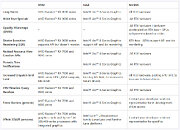
Besides Shader Model upgrades, some key DirectX ray tracing (DXR) 1.2 features are officially exiting preview, such as OMM and SER. Opacity Micromaps (OMMs) enable hardware to handle complex alpha-tested geometry far more efficiently, bypassing costly shader invocations. The feature was announced way back in 2022 with NVIDIA's Ada Lovelace architecture. Meanwhile, Shader Execution Reordering (SER) empowers applications to dynamically sort rays for highly optimized parallel execution. Microsoft has directly addressed developer feedback by integrating several targeted quality-of-life updates. Highlights include Revised Resource View Creation API, as well as new CPU Timeline Query Resolves that eliminate unnecessary GPU overhead. The table below compares hardware support for Shader Model 6.9 across the three GPU brands.
Source: Microsoft DirectX Blog
Add your own comment

28 Comments on Microsoft Intros DirectX 12 Shader Model 6.9 and New Direct3D 12 Improvements

#1
LastDudeALive
Have OMM and SER been implemented in any games yet, or did developers have to wait until the features were officially released?
Posted on Reply
#2
shuffy_losys
LastDudeALiveHave OMM and SER been implemented in any games yet, or did developers have to wait until the features were officially released?
The latter is probably more likely, otherwise it requires vendor specific code paths (if it's even supported) and that gets annoying.

It's like how ATi/AMD had hardware tessellation before DirectX 11 and AFAIK, nobody actually bothered with it.
Posted on Reply
#3
THU31
Microsoft today released DirectX Shader Model 6.9
Nice!
Posted on Reply
#4
Event Horizon
THU31Nice!
I don't think DirectX will ever be this nice again.
Posted on Reply
#5
Steevo
We are quickly approaching another close to metal model for 3D I feel.
Posted on Reply
#6
Visible Noise
AMD holding up progress in the graphics industry as usual.
Posted on Reply
#7
shuffy_losys
Visible NoiseAMD holding up progress in the graphics industry as usual.
It just means they have to play catch up if they don't support these features and games start using them.
Posted on Reply
#8
soupinator
LastDudeALiveHave OMM and SER been implemented in any games yet, or did developers have to wait until the features were officially released?
Every game that features pathtraced lighting should support both of these. I'm not 100% sure if OMM is implemented in Cyberpunk 2077, but it definitely is in newer games like Indiana Jones, where it's necessary for decent performance using PT lighting in the jungle maps.
Posted on Reply
#9
mechtech
I'm still playing DX9 games :)
Posted on Reply
#10
trsttte
Event HorizonI don't think DirectX will ever be this nice again.
Version 9.6 will be a close second. In a couple decades, the obstructing dot will be gone for version 69 and then it will be really nice 🤣
Posted on Reply
#11
LX_forReal
LastDudeALiveHave OMM and SER been implemented in any games yet, or did developers have to wait until the features were officially released?
Alan wake2, doom: dark ages, Indian Jones and the Great Circle and Half-Life2 RTX Remix( RTX Remix mod games).
Posted on Reply
#12
nguyen
More path tracing games coming out would be nice
Posted on Reply
#13
TumbleGeorge
nguyenMore path tracing games coming out would be nice
If you want more path tracing, become a rocker and never get off the bike.
Posted on Reply
#14
Visible Noise
TumbleGeorgeIf you want more path tracing, become a rocker and never get off the bike.
Wut?
Posted on Reply
#16
Scrizz
TumbleGeorgeIf you want more path tracing, become a rocker and never get off the bike.
never thought I'd hear "line" jokes on here :laugh:
Posted on Reply
#17
MufasaV
LastDudeALiveHave OMM and SER been implemented in any games yet, or did developers have to wait until the features were officially released?
Majority of path traced games use OMM
Posted on Reply
#18
wolf
Better Than Native
Man RTX was so forward looking, most of this stuff is supported all the way back to Turing, and Ada onwards is even better.

With AMD even one generation back misses out, which seems like a running theme.
Posted on Reply
#19
Drash
wolfMan RTX was so forward looking, most of this stuff is supported all the way back to Turing, and Ada onwards is even better.

With AMD even one generation back misses out, which seems like a running theme.
Isn't that because OMM & SER are actually NV technologies that have become standards? I know little of this, but I read that this caught AMD on the back foot, so much so that even RDNA4 doesn't have the h/w to support SM6.9.
Posted on Reply
#20
TumbleGeorge
wolfMan RTX was so forward looking, most of this stuff is supported all the way back to Turing, and Ada onwards is even better.

With AMD even one generation back misses out, which seems like a running theme.
I don't agree. This was forcibly imposed from Nvidia and game developers to home users. Their hard and expensive adapting period to ray tracing was forgotten. I don't understand unjustifiably praising the abusers who forced you to change in order to be their convenient consumer.
Posted on Reply
#21
wolf
Better Than Native
TumbleGeorgeThis was forcibly imposed from Nvidia and game developers to home users
They innovate, and have a history of doing so. My recollection is that even back to earlier days like DX 8,9 even, the hardware makers were pushing capability and then directx followed with standards around capability. The competition is driving innovation, but I appreciate that's been one sided for basically a decade now, so it all looks a bit skewed and some perspectives on that aren't positive.
Posted on Reply
#22
Prince Valiant
My recollection is that they would constantly try to cut corners wherever possible and still are. It's been "basically a decade now" and ray tracing is still bad performing, hardly amazing.
Posted on Reply
#23
LastDudeALive
TumbleGeorgeI don't agree. This was forcibly imposed from Nvidia and game developers to home users. Their hard and expensive adapting period to ray tracing was forgotten. I don't understand unjustifiably praising the abusers who forced you to change in order to be their convenient consumer.
Maybe AMD should try creating something then. If you don't want your GPUs to be two generations behind, you should create a feature that has value so you can be the first adopter.
Posted on Reply
#24
Nicholas Steel
shuffy_losysThe latter is probably more likely, otherwise it requires vendor specific code paths (if it's even supported) and that gets annoying.

It's like how ATi/AMD had hardware tessellation before DirectX 11 and AFAIK, nobody actually bothered with it.
ATi/AMD had tessellation before Direct3D 10.1, which is when Tessellation was first added to DirectX spec. The DirectX implementation was quite different thanks to Nvidia meddling iirc, invalidating AMD's previous work.
Posted on Reply
#25
shuffy_losys
TumbleGeorgeI don't agree. This was forcibly imposed from Nvidia and game developers to home users. Their hard and expensive adapting period to ray tracing was forgotten. I don't understand unjustifiably praising the abusers who forced you to change in order to be their convenient consumer.
I mean, we could argue that AMD forced Mantle on everyone by way of Vulkan. They too invented something innovative and decided the only way to get it out there was to make it an industry standard.

Or another one: async compute. Those were fun days when that was starting out. (actually I don't think this was an AMD invented thing, but it certainly gave them an early advantage)
Nicholas SteelATi/AMD had tessellation before Direct3D 10.1, which is when Tessellation was first added to DirectX spec. The DirectX implementation was quite different thanks to Nvidia meddling iirc, invalidating AMD's previous work.
Do you have a source that it started with 10.1? Microsoft's documentation doesn't say it's there for 10.1, but it's there in 11
Posted on Reply
Add your own comment
Nov 22nd, 2026 10:15 CST change timezone

New Forum Posts

Popular Reviews

TPU on YouTube

Controversial News Posts