Friday, June 5th 2026

Western Digital Ultrastar HDD Storage at Computex 2026
Having offloaded its entire consumer flash storage business to Sandisk brand, Western Digital is focusing on the Ultrastar brand of enterprise hard drives, and the G-Drive brand of professional storage solutions. During the exhibition in Taipei, the company highlighted how continuous AI workloads ,ranging from initial training models to active agentic systems, generate massive, compounding volumes of data. WD asserts that managing this exponential data growth while maintaining economic efficiency is the defining challenge for enterprise and cloud computing environments. By treating AI primarily as a data system rather than merely a compute system, the company aims to provide the foundational storage necessary for long-term operational viability.
Central to Western Digital's showcase are several significant advancements in traditional mechanical storage. The company demonstrated its comprehensive Ultrastar hard drive portfolio, which utilizes recording technologies such as UltraSMR, ePMR, and HAMR to achieve massive capacities. To integrate these advanced drives into functional enterprise environments, the company expanded its platform solutions with the introduction of the Ultrastar Data 3000 series JBODs. These scalable enclosures feature twelve ports of 24 Gb/s SAS-4 host connectivity to accommodate increasing bandwidth demands. The 3000 series implements specialized physical engineering, including ArcticFlow multizone cooling and IsoVibe vibration isolation technologies. Western Digital states that these environmental controls can reduce drive return rates by up to sixty-two percent, ensuring dependable operation in high-density deployments.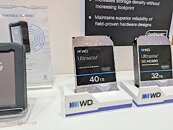
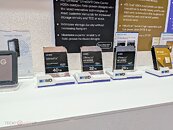

Central to Western Digital's showcase are several significant advancements in traditional mechanical storage. The company demonstrated its comprehensive Ultrastar hard drive portfolio, which utilizes recording technologies such as UltraSMR, ePMR, and HAMR to achieve massive capacities. To integrate these advanced drives into functional enterprise environments, the company expanded its platform solutions with the introduction of the Ultrastar Data 3000 series JBODs. These scalable enclosures feature twelve ports of 24 Gb/s SAS-4 host connectivity to accommodate increasing bandwidth demands. The 3000 series implements specialized physical engineering, including ArcticFlow multizone cooling and IsoVibe vibration isolation technologies. Western Digital states that these environmental controls can reduce drive return rates by up to sixty-two percent, ensuring dependable operation in high-density deployments.


11 Comments on Western Digital Ultrastar HDD Storage at Computex 2026
On the otherhand, I doubt that the "smaller" 18-24 TB models would get any cheaper because of these.
Spinning rust lives on, albeit in bigger & bigger capacities, hahaha :)
But as my data center friends will say:
Gimme 100,000 ZB's, or gimme death :D
But man o man the RAID rebuild/resilver times on these...
it makes data recovery way more complicated, and the prices for that is going to keep getting higher and higher, which is also why that tape is still widely used, and the prices are still stable for tape, unlike everything else
Talking actual numbers (on the more useful sizes), the tapes are not that cheap either:
- 90-100 bucks per 18TB LTO-9 (5-5.55 USD/TB)
- 265-295 bucks per 30TB LTO-10 (8.83-9.83 USD/TB)
- 465-585 bucks per 40TB LTO-10 (11.63-14.63 USD/TB)
At those sorts of prices, even the currently massively inflated 24+USD/TB hard drives look pretty alright, especially once you factor that you go from seek times measured in minutes to seek times measured in milliseconds. And we haven't talked about the tape library with autoloader either. And the climate-controlled storage room. And you get far higher sequential speeds when HDDs are setup in arrays too. And the tape drive wear. And the fact that you need to double or even triple the prices on any tape and drives you buy because the risk of a drive eating a tape is very, very real.The monopoly holders are Quantum Corporation (generic publicly-traded company) for the drives and seemingly Fujifilm for the tapes. HP, Dell, MagStor etc are all "just" rebranders applying their logos to the same bits. The only exception to that is IBM, who work closely with Quantum and Fuji for LTO R&D, but they don't manufacture anything themselves (thus the need for partners in the first place)