Monday, June 22nd 2026

Killscreen Launches the SFC-1, a Super Famicom-inspired Custom Controller for PC and PS5

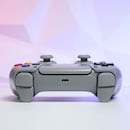
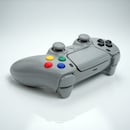
Killscreen today announced the launch of SFC-1, a new custom performance controller inspired by the Japanese Super Famicom and the 16-bit era of gaming. Built for PC and PlayStation 5 players, SFC-1 brings the unmistakable visual style of classic Japanese gaming hardware into a modern performance controller. SFC-1 features a retro SFC-inspired aesthetic with a soft gray body, graphite directional controls, and multicolor face buttons in blue, green, red, and yellow. The design draws from the Japanese Super Famicom console and controller—16-bit hardware many players in the U.S. first discovered through magazines, import shops, and collector culture.
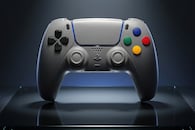
"Growing up, the Super Famicom always felt like this mysterious, cooler version of the system we got in the U.S.," said Erik at Killscreen. "The gray body, the colored buttons, the shape of the console—it had this completely different energy. It felt like hardware from another world. With SFC-1, we wanted to capture a little bit of that feeling and bring it forward for PC and PS5."
Beyond its retro-inspired design, SFC-1 is available with Killscreen's premium performance upgrade options, including TMR Anti-Drift Thumbsticks for improved precision, durability, and long-term resistance to stick drift. Players can also configure SFC-1 with Mecha Triggers, featuring high-performance Omron microswitches for shorter, faster trigger pulls, and mechanical face buttons for crisp, tactile inputs.

SFC-1 is designed for players who want a unique custom controller with a clear connection to gaming history, without giving up modern performance options. Like all Killscreen controllers, SFC-1 can be configured from a clean standard build to a competition-focused setup, giving players the ability to choose the controller that fits how they play.

The release continues Killscreen's growing line of retro-inspired modern gaming hardware, following previous controllers that reimagine classic PlayStation, Xbox, and Nintendo-era design cues for today's players.

The SFC-1 Super Famicom-inspired PS5 controller is available now exclusively at killscreen.io.

Key Features
  • Retro SFC-inspired aesthetic—Classic 16-bit color styling with multicolor face buttons inspired by the Japanese Super Famicom console and controller.
  • TMR Anti-Drift Thumbstick upgrade option—Built for improved precision, durability, and long-term resistance to stick drift.
  • Mecha Triggers upgrade option—High-performance Omron microswitch triggers with shorter, faster pulls designed for quicker response in competitive play.
  • Mechanical face button upgrade option—Crisp, tactile button inputs with a more responsive mechanical feel.
  • Configurable performance-focused build options—Available in standard or upgraded configurations depending on how players want to build their controller.
  • Full PC + PS5 compatibility—Designed for PlayStation 5 and compatible PC gaming setups.
Source: Killscreen
Add your own comment

24 Comments on Killscreen Launches the SFC-1, a Super Famicom-inspired Custom Controller for PC and PS5

#1
Grimling
This "thing" displayed on the packaging makes me feel uncomfortable...
Posted on Reply
#2
FreedomEclipse
~Technological Technocrat~
Those coloured buttons reminds me of the SNES controller.
Posted on Reply
#3
bonehead123
s.N.o.O.z.E......

Although I generally appreciate the effort to do the "retro" thing, I don't think there is much if anything that can be done with these silly controllers beyond different colors, schemes etc, cause like soooo many pc cases nowadayz, they are merely rehashes of rehashed rehashes of the original rehash, hahaha :D
Posted on Reply
#4
Apocalypsee
bonehead123s.N.o.O.z.E......

Although I generally appreciate the effort to do the "retro" thing, I don't think there is much if anything that can be done with these silly controllers beyond different colors, schemes etc, cause like soooo many pc cases nowadayz, they are merely rehashes of rehashed rehashes of the original rehash, hahaha :D
Just like game, they just....remaster/remake/rewahtever old games. Like the world already exhausted all the ideas.
Posted on Reply
#5
Onasi
So, color scheme aside, it’s essentially just a DualShock 5 with actual modern 2026 features? Seems nice. Will it cost an arm and a leg though? The market is rather competitive.
Posted on Reply
#6
TheLostSwede
News Editor
OnasiSo, color scheme aside, it’s essentially just a DualShock 5 with actual modern 2026 features? Seems nice. Will it cost an arm and a leg though? The market is rather competitive.
Since you're too lazy to click the source link that goes straight to the product page...
Posted on Reply
#8
Dr. Dro
FreedomEclipseThose coloured buttons reminds me of the SNES controller.
Europe never received the "SNES", what you guys had was a PAL version of the Super Famicom marketed as the "SNES". The SNES in the Americas had a completely different look, and a two-tone purple outline in the controllers instead of the Super Famicom color scheme that Europe got.

Funniest bit: Nintendo had a directive that forbade American games from bearing Super Famicom logos, color schemes and wordmarks... yet this very rule was broken by the pack-in and most popular game in the console, Super Mario World.
Posted on Reply
#9
lexluthermiester
Dr. DroEurope never received the "SNES", what you guys had was a PAL version of the Super Famicom marketed as the "SNES".
I disagree. The UK/Europe got the real SNES. North/South America got the silly lavender/purple blocky nonsense the dimwits at Nintendo Of America came up with.
The proper SNES;

This is a thing of smooth, sleek style that just said "high-tech gaming" without speaking a word. It's what the controller subject of this article is inspired by and rightly so!
Posted on Reply
#10
Dr. Dro
lexluthermiesterI disagree. The UK/Europe got the real SNES. North/South America got the silly lavender/purple blocky nonsense the dimwits at Nintendo Of America came up with.
The proper SNES;

This is a thing of beauty and is what this controller subject of this article is inspired by.
That is a Super Famicom :D

I get what you mean though :p
Posted on Reply
#12
Onasi
TheLostSwedeSince you're too lazy to click the source link that goes straight to the product page...
Yes, because as we all know, there are no other shapes for PS5 controllers other than the DualShock shape, which is what I was clearly referring to. None at all. They just don’t exist.
Posted on Reply
#13
Synthwave
GrimlingThis "thing" displayed on the packaging makes me feel uncomfortable...
Cool, sophisticated cyberpunk artwork tbh.
lexluthermiesterI disagree. The UK/Europe got the real SNES. North/South America got the silly lavender/purple blocky nonsense the dimwits at Nintendo Of America came up with.
The proper SNES;
This is a thing of smooth, sleek style that just said "high-tech gaming" without speaking a word. It's what the controller subject of this article is inspired by and rightly so!
Yeah, the US version looks pretty stupid in comparison. Thankfully, the European version looked the same as the Japanese.
Posted on Reply
#14
MTS-C
I like the blocky grey and purple thing that turned yellow due to plastics. It fits the era of late 80s early 90s over here quite perfectly.
Posted on Reply
#15
Dr. Dro
OnasiYes, because as we all know, there are no other shapes for PS5 controllers other than the DualShock shape, which is what I was clearly referring to. None at all. They just don’t exist.
I mean this just seems like modified off the shelf DualSense controllers with a custom shell? Or did I miss something
Posted on Reply
#16
anachron
Dr. DroI mean this just seems like modified off the shelf DualSense controllers with a custom shell? Or did I miss something
The product page seems to indeed indicate that it's actually a modified DualSense with a bunch of options :
  • Default / Standard – A stock PlayStation 5 DualSense with Sony’s adaptive trigger system. Traditional rubber membrane buttons and variable-resistance triggers.
  • Mouse Click Triggers & Bumpers – Also called “clicky triggers.” Adaptive triggers are reengineered into ultra-fast hair triggers with short travel (~2mm) and a crisp, tactile click. Bumpers and triggers both respond like on/off switches.
  • Mouse Click Face Buttons – The D-pad and face buttons (Square, Triangle, Cross, Circle) are upgraded from soft membranes to snappy microswitches—giving each press a clean, responsive click.
  • Full Mouse Click – Combines both trigger/bumpers and face buttons for a complete tactile setup. Every primary input on the controller responds with that sharp, clicky feedback.
Posted on Reply
#17
Dukenukemx
lexluthermiesterI disagree. The UK/Europe got the real SNES. North/South America got the silly lavender/purple blocky nonsense the dimwits at Nintendo Of America came up with.
The proper SNES;

This is a thing of smooth, sleek style that just said "high-tech gaming" without speaking a word. It's what the controller subject of this article is inspired by and rightly so!
To each their own, but I liked the North American version better. Speaking of which, they really need to start making replacement chips for the SNES because they're failing. Early SNES chips had a flaw that will slowly kill the CPU. PPU's are also known to fail. Only the One Chip SNES's are safe. I'd be more excited for this over a SNES colored PS5 controller.
Posted on Reply
#18
lexluthermiester
DukenukemxTo each their own
Indeed.
DukenukemxSpeaking of which, they really need to start making replacement chips for the SNES because they're failing. Early SNES chips had a flaw that will slowly kill the CPU. PPU's are also known to fail. Only the One Chip SNES's are safe.
I've had my OG SFC for several decades. Had to do a cap replacement on it and that's the only issue.
Posted on Reply
#19
Dr. Dro
DukenukemxTo each their own, but I liked the North American version better. Speaking of which, they really need to start making replacement chips for the SNES because they're failing. Early SNES chips had a flaw that will slowly kill the CPU. PPU's are also known to fail. Only the One Chip SNES's are safe. I'd be more excited for this over a SNES colored PS5 controller.
Yeah, man. Shame that's pretty much never happening. I'm dealing with a similar dilemma right now, I like to collect first revision consoles but unfortunately they all have a knack for dying in some really convoluted ways... sitting on a launch day PS2 that looks like it's barely a month old despite being 26 years young, even the laser works perfectly but it's started to crash randomly and I've no idea what to do.

I've read it's possible that it's a resistor related to a clock generator or an IC related to the RDRAM that goes bad frequently on SCPH-10000 systems, but there's no service manual/schematics available for it, not even in Japanese. Apparently it never leaked... Only solution is tracking down another 10000 (they're expensive) for a motherboard swap. More economical to just buy a replacement shell and optical group for my 90001 at that rate.

One of my biggest regrets was passing on a Mega Drive VA0 that appeared for sale here some time ago, it'd be the crown jewel of my collection but I just didn't have the money at the time.
Posted on Reply
#20
Rulumi
DukenukemxTo each their own, but I liked the North American version better. Speaking of which, they really need to start making replacement chips for the SNES because they're failing. Early SNES chips had a flaw that will slowly kill the CPU. PPU's are also known to fail. Only the One Chip SNES's are safe. I'd be more excited for this over a SNES colored PS5 controller.
From my experience and what I have seen, SHVC-CPU-01 with 1/1/1 (CPU/PPU1/PPU2) usually work fine if you give them the proper maintenance they need at this point, other SHVC-CPU-01 may also be fine, but can't tell you for sure of the in between rarer variations with CPU-A. SHVC-CPU-01 it's also the best quality motherboard of all revisions, everything after it cuts corners for costs somewhere, albeit most of the SNS-CPU-GPM are fine-ish.

Personally I don't like the 1CHIP systems, they clearly feel and are cheaper, and they also have small graphical bugs in a lot of games, the S-APU in those also cause problems in a few games.

As for replacement chips, while not directly compatible, I think you can still find Super Famicom clone chips that are basically the same as the mid 90s and late 2000s (earlier ones were almost 1:1 and pin compatible) clone chips that consist of 1 CPU chip, 1 PPU chip and 1 sound chip, just in a new package nowdays (maybe node shrinked too?). Since they are basically the same as that era clone chips those chips still natively do RGB that then gets converted to S-Video or composite by an external video encoder like in the original systems or in the case of some modern systems, they convert the analog RGB to some form of scaled HDMI.
Dr. DroOne of my biggest regrets was passing on a Mega Drive VA0 that appeared for sale here some time ago, it'd be the crown jewel of my collection but I just didn't have the money at the time.
For collection purpouses VA0 Mega Drive's can be nice, however if I remember well both VA0 and VA1 can have sync problems even with the small bugfix board (VA1 uses a gate array chip with the same fix as VA0 instead of VA0's logic gate daughterboard), so that may make VA2 and VA3 preferable because of this, they improved the sync fix a bit with VA2 and later.
Posted on Reply
#21
Dukenukemx
Dr. DroYeah, man. Shame that's pretty much never happening. I'm dealing with a similar dilemma right now, I like to collect first revision consoles but unfortunately they all have a knack for dying in some really convoluted ways... sitting on a launch day PS2 that looks like it's barely a month old despite being 26 years young, even the laser works perfectly but it's started to crash randomly and I've no idea what to do.
Genesis models 2's had this problem, but not the model 1's. When putting together my Neptune board, I was told to use 315-5660 ASIC's instead of other revisions because it's known to be reliable. Something about these chips breaking internal connections over time. What's interesting is that you can buy new 315-5660's on AliExpress which makes repairing Genesis console's very doable. I ended up buying a second Genesis model 2 because I couldn't get the Neptune working. Turns out I broke the crystal oscillator and those are dirt cheap off Aliexpress. I took the other Genesis parts and soldered them into the board which wasn't meant to have a 315-5708-01. I now have a 3rd working Genesis for no reason.
I've read it's possible that it's a resistor related to a clock generator or an IC related to the RDRAM that goes bad frequently on SCPH-10000 systems, but there's no service manual/schematics available for it, not even in Japanese. Apparently it never leaked... Only solution is tracking down another 10000 (they're expensive) for a motherboard swap. More economical to just buy a replacement shell and optical group for my 90001 at that rate.
The best solution would be to ask someone to measure their resistor to see what value it should have. Unless you don't know where the resistor is? A quick look I found someone with your issue and it seems to be a resistor array near the big IC chips. Since these are anywhere from 4x to 8x resistor arrays, there's a lot of opportunity for a failed resistor here. This guy went all in and replaced them all.
One of my biggest regrets was passing on a Mega Drive VA0 that appeared for sale here some time ago, it'd be the crown jewel of my collection but I just didn't have the money at the time.
I have to see if I have a VA0 but the board was repaired when I was a child and they might have replaced the board entirely.
Posted on Reply
#22
Dr. Dro
DukenukemxGenesis models 2's had this problem, but not the model 1's. When putting together my Neptune board, I was told to use 315-5660 ASIC's instead of other revisions because it's known to be reliable. Something about these chips breaking internal connections over time. What's interesting is that you can buy new 315-5660's on AliExpress which makes repairing Genesis console's very doable. I ended up buying a second Genesis model 2 because I couldn't get the Neptune working. Turns out I broke the crystal oscillator and those are dirt cheap off Aliexpress. I took the other Genesis parts and soldered them into the board which wasn't meant to have a 315-5708-01. I now have a 3rd working Genesis for no reason.

The best solution would be to ask someone to measure their resistor to see what value it should have. Unless you don't know where the resistor is? A quick look I found someone with your issue and it seems to be a resistor array near the big IC chips. Since these are anywhere from 4x to 8x resistor arrays, there's a lot of opportunity for a failed resistor here. This guy went all in and replaced them all.

I have to see if I have a VA0 but the board was repaired when I was a child and they might have replaced the board entirely.
That's awesome. It's been a long time since I had an MD, so I've been quite out of the loop with those.

Problem with repairing A chassis PS2 models is that they were only available in Japan for their earliest launch period, documentation is scant especially for the model I have (which is the very first unit with GH-001 board and v1.00 BIOS). The internals are pretty much completely different from the SCPH-30001 models for the Americas, by the time they released here Sony was already manufacturing B-chassis units with an expansion bay rather than a PCMCIA slot, and several other changes to how the machine works...

I've been debating it over, whether do I just buy another 10000 with a good motherboard, and hopefully as many "ok" parts as possible elsewhere and rebuild a complete unit based on mine that's in extra good condition, or if I just take either my 70011 or 90001 and rebuild them with an aftermarket shell, new optical group (the 90001 will def need it, I broke it almost 15 years ago), etc. - it's a plan for something sometime :)
Posted on Reply
#23
Rulumi
It could be worth it to try to repair the SCPH-10000 given it's good condition if that's an important factor for you. A non-Slim model also can be useful if you are interested in using an HDD with the system, however the SCPH-2040 HDD needed for the HDD enclosure in the PCMCIA connector models is more expensive than the adapter for the expansion bay models, so may be a lot of ifs to follow that route if just for the HDD.
Posted on Reply
#24
Dr. Dro
RulumiIt could be worth it to try to repair the SCPH-10000 given it's good condition if that's an important factor for you. A non-Slim model also can be useful if you are interested in using an HDD with the system, however the SCPH-2040 HDD needed for the HDD enclosure in the PCMCIA connector models is more expensive than the adapter for the expansion bay models, so may be a lot of ifs to follow that route if just for the HDD.
From what I hear, it works with straight CompactFlash adapters, too, but the HDD connector doesn't really matter anymore since MX4SIO lets you load things through the memory card port, it's actually even the fastest and most reliable way to load games on your PS2 these days as it's got the benefits of solid state storage and is faster than USB 1.1. A PSXMemCard Gen 2 and a bitfunx MX4SIO card (second optional as former has this functionality already, it's just easier IMO) are all you need. No modchips are required for anything anymore.
Posted on Reply
Add your own comment
Nov 12th, 2026 10:04 PST change timezone

New Forum Posts

Popular Reviews

TPU on YouTube

Controversial News Posts