Wednesday, July 8th 2026

Intel Nova Lake-S and -H CPUs To Feature 12-Core Arc Xe3P iGPUs
Recently, new Intel Nova Lake-S iGPU IDs were added to the Linux kernel driver stack, revealing that Intel may be planning to launch as many as seven SKUs in the Core Ultra 400 desktop CPU series. Until a new rumor by leaker @jaykihn0 on X, however, little was known about the upcoming Nova Lake-H and Nova Lake-S CPUs and their iGPU configurations. The leaker claims that Intel's Nova Lake-S desktop line-up will feature at least one SKU with a 12-core Xe3P iGPU configuration.
A 12-core Xe3P iGPU solution would conceivably be a worthwhile entry-level dGPU replacement, given the performance observed in tests of the current Xe3 B390 iGPU. The leaker also tips that Nova Lake-H, the upcoming mobile CPU line-up, will feature several 12-core Xe3P configurations, similar to the current Core Ultra X7 358H and Core Ultra X9 388H SKUs which both feature 12 Xe3 cores, while lower-end Nova Lake-S and -H parts will fall back to 4 Xe3 or 2 Xe3 configurations. There is no word on whether there will be a 10-core Xe3 or Xe3P iGPU SKU as there is with the Arc G3 handheld gaming CPU family. These leaks come not too long after another rumor revealed that Intel's Xe3P iGPU architecture is expected to be significantly faster than even the current Arc B390 iGPU that has taken the crown for high-performance integrated graphics from the likes of AMD's Radeon 890M.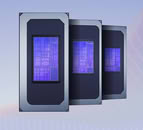

Source:
@jaykihn0 on X
A 12-core Xe3P iGPU solution would conceivably be a worthwhile entry-level dGPU replacement, given the performance observed in tests of the current Xe3 B390 iGPU. The leaker also tips that Nova Lake-H, the upcoming mobile CPU line-up, will feature several 12-core Xe3P configurations, similar to the current Core Ultra X7 358H and Core Ultra X9 388H SKUs which both feature 12 Xe3 cores, while lower-end Nova Lake-S and -H parts will fall back to 4 Xe3 or 2 Xe3 configurations. There is no word on whether there will be a 10-core Xe3 or Xe3P iGPU SKU as there is with the Arc G3 handheld gaming CPU family. These leaks come not too long after another rumor revealed that Intel's Xe3P iGPU architecture is expected to be significantly faster than even the current Arc B390 iGPU that has taken the crown for high-performance integrated graphics from the likes of AMD's Radeon 890M.


14 Comments on Intel Nova Lake-S and -H CPUs To Feature 12-Core Arc Xe3P iGPUs
The only reason we have the Panther Lake models with lesser Xe-cores (386H/356H) is to free up PCIe lanes for dGPU use, mainly for the bigger prosumer/gaming laptops. CPU-wise they are the same.
I was hoping for much better iGPU performance, about halfway between GTX 1630 and GTX 1060 in the above charts, but if the regular NL desktop CPUs will have 2 Xe3 (so not Xe3P?) cores I don't see that happening, more like GTX 1630 performance.
Eh...
In the new shader configuration introduced with Panther Lake, 12XE = 24CU.
Intel's architecture is just much larger.
I also wish that more laptop features for hybrid graphics setups could work on desktop systems. I'm still unsure if CASO works on desktop systems but from what I tested so far, the experience feels similar enough.
I really just want another output that doesn’t require me to carry around a mDP adapter at all times.
I don't think it's unreasonable to expect another significant uplift from Arrow Lake to Nova Lake, okay maybe not as significant but certainly not single digit uplift.
Of course I'm not asking for the flagship 12 Xe3P iGPU to be used universally, hopefully the higher end NL SKUs have 4 Xe3 iGPU and only some lower end CU5 and CU3 have 2 Xe3 iGPU, similar to how the current CU5 225 and CU3 205 have a 2 Xe iGPU.
Fingers crossed! 🤞
If Nova lake uses 12 Xe3P and you give it more power than regular thin and light panther lake, we could see some quite decent performance. As for lower SKUs of 4 or 2 - I would not expect too much for them, but there could be core ultra 5 models with 10 or 12 Xe cores. I think if you care for IGP performance go with the models with bigger 12 or 10 core integrated, the 4 and 2 core version are basically for having basic display adapter and light graphical loads.You can do it, even in current chips - but usually you shouldn't as there is performance overhead for doing so as well as communication overhead.
CASO is software compromise for not having display MUX - while it's better than regular optimus, it still has overhead. If motherboards added MUX and display input, that will be optimal solution, but it costs money and it's less important for desktop uses.