Friday, August 7th 2026

SK hynix Invests 54 Trillion Won in Yongin Y2 and Cheongju M17 to Secure Mid-to-Long-Term Production for AI Memory Demand
SK hynix Inc. announced today that it has decided to build new fabs in Yongin and Cheongju to respond to the continuously growing demand for memory in the AI era.
The company approved a total investment of approximately 54 trillion, 35.2 trillion won in Yongin "Y2" fab and 19.1 trillion won in the Cheongju "M17" fab, in a board meeting.
This decision represents execution of the mid-to-long-term investment strategy announced by the company last June. Under its master plan to invest 600 trillion won in the Yongin Semiconductor Cluster and 100 trillion won to expand its Cheongju production base, SK hynix is currently constructing its first fab in Yongin (Y1). With this latest decision, the company is embarking on the construction of subsequent fabs in both Yongin and Cheongju.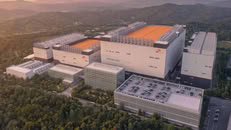
 According to market research firm Omdia, both DRAM and NAND demand are projected to maintain a compound annual growth rate (CAGR) of 19% from last year through 2030. The company views this growth not as a temporary supercycle, but as a structural transformation in which memory transcends its role as a mere component to become core infrastructure determining AI performance itself.
SK hynix stated that in the AI era, technological competitiveness alone is not enough and the ability to supply the required volume at the exact moment customers need it is the ultimate competitive advantage. We reached this investment decision after a thorough review of market demand.
Yongin Y2 is the second of four fabs planned sequentially for the Yongin Semiconductor Cluster. It will serve as a DRAM production base spanning a total floor area of 341,000 pyeong (approximately 1,130,000m2). Construction is scheduled to break ground in July next year, targeting the opening of its first cleanroom in June 2029 to produce high-bandwidth memory (HBM) and other next-generation DRAM products. Meanwhile, construction on Y1 is progressing smoothly toward its initial cleanroom opening target of February next year.
SK hynix previously set a goal to advance the completion date of the Yongin Semiconductor Cluster by 12 years—from the originally planned 2045 to 2033—to finish constructing all four fabs. The Y2 construction serves as the second phase supporting this accelerated timeline and the investment spans to October 2031 sequentially. The investment amount includes construction costs for "Business Support Building" with administrative and welfare facilities for Y2 personnel, an "Integrated R&D Center" to consolidate product development testing, analysis, and experiments, as well as auxiliary infrastructure.
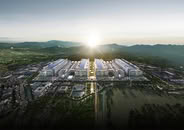
For the Yongin Semiconductor Cluster—sprawling over approximately 1.26 million pyeong (approximately 4,160,000 m²) in Wonsam-myeon, Cheoin-gu, Yongin-si, Gyeonggi-do—Phase 1 power and water infrastructure required up through Y2 operation is nearing completion, currently at a 99% progress rate. As fab construction and infrastructure setup have been carried out concurrently, the company plans to proceed with the Y2 construction according to schedule.
In the NAND market, demand is surging rapidly centered on enterprise SSDs driven by the full-scale expansion of AI services. This is further boosted by demand for key-value (KV) cache2storage in AI inference, with application fields expected to broaden further as Agentic and Physical AI are introduced.
SK hynix selected Cheongju as its new NAND fab base because it offers the fastest fab construction timeline. The Cheongju Campus already houses the M11, M12, and M15 fabs, enabling efficient production linked to existing operations on sites equipped with substantial pre-established power and water infrastructure. Cheongju M17 will be built across a total area of 206,000 pyeong (approximately 680,000 m²), breaking ground in February next year with plans to open its first cleanroom in December 2028. The investment period runs through April 2031 according to the master plan.
SK hynix plans to proactively secure production infrastructure based on mid-to-long-term demand discussed with customers, while expanding actual production capacity in alignment with the timing of customer needs. Fabs will be constructed according to the master schedule, whereas cleanroom expansions and equipment installation will take place sequentially in line with demand trends to maximize capital efficiency.
The company expects this investment to secure future growth foundations while strengthening the competitiveness of the domestic semiconductor ecosystem and boosting local economies. The large-scale simultaneous investments in Yongin and Cheongju are anticipated to expand joint growth opportunities for supply chain partners, generate employment, and revitalize local commercial districts, thereby contributing to the sustainable growth of the national economy.
An SK hynix official stated that "This investment is a decision made to seize opportunities in line with the market's growth speed. By proactively securing production capabilities, we aim to establish ourselves as a key partner in AI infrastructure, contributing to the stability of the global AI semiconductor supply chain."
The company approved a total investment of approximately 54 trillion, 35.2 trillion won in Yongin "Y2" fab and 19.1 trillion won in the Cheongju "M17" fab, in a board meeting.
This decision represents execution of the mid-to-long-term investment strategy announced by the company last June. Under its master plan to invest 600 trillion won in the Yongin Semiconductor Cluster and 100 trillion won to expand its Cheongju production base, SK hynix is currently constructing its first fab in Yongin (Y1). With this latest decision, the company is embarking on the construction of subsequent fabs in both Yongin and Cheongju.


SK hynix stated that in the AI era, technological competitiveness alone is not enough and the ability to supply the required volume at the exact moment customers need it is the ultimate competitive advantage. We reached this investment decision after a thorough review of market demand.
Yongin Y2 is the second of four fabs planned sequentially for the Yongin Semiconductor Cluster. It will serve as a DRAM production base spanning a total floor area of 341,000 pyeong (approximately 1,130,000m2). Construction is scheduled to break ground in July next year, targeting the opening of its first cleanroom in June 2029 to produce high-bandwidth memory (HBM) and other next-generation DRAM products. Meanwhile, construction on Y1 is progressing smoothly toward its initial cleanroom opening target of February next year.
SK hynix previously set a goal to advance the completion date of the Yongin Semiconductor Cluster by 12 years—from the originally planned 2045 to 2033—to finish constructing all four fabs. The Y2 construction serves as the second phase supporting this accelerated timeline and the investment spans to October 2031 sequentially. The investment amount includes construction costs for "Business Support Building" with administrative and welfare facilities for Y2 personnel, an "Integrated R&D Center" to consolidate product development testing, analysis, and experiments, as well as auxiliary infrastructure.
For the Yongin Semiconductor Cluster—sprawling over approximately 1.26 million pyeong (approximately 4,160,000 m²) in Wonsam-myeon, Cheoin-gu, Yongin-si, Gyeonggi-do—Phase 1 power and water infrastructure required up through Y2 operation is nearing completion, currently at a 99% progress rate. As fab construction and infrastructure setup have been carried out concurrently, the company plans to proceed with the Y2 construction according to schedule.
In the NAND market, demand is surging rapidly centered on enterprise SSDs driven by the full-scale expansion of AI services. This is further boosted by demand for key-value (KV) cache2storage in AI inference, with application fields expected to broaden further as Agentic and Physical AI are introduced.
SK hynix selected Cheongju as its new NAND fab base because it offers the fastest fab construction timeline. The Cheongju Campus already houses the M11, M12, and M15 fabs, enabling efficient production linked to existing operations on sites equipped with substantial pre-established power and water infrastructure. Cheongju M17 will be built across a total area of 206,000 pyeong (approximately 680,000 m²), breaking ground in February next year with plans to open its first cleanroom in December 2028. The investment period runs through April 2031 according to the master plan.
SK hynix plans to proactively secure production infrastructure based on mid-to-long-term demand discussed with customers, while expanding actual production capacity in alignment with the timing of customer needs. Fabs will be constructed according to the master schedule, whereas cleanroom expansions and equipment installation will take place sequentially in line with demand trends to maximize capital efficiency.
The company expects this investment to secure future growth foundations while strengthening the competitiveness of the domestic semiconductor ecosystem and boosting local economies. The large-scale simultaneous investments in Yongin and Cheongju are anticipated to expand joint growth opportunities for supply chain partners, generate employment, and revitalize local commercial districts, thereby contributing to the sustainable growth of the national economy.
An SK hynix official stated that "This investment is a decision made to seize opportunities in line with the market's growth speed. By proactively securing production capabilities, we aim to establish ourselves as a key partner in AI infrastructure, contributing to the stability of the global AI semiconductor supply chain."
24 Comments on SK hynix Invests 54 Trillion Won in Yongin Y2 and Cheongju M17 to Secure Mid-to-Long-Term Production for AI Memory Demand
it def will take some time, but it's possible this happens.
whoever gets AGI first and uses it to enhance their military, is the new super power for the next 20 years, that is their thinking... I think :roll:
the money will flow...
Once supply catches up/new AI datacentre demand slows down, datacentres can just be retooled for cloud services. In that scenario it wouldn't make sense to lower component prices for plebians, especially if smaller AIBs and PC makers have died off in the meantime.
A "normal consumer" ranges from property owners to people on foodstamps. If you could afford an 8800gt ($400 after inflation) in 2007, you may or may not be able to afford a modern equivelant now (5070ti?).
I'm personally priced out of current gen GPUs, for example. I'd like to enter the property market sometime in the next 50 years, so can't justify dropping £1k on a luxury item.
I mainly have been tinkering with running local models since that's the way this whole industry should go, so I guess my two GPU purchases last year ($350 for an Arc Pro B50 and $625 for an RX 9070 XT) could be considered my AI expenditure, even though they primarily get used for gaming (yes, even the B50).
I'm sure come winter I'll try Skyrim/Fallout 4 in VR again, struggle to run it at max resolution, then get the upgrade itch only to lose it by summer :laugh:
However, it's not just semiconductors - it's an energy generation crisis too. Current projections indicate that the energy demands of AI systems will eventually exceed the capacity of all available energy generation sources on Earth.
Given the market conditions, I'd do everything in my power to stop an RMA from happening, especially if where you live they're legally allowed to just issue a refund for what you paid (and that's definitely a lot less than what the card is worth now). Not to mention the downtime, it's just a lot of stress.
I get excited by all the possible desktop tech and then I remember I still don't have re-ram disks.