Wednesday, August 19th 2026

Linux 7.3 Scheduler Boosts FPS for Low-Power Hardware
Linux gaming is once again getting gaming performance improvements, this time thanks to scheduler changes scheduled to launch with Linux Kernel 7.3. The merge request noted in a kernel mailing list archive post note several changes to the scheduler that make it more efficient, improve latency, and add support for asymmetric CPU architectures, like Intel's modern mix of P-Cores and E-Cores.
The result of the changes is that low-power PC hardware should see notable improvements to average game FPS, 1% and 0.1% low FPS, and to frame time consistency, all of which should make gaming feel more fluid. In the Shadows Awakening benchmark running via GOG and GE-Proton 10-34 on an Intel Core i7-2600K and AMD Radeon RX 580, average frame rates were improved by 25%, while average frame times were 50% better than before, and minimum FPS jumped from 4.0 to 29.0—a 7.25× boost.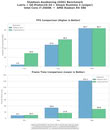 The CachyOS development team has noted in a post to its official X account that these improvements will already be available in the CachyOS 7.2 Kernel, "which should arrive soon." It remains to be seen how effective this patch is on more modern hardware, but it stands to reason that something like the Valve Steam Deck might benefit from these performance improvements, given its relatively low-spec CPU. Lower scheduler latency should make the biggest difference across the board, since the system will be able to more efficiently balance load.
Sources:
Linux Kernel archive, Phoronix
The result of the changes is that low-power PC hardware should see notable improvements to average game FPS, 1% and 0.1% low FPS, and to frame time consistency, all of which should make gaming feel more fluid. In the Shadows Awakening benchmark running via GOG and GE-Proton 10-34 on an Intel Core i7-2600K and AMD Radeon RX 580, average frame rates were improved by 25%, while average frame times were 50% better than before, and minimum FPS jumped from 4.0 to 29.0—a 7.25× boost.

3 Comments on Linux 7.3 Scheduler Boosts FPS for Low-Power Hardware
Both of these links are on the actual Phoronix source that was used for this post.