Monday, September 21st 2026

Sony Patent Imagines PlayStation Consoles That Fix Themselves Using AI
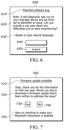
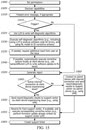
Sony has filed a patent for an AI system that would let its devices, including PlayStation consoles, diagnose and fix software problems on their own. As reported by TweakTown, citing patent aggregator Patentlyze, the filing describes a cloud server that monitors connected hardware, uses a large language model to write a diagnostic program tailored to whatever issue it detects, and then either pushes a fix automatically or logs the issue for an engineer to review later. The patent covers Sony's broader electronics lineup, not just PlayStation, and also names TVs, cameras, and headphones as possible targets.
If something like this ever ships, it could potentially mean fewer support calls and error screens for PlayStation owners down the line. The bigger question is safety, since handing an AI model the ability to write and push its own firmware to millions of consoles sounds risky if the generated code isn't verified. AI models also have a big hallucination problem, which is a huge risk when firmware-level tweaks are being offloaded to AI. It's worth noting that the filing has already received a rejection from the USPTO examiner, so there's no guarantee it clears the patent office in its current form, let alone becomes a real product.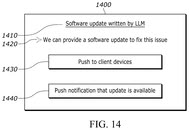
 Companies file thousands of patents a year, and most of them go nowhere. Sony, in particular, has a history of odd filings that never made it out, including one for pumping smells into games through a controller and an older patent describing ultrasonic brain stimulation to simulate smell and taste for moviegoers. This AI-powered self-repair patent seems like another ambitious Sony effort.
Sources:
Patentlyze, via TweakTown
If something like this ever ships, it could potentially mean fewer support calls and error screens for PlayStation owners down the line. The bigger question is safety, since handing an AI model the ability to write and push its own firmware to millions of consoles sounds risky if the generated code isn't verified. AI models also have a big hallucination problem, which is a huge risk when firmware-level tweaks are being offloaded to AI. It's worth noting that the filing has already received a rejection from the USPTO examiner, so there's no guarantee it clears the patent office in its current form, let alone becomes a real product.


28 Comments on Sony Patent Imagines PlayStation Consoles That Fix Themselves Using AI
Yes, lets let AI write firmware on the fly, what could POSSIBLY go wrong!?!
That is nothing worth to give a patent for.
How do deal with errors / making such flow charts is common knowledge. To implement usage of fake AI, which can not read or know grammar, etc, is also common knowledge and the obvious.
I do not see anything worth a patent, the patent lab(when that is the correct word), did a bad job and has a lack of common knowledge.
More than 10 years ago there was JTAG, boundary scan,call it whatever you want, which also checked hardware itself. that is also common knowledge, not worth a patent.
This is not unique to Sony. Many technology patent authors use flowcharts to explain their ideas because often it's clearer than just typing paragraph after paragraph of text.
It's important to note that this is a patent filing not an approval confirmation. If it does not have enough substance to merit an approval then the governing agency will deny the application or possibly ask Sony to clarify unclear sections. As the article author mentions, this happens pretty frequently, not all patents are granted.
You could use a cartoon strip or song lyrics to describe a patent concept if you wanted. But technology patents tend to use flowcharts because of their prevalence and acceptance in the industry.
2. This could open quite a bit of potential for hacking and modding, both good and bad. Depending on how much the AI is willing to listen to you or how easy it is to bypass the AI's code and install your own, it could clear a wide path for unsanctioned activities.
over the internetwith AI!Not gonna lie, this seems not good. And obviously it requires the console being always online so that’s a plus. And it has direct access to your console so any exploits could jeopardize your console. It will definitely be perfect and nothing will go wrong!
It'll be a disaster tho:
[INDENT=2]I have fixed the following issues on your PS6:[/INDENT]
[INDENT][INDENT][INDENT]
- Renamed the system to GameBoy On-Line as requested.
- Uploaded the propler firmware - GBOL v1.01 (©1989).
- You may now detach your system from all networking and electrical connections.
[/INDENT][/INDENT][/INDENT][INDENT=2]Have a nice day. What else is on your mind?[/INDENT]
The patent mentions using AI models (including LLMs) to analyze device data and decide on fixes, and several reports specifically say it involves LLMs to generate custom diagnostic code or firmware on the fly. The hallucination risk is real either way though. The risk is still real because the patent may alternatively use AI models to analyze device data and decide on corrective actions, which could involve generating or applying custom fixes. Any AI that creates or modifies code on the fly can AND DOES make mistakes, even if it's not a full-blown LLM or technically considered to be an "LLM" at all. Bad logic or edge-case errors could and likely would, still push a faulty patch that bricks the console.
So, yes, please keep reinforcing this idea.
The patent number is US 2026/0277730 A1, published September 17, 2026. You can read it here: image-ppubs.uspto.gov/dirsearch-public/print/downloadPdf/20260277730
The one you’re looking at is the peer-to-peer version where devices diagnose each other on the same network. The other one is the cloud/server version that explicitly uses an LLM to write diagnostic code on the fly.
The cloud version is nearly identical: image-ppubs.uspto.gov/dirsearch-public/print/downloadPdf/20260277732 (ref. pp.11)
Problem between chair and keyboard eliminated. All systems now optimized.
Here's what grok thinks (as if it could think). I gave it the two links and said "what do you think?" It replied:Errm, umm, maybe it can think - damn! :nutkick:
SFC/scannow
Windows "solve problems"
You name it...
This is going to be full of epic popcorn moments before Sony finally realises it doesn't work well, I can feel it.
and as they want it everywhere , how to get things more and more hazardous (at best unmanageable)... "my ps6 changed into a xbox than only wanted to download linux, and finally it destroyed itself while getting conscious" (if think it is the science fiction "pi" movie scenario ? lol...... i don't believe any artificial neuronal network will ever get "conscious" , they don't even "think" , just trying to make people think it thinks , but it's more like a neuronal network memory approximative storage as i see it to which they stick algorythm .. just need to see the "errors" it does before they are artificially corrected by new trainings, it doesn't think at all.. but marketing will make think it does) in my view , "superficial memory imitation" is more precise than "artificial intelligence" .. for what i know and tested (i don't use their apps with their prompts, i tested and configured neuronal networks directly at home to try to understand what is it about .. )
Still I do not see anything wroth a patent. There is no new idea etc.
the implementation / find new use cases / fire people / replace people with aI is the de facto standard or the direction it will go. nothing new.
What should such a fake AI write self diagnostic code?
It is hidden but some low value brands have such stuff implemented in the uefi for consumer electronics several years ago. You can run the hole test procedure to test display, keyboard, wireless, etc, every hardware inside. I doubt such AI will diagnose the silicium? There is no self repairing silicium. And ERATA = AMD bugs in silicon are fixed by amd and not by fake ai.
Execute = run a binary = nothing new
ask the user or connect yourself to the internet = ask LG how it is done = LG are specialists on hostile scan your network, collect data and send everything to LG = also nothing new, LG was first, therefore patent denied
-- I see more the issue, tehy want a generic patent on the usage of FAKE AI for customer service for any consumer electronics, regardless if it is a coffee machine, washing machine, fridge, television, a keyboard, a gaming usb mouse, so they can take monthly fees from the user or the company who sold the devices in the first place.
I doubt the patent lab is willing to check existing solutions vs sony idea.
-- 20 years ago hardware had a build in key and a silicion bootloader where you could overwrite the eeprom. It should not be a problem, but i doubt sony can do that, any other proper brand can implement that properly, to reflash the hole device with only usb-a and a power cord.
Here's the workflow they're claiming in the 32 patent:
- The device detects an issue and sends telemetry or a signal to the remote server.
- The server runs AI models to analyze the data and decide if further action is needed.
- If yes, the server uses an LLM to generate a custom diagnostic program tailored to that specific problem.
- The server sends this newly generated code to the device.
- The device runs the code and sends the results back to the server.
- The server then decides on a fix, sends instructions, and the device applies it automatically.
That's the specific flow they’re trying to patent - especially the part where the LLM writes brand-new diagnostic code on the fly.They did though - and just as you were able to surmise, it's noting novel or new and it got a "final rejection" on Sept 9th. :D--
The 30 patent is narrower. It's about one Sony device running diagnostics on another device on the same network, like, your PS5 checking your TV - LOL. That one's still alive. I agree about the business angle IMO you brought up. It seems mostly to be about cutting support costs. Whether the patent office will give them broad protection on "use AI for customer service on electronics" is doubtful here too.
Here's the process they're claiming in the 30 patent:
- A first Sony device detects a problem with a second Sony device on the same local network.
- The first device runs diagnostic tests directly on the second device.
- The first device collects the test results from the second device.
- The first device sends those results to a remote Sony server.
- The server analyzes the results and sends back instructions for how ot fix the second device.
- The first device then applies those fixes to the second device.
That's the specific workflow they're trying to patent. And yes, I know it sounds insane to have the ability to patent a workflow - but that's our beloved US Patent office. :pimp: When it started covering high-level ideas and common steps in the late 90's I knew we were doomed and this day would eventually come. If you're interested, look up "the 1998 State Street Bank court decision" and proceed to consume pure insanity.Time will tell on this one but, it doesn't look like it's getting tha same treatment. The number 30 patent only has a "non-final office action" from August 10th. That's a normal early rejection they can try to fix - within the process (maybe they can use their ultra-unique AI process for this too? :D). The 32 one got hit with a final rejection right before publishing, which is way more serious. So the 30 still has about a 50:50 shot IMO.Reading into the patents, both of them seem to be capable of acting like snitches against DIY'ers, modders, license violators, and those exercising their right to repair. So, hopefully the second will be rejected as well!