News Posts matching #consumer

Return to Keyword Browsing

Otto Introduces Otto One: the Personal AI Computer for Autonomous Agents

Otto, the company building the operating system for the agentic era, today introduces Otto One, the first purpose-built agent computer: a compact, screenless computer designed for an AI agent to live and work on. Running on Otto OS, its proprietary software layer, Otto One lets people deploy, direct and monitor autonomous agents from a phone or desktop while the device works continuously in the background, even when the user closes their laptop or walks away.

AI agents are finally capable of taking on a persistent role in people's lives. The real opportunity is not a better inbox assistant; it is an agent that can keep a household organized, manage a budget and taxes, coordinate care and appointments, and keep a business moving. To do that well, it needs usable context and the authority to act across the financial, personal and work systems that make up a life.

Terafab Wants to Become One of the Largest Memory Makers by 2032

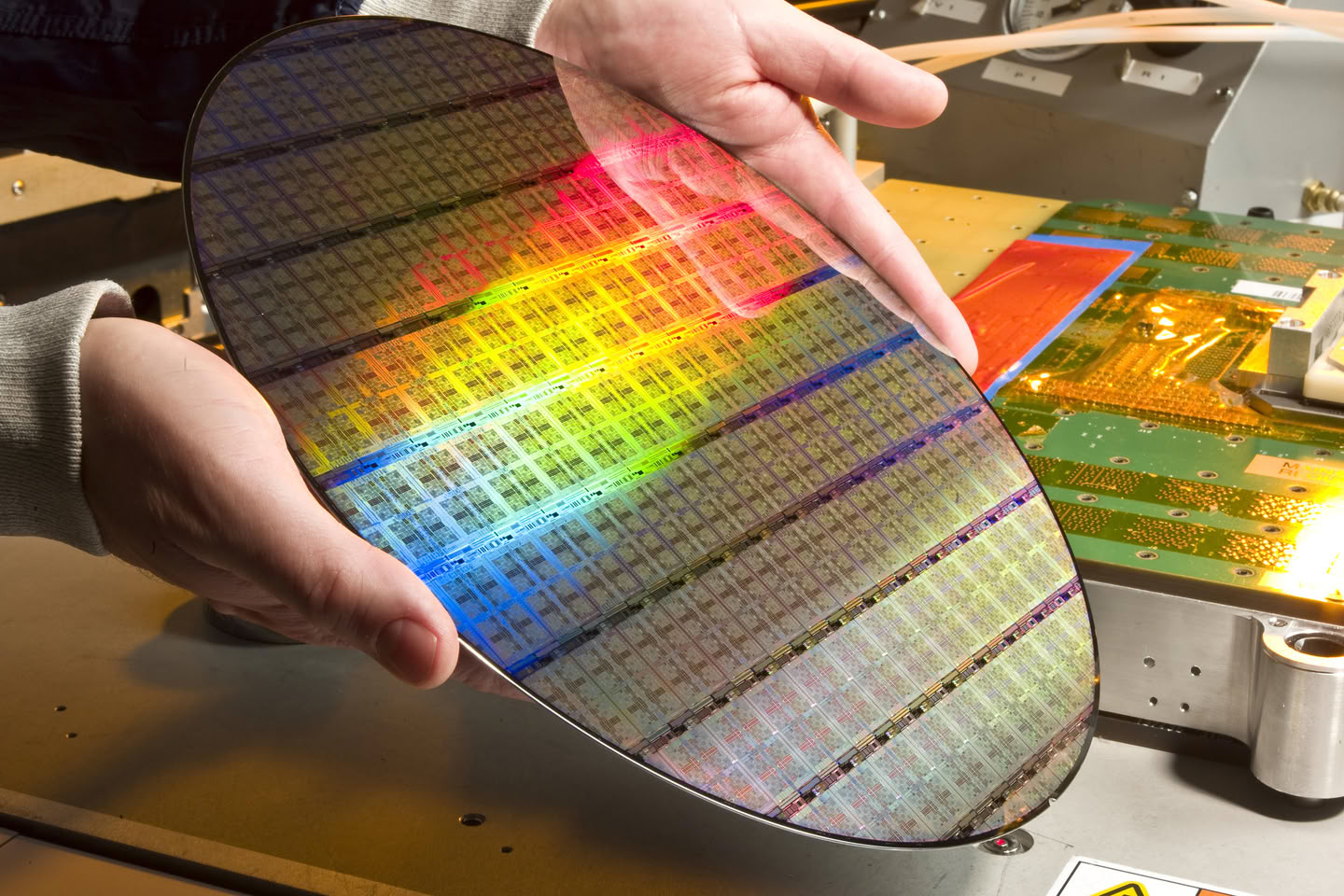
According to Nikkei, a procurement team from Terafab, the chip venture between Tesla and SpaceX, visited Japan and walked local equipment makers through what it plans to buy. The targets it reportedly shared are gigantic: 1 million wafers per month from 2032 onward, with around 700,000 of those going to memory chips and 300,000 to logic. Nikkei's headline puts that at 40 times the output of Japan's Rapidus. The same split first surfaced in a Jiji Press report last month, which said a single Texas plant would handle both memory and logic, with a pilot fab completed as early as July 2027. Intel is reportedly helping with logic using its 2 nm and 1.4 nm-class technology, while a Taiwanese company has been floated as a technology partner for memory. That could be Nanya, though nothing is confirmed.

For context, Samsung's entire DRAM output was estimated at 650,000 to 700,000 wafers a month late last year, while SK hynix was at about 550,000 earlier this year and hopes to reach roughly 1 million by 2030 or 2031. It isn't clear whether Terafab's memory figure covers DRAM alone or also includes NAND, so the Samsung comparison is a loose one. Musk has also been careful with his own dates. On an October SpaceX call, he put "big error bars" on reaching volume production by Q3 2028, with a first SRAM test chip planned for mid-2027 at Terafab's Austin research lab.

AMD Goes "Data Center First" While Gaming Revenue Drops 40%

AMD CEO Lisa Su now calls AMD a "data center first" company, two days after AMD reported a 40% drop in gaming revenue. Speaking to Yahoo Finance's Brian Sozzi on November 5, Su said AMD's data center business should grow 50% sequentially from Q3 to Q4, and suggested it could more than double next year. Here's how she put it:
Dr. Lisa Su, AMD CEOWe are a data center first company, that is our profile, and you know, people need more computing to power all these applications.
Data Center brought in a record $8.5 billion in Q3, up 97%, and now makes up 64% of AMD's $13.4 billion total, up from 47% a year ago. Gaming fell to $773 million, or under 6% of revenue. AMD blames it mostly on lower semi-custom sales, meaning the console chips it makes for Sony and Microsoft, along with weaker graphics demand. Gaming was flat against Q2, though, and last year's Q3 was boosted by a 181% console-driven jump to $1.3 billion. Su used the same "data center first" line back in 2024, when data center was just over half of revenue.

NVIDIA RTX PRO 5500 Listing Spotted at $17,999, More Than the Flagship RTX PRO 6000

The NVIDIA RTX PRO 5500 "Blackwell" workstation card has shown up at a US retailer, and it surprisingly costs more than the flagship RTX PRO 6000. As spotted by Alex Ziskind on X and corroborated by Videocardz, SHI Government Solutions listed the PNY-built model (VCNRTXPRO5500B-PB) with an MSRP of $17,999 and a discounted price of $17,408.63. NVIDIA's own US marketplace, on the other hand, lists the RTX PRO 6000 for $16,000, even though that card has more CUDA cores (24,064 vs. 21,760) and more memory (96 GB vs. 84 GB). So even at SHI's discounted price, the cut-down card costs around $1,400 more. NVIDIA hasn't announced official pricing since it quietly added the RTX PRO 5500 to its lineup in September, so it isn't clear whether the $17,999 figure comes from NVIDIA or PNY.

Videocardz points out that Chinese demand is probably a big factor behind the RTX PRO 5500's price. According to Reuters, ByteDance, Alibaba, and Tencent have ordered over 3 million RTX PRO 5500 cards at roughly $11,400 each, with total orders from China reportedly topping 6 million. One source said NVIDIA can make no more than 3 million of them in 2027. With the B300 barred from China and the H200 reviewed case by case, the RTX PRO 5500 is one of the strongest NVIDIA GPUs Chinese firms can still buy. The card also packs 28 GDDR7 modules at a time, even as memory prices keep climbing. With orders far ahead of supply, it's reasonable to expect RTX PRO 5500 pricing to stay high for a while.

Nintendo Has No Plans for Another Switch 2 Price Hike

Nintendo isn't considering another price increase for the Switch 2, at least for now. Speaking at the company's financial results briefing on November 5, president Shuntaro Furukawa said there hasn't been any major change in the memory situation and that Nintendo is still able to secure "sufficient quantities," according to Reuters. That's welcome news for anyone still on the fence, since the console has already gone up once this year. Nintendo announced a $50 price hike back in May, which took the US price from $449.99 to $499.99 on September 1, while the Japanese model went from ¥49,980 to ¥59,980 and the European My Nintendo Store price climbed from €469.99 to €499.99.

The comments seem to arrive as Switch 2 hardware sales are slowing down. Nintendo shipped 2.67 million units between July and September, down 41% from a year earlier, though the console has now reached 26.35 million units overall and is still ahead of where the original Switch was at the same point. Nintendo has kept its forecast of 16.5 million Switch 2 units for the fiscal year ending March 2027. Of course, "not considering" isn't the same as a promise, so it's best not to treat this as a price freeze. Sony said much the same thing this week, noting that it has already agreed on memory volumes with suppliers for its next fiscal year. Elsewhere, hardware keeps getting pricier, with NVIDIA's GeForce RTX 50-series reportedly set for price hikes of up to $500, but at least Nintendo is staying put for now.

Netgear Reports Third Quarter 2026 Results

Netgear, Inc. (NASDAQ: NTGR), a global leader in intelligent networking solutions designed to power extraordinary experiences, today reported financial results for the third quarter ended September 27, 2026.

Q3 2026
  • Net revenue of $167.3 million, down 9.3% as compared to Q3 prior year
  • GAAP gross margin of 40.1%, up 100 basis points year over year
    • Non-GAAP gross margin of 41.3%, up 170 basis points year over year
  • GAAP operating income of $(13.7) million compared to $(7.1) million from Q3 prior year
    • Non-GAAP operating income of $3.3 million compared to $3.8 million from Q3 prior year
  • GAAP EPS of $(0.45) compared to $(0.17) from Q3 prior year
    • Non-GAAP EPS of $0.13 compared to $0.12 from Q3 prior year
The accompanying schedules provide a reconciliation of financial measures computed on a GAAP basis to financial measures computed on a non-GAAP basis.

HP Inc. Appoints Emma Walmsley as Chief Executive Officer

HP Inc. (NYSE: HPQ) today announced that its Board of Directors has unanimously appointed Emma Walmsley as Chief Executive Officer, effective January 4, 2027. Ms. Walmsley most recently served as Chief Executive Officer of GSK and has been a member of Microsoft's Board of Directors for seven years. She will succeed Bruce Broussard, who has served as Interim Chief Executive Officer since February 2026. Broussard will become Chair of the Board effective January 4, 2027, succeeding Chip Bergh.
Bruce Broussard, Interim Chief Executive Officer"HP has tremendous potential at an important inflection point in technology, and we need a leader who can build on our innovation heritage and strengths to boldly shape the company's future. Emma is a proven CEO with a track record of leading organizations at scale and guiding them through significant change. She has the experience and skills to bring HP's businesses, capabilities and people together to capture the opportunities ahead as AI moves to the edge, transforming how we work and live in a more connected world. I look forward to supporting her as she leads HP into its next phase of growth".

Intel Diverts 18A Capacity From Panther Lake to Meet Xeon Demand

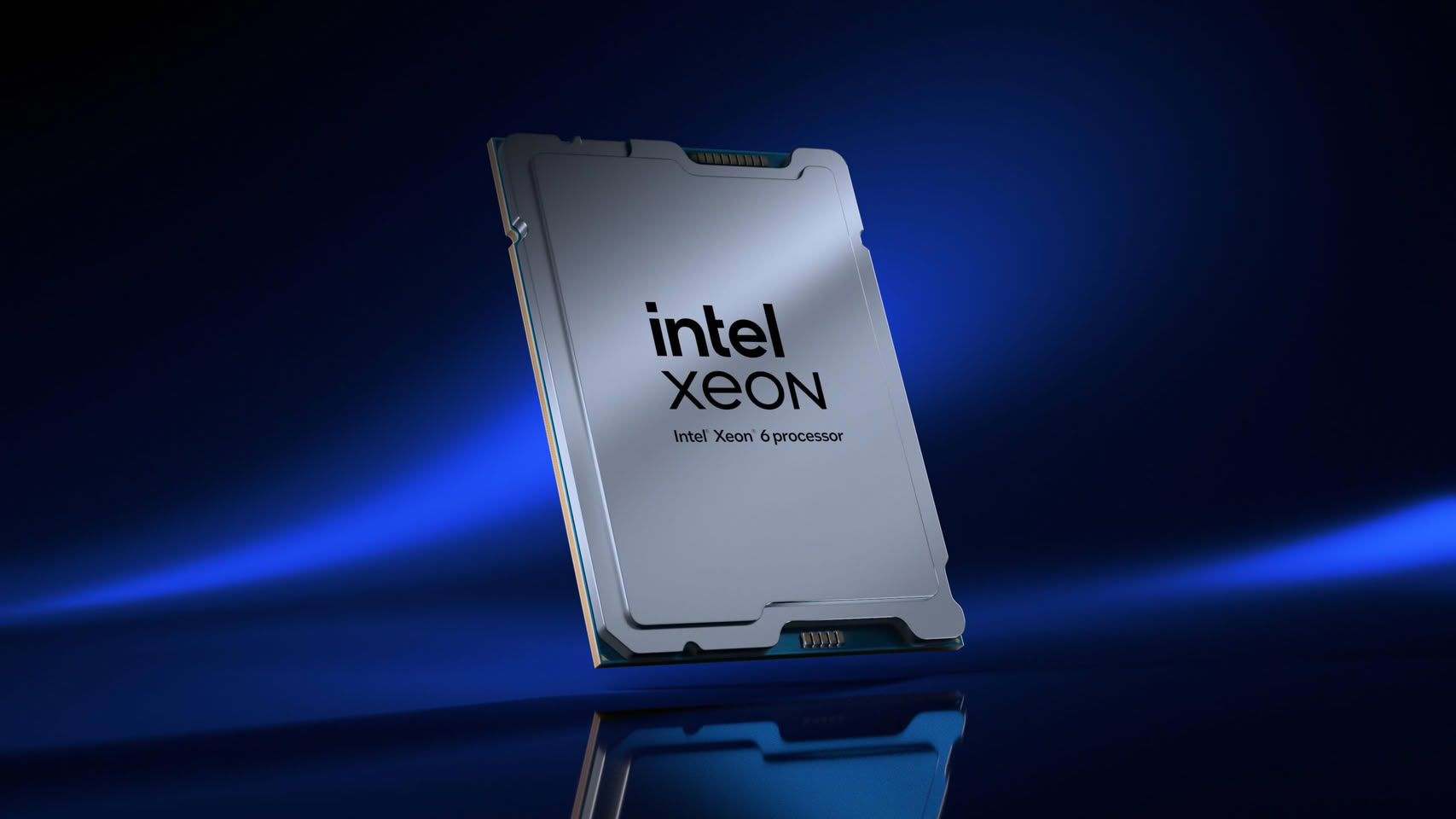
Intel is moving some manufacturing capacity away from consumer chips to keep up with demand for its Xeon server processors. During its Q3 2026 earnings call, the company said it will convert some Intel 18A resources at its Oregon facilities to Intel 3, the node behind Xeon 6 "Granite Rapids." According to CFO Dave Zinsner, those 18A wafers "are generally going to build Panther Lake products." Zinsner also indicated that weaker PC demand gives Intel room to make the switch, as the company expects the PC slowdown to last at least through the first half of next year. CEO Lip-Bu Tan said the added Intel 3 capacity should be in production in the second half of 2027.
Intel CEO Lip-Bu TanThe industry continues to navigate one of the most significant supply shortages in the history, driven by the unprecedented demand for Super Intelligence. Against this backdrop, I am pleased by the progress we made growing our server supply in Q3. I'm mindful about the ongoing challenges we face in the future quarters to keep pace with the server demand.

OpenAI CEO Argues Home PCs Waste the World's Limited DRAM Supply

OpenAI CEO Sam Altman thinks the DRAM sitting inside personal computers would be better used in data centers. He made the comments on the Cheeky Pint podcast, hosted by Stripe co-founder John Collison, in an episode released on October 29. The two were discussing the memory supply chain when the topic turned to local inference, meaning running AI models on your own hardware instead of the cloud. Here's what Altman said, at roughly the 29-minute mark:
Sam Altman, OpenAI CEOA lot of people want local inference. And somehow, they assume that the problem is solved now. Because, we are going to have open-source models. We're going to be able to run them on our computers. And so we're not going to need all the stuff in the data center. But from a global allocation perspective, actually, it's quite terrible to have everybody have a bunch of the world's limited supply of DRAM sitting in their own computer. And, being used 5% of the time. You want maximum utilization in the cloud if you're trying to deal with this very supply constrained environment. And somehow everyone's... many people's intuition is the opposite of that.

RTX 5080 Vanishes From NVIDIA's US Marketplace Two Weeks After the RTX 5090

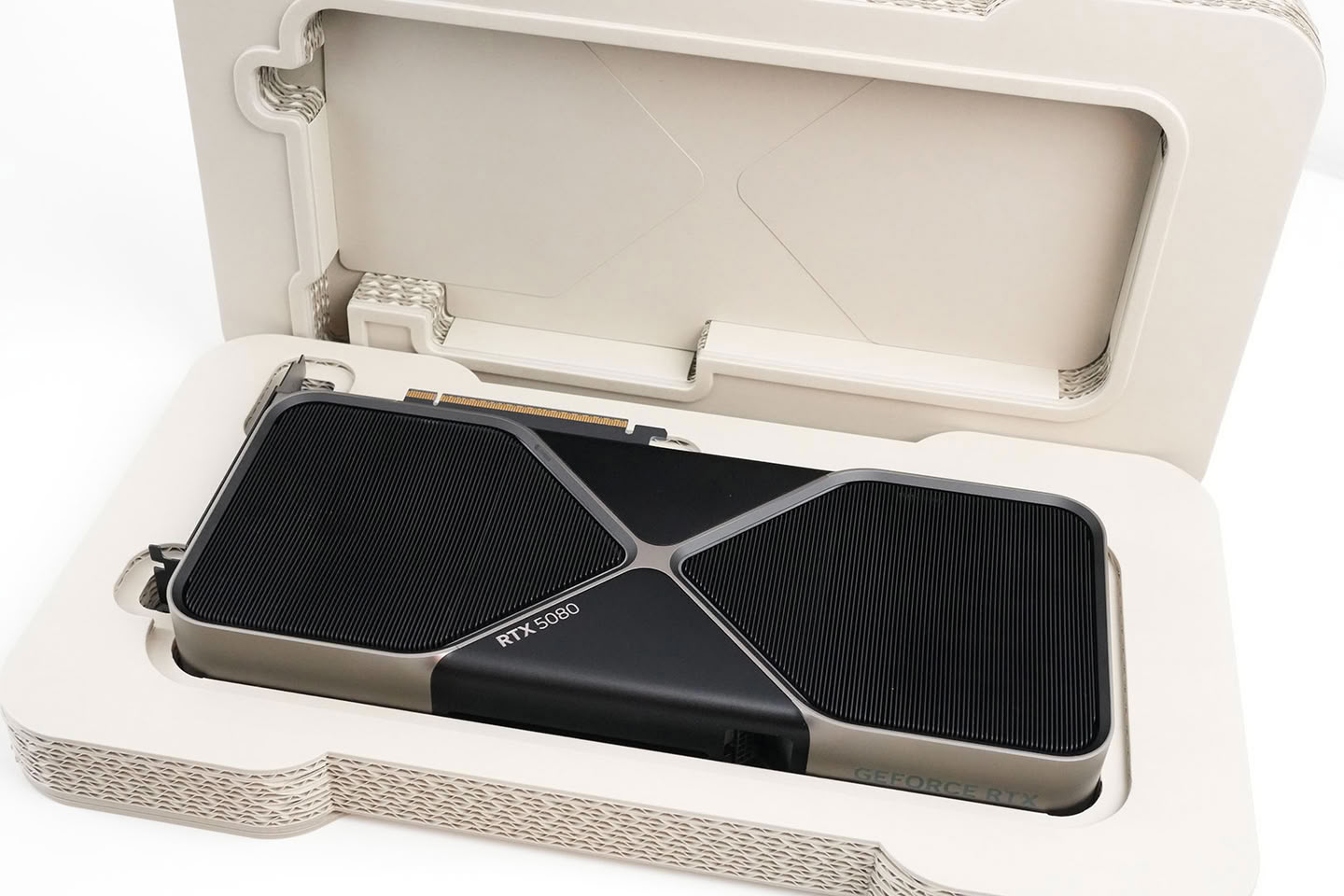
NVIDIA's US Marketplace no longer lists the GeForce RTX 5080. The GPU filter on the store's graphics card page now tops out at the RTX 5070 Ti, followed by the RTX 5070, RTX 5060 Ti, RTX 5060, and RTX 5050, with partner RTX 5080 models gone as well. The same thing happened to the RTX 5090 about two weeks ago and, barring a brief cameo at $5,599, the card still hasn't returned. NVIDIA has since denied that the RTX 5090 is discontinued, though it hasn't said anything about the RTX 5080 yet. Oddly enough, its RTX 5080 product page still says "Starting at $999."

The removal seems limited to the US for now. NVIDIA's UK Marketplace still has 13 RTX 5080 listings and two RTX 5090 cards. Of course, a missing listing could simply mean there's no stock left, since the RTX 5080 already costs close to $2,000 at US retailers, roughly double its MSRP. That leaves the RTX 5070 Ti as the fastest card on NVIDIA's US store, and it isn't cheap either. The seven listings there range from $1,269.99 to $1,499.99, well above its $749 launch price.

Motherboard and GPU Prices Could Rise Further as PCB Shortages Extend to 2030

Printed circuit boards (PCBs) are the foundation of every PC component, as they mount everything and connect the entire system using electrical components, wiring, and more. However, we are about to enter another phase of consumer electronics price hikes, as these PCBs are now experiencing severe component shortages projected to last until 2030. According to Nikkei Asia, an unnamed executive from an American PC maker told the publication that PCB manufacturers are confirming this situation, with some predicting that orders placed today may not be fulfilled until late 2028.
American PC Maker for Nikkei AsiaEven though PC shipments could decline again next year, we are still struggling to secure enough PCB supplies to meet our needs.

TSMC Could Charge Up to 20% More for CoWoS Packaging Amid AI Crunch

TSMC is reportedly considering raising prices for its CoWoS (Chip on Wafer on Substrate) advanced packaging by as much as 20%, according to supply chain sources cited by Taiwan's Commercial Times. Foundries and outsourced packaging firms are apparently weighing another round of 10% to 20% increases, as CoWoS demand has spread beyond AI GPUs to server CPUs and custom ASICs, leaving a growing backlog of unfilled orders. TSMC hasn't confirmed anything yet.

Testing is turning into a bottleneck of its own. Nomura estimates, via Seoul Economic Daily, that NVIDIA's Blackwell takes roughly four times longer than Hopper in final testing, while Rubin could need seven times as long. Packages keep growing too, with TSMC already mass producing CoWoS-L at 5.5 times the reticle limit. Tool lead times have reportedly stretched from three to six months to as long as eight months. TSMC, which usually negotiates for discounts or extra features, apparently placed this year's equipment orders at existing prices instead, which says a lot about how tight things are.

Targus Introduces DOCK402 USB-C Alt. Mode Mobile Dock with Built-In 140 W Charger

Targus, a global leader in laptop cases and mobile computing accessories and the number one third-party docking station brand in the U.S., today launched the USB-C Alt. Mode Single Video 8K Mobile Dock with Built-In GaN Charger (DOCK402TT). Designed for portable power and connectivity, the new dock combines laptop power, display output, peripheral connections, and wired networking in one travel-ready, sustainable design.
David Dorantes, Director of Product Marketing, Targus"Mobile professionals shouldn't have to carry a separate dock and charger to stay productive when they are away from their usual workspace. DOCK402TT combines both in one travel-ready device, delivering the power and connectivity they need with less gear to pack, carry, and manage."

GeForce Unlocked: Modders Boost RTX 20, RTX 30, and RTX 40 Compute Performance by Up to 2x

NVIDIA's GeForce RTX 30-series and RTX 40-series graphics cards are based on the same dies as their professional-grade GPUs. This means the compute potential of consumer-oriented RTX GPUs is restricted by NVIDIA's firmware stack, but modders have managed to unlock the instruction issuing rate equivalent to their professional GPU counterparts. Starting with the GeForce RTX 30-series "Ampere," a researcher developed an unlock that effectively doubles the instruction issuing speed of FP/BF16 FMA into FP32 operations on GA102, GA103, GA104, and GA106 cards. As a result, cards like the GeForce RTX 3090 Ti experience up to 80% faster matrix multiplication in BF16, which is crucial for running nearly all neural networks. The unlock supports GA102, GA103, GA104, and GA106-based GeForce RTX graphics cards.

Next, we have the GeForce RTX 40-series "Ada Lovelace" with another project that has demonstrated a massive 2× speedup in FP16 and BF16 tensor throughput with FP32 accumulation. When the GeForce RTX 4090 was tested with FP16 tensor throughput and matrix accumulation, the GPU achieved 165.6 TeraFLOPS, while the unlock pushed that number to 331.6 TeraFLOPS. This is intriguing as these computational performance numbers are typically reserved for the higher-end professional segment like the NVIDIA RTX 6000 "Ada Lovelace." It seems NVIDIA artificially limited the AD102 silicon's performance in compute-sensitive matrix multiplication and accumulation, affecting the performance of running large language models. For this unlock, AD102, AD103, and AD106 are officially unlocked.

YouTube Sets Early 2027 Target for AV2 Streams on the Web

The Alliance for Open Media (AOMedia) shared an update on AV2 this week, and the clearest date in it comes from YouTube. Des Keane, Engineering Director at YouTube, confirmed the platform will begin streaming in AV2, which is the royalty-free successor to AV1 that AOMedia says offers roughly 30% better compression. In practice, that means either sharper video at the same bitrate or the same quality using less bandwidth, and the codec also adds support for multi-stream and multi-view video, higher frame rates, and improved HDR. Keane put it plainly: "YouTube AV2 streams will be available for Web as soon as early 2027."

Chrome is the other half. Jim Bankoski, VP of Engineering for Google Chrome, said AV2 playback has been demonstrated in the browser, though Google hasn't said which Chrome version will get it or whether it will be on by default. That demo dates back to CES 2026, where Google streamed AV2 videos from YouTube to a gaming laptop at 1080p and 24 FPS using a custom Chrome build with the reference decoder. Netflix and Prime Video are also exploring the format, but neither has shared a timeline. Meta wants to repeat its AV1 rollout with AV2, and Intel is working on SVT-AV2.

ASUS Gaming Laptop Returns from RMA with Mysterious RAM Shortage

Given ASUS's recent history with warranty repairs, it's likely unsurprising to some to learn that the company has been embroiled in yet another RMA drama. This time, a Reddit user who goes by u/Thriceinabluemoon posted in r/ASUS about their experience sending a 2023 ASUS Zerphyrus G14 in for repair under an extended warranty and receiving the laptop back without its 16 GB SODIMM RAM stick. While this in itself would be a frustration, ASUS customer support in the Netherlands, where the laptop and extended warranty were purchased and serviced, "won't even recognize that the additional RAM came with the product," never mind correcting the issue.

The redditor explains in the comment thread on the original post that the laptop was purchased with 32 GB of RAM—16 GB soldered and 16 GB installed in a SODIMM slot—and it's that same SODIMM stick it was purchased with that has gone missing during the repair process. They have since contacted ASUS, providing the receipt as evidence that the laptop was purchased with 32 GB of RAM pre-installed and have yet to hear back from support with a resolution.

Dell CEO Says the Memory Shortage Will Get Worse in 2027

Michael Dell doesn't think the memory shortage is anywhere near over. Speaking with The Wall Street Journal, Dell's chairman and CEO said things will get worse next year, as the AI data center buildout keeps soaking up DRAM and HBM supply. According to him, the bottleneck for Dell isn't demand, since the company is sitting on roughly $95 billion worth of AI server orders it hasn't delivered yet, the largest backlog in its history. Memory is what's holding those shipments back, as AI accelerators need plenty of HBM, while the servers around them still rely on conventional DRAM.

Relief also looks quite far away. New memory fabs take around four years to build, so Dell apparently doesn't expect meaningful new supply until 2029 or 2030. That aligns with Micron's CEO, who recently said supply will be much tighter in 2027 and 2028 than it is this year. Interestingly, SK hynix's CEO said something similar, expecting the memory shortage to last through 2030. Dell is reportedly coping by buying DRAM only when final assembly is close and by locking in long-term supply agreements, though there's no word on how much of that applies to its consumer products.

Rep. Ritchie Torres Wants Gamers to Own the Games They Buy, Announces Power To The Players Act

U.S. Representative Ritchie Torres (D-NY) has announced plans to introduce the "Power To The Players Act," a federal bill that would direct the FTC to write rules making a game purchase actual ownership rather than a revocable license. Games that rely on online servers would also need to offer an offline mode before those servers are switched off, and players would keep the right to transfer the games they buy. The bill hasn't been formally introduced yet, so there's no bill text, and Torres hasn't confirmed any cosponsors. Torres pointed to NBA 2K25 as the example. The game sold for $69.99, or $99.99 for the All-Star Edition, and it leaves digital storefronts on October 30, with online servers shutting down at the end of the year, roughly two years after launch. Here's how Torres put it:
When you pay for a game, you should own it. Consumers must have the right to own, the right to play, and the right to transfer the games they buy. A game that can be taken away the moment a company pulls the plug is not a purchase. It is a rental disguised as a sale. Families in the Bronx and across the country save up to buy these games, and they deserve better than a license that can vanish at any time. The Power To The Players Act ensures consumers own what they buy and can keep playing long after a company moves on.

ASUS Makes Its First Intel Arc Card, a 32 GB Arc Pro B70 Under the UGen AI Brand

ASUS has listed the UGen Arc Pro B70 32 GB on its website, which makes it the company's first Intel Arc graphics card. ASUS sat out both the Alchemist and Battlemage consumer generations, and its last Intel discrete card was the passively cooled Iris Xe DG1-4G from 2021. Interestingly, ASUS files it under its UGen AI accelerator lineup rather than ProArt, putting it in the same family as the UGen300 USB AI accelerator the company showed at CES 2026. ASUS hasn't announced pricing or a release date yet. Intel launched the Arc Pro B70 at $949 back in March, though US retail listings now seem to sit closer to $1,300.

The ASUS card uses the full "Big Battlemage" BMG-G31 die with 32 Xe2 cores, 256 XMX engines, and 32 GB of GDDR6 ECC memory on a 256-bit bus for 608 GB/s of bandwidth. ASUS rates it at a 2,800 MHz boost clock, up to 367 INT8 TOPS, and a 290 W board power, which is the top of Intel's 160 to 290 W range for the B70 (the reference default is 230 W). Cooling comes from a dual-slot blower, and ASUS says four cards can be paired for 128 GB of combined VRAM, enough for models with up to 120 billion parameters according to the company. ASUS also joins ASRock, Sparkle, and Maxsun, which already have their own B70 models, so pricing will likely decide how well the UGen version does.

Update Oct 27th: ASUS has confirmed European pricing for its UGen Arc Pro B70 card. It is available in Germany and Austria at a recommended price of €1,799 including VAT.

Sandisk Releases SANDISK Guardian Memory Cards Series

Sandisk today announced the SANDISK Guardian Series, a new portfolio of high-endurance storage solutions engineered for the always-on cameras and systems consumers rely on to record and monitor important moments. Designed for use with compatible home security cameras, dash cams and built-in monitoring systems, SANDISK Guardian Series enables continuous recording with the durability to withstand harsh environmental conditions, and the continuous overwriting cameras require.

As cameras become increasingly central to monitoring homes, families, vehicles and personal property, consumers need storage that can withstand the demands of 24/7 recording to help support recorded footage availability when they need it. The SANDISK Guardian Series was developed to support those needs with high-endurance storage solutions designed for continuous operation, broad compatibility and dependable local recording.

TCL Showcases 5G AI CPE X5 at Network X 2026

TCL, a global leader in consumer electronics, showcases its flagship 5G AI CPE X5 at Network X 2026. Positioned as a comprehensive agentic AI 5G CPE, X5 features natural-language interaction, AI network optimization, application-aware QoS, proactive diagnosis and self-recovery, and an extensible AI service platform—making connectivity more reliable and effortless for households while helping reduce operators' O&M workload.

The X5 is designed for homes and small businesses seeking a premium broadband experience, from remote work and gaming to smart-home connectivity. Recently, it was named a 2026 IFA Innovation Award Honoree.

Steam Beta Update Automatically Sets Non-Steam Windows Apps To Launch Under Proton

Seemingly as part of the ongoing efforts to streamline and polish Steam and SteamOS, Valve has published a new beta update for the Steam client that fixes a handful of issues with the library, Steam Input, the Steam Controller's BLE mode, and Big Picture mode. More notably, with this update, Steam clients installed on Linux machines will automatically set Windows programs added to Steam as non-Steam games to launch via Proton by default.

This change only removes one step in the installation process, but it may help shift the compatibility burden away from the consumer, since they would only have to go digging for the compatibility options if the program doesn't initially launch. This simplification seems to be part of Valve's strategy to bring in more users and more or less goes hand-in-hand with recent changes that give developers more tools to optimize their games for Valve's hardware and SteamOS—again, taking some of the fiddliness out of running Linux and SteamOS by placing optimization in the hands of developers. The full update notes follow.

Xbox Helix Will Be "a Great Console First" With Portable Play in Mind, Says CEO

Xbox CEO Asha Sharma has reportedly told staff that the next-generation "Project Helix" hardware will lead with a home console, with portable play apparently coming as part of the same lineup. The remarks come from an internal town hall, and Windows Central says it obtained and verified a transcript. Helix was already known to be a "family of devices" instead of a single box, but this is the clearest hint so far about what else is in that family. Here's what she said:
We are moving to a family of devices for Gen-10. There is not one device that fits all. We will certainly have a great console first, but we also know that many players will be on the go. There are some things that we are the best in the world to manufacture, and there are other things that we will partner on. So, we will be sharing more about that as our plans develop. The operating system is starting to look really good. We're very excited about this.

AMD CEO Lisa Su Says 2027 Will Bring a "Substantial" Supply Increase

AMD will "substantially" increase its chip supply in 2027, CEO Lisa Su told reporters in Taipei on Tuesday, while admitting that demand is still running ahead of what the company can ship. Su is on her third trip to Taiwan this year, meeting partners such as Foxconn, Quanta, Acer, and ASUS, with TSMC also on the schedule. She is reportedly heading to South Korea later this week to sit down with memory suppliers Samsung and SK Hynix. Here's what she said:
We've been able to increase our supply as we've gone through 2026, and we're going to substantially increase our supply in 2027, but we can definitely use more. There's very, very high demand for the next several years. We can see very high demand, and so we need more advanced wafer capacity.

Chinese NAND Maker YMTC Reportedly Expects Memory Shortage to Last Another Three Years

Chinese NAND flash maker YMTC apparently expects the global memory shortage to last another three years. The claim comes from a profile of the company published by The Wire China, in which a YMTC employee, speaking anonymously, shared the outlook. The same employee said YMTC has raised prices for its chips and shifted capacity toward higher-margin products. The excerpt was shared on X by @jukan05, who read it as a NAND forecast, although the employee's wording covers memory in general. Three more years would put the end of the shortage somewhere around late 2029. This is one unnamed employee's words, of course, and not public guidance from YMTC.

That 2029 prediction is well past TrendForce's estimate, which has NAND flash supply loosening in the second half of 2027 as new capacity comes online. It sits closer to Micron's view, with CEO Sanjay Mehrotra saying last week that supply will be much tighter in 2027 and 2028. The shift in capacity matters too, especially for regular PC builders. Counterpoint Research ranked YMTC fourth in NAND bit shipments in Q2 with a 14% share, yet only fifth in revenue, since its product mix leans toward consumer applications. Moving capacity to higher-margin chips could leave less for consumer SSDs, even as YMTC works to double its wafer output with new fabs. Nevertheless, readers planning a storage upgrade shouldn't count on prices dropping anytime soon.
Return to Keyword Browsing
Nov 11th, 2026 03:12 CST change timezone

New Forum Posts

Popular Reviews

TPU on YouTube

Controversial News Posts