Monday, September 28th 2026

Former EVGA Product Manager Recounts NVIDIA FE Squeeze and Leaker Witch Hunts

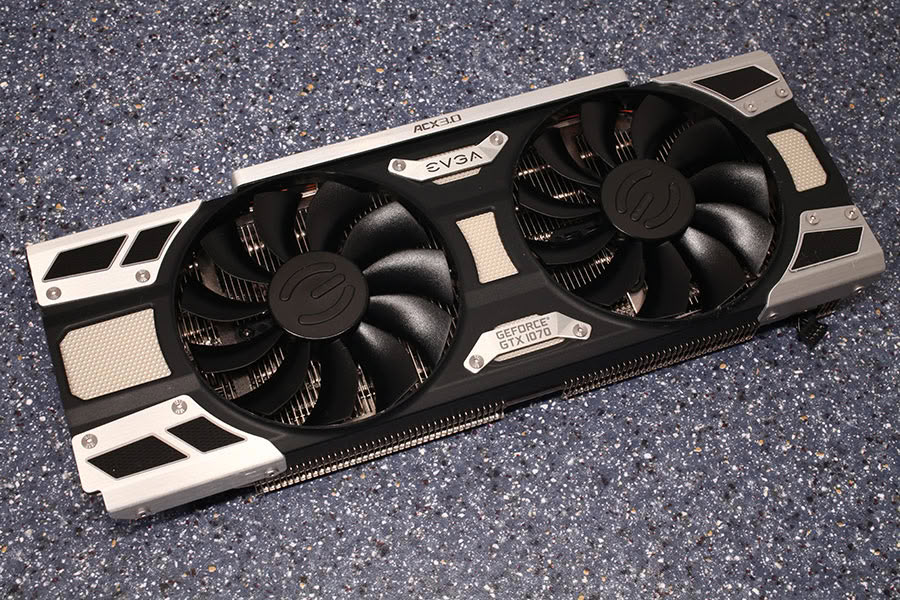
When it was first revealed that EVGA would be leaving the GPU industry, there was speculation that the hardware maker was leaving the industry partly due to direct competition from NVIDIA's own Founder's Edition cards—reference designs that were previously under the purview of EVGA at launch. In a new blog post on his personal blog, former EVGA Product Manager, Brendon Ray Hedrick, confirmed in a recent blog post that these concerns were real, and that they were felt inside EVGA when NVIDIA started selling its own Founder's Edition GPUs more prominently around the launch of the Pascal generation.
When NVIDIA introduced the Pascal Founders Edition cards in 2016, I remember people at EVGA worrying about what that meant for us. We were used to selling NVIDIA's reference designs with our name on them. NVIDIA had sold its own cards before, but this was when the tension became clear to me: the company supplying our GPUs was also making a prominent pitch to sell finished cards directly to our customers. At that launch, the GTX 1080 Founders Edition carried a premium over the announced starting price for partner cards. The concern was the relationship itself. We depended on NVIDIA while competing with it for the same buyers.
He goes on to talk about how NVIDIA kept things close to the chest when it came to product specifications, often revealing GPU specs to customers the same day it had to board partners, like EVGA. He adds that NVIDIA took leaks very seriously and, around the time of the launch of RTX and Ray Tracing, came up with the strategy of marking images sent to retailers in order to root out leakers.
Jacob Freeman came up with the idea of sending each online retailer a set of product images with a different colored dot in a corner. If an image leaked and NVIDIA came back to us, we could identify which retailer had originally received that image set.
Talking about GPU pricing and margins, he recounts that GPU margins were so slim that, in order to sell GPUs at NVIDIA's MSRP—which the company had to do, or else it would lose GPU allocation from NVIDIA, it would have to sell certain models at a loss. The models EVGA made profit on were those that featured high-end cooling solutions and more robust PCB and power designs, but they came at a much higher cost, which was prohibitive to many consumers. Effectively, it seems as though, in order to make up for the losses on those cheaper cards, EVGA had to price the more premium cards even higher than the BOM, development, and logistics costs would otherwise require, making those GPUs even more expensive than they were meant to be.
There was another part of that price that made the situation harder for EVGA. As I understood the arrangement, we were required to offer a model at NVIDIA's advertised starting price. If we did not, NVIDIA could reduce our allocation of GPUs, and it could be difficult to tell whether a reduction was a response to our pricing. We needed to keep a loss leader—a card we sold at a loss—to keep NVIDIA happy and protect our access to the chips.

The models on which we did not lose money had better circuit boards and cooling of our own, but they also carried a substantial premium. To a customer comparing them with the advertised starting price, it could look as though EVGA was charging an enormous amount just for those additions. The loss leader set the expectation; the cards with room for us to make money had to justify the gap.
He also explains how it seems as though NVIDIA was eroding the position of some of those more expensive EVGA designs, by introducing features like GPU Boost 3.0, while simultaneously limiting what could be achieved with overclocking on standard cooling setups, and effectively making it so that the custom PCB work EVGA put into its cards was no longer generating the same benefit for its customers.
Over successive generations, I had watched NVIDIA refine its reference board designs and the way its GPUs managed their clock speeds. Technologies such as GPU Boost automatically adjusted clocks within power and temperature limits. From where I sat, extra spending on custom circuitry and cooling was no longer buying the kind of everyday performance advantage that overclocking had once made possible.

The better hardware still took work to design and build. But we were asking customers to pay a significant premium for our choice of components when the improvement they could expect in their games was often marginal. It was an increasingly difficult proposition to sell.
Source: Brendon Ray Hedrick
Add your own comment

74 Comments on Former EVGA Product Manager Recounts NVIDIA FE Squeeze and Leaker Witch Hunts

#51
Bobaganoosh
HxxI personally respect that. Nothing is more valuable that family time no matter how successful one is . But even without that, if it’s your business then you get to do what you want with it and no one should judge you. I think the reason this keeps being brought up ( which is - why didn’t they continue why this why that) is because EVGA made it seem like losing nvidia triggered the cashing out and winding down which is clearly not true . In reality EVGA cashed out because they chose to not because of nvidia.
From what information they've put out and the fact that they still exist (to some extent) makes it seem like both are true. The guy wanted to wind down, but didn't want to fully close shop immediately. He just seems like he wanted to keep the "simpler" business and it was becoming much too difficult to keep working with Nvidia. So in his opinion, the answer was to drop from the video card market altogether as that "maintained their honor" that they had always been an Nvidia GPU maker and even with the problems he maintained what he felt was a personal relationship with Jensen.

It sounded like there were people internally that offered to take over the business and keep making graphics cards, but the owner didn't want to. He seems like he didn't want to risk the brand turning into anything other than the vision he had for it. So when Nvidia made making graphics cards too hard and too unprofitable, they just pulled back and stuck to basically power supplies and a couple other odds and ends they sell via Amazon now (their direct sales via their own website have halted). So yes, they chose to wind down. They also picked the time to wind down and how hard they did it because of issues with Nvidia that were getting worse. To say "they only wound down because of Nvidia" is wrong.

As to some other comments about mismanagement, I think there's some validity to that, but it depends on who you ask. There were reviews on glassdoor (and others possibly) from current and former employees over the years indicating that the owner was someone who had clear favorites, micro-managed everything, and wasn't afraid of firing a whole group of people and hiring new ones if he didn't like how product lines were being handled (that last part was echoed in one of Jayz2cents's videos). So he sounds like unless you're one of his favorites, he was very difficult to work for. I think that happens a lot in privately owned companies with a heavily involved and opinionated owner. I have no desire to try and argue which parts of their history of decisions or products I agree with or disagree with, but it all comes down to there being ultimately one guy in charge there and he was heavily involved in everything so when he decided he needed the business to be easier to run...he just started cutting things, starting with their largest and most difficult business unit.
Posted on Reply
#52
MTS-C
Not a single AIB partner honors the MSRP, so that's a shit excuse.
Posted on Reply
#53
evernessince
FreedomEclipseYeah. The UK got boned pretty hard on warranty:


Only EVGA offered it but then you paid for it.
That is some BS, UK got the short end of the stick.
Posted on Reply
#54
Crackong
chrcolukAlso that the build quality of the FE of that 3080 is better than any AIB I have ever purchased. The AIB that came the closest but still a way off was Palit.
Since only (1 profit to NVIDIA) has to be made for selling a FE card vs (1 profit to NVIDIA + 1 profit to AIB + 1 profit of reseller) have to be made for selling an AIB card.
And there are policies to force AIB partners to produce certain amount of MSRP cards at launch.

Therefore,
It is natural for FE cards to be built better than the AIB MSRP cards.
Same price, less cost.
And the AIB partners are forced to built these non-profitable MSRP cards,

Nvidia's corporate gross margins was 70%.
For a 5090 at $1999 MSRP, it means roughly a $1200 cost for NVIDIA to make the card.
Then, roughly 80% of the cost are the GPU and VRAM, so $960 , and $240 for the rest

In AIB 's side.
NVIDIA first charge GPU and VRAM with profits, and shipping, that means $1632, let's say $1650 with shipping.
Then AIB partner added their $240 for the cost of other things,
All it comes to $1890
Then add the single digit margin reported by multiple AIB partners, let say 9% at best
The final cost of the AIB 5090 is $2060.

And then the resellers have to profit, let say 10%
Now the price goes to $2266.

And guess what happens for those "AIB MSRP models" ?
$1999 - 2266 = - 267.

By doing it's own FE cards and forcing predatory policies to the AIB partners.
Nvidia effectively making their "Partners" the stepping stones to show "How great the FE cards are".
And the most amazing thing is,
They don't even need to pay the stepping stones, the stepping stones pay them.

Posted on Reply
#55
DeathtoGnomes
JustBenchingSource?
common knowledge but it also been mentioned in the thread a couple times if you actually read anything.
Hecate91XFX stopped making Nvidia cards in 2010, I can only assume the situation for partner brands is different now with lower margins and trying to compete against FE cards while at the same time being restricted on overclocking and board design.
Nv had a program, forget the name of it, trying to force all of its AIB partners to sell only Nv cards, XFX refused and was one of few companies forced out and "sort of" blacklist from selling NV cards.
chrcolukabsolutely correct decision to retail themselves
I wholeheartedly disagree with this, it did more damage than good for AIB partners.
Posted on Reply
#56
JustBenching
DeathtoGnomescommon knowledge but it also been mentioned in the thread a couple times if you actually read anything.
Random people here saying it isn't evidence man.
Posted on Reply
#57
chrcoluk
CrackongSince only (1 profit to NVIDIA) has to be made for selling a FE card vs (1 profit to NVIDIA + 1 profit to AIB + 1 profit of reseller) have to be made for selling an AIB card.
And there are policies to force AIB partners to produce certain amount of MSRP cards at launch.

Therefore,
It is natural for FE cards to be built better than the AIB MSRP cards.
Same price, less cost.
And the AIB partners are forced to built these non-profitable MSRP cards,

Nvidia's corporate gross margins was 70%.
For a 5090 at $1999 MSRP, it means roughly a $1200 cost for NVIDIA to make the card.
Then, roughly 80% of the cost are the GPU and VRAM, so $960 , and $240 for the rest

In AIB 's side.
NVIDIA first charge GPU and VRAM with profits, and shipping, that means $1632, let's say $1650 with shipping.
Then AIB partner added their $240 for the cost of other things,
All it comes to $1890
Then add the single digit margin reported by multiple AIB partners, let say 9% at best
The final cost of the AIB 5090 is $2060.

And then the resellers have to profit, let say 10%
Now the price goes to $2266.

And guess what happens for those "AIB MSRP models" ?
$1999 - 2266 = - 267.

By doing it's own FE cards and forcing predatory policies to the AIB partners.
Nvidia effectively making their "Partners" the stepping stones to show "How great the FE cards are".
And the most amazing thing is,
They don't even need to pay the stepping stones, the stepping stones pay them.

You want me to cry for AIB's that sell cards for double MSRP with low quality build, sorry wont be doing that.

Final cost of AIB 5090 on your not backed up figures $2266, cost to buy a 5090?

Gigabyte £4499
ASUS £4619
MSI £4998.99

We do both agree cutting AIB out of the loop is better for consumer it seems, given your explanation as to how Nvidia improved the quality, although your explanation is wrong, there is still a retailer who has their margins selling the FE in the UK. Scan the official retailer do make a profit on the FE.
DeathtoGnomescommon knowledge but it also been mentioned in the thread a couple times if you actually read anything.


Nv had a program, forget the name of it, trying to force all of its AIB partners to sell only Nv cards, XFX refused and was one of few companies forced out and "sort of" blacklist from selling NV cards.


I wholeheartedly disagree with this, it did more damage than good for AIB partners.
I dont care for AIB partners, I am not a shareholder, I do care for consumers though. Did you read my post about the behaviour of the AIB partners during ampere, absolutely disgusting from all of them.
Worth noting FE is not usually stocked so highly or sell in such big numbers, they were increased significantly as a response from AIB failing to supply the intended market, and resell price abuse. The AIB's were so bad, Nvidia had to halve the hash rate on all AIB chips (note FE was unaffected).
Posted on Reply
#58
Crackong
chrcolukGigabyte £4499
ASUS £4619
MSI £4998.99
I see .
You clearly don't get the memo that EVGA went out of GPU business BEFORE the AI bloom.
Posted on Reply
#59
Dr. Dro
I have zero pity for this company and its (mis)management. The honest truth is that they let the business go - the enshittification of power supplies, giving up on peripherals and gear such as its excellent audio card and former network cards, etc. - and none of this can be attributed to the spat between Andrew Han and Jensen Huang.

EVGA could have done so much more, and could be more than just a corpse that processes RMAs here and there. It's for that reason that I couldn't care less about this company's fate, business is cut-throat and if you can't keep up, you're going to be swallowed whole by the competition.
Posted on Reply
#60
chrcoluk
CrackongI see .
You clearly don't get the memo that EVGA went out of GPU business BEFORE the AI bloom.
Are you an EVGA shill? you just making stuff up now. My comments about EVGA re related to their behaviour in the Ampere era, that is before the AI boom.

I wont miss them.
Posted on Reply
#61
Crackong
chrcolukAre you an EVGA shill? you just making stuff up now. My comments about EVGA re related to their behaviour in the Ampere era, that is before the AI boom.

I wont miss them.
I am not a EVGA shill.
But you clearly lost every context in this thread and mixed up many conditions in many eras to make up your arguments.

While this is an EVGA thread, ofc we are talking about conditions before EVGA went down in GPU business.
Yet you used current market prices for your arguments, which is, ofc out of context and provides no meaningful arguments .

Then
You quickly went into pointing fingers to mark someone as a shill.
This is a typical behaviour when someone ran out of any contructive criticisms
And the only thing they can do is making rootless accusation, throwing big words with no meaning other than stereotypes.

If you really want to argue on the predatory policies I pointed out in #55
You should start looking at the sales numbers and finacial reports in the 10, 20 and 30 series era.
Which EVGA was still around.
And make up your arguments from actual numbers, not pointing fingers.

Posted on Reply
#62
Dr. Dro
No use shilling a corpse of a company anyways. I liked EVGA's products, I was fond of their high-end video cards like the Classy and KPEs, their earlier PSU models that were flawless and especially of their audio card. But everything that transpired with EVGA is exactly how NOT to run a business. Towards the end, the only thing this company was doing was peddle second rate products like the N1 and W power supplies and hiding the fact they were actively hazardous garbage backed by a promise of "legendary RMA", which at least to their credit, were kept.

At the end of the day, everything EVGA did, other companies could and can do as well. ASUS proved with their Astral cards this generation that they can make something that owes nothing to an EVGA Classified. MSI, with the Lightning Z, proved they could build a card that rivaled the KPE. Palit has been doing it for ages with the Galax HOF and OC Lab series. When I needed a new PSU, with EVGA's units all but gone, I just picked a be quiet. Could've been a Corsair, too. No replacement for my NU Audio? Creative has an AE-9. We'll live.

I do not mourn the passing of EVGA simply because competition is in my interest as a consumer, work your hardest to bring me the very best product for my money. Incompetent companies shouldn't get a handout, and their internal struggles aren't of any concern to us. I don't care if it was hard to price match. I don't care if you see Nvidia as a threat. You adapt. You branch out. You go against the grain, do like XFX and become an AMD AIB if you have to. Burn bridges if you must! They had this leverage. I strongly believe the CEO just gave up.

This can sound "cold"? Yeah, perhaps it is. But that's capitalism, and I am very fond of it.
Posted on Reply
#63
DeathtoGnomes
chrcolukThe AIB's were so bad, Nvidia had to halve the hash rate on all AIB chips (note FE was unaffected).
Since your tossing around calling people schills....Are you a Nvidia Schill? or maybe a schill for EVGA?

That move was in response to the bitcoin miners buying up all the GPUs using bots and scammy tricks, Of course Nv did that to AIBs and not themselves, guess who made the big profits at that point? surely not AIBs, they had to scramble to break even on profits. Stop nitpicking facts and tell the whole story to make your point.
JustBenchingRandom people here saying it isn't evidence man.
what people where said that?
DeathtoGnomesNv had a program, forget the name of it, trying to force all of its AIB partners to sell only Nv cards, XFX refused and was one of few companies forced out and "sort of" blacklist from selling NV cards.
a quick search resulted in...
In 2018, NVIDIA launched the GeForce Partner Program (GPP), which required AIB partners to align their primary gaming brands exclusively with NVIDIA, effectively limiting their ability to market AMD products under the same brand. This program faced significant backlash and was canceled shortly after due to concerns about its impact on competition and consumer choice.

essentially a exclusivity contract, note the first bullet point in the following quote.

NVIDIA GeForce Partner Program Overview

In 2018, NVIDIA introduced the GeForce Partner Program (GPP), which aimed to strengthen its relationship with AIB (Add-In Board) partners. The program required these partners to align their primary gaming brands exclusively with NVIDIA. This meant that brands known for gaming products, like ASUS ROG, could only use those names for NVIDIA graphics cards, while AMD products would need to be marketed under different, less recognized brands.

Key Features of the GPP

  • Exclusivity Requirement: AIB partners had to commit to promoting NVIDIA products exclusively under their main gaming brands.
  • Marketing Support: Participants were promised enhanced marketing resources, including co-marketing budgets and bundled game promotions.
  • Access to Resources: Early access to GPUs and closer technical cooperation were offered to partners who joined the program.

Backlash and Cancellation

The GPP faced significant criticism from the PC hardware community. Concerns were raised about its potential to limit competition and consumer choice in the graphics card market. Many viewed the exclusivity requirement as an anti-competitive tactic that could harm AMD's market presence.

Timeline of Events

DateEvent
Early 2018NVIDIA launches the GPP
May 2018Public backlash and concerns arise
May 4, 2018NVIDIA announces the cancellation of GPP

The program was ultimately canceled shortly after its launch due to the negative response and the implications it had for competition in the GPU market.
Posted on Reply
#64
JustBenching
DeathtoGnomesSince your tossing around calling people schills....Are you a Nvidia Schill? or maybe a schill for EVGA?

That move was in response to the bitcoin miners buying up all the GPUs using bots and scammy tricks, Of course Nv did that to AIBs and not themselves, guess who made the big profits at that point? surely not AIBs, they had to scramble to break even on profits. Stop nitpicking facts and tell the whole story to make your point.


a quick search even by the laziest of people.


essentially a exclusivity contract
No, gpp had nothing to do with exclusivity, it was meant to separate the naming schemes the same way it was done mobos. For example Asus crosshair mobos were exclusive to amd and Asus hero was the Intel equivalent.

Asus, gigabyte, asrock, msi make gpus for amd so that contract doesn't seem to affect them.. Lol
Posted on Reply
#65
DeathtoGnomes
JustBenchingNo, gpp had nothing to do with exclusivity, it was meant to separate the naming schemes the same way it was done mobos. For example Asus crosshair mobos were exclusive to amd and Asus hero was the Intel equivalent.

Asus, gigabyte, asrock, msi make gpus for amd so that contract doesn't seem to affect them.. Lol
i edited my post to include the GPP key features that says what GPP is. if you cant see the word "Exclusive" in it, take off your blinders.

I see you are reaching to argue your point, any further responses are futile. Next time do your own searching before trying to call out others.
Posted on Reply
#66
JustBenching
DeathtoGnomesi edited my post to include the GPP key features that says what GPP is. if you cant see the word "Exclusive" in it, take off your blinders.

I see you are reaching to argue your point, any further responses are futile. Next time do your own searching before trying to call out others.
It seems that you can't read. Exclusivity refers to the product name. Ie if you make ASTRAL ROG Nvidia you can't make astral ROG amd cards, you have to use a different name.

Again, hello, you do realize all big brands make gpus for amd as well, right? Like how could you argue this is beyond me.

Just realized your edited post says exactly what I'm saying. Wow dude
Posted on Reply
#67
DeathtoGnomes
JustBenchingIt seems that you can't read. Exclusivity refers to the product name. Ie if you make ASTRAL ROG Nvidia you can't make astral ROG amd cards, you have to use a different name.

Again, hello, you do realize all big brands make gpus for amd as well, right? Like how could you argue this is beyond me.

Just realized your edited post says exactly what I'm saying. Wow dude
obviously you didnt read the key features section where it explains exactly what its definition of Exclusivity means. so please point out the source where it refers to product names. reading comprehension required here.
Posted on Reply
#68
JustBenching
DeathtoGnomesobviously you didnt read the key features section where it explains exactly what its definition of Exclusivity means. so please point out the source where it refers to product names. reading comprehension required here.
It's right there in your post

This meant that brands known for gaming products, like ASUS ROG, could only use those names for NVIDIA graphics cards, while AMD products would need to be marketed under different, less recognized brands

Anyways keep ignoring Asus gigabyte asroxk etc making Gpus for both.
Posted on Reply
#69
the54thvoid
Super Moderator
It is generally accepted that the requirements to join the GPP required non Nvidia cards to remove gaming branding from the other chips cards. So, if a brand had previously used a gaming tag for both AMD and Nvidia cards, they were no longer allowed to use it on the AMD card. It was anti-competitive by way of removing a previous top tier brand from the opponents top card.

It was NOT a sales exclusivity tactic. You could sell AMD and Nvidia, but Nvidia cards kept the more popular gaming branded 'names.'

It was very unpopular and Nvidia shelved it soon after its inception.

@JustBenching @DeathtoGnomes - please stop arguing about it. You're both dancing in circles.
Posted on Reply
#70
chrcoluk
CrackongI am not a EVGA shill.
But you clearly lost every context in this thread and mixed up many conditions in many eras to make up your arguments.

While this is an EVGA thread, ofc we are talking about conditions before EVGA went down in GPU business.
Yet you used current market prices for your arguments, which is, ofc out of context and provides no meaningful arguments .

Then
You quickly went into pointing fingers to mark someone as a shill.
This is a typical behaviour when someone ran out of any contructive criticisms
And the only thing they can do is making rootless accusation, throwing big words with no meaning other than stereotypes.

If you really want to argue on the predatory policies I pointed out in #55
You should start looking at the sales numbers and finacial reports in the 10, 20 and 30 series era.
Which EVGA was still around.
And make up your arguments from actual numbers, not pointing fingers.

Dude, I used current prices to respond to someone else who brought them up. I use the term Shill when someone starts defending a company when is no rationale reason to, and especially when their posts become made up junk. I posted several factual statements.

Looking back it was you that brought up current prices.

So you referenced unsourced 5090 costs, and then told off someone replying to your 5090 post that they shouldnt be talking about current gen.

If we talking about only the conditions prior to EVGA leaving the market, why did you bring up 5090 prices?
DeathtoGnomesSince your tossing around calling people schills....Are you a Nvidia Schill? or maybe a schill for EVGA?
No I dont blindly defend Nvidia, and have criticised them many times on this forum.

EVGA didnt supply the UK during ampere, they heavily supplied mining farms, Nvidia increased UK FE supply during ampere to compensate for lack of AIB supply and unstable AIB pricing, these are all evidenced.
I never disputed that some times AIB might have been forced to sell at a loss (although I dont also blindly believe it), but we cant just pretend AIB's were not making buck.
Posted on Reply
#71
Crackong
chrcolukDude, I used current prices to respond to someone else who brought them up. I use the term Shill when someone starts defending a company when is no rationale reason to, and especially when their posts become made up junk. I posted several factual statements.

Looking back it was you that brought up current prices.

So you referenced unsourced 5090 costs, and then told off someone replying to your 5090 post that they shouldnt be talking about current gen.

If we talking about only the conditions prior to EVGA leaving the market, why did you bring up 5090 prices?
I see.
You are relying on small nitpick trying to mudding the water.

Nvidia did FE cards since the 10 series and the predatory policies progress across 10,20,30,40 and 50 series.
Same logic applies on these 5 generations.
There is no need to list every card models and calculate their relative costs.

It seems you are unable to understand the common logic behind the context.

Just like I said, you ran out of any contructive criticisms.
You reply on nitpicking instead of actual reasoning.

I 'll stop here.
Talking to a wall does not yield anything productive.

Posted on Reply
#72
chrcoluk
CrackongI see.
You are relying on small nitpick trying to mudding the water.
I wouldnt call not supplying a country a small nitpick. You seem to have an unhealthy obsession with Nvidia and EVGA relationship, why does that bother you? The only message I get from your posts is that you have some sour grapes against Nvidia about EVGA leaving the market.
Posted on Reply
#73
Dr. Dro
chrcolukI wouldnt call not supplying a country a small nitpick. You seem to have an unhealthy obsession with Nvidia and EVGA relationship, why does that bother you? The only message I get from your posts is that you have some sour grapes against Nvidia about EVGA leaving the market.
It's not just about any country either, the United Kingdom is a huge market. I get nostalgia is a tough thing to beat. But at the end of the day I think EVGA is the only one to blame for their downfall.
Posted on Reply
#74
SnoutBaron
Oh yeah, I almost forgot. Remember when EVGA lied and stole Unwinder's code from MSI Afterburner/RTSS and tried to pass it off as their own.
Posted on Reply
Add your own comment
Nov 29th, 2026 09:38 CST change timezone

New Forum Posts

Popular Reviews

TPU on YouTube

Controversial News Posts