Thursday, October 22nd 2026

GALAX GeForce RTX 5080 HOF Extreme Comes with Dual 12V-2x6 Power Connectors

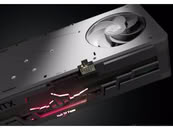
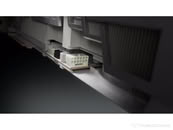
GALAX has unveiled the specifications for its GeForce RTX 5080 Hall Of Fame Extreme edition graphics card, the only RTX 5080 model featuring two 12V-2x6 power connectors. Interestingly, the card has a TGP of 400 W, and the official GALAX announcement states that the two power connectors are not required for simultaneous use. Instead, they are offered as alternatives to suit different PC builds and cable management preferences, so even if both connections are used, only one will be active. One standard connector is located on the top of the GPU, in the usual spot. The second 12V-2x6 power cable is positioned at the bottom of the card, concealed behind a GPU shroud near the PCIe x16 connector. This serves as an alternative power supply, allowing system builders to hide visible cables for a cleaner look.

For the GPU itself, GALAX has implemented a 20-phase power delivery system for the GPU and a 4-phase power delivery design for the GDDR7 memory, along with a digital PWM controller, eFuse, and HOF-branded inductors. All of this is mounted on a customized white PCB with gold plating on key connections. In OC Mode, which raises the TGP to 400 W, the GPU clock speed reaches 2,805 MHz. In regular Gaming Mode, the TGP is reduced to NVIDIA's reference 360 W, with clock speeds at 2,655 MHz. Since the 12V-2x6 connector is sufficient for these TGP designs, a second power source is unnecessary. GDDR7 memory is running at 30 Gbps on a 256-bit memory bus for a total of 960 GB/s memory bandwidth.
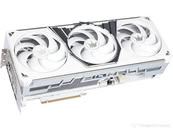
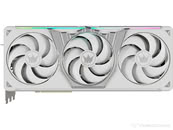
Currently, the GALAX GeForce RTX 5080 Extreme is only available in China, and it's unclear if it will be sold in Western markets. However, the card is likely to attract enthusiasts worldwide, though it is expected to come with a hefty price tag. The current fixed price in China is 19,999 Yuan, which is approximately 2,995 US Dollars at the time of writing.
Source: via VideoCardz
Add your own comment

25 Comments on GALAX GeForce RTX 5080 HOF Extreme Comes with Dual 12V-2x6 Power Connectors

#1
Grimling
Imagine paying 3K USD for a 16 GB Midrange GPU in 2026!
Posted on Reply
#2
RejZoR
GrimlingImagine paying 3K USD for a 16 GB Midrange GPU in 2026!
NVIDIA removed RTX 5090 and slapped its price on RTX 5080...
Posted on Reply
#3
Grimling
RejZoRNVIDIA removed RTX 5090 and slapped its price on RTX 5080...
Actually, the the MSRP for the 5090 is 1999 USD. So this 5080 is 50% more expensive than an 5090s original suggested Price!
You get half the Vram and 69% the performance for 50% higher price that a 5090s MSRP!
Posted on Reply
#4
kazuviking
Still no load balancing, the joke writes itself.
Posted on Reply
#5
Athena
GrimlingActually, the the MSRP for the 5090 is 1999 USD. So this 5080 is 50% more expensive than an 5090s original suggested Price!
You get half the Vram and 69% the performance for 50% higher price that a 5090s MSRP!
...and yet, people will still buy this
Posted on Reply
#6
Chaitanya
GrimlingImagine paying 3K USD for a 16 GB Midrange GPU in 2026!
Even 9070XT has crossed $1000 for most SKUs recently.
Posted on Reply
#7
Vya Domus
I thought the dual connectors was a meme, bruh.
Athena...and yet, people will still buy this
I guess some buy it out of necessity, the thing is so few of these will be produced who cares.
Posted on Reply
#8
neatfeatguy
Card is already discontinued if rumors are true, come this January the 16GB 5080s will no longer be in production!

Get it while you can! FOMO! FOMO! FOMO!
ChaitanyaEven 9070XT has crossed $1000 for most SKUs recently.
About 3 weeks ago the 9070XT were still at the $799 price that most had been for months and months, but just recently they all went up to $899 at my local Micro Center. Guess it depends on where you are. What doesn't make any sense to me is that most of these cards on the shelf were probably there after already being purchased and having a $799 price on them, but now that AMD has increased their prices all the cards that were already paid for before the price increase have magically gone up in price. Same happens for the Nvidia cards too....consumer is the one taking it in the shorts at every possible turn.
Posted on Reply
#9
RejZoR
GrimlingActually, the the MSRP for the 5090 is 1999 USD. So this 5080 is 50% more expensive than an 5090s original suggested Price!
You get half the Vram and 69% the performance for 50% higher price that a 5090s MSRP!
Not to even mentioning MSRP value itself is a total made up bs number...
Posted on Reply
#10
Aquilino
RejZoRNVIDIA removed RTX 5090 and slapped its price on RTX 5080...
3K is not the price of a 5090 almost 2 years after release. That would be 1K tops.
But we live in the moronic timeline and it shows.
Posted on Reply
#11
RejZoR
Aquilino3K is not the price of a 5090 almost 2 years after release. That would be 1K tops.
But we live in the moronic timeline and it shows.
Well, that too. Now old hardware that isn't as performant anymore because more demanding games did show up in between suddenly costs more than it cost on release, 2 years ago. Which is indeed absolutely moronic.
Posted on Reply
#12
MikOnTopGG
GrimlingImagine paying 3K USD for a 16 GB Midrange GPU in 2026!
Uhhhh, the RTX 5080 is not a midrange GPU.
Posted on Reply
#13
SiliconSeraph
Grimling16 GB Midrange GPU
If the 5080 is considered "mid-range", then the 5060 is just a display adapter! :laugh: $3k is absolutely heinous though, given---as you mentioned---its more than the MSRP for a 5090. What a time to be alive.
Posted on Reply
#14
evernessince
MikOnTopGGUhhhh, the RTX 5080 is not a midrange GPU.
66% of flagship performance definitely seems midrange. Resource wise it's half a 5090.

The GTX 970 had more relative performance to the flagship and that GPU had another 20-40% in the tank for OC.

What is the argument for it not being a midrange GPU outside of price?
Posted on Reply
#15
rv8000
GrimlingActually, the the MSRP for the 5090 is 1999 USD. So this 5080 is 50% more expensive than an 5090s original suggested Price!
You get half the Vram and 69% the performance for 50% higher price that a 5090s MSRP!
You forgot the “twice the opportunity to melt itself” feature.
Posted on Reply
#16
evernessince
SiliconSeraphIf the 5080 is considered "mid-range", then the 5060 is just a display adapter! :laugh: $3k is absolutely heinous though, given---as you mentioned---its more than the MSRP for a 5090. What a time to be alive.
This logic cannot be applied across the stack.

The 5080 is unqiuely the weakest xx80 class GPU releative to the flagship Nvidia has ever produced. It doesn't beat the last gen flagship and only beats it's predecessor by 11%.

The 5080 is roughly half a 5090 core and VRAM wise. It's literally the middle. Historically Nvidia's mid-range sits between 50 - 76% of flagship performance. Either way you slice it, it's mid-range.

Mind you, the 5090 has quite a few disabled cores. If you compare the % of disabled cores to the 1080 Ti, it sits between the 5090 and RTX 6000 Pro. The only saving grace is that the die is rather large but even accounting for that it would seem Nvidia simply rebranded xx80 Ti to xx90 and upcharged. The real xx90 class GPU is the RTX 6000 pro but you've got to pay $17,000 - $22,000 for that now.
Posted on Reply
#17
Youseethis
MikOnTopGGUhhhh, the RTX 5080 is not a midrange GPU.
SiliconSeraphIf the 5080 is considered "mid-range", then the 5060 is just a display adapter! :laugh: $3k is absolutely heinous though, given---as you mentioned---its more than the MSRP for a 5090. What a time to be alive.
The only thing that makes it NOT mid range is the name.

64 bit chips were usually display adapters
128 bit were the low end
192 bit *see below
256 bit were mid range
384 bit high end
512 bit rare/enthousiast

Nvidia pulled that trick with the 680,980,1080,2080,4080 and 5080 and amd with the 6000 series.
evernessince66% of flagship performance definitely seems midrange. Resource wise it's half a 5090.

The GTX 970 had more relative performance to the flagship and that GPU had another 20-40% in the tank for OC.

What is the argument for it not being a midrange GPU outside of price?
Not even 66%, it's close to 61% if you push it with RT/PT.
Posted on Reply
#18
SiliconSeraph
YouseethisThe only thing that makes it NOT mid range is the name.
evernessinceThe 5080 is unqiuely the weakest xx80 class GPU releative to the flagship Nvidia has ever produced. It doesn't beat the last gen flagship and only beats it's predecessor by 11%.

The 5080 is roughly half a 5090 core and VRAM wise. It's literally the middle. Historically Nvidia's mid-range sits between 50 - 76% of flagship performance. Either way you slice it, it's mid-range.
That's my bad; I went off of the TPU GPU database where it's classified as a "enthusiast-class" card. Didn't think that some might classify it as "mid-range" based on it's positioning relative to the flagship of the generation, but that actually makes sense too. I think I also got hung up on "range" vs "class" terminology. Learned a new perspective today!
Posted on Reply
#19
evernessince
SiliconSeraphThat's my bad; I went off of the TPU GPU database where it's classified as a "enthusiast-class" card. Didn't think that some might classify it as "mid-range" based on it's positioning relative to the flagship of the generation, but that actually makes sense too. I think I also got hung up on "range" vs "class" terminology. Learned a new perspective today!
I assume the TPU database classifies the xx80 as enthsiast class because the xx80 tier has always been enthusiast class. Can't really blame them.

Name are supposed to be helpful to customers indentifying a product but companies like to build up customer trust in a particular branding and then use that trust to extract more money.
Posted on Reply
#20
jesdals
That seems like extreme overkill for a 5080….
Posted on Reply
#21
Onasi
YouseethisThe only thing that makes it NOT mid range is the name.

64 bit chips were usually display adapters
128 bit were the low end
192 bit *see below
256 bit were mid range
384 bit high end
512 bit rare/enthousiast

Nvidia pulled that trick with the 680,980,1080,2080,4080 and 5080 and amd with the 6000 series.
Using memory bus as a metric for GPU positioning in the product stack is inane. It literally doesn’t matter, faster memory made wide buses obsolete.

The logic of resources versus the flagship is more solid, but the GB202 is such an anomaly that the argument feels… eh.
Posted on Reply
#22
Youseethis
OnasiUsing memory bus as a metric for GPU positioning in the product stack is inane. It literally doesn’t matter, faster memory made wide buses obsolete.

The logic of resources versus the flagship is more solid, but the GB202 is such an anomaly that the argument feels… eh.
And yet, the corresponding core sizes are literally extra small, small, medium and large and extra large. The anomaly here is the amd 6000 with the giant L3 cache made the die huge. It was not a good example :roll: .

Anyway. They were even using hbm in consumer cards. Nvidia almost made it available with volta, amd did with fury and vega. Wide buses are not obsolete, they were phased out as a cost cutting measure. "Shrinkflation" in action. (some cited technical difficulties with gddr6/gddr6x but gddr7 works just fine obviously)

The 5080 is a medium sized die on an extremely mature 5nm node. Nvidia did this a lot, if they reuse a node, the second gen products bigger. kepler>maxwell, pascal>volta>turing but not with ada to blackwell, except for the 5090. GB203 is actually a little smaller, even more "mid range" than AD103.

Finally the latest rumors caused a 200$ spike on the 5080 in China. Even that extreme 3000$ 5080 is now a 3200$ 5080 probably.
Posted on Reply
#23
Tomorrow
GrimlingYou get half the Vram and 69% the performance for 50% higher price that a 5090s MSRP!
More like 50% of performance, unless 5090 is CPU bottlenecked, that reduces the gap.
MikOnTopGGUhhhh, the RTX 5080 is not a midrange GPU.
It's 5070 Ti in disguise. Literally the same die. Negligibly faster (who notices extra 10-15%?
It was never a 80 class card to begin with.
Posted on Reply
#24
MikOnTopGG
TomorrowMore like 50% of performance, unless 5090 is CPU bottlenecked, that reduces the gap.

It's 5070 Ti in disguise. Literally the same die. Negligibly faster (who notices extra 10-15%?
It was never a 80 class card to begin with.
Yeah. I agree with you on this part. DNA wise, it shares the same structure and architecture layout. But, the price does not justify any of that. Even though it has the same Die as the Nvidia GeForce RTX 5080, I feel like making the 5080 really made no point, especially since it "only" had 16GB of VRAM.
Posted on Reply
#25
evernessince
OnasiUsing memory bus as a metric for GPU positioning in the product stack is inane. It literally doesn’t matter, faster memory made wide buses obsolete.

The logic of resources versus the flagship is more solid, but the GB202 is such an anomaly that the argument feels… eh.
I would say memory bus is useful with additional context. You have to look at memory bandwidth and where the actual memory performance sits relative to the rest of the GPU stack and prior generations.

Making these kind of comparison should, in my opinion, always try to get as much of the picture as possible.

In regards to GB202 being an anomoly, it is larger than most but the 5090 has much more disabled cores relative to the flagship than most flagship GPUs as well. 1080 Ti for example have much more enabled cores of the full die. When you factor that in, it's not abnormal. It's probably evens out to around an xx80 Ti class GPU. Realistically the RTX 6000 pro is the xx90 class GPU this gen but like other GPU tiers, what you get has been shifted down by one. Nvidia would much rather sell the chips for $17,000.
Posted on Reply
Add your own comment
Nov 11th, 2026 17:30 CST change timezone

New Forum Posts

Popular Reviews

TPU on YouTube

Controversial News Posts