Friday, October 23rd 2026

YMTC to Start Mass Production of LPDDR5X with 9,600 MT/s Speed
YMTC, known as a NAND Flash manufacturer, is reportedly preparing to start mass production of LPDDR5X memory. While it has been known for some time that YMTC plans to enter DRAM production alongside its main NAND Flash business, it was not widely known that the company had already begun low-scale manufacturing. According to Counterpoint Research, YMTC has been producing about 5,000 wafers per month of 16 Gb LPDDR5X DRAM running at 7,500 MT/s at its Fab 2 since October 2025. The company is now preparing to begin volume production of LPDDR5X memory with speeds of 9,600 MT/s at its Fab 3, using Vertical Channel Transistor (VCT) 4F² cell structure technology.
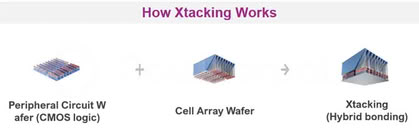
YMTC has a significant advantage with 3D silicon, which represents the next phase of memory evolution. With its Xtacking 4.0 technology, YMTC can separate memory cell wafers from peripheral logic circuits and combine them using hybrid bonding wafer-to-wafer stacking. Hybrid bonding creates a permanent bond between two silicon chips using embedded metal bumps that are fused together to form a single chip. Multiple dies or entire silicon wafers can be connected by stacking the back ends of two chips together.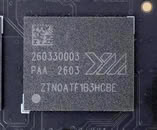
 Even if the company continues large-scale manufacturing of LPDDR5X, it can easily transition into 3D DRAM with its Xtacking 4.0 or possibly a future 5.0 iteration, which has yet to be seen. Micron recently confirmed that it will not bring 4F² DRAM to market, remaining focused on the 6F² layout used in today's DRAM until 3D DRAM arrives. YMTC, along with CXMT, is pushing for 4F² adoption first, which means that Chinese memory makers might have a slight advantage in cell design, despite being limited by DUV lithography tools. However, once 3D DRAM is ready for mass manufacturing, YMTC is one of the best-positioned companies to capitalize on it.
Source:
Counterpoint Research
YMTC has a significant advantage with 3D silicon, which represents the next phase of memory evolution. With its Xtacking 4.0 technology, YMTC can separate memory cell wafers from peripheral logic circuits and combine them using hybrid bonding wafer-to-wafer stacking. Hybrid bonding creates a permanent bond between two silicon chips using embedded metal bumps that are fused together to form a single chip. Multiple dies or entire silicon wafers can be connected by stacking the back ends of two chips together.


17 Comments on YMTC to Start Mass Production of LPDDR5X with 9,600 MT/s Speed
There's no way I want to pay 600 bucks just for the RAM for my long overdue upgrade.
I'm sill on an i7-6700K!
They use outdated equipment and facilities, yields are poor, and so are the prices.
CCPPRC...low power dram is not DRAM which you buy for 600€ for your desktop computer. Never confuse LPDRAM with desktop grade module DRAM.You are 4 months to late. earlier this year you could buy a full working intel 10th generation computer without monitor and peripherals but with storage and dram for 69€, the price has increased to 99€ by now.I would be more worried about the firmware for certain companies like huawaii, lenovo etc.
ASUS and all the others could sell on their own will libreboot or similar more user friendly desktop motherboards. Is it only PRC?
you use the wrong amd64 and arm9a platform when you state PRC in this context
I am more worried about microslop windows and fake RGB unit which downloads 3rd party CVE binary for microslop windows on its own because microslop thinks RGB needs a 3rd party driver. Else I really wonder how DRAM could have issues these days. the issue is the motherboard firmware and microslop. we saw already how certain LG devices download malware by themselves with microslop in year 2020-2026
Feel free to explain in detail the backdoor in DRAM only, especially with desktop modules without RGB on it, wiht DDR5 as an example
I read somewhere most code massively wastes ram because it has never been an issue, but if optimized it can drastically reduce the memory footprint of most modern code, especially the OS as a whole.
So maybe soon 8GB of ddr5 will run your OS and apps just fine..
Just speculating, I'm no expert..