Wednesday, November 11th 2026

CD Projekt Red Turns to AI to Restore Polish Geralt's Voice in Witcher 3 Expansion
Jacek Rozenek, who has voiced Geralt in Polish since the first Witcher game, is returning for The Witcher 3: Songs of the Past, though his new lines are being run through an AI voice model so they match his original Witcher 3 performance. CD Projekt Red told Game File it worked with Ukrainian AI firm Respeecher on this, with Rozenek's approval. The actor suffered a stroke in 2019 that left him unable to speak for months, and his voice is now lower and gruffer than in the roughly 10,000 lines he recorded for the base game in 2014. CDPR feared the mismatch would stand out, since new battle cries and one-liners can play in older parts of the map too.
Rozenek still performs every line himself. Respeecher's model, trained on his original Witcher 3 recordings, then reshapes the new takes to match how Geralt sounded in 2015. Rozenek himself weighed in on this, saying the point is that this voice should be as close as possible to his voice from 12 years ago. Localization producer Mikołaj Szwed called it a "special case" tied to Rozenek's health and said CDPR's contracts require consent for any AI work. He sees this as a way to use AI "ethically, with consent and also to do something good." Doug Cockle's English Geralt, apparently, needed no such treatment.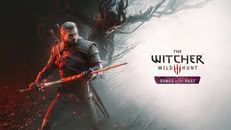 CDPR has used Respeecher once before, in Cyberpunk 2077: Phantom Liberty, where another actor recorded new lines for Viktor Vektor and the software made them sound like the late Miłogost Reczek, with his family's blessing. We get to hear Rozenek in The Witcher 3: Songs of the Past, due in 2027 as a paid expansion.
Source:
Game File
Rozenek still performs every line himself. Respeecher's model, trained on his original Witcher 3 recordings, then reshapes the new takes to match how Geralt sounded in 2015. Rozenek himself weighed in on this, saying the point is that this voice should be as close as possible to his voice from 12 years ago. Localization producer Mikołaj Szwed called it a "special case" tied to Rozenek's health and said CDPR's contracts require consent for any AI work. He sees this as a way to use AI "ethically, with consent and also to do something good." Doug Cockle's English Geralt, apparently, needed no such treatment.
24 Comments on CD Projekt Red Turns to AI to Restore Polish Geralt's Voice in Witcher 3 Expansion
The final product would probably be of the higher quality, but the costs would be much higher.
Talking about not seeing the forest from the tree. An example of a damn AI stealing the job from the humans right there.
Your statements seem hollow and based in anger. I Loathe AI but can look at individual moments with context, which is important in this instance.
Its a matter of perspective. But this reduction in expense to make something, and obtain a decent level of quality doing it, is exactly what the technology is useful for.
This is, by the way, also why I think when the storm has passed, AI won't really reduce the total number of jobs. AI or not, you still need very good source material to base something on. We're rapidly developing a keen eye for detecting what is AI slop and what is actually something special, made with AI, or without, or assisted.
To me he IS the Geralt's voice, there's no doubt about it. If he wanted the new recordings to sound the same as those original Witcher 3 lines and they had used AI to adjust it so be it, he still got paid. I just hope that he had all the bases covered from legal point of view when it comes to what happens with that trained AI model after delivery of the voice lines for this project.
Or it could be that he missed that line, but in that case, don't you think he would be complaining about the actor not getting the money, instead of an audio studio using more established methods of modification, which is what I took from it. I mean, both the visuals and the audio of movies has been at half 'fixed in post' for a lot longer than the ai train has been going.
I dunno how much I agree. I mean I do think this is one of the more legit uses for ai and like he said, probably will produce a good result. But I still have a burning hatred for it due to current hardware prices. If things settle down into a new norm, where regular people still have the freedom to buy computers without selling a kidney, and also ai exists without this constant over-speculating and circular money shenanigans, then maybe I'll go back to how I was before... which was mostly along the lines of 'meh, I guess its here to stay and has some legitimate uses,' but right now its out of control.
Also, kind of off topic but the english voice actor for Geralt, Douglas Cockle, is also in my favourite modern rts game, spellforce III reforced, playing Sentenza Noria. But seriously its an amazing game that not enough people know about. Also made in europe (forget where), but its definitely more known there than North America. Playing multiplayer is always european player on the other side, if you can even find anybody playing.
I didn't mention the actor, nor his payment. I was talking about the fact that a damn AI company got the job, and not the professional audio recording/mixing/mastering studio. The actor would get paid either way, even more by doing the same thing in a recording studio, because that would require even more working hours.
Do you people really think that the situation where the original voice actor is not able to reproduce his voice for a sequel is something new? For various reasons like getting sick or passing away?
How do you think the motion picture industry solved that problem before the damn AI wasn't available?
Now return to my first post and read again, or go back to school to learn to do so.
I'm not wasting my time by quoting ignorant people that praise a damn AI.
Its clear you don't like AI and I'll be honest with you, I hate it too. But try to keep emotion and reality separated, I'd say. Things aren't black and white
Also you could try to understand why my stance is like that, if you wish. And the reason is simple, sound does effect my whole being in a special way.
That's why I have and give huge respect to the people that compose, sing, play instruments, do recording, mixing and mastering. And I don't like seeing an AI taking away their daily bread.
I hope the answer is satisfying enough. @Vayra86
Well, they won't and he isn't. The two use cases are different.
I've seen digital music rise and fall, different genres of it... and it was exactly the democratization of creation of electronic music that has enabled so much. The entire dance scene for example. I've lived the creation of the underground Dubstep scene when it started in Croydon, London some 20 years ago... So I view this AI thing as something... yeah... yet another way of creation in the sea of options, really. Not so much as 'the thing that will erase everything else'
Like gaming has and will survive these technologies... so will music. I have no fear whatsoever. Humans will never just fall in line, we get bored and we destroy things.
If potato peeling ceases to be a job because of industrial potato peeling machines, all the better for us - as long as there are people left who know how to peel a potato in case the industrial machine fails. This statement doesn't apply to the creation of art, which should always be a human endeavour.
AI or not you still need to get a professional studio and engineers to record his lines, then post process them and master them.Unsure who is being reffered to tbh.I love music too and I hate generative AI used for the creative process that is making music and the work that goes into it, but even generative AI music needs mixing and mastering at the end of the day.
Even if you do, what would be the total of all their salaries be? Humans are, at the end of the day, expensive to employ.
So for purely large-scale workloads, you want to use something that will be able to handle the amount of work in the time you have (and be able to afford using it).
And in CDPR's case, I doubt it's even about that. It's about changing the SAME ACTOR'S voice to a different version of itself. They're even paying the actor!
(Oh and someone should tell the OP how they put Iceman's voice in Top Gun 2 because Val Kilmer was unable to talk).