Friday, February 29th 2008

More 9800 GX2 Pictures Released
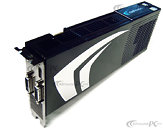
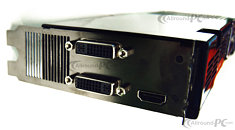
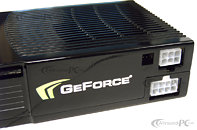
German site Allround-PC.com has acquired a few new pictures of NVIDIA's upcoming 9800 GX2 graphics card, which is set to become the company's flagship consumer card when it's released next month. The card will have two 65nm GeForce 8800 GPUs working in SLI on a single card, with a 600MHz core, 1GHz GDDR3 memory and a 1.5GHz shader clock. The pictures are below.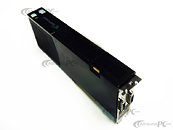
Source:
Allround-PC.com


91 Comments on More 9800 GX2 Pictures Released
We are talking about cutting edge GPU's and you're wondering if a company can make a piece of metal hollow with flat sides? :wtf:
It could be engineered to even use the reference design fastener if they wanted to. :laugh:
I know, we all wish we knew. :(
On ATIs side it's harder to comment.. I'd be interested to see how they're actually doing (ie: apart from AMD as a whole). It does sound like after the intial merger mess they're doing a lot better. They margins on the 3000 series cards were supposedly pretty good (and they seem to have room to play with the prices still looking at the recent price cuts) and they seem to be poised to get ahead of Nv this spring/summer.
Regarding AMDs situation I'm not completely sure what you're arguing... I did not say AMD is not in a bad situation but that your comment "No one in the right mind would buy AMD stock right now" may not be the most accurate assement. Yes AMD is currently in the shitter but that's part of the appeal of buying into them atm. Like I said, if you bought them at their worst 2 months ago when people were crapping on them the most you would currently be up 30% on your investment today. And given AMD/ATI's potential, what they are to a few companies, and how low they currently are it just seems to me like it's most likely to go up for them (and like the saying goes, you're supposed to buy low). If nothing else I have a hard time believing someone won't buy them out before they go bankrupt, which (again I'm not a big finance guy) I would imagine would drive the price up since there's not much room to currently fall before it gets to that point and there are probably a few companies that would have a stake in acquiring them.
With the side deals thing I don't think you can say they obviously won't help b/c they're currently still in debt when the pay off is still be a ways away. The EUV thing for example is expect to not be needed for at least another 3 years I think it was (yes that seems like a long time but Intels already been waiting at least 1 year - as in that's how long it takes to disassemble, ship, & reassemble the stuff they're waiting for - just to get a tool from Nokia I think it was so they could do some R&D on the tech AMD+IBM are playing around with).
And I read the same article from Tom's a while ago. I also read one from them a month or so ago as well that the new one contracdicts on a lcouple of points. When they write a new one that offers further speculation I'll probably read that as well. I'll probably take that with a grain of salt though rather than convincing myself that reading an article on Tom's equates to working knowledge of business and finance. :)1) I'm not trying to argue.. someone said something, I'm not completely familiar with water cooling but I understand the principals so I was curious how it would actually work b/c it sounded like what he was saying had a flaw in the idea. If you don't have anything worthwhile to add feel free to save some gas.
2) I'm sure if a company really wanted to they could figure something out ... whether they would actually do so would depend on the success of the card and the likelyhood of selling their cooling solution (talking particularly of aftermarking - I'd imagine Nv partners will design their own cooling on their versions of the card). No matter how smart the design of an aftermarket cooler may be, it's worthless if the end user won't be able to install it.
But here's what I'm asking as it relates to what you said.. using your assumptions it sounds like you think the case will be removable and that there should be enough space between the 2 cards to just slide the block in. The block if it's like Newtekie was saying would have to be connected to/between both chips (for anyone else - keep in mind this was all originally directed to him so that's why I'm referring to this design) so both sides would have to be connected to both boards to secure a tight fit after it's in no?
Now try this, take 2 pencils.. lay one against your palm across the top of your thumb and pinky. Take the other one and cross across the first between your index and middile finger and hold the two tight in a fist so they stay together. Imagine the one across your pinky and thumb is the top card and the vertical pencil is the water block that is already tight/secured against the top chip/pcb. When you tighten the block to the bottom core it should pull the block down towards it.. if you pull on the bottom of the vertical pencil maybe you'll get what I was getting at.
When you screw a block or fan down to 1 PCB the block moves not the PCB. But if you do it to 2 it's different. If there's any space between them and you go to tighten the blocks down to both, one or both of the cards will have to bend to make up the difference (the space that allowed easy installation) which I'd imagine would normally be considered a bad thing. If you remove the space from the equation before that point you have to deal with the possability of a bad fit/forcing it in, thermal paste scrapping off (more annoying than anything) etc. The only way I can think of that design Newtekie was suggesting working would be is if it's designed for no space and it's possible to disassemble the 2 cards so you can put the block in first and then the top card. But I have a hard time buying that that would be possible.
Aftermarket cooling for this just seems like it would be impractical.. especially if it's success and Nvidia's commitment to the design ends up being questionable.
As for #4, I remember that post with the roadmap. However, if you notice, there are little stars by some of the information, including the price for the 9800GX2. And at the bottom is says "* Not confirmed, and should be considered with a pinch of salt". In other words, they are just speculating what the price will be. It will be priced based on performance, if it performs like a $600 card, why shouldn't nVidia sell it at that price point? Just because ATi can't get their cards to perform at that high of price points, doesn't mean nVidia should lower the price of their cards.So you agree that the card is clocked lower than the 8800GT? You agree that it will perform worse than 2 much weaker cards in SLI?
Yes, there is a way a single waterblock can be used. The two PCBs come apart, just like the 7950GX2. You don't have to slide the thing in there. Like I said before, do you really think that is how nVidia got their cooler in there?
The roadmap posted earlier suggests that the speculation is the 9800GTX will be below $400. And that seems about right considering it is just a slightly beefed up 8800GTS512.Actually, I replied to the posts in the order they were posted in. If the original posts I replied to were reversed I would have answered them in reverse order.
The card doesn't look junky, he is just needlessly bashing it because it is an nVidia card. He has done it in the past, and he is doing it now. And just like in the past, he is bashing the card using blatently false information.
Considering IBM has been decreasing there use of AMD products lately and opting for Intel parts instead on workstations and laptop segments; I would say don't count on IBM helping them much. Unless you are talking about R&D only, and then I would say yes. Remember the evil "chipzilla" that is Intel, has much more money to throw at R&D, than IBM would throw at a company like AMD.
But there is one thing on your side of the debate that I am surprised you haven't mentioned. In the past year, AMD has received tax breaks, incentives, and corporate welfare from the German government to help keep them afloat. If the German government wanted to badly enough, they could pay off all of AMD's debt and wait for them to pick up speed again before getting the money back as part of an agreement with them.
But it probably won't happen, but thats just speculation on my part that it wouldn't though. I am not sure how their politicians feel towards AMD because I don't follow them politically. :)
I was under the impression that seperating that second card to give you the room you would need to work would be more towards the side of impractical. I suppose that would mostly be based on what actually connects the two together though. ie: if it was a small bridge that disconnects easy that should be no problem assuming that the second cards connection to the back plate is also designed to come apart. . If it's a solid connection though I could see that being a pain in the ass (I was assuming it'd be the later). Did they design the 7950GX2 to be easily disassembled?
DaedalusHelios, where I disagree is the high risk assesment. I think a good chunk of their problems can be attributed to ATI acquisition and as they go along they should be able to put that behind them if they can manage to press through. Both AMD and ATI have the potential to perform well.
What you mentioned with the german gov relates to what I was saying about AMD is to different companies and how that mitigates the risk with AMD. Germany wants to see AMD do well b/c of their Dresdan plant so they're bound to treat them well. AMD I think was also supposed to be opening a plant in NY as well no? And low and behold NY state files that anti trust suit vs. Intel, so they'll probably have the state of NY on their side as well.
With IBM what I'm wondering about is the extent of their relationship. I keep hearing about the duo having quite the relationship and having a bunch of joint R&D projects together. For IBM to work with AMD they must have something to offer, be it intellecutal property or some form of physical asset. If AMD was to go under would IBM not stand to lose if another company buys that IP or if they need to find those assests elsewhere? Ex: with the EUV tech thing, part of that test chip was manufactured in Dresden... is that something that is easily & immediately replicable elsewhere? If not it should be in IBMs best interest to protect AMD when their stability can have an adverse effect on IBMs business. Not for AMDs sake but their own.
The best scenario would be IBM buying AMD. That kind of money is nothing to IBM.
Sadly, IBM's history of success has partially rooted from Nazi support. They created automated methods of keeping up with the jews with punch card systems that increased the success of those genocidal goals of the Nazi's. Those contracts and relationships helped them grow extremely fast as a company, but at what cost? :(
There is a picture of the 7950GX2 taken apart to give you an idea. The two PCBs are only linked by a few screws/risers and a small "link PCB".
There have been a few pictures of the 9800GX2 already dismantled floating around the internet. It seems that it might be a little more complicated to take apart and put back toghether, but it shouldn't be anything crazy. If you can install a water cooling kit and water blocks, then you can more than likely take apart and reassemble the 9800GX2.
Of course, it's no worse than Google, Yahoo, or Cisco helping out the Chinese government today. All companies have skeletons in their closet.
Here's to hoping that IBM buys them out instead of nvidia!
Be wary how racist your comments sound and all will be okay :) (and get back on topic)
If you would have bothered to do a little reading about those number you would see some interesting things.
1.) The test setup used was a stock QX6700(2.66GHz). 14,000 is about all you are going to get in 3Dmark06 with a stock QX6700. With the current high end graphics cards, 3Dmark06 is CPU limitted with the C2Q processors at such low speeds. My 8800GTS won't score over 12,100 unless I overclock my Q6600. And then it tops out at 14,000 with the Q6600 at 2.7GHz.
2.) Those runs were rather old drivers. 173.67 to be specific. 174.12 is what I have installed right now, and there are even newer version available. I'm sure the drivers have come a long way since the drivers they used. Those old drivers probably barely had support for the 9800GX2. I'm going to guess nVidia has been doing some optimizations since those drivers.
I'm not going to believe anything I see about the performance of these cards until they are released.