News Posts matching #AM4

Return to Keyword Browsing

CRYORIG to Provide Free AM4 Upgrade Kits

In response to AMD's soon to be released Ryzen CPU and AM4 platform, PC thermal solution brand CRYORIG will be providing free AM4 upgrade kits soon after the official release of AMD Ryzen CPUs. All users of existing AMD-supported products will be able to apply for the free upgrade kits, and native AM4 mounting kits will start hitting the markets after the official CPU release.

CRYORIG will provide all existing users and new owners of AMD supported products the new AM4 kit totally free of charge. Existing eligible products include: R1 Universal/Ultimate, C1, H5 Universal/Ultimate, H7, H7 Quad Lumi, M9a, C7, A40, A40 Ultimate and A80. Users will only need to provide the following information: proof of purchase of the CRYORIG product (or product registration number), and a proof of purchase of an AMD Ryzen or AM4 CPU or Motherboard. The necessary info just needs to be sent to CRYORIG support email-box "support@cryorig.com" and the kit will be sent directly to the provided address. Local distributors and select channels will also have these kits available.


Phanteks Announces Free AM4 Upgrade Kits

Phanteks, the award-winning thermal cooling and chassis manufacturer today announced that they would distribute free AM4 upgrade kits to their customers. Owners of Phanteks' CPU Coolers that want to be able to use their coolers with the new AM4 socket can now receive a free upgrade kit

Phanteks AM4 upgrade kit will allow for full compatibility with the new AMD AM4 Socket. Starting January 25th, 2017, customers that have Phanteks CPU coolers can contact their service team to receive their free upgrade kit, for which they'll need to provide a copy of the purchase invoice, a copy of the purchase invoice of an AMD motherboard or AMD processor, and e-mail those to Phanteks' customer support team. All future Phanteks cooler products will include the required AMD AM4 mounting bracket.

ECS B350AM4-M Socket AM4 Motherboard Pictured

ECS showed off its B350AM4-M, which appears to be the company's only socket AM4 motherboard, for now. This micro-ATX board is based on AMD's mid-tier B350 chipset. The board draws power from 24-pin ATX and 4-pin CPU power connectors, and conditions it for the CPU with a 6-phase VRM. Expansion slots include one PCI-Express 3.0 x16, a second x16 slot that's electrical x4, and one each of x1 and legacy PCI slots. Storage connectivity includes two M.2 slots, and four SATA 6 Gb/s ports. 6-channel HD audio, and gigabit Ethernet make for the rest of it.

DeepCool Also Intros the New Ark 90 Chassis

DeepCool also unveiled its glassy New Ark 90 chassis, with factory-fitted CPU liquid cooling. This ATX mid-tower chassis features a 3-sided tempered glass panel covering the left side, and three quarters of the top and front panels. Under the hood, is a horizontally partitioned layout, with the larger top half housing the motherboard tray and three 120 mm fan mounts that exhaust out of the right side panel, and which can hold on to a 360 x 120 mm radiator.

The bottom compartment of the New Ark 90 features the PSU bay and two 3.5-inch drive caddies. The included DeepCool Captain 120EX AIO liquid cooler has a 120 mm x 120 mm radiator that's factory-fitted to one of the 120 mm top exhausts. The pump-block comes with AMD socket AM4 support, besides support for most common CPU socket types. The company plans to release the New Ark 90 to the market some time in May 2017.

ASRock Socket AM4 Motherboard Lineup Detailed

At the 2017 International CES, ASRock showed off some of its first socket AM4 motherboards for AMD Ryzen processors and 7th generation A-Series "Bristol Ridge" APUs. Leading the pack is the X370 Taichi. Built in the ATX form-factor, the board draws power from a combination of 24-pin ATX and 8-pin EPS power connectors. It uses a 16-phase CPU VRM with high-capacity Super Alloy chokes. The AM4 socket is wired to four DDR4 DIMM slots, and two PCI-Expres 3.0 x16 slot (x8/x8 when both are populated). The third x16 slot is electrical x4 and wired to the chipset. Two other x1 slots make for the rest of its expansion area.

Connectivity on the X370 Taichi include two USB 3.1 ports (one type-A and one type-C), ten USB 3.0 ports, 8-channel PureSound 4 onboard audio solution (of the same grade the company is deploying on its high-end Intel Z270 motherboards), gigabit Ethernet with an Intel-made controller, and 802.11ac WLAN. Storage options include one 32 Gb/s M.2 slot, one 16 Gb/s M.2 slot, and eight SATA 6 Gb/s ports. Next up, is the X370 Professional Gaming. This board is practically identical to the X370 Taichi. The two boards share a common PCB, and differ only with the red+black color scheme on the X370 Professional Gaming, as opposed to white+black on the X370 Taichi.

AMD Confirms "Full Spectrum" of Unlocked, Overclockable Ryzen CPUs

AMD has seemingly confirmed that there will be more than just the fabled 8-core, 16-thread Ryzen CPUs we've only as of yet seen presented by the company. Come the expected Ryzen launch before the end of Q1 (which means, before the end of March), we should see more Ryzen CPUs than only 8-core solutions, though AMD still hasn't revealed exactly the core-count/configurations of the other CPUs on their product stack. Theoretically, AMD could follow the Intel path of simply disabling SMT (Simultaneous Multi-Threading, AMD's equivalent to Intel's Hyper Threading) and thus crafting another product, though this is pure speculation on my part. Whether or not AMD will include 4-core or 6-core CPUs on their product stack as well is as of now an unconfirmed, educated guess.

Four GIGABYTE Socket AM4 Motherboards Pictured

GIGABYTE showed off four socket AM4 motherboards, designed for the upcoming AMD Ryzen processors and 7th gen. A-series APUs, at its 2017 CES booth. The lineup begins with the AB350M-D3H, an entry-level micro-ATX board based on the mid-tier B350 chipset; the mid-range AB350-Gaming 3, the mid-high segment AX370-Gaming K5, and the AX370-Gaming 5. The AB350-D3H covers the basics, with a 7-phase VRM, one PCI-Express 3.0 x16 slot wired to the AM4 socket, a second x16 slot that's electrical x4 and wired to the B350 chipset, one legacy PCI slot; one 32 Gb/s M.2 slot and six SATA 6 Gb/s ports (from which two are directly wired to the AM4 socket); and connectivity that includes 6-channel HD audio, gigabit Ethernet, two USB 3.1 (10 Gb/s) ports, DVI, HDMI 2.0, and DisplayPort.

Moving up the ladder, the AB350-Gaming 3 is a gaming-grade board in the ATX form-factor, featuring a red+black color scheme. The board draws power from a combination of 24-pin ATX and 8-pin EPS power connectors; conditioning it for the CPU with a 7-phase VRM. The APU is wired to four DDR4 DIMM slots, and one PCI-Express 3.0 x16 slot. Other expansion slots include two x16 slots that are electrical x4, and two x1 slots. Storage connectivity includes one 32 Gb/s M.2 and six SATA 6 Gb/s ports (from which two are low-latency ports). Display outputs include DVI, DisplayPort, and HDMI. USB connectivity includes two USB 3.1 (10 Gb/s) ports, and six USB 3.0 ports. GIGABYTE deployed its gaming-grade AMPUp! onboard audio solution with a 115 dBA SNR CODEC, ground-layer isolation, audio-grade capacitors, a headphones amp, and gold-plated audio jacks. Network is care of an Intel-made gigabit Ethernet controller.

AM4 Socket Compatibility: be quiet! Announces Free Upgrade Kits

be quiet!, the market leader in PC power supplies in Germany for ten consecutive years, is committed to its high level of customer support. Today the company announces the availability of free AM4 upgrade kits to their customers. Owners of current be quiet! CPU coolers switching to AMD's new socket will not have to retire their reliable and proven coolers. Thanks to an elaborate product design, installing the coolers on the new platform will be straightforward and very similar to previous sockets.

All be quiet! CPU coolers that can currently be mounted to the AMD retention module already support socket AM4 CPUs, including the Pure Rock, Pure Rock Slim and Shadow Rock LP coolers.

AMD A12-9800 "Bristol Ridge" AM4 APU with ASUS A320M-C Tested

German PC enthusiast "Crashtest" clinched a sweet combo of an AMD A12-9800 "Bristol Ridge" socket AM4 APU with an ASUS A320M-C entry-level micro-ATX motherboard, for 200€. Pairing it with 8 GB of dual-channel DDR4-2133 memory, the platform was put through the AIDA64 test-suite. In the memory front, the platform performs on-par with older platforms at comparable DDR3 bandwidth. The K15.6 integrated memory controller isn't producing the kind of memory bandwidth as the Core i7-6700K with dual-channel DDR4-2133 memory from AIDA64's internal reference bench table.
In the CPU-related tests, the APU has about the same performance as its predecessors, such as the A10-7850K. The chip features two "Excavator" x86-64 CPU modules, making up four cores, and is clocked at 4.20 GHz. There are performance upticks seen in tests such as Hash and VP8, where the chip likely benefits from new instruction sets.
More results follow.

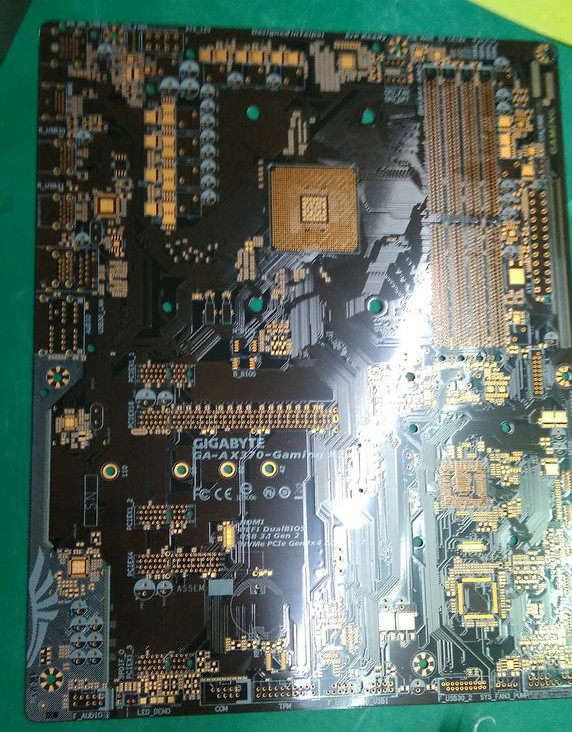
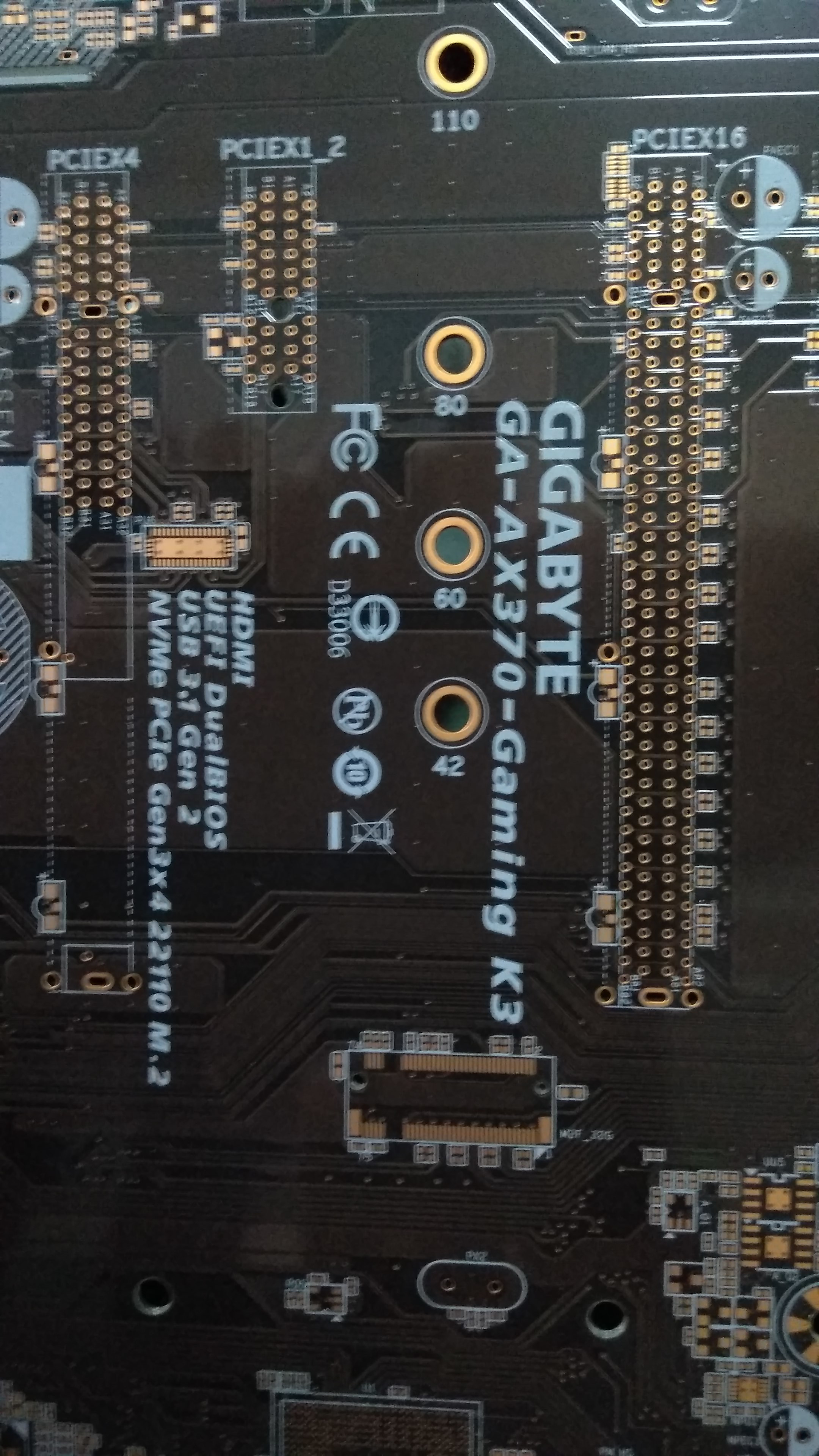
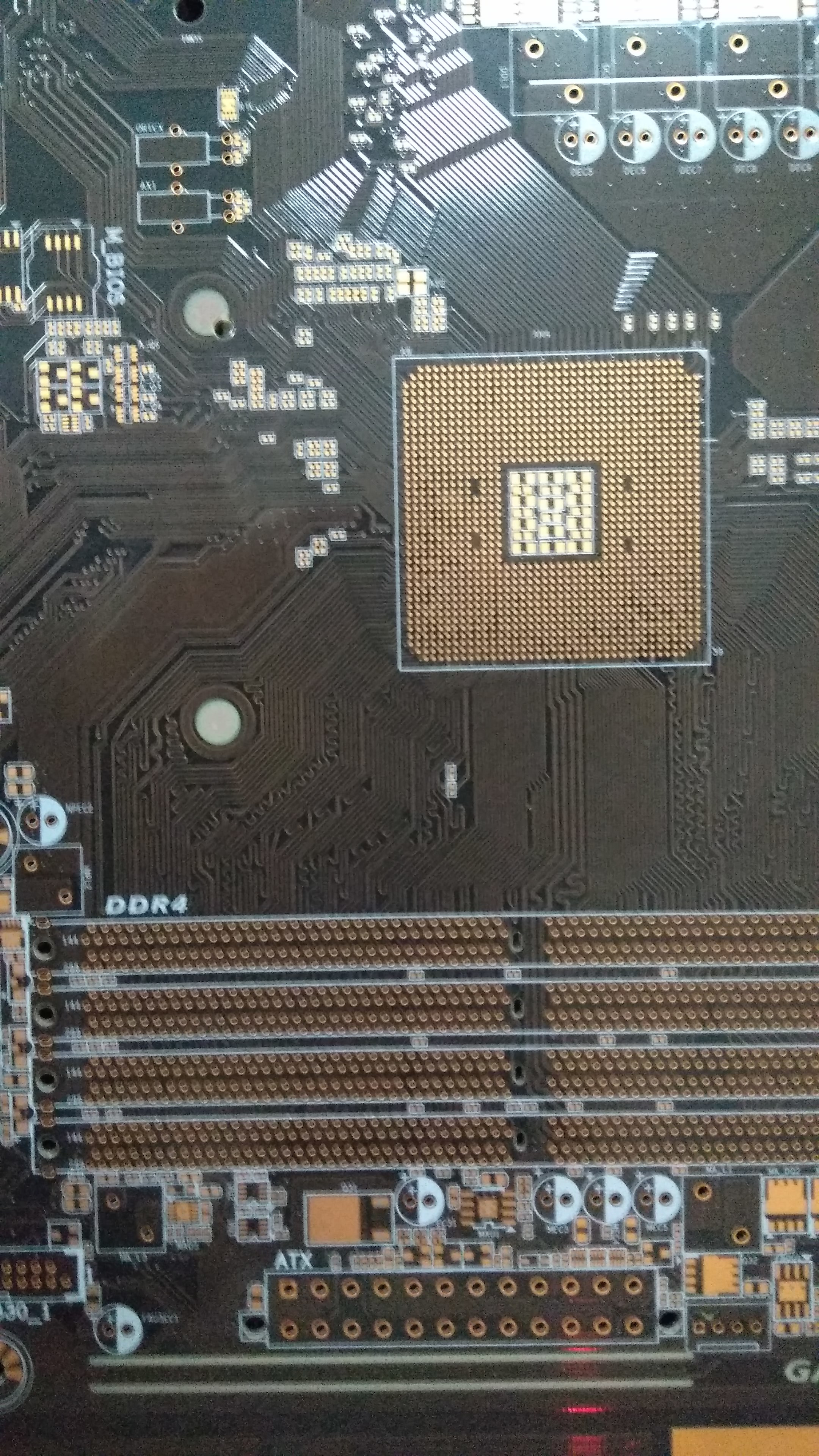
GIGABYTE AX370-Gaming K3 Socket AM4 Motherboard PCB Pictured

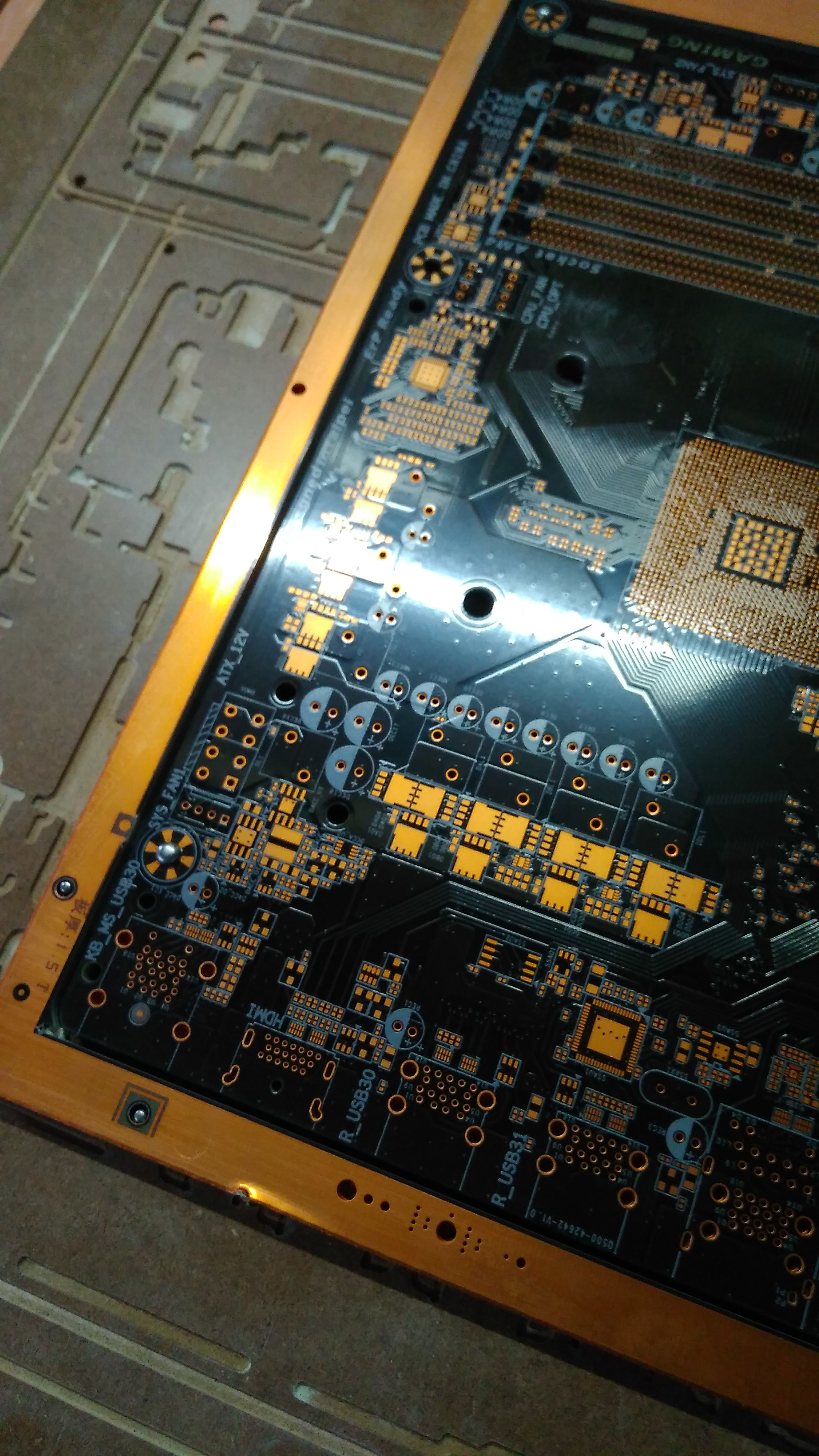
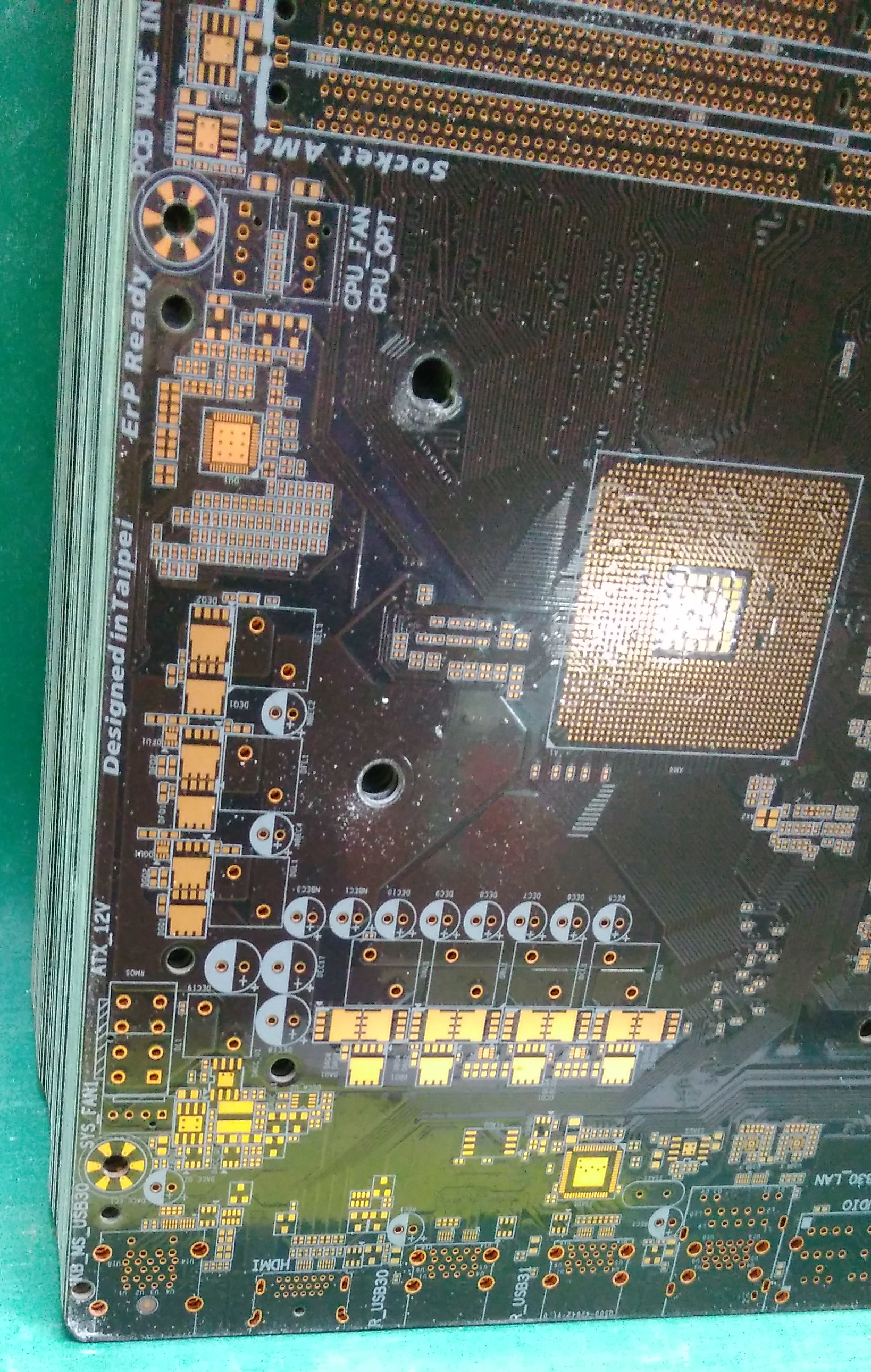
The picture of a bare PCB of an upcoming GIGABYTE AX370-Gaming series socket AM4 motherboard is doing rounds on the web. The picture reveals the bare PCB of the motherboard with all its traces and printed markings, but at a stage before surface-mount components can be soldered onto it. One can still make out quite a bit about the board. AMD X370 is the company's upcoming high-end desktop chipset, which will be launched alongside the company's Ryzen 8-core processor, some time in February, 2017.

To begin with, the AX370-Gaming K3 is built in the ATX form-factor. Its AM4 socket supports both Ryzen "Summit Ridge" CPUs and 7th generation A-series "Bristol Ridge" APUs. The board draws power from 24-pin ATX and 8-pin EPS power connectors, and conditions it for the CPU with a 7-phase VRM. The AM4 socket is wired to four DDR4 DIMM slots. Expansion slots include one PCI-Express 3.0 x16, a second gen 3.0 x16 slot that's electrical x4, and three other gen 3.0 x1 slots. Storage connectivity appears to include at least eight SATA 6 Gb/s ports, and one 32 Gb/s M.2 slot. 8-channel HD audio, gigabit Ethernet, USB 3.1 (including type-C) ports, appear to make for the rest of the connectivity. GIGABYTE's signature Dual-UEFI is featured.
Many Thanks to TheLostSwede and Tomas H. for the tips!

AMD RYZEN Demo Event - Beats $1,100 8-Core i7-6900K, With Lower TDP

At their Austin, Texas "New Horizon" Event, AMD introduced us to live "ZEN" chips working full-tilt, showing us what AMD's passion and ingenuity managed to achieve. The "New Horizon" event was a celebration to what AMD sees as another one of those special, breakthrough moments for a company: after starting work on "ZEN" 4 years ago in 2012 as a complete new design. The focus: building a great machine, whilst increasing IPC by 40% over their previous architecture, at the same power constraints; and to create a smart machine, which could sense and adapt to environment and applications so it improves over time. The company's verdicts: "ZEN" met or exceeded their goals, with the desktop PC market being home to the very first "ZEN" product.

According to AMD's CEO Dr. Lisa Su, AMD's event was named "New Horizon" as a reference to AMD's vision in the computing space: that they're on a journey to bring a new generation of processor technology, and customers towards a new horizon of computing. Their intention? To directly connect with fans who love PC gaming, whilst doing what AMD does best - pushing the envelope on performance, power, frame-rates and technology. AMD also flaunted their renewed faith in gaming, with it being on the company's DNA and passion, whilst revisiting the old memory lane, reminiscing on the Athlon Thunderbird, the world's first chip to break the 1 GHz barrier; the launch of their first 64-bit processor; and breaking the 1 TFLOP barrier in computing power with their HD 4850 and 4870 gaming GPUs.

AMD RYZEN Brand Name of First Enthusiast "ZEN" CPUs

AMD has apparently chosen RYZEN (pronounced "risen") as the marketing name for the first consumer enthusiast processors based on the "ZEN" micro-architecture. Slated for market availability in Q1-2017, the first RYZEN part will feature 8 cores, 16 threads, 20 MB of total cache (8x 512 KB L2 + 2x 8 MB L3), and a clock speed of over 3.40 GHz. The chips will be built in the socket AM4 package, and will be launched alongside a new wave of motherboards with AMD X370 chipset.

Given the relatively modest clock speeds by AMD's standards, it's safe to say that AMD has made big IPC gains, and is now tapping into those gains. Intel, on the other hand, is clocking its upcoming Core i7-7700K at 4.00-4.40 GHz. AMD is also introducing enthusiast-segment features with RYZEN, including XFR (eXtended frequency range), Smart Prefetch, a tightly tuned power-management system built from the ground up, called AMD Pure Power, and its related feature, AMD Precision Boost.
More slides follow.

AMD's ZEN-Supporting X370 Motherboards to be Shown at "New Horizon" Event

AMD's December 13th "New Horizon" event is supposedly (and expectedly) a pivotal moment for the company - a celebration of sorts for the impending launch of their ZEN-based microprocessors. The event, which will be presented mainly by Gametrailers TV-based journalist Geoff Keighley, is now turning up to be a Summit Ridge celebration of sorts as well.

According to recent reports, a small number of motherboard manufacturers should also be in attendance at the event, showing-off their AM4-compatible motherboards based on the top-of-the-line X370 chipset. The X370 is the most advanced version of the Zen-compatible chipsets and is expected to provide extensive overclocking features and up to two third-generation PCIe x16 lanes for multi-GPU systems. Below the X370, the B350 and A320 take over the role of the mid-range and entry-level chipsets respectively. The new chipsets are expected to bring native M.2 NVMe & SATA Express connectivity, PCIe gen 3, DDR4 memory compatibility and USB 3.1 Gen2 to the company's high-end desktop platform for the very first time.

AMD Socket AM4 "Bristol Ridge" APU De-lidded

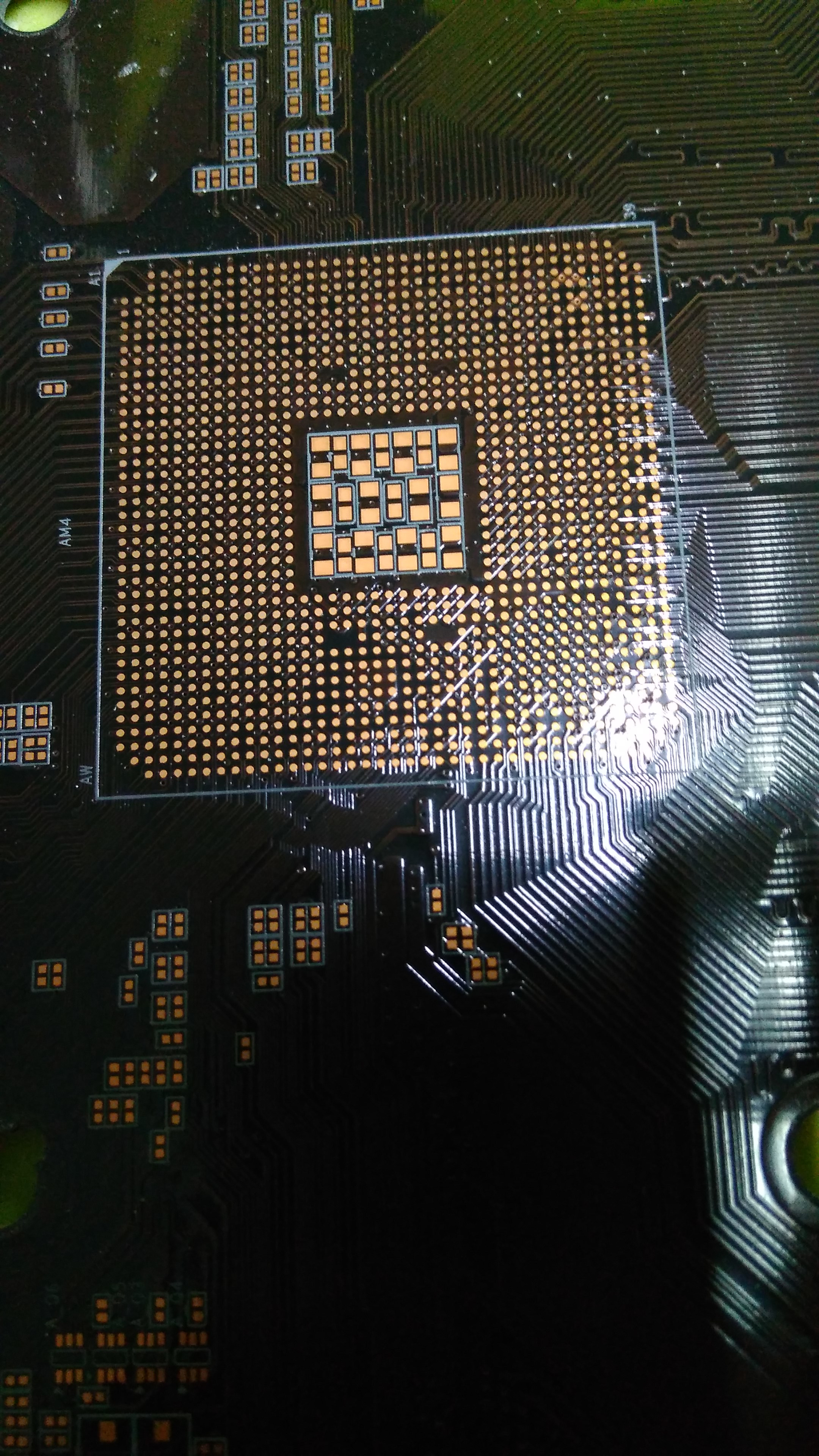
Here are some of the first pictures of an AMD socket AM4 APU being de-lidded. De-lidding is the process of removing the IHS (integrated heatspreader), the metal plate covering the CPU die. Some PC enthusiasts remove the IHS to improve heat-transfer between the CPU and extreme cooling solutions, such as LN2/dry-ice evaporators. Overclocker Nam Dae Won, with access to a couple of socket AM4 chips (most likely 7th generation A-series "Bristol Ridge" APUs), de-lidded the chips, revealing a large rectangular die. AMD is using high-quality TIM between the die and the IHS, which could either be solder or liquid metal. There's also a clear picture of the underside pin-grid of the AM4 chip, which has a central cutout that lacks any SMT components. Socket AM4 has 1,331 pins.

AMD's Internal ZEN SR7, SR5, SR3 Priced Above A12-9800

AMD's first desktop processors based on the "ZEN" micro-architecture will be priced above the fastest socket AM4 part currently in production, the A12-9800 APU. While AMD hasn't started selling the A-series socket AM4 APUs in the retail channel, the top-end A12-9800, which is faster than the A10-7870K from its previous-generation, is expected to be priced at least the same ($160) or higher. This would mean that even the cheapest ZEN part, under the ZEN SR3 series, likely quad-core; could be priced above $160.

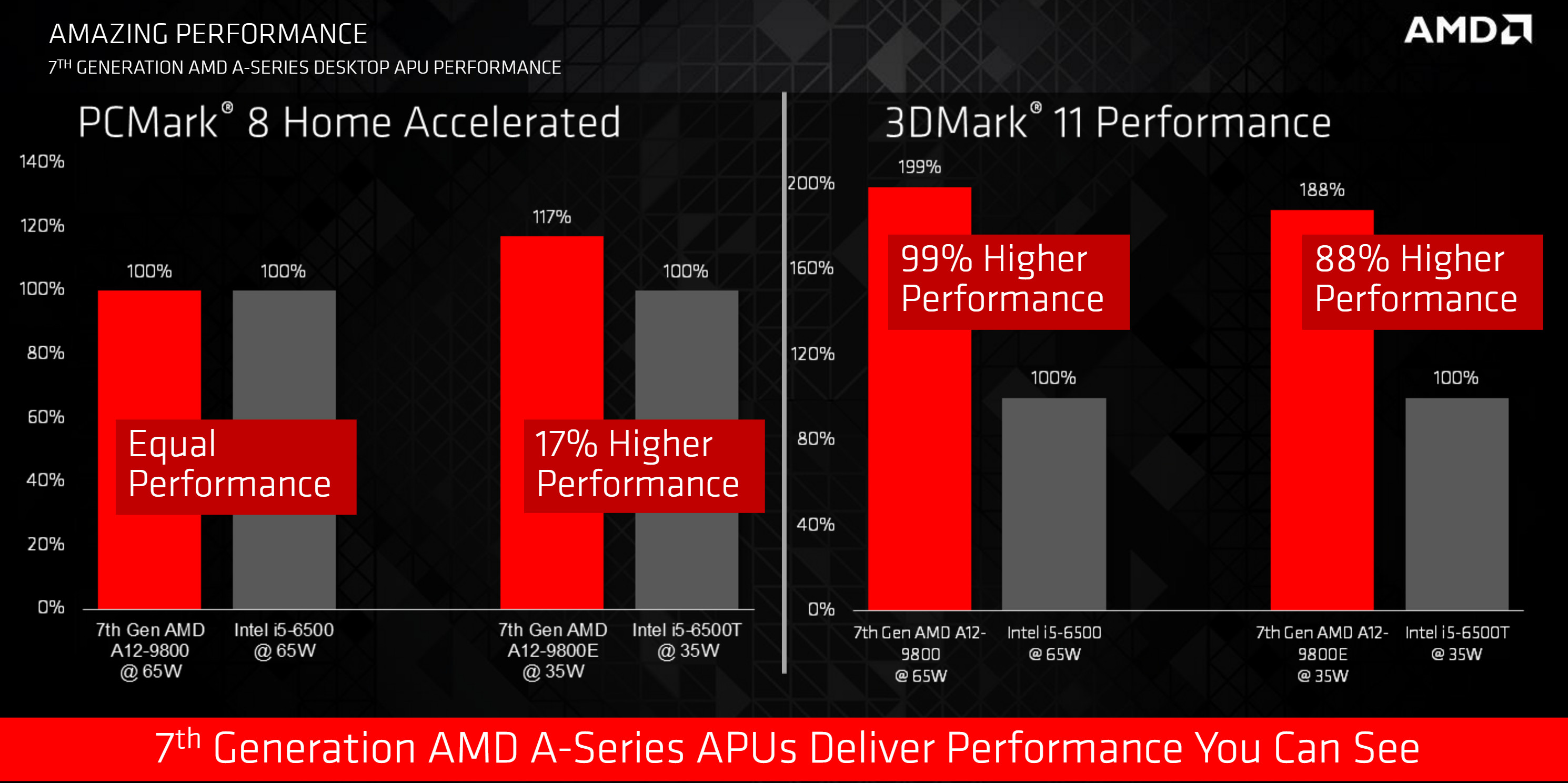
Two key slides from a presentation AMD intended for Chinese distribution channels, was leaked to the web by ChipHell tech forum members, revealing that ZEN parts will be priced in a segment "above" RMB ¥1,500 (USD $218), assuming that that's a price inclusive of all taxes. The company also put out some performance numbers for the A8-9600 "Bristol Ridge" socket AM4 APU, keeping the "Godavari" A8-7650K as baseline, compared to the Intel Core i3-6100 "Skylake" processor. The A8-9600 was shown to be faster in most tests.

AMD's Zen Rumored for January 17th Launch; 8 Cores With 16 Threads for $300

As we inch ever closer to AMD's Zen launch, more and more information seems to be slipping through the cracks. This time, MAXSUN, an AMD China partner (poised to provide customers with AM4 platform motherboards) is the source of the proverbial leak, with information that, if true, is sure to stir the pot of bubbling Zen excitement even more.

According to MAXSUN, Zen's initial release date is pegged for January 17th, which, if true, would probably mean a product announcement around CES 2017 (scheduled from the 5th of January through the 8th) - at the same time as Intel is expected to fully unveil their Kaby Lake parts. The company also reports a second release window at March 2017, which lends further credence to AMD's expected staggered launch of Zen-based processors, first for the High-Performance-Desktop (HEDT) market, and trickling down from there. MAXSUN also confirms the pricing scheme we reported yesterday, with regards to the companies' SR7 processors (the top-of-the-line parts in the Zen line-up, and whose naming scheme I think isn't the final one) - the company states these are expected to be priced at around 1500-2000 Yuan SKU ($250-$300).

Two GIGABYTE Socket AM4 Motherboards Pictured

Ahead of their launch later this year, to cater to the 7th generation AMD A-series "Bristol Ridge" APUs, with support for next-generation "ZEN" processors due in 2017, two GIGABYTE socket AM4 motherboards smiled for the camera. The two appear to be based on either AMD's entry-level A320 or mid-range B350 chipsets. Since the AM4 chips are true-blue SoCs with complete integration of chipsets, including what you'd normally call a southbridge or FCH; the "chipsets" in the AM4 platform are merely chips that add to the PCIe lane budget of the platform, and provide additional SATA and USB connectivity.

The first of the two GIGABYTE AM4 boards is built in the narrow micro-ATX form-factor; featuring a single PCI-Express 3.0 x16 slot, two DDR4 DIMM slots, four SATA 6 Gb/s ports, and basic connectivity that includes 6-channel HD audio, one gigabit Ethernet connection, and 4-6 USB 3.0 ports. The second board is better endowed, and is likely a variation of the socket AM4 board that was earlier pictured this September. It features two PCI-Express 3.0 x16 ports (the second one could be electrical x4); and comes with two additional SATA 6 Gb/s and USB 3.0 ports compared to the other board.

AMD Announces the 7th Generation AMD PRO Processors

AMD at the Canalys Channels Forum announced the first PCs featuring 7th Generation AMD PRO APUs (formerly codenamed "Bristol Ridge PRO"). Built for business, AMD PRO APUs deliver increased computing and graphics performance, improved energy efficiency, while providing a secure and stable platform to protect customers' IT investments.

"In the past two years we made incredible progresses in the commercial client segment. Since its inception in mid-2014, AMD PRO processor unit shipments increased more than 45 percent enabling businesses all over the world to simplify IT with secure, high performance, reliable solutions" said Jim Anderson, senior vice president and general manager, Computing and Graphics Business, AMD. "We are thrilled to have PC market leaders like HP and Lenovo expanding their use of AMD technology in their business client portfolios."

AMD Aggressively Clearing Inventory to Make Room for ZEN

AMD is reportedly "aggressively clearing" its inventories of current-generation processors, such products in the AM3+ and FM2+ packages; to make room for next-generation processors based on the "ZEN" architecture, and new 7th generation A-series "Bristol Ridge" APUs, both of which are built in the new socket AM4 package. You should be able to find AMD FX CPUs at attractive prices, so current 4-core and 6-core users could be lured to upgrade to faster 8-core chips, including those featuring the company's Wraith silent CPU cooler.

Taiwan industry observer DigiTimes reports that AMD will launch its next-generation "ZEN" processors, and motherboards based on the high-end X370 chipset, alongside the 2017 International CES expo, in early January. 2017 promises to be a big year for the company as it's not only attempting to regain competitiveness in the performance desktop CPU space, but also high-end graphics, with its Radeon "VEGA" family.

GIGABYTE AMD B350 Socket AM4 Motherboard Pictured

Here are some of the first pictures of a socket AM4 motherboard by GIGABYTE. Positioned as an entry-mainstream offering by the company to launch with AMD's 7th generation A-series "Bristol Ridge" APUs, while being ready for upcoming "ZEN" based CPUs and APUs, this board appears to be based on AMD B350 chipset, the company's mid-tier socket AM4 chipset alongside the entry-level A320 and enthusiast-segment X370. This board appears to feature a rectangular CPU cooler retention-module like older AMD sockets. Could the "square" bolt-type RM we spotted on OEM boards, as well as AMD's own platform demonstrator board not make it to the DIY segment?

This unnamed (label not clearly pictured) motherboard is built in the micro-ATX form-factor, drawing power from 24-pin ATX and 8-pin EPS power connectors. It uses a 7-phase CPU VRM. AMD appears to have introduced new voltage domains with AM4, probably because these are full-fledged SoCs, with core-logic completely integrated. The board features four DDR4 DIMM slots, and PCI-Express gen 3.0 slots. The B350 chipset wires to the SoC over PCI-Express gen 3.0, and puts out additional downstream general-purpose PCIe gen 3.0 lanes, besides additional SATA 6 Gb/s and USB 3.1 ports.

HP Socket AM4 A320 Chipset OEM Motherboard Pictured

Here is perhaps the first picture of a socket AM4 motherboard up close. The HP "Willow" is a micro-ATX motherboard custom-designed by the company to deploy on several of its upcoming desktop PC models, offered initially with AMD A-series "Bristol Ridge" socket AM4 APUs. Since this is custom-built for desktops that will probably be sold under $500, the board is built to a cost. The board features AMD A320 chipset.

The picture reveals socket AM4 to have extremely fine pins, and feature a square bolt-type cooler retention mechanism similar to that of contemporary Intel sockets. It does away with the rectangular layout. The advantage of a square layout is that it allows you to orient your cooler in any direction. Since the core-logic is moved to the APU/CPU package, the remaining rump of what AMD refers to as "chipset," is just a PCIe multi-function chip that puts out additional SATA and USB ports. With its TDP under 5W, this chip can make do without a heatsink. Other noteworthy features include two DDR4 DIMM slots, a PCIe gen 3.0 x16 slot, a short M.2 slot, a couple of SATA 6 Gb/s ports, and basic connectivity.

AMD "ZEN" Mobile Chips En Route Q2-2017 Launch

AMD will follow up its Q1-2017 launch of socket AM4 desktop processors and APUs based on the "ZEN" microarchitecture, with single-chip mobile processors and APUs in the following quarter, according to an Expreview report. These solutions could take advantage of the fact that "ZEN" CPUs and APUs completely integrate platform core-logic (chipsets), even though on the desktop platform, AMD is launching the A320, B350, and X370 chipsets to expand connectivity given out by the SoCs.

With requirements for fewer M.2, SATA, and USB 3.0 ports on mobile platforms such as notebooks, designs that completely do away with the chipset should theoretically be possible, and the company could use this to score design wins. Intel currently offers CPU and PCH on single packages, as multi-chip modules (MCMs).

AMD Readies X370 High-end Chipset for "Summit Ridge" Processors

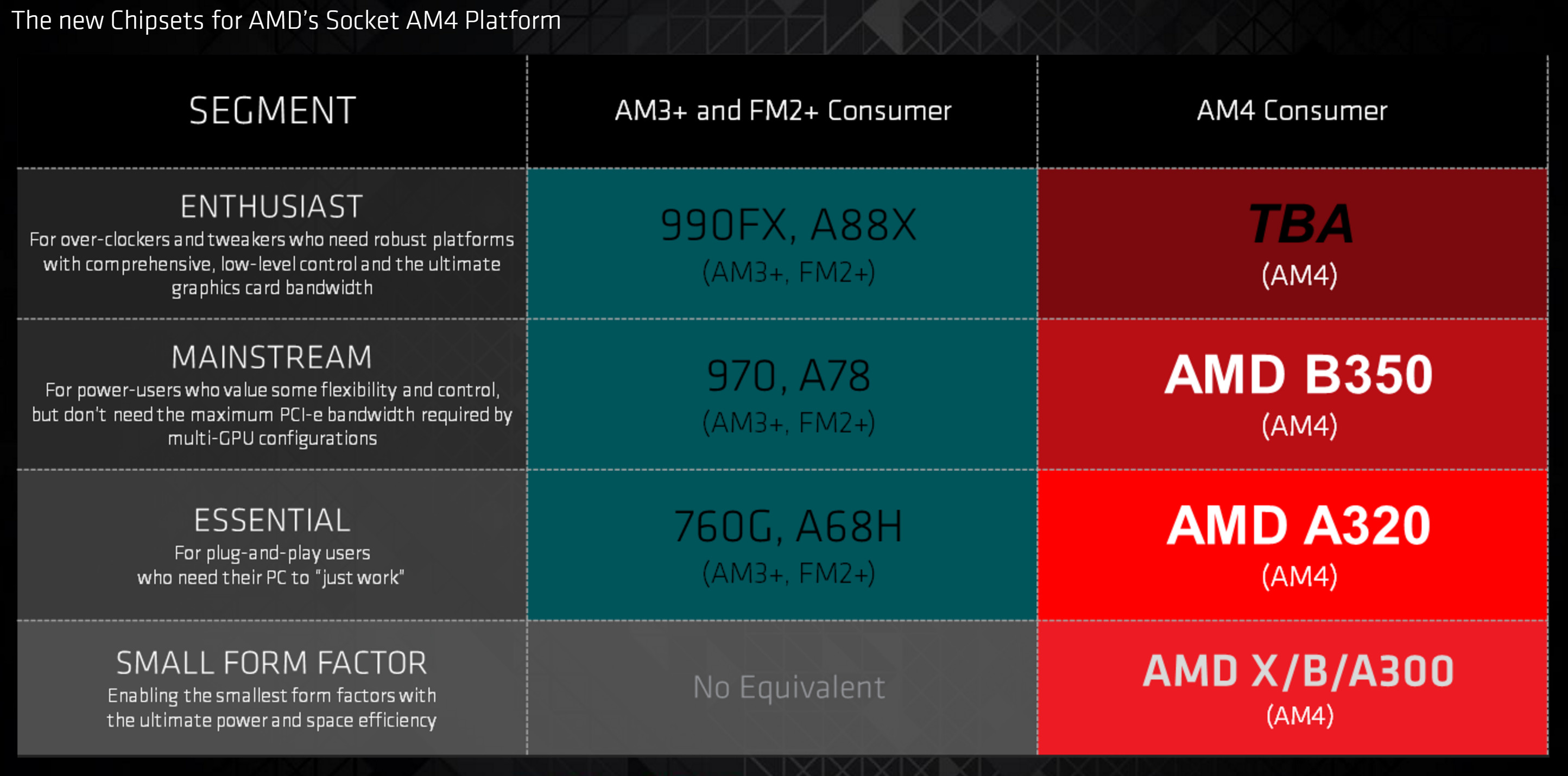
AMD is readying three motherboard chipsets for its next-generation socket AM4 desktop platform. With its 7th generation A-series "Bristol Ridge" APUs, the company launched the A320 mainstream and B350 premium motherboard chipsets, while keeping a better-endowed high-end chipset under the wraps, which makes its debut with the ZEN "Summit Ridge" processors. It turns out that this chipset is the AMD X370. The X370 chipset will debut with the first ZEN "Summit Ridge" processors along the sidelines of the 2017 International CES, next January.

AMD "Summit Ridge" desktop processors, much like the 7th generation A-series APUs they share the platform with, are SoCs, in that the chips combine the entire platform core-logic along with the CPU and its relevant uncore components. AMD is still giving this platform a sort of chipset, which adds to the number of SATA, USB, and general-purpose PCI-Express connectivity that the processor gives out. The AMD X370 should feature more 10 Gb/s USB 3.1 ports, SATA 6 Gb/s ports, 32 Gb/s M.2 or U.2 ports, and general-purpose PCIe lanes than what the B350 offers. This chipset should drive motherboards that are ready for multi-GPU setups.

AMD Unveils its 7th Generation A-Series Desktop APUs

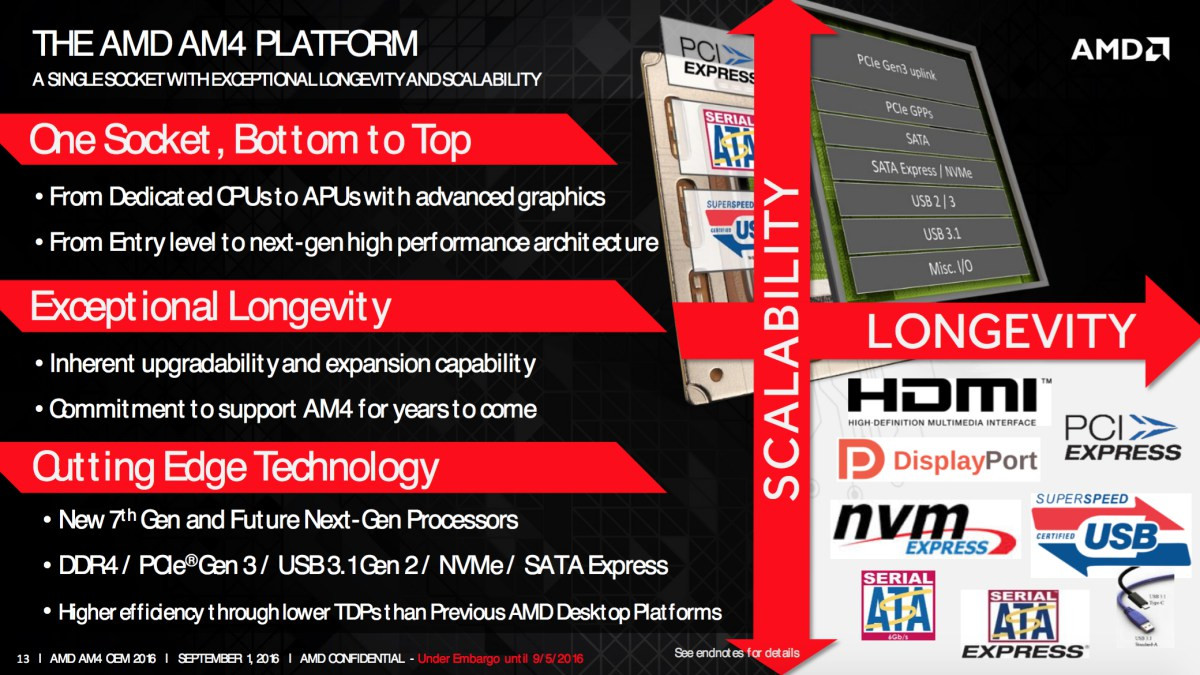
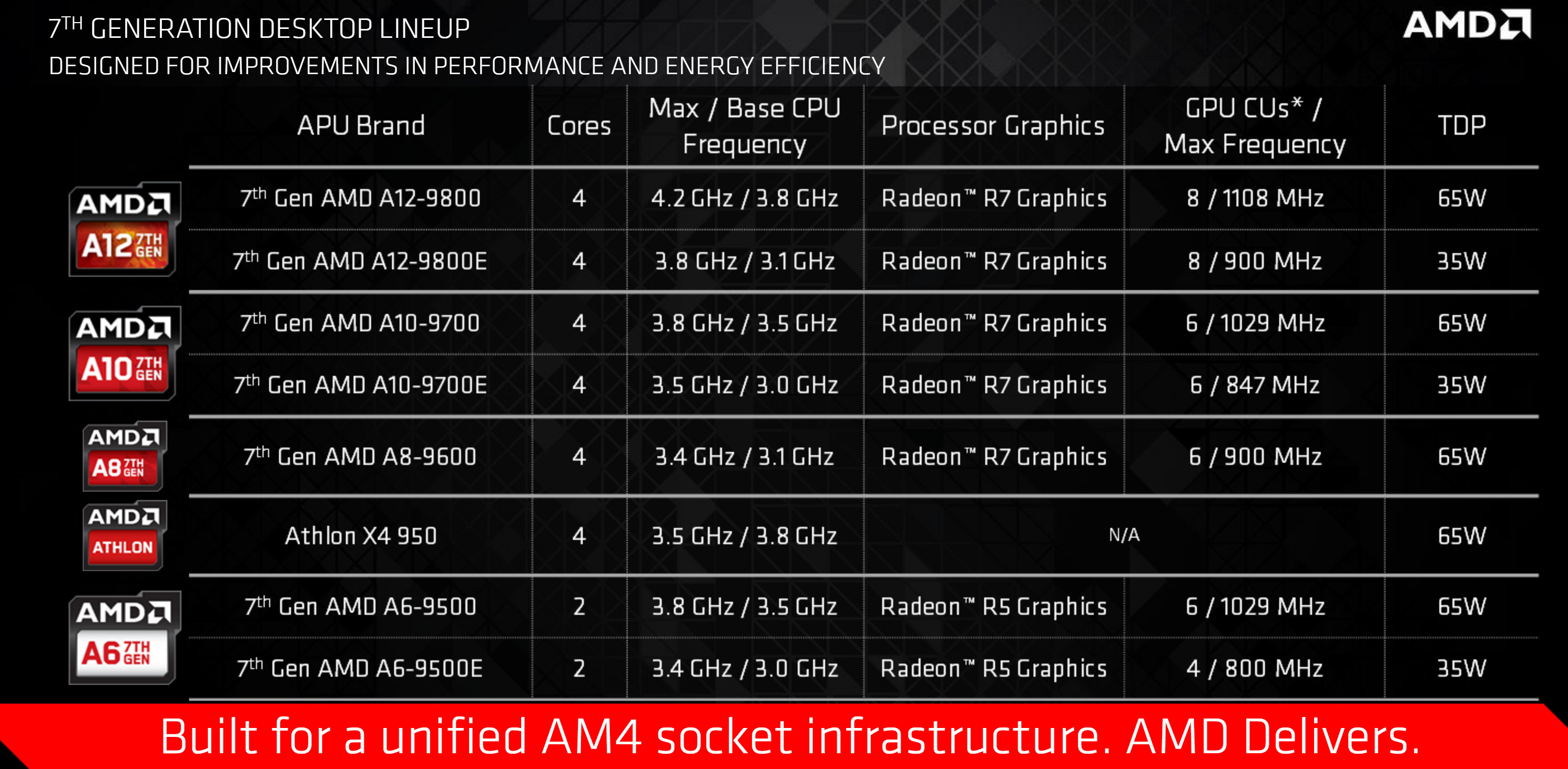
AMD today unveiled its 7th generation A-series desktop APUs. Unlike its predecessors, the new chips are full-fledged SoCs, built in the new socket AM4 package, on which the company plans to launch its "Zen" processors. The 7th gen A-series APUs are based on the "Bristol Ridge" silicon, and are the first fully-integrated SoCs (systems-on-chip) from the company in the performance-desktop segment, in that the APU completely integrates the functionality of a motherboard chipset, including its FCH or southbridge.

This level of integration includes PCI-Express root-complex, USB 3.0, and storage interfaces such as SATA 6 Gb/s emerging directly from the AM4 socket. Some AM4 motherboards could still include a sort of "chipset," which expands connectivity options, such as USB 3.1 ports, additional SATA ports, and a few more downstream PCI-Express lanes. The amount of downstream connectivity and features decide the grade of the chipset. AMD is initially launching two chipsets, the A320 for the entry-level segment, and the B350 for mainstream desktops. The company plans to launch an even more feature-rich chipset at a later date (probably alongside ZEN "Summit Ridge" CPUs).

AMD ZEN Quad-Core Subunit Named CPU-Complex (CCX)

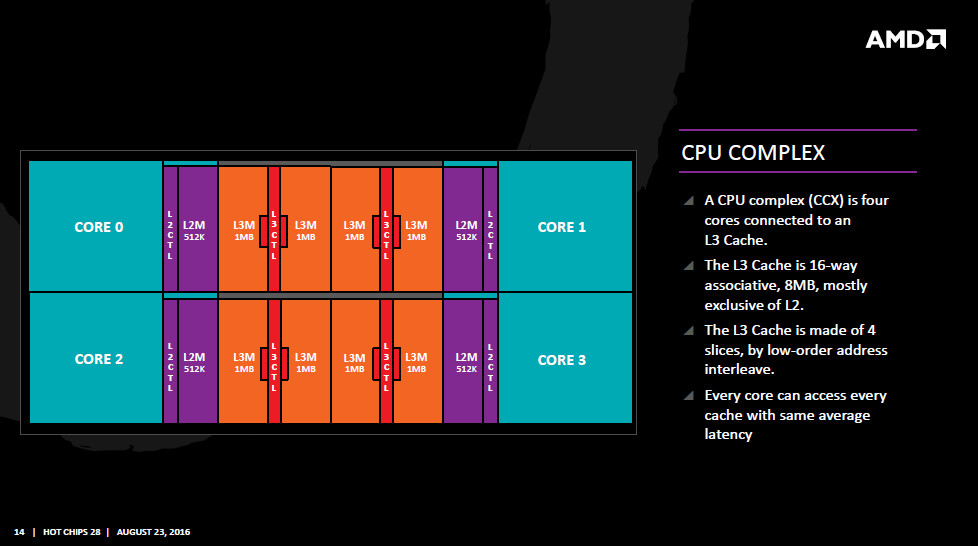
We've been chasing AMD Zen for a long time now. Our older report from April 2015 uncovered an important detail about component organization on Zen processors - the clumping of four CPU cores into a highly-specialized, possibly indivisible subunit referred to then, as the "Zen Quad-core Unit." Some of the latest presentations about the architecture, following AMD's "performance reveal" event from earlier this month, shed more light on this quad-core unit.

AMD is referring to the Zen quad-core unit as the CPU-Complex (CCX). Each CCX is a combination of four independent CPU cores. Unlike on "Bulldozer," a "Zen" core does not share any of its number-crunching machinery with neighboring cores. Each "Zen" core has a dedicated L2 cache of 512 KB, and four Zen cores share an 8 MB L3 cache. AMD will control core-counts by controlling CCX units. A "Summit Ridge" socket AM4 processor features two CCX units (making up eight cores in all), sharing a dual-channel DDR4 memory controller, and the platform core-logic (chipset), complete with an integrated PCI-Express root complex. Socket AM4 APUs will feature one CCX unit, and an integrated GPU in place of the second CCX. With this, AMD is able to bring the two diverse desktop platforms under one socket.
Return to Keyword Browsing
Nov 17th, 2026 14:01 CST change timezone

New Forum Posts

Popular Reviews

TPU on YouTube

Controversial News Posts