News Posts matching #Asus

Return to Keyword Browsing

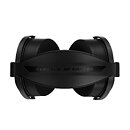
ASUS Republic of Gamers Announces ROG Kithara Headset

ASUS Republic of Gamers today announced ROG Kithara - the first ROG high-fidelity planar magnetic gaming headset. ROG partnered with HIFIMAN, a world-renowned planar headphone innovator, to develop ROG Kithara, giving gamers incredibly immersive, audiophile-grade in-game audio. The headset features special ROG-customized 100 mm HIFIMAN planar magnetic drivers to offer excellent frequency extension at both ends of the spectrum with minimal distortion, delivering sounds that stay true to the original source. The bass is deep yet smooth, while the treble is crisp and well-extended, providing clearer and more refined audio experiences to give gamers a competitive edge.

The ROG Kithara has an open-back design for an extremely wide and dimensional sound stage with clear sound separation of balanced bass, mids, and treble. This offers precise imaging and enhances gamers' spatial awareness, enabling them to pinpoint the exact source and location of in-game sounds. In addition, an on-cable full-band MEMS boom microphone ensures clean, distortion-free voice pickup across an ultrawide 20 Hz-20 kHz frequency range. Separate signal channels help prevent crosstalk, while the high SNR provides detailed and natural voice reproduction with minimal background noise. In addition, the Kithara includes a headphone cable with a balanced 4.4 mm plug and a 3.5/6.3 mm single-ended plug for compatibility with most DACs, amplifiers, PCs and gaming consoles. For laptops and mobile users, the Kithara includes a USB-C-to-dual-3.5 mm adapter for greater flexibility.



ASUS Announces New ExpertBook B5 G2 Laptop

ASUS today announced ASUS ExpertBook B5 G2, a compact yet powerful Copilot+ PC designed to elevate business productivity with AI-driven intelligence, enterprise-grade security, and premium professional design. Powered by the latest up to Intel Core Ultra 7 Series 3 processor and weighing just 1.38kgi with an aluminium build and a 180° lay-flat hinge, ASUS ExpertBook B5 G2 is engineered for mobility, durability, and seamless collaboration.

Superb AI performance
ASUS ExpertBook B5 G2 delivers exceptional productivity with the latest Intel Core Ultra 7 Series 3 processor, up to 50 TOPS NPU, and Intel graphics. Designed for professionals, it handles demanding multitasking, data-intensive applications, and AI-driven workflows with ease. Coupled with up to 19 hours of battery life, this business laptop supports all-day efficiency, making it a reliable companion for modern challenges.

ASUS UK Reports "High Repair Volume," Diverts Repairs to Overseas Facilities

The ASUS ROG Ally series is no stranger to issues, with early models of the ROG Ally suffering from issued with the microSD slot, due to its placement near the exhaust vent. Now, according to an automated message sent to a writer at Windows Central, ASUS is "experiencing high repair volumes" not too long after shipments started for the ASUS ROG Xbox Ally. This was discovered when Jennifer Young attempted to send in her five-month-old ASUS ROG Xbox Ally X for warranty repair after it spontaneously gave up the ghost, but was told that repairs could not be completed in the country of purchase, the UK, due to high repair volumes. Instead, select repairs will be processed in overseas repair centers, likely adding extra delays to the repair process.

[Editor's note: Our in-depth review of the ASUS ROG Xbox Ally X is now live]

High repair volumes aren't necessarily an indication of an issue with a device or any hardware at all—it could also indicate that the company sold far more devices than it had anticipated in a short timeframe. ASUS has previously had well-documented issues with its RMA and repair processes, however, and anecdotal Reddit reports also appear to indicate that the Xbox Ally X may have issues with the USB port, sticky buttons, and seemingly random motherboard issues. The reports of high repair volume come shortly after reports of software issues with the ASUS ROG Xbox Ally, although these seem to have been mostly caused by Microsoft itself, not ASUS.

ASUS ROG Launches Gaming Monitor with Built in Google TV

Back at CES this year, ASUS ROG announced the Strix OLED XG34WCDMS with an RGB QD-OLED panel and now the company has announced a variant of that same monitor, called the Strix OLED XG34WCDMTG, which oddly enough seems to be available ahead of the model announced at CES. The TG appears to stand for TV Google or something along those lines, as the XG34WCDMTG is ASUS's first gaming monitor with built-in Google TV support. We've already seen several monitors from both LG and Samsung that integrate TV functionality, but this appears to be one of the first, if not the first gaming monitor with Google TV support. The XG34WCDMTG comes with a version of Google TV based on Android 14 and comes with GeForce NOW as a pre-installed app, although we're unsure who would buy this to use the game streaming service over their PC.

Other Google TV specific features include Wi-Fi 6 support, a remote control, voice control and wireless projection. As far as the monitor specifications are concerned, the XG34WCDMTG sports a 34-inch, 3440 x 1440 RGB QD-OLED panel with an 1800R curvature with a typical brightness of 250 nits, but it can peak at 1000 nits in HDR mode. The panel has a maximum refresh rate of 240 Hz and it has a 0.03 grey to grey response time. The port selection consists of two HDMI 2.1 ports with FRL support, one DP 1.4, one USB Type-C with DP Alt mode and 90 W USB PD support, a pair of USB 2.0 ports and a headphone jack. The stand supports tilt, swivel and height adjustment. The XG34WCDMTG is currently sold on Amazon in the US for US$1,199, which according to Notebook Check is a US$200 premium over the XG34WCDMS.

ASUS ROG Launches MATRIX GeForce RTX 5090 D V2 24 GB Model in China

Last November, ASUS launched its GeForce RTX 5090 ROG MATRIX Platinum 30th anniversary 32 GB graphics card model. This strictly limited edition release—at the time, only 1000 units were produced—demanded a whopping $3999 (per unit) price tag. Unique selling points (USPs) included an unusual overall design, 3 oz copper PCB layers, a dual-power input involving the 16-pin 12V-2x6 connector and BTF-supplied power delivery, as well as the integration of a tiny Bosch Sensortec BMI323 inertial measurement unit (IMU). By early December, it was not clear whether initial quality issues had caused an official(?) recall of extremely overengineered MATRIX custom flagships. Months later, a Chinese market variant has hit the pre-order stage—over the weekend, ITHome reported on the pre-release status of this sanction-conforming model.

Despite featuring downgraded specifications, the customized GeForce RTX 5090 D V2 24 GB version still demands a hefty cost of entry—a main JD.com listing advertises a price tag of 29,999 yuan (~$4341 USD). Last month, Tony Yu—the manager of ASUS China—showcased a MATRIX GeForce RTX 5090 D V2 sample achieving a 3DMark Time Spy Extreme score of 28,638 points. This impressive tally was enabled via an 800 W operation mode, ITHome noted that this figure: "even surpasses NVIDIA's RTX PRO 6000 (21,760 cores vs. 24,064 cores), which is closer to (utilizing) the 'full-blooded' GB202 (GPU die's max. count of 24,576 units)." The older GeForce RTX 5090 D "V1" 32 GB card was no slouch in gaming and AI performance departments, but global tensions led to an eventual cut-off of supplies into China. Oddly, ITHome tracked the 25,999 yuan (~$3762 USD) listing of an MSI GeForce RTX 5090 D Gaming Trio 32 GB SKU on the JD.com e-tail platform, earlier on in 2026. In any case, local hardcore PC enthusiasts and AI companies can access top-tier "Blackwell" GPU hardware, whether in V2 or V1 guises. Black market options, including "truly banned" models are also (reportedly) available.

Major PC OEMs Reportedly Exploring Chinese CXMT Memory Amid Shortages

According to Nikkei Asia, some of the biggest PC makers like ASUS, Acer, Dell, and HP are exploring alternative memory suppliers amid industry-wide memory shortages, which are forcing PC OEMs to seek supply even from Chinese memory maker CXMT. Late last year, CXMT unveiled its homegrown DDR5-8000 and LPDDR5X-10667 memory modules at the 2025 China International Semiconductor Expo. This has likely prompted many OEMs to start finding alternatives to the traditional triad of SK Hynix, Samsung, and Micron, whose supply has been very limited outside AI accelerator workloads.

CXMT offers 12 Gb and 16 Gb LPDDR5X capacities, while DDR5 scales to 16 Gb and 24 Gb module formats. The 16 Gb DDR5 chips from CXMT measure 67 square millimeters, with a density of 0.239 Gb per square millimeter. The G4 DRAM cells are 20% smaller than CXMT's previous G3 generation. Reportedly, CXMT manufactures these chips using a 16 nm node, which is three years behind Samsung, SK Hynix, and Micron in manufacturing capabilities. However, CXMT is progressing quickly, and its DRAM modules adhere to the official JEDEC specifications and even exceeding the specification, making them ideal for OEM PCs depending on the use case.

ASUS IoT Introduces PE1000U Rugged Fanless DIN-Rail Industrial PC

ASUS IoT, a global leader in AIoT solutions, today announced PE1000U, a compact DIN-rail-mountable edge computer powered by an Intel Core Ultra Series 2 processor. Measuring just 63 x 110 x 160 mm, PE1000U features extensive I/O connectivity to address the growing demand for real-time intelligence at the edge. Housed in a fanless, rugged IP40-rated chassis that's been subjected to US MIL-STD-810H testing for 5Grms vibration, PE1000U is able to operate in environments with temperatures ranging between -25°C to 70°C. It accepts a wide 9-36 V DC power input and includes built-in ignition control, making it suitable for on-vehicle deployment. PE1000U is also ideal for collaborative robots, AMR, industrial vision equipment, and other space-constrained deployments where reliability is paramount.

Performance and connectivity in a palm-sized package
PE1000U is powered by either an Intel Core Ultra 265U or 235U processor paired with hybrid cutting-edge CPU, GPU, and NPU acceleration for high single-thread responsiveness for motion control while simultaneously accelerating AI inference and graphics workloads. Front-access I/O connectors include four USB ports, up to four COM ports, and up to four Ethernet ports (two 2.5G by default) to simplify sensor, camera, and network integration. Onboard dual CAN Bus and an isolated DIO module enhance deterministic control, while DisplayPort and HDMI outputs support up to two 4K displays for HMI or machine-vision monitoring.

ASUS Announces ROG Strix Aiolos, 20 Gbps USB 3.2 Gen 2x2 SSD Enclosure

ASUS Republic of Gamers (ROG) today announced the ROG Strix Aiolos SSD Enclosure, a premium external SSD enclosure built for gamers and creators who demand top-tier performance, seamless device management. Engineered for next-generation NVMe M.2 storage, the ROG Strix Aiolos delivers lightning-fast transfer speeds, enhanced thermal efficiency, and an exclusive ROG SSD Dashboard, which provides real-time drive status updates. Designed for life on the move, it also incorporates a durable metal hook with a fabric tag to ensure convenient and secure portability.

Ultra-fast transfers and smarter storage management
The ROG Strix Aiolos delivers high-speed portable performance with USB-C 3.2 Gen 2x2 connectivity supporting transfer speeds of up to 20 Gbps, enabling users to move large media files or entire game libraries with ease. Its versatile dual M.2 interface, compatible with both NVMe PCIe (2242/2260/2280) and SATA SSDs, offers flexible upgrade and expansion options for a wide range of user needs. For effortless oversight, the enclosure features the exclusive ROG SSD Dashboard, which features a custom UI that provides users with a complete real-time overview of SSD status, performance, and other key metrics. Tailored for ROG enclosures, it makes storage management simple and intuitive.

ASUS ExpertBook Ultra AI PC's Level the Playing Field for SMBs

Data from ASUS's Future of SMB Report reveals that small and medium-sized businesses (SMBs) are increasingly adopting the mindset, and tools, of large enterprises to stay competitive. According to the report, 88% of SMB owners in the United States believe that "thinking bigger" is essential for future growth. This shift is being driven in part by competitive pressure: among those who strongly agree, 41% say they face the most competition from larger enterprises, not just peers or start-ups.

Rather than relying solely on headcount or traditional infrastructure, SMBs are using AI-powered PCs to boost productivity and streamline decision-making. From intelligent forecasting to content creation and workflow automation, AI is now a key enabler of enterprise-level capability delivered with small business agility.

Intel's Core Ultra 9 290K Plus Shows 10% Performance Boost Over Core Ultra 9 285K

Intel's next desktop "Arrow Lake Refresh" CPU upgrade is inching closer to reality. The Core Ultra 9 290K Plus has been spotted in a new Geekbench run, adding to the evidence that the "Arrow Lake Refresh" will indeed offer a meaningful performance improvements over its predecessors. The test system used an ASUS ROG Strix Z890-E Gaming Wi-Fi board with 64 GB of DDR5-6800 memory. The processor achieved scores of 3,535 in the single-core test and 25,106 in the multicore test. Compared to the Core Ultra 9 285K's typical scores of around 3,200 and 22,560, this represents improvements of approximately 10.5% and 11.3%, respectively. These results place the 290K Plus at the top of Intel's consumer CPU rankings in Geekbench's database. An earlier leak on different hardware showed slightly lower results, suggesting that this newer test run benefits from better optimization rather than just faster memory.

The 290K Plus SKU keeps the same 24-core layout as its predecessor with 8 P-Cores and 16 E-Cores, plus identical power limits of PL1 of 125 W and PL2 of 250 W. The gains come from higher clock speeds. According to rumors, the efficiency cores now boost to 4.8 GHz, up 200 MHz, while the performance cores get an extra 100 MHz on both turbo and thermal velocity boost. The benchmark registered the chip running at 5.7 GHz during testing. Intel has confirmed the ARLR is coming but has stayed quiet on specific models and dates. Leaks suggest a March or April release, and since these chips use the same LGA 1851 socket, they should work as drop-in upgrades for current Z890 motherboards. As with any pre-release numbers, may not reflect final CPU performance, so final performance data and gaming results that come from third-party reviews will show the real-world situation.

Modder Puts vBIOS From ASUS ROG Matrix RTX 5090 With +200 W Extra Power Onto Astral RTX 5090

Flashing alternative vBIOS versions onto GPUs is a common practice used by modders to increase power limits on GPUs, and it has only become more common since NVIDIA started clamping down on overclocking options available to users via software tools. The recently announced ASUS ROG Matrix Platinum has become an attractive source for one such high-wattage vBIOS, although it has proven difficult to get the aforementioned vBIOS onto certain cards. One user on the HardwareLuxx forum, however, has managed to get the 800 W vBIOS from the Matrix Platinum GPU onto an ASUS ROG Astral GeForce RTX 5090 (read our review of the latter here), although the mod only seems to be necessary on the black version of the card.

It turns out that in order to flash the Matrix vBIOS onto the black Astral 5090 required physical modifications to the GPU PCB itself—this is due to the rear-mounted fan being wired with the front middle fan on that particular version of the card, as opposed to on a separate header as it is on the white version. The modification in question involves swapping a pull-down resistor in the serial in signal line of the EEPROM to a pull-up resistor. Obviously, this mod alone requires more than a little bit of soldering experience, but there's also the question of cooling. The stock version of the ROG Astral is designed with a 600 W power limit, and the Matrix vBIOS lifts that to 800 W, so realistically, any overclocking attempts made with the modded card requires an aftermarket cooling solution to handle the increased power and corresponding heat.

ASUS GPU Tweak Now Has Level Sense GPU Sag Detector Support for ROG Astral Cards

Not too long ago, ASUS announced a new feature called Level Sense, which is meant to monitor internal IMUs on some premium ASUS GPUs and notify users when the GPU in their system is starting to sag. The feature was previously limited to ASUS ROG Matrix GPUs, but ASUS has just released an update to GPU Tuner III that makes the feature compatible with ASUS ROG Astral GPUs as well. This includes both the ASUS ROG Astral and ROG Astral BTF GPUs, meaning it is still exclusive to NVIDIA flagship GPUs.

Level Sense officially landed for the new GPUs with the January 25 update 2.0.8.5, which also fixed some stability issues. We recently reviewed the ASUS ROG Astral OC RTX 5090, and in our review, the chunky cooling solution did a good job at keeping the unruly chip inside it. Such cooling solutions, however, often weigh several kilograms, necessitating unorthodox solutions, like GPU support brackets and the aforementioned software and sensors. Users can also adjust how sensitive the sensor is to shifting, potentially allowing for non-level surfaces or minor sag before notifying the user.

NVIDIA Releases GeForce 591.86 WHQL Game Ready Drivers

NVIDIA has released its latest GeForce Game Ready driver, version 591.86 WHQL, which includes day-one support for the ARC Raiders: Headwind Update. This driver also provides initial support for the newly launched PvP shooter, Highguard, and updates compatibility for the strategy RPG, Arknights: Endfield. Players of Arknights: Endfield can take advantage of DLSS 4 Multi Frame Generation on RTX 50 series cards. NVIDIA claims that gamers can expect approximately triple the performance at 4K with maxed settings or reach the game's 480 FPS cap at lower resolutions. The game's developers, HYPERGRYPH, are also working to integrate native DLSS support in a future update. NVIDIA has resolved the issue of artifacts appearing during gameplay in Total War: Three Kingdoms. Additionally, this driver addresses problems with SDR content when Windows Automatic Color Management is enabled, ensuring accurate SDR color management, and ASUS G14 laptop freezes have been fixed.
DOWNLOAD: NVIDIA GeForce 591.86 WHQL

ASUS Addresses Reports of 800-series Motherboards Killing AMD Ryzen 7 9800X3D CPUs

We are aware of recent reports concerning AMD Ryzen 7 9800X3D CPUs and ASUS AMD 800-series motherboards, and we have initiated an immediate internal review. Our teams are conducting preventive checks on product compatibility and performance, working closely with AMD to validate reported cases and ensure ongoing stability and quality. We are looking to provide timely solutions to ensure our products and services meet expected standards.

Users are also advised to update their ASUS AMD 800-series motherboard to the latest BIOS via ASUS EZ Flash or BIOS Flashback to help ensure system stability; we provide an official technical support FAQ with detailed instructions. Customers who are affected or have concerns are encouraged to contact ASUS customer service for direct assistance. We take this matter seriously and value our customers' trust, and we remain committed to transparency and to ensuring our products can be used with confidence.

ASUS Unveils ExpertBook B3 G2

ASUS today announced ASUS ExpertBook B3 G2, a configurable Copilot+ PC designed for business, available in 14-inch and 16-inch models and featuring a durable, lightweight design starting from just 1.41 kg, a 180° lay-flat hinge, advanced AI capabilities, enterprise-grade security, and seamless collaboration.

With up to an AMD Ryzen AI 9 HX processor with integrated GPU and NPU acceleration power, ExpertBook B3 G2's advanced AI features—including ASUS MyExpert, Copilot, and noise-canceling technology—to enhance business productivity. The lightweight, easily-maintained design offers extensive I/O options and support for high-speed Wi-Fi 7 connectivity. Security is strengthened by ASUS ExpertGuardian, delivering NIST SP 800-193 compliance, dual ROM BIOS recovery, and TPM 2.0 protection for robust data resilience.

ASUS Prepping Motherboard BIOS Updates for Core Ultra 200K+ "ARL-S R" CPUs

Intel did not introduce its oft-leaked "Arrow Lake Refresh" desktop and laptop CPU ranges at CES 2026, despite plenty of pre-event activity suggesting a near future arrival at retail. Almost two weeks after the conclusion of new product promotional activities in Las Vegas, ASUS has just started to hype up its own "in advance" preparations for Team Blue's inevitable release of "ARL-S Refresh" desktop chips. A few hours ago, the Taiwanese hardware manufacturer's main social media account proudly declared: "ready for the future of Intel! ASUS W880, Z890, Q870, B860 & H810 motherboards are BIOS READY—rolling out in late January." Leaked "Core Ultra 200 Plus" nomenclature suggests that Intel has kept its slightly upgraded designs within the Core Ultra Series 2 generation. Previously, their refreshment of "Raptor Lake" was deemed worthy of becoming a new processor generation: 14th Gen Core.

Curiously, today's ASUS announcement labels the latest mid-gen refresh as next generation: "all set for Intel Arrow Lake Refresh! Upgrade smoothly. Next-gen power is coming!" Gaming CPU market segment trackers believe that the "Plus/+" designation will only turn up on three new SKUs: Core Ultra 9 290K Plus, Core Ultra 9 270K Plus, and Core Ultra 5 250K Plus. This seemingly sparse lineup is expected to keep Team Blue's LGA 1851 platform propped up for a little bit longer, until the successive and truly next-gen "Nova Lake-S" desktop family rolls up with its matching LGA 1954 socket. About a week ago, Golden Pig Upgrade predicted that Intel would launch Ultra 200 Plus desktop and laptop/notebook (HX) products within a March/April window. Coinciding with ASUS readying BIOS updates for 800-series motherboard later this month, Intel and its hardware partners will be unleashing Core Ultra 300 "Panther Lake-H" mobile processors.

Boosteroid Adds Official ROG Ally Series Support for Optimized Handheld Cloud Gaming

ROG Ally gaming handhelds offer tons of ways to play your favorite games. But cloud streaming continues to up the ante, with Boosteroid boasting high-resolution, high-refresh cloud-streamed games optimized for your ultimate gaming handheld. Boosteroid, the world's biggest independent cloud gaming service, has optimized its infrastructure to better serve ROG Ally series handhelds. Boosteroid has partnered with ROG to make the most of the Ally's architecture for uniquely powerful gaming experiences, including up to 4K, 120 FPS cloud-streamed games.

"We have deepened our strategic cooperation with ASUS to ensure that our software utilizes the capabilities of the ROG Ally series to deliver a highly responsive and visually rich experience that sets a new standard for handheld cloud gaming," said Ivan Shaichenko, CEO of Boosteroid.

ASUS ROG Swift PG27AQWP-W 720/540 Hz Dual-Mode OLED Monitor Available for Pre-Order in US

ASUS announced its Tandem OLED ROG Swift PG27AQWP-W QHD gaming monitor in November 2025, but it has not been available to purchase in the US since that announcement. The 27-inch monitor's calling card is its ability to switch between a 1440p mode that runs at 540 Hz and a 720p mode that runs at 720 Hz. What ASUS calls the "world's first dual-mode 540 Hz / 720 Hz" gaming monitor is now available to pre-order at Newegg. The starting price is $1,099.99, and the monitor will enter regular retail availability on January 30, 2026.

Aside from the dual-mode functionality, the PG27AQWP-W boasts DisplayHDR 500 TrueBlack and AdaptiveSync 540 Hz certifications. The 540 Hz mode doesn't require Display Stream Compression, thanks to DisplayPort 2.1 with UHBR20 link support. ASUS claims that the Tandem OLED tech helps the display get brighter and have a 60% longer lifespan. The display also features ASUS also offers a three-year burn-in warranty and the ASUS OLED Care Pro suite is there to help reduce the risk of burn-in.

ASUS Announces ROG Strix GS-BE7200 Dual-Band WiFi 7 Gaming Router

ASUS Republic of Gamers (ROG) today announced the ROG Strix GS-BE7200, a next-generation dual-band Wi-Fi 7 (802.11be) gaming router designed for players who demand fast, stable and intelligently optimized connectivity. Leveraging Multi-Link Operation (MLO), ultrawide 160 MHz channels, and 4K-QAM modulation, the GS-BE7200 maximizes efficiency and overall wireless capacity, delivering wireless throughput of up to 7200 Mbps to enable ultra-smooth online gameplay, low-latency streaming, and high-speed data transfers - even in congested environments.

The GS-BE7200 features six internal antennas, including an enhanced 5-antenna 5 GHz (5T5R) system that improves long-range throughput by up to 15%, compared to traditional 4T4R designs. This architecture strengthens stability across multiroom setups and ensures that competitive gamers enjoy fast, uninterrupted connections from anywhere in the home.

ASUS Revises PCIe Q-Release Design Yet Again, Claims "Users Were Confused" By Buttonless Mechanism

When it first launched the Q-Release Slim PCIe mechanisms on its high-end gaming X870 Gaming motherboards, the new connector ended up causing scratches on the PCIe contacts of GPUs after repeated insertion and removal cycles. The connector was later quietly revised in March 2025 to remove the metal bracket that was blamed for the scratched contacts. Now, ASUS has once again revised the Q-Release Slim PCIe mechanism design for the latest Neo series motherboards, once again requiring a button to release PCIe cards from the motherboard.

In a video previewing the updated 2026 motherboard line-up, ASUS North America explains that the Q-Release mechanism was revised because "some users were confused" by the connector, which didn't require any intervention beyond pulling the GPU out of the slot to remove it, while others simply wanted a button to be present—likely those who had heard about the aforementioned scratched PCIe connectors and didn't want the added risk. The new motherboard PCIe retention mechanism will be present on all of the new NEO motherboards ASUS announced for 2026, which includes more affordable gaming motherboards, like the ASUS TUF Gaming B850-Pro WiFi7 Neo and the creator-focused ProArt B850-Creator WiFi Neo and goes all the way up to the premium ROG Crosshair X870E Glacial motherboard.

ASUS Unveils Mac-Friendly Features on ProArt Displays to Enhance Workflows

ASUS today announced new features on ProArt displays to enhance productivity and creative workflows for MacBook, Mac Mini, and Mac Studio users. ASUS DisplayWidget Center software for macOS provides an intuitive interface that allows users to easily adjust monitor settings, including brightness, contrast and color temperature. ASUS DisplayWidget Center also enables users to adjust the brightness of the display directly via the MacBook shortcut buttons. Plus, new M Model P3 color settings align monitor colors with MacBook for consistent color accuracy.

High-resolution, high-pixel-per-inch ProArt displays allow users to fully experience the exceptional graphics prowess of the latest Mac devices. And with up to Delta E<1 color accuracy and wide 99% DCI-P3 gamut, every detail comes to life, enhancing the quality of work and efficiency of creative workflows.

NVIDIA Reportedly Ends GeForce RTX 5070 Ti Production, RTX 5060 Ti 16 GB Next

NVIDIA has reportedly stopped production of its mid-range GeForce RTX 5070 Ti graphics card, according to ASUS, one of the largest PC manufacturers. ASUS shared exclusive information with Hardware Unboxed, revealing that NVIDIA has created a supply shortage for the GeForce RTX 5070 Ti, effectively ending its production. As one of NVIDIA's largest AIB partners, ASUS has learned that the model is essentially in end-of-life status. The company noted the supply shortage and offered no further comments on availability or potential improvements in supply. Since retailers and manufacturers can't source enough stock of the GeForce RTX 5070 Ti GPUs, the shortage has led to significant price increases for these models and suggests that the future availability of this GPU SKU might be nonexistent.

Update 2, January 16, 08:30 UTC: ASUS issued an official public statement regarding the "incomplete" information about the RTX 5070 Ti and RTX 5060 Ti EOL.
ASUSWe would like to clarify recent reports regarding the ASUS GeForce RTX 5070 Ti and RTX 5060 Ti 16 GB. Certain media may have received incomplete information from an ASUS PR representative regarding these products. The GeForce RTX 5070 Ti and GeForce RTX 5060 Ti 16 GB have not been discontinued or designated as end-of-life (EOL). ASUS has no plans to stop selling these models. Current fluctuations in supply for both products are primarily due to memory supply constraints, which have temporarily affected production output and restocking cycles. As a result, availability may appear limited in certain markets, but this should not be interpreted as a production halt or product retirement. ASUS will continue to support the GeForce RTX 5070 Ti and RTX 5060 Ti 16 GB and is working closely with partners to stabilize supply as conditions improve.

ASUS ROG Harpe Ace Mini Core Gaming Mouse Officially Launches at $49.99

The ASUS ROG Harpe Ace Mini Core has officially been listed on Amazon at $49.99, and some of the specifications seem to have changed or been updated since ASUS announced the diminutive lightweight gaming mouse back in October 2025. For starters, the product page now lists the ROG Harpe Ace Mini Core at 52 g, which is 3 g (or 6% heavier than previously claimed), and ASUS has clarified that the ROG Harpe Ace Mini Core has a paracord cable. At the time of writing, the mouse is still temporarily out of stock on Amazon, although it's unclear if there was stock when the product page went live.

In addition to the aforementioned weight increase, ASUS has also revealed that the ROG Harpe Ace Mini Core is compatible with the new ASUS Gear Link web-based driver software that has also been available for the company's latest HE keyboard launches. Another specification that has been clarified is the polling rate, which remains at 1 kHz instead of the 4 kHz and 8 kHz options offered by much of the competition these days. The rest of the mouse's specifications and features remain unchanged, as does the hot-swap switch design.

ASUS Apparently Unveiled Next-gen W890 Pro WS EBB Motherboard at CES

Days after the conclusion of CES 2026, ASUS has presented a brand-new workstation motherboard design on social media. Today's mid-morning teaser claims that company representatives had already introduced their behemoth EBB format product in Las Vegas—furthermore, they describe their next-gen board as being "built for pros who demand serious performance and rock-solid stability." An included photo shows a demonstration sample sitting on top of a black plinth, emblazoned with the ASUS logo and a customary "in search of incredible" slogan. TechPowerUp and several other PC hardware media outlets did not manage to inspect this particular unit during visits to the Taiwanese brand's showroom space. The ASUS social media account hinted that "the future of workstations" is arriving soon, and included a cryptic link to their ExpertCenter Pro ET900N G3 workstation product page. It should be noted that this specific system is powered by NVIDIA's GB300 "Grace Blackwell" ultra desktop superchip.

It is possible that an Intel-based ExpertCenter workstation variant will emerge in the near future. The teased new-gen W890 Pro WS mainboard could succeed the company's current Pro WS W790E-SAGE SE design. The lone ASUS preview shot shows an LGA 4710 socket. This format will host Team Blue's upcoming Xeon "Granite Rapids-WS" HEDT processor family. Coincidentally, the supposed 86-core flagship "Xeon 698X" SKU has made an appearance this week. Forthcoming compatible motherboards are expected to utilize the W890 workstation platform chipset. The gigantic new ASUS Pro WS layout sports eight DDR5 DIMM slots, seven PCIe x16 slots, and four Gen 5 x4 slots. Various large heatsinks and two active cooling fans temper crucial elements on this feature-rich board. Naturally, pricing information is not available at this point in time. Given that the Pro WS W790E model goes for $1600+, we expect its successor to launch with a price tag closer to $2000.

ASUS's AMD Ryzen AI 400 Laptops To Launch on January 22

AMD launched the Gorgon Point Ryzen AI 400 mobile refresh in early January at CES 2026—check out our coverage of the launch for the full run-down—and suggested that the new silicon would bring with it improvements in both iGPU and CPU performance thanks to higher boost residency and clock speeds. Now, it seems as though ASUS has unofficially confirmed, via @RubyRapids and @realVictor_M on X, that the new Gorgon Point APUs will launch on January 22 with the company's new laptops. This will likely mark the start of a slew of new laptops launching with AMD's new Ryzen AI 400 APUs from other manufacturers, as well.

According to the leaks, the January 22 Gorgon Point laptop launch will be happening in China, but it's unclear if that will also be the international launch date. So far, aside from what appears to be a China-exclusive model with the AMD Ryzen AI 7 445, ASUS looks to be launching a new VivoBook Pro 16 powered by an unspecified AMD Ryzen AI 400 APU, up to 32 GB of LPDDR5X memory, and 1 TB of PCIe 4.0 SSD storage. The new thin-and-light laptop will also have an 80 W TDP and a 1100-nit OLED display with 100% DCI-P3 coverage and a 165 Hz refresh rate. There will also be a ZenBook Air 16, which is slated to feature and AMD Ryzen AI 9 465 with 32 GB of RAM, a 1 TB SSD, and a 2.8 K OLED display with 1,100 nits of brightness. The leaked PR images, with machine translated text, are available below.
Return to Keyword Browsing
Nov 25th, 2026 22:55 CST change timezone

New Forum Posts

Popular Reviews

TPU on YouTube

Controversial News Posts