
News Posts matching #CUDIMM

Return to Keyword Browsing

Transcend Launches 64 GB DDR5-6400 CUDIMM and CSODIMM Embedded DRAM Modules

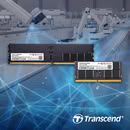
Transcend Information, Inc. (Transcend), a leading global manufacturer of memory and storage solutions, has introduced its DDR5-6400 CUDIMM and CSODIMM embedded DRAM modules, offering capacities of up to 64 GB per module to meet the computing demands of edge AI, smart manufacturing, industrial automation, and high-performance embedded systems. Featuring DDR5's dual-channel architecture and a low operating voltage of 1.1 V, the modules incorporate a Client Clock Driver (CKD) to minimize signal interference caused by noise and jitter during high-speed operation, thereby enhancing signal stability. An integrated power management IC (PMIC) further improves power efficiency and voltage regulation. The SPD chip features a built-in temperature sensor for real-time memory temperature monitoring, while a transient voltage suppressor (TVS) helps protect components from damage caused by voltage fluctuations. In addition, On-Die ECC built into the DDR5 DRAM chips enhances data integrity and long-term operational reliability. Together, these features provide next-generation industrial computing platforms with a high-capacity, high-performance, and dependable memory solution.

Up to 64 GB per Module for Demanding Industrial Applications
Transcend's DDR5-6400 CUDIMM and CSODIMM modules offer capacities of up to 64 GB per module, meeting the intensive computing requirements of industrial computers, edge computing devices, and embedded systems. DDR5's dual-channel architecture improves data access efficiency and overall transfer performance, while DDR5-6400 speeds accelerate large-scale data exchanges and real-time processing. The modules provide the capacity and bandwidth required for high-performance industrial applications.
Transcend Launches Full Range of DDR5-7200 Embedded DRAM Modules

Transcend Information, Inc. (Transcend), a global leader in memory and storage solutions, has introduced a comprehensive lineup of DDR5-7200 embedded DRAM modules designed to meet the growing performance and data-processing demands of next-generation computing platforms. The portfolio includes CUDIMM, CSODIMM, ECC CUDIMM, ECC CSODIMM, and RDIMM modules, supporting a wide range of applications—from AI PCs, desktop computers, and industrial embedded systems to workstations, servers, and data centers. With transfer speeds of up to 7200 MT/s, the modules significantly enhance memory bandwidth, data-processing efficiency, and multitasking performance while maintaining low power consumption, stable operation, and high system reliability. This enables customers to accelerate the deployment of AI computing, edge computing, and other data-intensive applications.

7200 MT/s High-Speed Data Transfer for Next-Generation Computing
Transcend's DDR5-7200 modules accelerate large-scale data access and multitasking, making them ideal for applications such as AI inference, industrial automation, smart healthcare, in-vehicle systems, and high-performance computing. Featuring a dual-channel architecture, an integrated power management IC (PMIC), a low operating voltage of 1.1 V, and on-die ECC, the DDR5 DIMM modules enhance data access efficiency while optimizing power management and ensuring stable data transmission.

Rambus Announces DDR5 9600 Server RDIMM Chipset

Rambus Inc. (NASDAQ: RMBS), a premier chip and silicon IP provider making data faster and safer, today announced its complete DDR5 9600 Client Memory Module Chipset for high-performance CUDIMM, CQDIMM and CSODIMM modules in future generation AI PCs. The chipset includes the new Gen 2 Client Clock Driver (CKD02), delivering breakthrough performance with support for PC memory module operation of up to 9600 MT/s, Power Management IC (PMIC5120) and Serial Presence Detect Hub (SPD Hub).

With the rise of agentic AI, PCs now plan, execute, and adapt workflows in real time. These workloads require persistent context, concurrent processing, and continuous data movement between the processor and system memory requiring significant increases in both bandwidth and capacity. At the same time, scaling DDR5 memory beyond 6400 MT/s introduces new technical challenges, including signal degradation, clock jitter, and timing instability. To address these challenges, the industry is transitioning to clocked memory modules, including CUDIMM and CQDIMM for desktops and CSODIMM for laptops, which incorporate an on-module client clock driver (CKD) to condition and redistribute the clock signal.

Team Group Memory at Computex 2026: T-Create and T-Force Lead the Charge

Team Group brought a large selection of new products to Computex 2026 across its main brand, the T-Force brand targeting PC enthusiasts, and the T-Create brand targeting creative professionals and AI developers. We begin our tour with the new Team Group T-Force Vulcan DDR5 CAMM2 module. Intended to be installed along the plane of the motherboard, CAMM2 modules conserve Z-Height around the CPU socket, and are dual-channel memory modules. The T-Force Vulcan CAMM2 somes with a thick heat spreader with a carbon fiber decal on top. Next up, is the T-Force Delta CAMM2, which is among the first CAMM2 modules we've seen with an ARGB LED lighting setup. Both these CAMM2 modules offer speeds of DDR5-8000. The T-Force DARK Low-Profile RGB are a line of DDR5 UDIMMs with reduced Z-Height, yet featuring ARGB LEDs. These come in mid-range speeds of DDR5-6400.

Next up, is the T-Create Expert AI 4R CUDIMM, a quad-rank memory module with CKD. A single module offers 128 GB of density across four ranks, along with speeds of DDR5-8000 and timings of 64-64-64-128, at 1.1 V. Team Group demoed this module on an MSI MEG Z890 Unify-X motherboard that has a 1 DIMM per channel topology. The new T-Create Master AI DDR5 RDIMM series is targeted at HEDTs and workstations that support ECC RDIMMs. The module shown offers 64 GB of density (per module), with DDR5-7600 speed at CL38. Winding things up on the memory front is the T-Create Expert AI LPCAMM2 for notebooks and mini-PCs that support LPDDR5X.
More pictures follow.

Apacer Memory and Storage Innovations at Computex 2026

Apacer at the 2026 Computex showed off its latest PC memory and storage products under its own brand, and under its ZADAK brand targeting PC enthusiasts and gamers. We begin our tour with its enthusiast-segment PC memory. The company showcased the NOX series of DDR5 memory kits under its main marquee. The new Apacer NOX CUDIMM comes in out-of-the-box frequencies ranging between DDR5-8400 and DDR5-9200, with capacities of 16 GB, 24 GB, and 32 GB per module. The modules are crowned by silicone ARGB diffusers.

The ZADAK PRO RGB DDR5 series of memory are conventional DDR5 DIMMs that come in speeds ranging between DDR5-6000 and DDR5-8000. The ZADAK PRO ROG Certified memory comes in DDR5-6000 with CAS latencies as low as 28. We're not sure if these feature EXPO-ULL. We've also seen the Apacer NOX RGB DDR5 series from last year, which come in DDR5-5200 to DDR5-8000 speeds. Winding things up on the memory front are the Apacer Panther RGB DDR5 series of mainstream memory kits that range between DDR5-5200 and DDR5-6800.

KLEVV at Computex 2026: 4R CUDIMMs, CRAS C925 G-Lite, CRAS V RGB Prime Memory

Essencore KLEVV brought a slew of new memory and storage products to Computex 2026. We begin our touer with the new LITE V RGB DDR5 memory, which comes in capacities of up to 64 GB, featuring an RGB-crowned heat spreader, and mainstream speeds of DDR5-6400. The CRAS C910 G is a mid-range Gen 4 x4 M.2 NVMe SSD. The CRAS Va RGB is a high-performance DDR5-10000 CUDIMM, we were shown a 48 GB (24 GB ×2) kit. Also shown was a Geniune G540 series Gen 5 x4 M.2 NVMe SSD.

KLEVV CRAS V RGB Prime is the company's first kit implementing AMD EXPO-ULL, it offers DDR5-6000 speeds with a CAS latency of 26. We were shown a 32 GB (16 GB ×2) kit paired with a Ryzen 9 9950X3D. The CRAS C925 G Lite is a value Gen 4 x4 M.2 NVMe SSD. We now more on to the star of the show, a 256 GB kit (128 GB ×2) featuring quad-rank (4R) CUDIMMs. This module offers a stunning DDR5-8000 speed with 128 GB density, letting you max out the 256 GB limit of the Core Ultra 7 270K Plus "Arrow Lake" desktop processor with just two DIMMs, without compromising on speeds.
More pictures follow.

OCPC Showcases Pista and Accelerator DDR5 Memory, New Gen 5 and Gen 4 M.2 NVMe SSDs

Overclockers PC (OCPC), showcased its latest enthusiast-segment memory and storage products at Computex 2026. The star of the show is the new Pista Black Label line of enthusiast-segment DDR5 PC memory, which comes in speeds of DDR5-8000 and features a 2-tone silver or black heat-spreader design crowned by a silicon ARGB diffuser. Targeted at enthusiasts, this module design may see more specs updates over the year as the company looks to implement new standards such as CUDIMM and quad-rank modules. Next up is the Accelerator line of memory targeted at creators and developers. The company will offer these in several higher-density kits, with mid-thru-high DDR5 memory speeds.

The M.2 NVMe SSDs shown by this brand include the MFL500 Formula, and the MBL410 Black Label. The MFL500 Formula is an M.2 NVMe Gen 5 drive that comes in capacities ranging between 512 GB and 4 TB, with speeds of up to 9.5 GB/s reads with up to 8.5 GB/s sequential writes; while the MBL410 is a line of M.2 NVMe Gen 4 SSDs that come in 1 TB, 2 TB, and 4 TB sizes, with up to 7 GB/s sequential reads, with up to 6 GB/s sequential writes. The MFL500 Formula appears to use a DRAMless controller, while the MBL410 features a controller with DRAM cache.

G.Skill Showcases DDR5-9200 1.1 V 2×16 GB High-Speed CU-DIMM Memory Kit

G.SKILL International Enterprise Co., Ltd, the world's leading brand of performance overclock memory, is showcasing an ultra-high speed DDR5 CU-DIMM 32 GB (2× 16 GB) memory kit operating at an impressive DDR5-9200 CL74-74-74-148 speed with only 1.1 V DRAM voltage, validated on the flagship MSI MEG Z890 GODLIKE motherboard platform.

As memory performance continues to advance, balancing high frequency and operation voltage has become increasingly important. Demonstrating the quality of G.SKILL's memory engineering and IC selection process, this DDR5-9200 32 GB (2× 16 GB) CU-DIMM kit is able to achieve an extreme memory frequency while operating at the standard JEDEC voltage level of just 1.1 V. This demonstration highlights the potential of next-generation DDR5 memory technology, where users can benefit from higher bandwidth while maintaining lower power consumption and thermal output.

Rambus Enables Next-Generation AI PC Memory with Complete Client Chipset for CUDIMM and CSODIMM Modules

Rambus Inc., a premier chip and silicon IP provider making data faster and safer, today announced its complete DDR5 9600 Client Memory Module Chipset for high-performance CUDIMM, CQDIMM and CSODIMM modules in future generation AI PCs. The chipset includes the new Gen 2 Client Clock Driver (CKD02), delivering breakthrough performance with support for PC memory module operation of up to 9600 MT/s, Power Management IC (PMIC5120) and Serial Presence Detect Hub (SPD Hub).

With the rise of agentic AI, PCs now plan, execute, and adapt workflows in real time. These workloads require persistent context, concurrent processing, and continuous data movement between the processor and system memory requiring significant increases in both bandwidth and capacity. At the same time, scaling DDR5 memory beyond 6400 MT/s introduces new technical challenges, including signal degradation, clock jitter, and timing instability. To address these challenges, the industry is transitioning to clocked memory modules, including CUDIMM and CQDIMM for desktops and CSODIMM for laptops, which incorporate an on-module client clock driver (CKD) to condition and redistribute the clock signal.

Team Group to Showcase Quad-Rank CUDIMM ECC CUDIMM, and More at Computex 2026

Global memory and storage technology leader Team Group Inc. is set to showcase its latest innovations at COMPUTEX 2026, taking place from June 2 to 5. Under the themes "100% Secure Your Data, Your Technology!" and "Awaken AI, Drive Evolution," Team Group will spotlight breakthrough advancements at Booth P1225 (TaiNEX 2) and Booth I0407a (TaiNEX 1) of the Taipei Nangang Exhibition Center. Global media and industry partners are warmly invited to visit and witness Team Group's long-term strategic development across the enterprise, industrial, and gaming sectors.

Team Group has remained committed to product innovation and technological advancement, continuously driving the evolution of storage solutions across the industry. Its proprietary "One-Click Data Destruction" mechanism, applied to both industrial-grade and consumer products, has successfully secured invention patents in Taiwan and the United States. Such innovation underscores the company's robust engineering expertise and technological leadership. Leveraging advanced R&D capabilities and internationally recognized certifications, Team Group empowers users worldwide with industry-leading protection for confidential data and reliable data security solutions.

addlink 2026 Virtual Showcase Highlights Storage Solutions for AI, Gaming, Creators, and Everyday Workflows

addlink Technology Corp. is pleased to introduce the addlink 2026 Virtual Showcase, an online product preview highlighting the company's latest storage and memory solutions for AI PCs, gaming systems, creators, and everyday digital workflows. The 2026 showcase features a focused lineup of upcoming products, including PCIe Gen 5 SSDs, high-performance DDR5 CUDIMM memory, portable SSDs, and SSD docking solutions designed to meet growing demand for faster data access, stable performance, flexible expansion, and efficient storage management.

AMD X970E Chipset Based on Same Promontory 21 Silicon as X870E and X670E, Native Support for CUDIMM

AMD's next-generation 900-series chipset to launch alongside Ryzen desktop processors powered by the "Zen 6" microarchitecture, could be fundamentally the same chipset as the current 800-series, based on the same "Promontory 21" silicon designed by ASMedia. What differentiates the platform from current 800-series and previous 600-series chipset could be a series of add-on features, new BIOS-level software features AMD is introducing with its next-gen processors, and a significantly overhauled memory support.

With its next-gen Ryzen "Olympic Ridge" desktop processors, AMD is introducing a new client I/O die, probably built on the 4 nm foundry node. This new cIOD is expected to feature a new set of DDR5 memory controllers that support higher DRAM clock speeds, tighter timings, and come with native support for CUDIMMs and CAMMs. The motherboard-side readiness for CUDIMMs and DDR5 CAMMs could be exclusive to AMD 900-series chipset models. AMD is readying the new EXPO 1.2 standard for overclocking DDR5 memory modules. With these upgraded memory controllers and native support for CUDIMMs backed by EXPO 1.2, AMD can catch up with Intel in terms of DDR5 memory speeds.

AMD Launches EXPO 1.2 for CUDIMM and Low-Latency DDR5 Memory

AMD has officially launched its Extended Profiles for Overclocking (EXPO) version 1.2, which expands support for more memory profiles, CUDIMM, and additional features. With this release, AMD aims to introduce more advanced memory tuning profiles to the "Zen 5" platform and its DDR5 memory types, while full support for EXPO 1.2 features is anticipated with the "Zen 6" processor generation. This means that full CUDIMM support for "Zen 5" tuning is still limited, and only "Zen 6" will offer complete CUDIMM support. EXPO 1.2 works with AMD's AGESA, but since AGESA 1.3.0.1 lacks full CUDIMM DDR5 support, this feature is postponed until the next-generation "Zen 6." Current-generation "Zen 5" CPUs on the AM5 socket may be able to use EXPO 1.2, but they won't fully support the new DDR5 memory with an onboard clock driver, instead relying on traditional memory to perform the task. Notably, popular AMD developer 1usmus mentioned that AMD EXPO 1.2 brings the following changes.
  • Support for module geometry.
  • Added support for MRDIMM (CUDIMM and CSODIMM are already supported). AGESA 1.3.0.1 still lacks full CUDIMM support; AMD is preparing this for Zen 6.
  • New! tREFI, tRRDS, tWR, ULL Enable—Unified Latency Lock and VDDP(V).

Advantech Unveils SQRAM DDR5 7200 MT/s 64 GB Industrial Memory Modules

Advantech (TWSE: 2395), a global leader in IoT intelligent systems and embedded platforms, today announced the expansion of its SQRAM DDR5 7200 MT/s industrial memory module series. Designed to meet the escalating data demands of Edge AI, the new modules offer a 12.5% performance increase over previous generations and a groundbreaking 64 GB per-module capacity, setting a new benchmark for stability and scalability in outdoor deployments.

12.5% Faster, Up to 64 GB per Module
The DDR5 7200 MT/s delivers a 12.5% performance increase compared to the previous DDR5 6400 generation. In addition to higher bandwidth, each module supports up to 64 GB capacity using 32 Gb IC technology. This enables AI PCs and high-end workstations to scale system memory up to 256 GB, fully addressing the growing demands of data-intensive Edge AI and computing applications.

CPU-Z v2.19 Update Brings Preliminary Intel "Wildcat Lake" Support

The popular CPU-Z utility for monitoring and hardware diagnostics has received an update in the latest version 2.19 release, bringing preliminary support for Intel's upcoming "Wildcat Lake" Core 300 series processors. This indicates that Intel's Core 300 series is on the horizon, and Intel might bring the same technology powering the Core Ultra 300 series "Panther Lake" processors to the embedded/edge sector. This lineup serves 12-25 W TDP applications with six processor cores, consisting of two "Cougar Cove" P-cores, zero "Darkmont" E-cores, and four low-power efficiency cores (2P + 0E + 4LPE). This CPU configuration is paired with two Xe3 GPU cores, which clearly shows that the product is aimed at lower-tier configurations. Additionally, the tool now includes support for AMD's Ryzen AI 7/PRO 450G/E, AI 5/PRO 440G/E & 435G/E, and AI 9 HX 470 processors. Finally, the tool now reads four-ranked CUDIMM memory in CQDIMM version.
Below is the complete changelog.

Silicon Power's XPOWER Cyclone DDR5 RGB Wins iF Design Award 2026

Silicon Power (SP) proudly announces that its XPOWER Cyclone DDR5 RGB gaming memory module has been honored with the iF Design Award 2026, one of the world's most prestigious recognitions, for outstanding product design. The award highlights the Cyclone's successful fusion of high-performance engineering and bold, minimalist aesthetics designed for gamers, overclockers, and PC enthusiasts.

Performance-Driven Design for the Next Generation
The XPOWER Cyclone DDR5 RGB series represents Silicon Power's next step in high-performance gaming memory, including the company's first Clocked Unbuffered DIMM (CUDIMM). Designed to meet the demands of modern gaming systems and performance computing, the modules support ultra-fast speeds of up to 9200 MT/s for smoother gameplay, faster data processing, and improved system responsiveness.

SP Industrial Presents High-Speed DDR5-7200 64 GB CSODIMM & CUDIMM

SP Industrial, a global provider of industrial-grade memory solutions, presents an advancement within its high-performance DDR5 memory portfolio: 64 GB DDR5-7200 CSODIMM and CUDIMM modules. Designed to meet the growing demands of AI-driven workloads and next-generation industrial platforms, these modules deliver improved signal stability, data integrity, and system reliability for edge and high-performance computing environments.

Performance and Reliability for Demanding Systems
Built on the latest JEDEC-standard DDR5 architecture, the CSODIMM and CUDIMM modules provide 7200 MT/s bandwidth, 64 GB single-module capacity, and low-power 1.1 V operation, enabling faster data movement and more efficient processing for data-intensive applications. The design focuses on optimized clock, command, and control signal integrity, supporting stable operation in complex and demanding system architectures.

MSI Introduces a Breakthrough PC Building Ecosystem at CES 2026

This year at CES 2026, MSI proudly unveils a new generation of PC hardware designed to inspire industry professionals and enthusiasts with innovative solutions that make building, upgrading, and personalizing systems more accessible and exciting than ever before. From a new line-up of motherboards, brand new Power Supplies with exclusive features, a flagship triple-sided panoramic chassis paired with a curved OLED display liquid cooler, and two Dual-Tower Air Coolers making their debut, MSI aims to showcase its commitment to pushing boundaries. Let's take a quick look below at what you'll find at MSI's CES 2026 show floor.

Brand New AMD X870(E)/B850 MAX Series Motherboards - Engineered for Maximum Performance
MSI will showcase its latest AMD MAX series motherboards at CES, spanning X870(E) and B850 chipsets to cover a wide range of performance needs. Each MAX model features an integrated OC Engine that enables asynchronous BCLK control for precise frequency tuning, delivering up to 15% higher gaming performance in supported scenarios. Building on MSI's EZ DIY approach, the onboard Direct OC Jumper allows real-time BCLK adjustments directly in the operating system, and the new BCLK Booster adds a simple one-click option for quick overclocking. To support a more feature complete BIOS experience, all MAX motherboards also include an upgraded 64 MB BIOS chip, expanding ROM capacity for current and future AMD processors.

MSI Demos 256 GB High-Capacity Motherboard Overclocking Platform with Two CUDIMMs

MSI showcased a high-capacity dual-CUDIMM platform at its CES 2026 booth, introducing a new approach that emphasizes high memory capacity in a compact form factor. With just two 128 GB DDR5 CUDIMMs, MSI achieves 256 GB of capacity on an Intel Core Ultra 200S series platform. Currently in development, this platform will be part of the MSI MEG family and will support four-rank CUDIMMs, which MSI claims offer 63% higher overclocking performance compared to standard platform alternatives. By using only two memory DIMMs, the board optimizes memory overclocking by reducing the number of traces that can cause cross talk between the DDR5 lanes, which carry signals to and from the CPU.

In partnership with ADATA, MSI is testing four-rank DDR5 CUDIMMs that enable large capacities per memory DIMM. This results in a 128 GB CUDIMM that not only offers substantial capacity but also allows higher overclocks than standard non-clock driven DDR5 DIMMs. While there is no information on the launch date, MSI plans to release these dual-CUDIMM motherboards in the near future, likely when memory prices stabilize and any remaining issues are resolved, allowing consumers to experience high speeds at large capacities. MSI is already experimenting with AMD-based motherboards as well, just like the UNIFY-X X870E motherboard pictured below. It also has two memory DIMM slots for extreme memory OC, but runs an AMD platform. This motherboard is finalized, and will feature 18+2+1 110 A dual rail SPS power delivery, built on the server-grade eight-layer PCB.

AMD Ryzen 7 9850X3D Listed at $553, Slightly Above Ryzen 7 9800X3D

AMD's upcoming Ryzen 7 9850X3D processor is slowly hitting the retailer space, and the pricing has been leaked by @momomo_us. At $553, the new "Granite Ridge" Ryzen 9000 X3D SKU is priced roughly $70 more than the Ryzen 7 9800X3D at its launch. The Ryzen 7 9850X3D CPU features 8 cores and 16 threads, 96 MB of L3 cache, and a boost clock up to 5.6 GHz, with a 120 W power envelope. This represents a 400 MHz increase over the Ryzen 7 9800X3D model, which has the same cache and core configuration. At Switzerland retailer Orderflow.ch, the CPU is listed for 473.55 CHF, which is 20% higher than the Ryzen 7 9800X3D.

Officially, AMD's Ryzen 9000 series supports DDR5 memory speeds up to 5600 MT/s, but this model could push that number to 9,800 MT/s if earlier reports are accurate. AMD is likely using higher-binned dies it has saved over the past few months to offer a better alternative to Intel's upcoming "Arrow Lake Refresh," scheduled for early 2026, and "Nova Lake," scheduled for late 2026. As Intel has confirmed it will ship with native support for DDR5 memory speeds reaching 7200 MT/s on CUDIMM modules, AMD is fighting with a faster CPU clock and supposedly better memory speeds to offer good competition in the consumer DIY PC space.

AMD Ryzen 7 9850X3D Spotted Running 9,800 MT/s DDR5 Memory

As part of the "Granite Ridge" Ryzen 9000 X3D series, AMD's upcoming Ryzen 7 9850X3D processor has been spotted running with 9,800 MT/s DDR5 memory, placing this late-cycle "Zen 5" SKU unusually high for its class. The AMD Ryzen 7 9850X3D features 8 cores and 16 threads, 96 MB of L3 cache, and a boost clock of up to 5.6 GHz, with a 120 W TDP. What sets this processor apart is not just the 400 MHz increase over the Ryzen 7 9800X3D model, which shares the same cache and core configuration. Officially, AMD's Ryzen 9000 series supports DDR5 memory speeds up to 5600 MT/s, but this model could push that number to 9,800 MT/s if the reports are accurate.

AMD might be using higher-binned IODs it has accumulated over the past few months to offer a competitive alternative to Intel's upcoming "Arrow Lake Refresh," set for early 2026, and "Nova Lake," scheduled for late 2026. Since the overall "Granite Ridge" family officially supports much lower DDR5 memory speeds, in line with JEDEC specifications, a new or better-tested IOD could enable these 9,800 MT/s speeds. In the BIOS image below, you can see a 9,800 MT/s figure. We can disregard the incorrect date, as it could have been intentionally altered by the leaker to prevent AMD from tracing the source. The CPU picture below serves as a mockup of what the actual design might look like.

Intel "Arrow Lake Refresh" Brings 7,200 MT/s DDR5 Memory Support

Additional confirmations regarding the launch of "Arrow Lake Refresh" have emerged, as Intel has updated its processor SKU support matrix for DDR5 technologies. The "Arrow Lake Refresh" processors will support faster DDR5 memory. Intel confirms that ARLR will ship with native support for DDR5 memory speeds reaching 7200 MT/s on CUDIMM modules. This enhanced speed rating applies only to DDR5 modules equipped with integrated clock driver circuits, commonly known as CUDIMMs, which improve signal integrity at higher frequencies. Standard UDIMMs and CSODIMMs will continue to operate within their existing specifications at 5600 MT/s and 6400 MT/s, respectively.

Intel attributes the speed boost to a refined integrated memory controller and subtle platform-level optimizations for LGA-1851 motherboards, not a new chipset. Core platform constraints, including the two-DIMMs-per-channel limit, remain unchanged, meaning the improvement simply provides additional headroom for compatible memory. Beyond memory improvements, select middle-class SKUs will gain extra efficiency cores or modest clock speed increases. Combined with the CUDIMM support, these changes should deliver measurable gains in specific workloads, though they will not dramatically shift Intel's competitive position. Overclocking enthusiasts can still exceed official speeds through manual tuning. Scheduled to debut in early 2026, just a few months before "Nova Lake," the update is primarily a refinement of Intel's existing technology rather than a completely new architecture. The fully new architecture is reserved for "Nova Lake-S."

ADATA and MSI Launch the World's First 4-RANK DDR5 CUDIMM Memory Module

ADATA Technology, a global leader in memory and storage solutions, today announced the launch of the world's first ADATA High Capacity DDR5 4-Rank CUDIMM Memory Module, jointly developed with leading motherboard manufacturer MSI. This groundbreaking module features the innovative 4-RANK architecture, delivering an impressive 128 GB per module and stable operation on the Intel Z890 platform, ushering in a new era of high-capacity and high-efficiency desktop memory.

The ADATA High Capacity DDR5 4-Rank CUDIMM Memory Module adopts the industry's first 4-RANK architecture, doubling capacity compared with traditional 2-RANK modules. Engineered for large-scale applications and data-intensive workloads, it also retains the hallmark high-speed, stable performance that defines ADATA's CUDIMM technology. Even under demanding conditions, it delivers excellent data-transfer efficiency and low latency, reinforcing ADATA's leadership in advanced DRAM innovation.

Montage Technology Introduces DDR5 Clock Driver Supporting 9200 MT/s Data Rates

Montage Technology today introduced its new-generation DDR5 Clock Driver (CKD) chip. The CKD delivers data rates of up to 9200 MT/s, optimizing client memory subsystem performance and providing critical technology support for next-generation high-performance PCs, laptops, and workstations.

Following the successful mass production of its 7200 MT/s DDR5 CKD in 2024, Montage Technology continues to focus on memory interface chip design for DDR5 and future standards. The 9200 MT/s CKD incorporates the company's proprietary high-speed, low-jitter clock buffer architecture, enabling high-precision clock distribution between host controllers and DRAM devices. This significantly improves clock synchronization accuracy and signal integrity, boosting system performance and stability for mainstream client memory modules including DDR5 CUDIMMs, CSODIMMs, and CAMMs.

Apacer Shows New Gaming RAM and Storage Products at Computex 2025

This year at Computex, Apacer was showing off several new DDR5 memory modules and storage products. First up is its NOX RGB DDR5 CUDIMM which delivers a base speed of 8000 MT/s, but according to the company, can be overclocked to 9000 MT/s and there's also a non RGB version. Next up we have the Shield RGB DDR5 modules, which appears to want to take on Corsair's Dominator modules, at least design vise and these are also available without RGB. There was no mention of any speeds for these modules and as they'll only be available later this year, there's no information on the Apacer website either. Finally, Apacer has entered into a partnership with ASUS to produce TUF co-branded memory and was showing off the new NOX TUF RGB DDR5 modules. The already available non RGB version is available in speeds from 5200 MT/s to 6800 MT/s.

On the storage side, Apacer had a new external USB4 Gen 3x2—otherwise known as 40 Gbps—SSD, which is based on the Phison U21 controller. The AS741 as the drive is called, will be available in sizes from 1 TB to 4 TB and it should offer sequential read speeds of up to 4000 MB/s and sequential write speeds of up to 3600 MB/s. It also has an integrated cable/handle, which is the blue part in the picture, but we're not sure how it really is intended to work. Apacer also had a new PCIe 5.0 x4 M.2 NVMe SSD that goes under the name of AS2280F4U, which is based on Silicon Motion SM2508 controller and it should offer read speeds of up to 14000 MB/s and write speeds of 13000 MB/s. It will come in sizes between 1 TB and 4 TB and the heatsink has a rather tiny fan built into it. Both of the SSDs will be available later this year.
Return to Keyword Browsing
Nov 11th, 2026 07:09 CST change timezone

New Forum Posts

Popular Reviews

TPU on YouTube

Controversial News Posts