News Posts matching #Core Ultra 9

Return to Keyword Browsing

Maxsun Readies Panther Lake and Wildcat Lake MoDT NAS Motherboards for November

Maxsun has shared full specifications for the SK-PTLNAS and SK-WCLAIO, two NAS-focused MoDT (Mobile on Desktop) motherboards built around Intel's Panther Lake and Wildcat Lake chips. Both were first shown at Computex 2026 and are expected to launch this month, though pricing is still unknown. The SK-PTLNAS now tops out at the Core Ultra 9 386H, a 16-core chip with four Xe3 GPU cores, a 25 W base power and up to 80 W of turbo power. The Computex listing mentioned options up to the Core Ultra X9 388H, which no longer seems to be on the table. It supports up to 128 GB of DDR5-7200 memory across two SO-DIMM slots, with five M.2 slots and three Mini SAS ports for storage. The board also gets a PCIe 5.0 x8 slot, 10GbE, 2.5GbE and two 1GbE ports, plus two Thunderbolt 4 ports. Maxsun lists Windows 11 and Ubuntu support.

The SK-WCLAIO measures just 90 x 165 mm, a big change from the mATX design shown in June. It runs the six-core Core 7 350 (2P + 4LPE) with two Xe3 cores, a single DDR5-6400 SO-DIMM slot for up to 48 GB, 1 TB of onboard UFS 3.1 storage and four M.2 slots. Wildcat Lake has very few PCIe lanes, so those drives probably won't each get full x4 bandwidth. Maxsun rates the system at 45 W when active and 16 W with drives on standby, which should suit an always-on home NAS. The power input is a bit unclear for now, since the listing mentions both a 12 V DC jack and USB-C PD.
Intel Nova Lake-S CPUs Reportedly Drop to 5.1 GHz Max Above 90°C

Intel's upcoming Core Ultra 4000 "Nova Lake-S" desktop processors will reportedly cap their maximum core frequency at 5.1 GHz whenever they run above 90°C, according to Intel leaker Jaykihn on X. He says the limit applies to the entire Nova Lake-S desktop lineup, works separately from regular TjMax throttling at 100°C, and can't be raised. He also notes that the information is still preliminary. In practice, it looks like a safety net that sits between normal boost behavior and full thermal throttling. Below 90°C, the chips should presumably boost as usual, and models that don't exceed 5.1 GHz in the first place wouldn't be affected at all.

Final Nova Lake clocks aren't official yet, though the current Core Ultra 9 285K already boosts up to 5.7 GHz, so a high-end Nova Lake chip that runs hot could lose a sizable chunk of its peak frequency. A 100°C TjMax would also be lower than Arrow Lake's 105°C, which can be manually raised to 115°C on the 285K. That puts more weight on cooling, since the 28-core Core Ultra 9 4970K BFC was reportedly set to pull up to 296 W at PL2 despite its 125 W rating, and staying under 90°C at that kind of power draw will probably take a really capable cooler. Nova Lake-S is currently expected to arrive in Q1 2027, and Intel hasn't confirmed any of this yet.

Intel Moves Select Core Ultra 200H and 200U CPUs to Embedded Market

Intel has released the latest Product Change Notice (PCN) document, stating that the company's mobile "Arrow Lake-H" and "Arrow Lake-U" processors, with the Core Ultra 200H and Core Ultra 200U naming schemes, will no longer be offered as standard parts for consumer products. Instead, Intel plans to transition some of these SKUs to the embedded sector, meaning these processors will continue to exist but under a different licensing agreement. For laptop manufacturers purchasing these processors, Intel has set May 21, 2027, as the final date for submitting orders, with the last shipments scheduled for November 19, 2027. After this date, these SKUs will cease commercial shipments.

The list includes the Intel Core Ultra 5 235H, Core Ultra 5 225U, Core Ultra 5 235U, Core Ultra 7 255U, Core Ultra 5 225H, Core Ultra 7 265U, Core Ultra 7 255H, Core Ultra 7 265H, and Core Ultra 9 285H processors.

28-Core Intel Nova Lake-S CPU Shows Promising Performance Boost in Leaked Benchmark

It looks as though the upcoming Intel Nova Lake-S CPU family will launch soon, headed-up by a 28-core Core Ultra 9 CPU. A new PassMark benchmark spotted by VideoCardz now purports to show expected performance of that 28-core Nova Lake-S CPU in two separate benchmark runs. The CPU, which is listed as "Nova Lake Client Platform," with the motherboard model giving it away as "NVL-S Embedded CRB 1 Fab2 Board," appears alongside an eight-core NVL-S CPU, and both CPUs achieve decent scores in the single-threaded performance benchmarks.

According to the PassMark database scores, the eight-core NVL-S scores up to 5,085 points, while the 24-core variant tops out at 5,210 points. Meanwhile, the 28-core—ostensibly the Core Ultra 9 4970K BFC—scores as high as 61,509 points in the multithreaded CPU test, and the eight-core variant, likely a Core Ultra 3 or 5 CPU, scores 23,478 points. If these PassMark scores are accurate, this puts the Core Ultra 9 4970K BFC at around 85% of the performance of an AMD Ryzen 9 9950X3D in multicore performance, while the CPU beats out the Intel Core Ultra 9 285K on single-threaded performance but misses out on matching the outgoing Intel chip by 5,721 points or around 8.5%.

Leak: Intel Core Ultra 9 4995HX Leads Nova Lake Laptop Lineup

Intel's Core Ultra 9 4995HX looks set to be the fastest Nova Lake chip for laptops. Leaker Jaykihn on X has confirmed that the 4995HX uses an 8+16+4+2 layout, meaning 8 P-cores, 16 E-cores, 4 LPE cores, and 2 Xe3 GPU cores. That adds up to 28 CPU cores, four more than Intel's current Arrow Lake-HX chips, with the extra cores coming from the LPE cluster Arrow Lake-HX lacked. The overall layout matches the 8P+16E+4LP ceiling earlier reports pointed to, and the name itself fits the Core Ultra 4000 branding said to be extending to HX parts. Intel hasn't confirmed any of this, and clocks, cache, and power figures are still unknown.

The same post lists the Core Ultra 9 4970H as 4+8+4+12, so 16 CPU cores and a 12-core Xe3P iGPU. That is the same core count as Panther Lake's flagship Core Ultra X9 388H, so any gains here should come from the new Coyote Cove P-cores, Arctic Wolf E-cores, and Xe3P graphics rather than extra cores. The tiny iGPU on the 4995HX is less of a concern, since HX chips almost always end up paired with a discrete GPU anyway. Jaykihn also put the final 8+16 HX compute tile, built on TSMC N2P, at 14.8 x 6.6 mm, or roughly 98 mm², shortly after die shots of both chips surfaced. Current reports point to the first Nova Lake-H and HX laptops showing up around CES 2027, though that timing should be treated as tentative for now.

Intel Core Ultra 4000 Naming Reportedly Extends to "Nova Lake-HX" Mobile Processors

Intel's "new" four-digit Core Ultra 4000 naming apparently isn't limited to desktop chips. Prominent leaker Jaykihn says on X that "Nova Lake-HX" laptop processors will use the same four-number format, while H-series and suffix-less mobile chips continue with the three-digit naming of the previous generation. The clarification follows a leaked list of seven "Nova Lake-S" desktop processors that showed names like Core Ultra 9 4970K BFC and Core Ultra 7 4870K BFC. In that list, the BFC suffix seems to mark the models with bLLC (big last-level cache). As for the mobile versions, HX chips have traditionally been BGA versions of Intel's desktop silicon, so it looks like Intel is grouping them with Nova Lake-S instead of the other laptop chips. Those would presumably fall under Core Ultra 400, although Jaykihn didn't name the series.

The HX claim isn't entirely new, either. When the Core Ultra 9 4950K surfaced in a CPU-Z leak in August, leaker Golden Pig Upgrade had already mentioned Core Ultra 4000HX naming for laptops. Jaykihn also seems to have cleared up one detail from the desktop list. Apparently, the non-BFC models keep their four LPE cores, even though the leaked table didn't show them for every SKU. We haven't seen any HX model names yet, and Intel hasn't confirmed the naming change. Nova Lake-S qualification samples are already showing up in HWiNFO, and reports point to an early 2027 launch. As if Nova Lake-S reusing Haswell's 4000-series numbering wasn't enough, laptop buyers will probably have to deal with two naming schemes in one generation.

Update Oct 17th: Leaker Jaykihn has now retracted part of that statement. Apparently, H-series and suffix-less Nova Lake Mobile CPUs also utilize the four-number "Ultra 4000" naming scheme.

Tuxedo Intros Stellaris 16 Gen 8 Laptops With Optional Liquid Cooling

Tuxedo Computers, the German Linux hardware maker, has launched the Stellaris 16 Gen 8, a 16-inch desktop replacement laptop with optional liquid cooling. Stellaris 16 is powered by Intel Core Ultra 9 290HX Plus processors and NVIDIA GeForce RTX GPUs from 5070 up to 5090. The laptop uses an all-aluminium chassis, measures 357 x 260 x 28 mm and weighs up to 2.8 kg, depending on configuration. The internal cooling system uses three fans, two on each side and one in the middle for up to 240 W of combined CPU and GPU power. For additional cooling, users can buy the optional Tuxedo Aquaris external docking station. This circulates distilled water through a dedicated cooling pipe inside the notebook, improving overall cooling performance. However, that will pretty much limit the laptop's mobility. Tuxedo also offers its own Control Center software that provides control over CPU power limits and fan speeds.

As with all of its laptops, Tuxedo provides plenty of other options for Stellaris 16. Users can choose the display from an IPS 300 Hz matte panel, a 300 Hz Mini-LED with G-Sync support, or an OLED with a 240 Hz refresh rate and 1000 nits brightness. The laptop supports either up to 96 GB DDR5-6400 or 128 GB DDR5-5600 memory. For storage, it includes two M.2 slots for SSDs, one PCIe 5.0 and one PCIe 4.0. Another important feature is that both SSDs, the RAM slots, the Wi-Fi module, and the 99 Wh battery can be accessed after removing the bottom cover.

Intel Reportedly Limits "Nova Lake DS" Samples, Rollout Starts in December

Intel is reportedly limiting access to some of its most interesting "Nova Lake" processors during the early development stages. According to leaker Jaykihn, chips with the internal "DS" designation are being distributed to a much smaller group of testers compared to the rest of the "Nova Lake" lineup. This "DS" designation reportedly includes parts built around two compute tiles, which are expected to be among the first to be released. These SKUs are currently known to carry the "BFC" suffix, which has appeared on several leaked Core Ultra 4000 desktop processors and is linked to Intel's larger big last-level cache (bLLC) implementation. For example, the leaked Core Ultra 9 4970K BFC is a 28-core processor combining eight P-cores, 16 E-cores, and four LPE cores.

The scarcity of BFC hardware in public leaks may be more related to Intel's sampling policy than to availability. The leaker claims these processors are being kept within a restricted testing group, preventing them from appearing through the standard qualification-sample pipeline that usually produces early benchmarks and hardware detections. This way, no public benchmark scores are surfacing, leaving us in complete dark before the official launch happens.
Intel Nova Lake

Intel Core Ultra 4000 "Nova Lake-S" Lineup Leaks With 28-Core 4970K BFC

A new leak by @laurentschoice lists seven desktop Nova Lake-S processors under what looks like Intel's new four-digit Core Ultra 4000 naming, led by a Core Ultra 9 4970K BFC. It apparently has 8 P-cores, 16 E-cores, and 4 LPE cores for 28 in total, plus bLLC (big last-level cache), a 125 W rating, and a 32 EU iGPU. That puts it above the Core Ultra 9 4950K, which first surfaced in a CPU-Z leak in August as a 28-core chip. This list shows the 4950K with 24 cores (8 P-cores and 16 E-cores), without LPE cores or bLLC.

The rest of the list follows a similar pattern. The Core Ultra 7 4870K BFC has 24 cores and bLLC, while the 4850K gets 20 cores without it. There is also a Core Ultra 9 4900 BFC with 22 cores, bLLC, and a 65 W rating. We currently don't know what BFC stands for, although the models carrying it appear to be the ones with bLLC, which Intel is introducing as its answer to AMD's 3D V-Cache. Intel hasn't confirmed any of these names, so they may well change before Nova Lake's official launch.

CyberPowerPC Launches RTX Founders Edition Pre-Built PCs Starting at $1,549

NVIDIA's Founders Edition graphics cards are generally restricted to its own retail channels, but it seems as though CyberPowerPC has a limited run of RTX 50-series GPUs available in its pre-built gaming PCs for a GeForce Week event, which is slated to run until September 27. The CyberPowerPCs are currently available at Walmart with an NVIDIA GeForce RTX 5070 Founders Edition, RTX 5080 Founders Edition, or RTX 5090 Founders Edition, with CPU configs including both AMD and Intel variants.

There are two versions of the RTX 5070-powered gaming PCs at Walmart. Both feature 32 GB of DDR5-6000 RAM, 1 TB of PCIe 4.0 SSD storage, 360 mm closed-loop liquid coolers, and the aforementioned NVIDIA RTX 5070 Founders Edition GPUs inside a CyberPowerPC MA-01 case. The only difference between them is that the $1,599 variant comes with an AMD Ryzen 7 7800X3D, while the version featuring an Intel Core i7-14700KF comes in at $1,549.

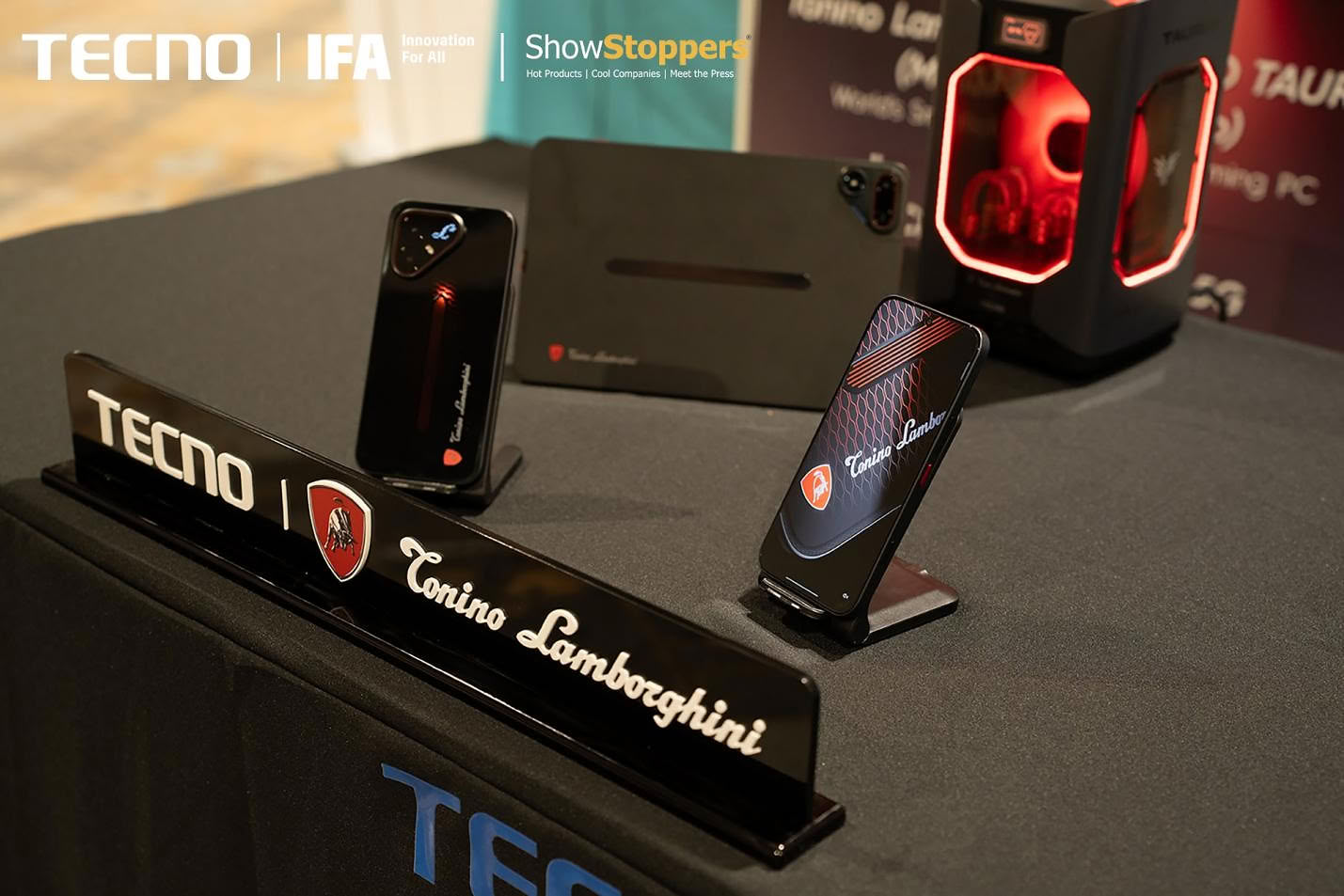
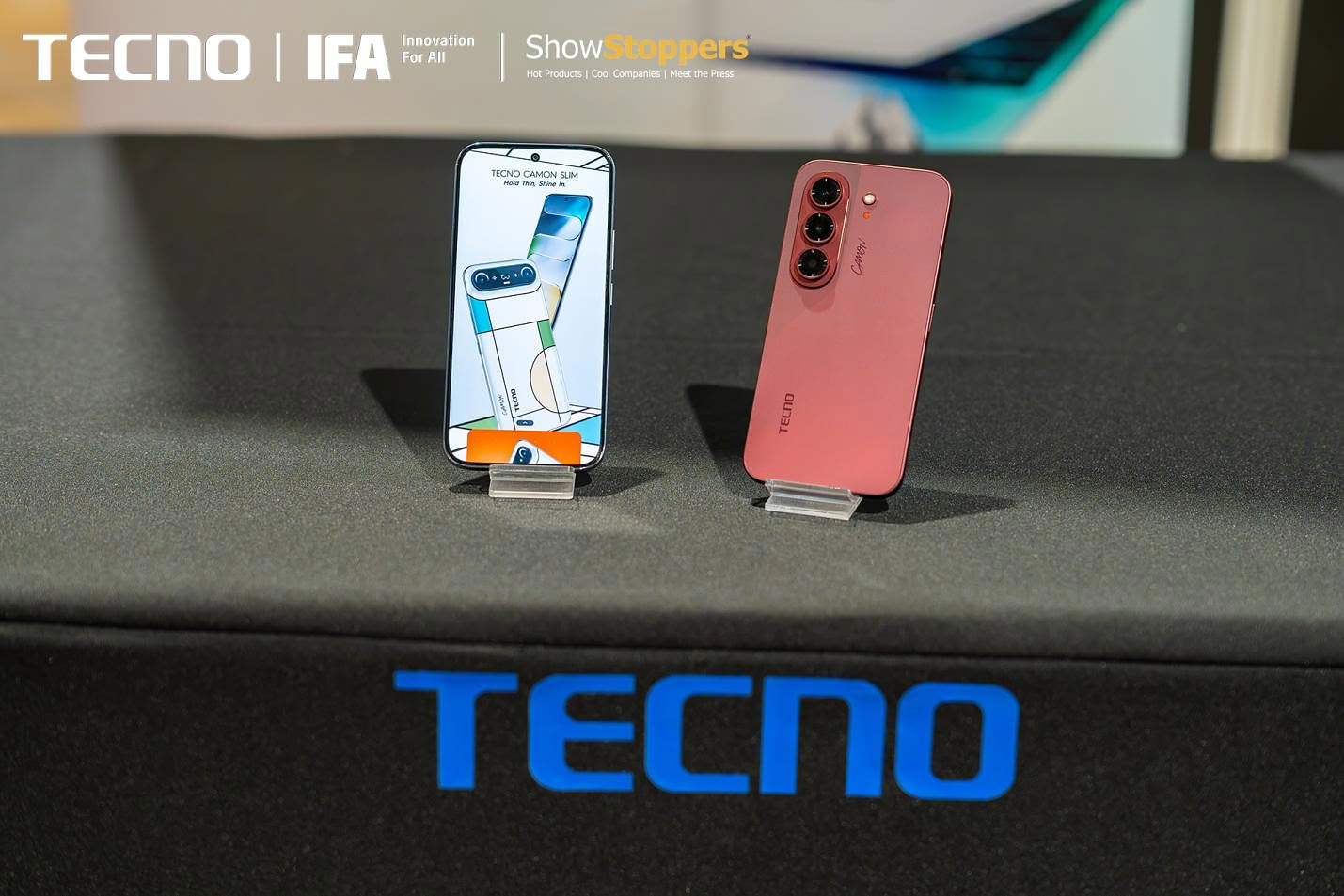
Tecno Showcased New Megabook Laptops and New Phones at IFA ShowStoppers 2026

Tecno, the AI-driven innovative technology brand, today launched the Megabook T15 360 Series at IFA ShowStoppers 2026, marking the debut of its first laptop series with a 360° hinge and touchscreen support. Tecno IFA ShowStoppers 2026 showcase also featured the 17-inch Megabook T17 Ultra, Tecno's first Intel Wildcat Lake-based laptop Megabook K15S WCL, the Next-Gen Bezelless Concept Phone, the upcoming Tecno POVA 8 Pro 5G Tonino Lamborghini Limited Edition, and the Tecno CAMON Slim 5G.

Megabook T15 360 Series: Tecno's First 360° Hinge Touchscreen Laptop
The Megabook T15 360 Series, comprising the Megabook T15 360 and Megabook T15 360 Pro, is designed around the increasingly fluid ways people work, study, create and enjoy content and dual demand for both tablet and laptop. The series delivers the flexibility to navigate diverse daily scenarios with a single device. It brings premium versatility and on-the-go convenience of convertible, touch enabled laptops for mobile executives, solopreneurs and business presenters.

Intel "Nova Lake-S" 28-Core SKU With bLLC to Draw Nearly 300 W at PL2

Intel's upcoming "Nova Lake-S" desktop processors are nearing launch, and the rumor mill is intensifying as we receive more information about clock speeds, core configurations, and power consumption. According to a post on the Weibo forums, Intel's 28-core SKU with a big last-level cache (bLLC) integrated into the package will reach up to 296 W of power consumption at the Power Level 2 (PL2) setting. This is the maximum power draw the CPU can achieve during short bursts of turbo clocking, reaching its peak. Compared to the current top-end "Arrow Lake-S" 24-core Core Ultra 9 285K, which has a PL2 setting of 250 W, the additional four LPE-Cores on the latest "Nova Lake-S" will increase that number by about 18.4%.

Previously, we learned that "Nova Lake-S" will be very power-hungry, especially in the top-end SKUs. For example, Intel's top-end, overclocking-focused, dual compute die "Nova Lake-S" CPU with 52 cores will feature a PL2 mode with a power level of 474 W. This is an unprecedented number for an Intel consumer desktop platform, typically expected from a high-end desktop (HEDT) design. However, since this is a 52-core design that can be overclocked, it represents the highest CPU PL2 setting that Intel will be shipping with "Nova Lake-S." For single compute die SKUs, the PL2 limit appears to be 296 W.

Intel Core Ultra 9 4950K Could Signal New Naming Scheme for "Nova Lake-S"

Intel's upcoming desktop CPU generation, part of the "Nova Lake-S" processor family, might adopt a new naming convention that returns to a four-digit format, unlike the current three-digit format used in the "Arrow Lake" family. According to a leaked CPU-Z submission, Intel's Core Ultra 9 4950K has been identified as a 28-core "Nova Lake-S" desktop chip. It features 8 "Coyote Cove" P-Cores, 16 "Arctic Wolf" E-Cores, and 4 LPE-Cores. This chip was tested on an unknown Z990 high-end overclocking platform, where it achieved over 1,000 points in single-core CPU-Z rankings and exceeded 20,000 points in multicore performance. This performance surpasses any consumer-focused desktop CPU currently available.

Despite this information, it's still uncertain if the naming convention is final. Intel is testing many SKUs for "Nova Lake-S," and a four-digit naming could be necessary due to the numerous SKUs and configurations. Some leakers, like Golden Pig Upgrade and Gotou_3rd, have suggested that the four-digit naming is a possibility, leaving room for speculation. Interestingly, qualification samples for NVL-S have not yet started shipping, but we can expect these shipments in the coming weeks, before manufacturers and motherboard makers begin integrating the latest CPU generation into their products.

Minisforum Details MS-03 Panther Lake Mini PC with PCIe x8 Support

Minisforum showed off a range of new hardware at Computex 2026 earlier this year, and one of the new products it announced there was the MS-03 workstation mini PC, a new small form factor workstation PC designed for productivity, NAS, and local AI workloads. The MS-03 is based on the Intel Panther Lake Core Ultra 9 386H, a 25 W (80 W max Turbo) mobile CPU with four P-Cores, eight E-Cores, and four LP E-Cores, and four Arc Xe3 cores, meaning it's not going to be an outstanding gaming, content creation, or rendering workstation.

One of the big draws for NAS and server use cases is undoubtedly going to be the ample storage options and networking. Not only does the MS-03 have three M.2 slots that support up to 8 TB per slot, it also includes an adaptor to support U.2 SSDs, for up to 15 TB of enterprise storage, and the full-size PCIe ×8 slot can be used for additional storage expansion. The MS-03's chassis is made of aluminium and features a slide-out motherboard tray for easy upgrades. Although the CPU is soldered, it uses DDR5-7200 SODIMMs. Minisforum says that it offers up to 128 GB of memory, but it's unclear if it will only sell as a barebones kit or as a pre-built PC as well.

Maxsun Shows Off iCraft Z890 ITX Wi-Fi Motherboard at Computex 2026

Maxsun has officially shown off its new iCraft Z890 ITX motherboard at Computex, with active chipset and VRM cooling in an ITX form factor. The Z890 ITX is built for the Intel LGA-1851 socket, with support for Intel's Core Ultra 2 series CPUs in mind. Maxsun claims that the Z890 ITX is capable of powering a CPU with a 250 W TDP, thanks to an 8+1+1 power circuit design, making it powerful enough even for the likes of the Core Ultra 9 285K at stock clocks, according to the testing in the TechPowerUp Core Ultra 9 285K in-depth technical review. Pricing and a launch date have not yet been revealed for the Maxsun iCraft Z890 ITX Wi-Fi motherboard.


Physically, the new motherboard sports a full-length PCIe 5.0 ×16 slot and two DDR5 memory slots for dual-channel memory configurations, and it has active cooling on both the VRM and in the M.2 heat sink under the PCIe slot. It supports 1× PCIe 5.0 ×4 M.2 SSD on the front of the motherboard, 1× PCIe 4.0 ×4 M.2 SSD in a rear-mounted M.2 slot, and 4× PCIe 4.0 Slim SAS SFF-8654 4i SSDs. As for network connectivity, the motherboard sports Bluetooth 5.4 and Wi-Fi 7, as well as Realtek 5G LAN, and the rear I/O has both DisplayPort 1.4 and HDMI 2.1, 3× USB Type-C 20 Gbps ports, 6× USB Type-A 10 Gbps ports, 2× USB 5 Gbps ports, and 4× USB 2.0 ports. The motherboard also features a built-in 5 v ARGB connector for case and fan customization purposes.

GEEKOM Launches the New GeekBook M16 Laptop

As a global leader in the Mini PC industry, GEEKOM continues to deliver reliable computing solutions recognized for outstanding quality and stable performance. Expanding its product portfolio, GEEKOM has officially introduced its first high-performance business laptop—the GeekBook M16. Priced at around $800, the new device combines the flagship Intel Core Ultra 9 processor with up to 24 hours of battery life, setting a new benchmark for productivity laptops by achieving an exceptional balance between performance and endurance.

Powered by the Intel Core Ultra 9 processor, the GeekBook M16 is further enhanced by GEEKOM's proprietary GeekBook Dynamic Tuning Technology (DTT), enabling up to 55 W of performance output while maintaining stable operation under demanding workloads. Paired with high-speed LPDDR5 memory and a Kingston SSD, the laptop delivers fast system responsiveness, efficient multitasking, and smooth large-file processing for both business and professional applications.

ASUS Republic of Gamers Announces ROG NUC 16

ASUS Republic of Gamers (ROG) today announced the ROG NUC 16, a compact gaming PC powered by up to an Intel Core Ultra "Arrow Lake-HX" processor and an NVIDIA GeForce RTX 5080 Laptop GPU. Featuring an upgraded thermal design and patented removable stand for vertical or horizontal placement, the ROG NUC 16 is built for gaming, creative pursuits, and AI workloads. Armed with the latest Intel Core Ultra 9 processor 290HX Plus, the ROG NUC 16 delivers improved gaming performance versus the previous-generation ROG NUC. It supports up to 128 GB of DDR5-6400 memory, ensuring smoother high-FPS gameplay and faster responsiveness.

Compact yet powerful, the ROG NUC 16 raises the bar with AI-enhanced performance. It features up to an NVIDIA GeForce RTX 5080 Laptop GPU and supports NVIDIA DLSS 4.5 with ML-based Super Resolution and Multi-frame generation for faster, smoother gameplay. Its updated Super Resolution transformer model delivers improved lighting, finer details, and clearer motion, benefiting real-time rendering, video editing, and up to 8K creative workloads. In addition, users can unleash creativity and generate images at unprecedented speed with NVIDIA Studio. For AAA gaming, DLSS 4.5 can reduce latency and generate up to five additional frames per rendered frame, enabling a more fluid and immersive experience. Combined with the Intel Core Ultra 9 290HX Plus processor, ROG NUC 16 delivers up to 2.3% better 3DMark performance than its predecessor.

Razer Unveils the New Razer Blade 18: Desktop-class Performance for Gaming and AI

Razer, the leading global lifestyle brand for gamers, today announced the 2026 evolution of the Razer Blade 18, its most powerful Blade ever. Designed for gamers and AI developers, the Blade 18 extends beyond traditional gaming laptops into a true desktop-class platform, built to run advanced workloads locally, from high-speed AI inference to real-time rendering and feature development, within a single, unified system.

The Edge of Performance. Gaming Meets AI Development.
  • Built to sustain high performance while running local LLM inference, compiling large codebases, rendering video and 3D assets, and playing modern AAA games.
  • Intel Core Ultra 9 290HX Plus processor (24 cores, up to 5.5 GHz boost) with an integrated NPU delivering up to 13 TOPS of AI acceleration
  • Up to NVIDIA GeForce RTX 5090 Laptop GPU with 175 W TGP, 24 GB of VRAM, and next-generation RTX AI technologies
  • Brighter 18-inch dual-mode display for UHD+ 240 Hz and FHD+ 440 Hz experiences
  • Advanced vapor chamber cooling with a refined multi-fan design for sustained workloads
  • Desktop-class connectivity including Thunderbolt 5, Wi-Fi 7, 2.5 Gb Ethernet, a 5MP camera, and a six-speaker system powered by THX Spatial Audio+

Razer Blade 16 Gaming Laptops Now Available With 64 GB LPDDR5X-9600 MT/s

Razer today announced the availability of two new configurations of the Razer Blade 16, expanding its flagship ultraportable gaming laptop lineup with NVIDIA GeForce RTX 5080 and RTX 5090 Laptop GPU options paired with a new 64 GB memory tier. The new models join the previously announced RTX 5080 and 5090 32 GB configurations and are available now, exclusively at Razer.com and select RazerStores.

Pricing and availability for the new Razer Blade 16 (2026) configurations:
  • Razer Blade 16 with NVIDIA GeForce RTX 5080 Laptop GPU | 64 GB LPDDR5X-9600 MHz | $4,699.99 USD
  • Razer Blade 16 with NVIDIA GeForce RTX 5090 Laptop GPU | 64 GB LPDDR5X-9600 MHz | $5,599.99 USD

ASUS Opens Pre-orders for the 2026 ROG Zephyrus Duo

ASUS Republic of Gamers (ROG) today opens pre-orders for the all-new ROG Zephyrus Duo, the world's first 16-inch dual-screen OLED gaming laptop. Powered by the latest Intel Core Ultra 9 386H processor and paired with up to an NVIDIA GeForce RTX 5090 Laptop GPU running at 135 W TGP, enabling flagship gaming and content creation. This ultra-premium machine is housed in a CNC-milled aluminium chassis with a stunning Stellar Grey colorway and comes complete with a detachable magnetic keyboard to keep users gaming and creating wherever life takes them.

The world's first 16" dual-screen gaming laptop
The Zephyrus Duo is the world's first 16-inch dual-screen gaming laptop. Boasting two 3K ROG Nebula HDR OLED touchscreens, with over 21 inches of total diagonal screen space available on one laptop, the Duo reimagines what a portable personal workstation is capable of. Both panels offer a 0.2 ms response time, paired with a 120 Hz refresh rate, and the main screen supports NVIDIA G-SYNC, bringing crisp motion and nearly zero ghosting in games. With 1100 nits of peak HDR brightness and a VESA DisplayHDR True Black 1000 certification, HDR games and content looks spectacular. For the creators out there, a color accuracy of Delta E < 1i and 100% coverage of the DCI-P3 color space offers twin professional-grade screens right out of the box.

ASUS Zenbook Duo 2026 Launches at $2,499.99 With Intel Panther Lake and Dual 14" 144 Hz OLED Displays

Back in January, we checked out the ASUS Zenbook Duo at the ASUS booth at CES 2026, where ASUS confirmed that the new dual-screen productivity laptop would feature Intel's Panther Lake CPUs, a new Ceraluminum coating, and redesigned hinges that bring the device's top and bottom displays closer together. Now, following the launch of the ASUS Zephyrus Duo, ASUS has officially launched the Zenbook Duo 2026 with two distinct models available for purchase at the time of writing. The biggest difference between the Zenbook Duo US8407AA-DS99T and the UX8407AA-PSXT is that the former uses the less powerful Intel Core Ultra 9 386H CPU, while the latter comes with the Core Ultra X9 388H. The two CPUs share similar CPU performance, but the 388H gains a significant lead when it comes to iGPU performance, thanks to the inclusion of the Intel Arc B390 iGPU compared to the more standard Xe3 graphics in the 386H.

Editors note: our in depth review is now available.

Both models share the same dual touch-enabled, 14-inch, 2880×1800p, 16:10, 144 Hz OLED displays with 1,000 nits HDR brightness and 500 nits of SDR brightness. Similarly, both laptops come with 32 GB of LPDDR5X memory and a 1 TB NVMe PCIe 4.0 SSD by default. While ASUS positions the Zenbook as a sort of catch-all laptop capable of doing everything from creative work to general productivity, and even a little gaming, the ports tell somewhat of a different story. Both have a single USB 3.2 Gen 2 Type-A port, dual Thunderbolt 4 ports with both USB Power Delivery and support for external displays, a single HDMI 2.1 FRL port, and a 3.5 mm audio combo jack. The Zenbook Duo comes with the ASUS Pen 3.0 with wireless charging as well as a Zenbook laptop sleeve, and the bottom display has a detachable wireless keyboard. The Zenbook Duo is available directly from the ASUS store, with the Core Ultra 9 386H variant starting at $2,499.99 and the Core Ultra X9 version starting at $2,699.99. The Core Ultra 9 version is expected to start shipping on May 11, while the Core X9 version will only be available in "late Q2."

Next-Gen Honor Win H9 Gaming Laptop Debuts With 6-Fan Cooling Setup

Honor may not be a household name in the gaming laptop space, but the company is apparently attempting to innovate on gaming laptop design with the new Honor Win H9 gaming laptop, which the brand claimed in a recent Weibo post would feature an NVIDIA GeForce RTX 5070 Ti with a total CPU and GPU TDP of 270 W. While powerful internals are great, the Win H9 gaming laptop's cooling solution may be the most interesting part of the whole package. In the new gaming laptop, Honor is debuting a six-fan cooling solution consisting of dual bottom intake fans, similar to the typical blower fans found in a gaming laptop, and an array of six exhaust fans on the back of the laptop to aid cooling.

According to Honor, the Win H9's cooling solution results in an increase of 10% in total air volume and a total 57% increase in internal airflow. Honor claims that, during gaming loads and in Quiet mode, the Win H9 runs at under 38 dBA and with a surface temperature under 40° C on the left palm rest. The H9 will be available in two configurations: with an Intel Core i7-14650HX, RTX 5060, and 16 GB of DDR5 memory and up to 1 TB of SSD storage or an Intel Core Ultra 9 290HX with an NVIDIA GeForce RTX 5070 Ti. Pricing and availability has not yet been revealed, but is slated to be announced in China on April 23.

Intel Core Ultra "Nova Lake-S" Desktop Core Configurations Surface

CPU core configurations of Intel's next-generation Core Ultra Series 4 "Nova Lake-S" desktop processors were leaked to the web by VideoCardz. These processors will remain disaggregated, tile-based chips, much like current Core Ultra Series 2 "Arrow Lake-S," but Intel will probably rearrange components around the various tiles. These chips will also introduce low-power island E-cores (LPE-cores) to the socketed desktop platform. The new processors will be designed for Socket LGA1954, which will be significantly different from the current LGA1851, while retaining cooler compatibility.

Intel intends LGA1954 to have longevity spanning several processor generations lasting till the end of the decade. The Core Ultra Series 4 will span a wide range of price-points, starting with Core Ultra 3, having the least core-count, going all the way up to Core Ultra 9 (probably X9). Perhaps the most interesting bit of news is the introduction of dual-die processors. These are SKUs with two Compute tiles connected to the SoC tile. This allows Intel to achieve extremely high CPU core counts. Since this is essentially the same approach to high core counts as AMD, both Compute tiles have equal access to memory and PCIe.

Intel Officially Confirms: Core Ultra 9 290K Plus Won't be Released

When the rumor mill for Intel's "Arrow Lake Refresh" began, we expected three SKUs: Core Ultra 5 250K Plus, Core Ultra 7 270K Plus, and a flagship Core Ultra 9 290K Plus. However, we later discovered that Intel is not launching the flagship SKU and will only release the Core Ultra 5 and Core Ultra 7 models. Instead, Intel chose to focus on delivering value with its Core Ultra 7 270K Plus SKU, which features 8 P-Cores and 16 E-Cores with a maximum turbo boost of 5.5 GHz. For individual boosting frequency, P-Cores reach up to 5.4 GHz, with a base speed of 3.7 GHz. E-Cores have a maximum boost frequency of 4.7 GHz and a base speed of 3.2 GHz. The main reason for canceling the flagship SKU is product overlap, as the Core Ultra 9 290K Plus would have the same core configuration as the Core Ultra 7 270K Plus, just with slightly higher clock speeds. Consequently, Intel decided not to launch this SKU. It has now been confirmed by Intel Germany for PC Games Hardware that Intel will definitely not introduce this SKU at any point in the future.
Florian Maislinger, Tech Communication Manager, Intel GermanyIntel is excited to deliver exceptional value with our Intel Core Ultra 200S Plus series processors. The Intel Core Ultra 7 270K Plus and Intel Core Ultra 5 250K Plus are positioned to deliver outstanding gaming performance and incredible value compared to our competition. Our objective was to maximize performance for the desktop SKUs that are most widely available. As a result, Intel is not launching a U9 290K Plus SKU.

Intel Silently Adds Core i7-13645HX to Its Raptor Lake Mobile CPU Lineup

Intel has quietly rolled out a new mobile CPU in the Raptor Lake lineup, the Core i7-13645HX. The chip is built with Intel's 10 nm process and splits its 14 cores across six Performance cores and eight Efficient cores, just like the Core i7-13650HX. That means both share the same 20-thread count, 24 MB of Smart Cache, max turbo clock at 4.9 GHz, and power specs: 55 W base, 157 W peak. However, there are some differences. The i7-13645HX supports DDR5-5600, up from 4800 on its older sibling. With that comes also an increase in memory bandwidth to 89.6 GB/s, up from 76.8 GB/s. It also sports a more capable Intel UHD Graphics P730 with 32 execution units versus just 16 on the i7-13650HX. The older part still has a slight edge in efficiency: its E-cores can boost to 3.6 GHz, while this one tops out at 3.5 GHz. But for users who need faster memory and better integrated graphics, especially those running light gaming or video workloads, the new chip might be the better choice.

Compared to the i7-13700HX, which has eight P-cores, a higher boost clock (5.0 GHz), 30 MB cache, and slightly more power headroom, this one feels like something in between, less raw performance than the top-tier HX model but with better memory support. Intel rebranded Raptor Lake as Core 200 series in late 2024, positioning it for higher-end laptops. The i7-13645HX appears to be part of that push: a refined option for systems targeting mainstream performance without stepping up to the full HX stack. No official pricing yet, as this is likely to show up in select gaming and creator machines over the next few months. Remember that just this Tuesday, Intel rolled out its Core Ultra 200HX Plus mobile processors, including the Core Ultra 9 290HX Plus and Core Ultra 7 270HX Plus. These processors add new features and architectural refinements, including support for the new Intel Binary Optimization Tool that can improve native performance in select games.
Return to Keyword Browsing
Nov 11th, 2026 04:04 CST change timezone

New Forum Posts

Popular Reviews

TPU on YouTube

Controversial News Posts