Wednesday, March 18th 2026

Intel Silently Adds Core i7-13645HX to Its Raptor Lake Mobile CPU Lineup
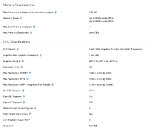
Intel has quietly rolled out a new mobile CPU in the Raptor Lake lineup, the Core i7-13645HX. The chip is built with Intel's 10 nm process and splits its 14 cores across six Performance cores and eight Efficient cores, just like the Core i7-13650HX. That means both share the same 20-thread count, 24 MB of Smart Cache, max turbo clock at 4.9 GHz, and power specs: 55 W base, 157 W peak. However, there are some differences. The i7-13645HX supports DDR5-5600, up from 4800 on its older sibling. With that comes also an increase in memory bandwidth to 89.6 GB/s, up from 76.8 GB/s. It also sports a more capable Intel UHD Graphics P730 with 32 execution units versus just 16 on the i7-13650HX. The older part still has a slight edge in efficiency: its E-cores can boost to 3.6 GHz, while this one tops out at 3.5 GHz. But for users who need faster memory and better integrated graphics, especially those running light gaming or video workloads, the new chip might be the better choice.
Compared to the i7-13700HX, which has eight P-cores, a higher boost clock (5.0 GHz), 30 MB cache, and slightly more power headroom, this one feels like something in between, less raw performance than the top-tier HX model but with better memory support. Intel rebranded Raptor Lake as Core 200 series in late 2024, positioning it for higher-end laptops. The i7-13645HX appears to be part of that push: a refined option for systems targeting mainstream performance without stepping up to the full HX stack. No official pricing yet, as this is likely to show up in select gaming and creator machines over the next few months. Remember that just this Tuesday, Intel rolled out its Core Ultra 200HX Plus mobile processors, including the Core Ultra 9 290HX Plus and Core Ultra 7 270HX Plus. These processors add new features and architectural refinements, including support for the new Intel Binary Optimization Tool that can improve native performance in select games.

Sources:
Videocardz, Intel (product page)
Compared to the i7-13700HX, which has eight P-cores, a higher boost clock (5.0 GHz), 30 MB cache, and slightly more power headroom, this one feels like something in between, less raw performance than the top-tier HX model but with better memory support. Intel rebranded Raptor Lake as Core 200 series in late 2024, positioning it for higher-end laptops. The i7-13645HX appears to be part of that push: a refined option for systems targeting mainstream performance without stepping up to the full HX stack. No official pricing yet, as this is likely to show up in select gaming and creator machines over the next few months. Remember that just this Tuesday, Intel rolled out its Core Ultra 200HX Plus mobile processors, including the Core Ultra 9 290HX Plus and Core Ultra 7 270HX Plus. These processors add new features and architectural refinements, including support for the new Intel Binary Optimization Tool that can improve native performance in select games.


7 Comments on Intel Silently Adds Core i7-13645HX to Its Raptor Lake Mobile CPU Lineup
Of course it also makes me think of:
Merkur XR4Ti
Eat your heart out Nvidia, these cheezballs got Ti first.
Correct me if I'm wrong :
Intel 13th and 14th gen : Intel fab 10nm (Intel 7)
Intel 100 : Intel fab 7nm (Intel 4)
Intel 200 Arrow Lake: TSMC fab N3B (so 3nm ?)
So I do understand that for multiple reason (mainly to meet supplier demand I guess ?) Intel has to keep producing old 10nm chips.
Ok, but why 13th Gen ?? 14th Gen is there and use the same node is there a single good reason to not produce only 14th Gen ?
Also, I don't understand the real difference between 13 and 14 gen, I guess the only difference is the way turbo works to overclock a single core ?
I'm not sure.
Thanks !