
News Posts matching #DDR5

Return to Keyword Browsing

SK hynix Announces FY25 Financial Results, Posts Record-High Results and Delivers Highest Shareholder Returns

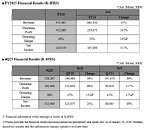
SK hynix Inc. announced today that it has achieved record financial results in 2025—97.1467 trillion won in revenue, 47.2063 trillion won in operating profit (with an operating margin of 49%), and 42.9479 trillion won in net profit (with a net margin of 44%). The results significantly exceeded the previous record set in 2024. The annual revenue increased by more than 30 trillion won while the annual operating profit nearly doubled year-on-year, marking the highest annual performance in the company's history.

Growth momentum accelerated further in the fourth quarter. In addition to HBM, demand on conventional memory solutions for servers increased sharply, to which SK hynix responded proactively. As a result, the company achieved record-high quarterly performance across all three indicators, with revenue rising 34% to 32.8267 trillion won, operating profit surging 68% to 19.1696 trillion won, and operating margin reaching 58% quarter-on-quarter.

Unusual Collaborative "Ryzen 7 9850X3D + DDR5 Kit + Cooler" Bundle Turns Up in China

Last week, AMD revealed further (post-CES) Ryzen 7 9850X3D details—namely an officially confirmed $499 MSRP, and January 29 launch date. This 8-core 3D V-Cache-augmented gaming desktop processor's arrival has not been timed to perfection; as evidenced by a leaked Team Red marketing slide. The ongoing computer memory supply crisis has caused many "rethinks" at affected manufacturers, with a handful of key players dipping back into older product lines. Extraordinary circumstances have led to the resurgence of DDR4 memory products—currently, this older—still viable—standard has experienced price hikes, albeit not to the extent of newer DDR5 sticks. In China, AMD and involved hardware partners have taken the unusual step of bundling the brand-new Ryzen 7 9850X3D OEM(?) model with a 32 GB (2 x 16 GB) DDR5 kit, and a CPU air cooler.

Photos of a boxed retail example were uploaded to JustBuy's Bilibili blog, showing a likely region-exclusive package that is advertised as including Team Red's newest member of "Granite Ridge" processor family, V-Color Manta XFinity+ OLED DDR5 memory, and a white Cooler Master HYPER 612 APEX Pro tower cooler. The exact specifications of V-Color's bundled-in kit were not visible, or described by the JoyBuy previewer—apparently this partnership-produced combo was unveiled during a recent Cooler Master event in China. In a joking assumption, UNIKO's Hardware proposed lowly 4800 CL58 credentials—clearly riffing on the AMD marketing team's reported claim that "DDR5-6000 to DDR5-4800 memory yields less than a 1% drop of FPS." Several PC hardware news outlets have assumed that V-Color has supplied Manta XFinity+ OLED DDR5-6000 CL26 kits, leading to a total price estimate of sub-$1100 for the snazzy Cooler Master ($79.99) x AMD ($499 MSRP) x V-Color (~$509) box and contents.

AMD Claims <1% FPS Difference on Ryzen 7 9850X3D Going From DDR5-6000 to DDR5-4800

According to an unreleased slide leaked by VideoCardz, AMD has prepared a section for its upcoming Ryzen 7 9850X3D CPU about difference in memory speeds affecting FPS performance. In AMD's own testing, going from DDR5-6000 to DDR5-4800 memory yield less than 1% drop of FPS, meaning that the memory selection isn't very important for this gaming CPU. The slide aims to demonstrate that even with cheaper DDR5 memory, priced around $400 for a 2x16 GB kit running at 4,800 MT/s, performance remains largely unaffected. AMD noted that a more expensive 2x16 GB DDR5 kit running at the "sweet spot" of 6,000 MT/s is priced at about $470. This means spending 17.5% more on memory does not provide significant real-world benefits. Gamers can instead to allocate their budget elsewhere and consider more affordable memory options, while keeping frame-rate in check.

Finally, this slide leaked just six days before AMD's official launch on January 29, with a suggested retail price of $499. This 8-core/16-thread processor features the "Zen 5" microarchitecture, enhanced with 3D V-Cache technology, and offers a 400 MHz speed boost over the current 9800X3D. The chip has a base frequency of 4.70 GHz and a maximum boost frequency of 5.60 GHz. Some samples have even been observed running at a 5.75 GHz boost frequency, indicating that enthusiasts might achieve even higher frequencies even under typical home conditions. As memory selection isn't a big differentiator, the 400 MHz boost increase from its sibling—Ryzen 7 9800X3D—will be the topic of discussion for third party review.

AI Architecture Evolution Set to Drive Memory Market Revenue to a New Peak in 2027, with Annual Growth Exceeding 50%

TrendForce's latest research indicates that AI innovation is causing a fundamental shift in the memory market. As data access volumes continue to grow, AI systems depend more on high-bandwidth, high-capacity, low-latency DRAM to handle large-scale model parameters, long-sequence inference, and multi-task parallel processing. Additionally, NAND Flash has become essential for fast data transfer, making memory a key component in AI infrastructure and a strategic focus for CSPs.

Memory prices have continuously increased due to limited capacity and rising demand for allocations, pushing industry revenue to new record levels. TrendForce projects the memory market to be worth $551.6 billion in 2026 and to surge to a peak of $842.7 billion in 2027, reflecting a 53% YoY growth.

ADLINK Launches Its First COM Express Module Powered by Intel Core Ultra Series 3 Processors

ADLINK Technology Inc., a global leader in edge AI computing solutions, proudly presents its latest Express-PTL COM modules powered by new Intel Core Ultra Series 3 processors. Express-PTL modules deliver a major performance leap with their advanced AI architecture, featuring an integrated NPU 5.0 that provides up to 50 TOPS of dedicated AI acceleration, offering significantly higher than the previous generation, and a new Intel Arc GPU with up to 12 Xe cores designed for efficient, streamlined operation, and delivering up to 120 TOPS for AI tasks and notably enhanced graphics rendering, supporting up to 16 CPU cores. All processing units provide up to 180 platform TOPS of AI compute, tailored not only for heavy but also for complex edge AI workloads.

High-Performance, Rugged Design for Mission-Critical Edge AI
The Express-PTL incorporates a hybrid CPU architecture with 4 high-performance (P) cores, 8 efficiency (E) cores, and 4 low-power (LPE) cores, offering improved processing efficiency and enhanced transistor performance. Complementing this high-performance computing, the module supports up to 128 GB of DDR5 SO-DIMM with IBECC for low-latency, reliable memory access. Industrial-temperature SKUs are engineered to withstand extreme rugged environments with a temperature range from -40°C to 85°C. Industrial features such as TCC, TSN, In-Band ECC, extended temperature support, and FuSa/FSEDP compliance further ensure robust, mission-critical operation, making the module a versatile and dependable solution for edge AI and general embedded deployments in demanding conditions.

GMKtec Launches NucBox K16 Mini PC with AMD Ryzen 7 7735HS and OCuLink Expansion

GMKtec today announced the official launch of the NucBox K16, a high-performance mini PC designed for power users, creators, and enthusiasts seeking desktop-class performance in a compact form factor. Powered by the AMD Ryzen 7 7735HS processor and equipped with high-speed LPDDR5X memory, PCIe 4.0 storage, and an OCuLink expansion interface, the NucBox K16 delivers exceptional computing capability in a sleek CNC-machined aluminium chassis.

Powerful AMD Ryzen Performance
At the heart of the NucBox K16 is the AMD Ryzen 7 7735HS, built on the Zen 3+ architecture with 8 cores and 16 threads, boosting up to 4.75 GHz on a power-efficient 6 nm process. Paired with AMD Radeon 680M integrated graphics featuring 12 compute units running at up to 2200 MHz, the system is well-suited for productivity, content creation, light gaming, and multitasking workloads.

SP Industrial Presents High-Speed DDR5-7200 64 GB CSODIMM & CUDIMM

SP Industrial, a global provider of industrial-grade memory solutions, presents an advancement within its high-performance DDR5 memory portfolio: 64 GB DDR5-7200 CSODIMM and CUDIMM modules. Designed to meet the growing demands of AI-driven workloads and next-generation industrial platforms, these modules deliver improved signal stability, data integrity, and system reliability for edge and high-performance computing environments.

Performance and Reliability for Demanding Systems
Built on the latest JEDEC-standard DDR5 architecture, the CSODIMM and CUDIMM modules provide 7200 MT/s bandwidth, 64 GB single-module capacity, and low-power 1.1 V operation, enabling faster data movement and more efficient processing for data-intensive applications. The design focuses on optimized clock, command, and control signal integrity, supporting stable operation in complex and demanding system architectures.

DDR3 Platforms Make a Comeback Amid Severe Memory Shortages

The year is 2007 2026 and DDR3 memory platforms are becoming popular. Amid a severe memory shortage, technology nearly two decades old is rising in demand as consumers struggle to find modern memory at reasonable prices. According to a report from Chinese Board Channels, Chinese consumers are turning to Intel's old X99 HEDT platform as a way to obtain high memory capacity at a good price. Older Intel Xeon processors offer quad-channel memory, and Chinese aftermarket motherboards have adapted regular DDR3 and ECC DDR3 memory to work with the X99 chipset, which originally supports DDR4 memory, allowing the reuse of older, cheaper modules. With quad-channel support and up to 128 GB of capacity, this approach provides workstation-grade capacity at a fraction of the price. Additionally, we found listings of dual-socket X99 motherboards with LGA 2011-V3 sockets, which offer DDR3 capacity of up to 256 GB across eight total channels.
Board ChannelsThere is one major trend worth watching: DDR3 motherboard sales are growing quickly. This may be driven by a rebound in demand for lower priced builds. Bundles that pair DDR3 motherboards with 6th to 9th gen CPUs are selling well. Based on recent information from domestic motherboard brands, DDR3 motherboard volumes are rising fast, showing a rapid growth trend of roughly 2 to 3 times or more.

Khadas Mind Pro Mini-PC Gets Intel Panther Lake, New Mind Graphics 2 eGPU Packs RTX 5060 Ti

Amid the flurry of CES 2026 news, Khadas, a popular mini PC maker, announced a series of updates coming to its Mind product line. Most exciting of the lot of updates is the new Intel Panther Lake-powered Khadas Mind Pro mini PC and the new Mind Graphics 2 eGPU dock. The Mind Pro Mini-PC, which is slated to launch gradually in Q1 2026, is a Mini-PC with Intel's new Panther Lake Core Ultra X7 358H or Core Ultra X9 388H CPUs and all the juicy new Intel Arc graphics that come with that. Khadas describes the Mind Pro as a modular design, suggesting that the new Mini-PC could be somewhat easily upgraded. The Mind Pro's chassis is said to come in at just 0.46 liters, and the Intel Arc graphics inside the Panther Lake CPU should deliver entry-level dGPU performance. It will also be available with up to 64 GB of LPDDR5X memory and up to 2 TB of NVMe storage. Given that it's an Intel system, the Mind Pro will also have dual Thunderbolt 4 ports, which have four PCIe 4.0 lanes for connectivity. The Mind Pro is not yet available, and pricing has not yet been confirmed.

One of the coveted use cases for Thunderbolt 4 ports on a Mini-PC is the ability to connect an eGPU for additional performance. Khadas itself provides one such eGPU, the Mind Graphics dock, which has now been updated to the Mind Graphics 2, receiving an NVIDIA GeForce RTX 5060 Ti 16 GB upgrade in the process. The Mind Graphics 2 and the Mind Pro mini PC feature what Khadas calls the Mind Link, which enables PCIe 4.0 x8 support for improved performance when docked. The Mind Pro also sits neatly atop the Mind Graphics 2, in a dedicated recess in the chassis, when docked to the Mind Graphics 2. The Mind Graphics 2 dock is already available for $1,349. For users looking for an on-the-go solution, Khadas has also announced the xPlay portable monitor, which features a 2.8 K, 3:2 display and a 47.94 Wh battery, which Khadas says is capable of powering itself and Khadas's Mini-PCs—that said, battery life will likely be limited due to the size. The xPlay monitor also connects to the Mind mini PCs with the Mind Link port, which should make it a lot neater to carry around than a regular USB-C monitor, although it also operates over USB-C. The Mind xPlay portable display is available for $99 from Khadas.

Netac Shows DDR5 Memory, Portable SSDs, and PCIe 5.0 M.2 NVMe Drives at CES 2026

At the Netac booth at CES 2026, we saw a fleet of memory and storage solutions that the company has prepared for the consumer market. Starting with its Basic memory lineup, it includes DDR5 memory running up to 4,800 MT/s with capacities of up to 32 GB per DIMM. On the other hand, its older DDR4 tops out at 3,200 MT/s with the same 32 GB max capacity (per kit). However, the company has prepared even more advanced DDR5 and DDR4 DIMMs that can reach much higher clock speeds. The Shadows series includes DDR5 running up to 6,400 MT/s, while DDR4 equivalents top out at 3,600 MT/s. Netac's highest-performing DDR5 kits come in the form of Z RGB series with 8,000 MT/s out-of-the-box speeds.

Gigabyte Announces Support for 256GB of DDR5-7200 CQDIMMs at CES 2026

Gigabyte, the world's leading computer brand, announces a breakthrough introduction of the world's first CQDIMM (Clocked Unbuffered Dual In-Line Memory Module) technology at CES 2026. By leveraging the CQDIMM-supported motherboard, Z890 AORUS Tachyon ICE CQDIMM Edition, and BIOS tuning technology, Gigabyte achieves the industry-first record DDR5-7200 without compromise at full capacity with two 128 GB memory modules.

Traditionally, increasing DDR5 memory capacity has required significant trade-offs in frequency and stability. Inherent in Gigabyte's expertise in hardware and firmware design, this critical compromise is conquered. On the hardware side, Gigabyte has optimized motherboard circuit layouts to significantly reduce memory channel loading, improving signal integrity and ensuring stable operation even under heavy workloads. Complementing the hardware advancements is Gigabyte's sophisticated BIOS tuning technology. Through an optimized clock driver architecture, Gigabyte's BIOS intelligently manages timing, signal synchronization, and voltage behavior to unleash extreme performance.

ASRock Previews Slew of New AMD and Intel Motherboards at CES 2026

With Intel and AMD both knee-deep into a desktop CPU refresh cycle, it's expected that new motherboard revisions will pop up at CES 2026. This is just what the TechPowerUp team spotted at the ASRock booth at the annual trade show. Although specifications are scarce, we got a glimpse at ASRock's upcoming AM5 and Intel LGA 1851 motherboards. While there are some new additions and other returning brand series coming, many of the motherboards on show at CES are simply refreshes that try to capture the essence of existing ASRock motherboards in new form factors or with new color schemes.

New to AMD's B850 chipset is the ASRock B850M Challenger WiFi, which looks to be a microATX version of the existing B850 Challenger WiFi ATX motherboard—a fairly feature-rich motherboard with a well-equipped VRM, Wi-Fi 7 support, and plenty of rear I/O. From the looks of the prototypes the TechPowerUp team spotted at CES 2026, the biggest difference between the microATX version and the original is the omission of one of the PCIe x4 slots, as it seems as though even the four-slot spacing between the full-size PCIe slots was maintained. The B850M Challenger motherboard will be available in both black and white colorways. Both versions of the Challenger WiFi will also feature four DDR5 RAM slots, although it's unclear what RAM compatibility will look like. ASRock also debuted the Challenger B860 WiFi for Intel's socket LGA 1851 CPUs.

Ace Computers Shows "Firestorm" PCs and "Nightsky" Workstation Laptops at CES 2026

Ace Computers, a U.S.-based PC builder, unveiled its expanded gaming PC lineup under the Ace Gaming brand at CES 2026. Featured at the booth was the "Firestorm" PC family, available in various shapes and sizes. The most compact model, the Ignite ITX, fits an AMD Ryzen 5 9600X processor, 16 GB of DDR5 memory, and a 1 TB NVMe SSD into a small-form-factor case. It also includes an NVIDIA RTX 5070 GPU and a 750 W power supply, for decent gaming. The Spark-A model uses a standard ATX tower while maintaining the same CPU, RAM, and storage as the Ignite ITX, but upgrades the power supply to 850 W for better future expansion.

The bigger Blaze-A is designed for more demanding users, featuring a Ryzen 7 9700X processor and doubling both the memory and storage to 32 GB and 2 TB. At the top of the lineup, the Inferno-A flagship combines a Ryzen 7 9800X3D chip with an RTX 5080 graphics card, making it the most powerful option in the series for 4K gaming and intensive creative work. All four models run Windows 11 Pro.

ASUS TUF Gaming TM500 Gaming Desktop With AMD Hawk Point CPU Spotted at CES

During CES 2026, ASUS announced the TUF Gaming TM500 Gaming PC, which in and of itself isn't a big deal and in fact, the TPU team on site grabbed a couple of quick snaps of it, without realising what sets it apart from your typical gaming PC. The TUF Gaming TM500 appears to be using leftover bits at ASUS, since it will be powered by either an AMD Ryzen 5 220 or a Ryzen 7 260, both of which are mobile CPUs based on AMD's Zen 4 processor architecture. These are obviously budget notebook chips with either six or eight cores, a Radeon 760M or 780M GPU and a total of 20 usable PCIe 4.0 lanes. ASUS decided that as this is a mobile CPU, the TM500 should use SO-DIMM memory. We're looking at a pair of DDR5 slots that support up to 64 GB of 5600 MT/s memory.

The motherboard itself appears to be microATX, but it has a custom layout and ASUS has even implemented a special heatpipe cooler that attaches to the rear of the chassis where the fan is located. As the TM500 is being sold as a gaming PC, it also comes with a choice of an AMD Radeon RX 9060 XT or an NVIDIA GeForce RTX 5060 graphics card. The motherboard also has room for a pair of SATA ports and a pair of PCIe 4.0 M.2 NVMe SSDs in the standard 2280 form factor. Connectivity wise, ASUS didn't seem to even have bothered, as the board only has a HDMI 2.1 port, one DP 1.4, one USB 3.2 Gen 1 (5 Gbps) Type-A port, two USB 2.0 ports, a Gigabit Ethernet port and three audio jacks around the back. The front of the chassis is home to a further two USB 3.2 Gen 1 (5 Gbps) Type-A ports and one Type-C port and a 3.5 mm combo headset jack. Considering the CPUs used have native USB4 support, as well as support for USB 3.2 Gen 2 (10 Gbps), this just feels cheap from ASUS. A Wi-Fi 6 module with Bluetooth 5.4 support and a 330 W PSU rounds off the package. There was no word on pricing, but it seems like there are competing mobile on desktop type systems out there that offer more features than the TUF Gaming TM500.

Origin Code Shows New Vortex DDR5 Modules With Vortex Triple-Fan Cooler at CES 2026

Origin Code, a new player on the memory market, has showcased its new Vortex series DDR5 memory modules at the CES 2026, including special packaging that comes with a triple-fan Vortex cooler for those same kits. To be available in various kit capacities, ranging from 32 GB to 256 GB, and in frequency reaching DDR5-6000 with CL 30-43-43-102 latencies, like the one we saw running at the CES show floor. We have been told that Origin Code will also have Mirrored Silver and Meteorite Black heatsink versions, where Meteorite Black will be focused on high-end performance systems.

Some of those kits will also come with a triple-fan Vortex cooler for those modules that is said to provide almost 40 percent higher heat dissipation when paired up with the patented "Scale Cut Cooling Fin" structure on the memory heatsink. Of course, it has RGB lighting as well if you are going to color match it to the rest of your system. Origin Code's new Vortex DDR5 kits should be available eventually, at least in a limited supply considering the situation on the market, and available to select partners (apparently some are already available in the Asian market). Hopefully, they will be able to push more to a wider market pretty soon, especially some of those high-performance kits.

Acer Announces New Lineup of Premium Swift AI Copilot+ PCs

Acer today introduced its latest Swift AI laptop portfolio, a new generation of Copilot+ PCs on Windows 11 designed to deliver powerful on-device AI capabilities for creators, on-the-go-professionals, and tech-savvy users. The new lineup includes the Swift 16 AI, along with the Swift Edge AI, weighing as light as under 1 kg, and the versatile thin-and-light Swift Go AI in 14- and 16-inch variants.

Each model in the Swift AI series is purpose-built with cutting-edge hardware and complemented with Acer's suite of proprietary AI features. These include productivity enhancements like Acer PurifiedVoice, PurifiedView, and User Sensing, while additional tools for AI-enhanced creativity and entertainment can be downloaded via the Acer Intelligence Space hub. The customizable Acer My Key is a programmable hotkey for launching apps, websites, and Windows 11 features with a single press, providing additional convenience.

Patriot Memory Showcases Viper Gaming Memory Products at CES 2026

Patriot Memory at the 2026 International CES showcased its latest memory and storage products. We begin our tour with the Viper Xtreme 5 CKD RGB and non-RGB series. This latest crop from the series comes with client clock drivers (CKD)s, with speeds of DDR5-9600, DDR5-9200, and DDR5-8600, and density of 48 GB (2x 24 GB), with timings of CL40, CL44, and CL46. The Viper Xtreme 5 Aurum is a new premium high-speed memory variant that comes with heatspreaders resembling gold. It comes in speeds of DDR5-8000, DDR5-6400, and DDR5-6000, and capacities of 64 GB (2x 32 GB), and 32 GB (2x 16 GB). These appear to lack CKD.

The Viper Steel 5 series is a new line of non-CKD high-frequency kits that come in speeds of DDR5-8600, DDR5-8000, DDR5-7200, DDR5-6400, and DDR5-6000; and densities ranging from 128 GB (2x 64 GB) to 64 GB (2x 32 GB), 48 GB (2x 24 GB), and 32 GB (2x 16 GB). Patriot's Signature Line of mainstream modules has been updated with DDR5-5600 and DDR5-5200 speed variants for capacities spanning 64 GB (1x 64 GB0, 32 GB (1x 32 GB), 24 GB (1x 24), and an interesting new 12 GB module that makes 24 GB in a dual-channel kit. The Signature Line Core series of SODIMMs come in DDR5-5600 speeds and capacities ranging between 48 GB and 8 GB for single modules.

UGREEN Shows GPU-Accelerated, AI-Powered NAS at CES 2026

At CES 2026, UGREEN showcased its latest models in the NASync line, the iDX6011 and iDX6011 Pro. The company envisions these NAS devices as private cloud appliances for creators, small studios, and home offices. Both models are built around Intel Core Ultra processors and can be equipped with up to 64 GB of LPDDR5x memory and up to 196 TB of pooled storage. Networking is a key focus, featuring dual 10 GbE ports that support link aggregation for up to 20 Gbps of bandwidth. This translates to a theoretical maximum of nearly 2,500 MB/s and provides redundancy if one link fails. The Pro model includes an OCuLink connector and an 8K HDMI output, allowing users to attach an external GPU for local AI acceleration or compute workloads, connect high-speed peripherals, and drive high-resolution monitoring for more demanding projects.

What really distinguishes these units from many consumer NAS boxes is the software layer that runs entirely on the device. A local large language model—Uliya AI Chat—processes natural language queries using a private knowledge base stored offline on the device. No internet connectivity is required, and all AI inferencing is conducted locally with RAG and other data indexing methods. The system can index faces, objects, scenes, and text for image recognition, allowing users to search with simple phrases. The AI Album can retrieve relevant photos based on straightforward descriptions. Audio recordings can be transcribed, translated, and summarized on the device, while an AI file organizer automatically sorts incoming files by type, date, or name. Users can also upload example images to train the system to recognize unique objects.

MSI Shows Off New AI Mini-PCs with Intel, AMD, and NVIDIA DGX Spark Platform

MSI has officially unveiled the specifications of its new AI-centric mini PC line-up that is being debuted at CES 2026. The new line-up offers something for everyone—as long as you're looking to run local LLMs or similar AI workloads—whether you're looking for a hyper-compact x86 system powered by AMD's RDNA 3.5, a more powerful NVIDIA RTX 5070, or something more exotic with NVIDIA's new Arm-based DGX Spark platform.

Perhaps the most interesting mini PC that MSI is showing off at CES is the EdgeXpert, which is targeted at AI developers and is built on NVIDIA's DGX Spark platform. In the EdgeXpert, which was announced earlier this year, that means 20 Arm CPU cores and an AI Blackwell GPU as well as NVIDIA's NVLink C2C tech, which claims to offer "five times the bandwidth of PCIe 5.0," for improved data transfer and sharing between the CPU and GPU. According to MSI, the EdgeXpert is capable of a petaFLOP of AI performance. It also features 128 GB of LPDDR5x unified system memory and a vapor chamber cooling system.

MSI Introduces a Breakthrough PC Building Ecosystem at CES 2026

This year at CES 2026, MSI proudly unveils a new generation of PC hardware designed to inspire industry professionals and enthusiasts with innovative solutions that make building, upgrading, and personalizing systems more accessible and exciting than ever before. From a new line-up of motherboards, brand new Power Supplies with exclusive features, a flagship triple-sided panoramic chassis paired with a curved OLED display liquid cooler, and two Dual-Tower Air Coolers making their debut, MSI aims to showcase its commitment to pushing boundaries. Let's take a quick look below at what you'll find at MSI's CES 2026 show floor.

Brand New AMD X870(E)/B850 MAX Series Motherboards - Engineered for Maximum Performance
MSI will showcase its latest AMD MAX series motherboards at CES, spanning X870(E) and B850 chipsets to cover a wide range of performance needs. Each MAX model features an integrated OC Engine that enables asynchronous BCLK control for precise frequency tuning, delivering up to 15% higher gaming performance in supported scenarios. Building on MSI's EZ DIY approach, the onboard Direct OC Jumper allows real-time BCLK adjustments directly in the operating system, and the new BCLK Booster adds a simple one-click option for quick overclocking. To support a more feature complete BIOS experience, all MAX motherboards also include an upgraded 64 MB BIOS chip, expanding ROM capacity for current and future AMD processors.

MSI Demos 256 GB High-Capacity Motherboard Overclocking Platform with Two CUDIMMs

MSI showcased a high-capacity dual-CUDIMM platform at its CES 2026 booth, introducing a new approach that emphasizes high memory capacity in a compact form factor. With just two 128 GB DDR5 CUDIMMs, MSI achieves 256 GB of capacity on an Intel Core Ultra 200S series platform. Currently in development, this platform will be part of the MSI MEG family and will support four-rank CUDIMMs, which MSI claims offer 63% higher overclocking performance compared to standard platform alternatives. By using only two memory DIMMs, the board optimizes memory overclocking by reducing the number of traces that can cause cross talk between the DDR5 lanes, which carry signals to and from the CPU.

In partnership with ADATA, MSI is testing four-rank DDR5 CUDIMMs that enable large capacities per memory DIMM. This results in a 128 GB CUDIMM that not only offers substantial capacity but also allows higher overclocks than standard non-clock driven DDR5 DIMMs. While there is no information on the launch date, MSI plans to release these dual-CUDIMM motherboards in the near future, likely when memory prices stabilize and any remaining issues are resolved, allowing consumers to experience high speeds at large capacities. MSI is already experimenting with AMD-based motherboards as well, just like the UNIFY-X X870E motherboard pictured below. It also has two memory DIMM slots for extreme memory OC, but runs an AMD platform. This motherboard is finalized, and will feature 18+2+1 110 A dual rail SPS power delivery, built on the server-grade eight-layer PCB.

Origin PC Introduces the S-Class Edge AI Developer Kit

ORIGIN PC today revealed the S-Class Edge AI, a compact and turnkey developer kit built around the NVIDIA Jetson Orin NX 16 GB Super. The platform is designed for developers, researchers, and integrators who need a ready-to-use environment for robotics, computer vision, and edge AI workloads. It delivers up to 157 TOPS of performance and allows users to move from unboxing to real-time inference within minutes. S-Class Edge AI represents a new step in ORIGIN PC's expansion into advanced edge computing solutions.

A Compact and Developer Focused Form Factor
The S-Class Edge AI features a small enclosure that fits easily on a desk, lab bench, or classroom workstation. Front and rear ports include USB 3.2, USB Type C OTG, HDMI 2.0, audio I/O, DC power, and dual Ethernet connectivity. This layout supports peripherals, displays, and robotics equipment and allows developers to begin testing immediately. The thermally optimized chassis supports stable operation during extended workloads. The compact footprint reinforces the platform's role as a lab-friendly and classroom-friendly solution that provides workstation level capability without taking up significant space.

Patriot Memory Showcases Next-Generation Performance at CES 2026

Patriot Memory, a global leader in high-performance memory and storage solutions, will unveil its latest advancements at CES 2026, taking place January 6-9, 2026, in Las Vegas, Nevada. Building on decades of engineering expertise, Patriot's CES 2026 showcase highlights the company's continued focus on next-generation DDR5 memory and PCIe Gen 5 storage technologies designed for enthusiasts, gamers, and professional users. At CES 2026, Patriot Memory will present its newest innovations across both memory and storage under the Patriot andViper Gaming brands, including:

Next-Generation DDR5 Memory: Viper Xtreme 5 Aurum Edition DDR5
The Viper Xtreme 5 Aurum Edition represents the pinnacle of Patriot's DDR5 design philosophy, combining elite performance with refined aesthetics. Engineered for stability at high frequencies, the Aurum Edition delivers DDR5 speeds of up to 8000 MT/s with capacities up to64GB, paired with a premium, precision-crafted heat spreader design. Built for enthusiasts who demand both speed and visual distinction, the Aurum Edition embodies Patriot's commitment to pushing DDR5 performance while maintaining elegance and reliability.

Memory Makers Prioritize Server Applications, Driving Across-the-Board Price Increases in 1Q26

TrendForce's latest investigations indicate that DRAM suppliers in 1Q26 will continue to reallocate advanced process nodes and new capacity toward server and HBM products to support rising AI server demand. This shift has significantly limited supply in other markets, causing conventional DRAM contract prices to increase by about 55-60% QoQ. Meanwhile, disciplined capacity management by NAND Flash suppliers, along with robust server demand that is displacing other applications, is likely to increase contract prices across all NAND Flash product categories by 33-38%.

Despite weaker notebook shipments and slower growth in memory demand due to potential specification downgrades, PC DRAM prices are still set to rise sharply in the first quarter. DRAM suppliers have simultaneously tightened supply to PC OEMs and module makers, forcing some OEMs to procure memory at higher prices through modules makers. This is expected to raise DRAM suppliers' module pricing and significantly drive up PC DRAM prices.

ADATA Pioneers New Era of AI Innovation at CES 2026

Global leader in memory modules and flash storage, ADATA Technology Co., Ltd. will present its latest breakthroughs at CES 2026, under the theme "Advancing Innovation." Marking its upcoming 25th anniversary, ADATA will showcase its latest innovations alongside its enterprise storage brand TRUSTA, industrial solutions leader ADATA Industrial, and gaming brand XPG.

The exhibition centers on three key zones: AI Innovation, Smart Living, and Gaming Lifestyle. The AI Innovation Zone showcases innovative hybrid storage and memory solutions, intelligent management software for edge computing, and Gen 5 SSDs for AI PCs, demonstrating significant achievements in AI integration. The Everyday Innovation Zone features the industry's first 4-RANK DDR5 CUDIMM memory, sustainable DDR5 memory, external SSDs equipped with USB4 and NFC technology, and embedded storage solutions. In the Gaming Lifestyle Zone, XPG will spotlight its innovative thermal solutions, establishing a high-performance gaming ecosystem with a comprehensive new product lineup. Simultaneously, an online exhibition will launch on January 6, inviting global audiences to witness groundbreaking AI innovations and smart application capabilities.
Return to Keyword Browsing
Nov 12th, 2026 21:54 PST change timezone

New Forum Posts

Popular Reviews

TPU on YouTube

Controversial News Posts