
News Posts matching #DDR5

Return to Keyword Browsing

ASRock H610M COMBO Motherboard Accepts DDR5 & DDR4 DIMMs

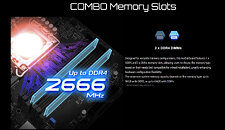
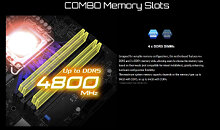
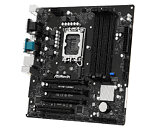
ASRock's Vietnamese website has added an intriguing new microATX motherboard to its portfolio of Intel H610 chipset products. Uniko's Hardware stumbled upon this low-key addition earlier today—their social media post expressed excitement about the young SKU's unique RAM setup. They proclaimed: "a new LGA 1700 H610M motherboard that supports DDR4 and DDR5—but not at the same time! Six DIMM slots on this mobo = two for DDR4, and the other four support DDR5, both in dual channel mode...ASRock saving our ass!" In-depth investigations reveal that the H610M COMBO's first BIOS release is tagged with a June 2025 publication date.

This basic board design's hybrid slot system—targeting office and industrial applications—offers refreshing flexibility. Over the past couple of weeks, computer memory prices have escalated. In particular, mainstream DDR5 product costs of ownership have hit unreasonable heights. Fortunately, the H610M COMBO can accept cheaper DDR4 sticks. Uniko's Hardware recalls that an obscure ONDA H610M+ board offered a similar system three years ago, albeit restricted to one slot per DDRx type (single channel). It is encouraging to see a mainstream manufacturer release a more capable "combo" design, but the new model's specifications and feature set outline entry-level operations—no pricing information or retail availability has emerged online. Hardcore gamers and overclockers will likely sniff at the H610M COMBO SKU's basic capabilities.
MSI IPC Unveils Powerful New Edge AI System MS-C910E

MSI IPC announces the launch of its latest edge AI system, the MS-C910E, a high-performance industrial computer engineered for robust AI inference, demanding I/O tasks, and real-world industrial deployments. The MS C910E is built on the LGA 1700 Intel R680E platform and supports up to Intel Core Processors (Series 2) for strong and scalable performance. It offers 2 DDR5 SO- DIMM slots for up to 96 GB memory with ECC for reliable data handling. The system supports 4 independent displays through 2 HDMI and 2 DP outputs and delivers fast networking with four 2.5 GbE LAN ports for demanding AI and industrial tasks.

The MS C910E is built for reliability with strong resistance to vibration and shock and supports wide range DC input from 12 to 48 volt. It operates in environments from -10 °C to 40 °C, making it ready for harsh industrial conditions.

Samsung Could Convert Some HBM3E Capacity to Regular DRAM to Meet Demand

As Samsung transitions from its HBM3 and HBM3E variations of HBM memory to HBM4, the company is reportedly reallocating some of its HBM production capacity to regular DRAM to meet demand. Discussions within the company focus on converting approximately 30-40% of the current capacity from the 10 nm-class, fourth-generation 1a DRAM process to the 10 nm-class, fifth-generation 1b lines used for general-purpose DRAM. This includes DDR5, LPDDR5X, LPDDR6, and GDDR7 memory. With additional investment to repurpose mature process nodes like 1z, Samsung expects to free up the equivalent of about 80,000 wafers per month of 1b capacity.

While HBM typically offers higher margins for companies like Micron and SK Hynix, Samsung's internal estimates show that the operating profit for a 12-hi HBM3E stack is around 30%. In contrast, the near-term expectations for general-purpose DRAM exceed 60%. These margin differences, along with forecasts of a significant decline in average selling prices for 12-hi HBM3E and limited incremental demand from the largest HBM customer, have reduced the incentive to expand HBM3E production.

XPG Launches New ARMAX DDR5 Gaming Memory Series

XPG, a fast-growing provider of systems, components, and peripherals for Gamers, Esports Pros, and Tech Enthusiasts, today announces the launch of the new ARMAX DDR5 gaming memory series. Inspired by the aggressive silhouette of stealth fighter jet defending the skies, the series features a hardcore exterior and delivers high-performance speeds of up to 6,400 MT/s. The lineup includes the ARMAX RGB DDR5 with dazzling lighting effects and the understated, low-key ARMAX DDR5, aiming to be the premier DDR5 upgrade choice for next-gen gamers to conquer all gaming campaigns.

Targeting the DDR5 Performance Sweet Spot with SFF Compatibility
In response to the growing trend of SFF (Small Form Factor) mini-PC modifications, the ARMAX DDR5 features a heatsink height of just 39.5 mm. This design avoids interference with large CPU coolers, cables, or other equipment, allowing for easy installation in various small chassis. Performance-wise, the series locks into the "performance sweet spot" of next-generation platforms with speeds ranging from 6,000 to 6,400 MT/s. Built with strictly selected high-quality ICs and featuring built-in PMIC (Power Management Integrated Circuit) and On-Die ECC (Error Correcting Code), it supports Intel XMP 3.0 and AMD EXPO for easy overclocking. The ARMAX series provides gamers with a perfect experience that balances performance, style, and excellent compatibility. The XPG ARMAX DDR5 memory series is available now through global channels and comes with a limited lifetime warranty.

Fujitsu Details Upcoming Arm-Based Monaka Processor Roadmap

Fujitsu has shared new details on its upcoming Arm-based Monaka processors during its Technology Update 2025 event. Monaka is planned as the company's next major datacenter CPU line, with the first chips arriving in 2027 on a 2 nm process. The initial Fujitsu Monaka CPU uses the Armv9-A architecture and a 3D chiplet layout combining a core die with separate SRAM and I/O dies. A single chip carries 144 cores, with two-socket configurations scaling to 288 cores per node. The platform supports 12-channel DDR5, PCIe 6.0 with CXL 3.0, and Arm SVE2 for AI and HPC workloads. Fujitsu is positioning it as a high-efficiency part aimed at AI inference, simulation, and large-scale data processing.

From there, the roadmap moves into more specialized designs. Targeted for late 2029, Monaka-X is a CPU-only built on a 1.4 nm class process. Fujitsu says it will be the first server CPU to implement Arm SME (Scalable Matrix Extension). The chip uses a 3D many-core layout tightly coupled with a GPU and includes hardware confidential-computing features as standard. The next CPU will be Monaka-X with NPU planned for the second half of 2030. This variant adds an on-package NPU aimed at mid-sized LLMs. Fujitsu is exploring a reconfigurable engine plus a dedicated quantization accelerator. Arriving in 2031, Monaka-XX is described as a full CPU-NPU fusion chip, again planned to be built on 1.4 nm or newer nodes. Overall, the roadmap shows Fujitsu pushing deeper into high-core-count Arm servers with increasing AI acceleration built directly into the platform.

AMD to Raise Ryzen Processor Prices from Today

AMD communicated to its retail partners of a price increase for its Ryzen desktop processors in the retail channel. This could just be a case of the company restoring regular pricing from brand- and distributor-level discounts for Black Friday and Cyber Monday, although we don't know the tune to which the prices are being increased just yet. Increased processor pricing could hit DIY gaming PC budgeting that's already strained with rising prices of DDR5 memory. The price increases are expected to cover the entire portfolio of consumer-segment Ryzen desktop processors, with there being active SKUs across the Ryzen 9000 series "Zen 5" and Ryzen 7000/8000 series "Zen 4." The company is planning interesting new SKUs in the entry-mainstream segment based on older IP, a recent example of which is the Ryzen 5 7500X3D.

MSI IPC Introduces MS-CF20 V2.0 in a Powerful and Versatile ATX Motherboard

The MS-CF20 V2.0, a high-performance industrial ATX motherboard built for the demands of modern computing. With native support for 15th Gen Intel Arrow Lake-S processors and extensive I/O options, this board brings together cutting-edge performance and legacy compatibility in a single rugged platform. SI IPC's MS-CF20 V2.0 is optimized to support the latest Intel Arrow Lake S processors, including Core Ultra U9, U7, U5, Pentium and Celeron models, by using the Intel W880 chipset. It provides exceptional memory bandwidth through 4 DDR5 UDIMM slots that support both ECC and non-ECC memory, at speeds up to 5600 MT/s and with a maximum capacity of 256 GB.

On the visual front, the MS-CF20 V2.0 supports 3 independent displays via VGA, DP, and HDMI connectors, making it ideal for environments that require multiple simultaneous outputs. In addition to strong display capabilities, this motherboard offers robust networking, featuring 4 2.5 GbE RJ-45 LAN ports that support high-throughput and redundant connections. Its storage architecture is similarly flexible: 2 M.2 M-Key slots, 4 SATA 3.0 ports, and support for RAID 0/1/5/10 enable both high-speed and redundant data handling.

Memory Shortage Just Started, Major Price Hikes Ahead, Warns Team Group

Memory markets are currently facing a significant supply shortage, with December contract prices for key DRAM categories increasing by 80 to 100%, according to Team Group general manager Gerry Chen. He described this substantial price hike as the beginning of a multiyear memory upcycle and warned that the most severe impact will be felt in the first half of 2026, once distributors deplete their inventories. This price shock is already affecting the system bills of materials for OEMs, with memory's share in PC and notebook BOMs rising from the mid-teens to the mid-20s and higher, depending on the configuration.

Costs for DDR5 and SSDs have, on average, increased two to three times. For overall DRAM, it is 171.8% year-over-year. Cloud service providers are securing allocations for 2026 and 2027, which reduces the available supply for consumer and mainstream devices. This situation risks significant shipment declines in cost-sensitive segments like mainstream PCs, notebooks, and Chromebooks. However, even the powerful hyperscalers cannot secure all the DRAM allocations, as Tier-1 U.S. and Chinese cloud order books are filled to an effective 70% capacity, eliminating the safety stock that most buyers thought they had secured.

ASRock Prepares Workstation with Four AMD Radeon AI PRO R9700 Creator GPUs

ASRock is looking to enter the workstation business and capture the lucrative demand for local AI acceleration with its new product lineup. Called GAI4G-R9700, the 4U workstation is a rack-mount or standalone desktop solution that pairs AMD Ryzen Threadripper 9000 series CPUs with four Radeon AI PRO R9700 Creator GPUs. This gives the system a total VRAM capacity of 128 GB from the GPUs alone, which is 32 GB per GPU. For additional capacity, the system can utilize the 2 TB DDR5 capacity housed on the ASRock WRX90 WS EVO motherboard with horizontal CPU and memory placement.

Since ASRock doesn't manufacture CPUs and memory, the company will likely bundle the workstation with four GPUs, leaving users to acquire their own CPU and memory. This is especially tricky to figure out as the massive memory demand could impact final workstation pricing far more than anything else, especially in larger quantities such as 512+ GB. The system supports eight ECC RDIMMs running at 6400 MT/s, in eight-channel configuration (1DPC). The whole system is powered by a single 80 Plus Platinum 2500 W ATX 3.1 power supply.

HP to Raise Prices, Cut Specs Due to Memory Cost Surge

HP says rising memory costs will likely push PC prices higher next year, or force the company to ship systems with less RAM. The warning comes as DDR5 pricing has surged more than 200% in recent weeks due to the ongoing memory shortage. CEO Enrique Lores told investors yesterday during HP's earnings call that HP has enough RAM stockpiled to get through the first half of its fiscal year, which began this month. But starting in May, higher memory costs will begin hitting margins. To compensate, HP is preparing to source cheaper suppliers, redesign some products with lower memory configurations, cut internal costs, and raise prices where necessary. According to Lores, the impact will be felt mostly in lower-end PC categories, which tend to be more sensitive to component cost changes. Any price increases will be rolled out selectively based on market and product segment.

HP isn't alone. CyberPowerPC, announced on X that the company will implement a price increase across all its SKUs on December 7, 2025. MAINGEAR, a major prebuilt PC manufacturer, is feeling the effects of ongoing memory shortages. CEO Wallace Santos told Wccftech that prices will keep rising and lead times will stretch as stock becomes limited. "We are in constant communication with our vendors and will delay these increases for as long as possible," Santos said. With the DRAM and NAND flash shortage showing no signs of ending, the situation could persist for some time. On its marketplace, Framework now lists all DDR5 or DDR4 SODIMMs as "coming soon," effectively halting standalone RAM sales. We'll end on that note, after a month overflowing with news of rising component costs.

PC Prices to Rise as DRAM and NAND Shortages Bite, Says MAINGEAR CEO

MAINGEAR is one of the largest prebuilt PC ODMs, and when the supply chain experiences disruptions, the company is among the first to notice. In an interview with Wccftech, MAINGEAR CEO Wallace Santos shared insights about the current state of the PC market and its near-term future. According to Santos, "prices will continue to rise, and eventually, we will have to increase our lead times as stock and allocation become constrained. However, we are in constant communication with our vendors and will delay these increases for as long as possible." This is concerning, as the ongoing DRAM and NAND flash shortage shows no signs of ending soon, suggesting we might be in this cycle for a while.

Just yesterday, another prebuilt PC ODM, CyberPowerPC, announced on X that the company will implement a price increase across all its SKUs on December 7, 2025. This decision is due to a 500% increase in RAM prices and a 100% increase in SSD prices. Currently, prices of server DRAM and LPDDR5X, commonly found in laptops, mini PCs, and gaming handhelds, are expected to double in 2026. Additionally, prices of NAND flash, a key component of SSDs, have doubled in the last six months, which is another worrying development.

Skyrocketing DRAM Prices Hit CyberPower Prebuilt PCs

It's no secret that DRAM prices have recently skyrocketed thanks to supply chain and fulfillment issues, and the effects of those price increases have already started to echo across the consumer market, with brands like Framework already pausing direct-to-consumer RAM sales. Now, however, CyberPowerPC has announced that it will be increasing prices of its pre-built desktop PCs as a result of increasing component costs. The exact price increase that will be applied when the increase happens is unclear, although, as we have pointed out before, prices for AMD's GPUs are also slated to increase by as much as 10%.

According to CyberPowerPC's post on X, the system integrator will effectuate a price increase across all of its SKUs on December 7, 2025. CyberPowerPC blames not only RAM prices, which it says have increased by 500%, but also cites a 100% increase in SSD prices. CyberPowerPC says these increased costs have been a factor for prebuilt PCs since October 1, 2025. Another common culprit for the increase in DRAM price and lack of availability is the demand for AI compute—a theory substantiated by recent CounterPoints Research projections. Currently, prices of server DRAM and LPDDR5X, commonly found in laptops, mini PCs, and gaming handhelds, are expected to double in 2026.

Tachyum Announces Details of Its 281 GB/s DDR5 DIMM (TDIMM)

Tachyum today announced details about how its TDIMM is bringing the future of AI and computing, enabling AI models with parameters many orders of magnitude greater than those of any existing solution at a fraction of the cost. TDIMM is key to reducing the estimated cost of OpenAI data center $3 trillion and 250,000 megawatts of power to $27 billion and 540 megawatts.

Prodigy Ultimate provides up to 21x higher AI rack performance than NVIDIA Rubin Ultra NVL576. Tachyum DDR5 DIMM (TDIMM) bandwidth increase is 5.5 times, from 51 GB/s to 281 GB/s. Prodigy Ultimate's 24 channels provide 6.7 TB/s, 11x increase over 12-channel CPUs. The TDIMM supports 256 GB in standard, 512 GB in tall, and 1 TB in extra tall height, and TSV increases capacity up to 8 times to 3 PB per Prodigy node.

Framework Halts Selling of Standalone RAM, Anticipates Increased Memory Prices

Framework has updated some of its component store listings, in reaction to fluid conditions that have affected computer memory supplies. In a reply to Jeff Geerling's musings regarding recent ludicrous price hikes, the North American modular PC specialist provided a short explanation: "the memory market is in a bad spot. We haven't changed our memory pricing, but we did have to delist standalone memory from our Marketplace to head off scalpers and preserve inventory for people buying it with our DIY Edition laptops." Over the past week and a half, several tech large players have started shifting production priorities.

At the time of writing, Framework's marketplace does not display any available stock of DDR5 or DDR4 SODIMMs. Every relevant item is marked with a "coming soon" tag. The company's prioritization of DIY laptop customers is a noble gesture, but this morning's social media activity also disclosed some troubling developments: "our memory costs from our suppliers are increasing substantially though, so it is likely we will need to increase memory pricing soon."

Memtest86+ 8.0 Gets Support for Latest Intel/AMD CPUs and More Improvements and Fixes

The popular RAM testing utility, the memtest86+, has been updated to the new 8.0 version, adding support for latest AMD and Intel CPUs as well as plenty of other improvements and fixes, like temperature reporting for DDR5 DIMMs, faster detection of CPUs with high core count, optional Dark Mode, fixed DDR5 XMP 3.0 issue, improved Loongson architecture support and more.

The newest memtest86+ 8.0 version also adds CLang/LLD support, and now ships as a single binary for both UEFI and legacy boot. It also brings better BadRAM support and reporting as well as better SPD detection for early ICHs, and better support for VTxxx serial console. The complete changelog can be found below.

Gigabyte's Z890 Aorus Tachyon ICE Shatters Another World Record at DDR5-13530

GIGABYTE TECHNOLOGY Co. Ltd, a leading manufacturer of motherboards, graphics cards, and hardware solutions, proudly announces another historic breakthrough in the world of extreme overclocking. In a spectacular demonstration of engineering excellence and collaborative innovation, elite overclocker Sergmann, together with GIGABYTE's legendary overclocker HiCookie, have obliterated the DDR5 memory speed world record, pushing past the 13,000 MT/s threshold to achieve an extraordinary 13,530 MT/s—the fastest memory speed ever achieved on the planet. This groundbreaking milestone was powered by GIGABYTE's revolutionary Z890 AORUS TACHYON ICE motherboard, paired with cutting-edge Corsair memory modules and Intel Core Ultra processors (Series 2), creating the ultimate trifecta of extreme performance technology.

"The Z890 AORUS TACHYON ICE represents the pinnacle of motherboard engineering—a testament to our relentless pursuit of performance perfection. This world record validates our vision: when you refuse to compromise on design, power delivery, and innovation, you don't just compete for records—you own them." said Jackson Hsu, Director of Motherboard Division at GIGABYTE.

Intel "Arrow Lake Refresh" Brings 7,200 MT/s DDR5 Memory Support

Additional confirmations regarding the launch of "Arrow Lake Refresh" have emerged, as Intel has updated its processor SKU support matrix for DDR5 technologies. The "Arrow Lake Refresh" processors will support faster DDR5 memory. Intel confirms that ARLR will ship with native support for DDR5 memory speeds reaching 7200 MT/s on CUDIMM modules. This enhanced speed rating applies only to DDR5 modules equipped with integrated clock driver circuits, commonly known as CUDIMMs, which improve signal integrity at higher frequencies. Standard UDIMMs and CSODIMMs will continue to operate within their existing specifications at 5600 MT/s and 6400 MT/s, respectively.

Intel attributes the speed boost to a refined integrated memory controller and subtle platform-level optimizations for LGA-1851 motherboards, not a new chipset. Core platform constraints, including the two-DIMMs-per-channel limit, remain unchanged, meaning the improvement simply provides additional headroom for compatible memory. Beyond memory improvements, select middle-class SKUs will gain extra efficiency cores or modest clock speed increases. Combined with the CUDIMM support, these changes should deliver measurable gains in specific workloads, though they will not dramatically shift Intel's competitive position. Overclocking enthusiasts can still exceed official speeds through manual tuning. Scheduled to debut in early 2026, just a few months before "Nova Lake," the update is primarily a refinement of Intel's existing technology rather than a completely new architecture. The fully new architecture is reserved for "Nova Lake-S."

Intel W890 Workstation Platform Details Leak Ahead of "Granite Rapids-WS" Launch

Intel's W890 workstation platform, the foundation for its upcoming "Granite Rapids-WS" HEDT workstation Xeon processors, has been leaked. The platform introduces a new Socket E2 design with 4,710 LGA pins built to support CPUs with TDP ratings reaching 350 watts. Intel is taking a two-tier approach with distinct "Expert" and "Mainstream" configurations: Expert-class implementations unlock 112 PCIe lanes (96 PCIe 5.0 lanes plus 16 PCIe 4.0 lanes), while the Mainstream tier delivers 80 PCIe 5.0 lanes. This will support a XCC-based "Granite Rapids-WS" processor with 86 cores and 172 threads, achieving single-core boost speeds near 4.8 GHz with 336 MB of L3 cache.

Memory capabilities mark a significant evolution from previous workstation platforms. The W890 chipset supports registered DDR5 modules, with RDIMMs validated for speeds up to 5,200 MT/s. In a quad-channel configuration with two DIMMs per channel, systems can address up to 2 TB of memory per processor socket. The connectivity suite includes a 2.5 Gigabit Ethernet controller, numerous USB 3.2 and USB 2.0 ports, multiple SATA III interfaces, and dual SlimSAS connectors that each provide PCIe 4.0 x4 bandwidth. Server-grade management infrastructure includes an ASPEED AST2600 BMC and a Nuvoton system supervisor, while power delivery provisions mandate a standard 24-pin ATX connector alongside support for up to four supplementary 8-pin CPU power headers.

Chinese CXMT Shows Homegrown DDR5-8000 and LPDDR5X-10667 Memory

Chinese company CXMT has unveiled its first homegrown DDR5-8000 and LPDDR5X-10667 memory modules at the 2025 China International Semiconductor Expo. These are CXMT's most advanced memory modules, matching the offerings from major South Korean manufacturers like Samsung and SK Hynix, as well as U.S.-based Micron. The expansion of Chinese server infrastructure for traditional computing and AI has been constrained by domestic silicon production capabilities. CXMT's DDR5 memory operates at 8,000 MT/s, while its LPDDR5X memory reaches 10,667 MT/s. This performance is comparable to Samsung's latest offerings, including their LPDDR6 memory, which matches the top speed of their LPDDR5X chips at 10,700 MT/s.

These memory modules are available in 12 Gb and 16 Gb LPDDR5X capacities, while DDR5 scales to 16 Gb and 24 Gb module formats. These are later packaged into RDIMM, MRDIMM, and TFF MRDIMM for data centers and enterprise servers. UDIMMs are designed for mainstream desktops and PCs, while SODIMMs are intended for laptops and compact devices. Additionally, clock drive modules like CUDIMM and CSODIMM are meant for the high-end overclocking and workstation markets. In the server market, which is the largest segment, CXMT RDIMMs offer a range of capacities to cover mainstream platform memory configurations.

Samsung Reallocates NAND Production to DRAM Across Korean Fabs

Samsung is reportedly preparing a major shift in its memory production strategy as DRAM demand continues to surge on the back of global AI infrastructure growth. According to Korean industry reports cited by SE Daily, the company plans to convert parts of its NAND flash lines in Pyeongtaek and Hwaseong into DRAM production, and will also run its upcoming Pyeongtaek Fab 4 (P4) as a DRAM-only line using Samsung's latest 1c process. Industry sources say Samsung has become cautious about the NAND market, while demand for standard DRAM has jumped sharply. Prices are rising fast, and some server customers are said to be offering as much as 70% higher prices for 96 GB and 128 GB DDR5 modules but still can't secure enough supply. Big tech firms reportedly expect shortages to run for years and are already negotiating DRAM allocations for 2027.

Samsung currently produces both DRAM and NAND across Pyeongtaek Fab 1, Pyeongtaek Fab 3, and its Hwaseong campus. The hybrid lines at P1 and Hwaseong will shift further toward DRAM as NAND equipment is removed. Fab 4, now in final construction, will start up next year as a dedicated 1c DRAM line, and Samsung is also considering using a second zone of P4, originally planned for foundry production, for DRAM as well. Once the changes are in place, Samsung's DRAM output from P1 (Hwaseong) and Fab 4 (P4) is expected to climb significantly in the first half of next year. Reduced Korean NAND production will reportedly be offset by higher output from Samsung's Xi'an plant in China.

NVIDIA Demand May Double LPDDR5X and Server DRAM Prices in 2026

Counterpoint Research expects memory prices to keep climbing through 2025 and into early 2026. The firm says DRAM prices could rise another 30% in Q4 2025, followed by up to 20% more early next year. This comes on top of roughly 50% price increases already seen this year. The main pressure right now is on older memory. LPDDR4 supply has tightened as manufacturers shift production to newer parts for AI hardware. That shift has created odd price gaps: DDR5 for PCs and servers is trading around $1.50 per gigabit, while DDR4, used in low-end phones and other consumer gear is selling for about $2.10. Even HBM3e is currently cheaper at around $1.70. Counterpoint expects DRAM output to grow by more than 20% in 2026 as Samsung, SK hynix, Micron, and China's CXMT ramp up production. But the bigger problem may be further ahead. NVIDIA's plan to use LPDDR in future AI systems puts it on par with a major smartphone vendor, something the LPDDR supply chain has never had to support. LPDDR also shifts error correction away from DDR5 ECC modules and onto the CPU, a change that could reshape server designs.

In a tight supply scenario, Counterpoint warns DDR5 RDIMM prices could double between early 2025 and the end of 2026. For now, the worst impact is hitting budget smartphones that still rely on LPDDR4. But analysts expect the strain to spread to mid-range and high-end devices, raising bill-of-materials costs by as much as 25% for some models. That could squeeze margins or slow shipment growth—or both. The report adds that broader risks like tariffs, geopolitics, and labor costs make the outlook even more volatile.

Silicon Power's XPOWER Storm DDR5 RGB Wins Taiwan Excellence Award 2026

XPOWER, the high-performance gaming brand of global memory leader Silicon Power (SP), has been honored with the Taiwan Excellence Award 2026 for its Storm DDR5 RGB UDIMM. Recognized for its outstanding performance, innovative engineering, and compelling aesthetic design, the XPOWER Storm delivers the speed, stability, and visual flair that today's gamers and PC enthusiasts demand.

High-Performance DDR5 Meets Reliability
The XPOWER Storm stands out with its impressive performance, reaching speeds of up to 8000 MT/s with low-latency configurations from CL28 to CL38. Its advanced architecture delivers exceptional responsiveness for high-demand gaming, multitasking, and content creation workloads—pushing the limits of what modern systems can achieve. Operating at a low voltage of 1.35 V to 1.45 V, the XPOWER Storm maintains outstanding efficiency while sustaining extreme performance. With built-in PMIC power management, On-Die ECC, and full support for Intel XMP 3.0 and AMD EXPO, users can unlock maximum speed with effortless, stable overclocking.

OneXPlayer Super X: 14-Inch Strix Halo Tablet with Liquid Cooling

OneXPlayer has already revealed the OneXFly Apex, an AMD Strix Halo-powered gaming handheld, but now it has revealed more information about the Super X, which the company calls the "ultimate 2-in-1 gaming laptop." The new OneXPlayer 14-inch tablet, which was previously revealed in a presentation, is powered by AMD's Ryzen AI Max+ 395 APU with up to 128 GB of LPDDR5X unified memory. The OneXPlayer Super X is currently listed on Kickstarter, although it hasn't officially launched there yet, so pricing is unclear. Although it is technically a tablet, OneXPlayer ships the Super X with a magnetic keyboard accessory, technically making it something akin to a Microsoft Surface-style 2-in-1 device. OneXPlayer is billing the Super X as a do-it-all compact tablet for everything from creative workloads and gaming to heavy local AI tasks. The AMD Ryzen AI Max+ 395 has a TDP of up to 120 W, and it will supposedly have an 83.5 Wh battery, which isn't particularly large, given the sizeable power budget. That 120 W TDP may pose a problem for a slim form factor, but OneXPlayer is allegedly planning a liquid-cooled version of the Super X tablet—although not much is available regarding the details of said liquid-cooling system.

As with most AMD Strix Halo devices, expansion and upgrades are limited to the SSDs, and the Super X has one M.2 2280 PCIe 4.0 slots, although a maximum storage capacity is not listed by OneXPlayer. The display is a 14-inch, 2880×1800, 120 Hz AMOLED panel with a claimed 138% coverage of the sRGB color space. The display supposedly also supports HDR and VRR, the latter of which should be a decent help when it comes to gaming workloads and perhaps even battery life. It also supports a stylus with 4096 levels of pressure sensitivity, so it may be useful as a sketching tablet or note-taking tool. The ports on the Super X include 2× USB4, 1× USB 3.2 Type-A, 1× 3.5 mm audio, 1× TF Card slot, 1× HDMI 2.1, 1× PCIe 4.0 Mini SSD Expansion Slot (externally accessible).

AMD & NVIDIA Reportedly Consider GPU Cuts, ASUS and Others Slow Motherboard Plans Amid Memory Shortage

A series of reports from Korean and Taiwanese outlets suggests growing pressure across the PC hardware industry as DRAM, NAND, and even NOR Flash prices continue to climb. Korea Economic Daily says NVIDIA, AMD, and other GPU makers are considering dropping some mid-to-high-end gaming cards where memory now makes up an unusually large share of total cost. Taiwanese PC brands, including ASUS, are also said to be looking at ways to reduce memory configurations in upcoming products. TrendForce warns that manufacturers may shift more production toward lower-margin models or raise prices across the board to cope with higher component costs. With most modern PCs, laptops, consoles, tablets, and phones now shipping with at least 16 GB of RAM, any further price spikes or supply shortages could force major brands to cut orders and increase retail pricing. Commercial Times reports that memory alone could add nearly NT$3,000 (about US $96) to basic office PCs next year.

According to Commercial Times, due to rising memory prices some motherboard makers and notebook ODMs vendors have paused new motherboard development or mass production. DRAM, NAND, and NOR Flash supply is tightening at the same time. DDR4 is becoming especially scarce as suppliers accelerate phase-outs and move mature-node capacity toward HBM and DDR5. WJ Capital Perspective estimates a DDR4 shortfall of around 70,000 wafers by the end of 2025, with 2026 unlikely to recover fully. NOR Flash demand is rising as well, driven by AI servers. Commercial Times says NVIDIA's GB200 NVL72 system already uses more than US $600 of NOR per rack, possibly reaching $900 within two years. This comes right after earlier reports that AMD is preparing GPU price increases and Samsung is raising memory prices by up to 60% due to tight supply.

G.SKILL and ASUS Break DDR5 Memory Overclock World Record at DDR5-13322

G.SKILL International Enterprise Co., Ltd., the world's leading brand of performance overclock memory, is thrilled to announce that the world-class German extreme overclocker, CENS, has broken the fastest DDR5 memory frequency overclocking world record at DDR5-13322. First to exceed the DDR5-13300 milestone, this incredible frequency record was achieved with one 24 GB module of G.SKILL Trident Z5 DDR5 memory, using the ASUS ROG Maximus Z890 Apex motherboard and Intel Core Ultra 9 285K desktop processor under extreme liquid nitrogen (LN2) cooling.

This incredible achievement pushes the boundaries of DDR5 speed once again. Over the past few weeks, multiple DDR5 memory overclock frequency scores have surpassed the DDR5-13000 barrier. The overclocking community continues to push the limits of the latest PC hardware through precision tuning. G.SKILL is excited to witness extreme overclockers from around the world continue to challenge limits and deliver new extraordinary results.
Return to Keyword Browsing
Nov 12th, 2026 21:54 PST change timezone

New Forum Posts

Popular Reviews

TPU on YouTube

Controversial News Posts