News Posts matching #DDR5

Return to Keyword Browsing

Team Group Announces New T-FORCE DELTA RGB DDR5-7200 Memory

Leading memory provider Team Group has reached a new level of DDR5 performance with its newest memory kit under the T-FORCE gaming sub-brand. Today, it has launched the DELTA RGB DDR5 DESKTOP MEMORY with an updated clock rate of up to 7,200 MHz to go along with Intel's recently released 13th generation CPUs and the new generation of 700 series motherboards from various motherboard manufacturers. Gamers around the world can reach new heights of DDR5 performance and experience the thrill of gaming with blazing fast clock speeds.

With T-FORCE LAB's stellar R&D capabilities and the use of carefully selected high-quality ICs, Team Group has taken the lead in introducing high-speed DDR5 16 GB dual-channel memory kits with clock rates of 6,800 MHz, 7,000 MHz, and 7,200 MHz for its DELTA RGB DDR5 DESKTOP MEMORY. It uses a special thermal module that combines cooling silicone and an aluminium alloy heatsink, allowing it to dissipate heat extremely effectively while overlocked and performing under high loads. Furthermore, it is certified by motherboard manufacturers ASRock, ASUS, Biostar, GIGABYTE, and MSI to be compatible with their respective lighting software. The desktop memory not only provides outstanding stability and performance but also the ability to freely customize RGB effects, allowing gamers to create truly unique and striking PC builds.

KLEVV Unveils CRAS XR5 RGB DDR5 Gaming Memory

KLEVV, an emerging memory brand introduced by Essencore, is thrilled to unveil its latest extreme performance DDR5 overclocking/gaming memory, the CRAS XR5 RGB DDR5 memory kit. Tailor-made to synergize well with the latest 12th Gen Intel Core desktop processors and Intel Z690 chipset motherboards, the CRAS XR5 RGB DDR5 memory brings leading-edge DDR5 technology with jaw-dropping performance like never before.

Pushing the envelope of technology while focusing on craftsmanship, KLEVV showcases superior product design language and engineering prowess with the new flagship CRAS XR5 RGB DDR5 memory, designed to empower overclockers, PC enthusiasts, gamers, and professional content creators with mind blowing performance.

BIOSTAR Releases the X670E Valkyrie Motherboard

BIOSTAR, a leading brand of motherboards, graphics cards, and storage devices, today announces the brand new X670E VALKYRIE ATX motherboard. Designed based on the AMD X670 chipset, the X670E VALKYRIE supports all new AMD AM5 Ryzen 7000 Processors, capable of extracting unprecedented performance for gaming, content creation, or any compute-heavy task thrown at it.

The X670E VALKYRIE motherboard carries BIOSTAR's top-shelf VALKYRIE range styling with a heavy emphasis on performance and cooling. DDR5 RAM support, PCIe 5.0, and PCIe 5.0 M.2 are essential features of any high-end motherboard in 2022. The new X670E VALKYRIE has it all with exceptional performance and synergy enabled by BIOSTAR's signature 22-phase power design and Digital PWM technology.

DRAM Q4 Price Drop to Expand to 13~18% Due to Weak Consumer Demand

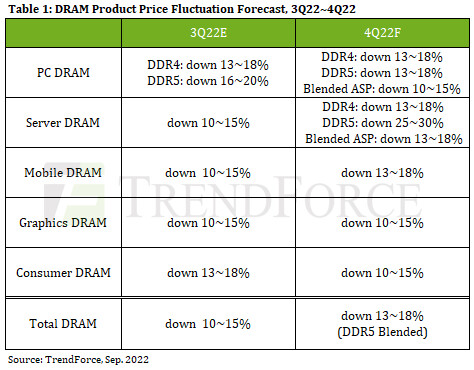
According to TrendForce research, rising inflation has weakened demand for consumer products, flattening the peak of peak season. In 3Q22, memory bit consumption and shipments continued to exhibit quarterly decline. Due to a significant decline in memory demand, terminal buyers also delayed purchases, leading to further escalation of supplier inventory pressure. At the same time, the strategies of various DRAM suppliers to increase their market share remain unchanged. There have been cases of "consolidated Q3/Q4 price negotiations" or "negotiating quantity before pricing" in the market, which are the reasons leading to a ballooning of declining DRAM prices to 13~18% in 4Q22.

In terms of PC DRAM, due to weak demand for notebooks, PC OEMs will remain focused on destocking DRAM inventory. While the DRAM supply side has not actually reduced production since operating profit remains favorable, bit output continues to rise and pressure on suppliers' inventory becomes increasingly obvious. From the perspective of DDR4 and DDR5, the price drop forecast in 4Q22 is 13~18% with DDR5 declining more than DDR4. However, as the penetration rate of DDR5 continues to rise, coupled with a higher unit price, the penetration rate of DDR5 in the PC DRAM sector will increase 13~15% in 4Q22, which will buoy the average unit price of overall PC DRAM (combined DDR5 and DDR4) marginally and PC DRAM pricing in 4Q22 is estimated to drop by approximately 10~15%.

G.SKILL Announces DDR5-6800 CL32 2x16GB and DDR5-6400 CL32 2x32GB Trident Z5 RGB Memory Kits

G.SKILL International Enterprise Co., Ltd., the world's leading brand of performance overclock memory and PC components, is excited to announce two new extreme overclocked performance DDR5 memory specifications to its flagship Trident Z5 RGB series: DDR5-6800 CL32-45-45-108 32 GB (2x 16 GB) and DDR5-6400 CL32-39-39-102 64 GB (2x 32 GB). These memory kits come with Intel XMP 3.0 memory overclocking profiles and have been validated on the latest 12th Gen Intel Core desktop processor and Intel Z690 chipset platform.

Dedicated to developing extreme overclock speed memory kits, the G.SKILL Trident Z5 RGB DDR5-6800 CL32-45-45-108 2x 16 GB memory kit is the ideal choice for overclocking enthusiasts to experience extreme DDR5 frequency performance. The screenshot below shows the DDR5-6800 memory kit validated with Intel Core i7-12700K desktop processor and ASUS ROG Maximus Z690 Hero motherboard.

ASRock X670E Motherboard Series Launches Ready for AMD AM5 CPUs

Leading global motherboard manufacturer, ASRock, is proud to announce its X670E motherboard series, ready for new AMD Ryzen 7000 Series processors. This first wave of AMD Socket AM5 motherboards includes Special Edition X670E Taichi Carrara, flagship X670E Taichi, high-end X670E Steel Legend, mainstream X670E PRO RS, and entry X670E PG Lightning.

"With the AM5 platform we're investing in the next generation of high-performance computing and gaming," said David McAfee, Corporate Vice President and General Manager, Client Channel Business Unit, AMD. "With the continued support of best-in-class partners like ASRock, AMD is bringing the most advanced features and technologies to desktop. The X670 Extreme is designed to bring the best connectivity and ultimate overclocking with PCIe 5.0 support."

Team Group & BIOSTAR's First Collaboration: T-FORCE DELTA RGB DDR5 VALKYRIE Edition

The two gaming product leaders, Team Group and BIOSTAR, have joined forces to release the T-FORCE DELTA RGB DDR5 VALKYRIE Edition DESKTOP MEMORY, the first collaboration of T-FORCE brand from Team Group and VALKYRIE series from BIOSTAR. The design is based on the popular DELTA RGB DDR5 DESKTOP MEMORY and its stealth fighter-influenced look, featuring the signature wide-angled heatspreader with dazzling RGB lightning. On top are the logos of T-FORCE's iconic wing and the classic golden wings of the BIOSTAR VALKYRIE series, also integrating the concept of the warriors' majestic wings in the form of a streamlined design spread across the heatspreader. Gamers can enjoy the memory's striking visuals and legendary performance as T-FORCE and VALKYRIE carry them further in the gaming arena.

T-FORCE DELTA RGB DDR5 VALKYRIE Edition DESKTOP MEMORY is equipped with a next-generation RGB smart control chip, allowing gamers to use BIOSTAR's Advanced VIVID LED DJ software to create a unique RGB setup for their PC. With both outstanding hardware and software supports, users can control and synchronize lighting effects any way they like, making it easy to create a divine look all will admire. The VALKYRIE Edition DDR5 supports the latest Intel XMP 3.0, allowing gamers to enjoy the thrill and performance of overclocking in just a few simple clicks. Furthermore, its special thermally conductive silicone and power management chip (PMIC) cooling design significantly reduce heat, providing stable performance while it runs at high speeds.

ASUS Republic of Gamers Premieres ROG Phone 6D, Built Around MediaTek's Dimensity 9000+ SoC

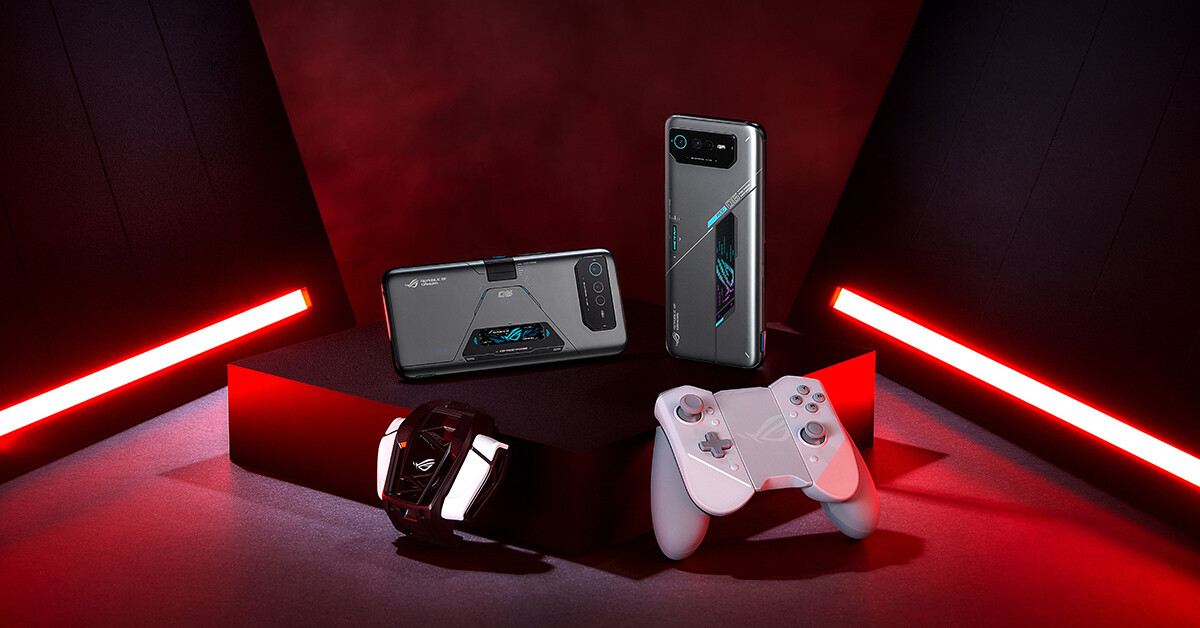
ASUS Republic of Gamers (ROG) today premieres Dare to be Ultimate: Building a World-Leading Gaming Phone, the design story video that reveals the genesis of the new ROG Phone 6D series of gaming smartphones. The ROG Phone 6D and ROG Phone 6D Ultimate are powered by the latest flagship MediaTek Dimensity 9000+ 5G chipset. Clocking up to 3.2 GHz CPU speeds, and boasting up to 16 GB of LPDDR5X RAM and 512 GB ROM of storage, the Dimensity 9000+ chipset provides flagship 5G experiences, perfect for mobile gamers.

"The pursuit of the ultimate performance and gaming experience has always been central for the ROG Phone. With each iteration, we consistently strive to surpass ourselves, achieving the spirit of For Those Who Dare," said S.Y. Hsu, Co-CEO, ASUS. "We are thrilled that this first collaboration with MediaTek has achieved such stunning performance, and we will continue to strive for continuous performance improvements."

GIGABYTE Z690, B660, and Follow-up Motherboards Will Support AMD EXPO Memory

GIGABYTE TECHNOLOGY Co. Ltd, a leading manufacturer of motherboards, graphics cards, and hardware solutions, today announced all Z690, B660, and following motherboards will support EXPO memory. Users can enjoy performance boost with ease on GIGABYTE motherboards of all platforms with either AMD EXPO or Intel XMP supported memories.

AMD recently announced the new EXPO technology for DDR5 memory on the latest AM5 platform, which allows easy DDR5 memory accelerating with built-in overclocking profiles for the performance uplift, just like XMP technology. Along with this new technology, all major memory module brands release EXPO memories correspondingly. GIGABYTE leads to provide both AMD EXPO and Intel XMP DDR5 support on AM5 motherboards, and carry on the innovative design to Intel platform, which enable users to speed up their DDR5 memories on Z690, B660, and following motherboards by simply activate XMP and EXPO in the BIOS setting for the performance boost.

Arm Announces Next-Generation Neoverse Cores for High Performance Computing

The demand for data is insatiable, from 5G to the cloud to smart cities. As a society we want more autonomy, information to fuel our decisions and habits, and connection - to people, stories, and experiences.

To address these demands, the cloud infrastructure of tomorrow will need to handle the coming data explosion and the effective processing of evermore complex workloads … all while increasing power efficiency and minimizing carbon footprint. It's why the industry is increasingly looking to the performance, power efficiency, specialized processing and workload acceleration enabled by Arm Neoverse to redefine and transform the world's computing infrastructure.

Kingston FURY Adds AMD EXPO Certified DDR5 Memory to Lineup

Kingston FURY, the gaming division of Kingston Technology Company, Inc., a world leader in memory products and technology solutions, announced today the addition of AMD EXPO certified DDR5 modules to the Kingston FURY Beast line of memory. Always aiming to provide the latest options to gamers and enthusiasts, these new overclock specs modules and kits are optimized for AMD's upcoming AM5 platform with two factory tuned profiles, plus one user customizable profile.

Qualified by the world's leading motherboard manufacturers, the Kingston FURY Beast line offers aggressive speeds up to 6000MT/s1 with a bold low-profile heatspreader design. Now with AMD EXtended Profile for Overclocking, users can trust that their selected Kingston FURY Beast DDR5 modules and kits are exactly what their AMD AM5 system needs to maximize performance, while also maintaining stability.

Neo Forza Server DRAM Available to DELL Data Center Customers

Goldkey Technology Corporation (TPEx : 3135), aka "Neo Forza", offers products and solutions marketed under the label Neo Forza successfully completed qualification of its server modules with Dell PowerEdge R650 and R750 series servers, which DELL loaned to Neo Forza. Following successful qualification, Neo Forza announces commercial and industrial channel partner availability of Neo Forza DDR4 RDIMM server memory in adherence to industry qualifications, ranging from DDR4 2133MT/s to 3200MT/s.

"Data center staff need to maximize platform performance and extend platform longevity. Neo Forza's qualified DDR4 server memory assures these factors are met cost-effectively," said Jess Kung, vice president of sales. "Goldkey Technology Corporation has been on the forefront of the memory industry and is an integrated-circuit (I/C) specialist with technical acumen of more than 15 years. The successful qualification program amplifies our intrinsic value to our global customers."

Key Slides from Intel 13th Gen "Raptor Lake" Launch Presentation Leak

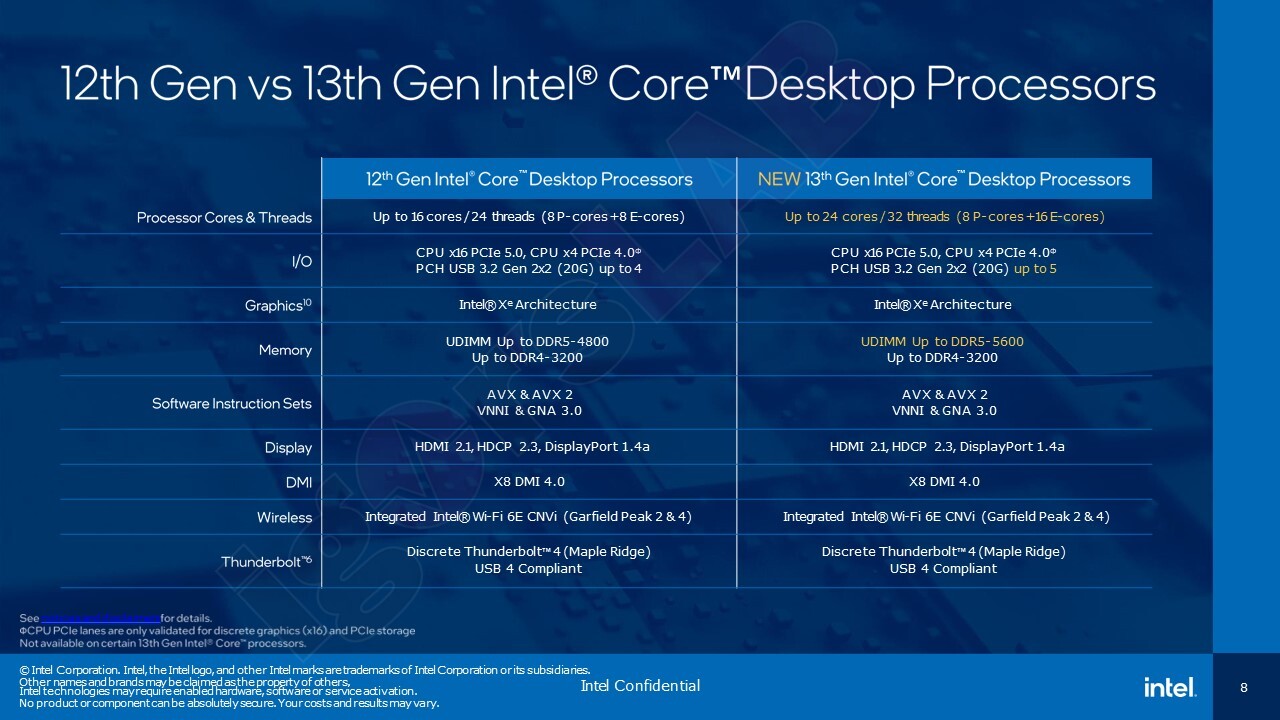
The most juicy bits of the Intel 13th Gen Core "Raptor Lake" launch press-deck just leaked, courtesy of Igor's Lab. They reveal the six SKUs Intel will debut the 13th Gen Core desktop processor series with, highlight key differences with the previous-gen "Alder Lake," and also detail what the new Intel Z790 chipset brings to the table. To begin with, the first-wave of 13th Gen Core processors will include six SKUs—the Core i9-13900K, i9-13900KF, i7-13700K, i7-13700KF, i5-13600K, and the i5-13600KF. The -K and -KF parts are identical to each other, spare for the lack of integrated graphics with the -KF ones.

Many of the key specs of these six SKUs were already leaked to the web along with those of several SKUs from future waves of 13th Gen SKUs, but this slide confirms a handful interesting specs related to power. The slide confirms 125 W as the Processor Base Power value for all six SKUs, 253 W as the Maximum Turbo Power value for the Core i9 and Core i7 K/KF SKUs; and 181 W as the Maximum Turbo Power for the Core i5 K/KF SKUs. This is a definite step up from the 241 W MTP for the previous-gen Core i9, 190 W MTP for the Core i7, and 150 W MTP for the Core i5. Of course, these limits are like a hedge blocking your path, you can relax them in the motherboard BIOS.

AMD Ryzen 7 7700X "Zen 4" Geekbench and CPU-Z Bench Numbers Surface

A user named "orangezone" submitted a CPU-Z validation for an alleged retail AMD Ryzen 7 7700X processor, revealing its key specs that include 5.425 GHz clocks at 1.152 V core-voltage. The submission includes a CPU-Z Bench run for the processor, which puts the single-threaded performance at 774 points, and the multi-threaded performance of the 8-core/16-thread processor at 8381 points. The single-threaded performance is around 20% higher than that of the previous-gen flagship Ryzen 9 5950X, and about 1% faster than the Core i9-12900K ("Golden Cove" P-core). This particular bench run was performed on a Gigabyte X670E AORUS Master motherboard, with DDR5-6400 CL30 memory.

In separate news, BenchLeaks spotted a Geekbench run of the Ryzen 7 7700X (by a different user); on an ASUS ROG Crosshair X670E Hero and DDR5-6000 memory. Here, the processor scored 2209 points in the single-threaded test, and 14459 points in the multi-threaded one, in Geekbench 5.4.5. This is a surprising result, as it puts the single-threaded performance of the 7700X at about 16% higher than the Core i7-12700K, and a fascinating 2% higher than the 8P+4E "Alder Lake" chip in multi-threaded tests. The 7700X launches in the same market segment as the i7-12700K, when it goes on sale this September 27.

Kingston Technology Remains Top DRAM Module Supplier for 2021

Kingston Technology Company, Inc., a world leader in memory products and technology solutions, today announced it has been ranked top third-party DRAM module supplier in the world, according to the latest rankings by revenue from analyst firm TrendForce (formerly DRAMeXchange). Kingston retains its number 1 position with an estimated 78.7% market share on $14.2B (USD) revenue. TrendForce states that Kingston increased revenue by 8% YoY marking the 19th consecutive year that Kingston has held the top spot.

According to the report, the world's top five memory module houses accounted for 90% of total sales in 2021 with Kingston holding nearly 80% of that market. As one of the leading buyers of DRAM chips in the world, Kingston provides a highly customized production model which has led to continuous growth in shipment scale and drove increased revenue by 8%. TrendForce states that pandemic-induced lifestyle changes and the demand for distance learning grew in the past two years, driving the growth of DRAM module shipments. Kingston took the approach to be prepared for those segments. Kingston's success is largely attributed to their working attitude of 'Kingston Is With You,' which solidifies the dominant force the company holds among consumers and organizations alike looking to upgrade new and existing systems.

Intel's 13th Gen Raptor Lake Lineup Leaks

Courtesy of Wccftech, we now have a complete picture of what Intel is planning to announce on the 27th of this month. The information is extremely detailed and covers no less than 14 different processor SKUs, ranging from the Core i9-13900K/KF to the Core i5-13400/F. All of the CPUs except the Core i5-13400/F and the upcoming Core i3 models will support memory speeds of up to DDR5 5600, whereas the lower end parts will be limited to DDR5 4800. All 13th Gen Intel CPUs should also support DDR4 3200 memory. Just as with the 12th Gen CPUs, the 13th Gen KF and F will not support ECC memory and of course, no IGP.

There's nothing that really stands out when looking at the specs and most things are expected based on earlier rumours. The Core i9-13900K/KF will indeed boost up to 5.8 GHz on up to two cores and all P-cores will boost up to 5.4 GHz, with the E-cores boosting up to 4.3 GHz. The Core i7-13700K/KF will have a much bigger gap here, compared to the the Core i7-12700K/KF versus the Core i9-12900K/KF where there was a 200 MHz boost frequency gap, which has now been extended to 400 MHz, as the Core i7-13700K/KF only boosts up to 5.4 GHz on two cores. Interestingly, the base clock frequency for the P-cores seems to have dropped 200 MHz on theK/KF parts, compared to 12th Gen equivalents in the product stack. For the remaining details, have a look at the data provided below.

ASRock X670E Steel Legend Motherboard Needs Hundreds of Seconds at First Boot or Clear CMOS to Train Memory

At this point, we don't know if this is a limitation at AMD's level or ASRock's, but someone with access to a retail ASRock X670E Steel Legend motherboard, with all its packaged paraphernalia in place, spotted an interesting sticker covering the board's four DDR5 DIMM slots. The sticker has some info on the ideal DIMM slot selection for dual-channel memory (4x sub-channels); but what catches our eye is a table which states just how long the motherboard will take to train the memory the first time it's booted up, or after a clear-CMOS operation (where your BIOS settings are erased).

The table says that a typical setup with two 16 GB modules (read: two single-rank modules in a 1 DIMM per channel/1DPC configuration), takes 100 seconds to train (or until first boot). Two 32 GB modules (typically a pair of dual-rank modules in 1DPC configuration) take 200 seconds, as do four 16 GB modules (four single-rank modules in a 2DPC configuration). The least optimal config, four dual-rank modules in a 2DPC configuration, takes a whopping 400 seconds (almost 7 minutes) to train. That's 100 to 400 seconds of a black screen, or no display signal, enough to unnerve anyone and assume something is DOA.
Update Sep 2nd: The source behind this story confirmed that this is an ASRock-level issue, and that it's been "fixed" with the latest BIOS.

Update Sep 8th: This has been fixed according to ASRock.

Montage Technology Delivers World's First Gen1 DDR5 Clock Driver Engineering Samples

Montage Technology, a leading data processing and interconnect IC design company, today announced that it is delivering the world's first Gen1 DDR5 Clock Driver (CKD or DDR5CK01) samples to the top DRAM memory vendors for their development of memory modules used in new-generation desktop and notebook computers.

For a long time, the clock driver functions have been integrated onto the register clock driver (RCD) device, which is used in the server platforms, rather than the PC computers. With the boost of the DDR5 data rate, the frequency of the clock signal becomes higher and higher, and the signal integrity issue of the clock becomes more and more challenging. As the DDR5 data rate reaches 6400MT/s and above, the memory modules such as UDIMMs and SODIMMs used in desktop and notebook computers, will need an on-DIMM clock driver to buffer and re-drive the clock signal of the memory modules, to meet the signal integrity and reliability requirement of the high-speed clock signal.

AMD EPYC "Genoa" Zen 4 Product Stack Leaked

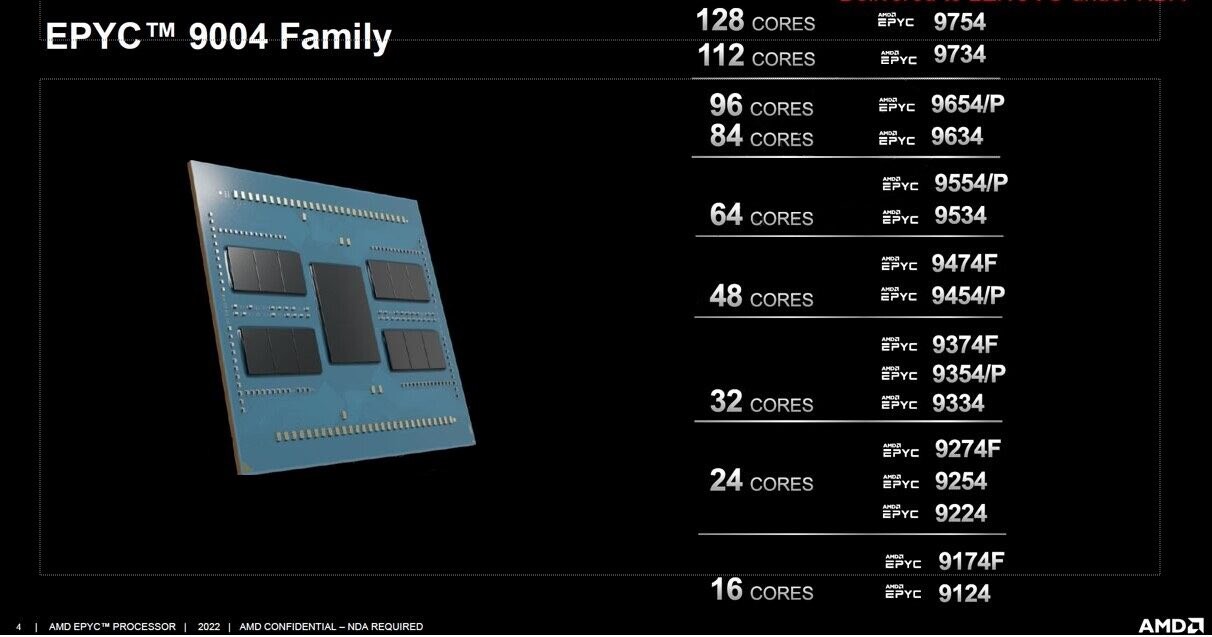
With its recent announcement of the Ryzen 7000 desktop processors, the action now shifts to the server, with AMD preparing a wide launch of its EPYC "Genoa" and "Bergamo" processors this year. Powered by the "Zen 4" microarchitecture, and contemporary I/O that includes PCI-Express Gen 5, CXL, and DDR5, these processors dial the CPU core-counts per socket up to 96 in case of "Genoa," and up to 128 in case of "Bergamo." The EPYC "Genoa" series represents the main trunk of the company's server processor lineup, with various internal configurations targeting specific use-cases.

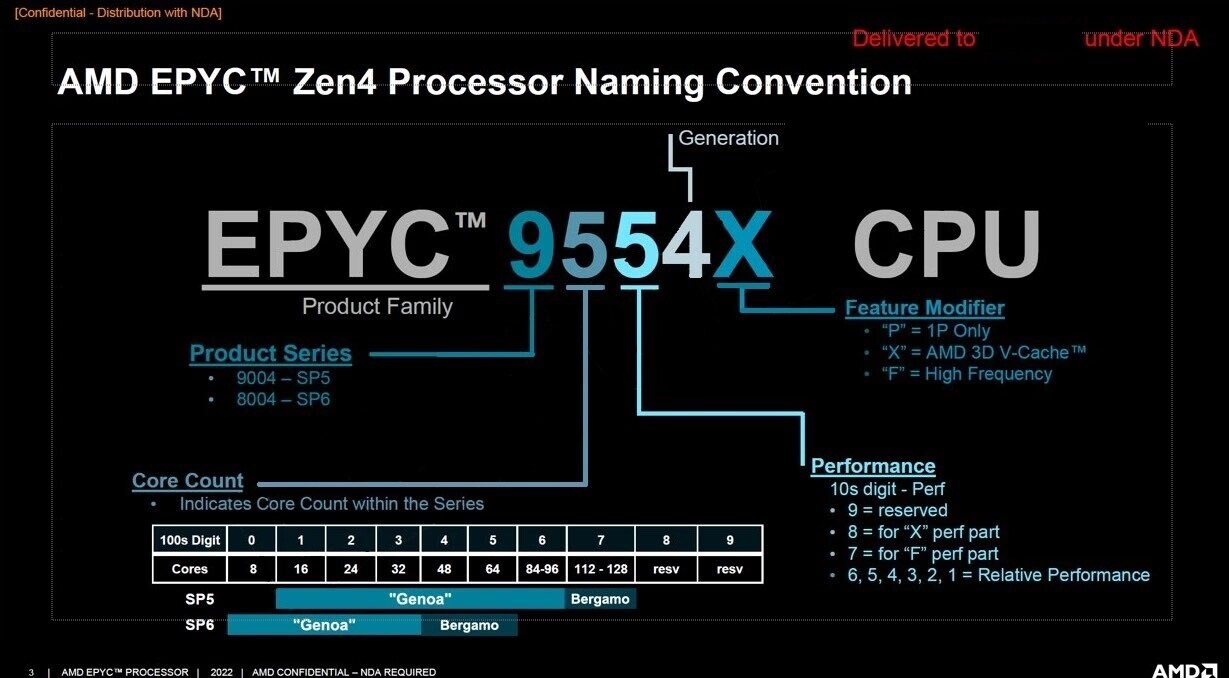
The 96 cores are spread twelve 5 nm 8-core CCDs, each with a high-bandwidth Infinity Fabric path to the sIOD (server I/O die), which is very likely built on the 6 nm node. Lower core-count models can be built either by lowering the CCD count (ensuring more cores/CCD), or by reducing the number of cores/CCD and keeping the CCD-count constant, to yield more bandwidth/core. The leaked product-stack table below shows several of these sub-classes of "Genoa" and "Bergamo," classified by use-cases. The leaked slide also details the nomenclature AMD is using with its new processors. The leaked roadmap also mentions the upcoming "Genoa-X" processor for HPC and cloud-compute uses, which features the 3D Vertical Cache technology.

AAEON Introduces ATX-Q670 LGA1700 Motherboard for Industrial Automation

Dedicated to innovation in embedded board computing, AAEON are delighted to announce an impressive breakthrough in its ATX motherboard range with the release of the new ATX-Q670A, AAEON's first ATX board with DDR5 support. With this innovation, the ATX-Q670A can provide customers with an unprecedented 50% increase in bandwidth and also a decrease in power consumption compared to prior generations. Particularly suited to IoT applications, the ATX-Q670A also combines the greatest maximum SATA performance with the very fastest SSD to give customer applications access to higher I/O speeds.

The ATX-Q670A is not just faster, but also far more expansive and accommodating to higher-performance modules, offering two PCIe [x16] slots alongside both a PCIe [x4] and PCIe [x1] slot, in addition to a further three PCI slots. Such specifications, alongside the ATX-Q670A's dual graphic card support mean that it can facilitate everything from video capture to AI calculation for vision-based applications, with four independent 4K@60 Hz resolution display capabilities to complete the package.

Lenovo Introduces ThinkBook 16p Gen 3 Powered by AMD Ryzen 6000

The new Lenovo ThinkBook 16p Gen 3 will help content creators and power users unleash their creativity without limitations. The latest supercharged ThinkBook features up to AMD Ryzen 9 6000 H-series processors and NVIDIA GeForce RTX 3060 discrete graphics to deliver flagship performance with Windows 11. The immersive narrow-bezel 16-inch 2.5K IPS display options include TÜV Rheinland Low Blue Light and TÜV Eyesafe certifications to maximize eye comfort and include an Ambient Light Sensor that adjusts screen and keyboard backlight brightness. Two display options are available including a 400nit 60 Hz panel and a new 500nit 165 Hz VESA Certified HDR400 panel offers vivid colors and increased shadow and highlight detail. Both display options are also X-Rite Pantone Certified and support Dolby Vision content.

Super processing power of the AMD Ryzen 6000 Series Mobile Processors and NVIDIA GeForce RTX graphics help users tackle the most arduous demands of hybrid working. The addition of up to 32 GB dual-channel LPDDR5 memory, up to 2 TB through dual SSD storage and a 71Wh battery should keep users powered throughout the day. New working styles also require high-speed reliable connectivity and port availability for flexible and versatile connections. Conveniently connect to wireless networks, peripherals, and AV equipment thanks to Wi-Fi 6 support and two USB Type-C ports including one USB4, two USB-A 3.2 Gen 2 and an HDMI 2.1 port.

AMD Confirms DDR5-6000 as "Sweetspot" Memory OC Frequency for Ryzen 7000

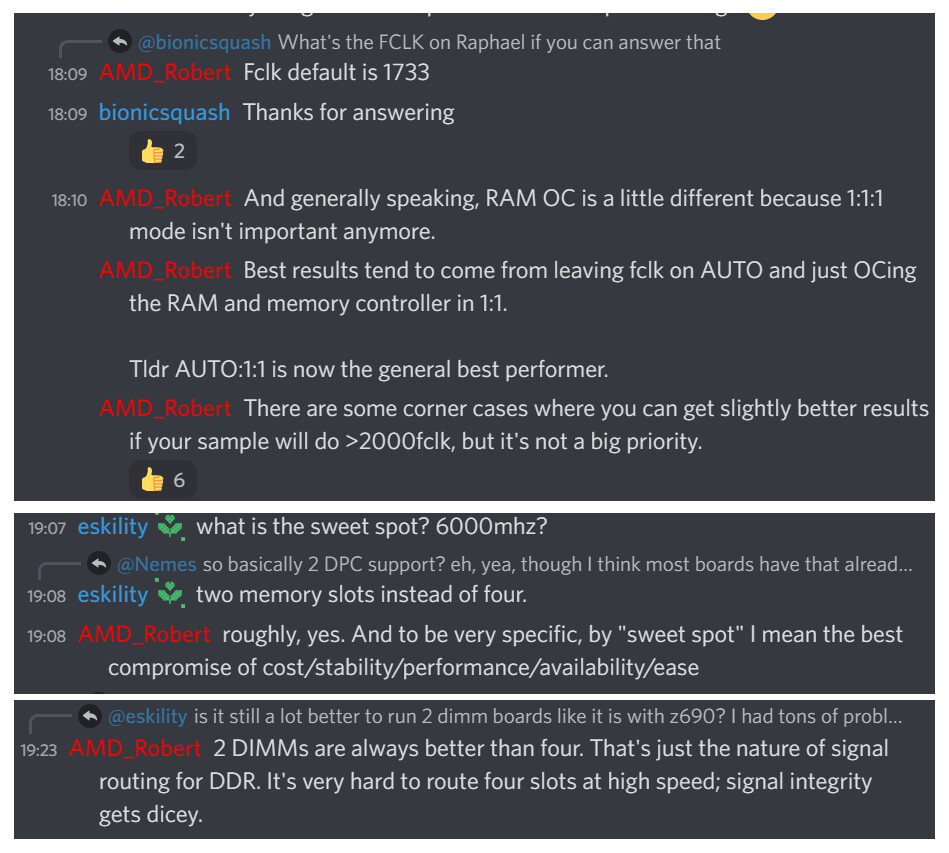
AMD in its Discord AMA confirmed DDR5-6000 to be the "sweetspot" memory overclock for its upcoming Ryzen 7000 "Zen 4" processors. A sweetspot frequency in AMD jargon is an inflection of performance, stability, cost, and ease. For the very first Ryzen, this was DDR4-3200. For Ryzen 2000, it was DDR4-3400. For the Ryzen 3000 "Zen 2," it climbed to DDR4-3800, the Ryzen 5000 "Zen 3" it was DDR4-4000.

At the architectural-level, it is usually the highest frequency where FClk, UClk, and MClk maintain a 1:1:1 ratio, before having to engage dividers that impact performance, making it a point of diminishing returns for investing in faster memory modules. AMD's Robert Hallock, leading the Discord AMA, recommended that FClk be left untouched at "Auto" for the best results, and overclockers look for an Auto:1:1 ratio for the FClk, UClk, and MClk. As with both AMD and Intel now, the highest frequencies are possible only with one single-rank DIMM per memory channel (1DPC), and memory overclocking yield lower results with dual-rank DIMMs, or two DIMMs per memory channel. Among the AMD EXPO-certified DIMMs announced over the past few days, some do engage memory clocks beyond DDR5-6000. It would be interesting to see how they affect the "golden ratio" for Zen 4.

SMART Modular Technologies Launches its First Compute Express Link Memory Module

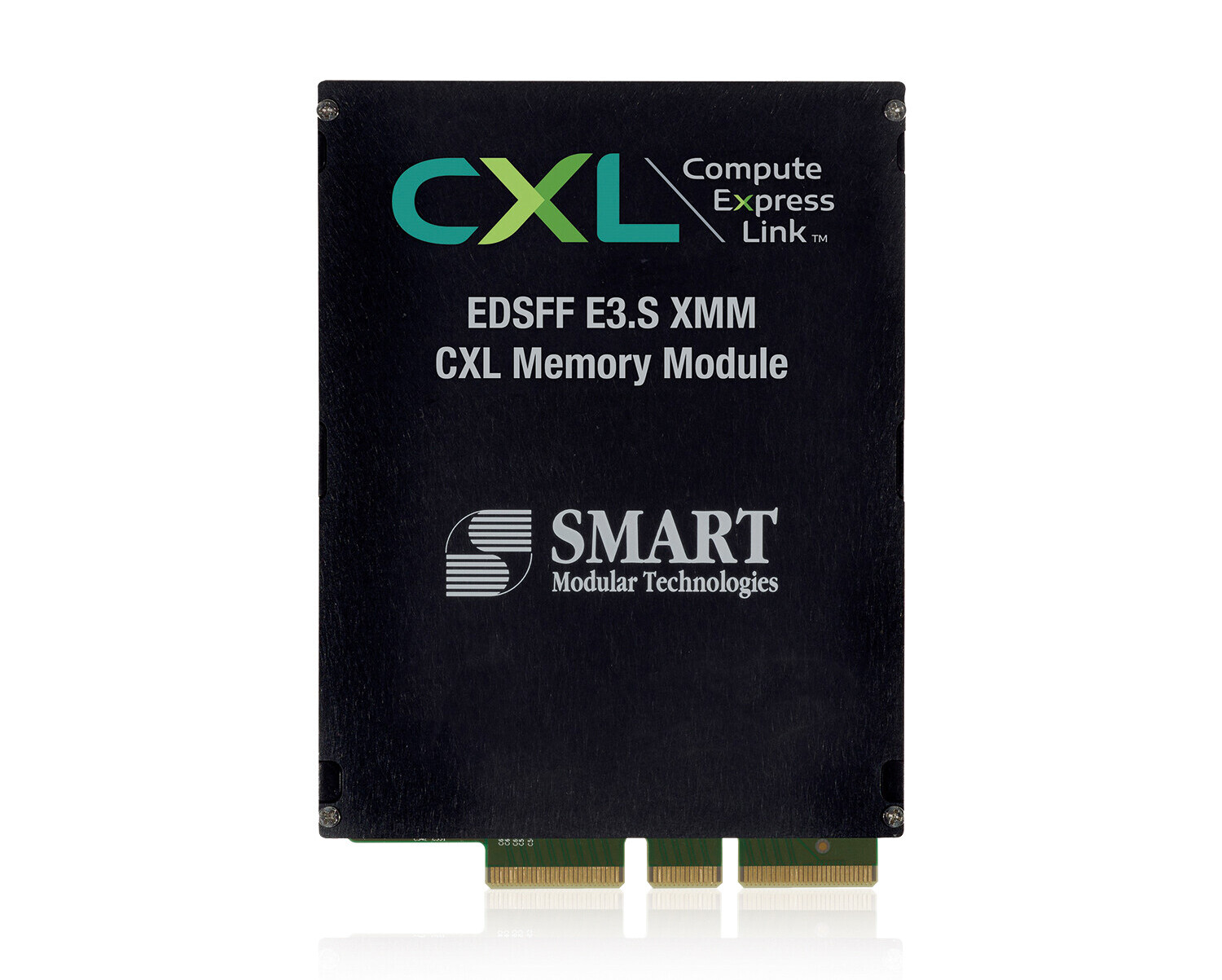
SMART Modular Technologies, Inc. a global leader in memory solutions, solid-state drives, and hybrid storage products announces its new Compute Express Link (CXL) Memory Module, the XMM CXL memory module. SMART's new DDR5 XMM CXL modules helps boost server and data center performance by enabling cache coherent memory to be added behind the CXL interface, further expanding big data processing capabilities beyond the current 8-channel/12-channel limitations of most servers.

The industry adoption of composable serial-attached memory architecture enables a whole new era for the memory module industry. Serial-attached memory adds capacity and bandwidth capabilities beyond main memory DIMM modules. Servers with XMM CXL modules can be dynamically configured for different applications and workloads without being shut down. Memory can be shared across nodes to meet throughput and latency requirements.

ADATA XPG Launches LANCER DDR5-5600 with Support for AMD EXPO

XPG, a fast-growing provider of systems, components, and peripherals for Gamers, Esports Pros, and Tech Enthusiasts, today announces announced the launch of the new XPG LANCER 5600 DDR5 memory module, its first DDR5 to support AMD EXPO (Extended Profiles for Overclocking); What's more, all ADATA's and XPG's full lineup of DDR5 memory modules are compatible with AMD's latest platforms, ensuring optimal stability and performance.

XPG LANCER DDR5-5600 is capable of delivering performance of up to 5600 MT/s and comes in variants with or without RGB lighting. They also come with two heat sink color options to choose from to meet different preferences, including Midnight Black and Snow White. As AMD Ryzen 7000 series processors have been announced, XPG took the initiative to launch the XPG LANCER DDR5-5600 to allow gamers who are still on the sidelines to upgrade to DDR5 and enjoy the benefits of AMD EXPO for easy overclocking. XPG's full range of DDR5 memory models, including CASTER, LANCER, and HUNTER will all support AMD EXPO and be available globally in October.

GeIL DDR5 Memory Lineup with AMD EXPO Revealed

GeIL is readying a fairly large lineup of its EVO V and Polaris RGB DDR5 memory lines featuring the AMD EXPO technology. These modules will pack both AMD EXPO and Intel XMP 3.0 profiles, but their advertised specs will apply on AMD Ryzen 7000-series platforms, whereas the XMP 3.0 profiles included will be an approximation of these specs. GeIL's lineup includes 32 GB dual-channel kits of two 16 GB modules. Frequencies include DDR5-4800 (JEDEC native), DDR5-5200 (JEDEC native), and EXPO-backed DDR5-5600, DDR5-6000, DDR5-6000 with tighter timings, DDR5-6200, and DDR5-6400. The exact part number, timings, and module voltages, are in the table below.
Return to Keyword Browsing
Nov 13th, 2026 03:04 PST change timezone

New Forum Posts

Popular Reviews

TPU on YouTube

Controversial News Posts