News Posts matching #DDR5

Return to Keyword Browsing

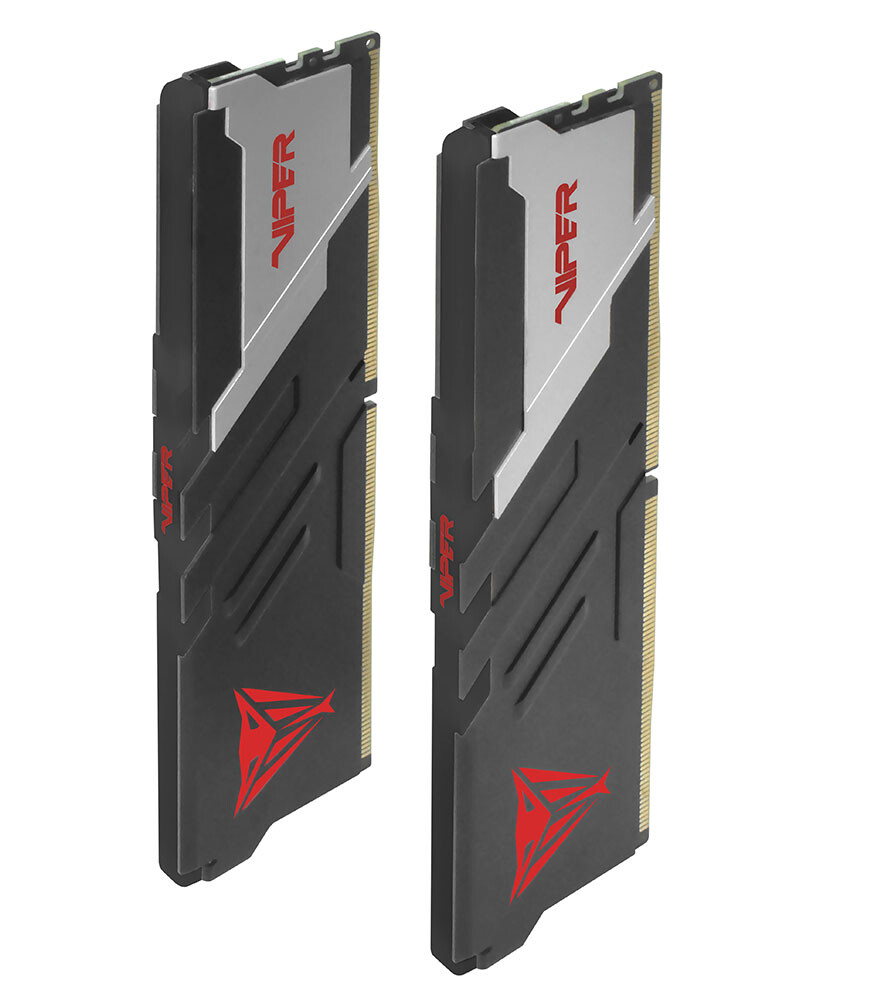
Patriot Memory Announces VIPER VENOM RGB and non-RGB DDR5 Kits

Viper, the trademarked gaming brand of PATRIOT and a global leader in performance memory, solid-state drives, and flash storage solutions today is proud to announce the market launch of their new VIPER VENOM RGB and non-RGB DDR5 high-performance DRAM memory kits. These brand-new VIPER VENOM DDR5 memory kits are available with and without the RGB illumination, it provides enhanced speeds ranging up to 6200 MHz with kit capacities of 16 GB-32 GB to meet the harsh demand for PC enthusiasts and hardcore gamers.

"Our VIPER Gaming fans waited quite a while for quality DDR5. The VIPER VENOM DDR5 is the first DDR5 DRAM that we distributed for hardware enthusiasts, hardcore gamers, and case modders addicted to unparalleled system performance and stability. VIPER's engineering team has put countless efforts to guarantee excellent compatibility and higher reliability across Intel 's latest platforms, currently." said Roger Shinmoto, Vice President of VIPER GAMING. "Our first launch of Venom DDR5 on 4/28 will feature the highest frequency version at 6200 MHz. We hope the enthusiasts or overclockers be able to experience the physical power of Viper Venom DDR5 at the market launch. However, due to the global shortage of memory chips, we have decided to launch the mainstream frequency models like 5200/5600/6000 MHz sometime in the coming months." He added.

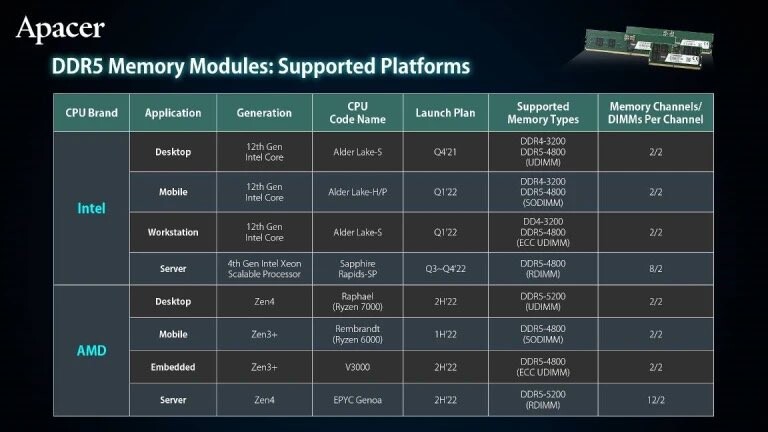
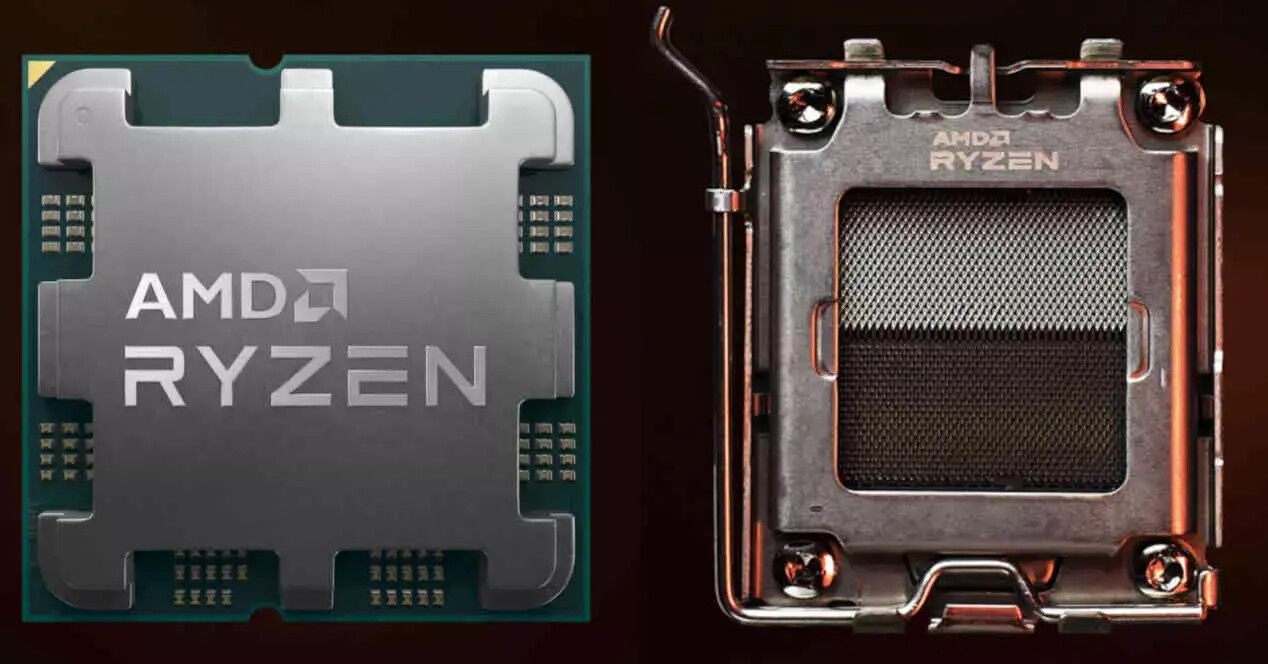
AMD Ryzen 7000 "Raphael" to Ship with DDR5-5200 Native Support

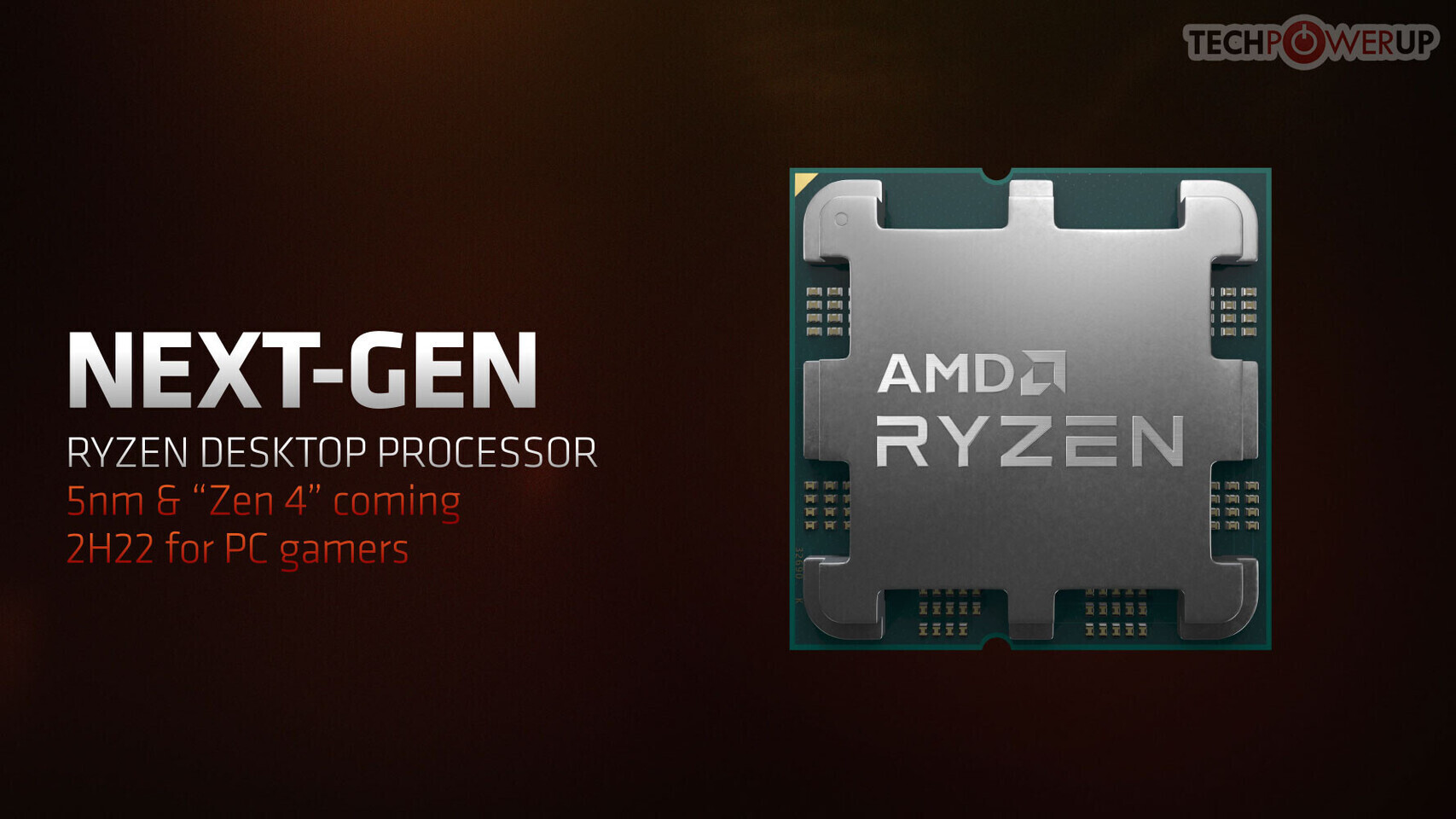
AMD's upcoming Socket AM5 Ryzen 7000-series "Raphael" desktop processors will ship with native support for DDR5-5200 memory speed, according to a marketing slide by memory maker Apacer (which also owns the overclocking memory brand ZADAK). The "Zen 4" based desktop processors will feature a dual-channel DDR5 (4 sub-channel) interface, just like the 12th Gen Core "Alder Lake," but with no backwards compatibility with DDR4.

AMD already stated that Ryzen 7000 processors have a design focus on memory overclocking capabilities, including AMD EXPO, a custom memory module SPD extension standard rivaling Intel XMP 3.0, which will come with fine-grained settings specific to the AMD memory controller architecture. Until now, AMD relied on A-XMP, a motherboard vendor-enabled feature based in the UEFI firmware setup program, which translates Intel XMP SPD profiles of memory modules into AMD-approximate settings.

Dell's DDR5 CAMM Appears in More Detail, Comes in Several Shapes, Won't be Proprietary

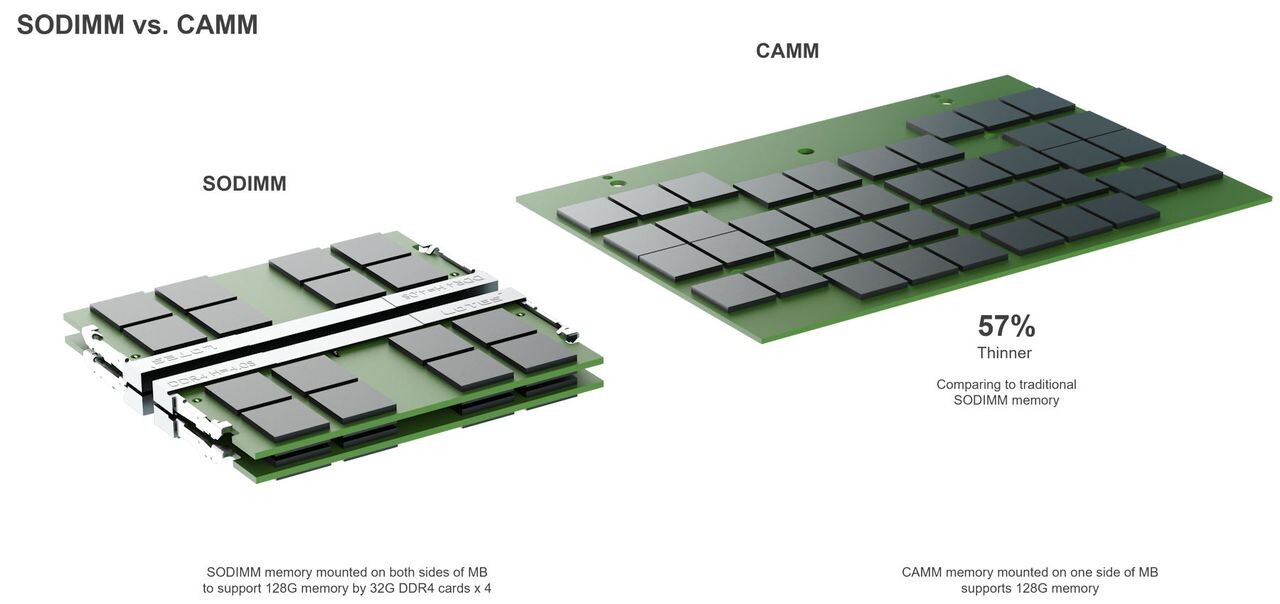
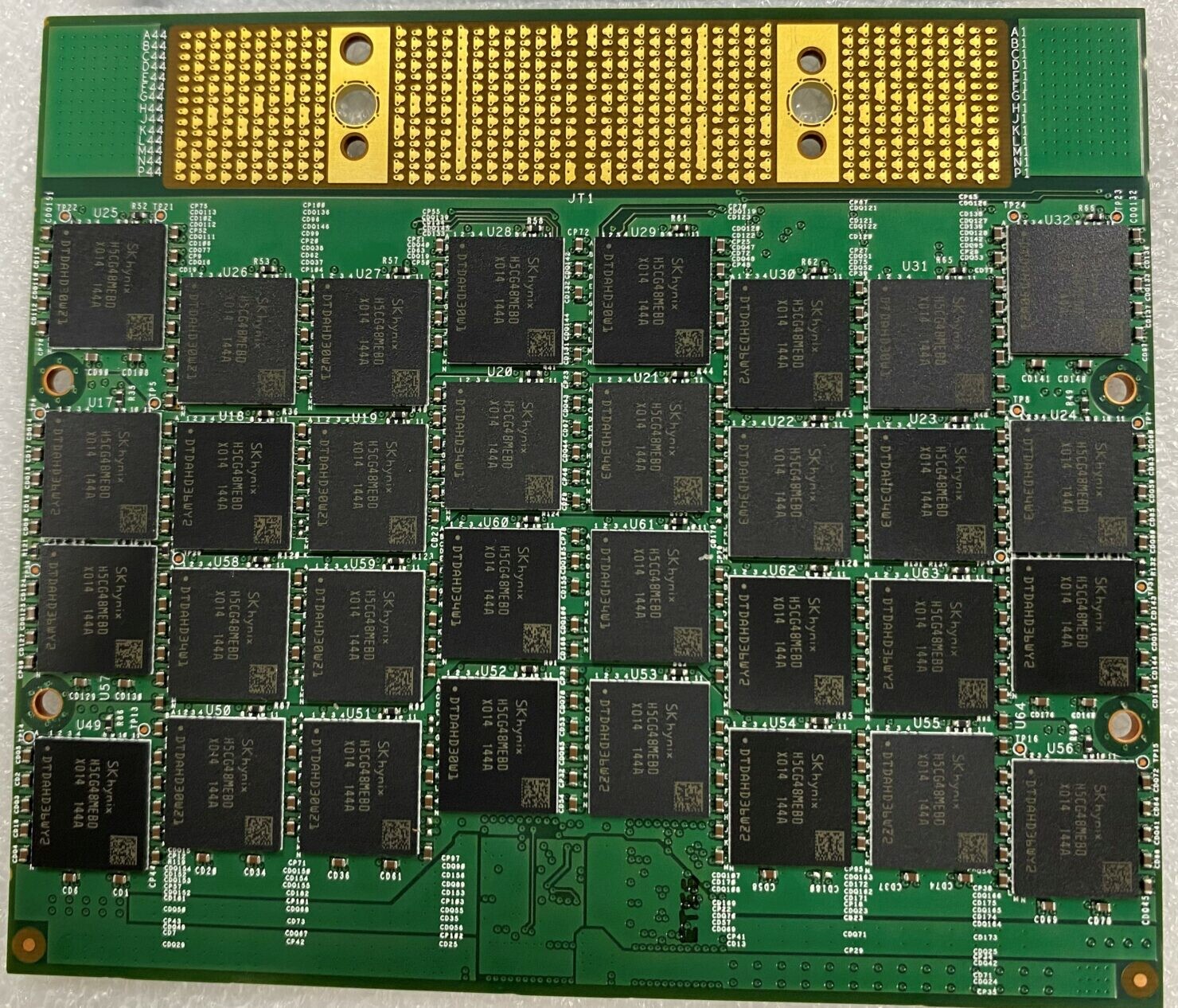
Last week the first details of Dell's CAMM (Compression Attached Memory Module) made an early appearance courtesy of a product leak, but now official details have appeared and the good news is that Dell is saying it won't be a proprietary solution. The Compression Connector looks unlike anything used by consumer computers today and Dell is said to be hoping that it'll be the next industry standard for memory modules, according to PCWorld. The interposer mentioned in the previous news article is also mentioned and allows for a pair of DDR5 SO-DIMMs to be used, albeit with a much taller Z-height.

Dell is apparently planning on getting its CAMM approved by the JEDEC, which is the standards organisation when it comes to memory. However, even if the CAMM format is accepted as a JEDEC standard, Dell holds patents and is likely to charge some kind of royalty fees to interested parties. That said, if it becomes a JEDEC standard, Dell has to follow RAND or Reasonable and Non-Discretionary terms, so the royalty fees would have to be reasonable for JEDEC to agree on making CAMM a standard. The main benefit of Dell's CAMM is that the memory traces end up being shorter and more direct, since the CAMM has a single-sided interface, whereas SO-DIMMs are interfaced on both sides, just like standard DIMMs. This would allow for higher speed memory interfaces, without the need of using something like signal re-drivers or re-timers.

V-Color Launches Manta XPrism RGB Gaming Series DDR5-6400 Memory

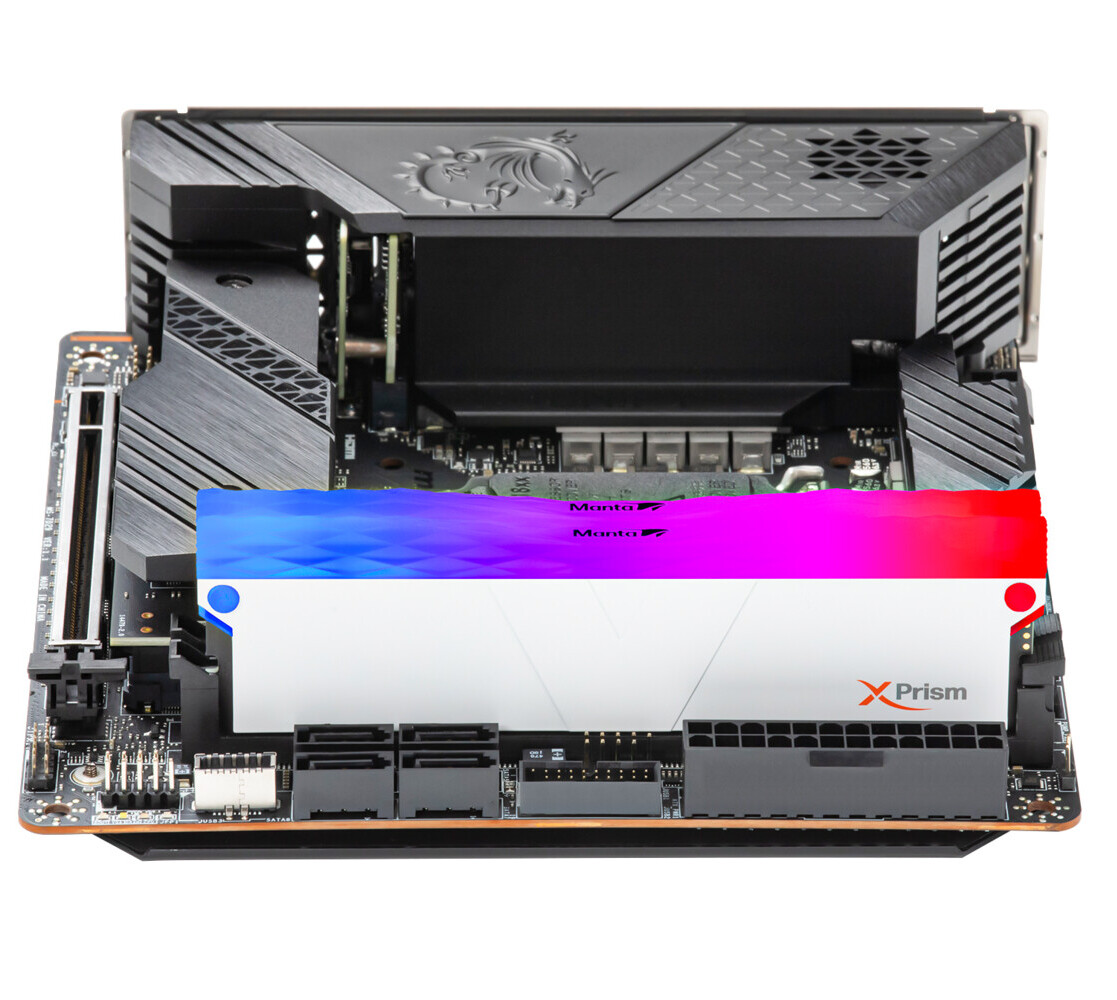
V-Color, a leading memory provider, announces the launch of Manta XPrism RGB DDR5 gaming series, with speeds of DDR5-5600 CL36-36-36-76 1.2 V to 6400 MHz CL32-39-39-102 1.4v. Available in dual channel kits of 32 GB (2x 16 GB) using carefully sorted Hynix ICs for superior overclocking performance, the Manta XPrism RGB DDR5 is designed for the latest 12th Gen Intel Core desktop processors and Intel Z690 chipset motherboard and is XMP 3.0 ready for easy overclocking. To fully complete PC builds, v-color also offers patented SCC 2+2 KIT, available in black and white, for filling unused DIMM slots.

The Manta XPrism RGB comes in 32 GB (2x16GB) modules and offers high-speed performance ranging from 5600 MHz to 6400 MHz. The XPrism RGB is XMP 3.0 ready for optimal frequencies by simply applying profiles in the BIOS. Additionally, each Manta XPrism RGB goes through v-color's patented auto-screening process (Advanced O.C Smart Sorting System).

TEAMGROUP Announces ELITE U-DIMM DDR5 Standard Memory with 5600 MHz Speed

TEAMGROUP, has announced today the upgrade of TEAMGROUP ELITE U-DIMM DDR5 Standard Memory in response to the evolution of future DDR5 memory specifications and development trends. Developed from TEAMGROUP's outstanding R&D capabilities and excellent product quality, the TEAMGROUP ELITE U-DIMM DDR5 Standard Memory complies with JEDEC standards and supports high-performance specifications of frequency 5600 MHz and 1.1 V voltage. The TEAMGROUP ELITE U-DIMM DDR5 Standard Memory has also been sent to major motherboard manufacturers for verification. As the world welcomes the advent of the DDR5 era, TEAMGROUP will continue to launch memory products with comprehensive compatibility and upgraded specifications.

TEAMGROUP is making an early play in the field of DDR5s. Last year, the company launched the TEAMGROUP ELITE U-DIMM DDR5 4800 MHz 1.1 V Standard Memory ahead of the industry and is now announcing an increased frequency from 4,800 MHz to 5,600 MHz with the same 1.1 V voltage, ensuring users can enjoy high-performance experiences while still conserving energy. The latest TEAMGROUP ELITE U-DIMM DDR5 Standard Memory will also be available in different storage capacities, including 2X8GB, 2X16GB, and 2X32GB, to deliver smooth multi-tasking and an outstanding product that is stable, high-performance, and energy-efficient.

AMD RAMP is Now Called EXPO

A little over three months ago, leaks suggested AMD was going to introduce its own competitor to Intel's XMP profiles called RAMP or Ryzen Accelerated Memory Profile. However, it seems like the company has decided to change the name of its XMP competitor and according to VideoCardz, the standard will be known as EXPO or Extended Profiles for Overclocking. AMD filed for a trademark for EXPO back in the middle of February, although it's unclear if it has been granted as yet.

According to information that VideoCardz has been given, EXPO is said to be able to store two profiles for memory overclocking and it'll be exclusively for DDR5 memory. AMD has gone for a novel approach compared to XMP, with the first profile being for high-bandwidth optimised settings and the second for low-latency. The second profile is apparently optional, which makes sense since not all memory modules can do low-latency. EXPO is also said to be compatible with all types of memory modules, so it might also appear in SO-DIMM modules in the future.

AMD AM5 Socket to Launch with DDR5-Only Memory Option, Feature Dual-Chipset Designs

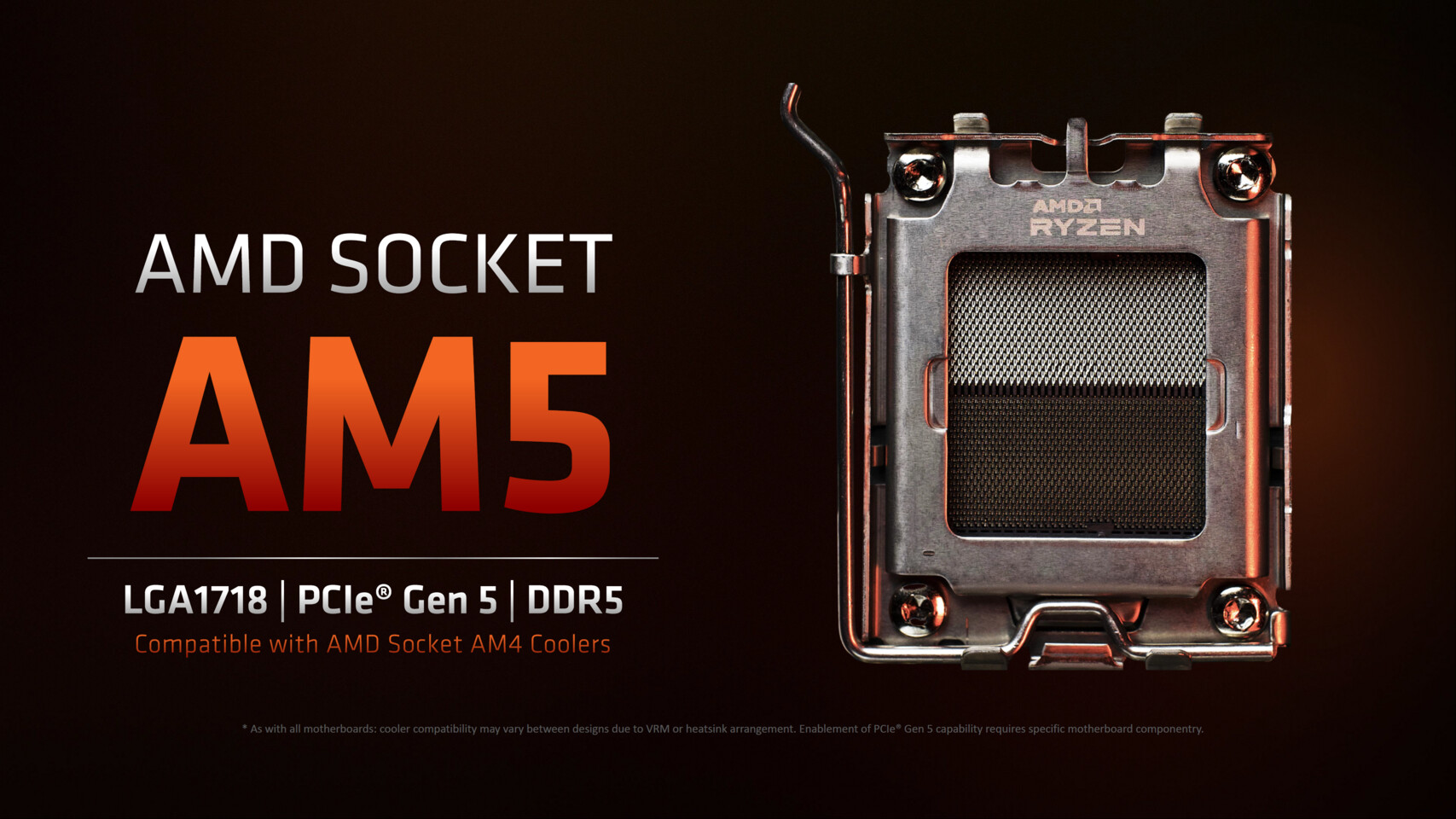
AMD is preparing to launch its highly-anticipated AM5 socket for the next generation of motherboards. And today, thanks to the sources over at Tom's Hardware, we have information regarding memory support for B650 and X670 motherboards. According to the report, both B650 and X670 chipsets will limit the user's memory option to the latest DDR5 memory standard, making it impossible for users with already existing DDR4 memory to perform a seamless upgrade to a new platform. So far, we don't have a lot of details about Zen4's integrated memory controller, and we can't be certain if it supports DDR5 only or carries legacy DDR4 support. However, it seems like B650 and X670 motherboards will have no plans to enable the DDR4 standard memory usage.

Additionally, the report confirms that the B650 chipset is connected to the AM5 socket via PCIe 4.0 x4 connection and has eight lanes of PCIe 4.0 (four of which are for M.2 SSD), four SATA, and lots of USB ports. Documents suggest that the chipset-socket connection is available using PCIe 5.0 for some AM5 processors, so we have to wait and see how it works. As far as high-end X670 is concerned, this chipset is a combination of two chipset dies, presumably a combination of two B650 modules. This doesn't work as the older north/southbridge type of a solution but rather doubled connectivity of a single B650 chipset. We have to wait for the official launch to confirm this information.

G.SKILL Announces New Ultra Low-Latency DDR5-6600 CL34 Memory Kit

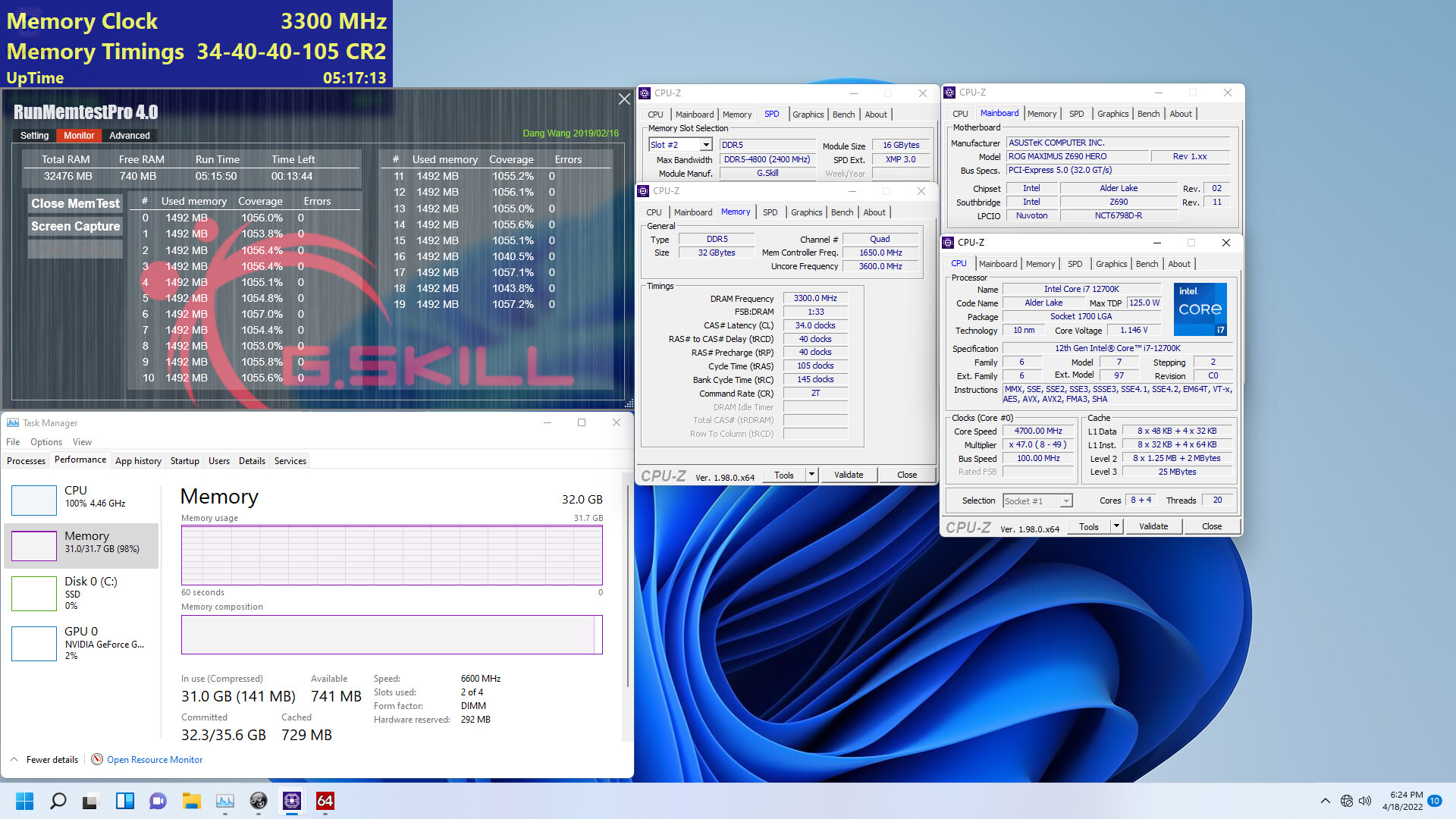
G.SKILL International Enterprise Co., Ltd., the world's leading manufacturer of extreme performance memory and gaming peripherals, is pleased to announce the launch of an ultra-low latency, high-speed DDR5-6600 CL34 32 GB (2x 16 GB) memory kit under the Trident Z5 RGB series DDR5 memory, for the latest 12th Gen Intel Core desktop processors and Intel Z690 chipset motherboards.

Fully committed to develop extreme performance overclocking memory kits, G.SKILL is releasing a new ultra-low latency, high-speed DDR5-6600 CL34-40-40-105 memory kit in 32 GB (2x16GB) kit capacity. The screenshot below shows this memory kit validated with the Intel Core i7-12700K processor and ASUS ROG Maximus Z690 Hero motherboard.

Origin PC Launches Upgraded Alder Lake + GeForce 30 Laptops

ORIGIN PC, a leader in custom high-performance systems, today announced the availability of its latest thin and light laptops. With ORIGIN PC's newly upgraded flagship systems, the EVO17-S and NT-17, as well as the addition of two brand new laptops to its lineup of world-class systems - the EVO14-S and NT-14 - gamers can play with power and portability. The EVO17-S is a performance powerhouse, equipped with an Intel Core i9-12900H 14-core processor, an NVIDIA GeForce RTX 3080 Ti GPU, and support for up to 64 GB of DDR5 DRAM, while a 240 Hz QHD screen displays all your games in stunning detail. With this combination of hardware pushing laptop gaming to entirely new heights, ORIGIN PC reaffirms its dedication to exceptional mobile performance.

The EVO17-S, EVO15-S, NT-17, and NT-15 systems feature massive hardware upgrades to meet the growing demands of users. For those looking for an expanded display, Thunderbolt 4 and HDMI ports can connect up to two additional monitors. Weighing in at only 2.4 pounds, the new EVO14-S and NT-14 serve to provide users the incredible power of an ORIGIN PC system with the maximum portability benefits of a laptop. These 14" display systems can be further upgraded by adding an external GPU, connecting up to a NVIDIA GeForce RTX 3090 or NVIDIA RTX A6000 for top-tier desktop graphics performance.

CORSAIR Announces Vengeance DDR5 SO-DIMM Memory Kits

CORSAIR, a world leader in enthusiast components for gamers, creators, and PC builders, today announced a new addition to its lineup of cutting-edge DDR5 memory: VENGEANCE DDR5 SODIMM. Optimized for the latest DDR5 gaming and performance laptops and small-form-factor PCs, these modules deliver groundbreaking DDR5 performance to compatible systems. Launching initially in speeds up to 4,800 MHz and capacities up to 64 GB (2x32GB), VENGEANCE DDR5 SODIMM pushes the boundaries of laptop and small-form-factor memory performance.

Modern DDR5 gaming laptops such as the Alienware x17 R2, MSI Raider GE66 12UHS, and ASUS ROG Zephyrus M16 need high-caliber memory to fully realize their performance potential. DDR5 ensures that today's high-end CPUs receive data as quickly as possible, elevating system speeds and processing power to greater heights. VENGEANCE DDR5 SODIMM modules harness the faster frequencies and greater capacities of DDR5 to improve load times and multitasking in a wide range of popular laptops and small-form-factor PCs, so you can bring DDR5 performance wherever you go.

Dell Will Have Custom DDR5 Memory Module for its Upcoming Laptops

A leak with details about upcoming Dell notebooks has revealed that Dell's upcoming notebooks with DDR5 memory will feature a custom memory module that Dell calls CAMM, or Compression Attached Memory Module. The CAMM can support up to 128 GB RAM according to the leak and initial modules will support memory speeds of 4800 MHz. It's unclear if notebooks with CAMM support will have soldered down memory as well, but what is clear is that Dell is not looking at using traditional SO-DIMM type modules.

The first notebooks from Dell to feature the new module appears to be the Precision 7-series, which will also feature an Intel 55 W Alder Lake-HX series CPU, a choice of an NVIDIA RTX A5000 GPU or Intel Arc DG2 based graphics with a 90 W TDP, as well as up to 12 TB of NVMe storage over PCIe 4.0. Apparently Dell has developed what it calls DGFF or Dell Graphics Form Factor for these laptops, which suggests that they'll feature some kind of modular graphics solution. Considering that at least some models in Precision 7-series will sport 16-inch displays, there should be plenty of space for a GPU module, although it'll be interesting to see exactly what Dell is bringing to the table that's new here.

Intel Sapphire Rapids 56-Core ES Processor Boosts to 3.3 GHz at 420 Watts

Intel is slowly transitioning its data center customers to a new processor generation called Sapphire Rapids. Today, thanks to the hardware leaker Yuuki_ans we have more profound insights into the top-end 56-core Sapphire Rapids processor and its power settings. According to the leak, we have information on either Xeon Platinum 8476 or Platinum 8480 designs that are equipped with 56 cores and 112 threads. This model was running at the base frequency of 1.9 GHz and a boost frequency of 3.3 GHz. Single-core can boost to 3.7 GHz if the report is giving a correct reading. Remember that this is only an engineering sample, so the final target speeds could differ. It carries 112 MB of L2 and 105 MB of L3 cache, and this sample was running with 1 TB of DDR5 memory with CL40-39-38-76 timings.

Perhaps the most exciting finding is the power configuration of this SKU. Intel has enabled this CPU to consume 350 Watts in PL1 rating, with up to 420 Watts in PL2 performance mode. The enforced BIOS power limit rating is set at an astonishing 764 Watts, which could happen with AVX-512 enabled. Final TDP ratings are yet to be disclosed; however, these Sapphire Rapids processors are shaping to be relatively power-hungry chips.

ZADAK Announces the Spark RGB DDR5 Memory

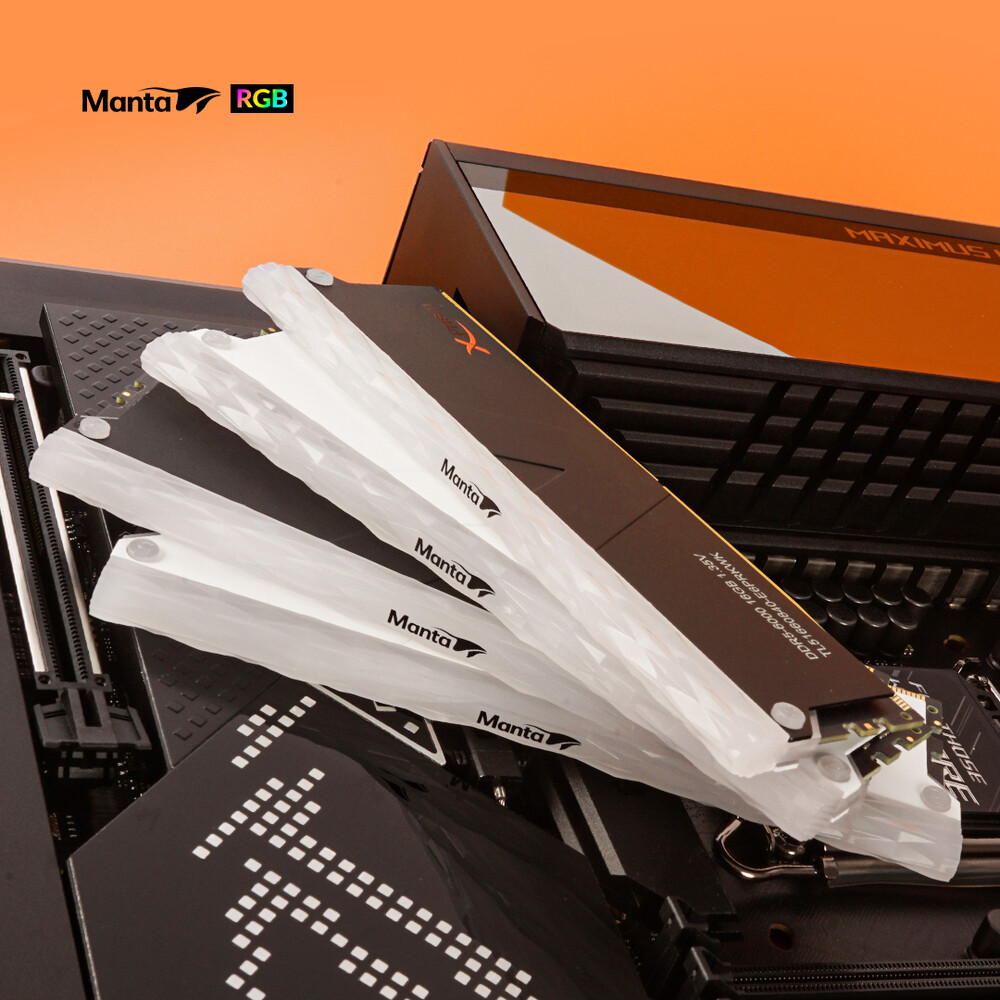
ZADAK, a leading provider of PC gaming components and innovative water cooling solutions, today announced the launch of SPARK RGB DDR5 desktop gaming memory modules. SPARK RGB DDR5 is ZADAK's first module in the DDR5 format. The performance, capacity, stability and power saving efficiency have all been significantly improved. It delivers speeds from 5200 MHz to 6400 MHz, and it is available in capacities of 16 GB and 32 GB. It's sure to be a hit among early adopters and high-end gamers.

The SPARK RGB DDR5 gaming memory module features a matte white exterior with a frosted texture. The top of the module features a slender aluminium alloy dissipation array that releases heat from the heat sink. And the staggered design of the materials presents a hollow light-guide effect with gem-like decorations. The eye is inevitably drawn to the gem shape set in the center of the heat sink, which shows off the dynamic multi-zone RGB lighting. This stunning aesthetic will give it a place of honor in any high-end gaming rig.

Alibaba Previews Home-Grown CPUs with 128 Armv9 Cores, DDR5, and PCIe 5.0 Technology

One of the largest cloud providers in China, Alibaba, has today announced a preview for a new instance powered by Yitian 710 processor. The new processor is a collection of Alibaba's efforts to develop a home-grown design capable of powering cloud instances and the infrastructure needed for it and its clients. Without much further ado, the Yitian 710 is based on Armv9 ISA and features 128 cores. Ramping up to 3.2 GHz, these cores are paired with eight-channel DDR5 memory to enable sufficient data transfer. In addition, the CPU supports 96 PCIe 5.0 lanes for IO with storage and accelerators. These are most likely custom designs, and we don't know if they are using a blueprint based on Arm's Neoverse. The CPU is manufactured at TSMC's facilities on 5 nm node and features 60 billion transistors.

Alibaba offers these processors as a part of their Elastic Compute Service (ECS) instance called g8m, where users can select 1/2/4/8/16/32/64/128 vCPUs, where each vCPU is equal to one CPU core physically. Alibaba is running this as a trial option and notes that users should not run production code on these instances, as they will disappear after two months. Only 100 instances are available for now, and they are based in Alibaba's Hangzhou zone in China. The company notes that instances based on Yitian 710 processors offer 100 percent higher efficiency than existing AMD/Intel solutions; however, they don't have any useful data to back it up. The Chinese cloud giant is likely trying to test and see if the home-grown hardware can satisfy the needs of its clients so that they can continue the path to self-sustainability.

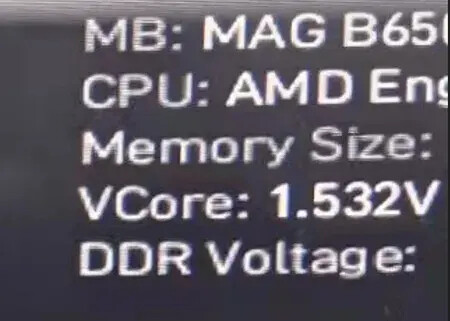
AMD Ryzen 7000 Series Processor Spotted Running on MSI MAG B650 Motherboard at 1.5 Volts

AMD is slowly gearing up to launch the latest 7000 series Ryzen processors codenamed "Raphael." Thanks to the famous hardware leaker @9550pro on Twitter, we have evidence of B650 motherboards for the next-generation hardware. According to the image posted by the leaker, it appears like AMD's Ryzen 7000 series Raphael processor is running on MSI's MAG B650 motherboard at a very high voltage of 1.5 Volts VCore. While we don't know the exact SKU running here, we see a note referring to it as an Engineering Sample, meaning that this is not a final product. It is expected to see the new AM5 platform make a debut alongside DDR5 and PCIe 5.0 technology, so we have to wonder what the B650 chipset can support.

AMD Ryzen 7000 "Zen 4" Processors Have DDR5 Memory Overclocking Design-Focus

AMD's first desktop processor with DDR5 memory support, the Ryzen 7000 series "Raphael," based on the "Zen 4" microarchitecture, will come with a design focus on DDR5 memory overclocking capabilities, with the company claiming that the processors will be capable of handling DDR5 memory clock speeds "you maybe thought couldn't be possible," according to Joseph Tao who is a Memory Enabling Manager at AMD.

Tao stated: "Our first DDR5 platform for gaming is our Raphael platform and one of the awesome things about Raphael is that we are really gonna try to make a big splash with overclocking and I'll just kinda leave it there but speeds that you maybe thought couldn't be possible, may be possible with this overclocking spec." We are hearing reports of AMD innovating a new overclocking standard for DDR5 memory, which it calls RAMP (Ryzen Accelerated Memory Profile), which it is positioning as a competing standard to Intel's XMP 3.0 spec.

ADATA Wins Six Red Dot Design Awards

ADATA Technology (Taiwan Stock Exchange: 3260.TWO), a manufacturer of high-performance DRAM modules, NAND Flash products, mobile accessories, gaming products, electric power trains, and industrial solutions today announces that it has been awarded six 2022 Red Dot Design Awards for product design excellence. The award winners include the XPG CASTER and SLAYER DDR5 DRAM, XPG ALPHA and PRIMER mice, and ADATA ELITE SE920 and SE880 external solid state drives (SSD).

"From three Red Dot winners last year to six winners this year, ADATA has shown its unwavering emphasis on product design as a key aspect of the user experience," said Ibsen Chen, Senior Product Marketing Director at ADATA. "Whether they be DRAM, gaming mice, or external SSDs, we not only offer users the performance and functionality they require but also a fitting industrial design that appeals to them on an emotional level." The Red Dot Design Award is a globally recognized award that honors innovative companies, praises design excellence, and ultimately recognizes those responsible for tomorrow's trends. An international jury of design experts with a variety of backgrounds assesses each submission on its merits.

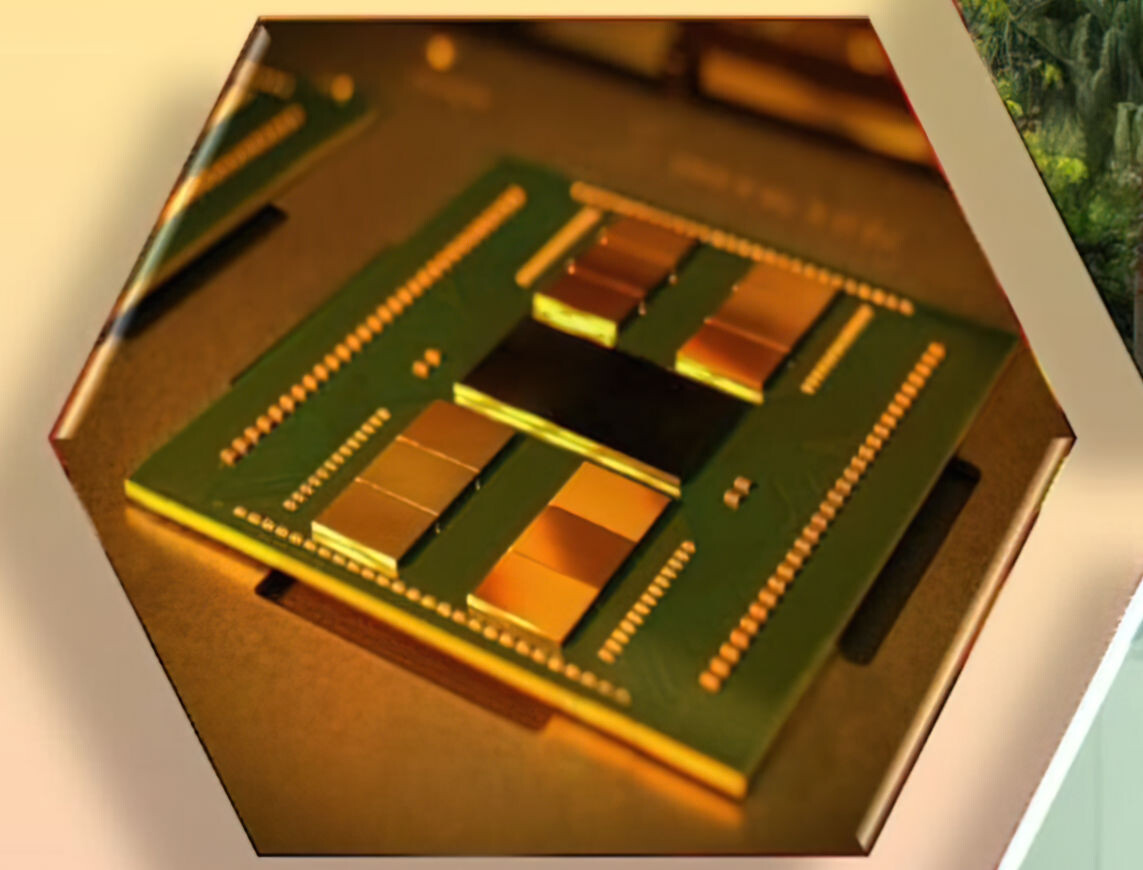
AMD EPYC "Genoa" Zen 4 Processor Multi-Chip Module Pictured

Here is the first picture of a next-generation AMD EPYC "Genoa" processor with its integrated heatspreader (IHS) removed. This is also possibly the first picture of a "Zen 4" CPU Complex Die (CCD). The picture reveals as many as twelve CCDs, and a large sIOD silicon. The "Zen 4" CCDs, built on the TSMC N5 (5 nm EUV) process, look visibly similar in size to the "Zen 3" CCDs built on the N7 (7 nm) process, which means the CCD's transistor count could be significantly higher, given the transistor-density gained from the 5 nm node. Besides more number-crunching machinery on the CPU core, we're hearing that AMD will increase cache sizes, particularly the dedicated L2 cache size, which is expected to be 1 MB per core, doubling from the previous generations of the "Zen" microarchitecture.

Each "Zen 4" CCD is reported to be about 8 mm² smaller in die-area than the "Zen 3" CCD, or about 10% smaller. What's interesting, though, is that the sIOD (server I/O die) is smaller in size, too, estimated to measure 397 mm², compared to the 416 mm² of the "Rome" and "Milan" sIOD. This is good reason to believe that AMD has switched over to a newer foundry process, such as the TSMC N7 (7 nm), to build the sIOD. The current-gen sIOD is built on Global Foundries 12LPP (12 nm). Supporting this theory is the fact that the "Genoa" sIOD has a 50% wider memory I/O (12-channel DDR5), 50% more IFOP ports (Infinity Fabric over package) to interconnect with the CCDs, and the mere fact that PCI-Express 5.0 and DDR5 switching fabric and SerDes (serializer/deserializers), may have higher TDP; which together compel AMD to use a smaller node such as 7 nm, for the sIOD. AMD is expected to debut the EPYC "Genoa" enterprise processors in the second half of 2022.

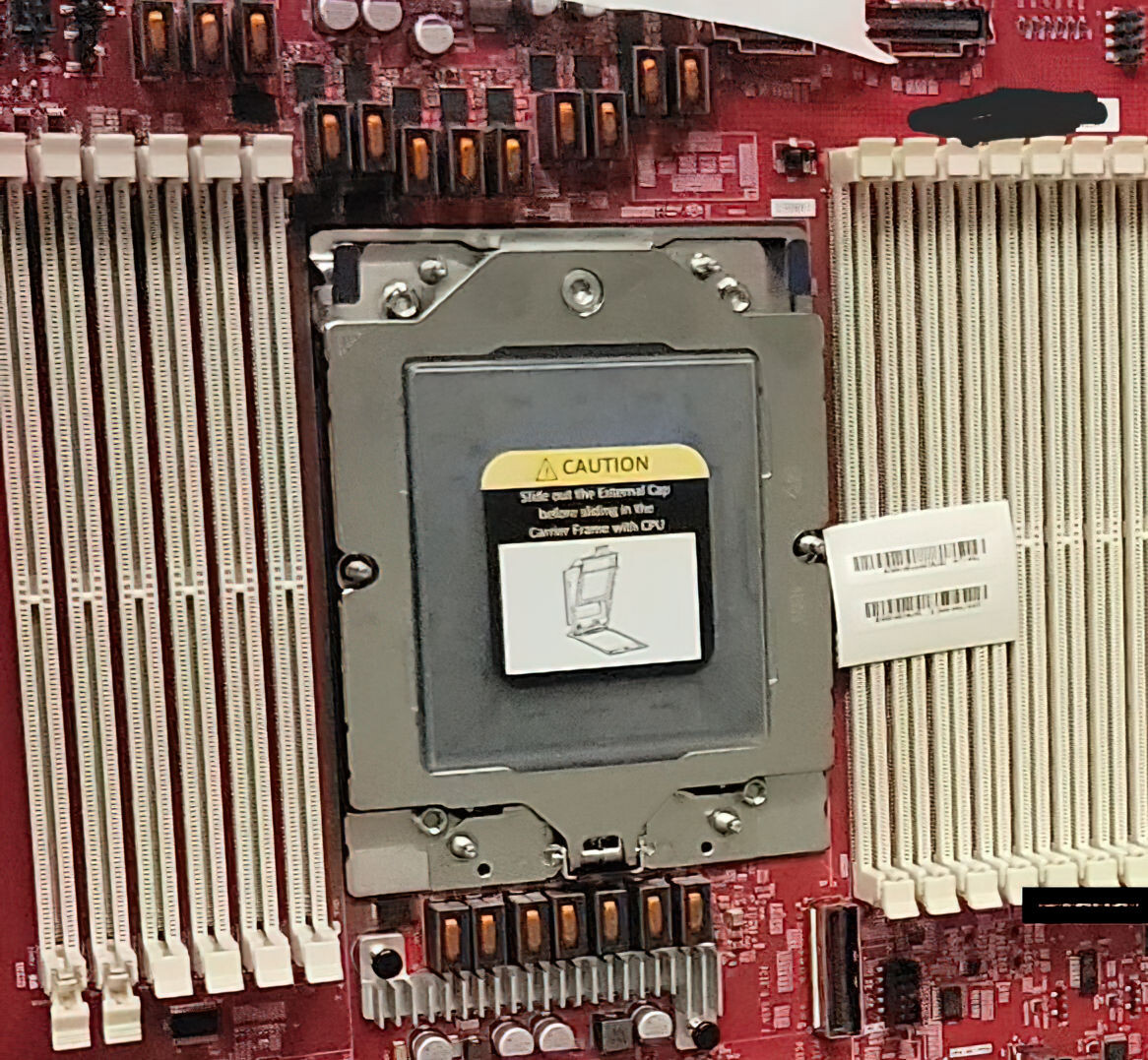
AMD SP5 EPYC "Genoa" Zen4 Processor Socket Pictured in the Flesh

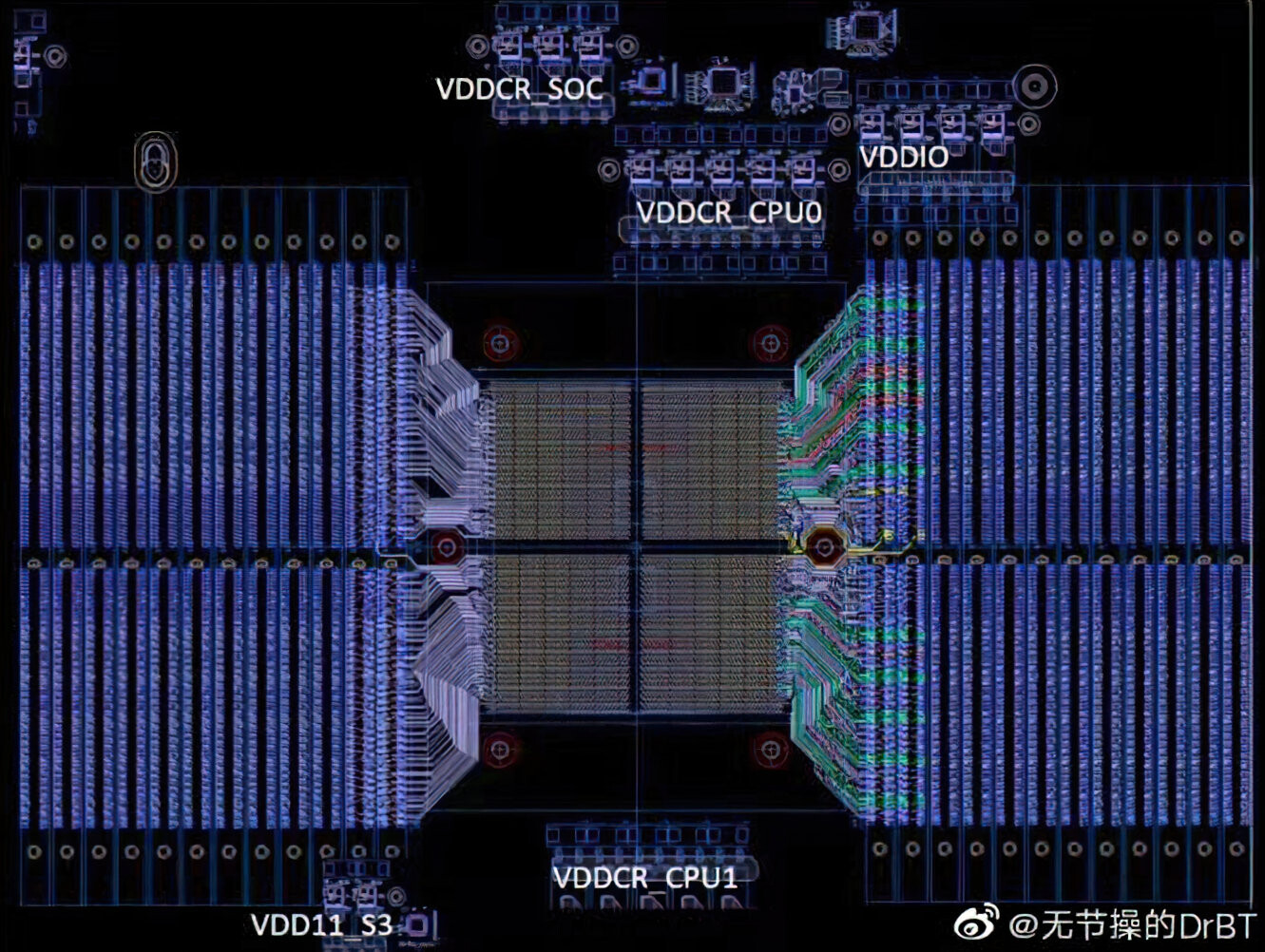
Here's the first picture of AMD Socket SP5, the huge new CPU socket the company is building its next-generation EPYC "Genoa" enterprise processors around. "Genoa" will be AMD's first server products to implement the new "Zen 4" CPU cores, and next-gen I/O, including DDR5 memory and PCI-Express Gen 5. SP5, much like its predecessor SP3, is a land-grid array (LGA) socket, and has 6,096 pins.

The vast pin-count enables power to support CPU core-counts of up to 96 on the EPYC "Genoa," and up to 128 on the EPYC "Bergamo" cloud processor; a 12-channel DDR5 memory interface (24 sub-channels); and up to 128 PCI-Express 5.0 lanes. The socket's retention mechanism and processor installation procedure appears similar to that of the SP3, although the thermal requirements of SP5 will be entirely new, with processors expected to ship with TDP as high as 400 W, compared to 280 W on the current-generation EPYC "Milan." AMD is expected to debut EPYC "Genoa" in the second half of 2022.

G.SKILL Trident Z5 RGB and Ripjaws S5 Series DDR5 Memory Receive Red Dot Design Award 2022

G.SKILL International Enterprise Co., Ltd., the world's leading manufacturer of extreme performance memory and gaming peripherals, has received the honor of Red Dot Award: Product Design 2022 for the Trident Z5 RGB and Ripjaws S5 series DDR5 memory for outstanding and innovative product design.

Standing out amongst more than thousands of entries, both G.SKILL Trident Z5 RGB and Ripjaws S5 series DDR5 memory products exceeded the juror panel's strict criteria and expectation in multiple areas of product standards, including the degree of innovation, functionality, formal quality, ergonomics, durability, symbolic and emotional content, product periphery, self-explanatory quality, and ecological compatibility.

First Game Test With the Ryzen 7 5800X3D Appears as Promised

XanxoGaming has now posted its first game benchmark with the Ryzen 7 5800X3D, paired with a NVIDIA GeForce RTX 3080 Ti Founders Edition. They put it up against an Intel Core i9-12900KS and Core i9-12900K. However, as you might have deduced from the headline of this news post, so far, they've only run a single game, but are promising to deliver more results shortly. That single game so far is Shadow of the Tomb Raider at 720p and using low settings, which means that this is a far cry from a real world scenario, but it does at least give a first taste of what's to come. For whatever reason, the Core i9 systems are using an NVIDIA GeForce RTX 3090 Ti and the CPUs are paired with DDR5 memory rated at 4800 MHz CAS 40. The Ryzen 7 5800X3D has been given another pair of 8 GB modules, so it's now using dual rank memory, but still at 3200 MHz and CAS 14.

In their test, the Core i9-12900K averages around 190 FPS, which they place as their baseline. The Core i9-12900KS manages around 200 FPS, or a bit over a five percent improvement. These benchmark numbers are provided by CapFrameX that claims that due to the low resolution used, the GPU doesn't really matter and although it's not an apples-to-apples comparison, it's very close. So what about the Ryzen 7 5800X3D? Well, it gets an average FPS number of 231, which is a bit odd, since the Intel CPU benchmarks are rounded and the AMD ones are not. Regardless, that's over a 20 percent increase over the Core i9-12900K and over 15 percent of the Core i9-12900KS. XanxoGaming is promising more benchmarks and those will be delivered at 1080p at Ultra settings according to the publication. In other words, this is still not what most of us have been waiting for.

AMD Ryzen 7000 "Raphael" Zen 4 Processors Enter Mass-Production by April-May?

The next-generation AMD Ryzen 7000 "Raphael" desktop processors in the Socket AM5 package are rumored to enter mass-production soon, according to Greymon55 on Twitter, a reliable source with AMD leaks. Silicon fabrication of the chips may already be underway, as the source claims that packaging (placing the dies on the fiberglass substrate or package), will commence by late-April or early-May. "Raphael" is a multi-chip module of "Zen 4" CCDs fabricated on the TSMC N5 (5 nm) node, combined with a cIOD built on a yet-unknown node. A plant in China performs packaging.

It's hard to predict retail availability, but for the Ryzen 5000 "Vermeer" processors, this development milestone was reached in June 2020, with the first products hitting shelves 4 months later, in November. This was, however, in the thick of the pre-vaccine COVID-19 pandemic. The "Zen 4" CPU cores are expected to introduce an IPC increase, as well as higher clock speeds. Also on offer will be next-gen connectivity, including PCI-Express Gen 5 (including CPU-attached Gen 5 NVMe), and DDR5 memory. These processors will launch alongside Socket AM5 motherboards based on the new AMD 600 series chipsets.

G.Skill Announces DDR5-6000 CL30 64GB (32GB x2) Memory Kit

G.SKILL International Enterprise Co., Ltd., the world's leading manufacturer of extreme performance memory and gaming peripherals, is delighted to announce the launch of a high-capacity, ultra-low-latency DDR5-6000 CL30 64 GB (32 GB x2) overclocked performance memory kit under the Trident Z5 family, designed for the latest 12th Gen Intel Core desktop processors and Intel Z690 chipset motherboard.

As the leader in developing high performance memory products, G.SKILL launches an all new high-capacity, ultra-low-latency dual-channel memory kit, rated at a blistering DDR5-6000 CL30-40-40-96 in 64 GB (32 GB x2) kit capacity. Using only the best-in-class memory components to achieve high-speeds with 32 GB module capacity, this extreme overclocked memory specification represents the next step in high-capacity DDR5 performance. The screenshot below shows this memory kit validated with the Intel Core i7-12700K processor and ASUS ROG Maximus Z690 Hero motherboard.

AMD's Upcoming Zen 4 Based Genoa CPUs Confirmed to Have 1 MB L2 Cache per Core

As unreliable as Geekbench can be as a comparative benchmark, it's also an excellent source for upcoming hardware leaks and in this case more details about AMD's upcoming Zen 4 based Genoa server and workstation processors has leaked. Someone with access to a 32-core engineering sample thought it was a good idea to run geekbench on it and upload the results. As the engineering sample CPU is locked at 1.2 GHz, the actual benchmark numbers aren't particularly interesting, but the one interesting titbit we get is that AMD has increased the L2 cache to 1 MB per core, or twice as much as its predecessor.

What seems to be missing from this engineering sample is any kind of 3D V-Cache, as it only has a total of 128 MB L3 cache. Despite the gimped clock speed, the Genoa CPU is close to an EPYC 7513 in the single core tests and that CPU has a 2.6 GHz base clock and a 3.65 GHz boost clock, both system running Ubuntu 20.04 LTS. It manages to beat it in a couple of the sub-tests, such as Navigation, SQLite, HTML5, gaussian blur and face detection and it's within a few points in things like speech recognition and rigid body physics. This is quite impressive considering the Genoa engineering sample is operating at less than half the clock speed, or possibly even at a third of the clock speed of the EPYC 7513. AMD is said to be launching its Zen 4 based Genoa CPUs later this year and models with up to 96 core and 192 threads, with 12-channel DDR5 memory and PCIe 5.0 support are expected.

Memtest86+ 6.00 Update Promised for This Summer

Memtest86+, the spiritual successor of MemTest86, has been somewhat stuck in development hell, but now the developer behind the memory testing software has promised to deliver version 6.00 sometime this summer. Version 5.31b was released in April 2020, some six years after the previous release and still not released as a final build, largely due to the pandemic. Version 6.00 promises a host of new features and the developers are already now asking for people that want to pitch in and help out with the project, since it's an open-source project.

The goal of version 6.00 is to deliver 64-bit support, UEFI and DDR5 with XMP support, as well as support for up to 256 CPU cores. Other features that are said to come include PXE and native USB boot. The goal is to provide a beta build sometime in April, but for those that don't mind compiling their own version of the code, can give it a try now, although the developers are warning that the code is going to be buggy at this point. The base code is said to have been re-written from scratch compared to prior versions and a lot of features are still missing and some features from the older versions are said to have been dropped, at least for the time being.
Return to Keyword Browsing
Nov 12th, 2026 22:47 PST change timezone

New Forum Posts

Popular Reviews

TPU on YouTube

Controversial News Posts