News Posts matching #DDR5

Return to Keyword Browsing

MSI MEG Z690 GODLIKE Motherboard to Bundle AIO Cooler and Memory Sticks

The retail version of MSI MEG Z690 GODLIKE, the company's flagship Socket LGA1700 motherboard, will include an all-in-one liquid CPU cooler, and DDR5 memory sticks. Snapped at a PC retailer, the front-face of the retail box of the motherboard reads that the contents include an MSI MEG CoreLiquid S360 cooler, and Kingston FURY Beast DDR5 memory. The size and speed of the memory is not mentioned. What's also unknown at this point, is whether the board comes in retail packages that don't bundle the cooler or memory. Assuming the bundled memory is a 32 GB (2x 16 GB) kit of decent specs, such as DDR5-6000, this motherboard could easily command a four-figure price, with speculative prices averaging $1,500.

Update Jan 17th: MSI has informed us, that the price for this bundle, consisting of the motherboard, 360 mm AIO, and 32 GB of DDR5 memory, will be around $2,099 in retail.

RAMP is AMD's Answer to Intel's XMP for DDR5

Based on details from multiple sources, least not the release notes for HWiNFO 7.17 beta, we now know that AMD is working on an answer to Intel's XMP memory profiles that should be called RAMP, or Ryzen Accelerated Memory Profile. Not much is known about RAMP at this point in time, but hopefully it'll be as straightforward to use as Intel's XMP when it comes to configuring overclocked DIMMs.

Intel has of course updated XMP to version 3.0 which includes support for DDR5 memory, although it was reported that Intel was late when it came to finalising the specifics of XMP 3.0, which meant some early DDR5 modules intended for overclocking didn't end up getting any XMP profiles. Hopefully AMD will get its RAMP spec finished well ahead of time, so the memory makers that want to offer support for RAMP can do so well ahead of the launch of AMD's upcoming AM5 platform.

TEAMGROUP & ASUS Announce T-FORCE DDR5 Memory, PCIe 4.0 SSD

TEAMGROUP today announced the worldwide release of the T-FORCE DELTA TUF Gaming Alliance RGB DDR5 DESKTOP MEMORY and T-FORCE CARDEA Z440 TUF Gaming Alliance PCIe 4.0 M.2 SSD at the end of this month. The first batch will be available on the North American Amazon store. Created in collaboration with ASUS TUF Gaming Alliance, the two products combine military gaming style and top-notch performance. The addition of the co-branded series to the hardcore gaming alliance means higher quality products and more pleasing, cohesive setups for the gaming enthusiast market.

The T-FORCE DELTA TUF Gaming Alliance RGB DDR5 DESKTOP MEMORY is the first ASUS TUF Gaming Alliance certified and rigorously tested DDR5 RGB gaming overclocking memory. The design merges stealth fighter-inspired aesthetics with TUF Gaming Alliance's unique gaming elements to create a distinctive look that features an ultra-wide 120° angle heatspreader and striking RGB lighting. It supports ASUS Aura Sync lighting control software, allowing gamers to adjust its RGB effects however they like to create custom and eye-catching gaming rigs. The product's first release will have speeds of 5,200 MHz and come in a 2x 16 GB dual-channel kit.

AMD EPYC "Genoa" Socket SP5 16-core Processor Prototype Pictured in the Flesh

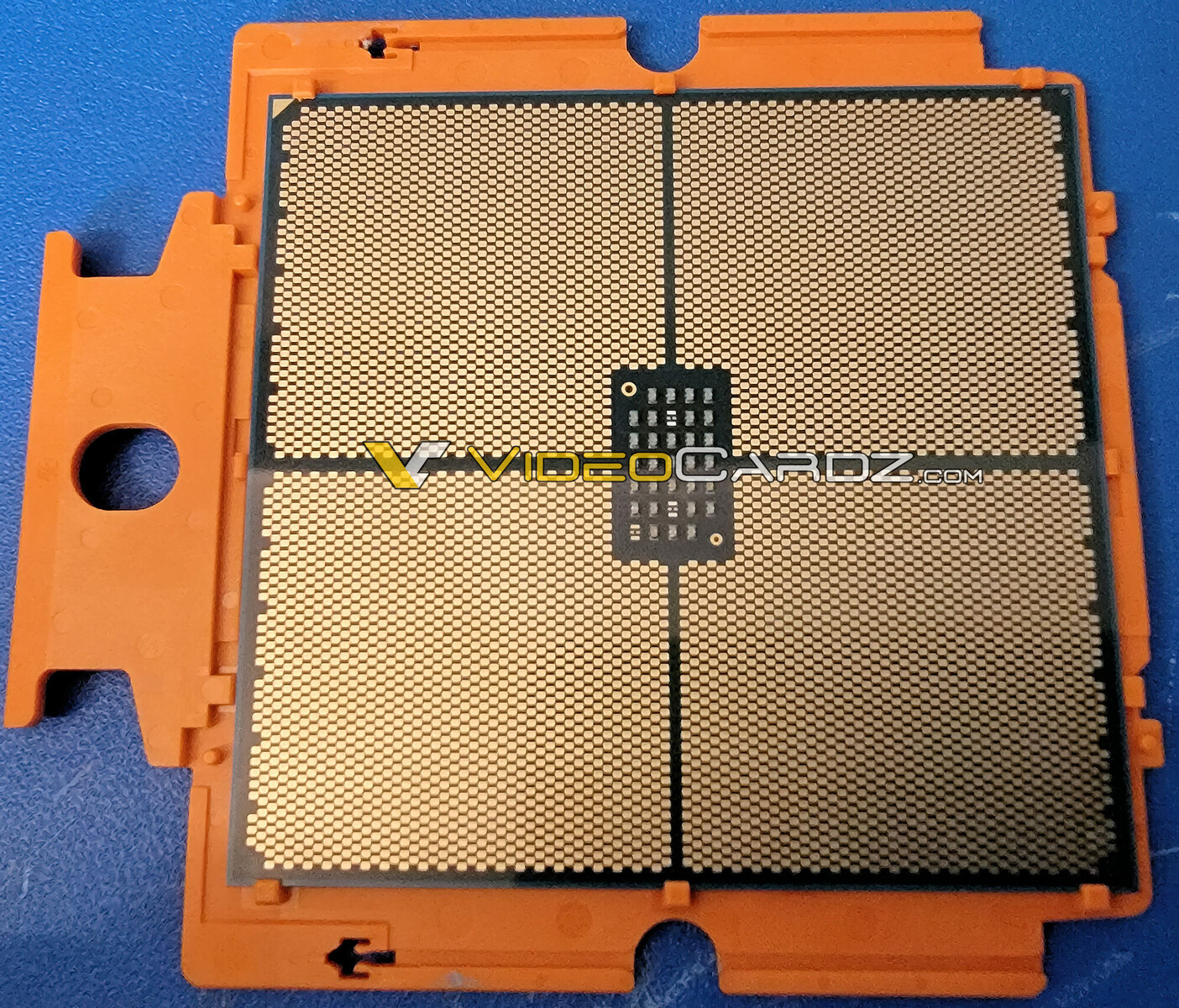
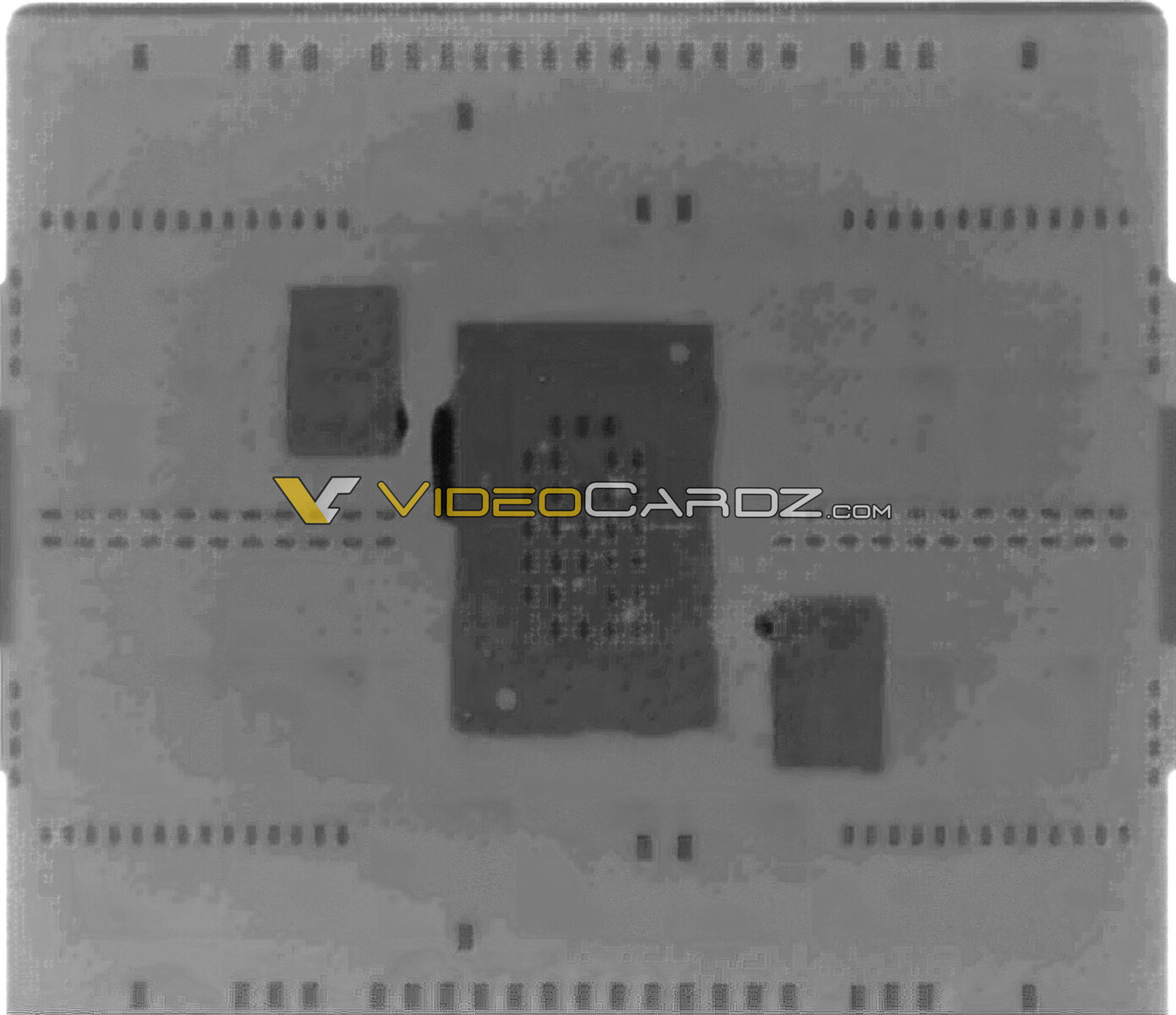
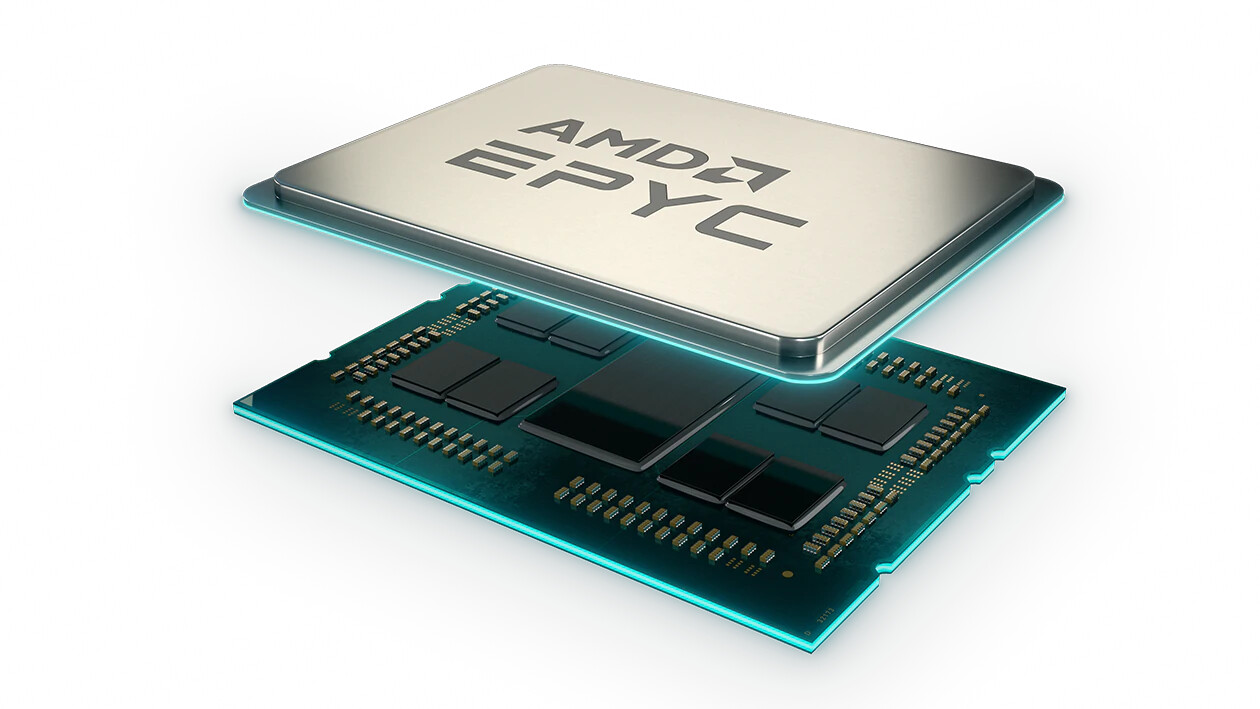
Here are some of the first real-world pictures of the next-generation AMD EPYC "Genoa" enterprise processors in the Socket SP5 package. The coaster-sized 6,080-pin SP5 package gives AMD's chip-designers fiberglass substrate real-estate to dial up CCD counts up to 12, resulting in up to 96 "Zen 4" CPU cores for "Genoa." Pictured below is a 16-core prototype with just two CCDs in place, as revealed by an X-ray shot. Socket SP5 gives "Genoa" some stellar I/O capabilities, including 24x 40-bit DDR5 channels (12-channel in the classical definition), and 128x PCI-Express Gen 5.0 lanes. AMD is expected to time its EPYC "Genoa" processor launch within 2022, to best compete with Intel's Xeon "Sapphire Rapids" processor launch. It will also launch a variant codenamed "Bergamo," based on "Zen 4c" CPU cores, with up to 128 cores to go around.

AMD Wanting to Time Launch of AM5 Platform with DDR5 Availability

It would seem that AMD is concerned about DDR5 memory availability in the market, at least based on an interview that Tom's Hardware had with David McAfee, the Corporate VP and GM of the Client Channel business at AMD. It's not just about availability it seems, but also pricing, as McAfee is quoted saying "One of the dynamics that we do think about a great deal is how and when to introduce that AM5 ecosystem and ensure that the DDR5 supply, as well as pricing of DDR5 memory, is mature and something that's easily attainable for an end-user".

With the current issues that the DRAM module makers are experiencing, with both staff issues related to the pandemic and the PMIC shortage some are having, the question is how long it'll take until there's a steady supply of DDR5 modules in the market, at a reasonable price point. We obviously don't know what kind of DRAM speeds AMD is aiming for either, although it's unlikely that the company is looking at something faster than JEDEC spec at this point in time, even though we expect faster speeds will also be supported. Outside of the US, it seems like a cheap stick of 8 GB of DDR5 memory is going for around the US$100 mark (€89) or roughly four times that of a similar DDR4 stick. Crucial in the US is offering a single 8 GB stick for US$68, with a 16 GB stick costing the same as a pair of 8 GB sticks, US$137. This is unlikely to be the kind of price point AMD is hoping for and most DDR5 memory modules are a lot more expensive.

AMD Socket AM5 a "Long-lived Platform": CEO

AMD is designing its upcoming Socket AM5 platform to be a "long-lived platform," not unlike AM4. CEO Dr Lisa Su, responding to a question on the longevity of AM5, by Paul Alcorn from Tom's Hardware, said that she's very happy with AM4 being the company's long-lived desktop socket; and while she doesn't have an exact number of years to share, one could expect AM5 to be a "long-lived platform" of a similar kind.

AMD Socket AM4 was debuted alongside the company's very first Ryzen processors, in March 2017. It has remained AMD's mainstream desktop socket for close to five years; and AMD continues to launch new products for the socket. Even in 2022, the company is expected to give the socket its swansong, with the Ryzen 5000X3D processors. AM4 was designed keeping in mind dual-channel DDR4 and up to 28 lanes of PCIe Gen 3 (later Gen 4) in mind. The change to Socket AM5 is driven by next-generation I/O, namely DDR5 memory (four 40-bit channels), and PCIe Gen 5.

GIGABYTE AORUS Delivers DDR5 6000 MHz 32 GB Memory Kit With RGB Lighting

GIGABYTE TECHNOLOGY Co. Ltd, a leading manufacturer of motherboards, graphics cards, and hardware solutions today announced AORUS RGB DDR5 6000 MHz 32 GB Memory Kit, which uplift frequency to 6000 MHz with RGB lighting for performance boost and striking accents. Enhanced by DDR5 XMP Booster and XMP 3.0 User Profile of GIGABYTE Z690 motherboards, and copper-aluminium heat spreaders with nano-carbon coating thermal design, the new memory kit promises the next-level performance with stability while dissipating heat efficiently under high-speed operation.

AORUS RGB DDR5 6000 MHz 32 GB Memory Kit features high clock speed and low power consumption by two 16 GB DDR5 XMP 6000 MHz dual-channel designs with 40-40-40-76 timings, which fit the support of DDR5 memory on Intel Z690 platform. Along with GIGABYTE Z690 AORUS motherboards, AORUS RGB DDR5 6000 MHz 32 GB memory kit can enable "DDR5 XMP Booster" function which detect the brand of memory IC in the BIOS setting to allow users to choose promptly from multiple built-in memory overclocking profiles, boosting the native DDR5 or XMP DDR5 memory speed. Furthermore, "XMP 3.0 User Profile" enables users to create and store XMP profiles of their own to unleash the extreme performance of memories.

ASRock Announces Two Z690 Aqua Motherboards, One with Extra OC Creds

At the launch of the Z690 chipset, ASRock didn't reveal its flagship Aqua model, but now the company has finally announced not just one, but two Z690 Aqua models, one "regular" SKU and one OC SKU. The main difference between the two is that the OC SKU only has two DIMM slots, since as we know, DDR5 is extra finicky when it comes to running at high clock speeds and two DIMM boards allow for higher DRAM clock speeds, This also means that all the major board makers have now launched a two DIMM product geared towards overclockers.

The two boards are mostly identical in terms of features otherwise, but there are some minor differences that we'll point out later. As expected, both boards feature a large, nicely integrated liquid cooling plate for the CPU and the 20 phase 105 A SPS VRM setup. ASRock has gone for a 12 layer PCB, not something you see in a lot of consumer motherboards and it's unclear if it'll bring any real benefits, but as this is a premium motherboard, it's a nice touch. The heatsink of the top-most M.2 drive is home to a small OLED display, but ASRock hasn't listed the size on its website.

Thermaltake Enters the DDR5 Era with TOUGHRAM RC DDR5 Memory

Thermaltake, the leading PC DIY premium brand for Cooling, Gaming Gear, and Enthusiast Memory solutions, is proud to announce the launch of TOUGHRAM RC DDR5 Memory, the first DDR5 memory of Thermaltake's RAM collection, at the 2022 Thermaltake Expo January Virtual Exhibition.

Thermaltake's RAM product line covers a wide range of options, ranging from DDR4 2400 MHz to higher frequencies of up to 5600 MHz for our DDR5 modules, as Thermaltake continues to strive to meet its users' needs with the best products. This time, together with the latest TOUGHRAM RC DDR5 Memory, Thermaltake officially turns to a new chapter and officially enters the new generation of DDR5.

ASRock Announces Z690 Taichi Razer Edition Motherboard

The leading global motherboard manufacturer, ASRock, reveals Z690 Taichi Razer Edition, a Razer Chroma RGB integrated motherboard paired with innovation and craftsmanship, poised to perfect Chroma RGB ecosystem on the latest 12th Gen Intel Core desktop processors, and illuminate the strong relationship between ASRock and Razer.

Razer Chroma RGB is the world's largest lighting ecosystem for gaming devices which supports over 500 devices, 150 natively integrated games and over 15 million users worldwide. The integration with ASROCK enables universal compatibility with thousands of addressable RGB (ARGB) components directly into the ecosystem.

congatec launches 10 new COM-HPC and COM Express Computer-on-Modules with 12th Gen Intel Core processors

congatec - a leading vendor of embedded and edge computing technology - introduces the 12th Generation Intel Core mobile and desktop processors (formerly code named Alder Lake) on 10 new COM-HPC and COM Express Computer-on-Modules. Featuring the latest high performance cores from Intel, the new modules in COM-HPC Size A and C as well as COM Express Type 6 form factors offer major performance gains and improvements for the world of embedded and edge computing systems. Most impressive is the fact that engineers can now leverage Intel's innovative performance hybrid architecture. Offering of up to 14 cores/20 threads on BGA and 16 cores/24 threads on desktop variants (LGA mounted), 12th Gen Intel Core processors provide a quantum leap [1] in multitasking and scalability levels. Next-gen IoT and edge applications benefit from up to 6 or 8 (BGA/LGA) optimized Performance-cores (P-cores) plus up to 8 low power Efficient-cores (E-cores) and DDR5 memory support to accelerate multithreaded applications and execute background tasks more efficiently.

MSI Releases the Latest B660 and H610 Motherboards

Wonderful news can't come sooner at the beginning of the new year. MSI launched the latest mainstream H670, B660 and H610 Series motherboards that everyone has been looking forward to ever since Intel released the 12th Gen Core processors. After MSI received high praises for the new Z690 motherboards last year, it's the B660 Series motherboards' turn to come under the spotlight. Some benefits of the B660 Series motherboards include affordable prices and remarkable performance. What else do MSI B660 motherboards use to draw our attention?

As promised to all of our fans and users, MSI is dedicated to offering a huge selection of choices. For the latest platform, MSI launched MAG and PRO segments and most of them are available in both DDR4 and DDR5 versions. The overclocking memory frequency of MSI B660 DDR5 motherboards can achieve 6200 MHz as a result of MSI OC LAB's tuning and MSI Memory Boost. All MSI B660 Series motherboards support PCIe 4.0, which provides 64 GB/s of transfer bandwidth. Equipped with up to 12 DrMOS with Duet Rail Power System, MSI MAG B660 motherboards have 6 layers PCB with 2-oz copper to guarantee stable current delivered to the core processors.

GIGABYTE Reveals the Best Featured B660 and H610 Motherboards

GIGABYTE TECHNOLOGY Co. Ltd, a leading manufacturer of motherboards, graphics cards, and hardware solutions, today announced the B660 and H610 motherboards which deliver formidable and flexible platform to users. Featuring up to 16+1+1 phases DrMOS VRM design with each phase holding up to 60 amps and fully covered thermal design, GIGABYTE B660 and H610 lineup can perfectly support the latest 12th Gen Intel Core processors. The two memory configuration of DDR4 and DDR5 with exciting XMP functions delivers remarkable performance, as well as superior storage performance, expansions, and flexible network, GIGABYTE B660 and H610 lineup brings incredible performance beyond users' expectation.

Started from B560 chipsets, Intel brought into the memory overclocking feature to the latest B660 chipset with support of both DDR4 and DDR5 which earned user's favor on B-series. To enable stable power for CPU under high-speed operation and to enhance XMP overclocking on memory, GIGABYTE B660 AORUS and GAMING series motherboards adopt up to 16+1+1 power phases with 60 Amp each phase. AORUS lineup also equip full-covered heatsink and 5 W/mK thermal pad for advanced heat dissipation and improved stability on VRM area.

Razer Announces All-New Blade Gaming Laptops at CES 2022

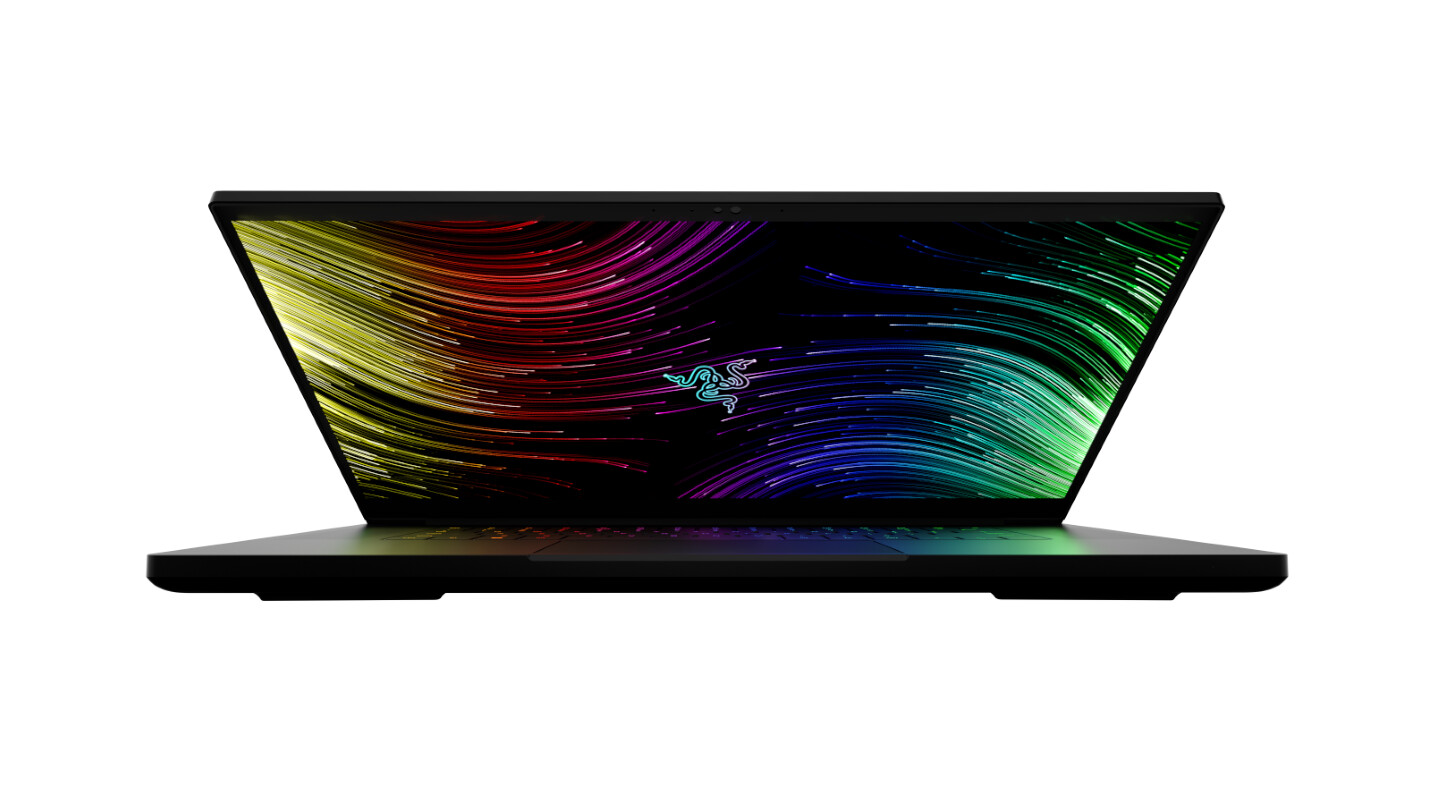
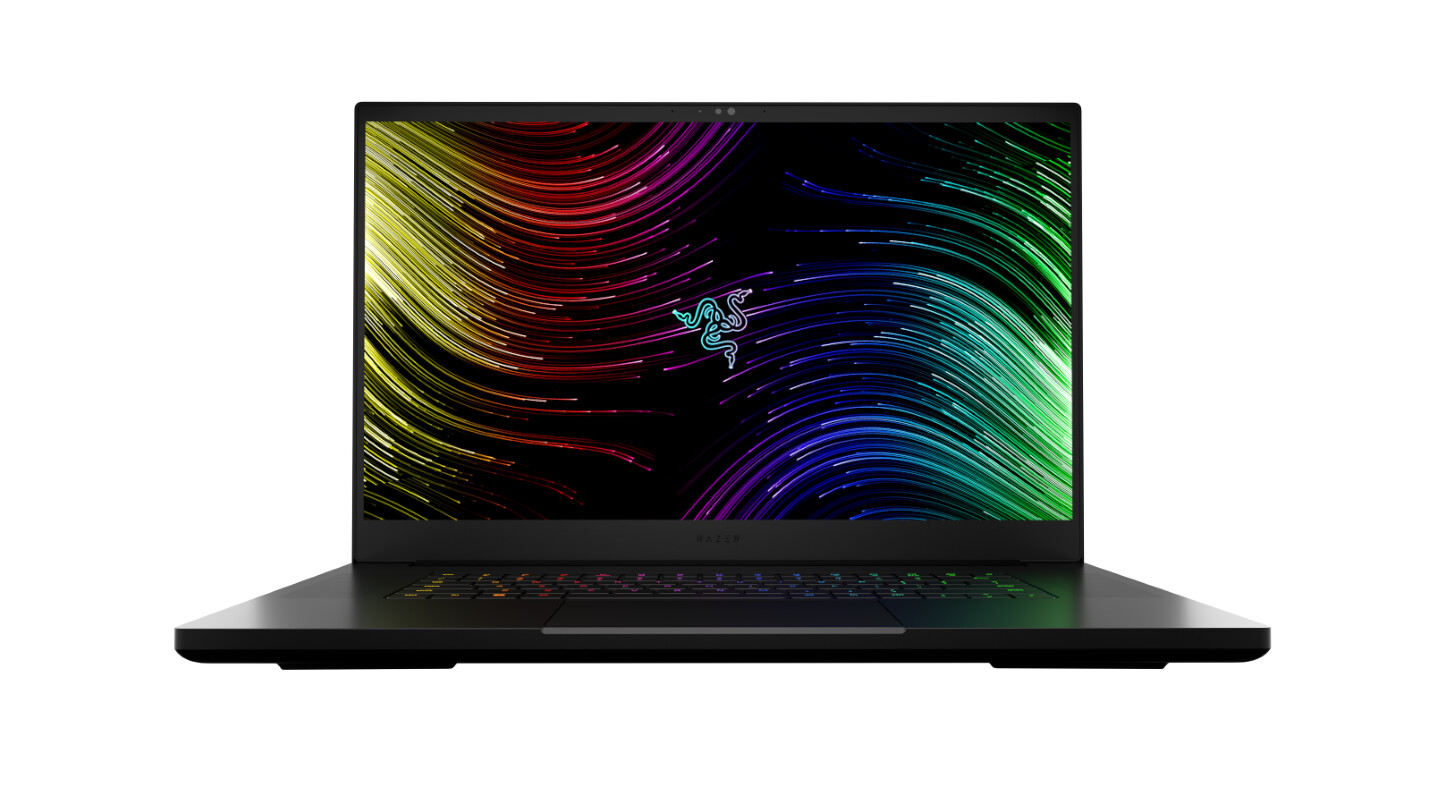
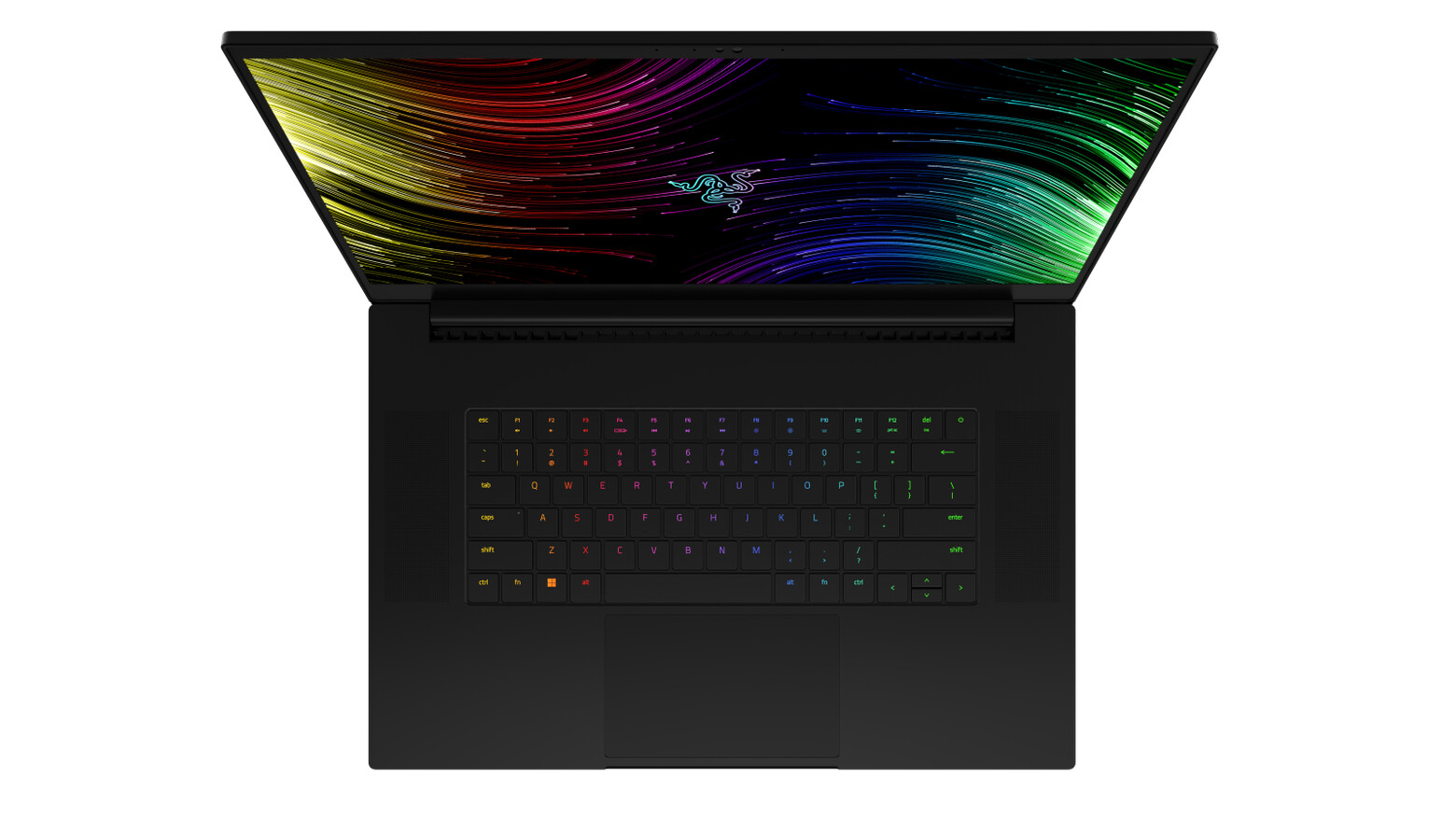
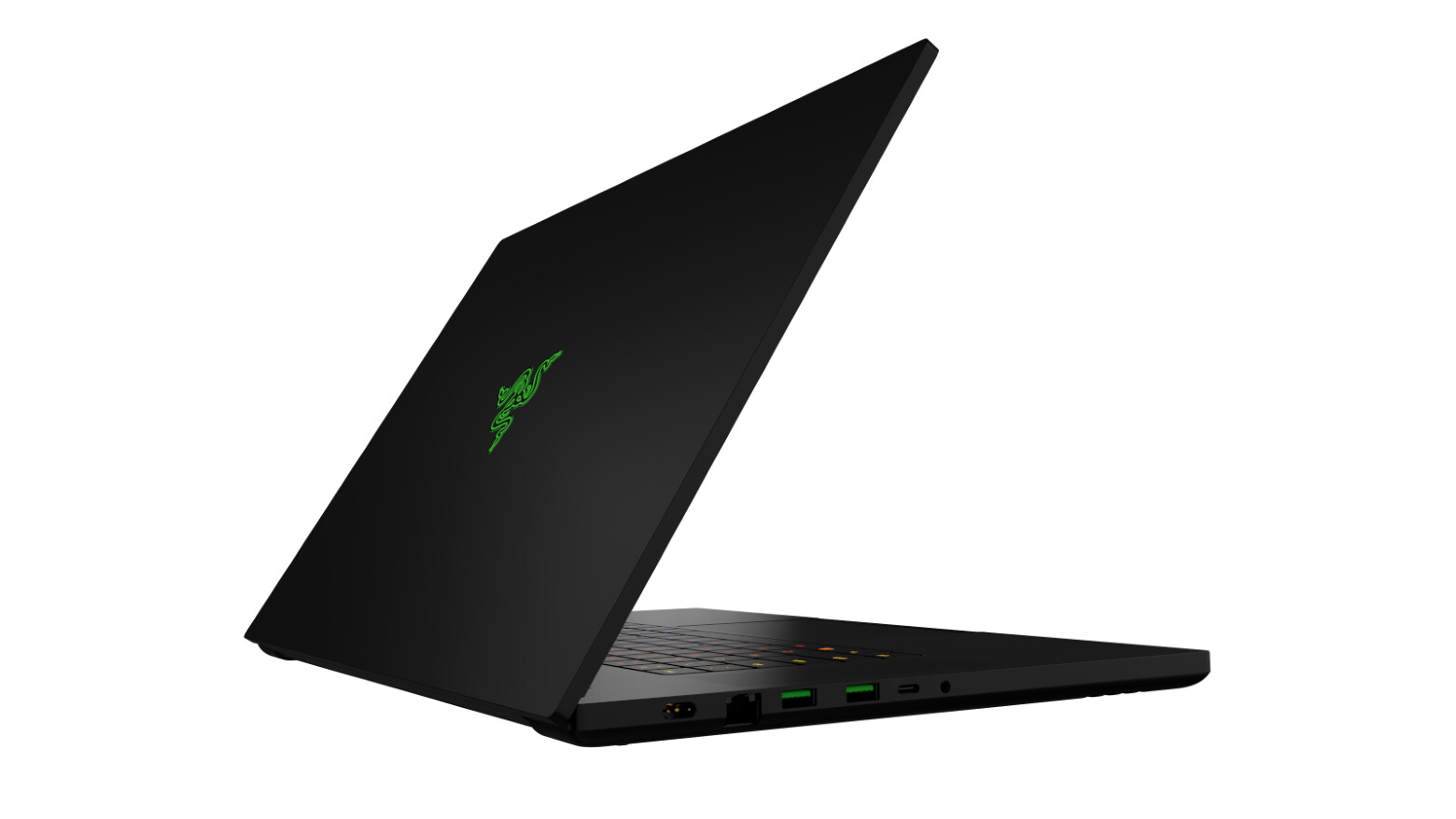
Razer, the leading global lifestyle brand for gamers (Hong Kong Stock Code: 1337), is kicking off 2022 with new Razer Blade gaming laptop models including the Razer Blade 14, Razer Blade 15, and Razer Blade 17. The world's fastest laptops for gamers and creators are equipped with the recently announced NVIDIA GeForce RTX 30 Series Laptop GPUs, up to an RTX 3080 Ti, making the new Blades better than ever, now shipping with Windows 11. All new Razer Blade gaming laptops now also include groundbreaking DDR5 memory, providing blistering clock speeds up to 4800 MHz, an increase in frequency by up to 50% compared to the previous generation.

"The Razer Blade series continues to be the best gaming laptop by providing desktop-class performance on-the-go," says Travis Furst, Senior Director of Razer's Systems business unit. "Additionally, we've enabled creators to work anywhere with gorgeous displays, available NVIDIA Studio drivers, and up to 14-Core CPUs. Users will have the ability to choose any model or configuration that best fits their gaming or creating needs, while getting the latest and greatest in graphics, memory and processing technology."

AMD Socket AM5 "Raphael" Ryzen Processor Confirmed for H2-2022 Launch

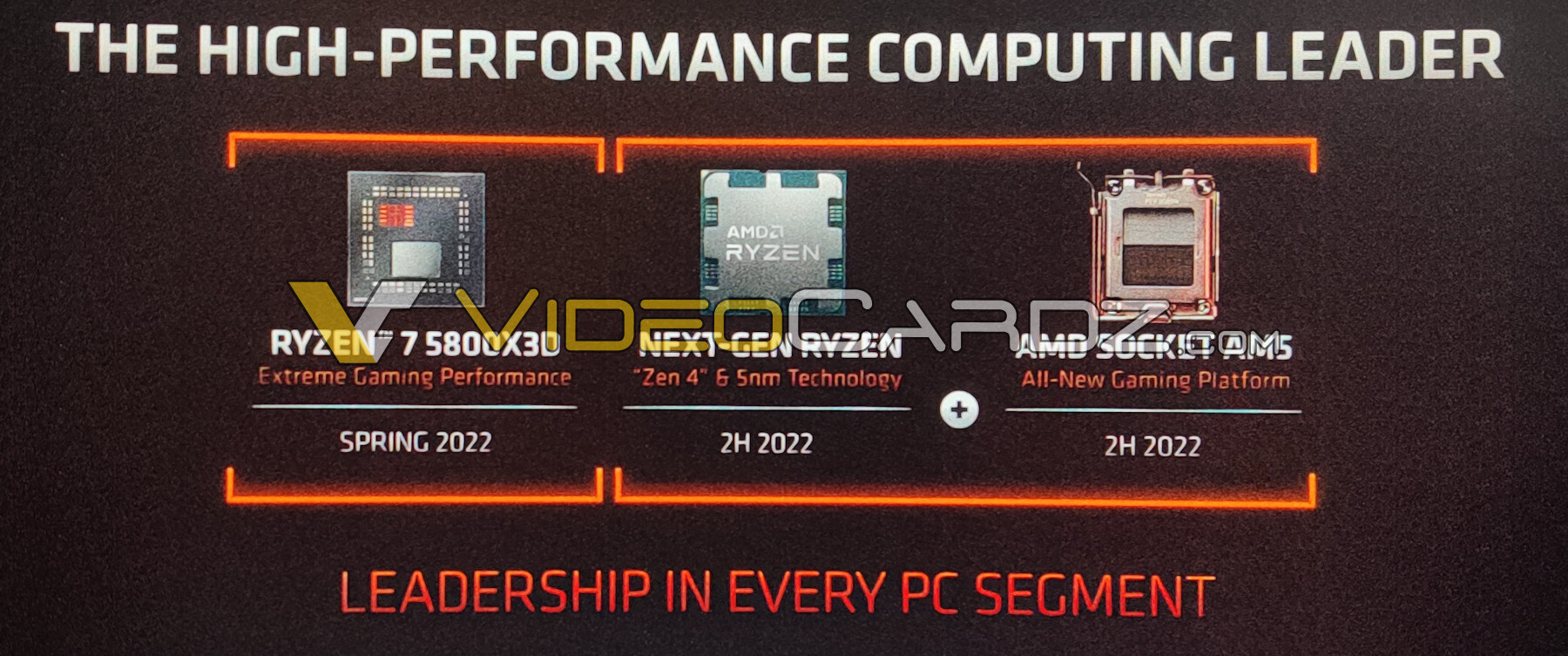
AMD's next-generation Ryzen "Raphael" processor could launch only in the second half of 2022, confirms a leaked company slide scored by VideoCardz. The slide points to a Ryzen 5000X3D series product-stack update within the 1H-2022. These are Socket AM4 processors that leverage the company's updated "Zen 3(+)" CPU core die (CCD), which features 64 MB of 3D Vertical cache memory in addition to 32 MB of L3. AMD claims that 3DV Cache technology significantly improves performance akin to a generational update (anywhere between 5% to 25% depending on the application). The company is targeting "Spring" 2022 for launch, which would put this around early-Q2.

The "Raphael" Socket AM5 processor is sure to catch much of the attention, as it's the company's true next-gen desktop product. It heralds Socket AM5, a new LGA-based socket; and next-generation connectivity that includes DDR5 memory and PCI-Express Gen 5. The CCDs of these processors are built on the TSMC N5 (5 nm) silicon fabrication node, and are based on the "Zen 4" microarchitecture. The leaked slide shows the first grainy picture of Socket AM5, with a retention mechanism not unlike what we're used to, on the Intel platform. We're hearing rumors that AM5 will somehow manage cooler-compatibility with AM4 despite the radical redesign to the socket. An H2-2022 launch would put "Raphael" close to Intel's 13th Gen Core "Raptor Lake" launch, as team blue hopes to return to an annual IPC-uplift cadence, with up to 8 "Raptor Cove" P-cores, and 16 "Gracemont" E-cores.

AMD Ryzen 6000 "Rembrandt" Mobile Processors Pack Next-Gen Connectivity: Leak

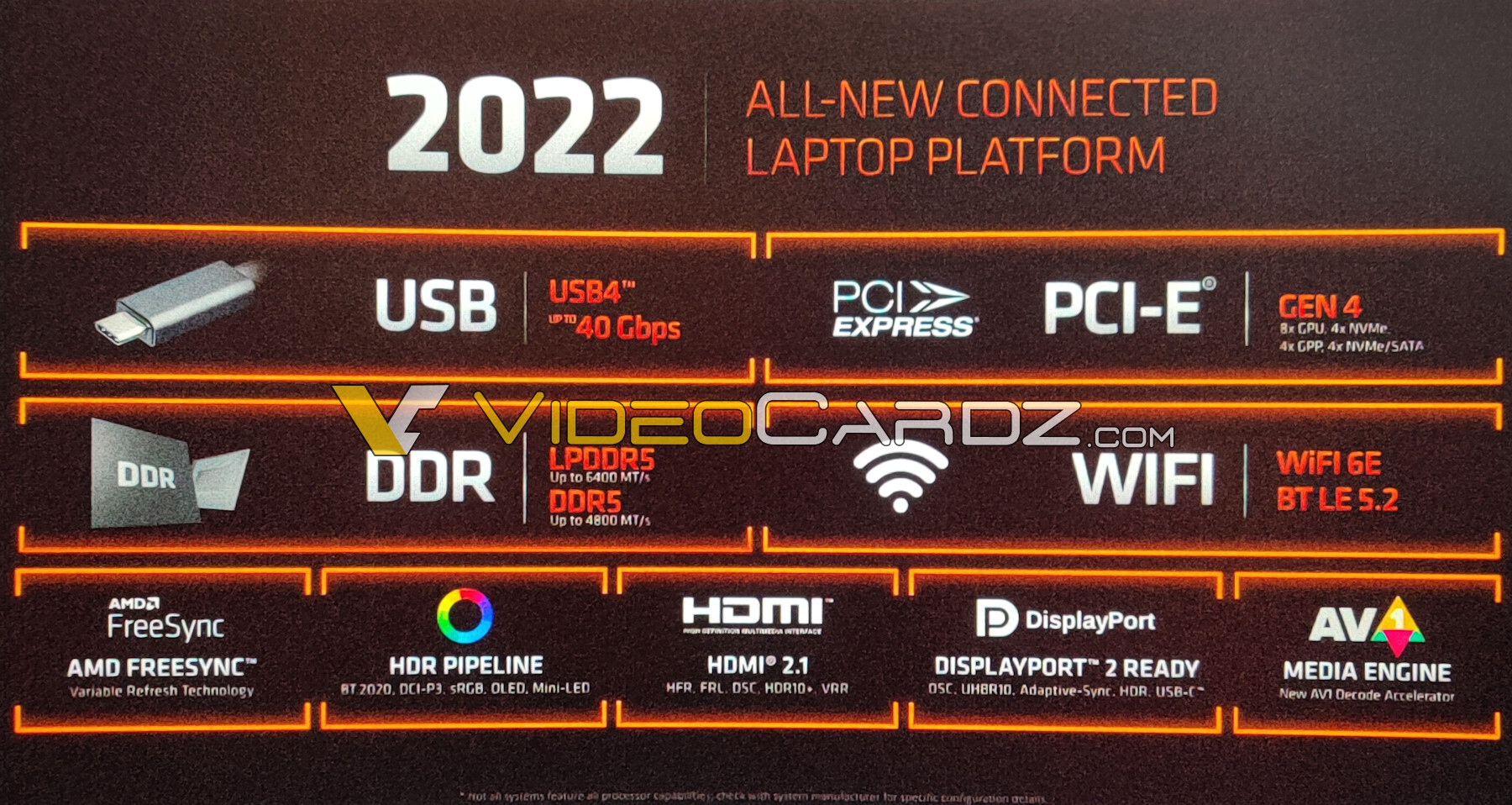
AMD is planning to crash Intel's big 12th Gen Core "Alder Lake-P" mobile processor launch with its own next-gen launch, the Ryzen 6000 mobile processor series. These chips are the company's first built on the TSMC N6 (6 nm) silicon fabrication process, and combine up to 8 "Zen 3+" CPU cores, with a next-generation iGPU based on the RDNA2 graphics architecture. The company has given the Media CoreNext and Video CoreNext engines incremental updates, according to a leaked slide scored by VideoCardz.

Ryzen 6000 "Rembrandt" processors come with hardware-accelerated decode of the AV1 video format. The Display CoreNext (display I/O engine) now supports DisplayPort 2.0, complete with DSC, UHBR10, HDR10+, and variable refresh-rate. The HDR pipeline has awareness for the various display panel types, including OLED and mini-LED. The iGPU on "Rembrandt" features up to 12 compute units (768 stream processors). It remains to be seen if Ray Accelerators are featured, as that would make this the first iGPU (on the PC platform) with DirectX 12 Ultimate support.

AMD's Upcoming Mobile Rembrandt APU Makes an Early Appearance

If you've been waiting for more details about AMD's next mobile platform, then you're in luck, as the motherload has dropped today, with lots of details about the new Rembrandt APU's that are launching next year. Not only has a picture of the first motherboard, with adhering laptop showed up, but we also have a mostly complete block diagram and a list of expected SKU's, even though not all SKU models are revealed as yet.

AMD's Rembrandt APU will be its first APU with PCIe 4.0 support, which in itself might not be worth the wait, but if paired with the right GPU, this might help increase the performance somewhat compared to the previous generation of APUs from AMD. The bigger news is USB4 support, plus a new GPU which we so far don't know too much about, but it's speculated that it'll be called Radeon RX 680M and should offer 12 compute units. DDR5 memory support is also expected, so Rembrandt clearly has a new memory controller, since the APU is still based on the Zen 3 architecture.

ASUS is Working on a DDR4 RAM Adapter for DDR5 Motherboards

With the current short supply and maybe more importantly, the rather insane pricing for DDR5 memory, ASUS is working on what could be called a quick fix for the problem, an adapter that would allow DDR5 motherboard owners to put DDR4 memory in their motherboards. It's not what we'd call an elegant solution at this point, but it's said it'll be refined before it's ready for retail—if it ever enters the market—since apparently the engineer that developed the adapter doesn't always get to see his projects hit retail, as from our understanding he's responsible for a lot of the more unusual products from ASUS' ROG brand.

That said, considering that a lot of high-end Z690 motherboards only support DDR5, this might be an interim solution that makes sense for a lot of people until availability of DDR5 improves. There's some complexity in making the adapter work though, as not only does it need its own power regulation, since DDR4 memory doesn't have onboard power conversion components unlike DDR5, but there's also the 2x 32-bit vs 64-bit bus to take into consideration as well. On top of this, the DRAM traces are obviously extended, which could lead to instabilities, which is why it's apparently only tested with one type of memory right now, which appears to be G-Skill's Tridentz Royal. A further limitation of the adapter is that it requires a special UEFI version to be installed that allows DDR4 memory to be used, but this might be the smallest issue in this "skunk works" project from ASUS' ROG team.

AMD and GlobalFoundries Renew Wafer Supply Agreement

AMD in its 8-K filing with the SEC, disclosed that it has updated its wafer supply agreement (WSA) with GlobalFoundries. Under the latest agreement, AMD commits to buy $2.1 billion worth wafers from GlobalFoundries between 2022 and 2025. The previous version of the WSA saw commitments up to 2024, and wafers worth $1.6 billion. The update hence adds another year and $500 million worth supply.

AMD currently sources 12 nm and 14 nm wafers from GlobalFoundries, which go into making cIOD and sIOD components in its processors, and motherboard chipsets. The move to extend the WSA indicates that the company may continue to use 12 nm-class I/O dies in its processors for the foreseeable future. It will be very interesting to see if 12 nm-class I/O dies make it to next-generation products such as "Genoa" and "Rapael," which integrate the latest IP blocks such as PCI-Express Gen 5 root-complexes, DDR5 memory controllers, and 3rd Gen Infinity Fabric. Processors with 12 nm I/O dies, such as "Milan" and "Vermeer" could be retired only by 2023-24, as AMD will use 2022 to spread across its next-gen product launches.

XPG to Showcase Latest Breadth and Depth of Products at CES 2022

XPG, a fast-growing provider of systems, components, and peripherals for Gamers, Esports Pros, and Tech Enthusiasts, today announces it will be on location in Las Vegas during the 2022 CES show (Jan. 5-8). Under the theme of 'Dawn of a New Xtreme,' it will be showing off the latest products from XPG and ADATA including gaming systems, peripherals, accessories, and components, such as the newest DDR5 memory, PCIe 5.0 solid state drives (SSD) and the latest state-of-the-art Platinum PSU.

XPG's and ADATA are gearing up to bring next-generation performance to gamers and other users with its latest PCIe Gen5x 4 SSDs and DDR5 DRAM. At the booth, visitors will get a first look at the XPG LANCER RGB DDR5 and CASTER RGB DDR5 that deliver next-level performance of up to 6000 MT/s and 7000 MT/s, respectively. ADATA's industrial-grade DDR5-4800 U/SO/R-DIMM memory with on-die ECC & PMIC will also be on display.

FORESEE Launches Commercial DDR5 to Empower Big Data Era

Since 2020, data centers have seen additional development opportunities driven by new infrastructure. For this reason, DDRs have been developed to become faster and more efficient. On July 14, 2020, JEDEC released the DDR5 SDRAM standard, marking the industry-wide transition to DDR5 server dual in-line memory modules (DIMMs). In China, mainstream manufacturers are gradually focusing on DDR5, striving to promote its widespread commercialization. DDR5 brings with it a series of crucial improvements to help empower next-gen servers with better performance and lower power consumption.

With 22 years of experience in the storage industry, Longsys is constantly accumulating industrial experience while remaining centered on R&D technology. As the first company in China to do so, it has made multiple DDR5 test data items publicly available. FORESEE, the industrial storage brand of Longsys, has recently launched commercial DDR5 U-DIMM, available in 16 GB and 32 GB options.

Micron Confirms Lack of DDR5 Modules due to PMIC and VRM Shortage

During its quarterly earnings call, Micron confirmed that the lack of DDR5 memory in retail is not due to a shortage of DDR5 memory ICs, but rather due to a shortage of PMIC and VRM components. Micron said that "demand for DDR5 products is significantly exceeding supply due to non-memory component shortages impacting memory suppliers' ability to build DDR5 modules."

It would appear that demand ended up being higher than expected, due to the popularity of Intel's Alder Lake CPUs, with the DRAM module makers not having prepared enough stock of the new components that are required to make DDR5 DIMMs, which has resulted in the current lack of DDR5 modules in retail. Micron is working on its end to resolve this issue and has entered what it calls "strategic agreements to secure supply of certain components" and is expecting supply of said components to improve slowly in 2022. It seems like some of these components are also related to other products made by Micron, such as SSDs.

ADATA XPG Unveils CASTER Series DDR5 Memory

ADATA XPG, a fast-growing provider of systems, components, and peripherals for Gamers, E-sports Pros, and Tech Enthusiasts, today announces the XPG CASTER DDR5 DRAM series. The XPG CASTER, which comes with and without RGB lighting, is rated for 7000 MT/s and comes equipped with On-Die ECC and PMIC for enhanced stability and reliability. Both the RGB and non-RGB variants feature capacities of 16 GB.

Running at 7000 MT/s, the XPG CASTER is a new breed of DDR5 that is over two times faster than standard DDR4 DRAM. With blazing-fast data transfer rates, users will enjoy a smoother and seamless gaming experience. With support for Intel XMP 3.0, overclocking is incredibly and straightforward. It allows users to avoid cumbersome BIOS settings and never-ending adjustment of overclocking parameters.

Apacer Announces NOX DDR5 Memory Series

Apacer's consumer and gaming DDR5 memory modules are finally available! The DDR5-4800 delivers 16 GB of DRAM at 4800 MHz and draws just 1.1 V. That leaves DDR4 modules far behind in the rear-view mirror. Performance, capacity, stability and power efficiency are all taken to the next level. In addition to the standard DDR5 memory module, Apacer is launching a NOX DDR5 gaming memory module. This will provide gamers with extremely stable overclocking capabilities with a single click. Power consumption management is also upgraded in DDR5.

Apacer's DDR5-4800 modules are compliant with the JEDEC standard. And their operating frequency of 4800 MHz is a 50% increase in bandwidth compared to the standard DDR4 upper frequency limit of 3200 MHz.

Lexar Announces ARES DDR5 Desktop Memory

Lexar, a leading global brand of flash memory solutions, is excited to reveal its cutting-edge Lexar ARES DDR5 Desktop Memory. The ARES DDR5 leverages next-gen technology, with speeds starting at 4800, DDR5-4800 is 1.5x the bandwidth faster than DDR4-3200. Features a sleek aluminium heatspreader to keep your system and motherboard running cool. It is perfect for PC enthusiasts, hardcore gamers and content creators who are looking to next-level performance, increased capacity and maximum power efficiency.

Whether you are operating speed-demanding video games, video editing software, or processing intensive workloads, the Lexar ARES DDR5 Desktop Memory accelerates your PC performance for multitasking with increased performance while on the latest 12th Gen Intel Core processor. Moreover, ARES DDR5 elevates the power efficiency and product reliability. It is built with an on-die ECC, which fully leverages real-time data error correction for increased data stability and reliability. With built-in Power Management IC (PMIC), the DDR5 computer memory module provides better power control and power delivery while operating at a low voltage of 1.1 V.
Return to Keyword Browsing
Nov 12th, 2026 21:51 PST change timezone

New Forum Posts

Popular Reviews

TPU on YouTube

Controversial News Posts