News Posts matching #DDR5

Return to Keyword Browsing

DRAM Prices Projected to Decline by 3-8% QoQ in 4Q21 Due to Rising Level of Client Inventory, Says TrendForce

Following the peak period of production in 3Q21, the supply of DRAM will likely begin to outpace demand in 4Q21, according to TrendForce's latest investigations (the surplus of DRAM supply is henceforth referred to as "sufficiency ratio", expressed as a percentage). In addition, while DRAM suppliers are generally carrying a healthy level of inventory, most of their clients in the end-product markets are carrying a higher level of DRAM inventory than what is considered healthy, meaning these clients will be less willing to procure additional DRAM going forward. TrendForce therefore forecasts a downward trajectory for DRAM ASP in 4Q21. More specifically, DRAM products that are currently in oversupply may experience price drops of more than 5% QoQ, and the overall DRAM ASP will likely decline by about 3-8% QoQ in 4Q21.

Although WFH and distance learning applications previously generated high demand for notebook computers, increasingly widespread vaccinations in Europe and North America have now weakened this demand, particularly for Chromebooks. As a result, global production of notebooks is expected to decline in 4Q21, in turn propelling the sufficiency ratio of PC DRAM to 1.38%, which indicates that PC DRAM will no longer be in short supply in 4Q21. However, PC DRAM accounts for a relatively low share of DRAM manufacturers' DRAM supply bits, since these suppliers have allocated more production capacities to server DRAM, which is in relatively high demand. Hence, there will unlikely be a severe surplus of PC DRAM in 4Q21. It should also be pointed out that, on average, the current spot prices of PC DRAM modules are far lower than their contract prices for 3Q21. TrendForce therefore expects an imminent 5-10% QoQ decline in PC DRAM contract prices for 4Q21, with potential for declines that are even greater than 10% for certain transactions, as PC OEMs anticipate further price drops in PC DRAM prices in the future.


First Tentative Alder Lake DDR5 Performance Figures Leak

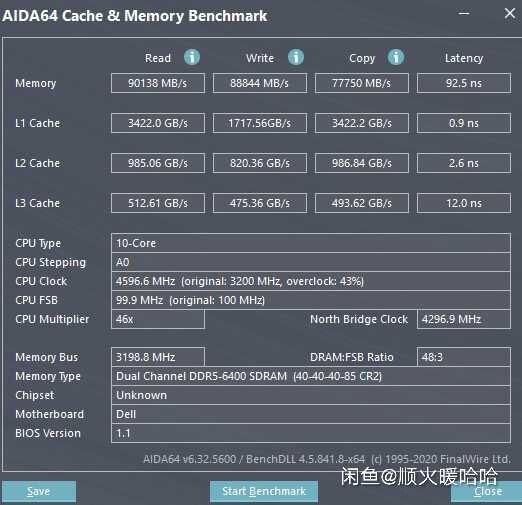
The first indication of what to expect in terms of early DDR5 memory performance on Intel's Alder Lake platform has leaked, courtesy of a Chinese forum and Twitter. It's not the first time we've seen DDR5 performance figures, but this time the CPU is clocked at much higher speeds compared to the figures leaked by Longsys back in March.

Although the memory is still running at 6400 MHz, performance is up significantly with read speeds of over 90 GB/s. As we're most likely still looking at an ES sample and an early UEFI build, there should be room for improvement here. The leaked performance numbers appear to be from a Dell system of unknown model.

Intel Z690 Alder Lake Chipset Pictured

Today, we got ahold of the first picture showing Intel's upcoming Z690 chipset, the highest-end chipset offering for the Alder Lake lineup of processors. From previous leaks, we have concluded that Intel has enabled the Z690 chipset to be a very powerful offering. Featuring support for running either DDR4 or DDR5 memory, the Z690 chipset will allow motherboard AIBs to offer motherboards with both the new and current DDR standards, easing the transition to the new DDR5 memory. As far as PCIe connectivity, this high-end chipset produces 12 PCIe Gen5 lanes, along with 16 PCIe Gen3 lanes. This is, of course, just an addition to the 16 PCIe Gen5 lanes that the Alder Lake processor provides, enabling a wide portfolio of PCIe lanes for connecting SSDs and graphics cards.

Below, you can see the Z690 chipset image (热心市民描边怪 image), compared to the Z590 (AnandTech image) chipset, where there is a clear difference in size. The new Z690 chipset seems quite a lot bigger, and that is really not a surprise given the new technology stack that it brings.

DRAM Module Revenue Undergoes 5% YoY Growth for 2020, with Varying Performances Among Suppliers, Says TrendForce

Annual shipment of notebook computers and desktop PCs underwent a massive increase in 2020 thanks to the proliferation of the stay-at-home economy brought about by the COVID-19 pandemic last year, according to TrendForce's latest investigations. In particular, notebook shipment increased by a staggering 26% YoY, thereby generating a corresponding demand for DRAM chips. Although the movement of DRAM prices remained stable in 2020, there was a palpable growth in actual DRAM bit demand. Hence, global DRAM module revenue increased by about 5% YoY to US$16.9 billion for 2020.

Looking back at the price trend of DRAM modules for 2020, TrendForce indicates that the market adopted a relative conservative outlook going forward in view of the ongoing pandemic. In turn, various end-products differed wildly in their respective market performances as well. For instance, while demand for notebooks remained strong, smartphone demand was relatively bearish. Server shipment, on the other hand, was at the same time consistent yet indicative of uncertainties, to some degree. In light of the varying performances in the end-markets, PC DRAM prices did not undergo drastic fluctuations throughout the year, and DRAM module suppliers posted earnings performances that were a direct result of their sales strategies, with certain suppliers, including Kimtigo and ADATA, able to raise their revenues by a massive margin.

CPU-Z 1.97 Brings Support for Alder Lake CPUs, DDR5, and XMP 3.0

CPU-Z, the software of choice for monitoring the CPU and its attributes, has yesterday been updated to version 1.97, which brings much-needed and interesting features. For starters, the new version adds support to detect Intel Core i9-12900K, Core i7-12700K, and Core i5-12600K "Alder Lake" CPUs and the Intel Z6xx chipset platform. Those specific SKUs are the top of the line in their respective categories, and it is only logical that support for the new generation starts there.

Next up, the software now supports detection of the latest DDR5 DRAM technology, which can now also be detected along with the new XMP 3.0 profile format. Last but not least, the software is adding detection for AMD's Radeon RX 6600 XT GPU as well.

To download the latest update, head over to our downloads section. If you wanna get pinged automagically when a new version is released, select the yellow "Get Notified" button on that same page.

Samsung Brings In-memory Processing Power to Wider Range of Applications

Samsung Electronics the world leader in advanced memory technology, today showcased its latest advancements with processing-in-memory (PIM) technology at Hot Chips 33—a leading semiconductor conference where the most notable microprocessor and IC innovations are unveiled each year. Samsung's revelations include the first successful integration of its PIM-enabled High Bandwidth Memory (HBM-PIM) into a commercialized accelerator system, and broadened PIM applications to embrace DRAM modules and mobile memory, in accelerating the move toward the convergence of memory and logic.

In February, Samsung introduced the industry's first HBM-PIM (Aquabolt-XL), which incorporates the AI processing function into Samsung's HBM2 Aquabolt, to enhance high-speed data processing in supercomputers and AI applications. The HBM-PIM has since been tested in the Xilinx Virtex Ultrascale+ (Alveo) AI accelerator, where it delivered an almost 2.5X system performance gain as well as more than a 60% cut in energy consumption.

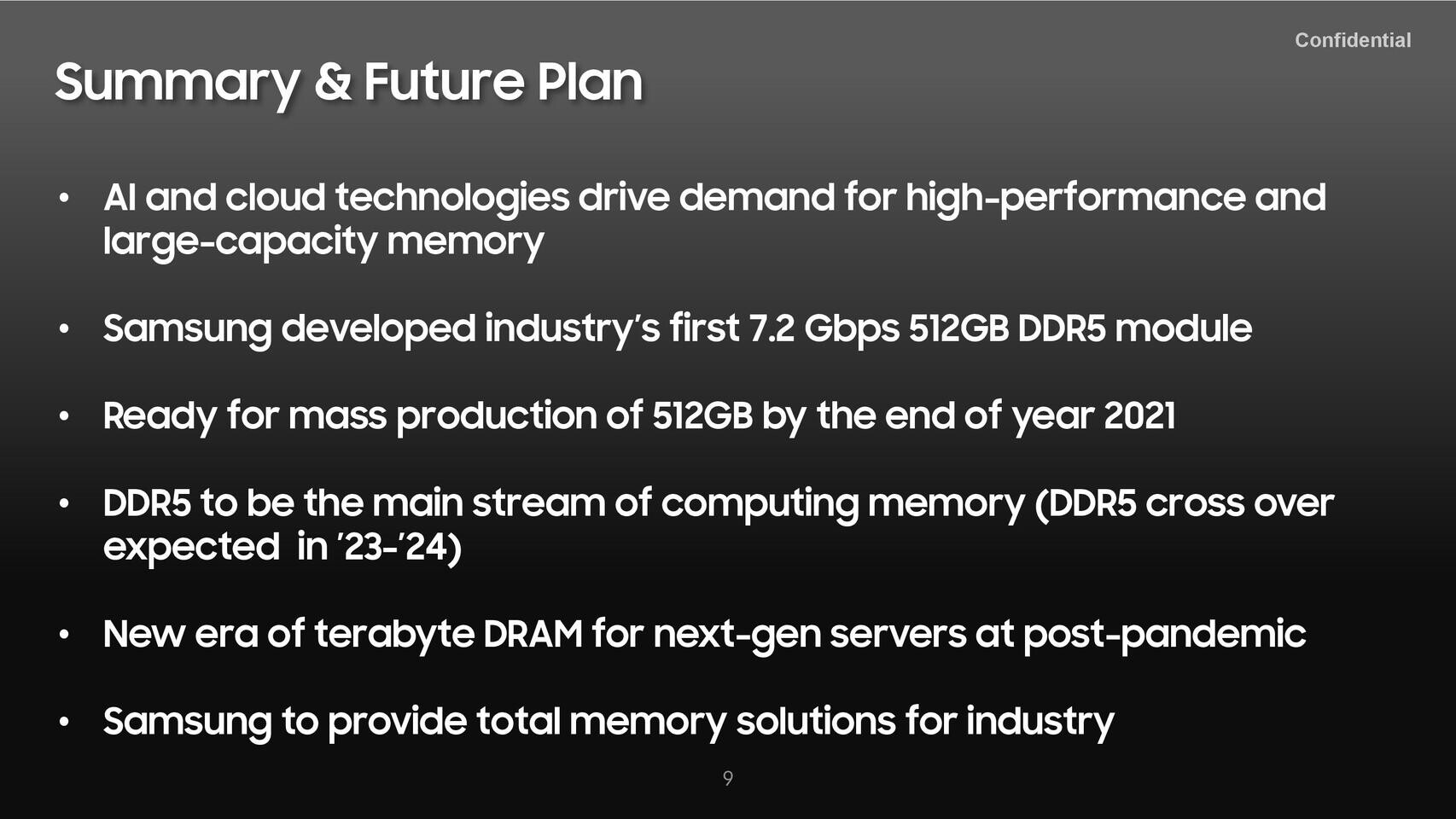
Samsung Develops 512 GB DDR5 Memory Modules Running at 7.2 Gbps

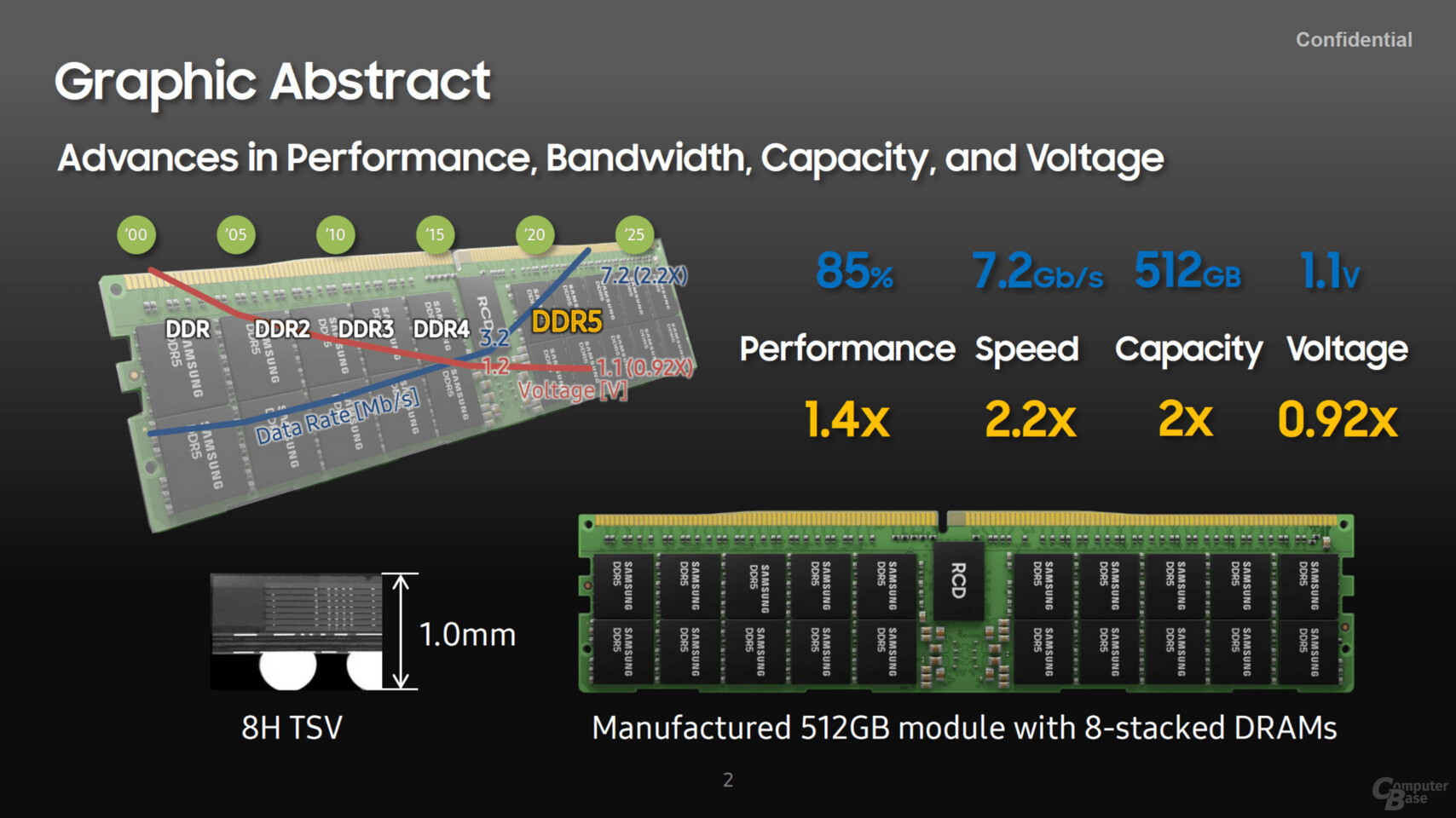
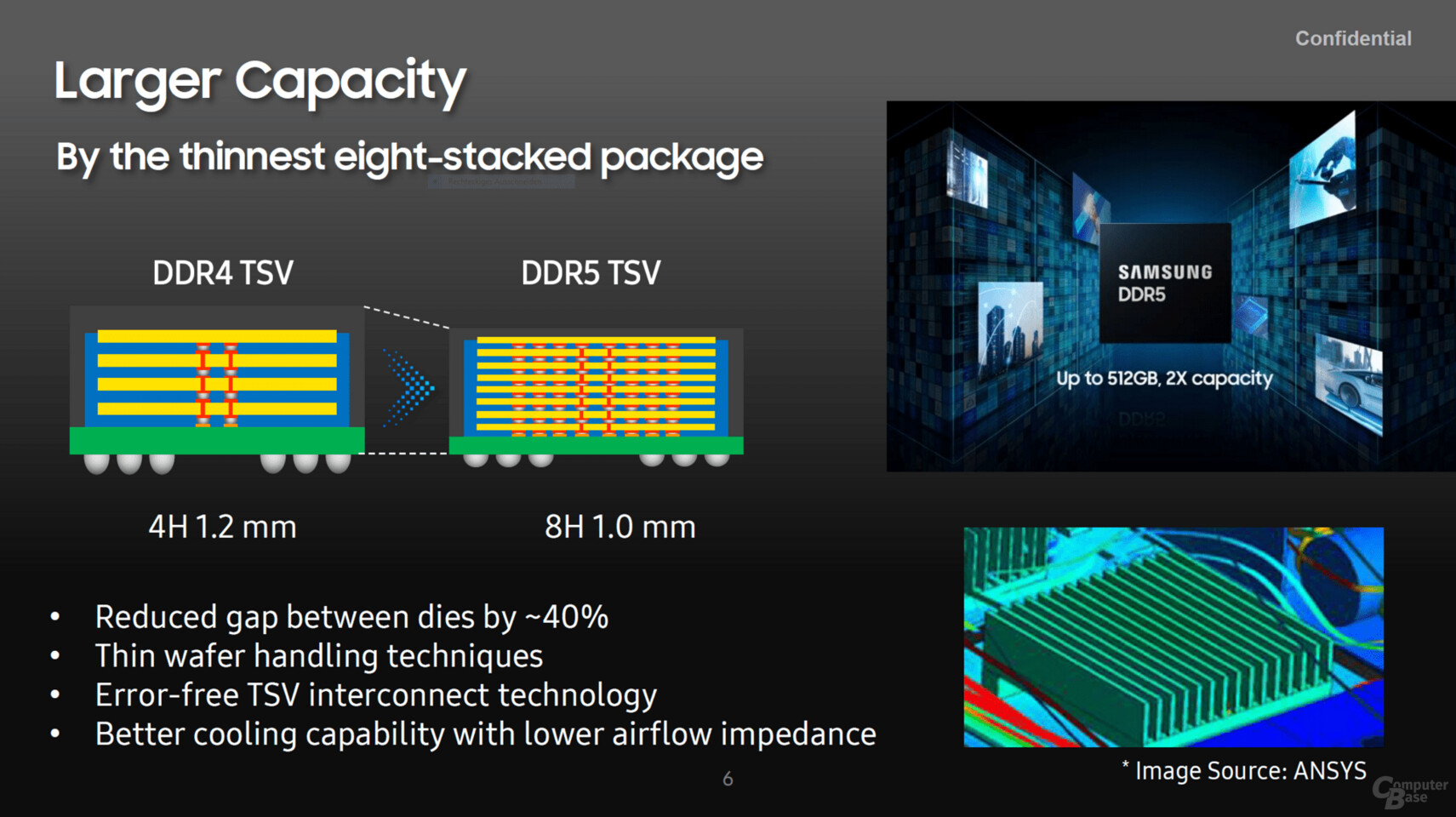
At this year's Hot chips 33 conference, Samsung has presented its works on the upcoming DDR5 memory standard. The company has managed to achieve a lot of new developments, as the newer standard pairs with new technologies to deliver higher speeds and better capacity. The Korean company designed its DDR5 modules as 8-high (8H) stacked TSV (through silicon via) dies. In the previous DDR4 implementations, Samsung used 4-high (4H) stacked TSV dies, which are actually thicker than the latest 8-high implementations. To achieve the new thin design, Samsung has used thin wafer handling techniques, which resulted in a 40% reduction in gab between stacked dies. The new 8H DDR5 modules are only 1.0 mm thick, compared to the 1.2 mm of the older 4H modules.

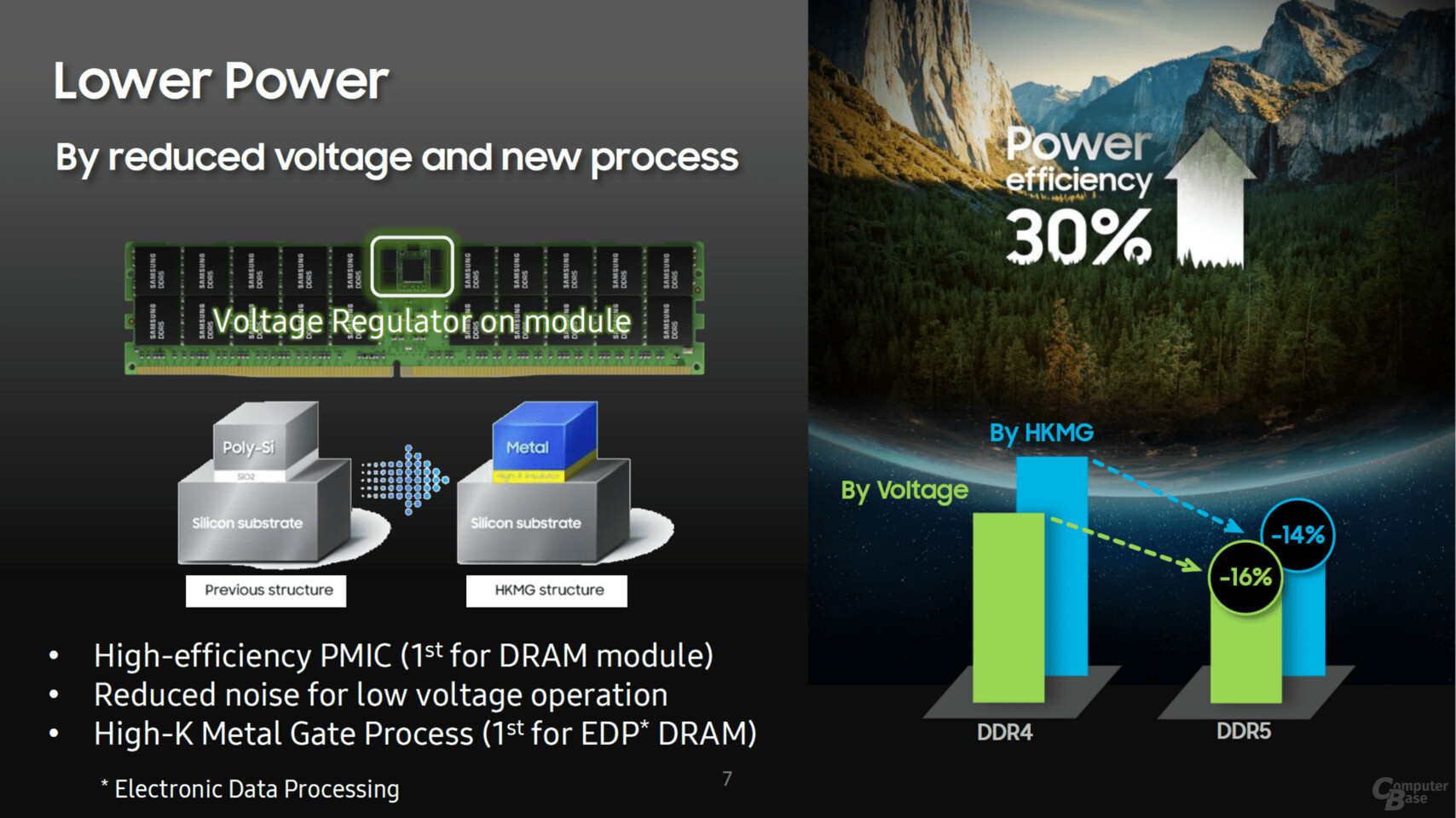
When it comes to performance, Samsung expects the new DDR5 modules to deliver big. Running at 7.2 Gbps speeds, the Samsung-made RDIMM/LRDIMM modules can reach up to 512 GB in capacity. This is, of course, limited to the server/enterprise market. Regular consumers/PC users can expect to have UDIMMs with up to 64 GB of capacity. The aforementioned 7.2 Gbps speed is achieved at the specified 1.1 Volts of power, meaning that Samsung's implementation is very efficient. According to some estimations made by the company, the DDR5 crossover for the mainstream market is not expected before 2023/2024, meaning that there is still a lot of time for memory makers to refine their DDR5 products.

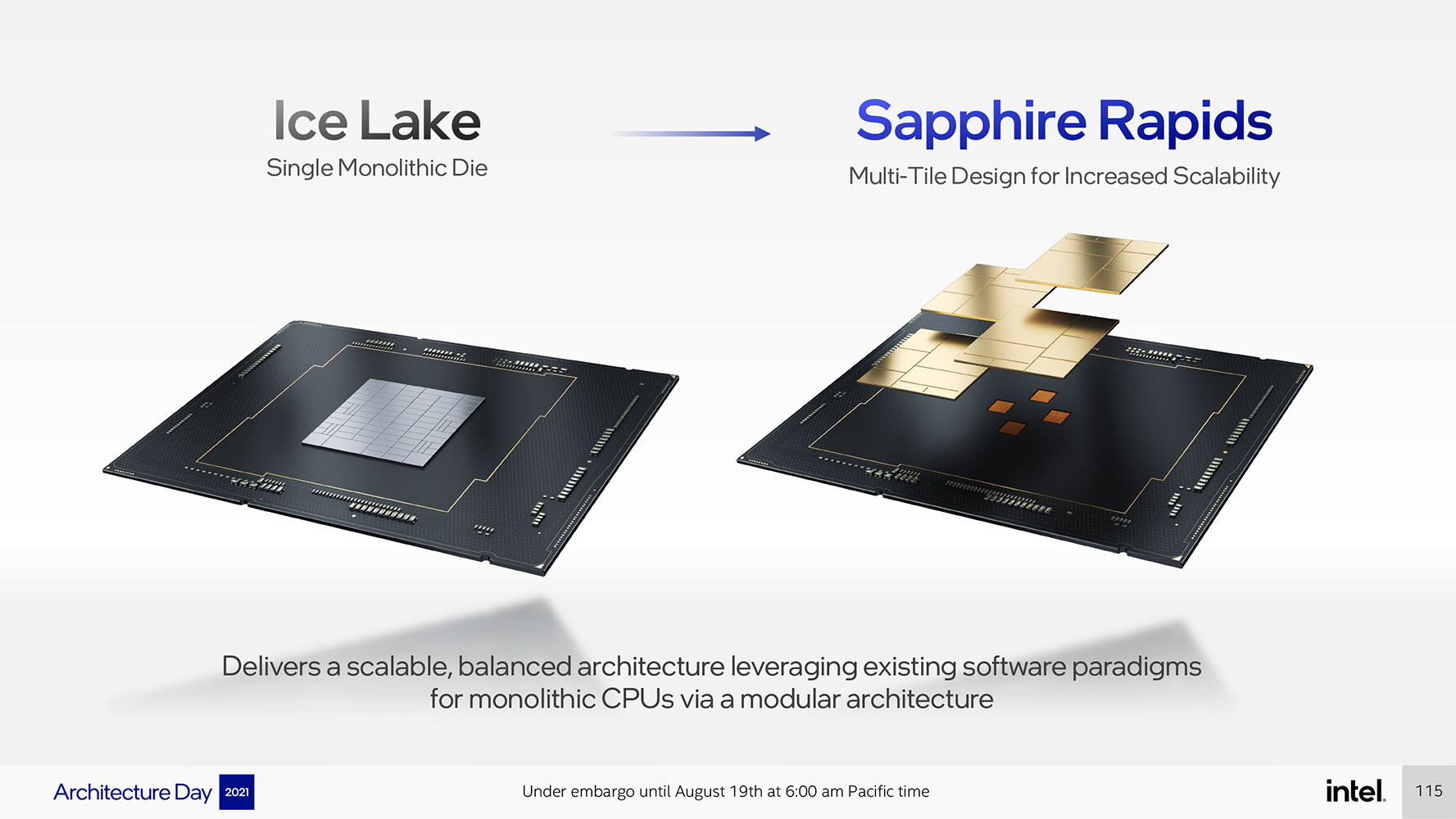
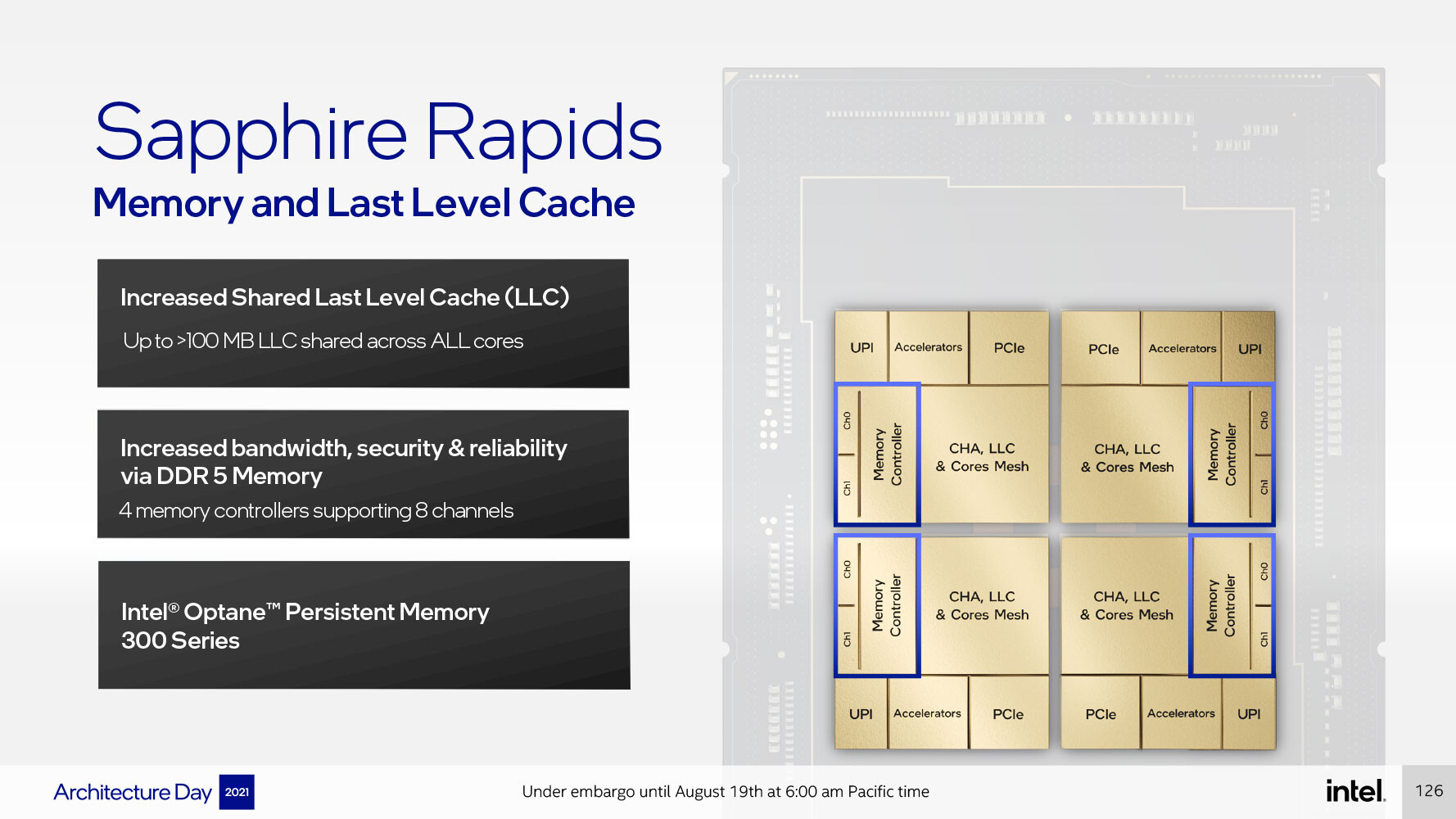
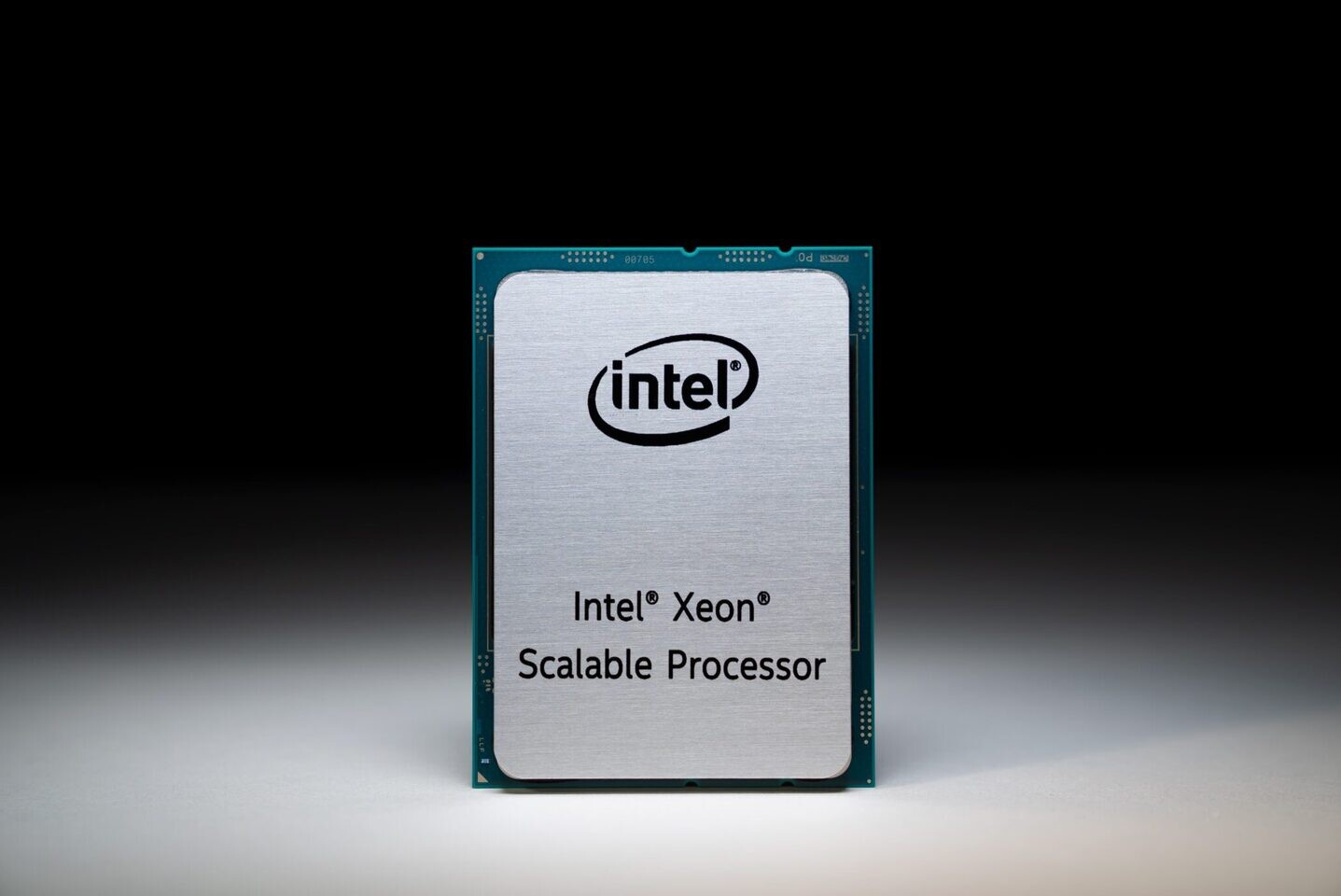
Intel Xeon "Sapphire Rapids" Memory Detailed, Resembles AMD 1st Gen EPYC: Decentralized 8-Channel DDR5

Intel's upcoming Xeon "Sapphire Rapids" processor features a memory interface topology that closely resembles that of first-generation AMD EPYC "Rome," thanks to the multi-chip module design of the processor. Back in 2017, Intel's competing "Skylake-SP" Xeon processors were based on monolithic dies. Despite being spread across multiple memory controller tiles, the 6-channel DDR4 memory interface was depicted by Intel as an advantage over EPYC "Rome." AMD's first "Zen" based enterprise processor was a multi-chip module of four 14 nm, 8-core "Zeppelin" dies, each with a 2-channel DDR4 memory interface that added up to the processor's 8-channel I/O. Much like "Sapphire Rapids," a CPU core from any of the four dies had access to memory and I/O controlled by any other die, as the four were networked over the Infinity Fabric interconnect in a configuration that essentially resembled "4P on a stick."

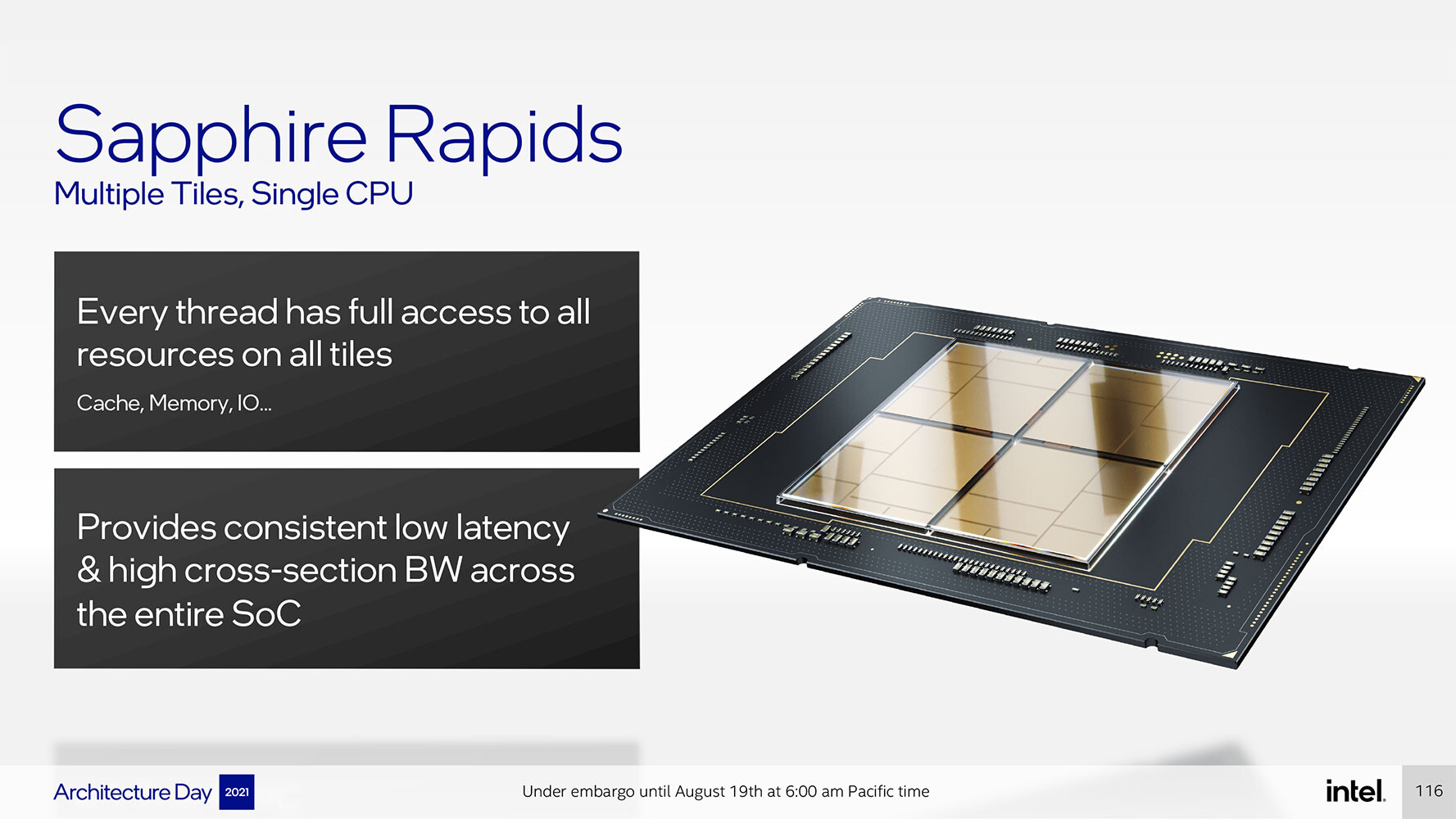
With "Sapphire Rapids," Intel is taking a largely similar approach—it has four compute tiles (dies) instead of a monolithic die, which Intel says helps with scalability in both directions; and each of the four compute tiles has a 2-channel DDR5 or 1024-bit HBM memory interface, which add up to the processor's 8-channel DDR5 total I/O. Intel says that CPU cores from each tile has equal access to memory, last-level cache, and I/O controlled by another die. Inter-tile communication is handled by EMIB physical media (55 micron bump-pitch wiring). UPI 2.0 makes up the inter-socket interconnect. Each of the four compute tiles has 24 UPI 2.0 links that operate at 16 GT/s. Intel didn't detail how memory is presented to the operating system, or the NUMA hierarchy, however much of Intel's engineering effort appears to be focused on making this disjointed memory I/O work as if "Sapphire Rapids" were a monolithic die. The company claims "consistent low-latency, high cross-sectional bandwidth across the SoC."

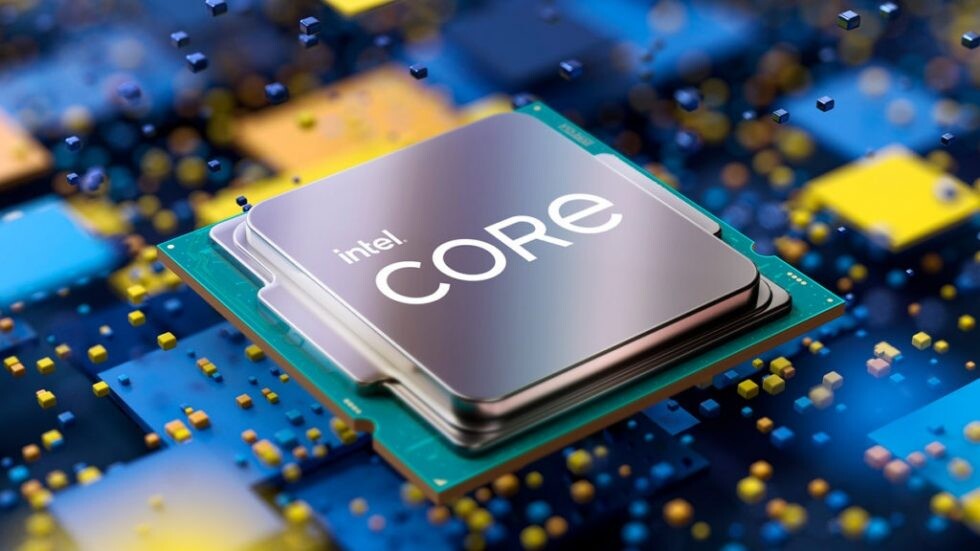
Intel's "Alder Lake" Desktop Processor supports DDR4+DDR5, (only few) PCIe Gen 5 and Dynamic Memory Clock

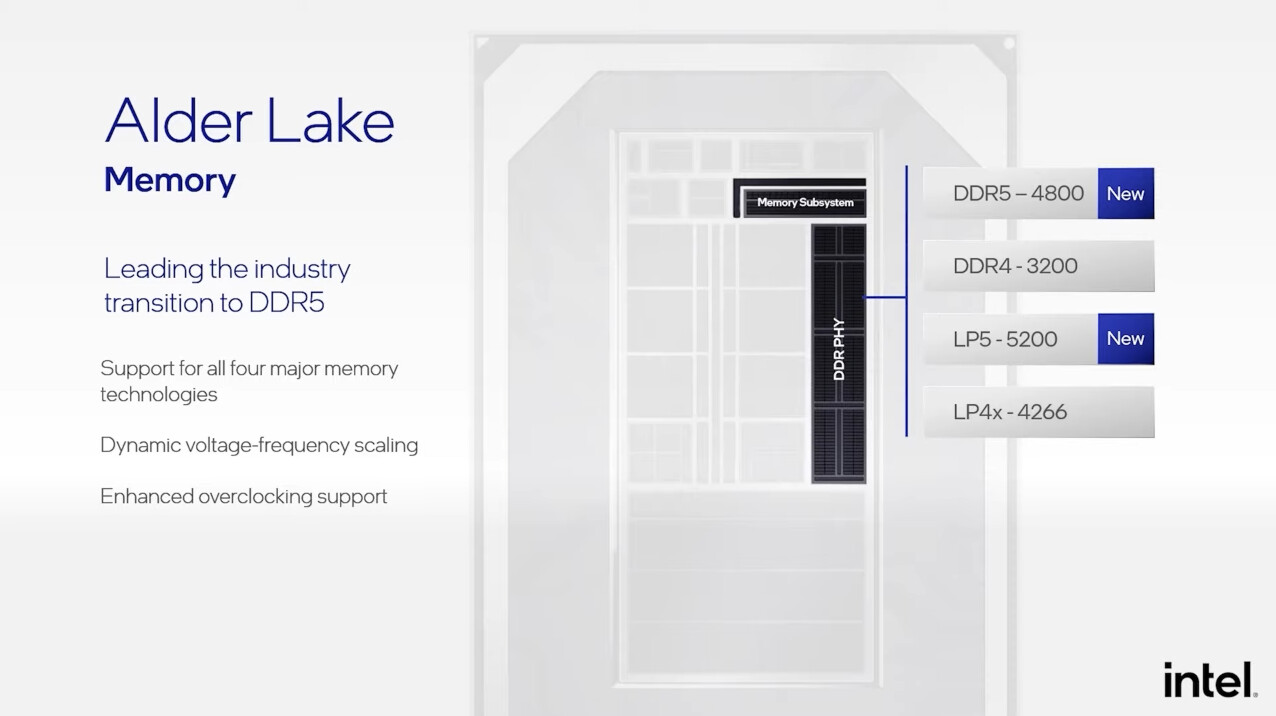
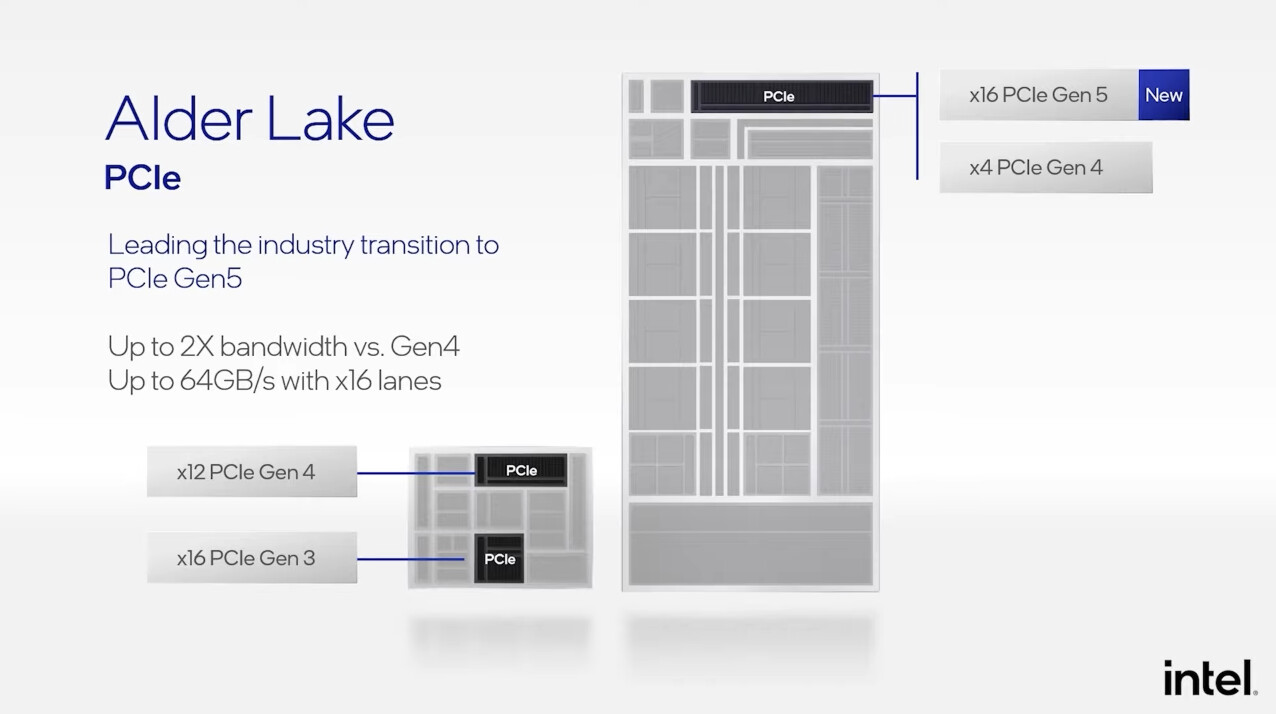
Intel will beat AMD to next-generation I/O, with its 12th Generation Core "Alder Lake-S" desktop processors. The company confirmed that the processor will debut both DDR5 memory and PCI-Express Gen 5.0, which double data-rates over current-gen DDR4 and PCI-Express Gen 4, respectively. "Alder Lake-S" features a dual-channel DDR5 memory interface, with data-rates specced to DDR5-4800 MHz, more with overclocking, reaching enthusiast-grade memory attaining speeds in excess of DDR5-7200. Besides speed, DDR5 is expected to herald a doubling in density, with 16 GB single-rank modules becoming a common density-class, 32 GB single-rank being possible in premium modules; and 64 GB dual-rank modules being possible soon. Leading memory manufacturers have started announcing their first DDR5 products in preparation of "Alder Lake-S" launch in Q4-2021.

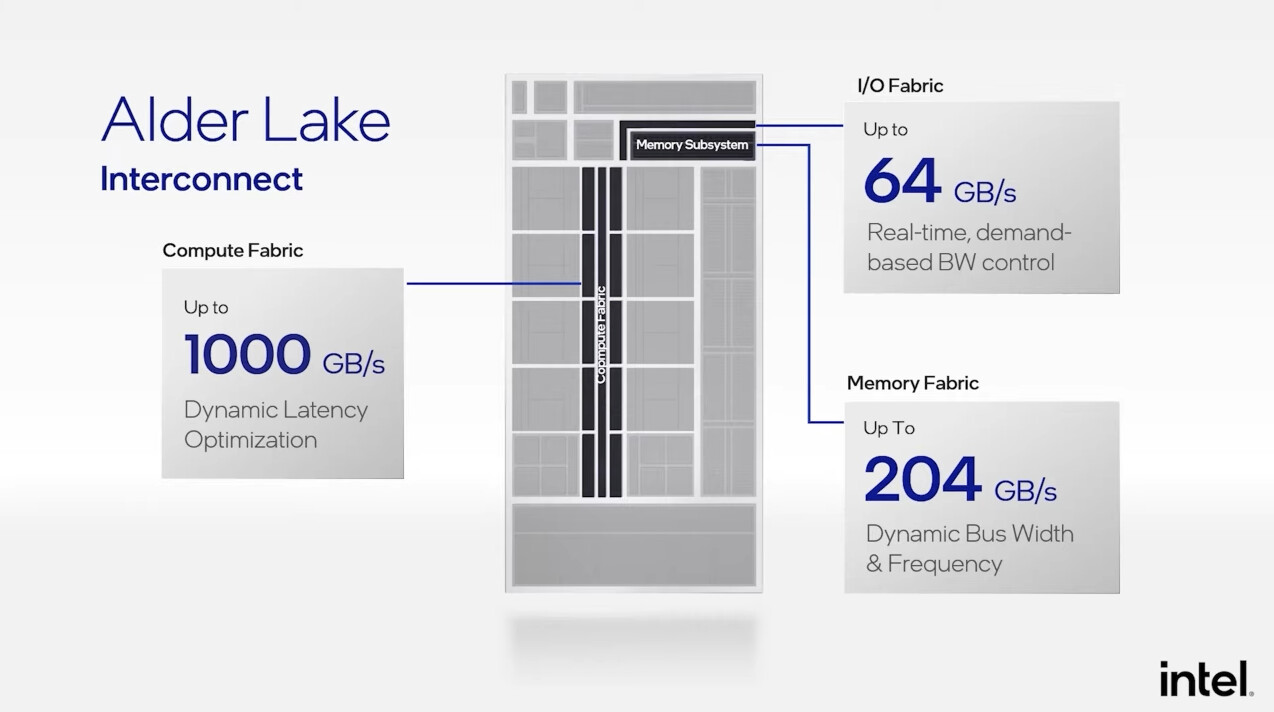
The memory controller is now able to dynamically adjust memory frequency and voltage, depending on current workload, power budget and other inputs—a first for the PC! This could even mean automatic "Turbo" overclocking for memory. Intel also mentioned "Enhanced Overclocking Support" but didn't go into further detail what that entails. While DDR5 is definitely the cool new kid on the block, Intel's Alder Lake memory controller keeps support for DDR4, and LPDDR4, while adding LPDDR5-5200 support (important for mobile devices). Just to clarify, there won't be one die support DDR5, and another for DDR4, no, all dies will have support for all four of these memory standards. How that will work out for motherboard designs is unknown at this point.

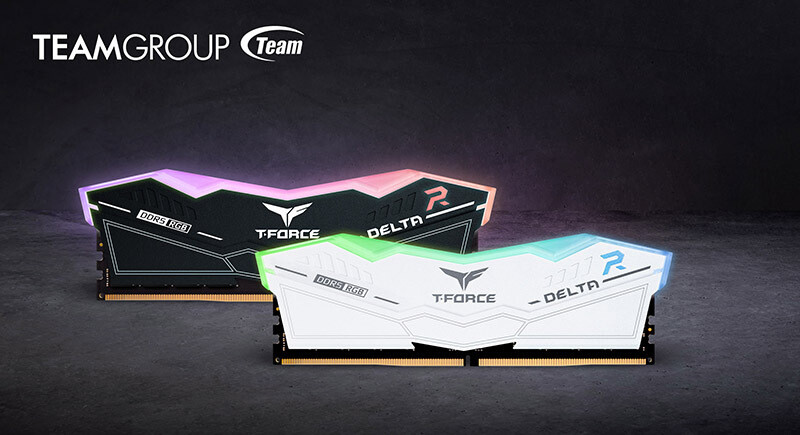
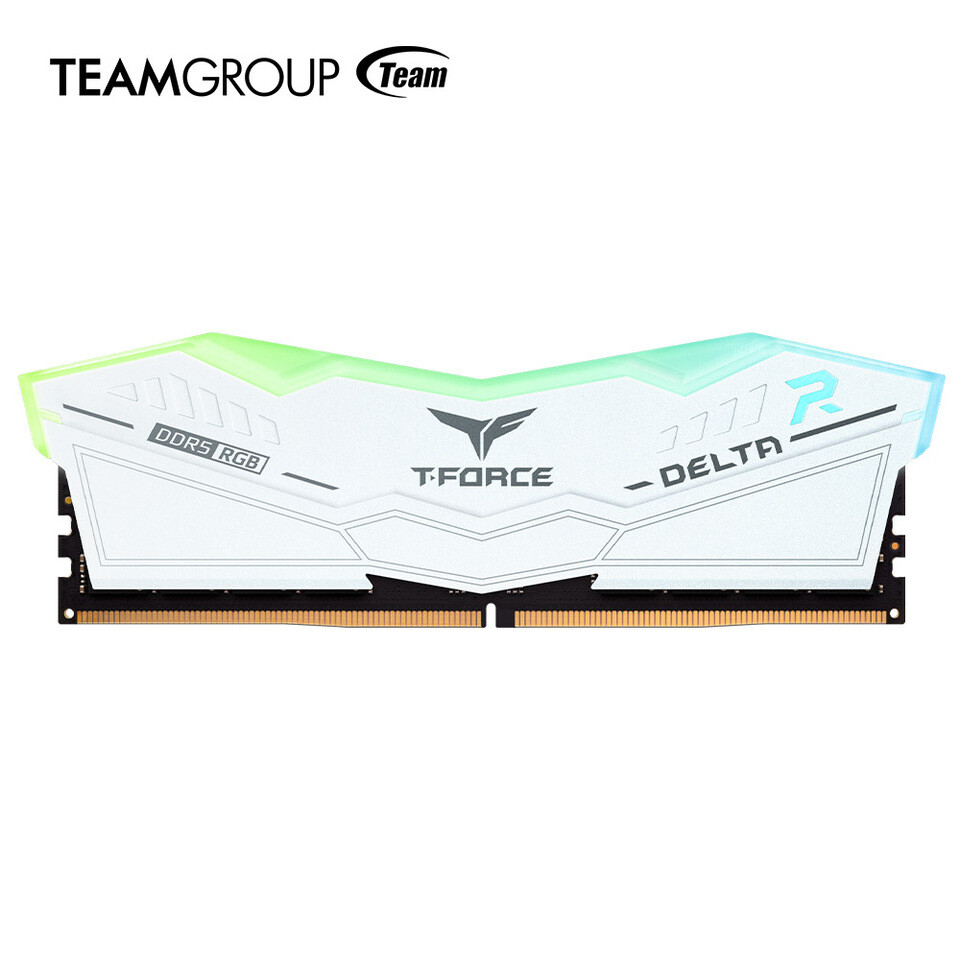
TEAMGROUP Brings RGB to Next-Gen DDR5 with the Launch of T-FORCE DELTA RGB DDR5 Gaming Memory

Since the end of 2020, TEAMGROUP has been at the forefront of next-generation DDR5 development, working closely with motherboard manufacturers to perform extensive validation testing. Whether it is the testing and research of DDR5's new PMIC architecture or XMP overclocking parameters, the company has achieved very fruitful results. Today TEAMGROUP is launching its brand new DELTA DDR5 Memory Series, the first DDR5 modules to be equipped with RGB lighting effect, providing gamers who enjoy visual flair with both next-level speed and eye-pleasing illumination.

The T-FORCE DELTA RGB DDR5 continues the design language of the DELTA DDR4 Series by maintaining the ultra-large spreader with wide-angled RGB edges and a minimalist geometrical surface. The overall look is further enhanced by its sleek stealth-fighter-inspired design. In addition, the color and flashing speed of each RGB LED used in DELTA RGB DDR5 can be independently controlled, offering more freedom to customize lighting effects than a typical RGB DDR4 memory. Currently samples have been sent to ASUS, GIGABYTE, MSI, ASROCK, BIOSTAR and other motherboard manufacturers for lighting tests. Players will be able to easily customize their own dazzling RGB effects through the manufacturers' lighting software.

PNY Announces XLR8 DDR5 4800 MHz Desktop Memory

PNY announced today the latest addition to their extensive lineup of PC memory for computer upgrades as well as for enthusiasts and gamers; Performance DDR5 4800 MHz Desktop Memory. Designed for next generation systems supporting the new memory standard, DDR5 will allow for higher-density modules and faster frequency speeds as compared to previous generation technologies.

PNY Performance DDR5 is designed to support the growing lineup of motherboards compatible with the new DDR5 memory standard. This advanced technology supports many new and exciting features that were limited or not supported in previous generations of PC memory. DDR5 supports higher density modules, up to four-times higher per module, and faster frequency speeds as standard. Compared to DDR4, which has a limited JEDEC standard speed of 3200 megahertz, DDR5 starts at 4800 MHz. The PNY Performance memory will also start at 16 GB per module and feature the JEDEC standard frequency of 4800 megahertz.

Penetration Rate of Ice Lake CPUs in Server Market Expected to Surpass 30% by Year's End as x86 Architecture Remains Dominant, Says TrendForce

While the server industry transitions to the latest generation of processors based on the x86 platform, the Intel Ice Lake and AMD Milan CPUs entered mass production earlier this year and were shipped to certain customers, such as North American CSPs and telecommunication companies, at a low volume in 1Q21, according to TrendForce's latest investigations. These processors are expected to begin seeing widespread adoption in the server market in 3Q21. TrendForce believes that Ice Lake represents a step-up in computing performance from the previous generation due to its higher scalability and support for more memory channels. On the other hand, the new normal that emerged in the post-pandemic era is expected to drive clients in the server sector to partially migrate to the Ice Lake platform, whose share in the server market is expected to surpass 30% in 4Q21.

MediaTek Announces Dimensity 920 and Dimensity 810 Chips for 5G Smartphones

MediaTek today announced the new Dimensity 920 and Dimensity 810 chipsets, the latest additions to its Dimensity 5G family. This debut gives smartphone makers the ability to provide boosted performance, brilliant imaging and smarter displays to their customers.

Designed for powerful 5G smartphones, the Dimensity 920 balances performance, power and cost to provide an incredible mobile experience. Built using the 6nm high-performance manufacturing node, it supports intelligent displays and hardware-based 4K HDR video capture, while also offering a 9% boost in gaming performance compared to its predecessor, the Dimensity 900.

Neo Forza Details its DDR5 Memory Rollout Plan

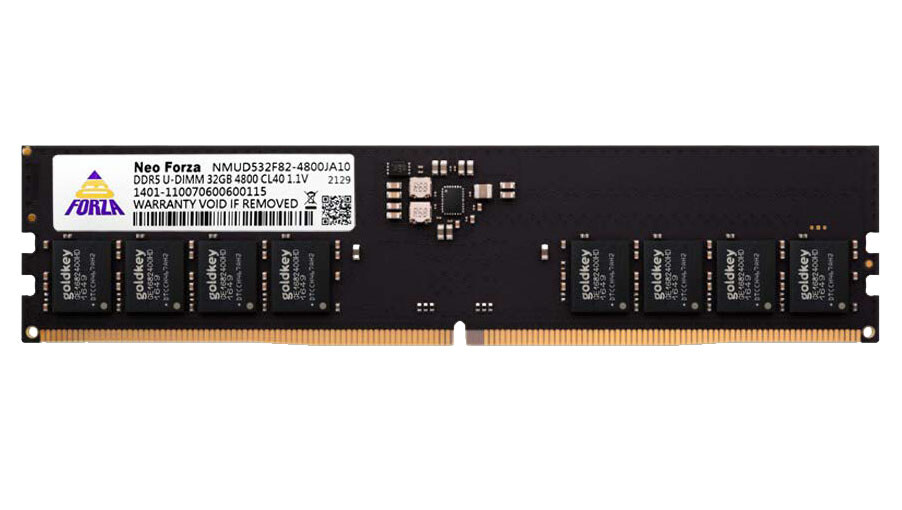
PC enthusiast memory and storage brand Neo Forza, detailed its plans to roll out DDR5 memory for desktop PCs. It also sheds light on some of the possible combinations of memory speed and density under development. Q4 2021 is when the company's first DDR5 memory modules will debut. These will be basic, bare-PCB modules with specs and speeds closest to JEDEC's. The company will start out with DDR5-4800 MHz modules, with densities of 8 GB, 16 GB, and 32 GB. The starting CAS latency on these things appears to be 40T. From what we gather, 16 GB will be the new single-rank standard memory size, 8 GB single-rank will be a low-cost option; while 32 GB could be commonly dual-rank, rarely single-. These modules will likely be co-branded with authorized DRAM IC providers.

Vanilla DDR5-4800 modules are only the beginning. Neo Forza plans to develop gaming-grade memory modules, complete with chunky heatspreaders, RGB LED illumination, and more importantly, higher clock speeds. The company expects that as DDR5 matures as a standard, speeds of DDR5-6400, DDR5-7200, and DDR5-8600, will become common for the enthusiast segment. The higher frequency modules will likely be 16 GB single-rank. As densities ramp up, 64 GB dual-rank modules will be possible, and Neo Forza expects to ship 128 GB (2x 64 GB) dual-channel kits, or scale out to 4-channel thru 8-channel HEDT platforms.

Corsair Postulates That DDR5 Memory Runs Hotter

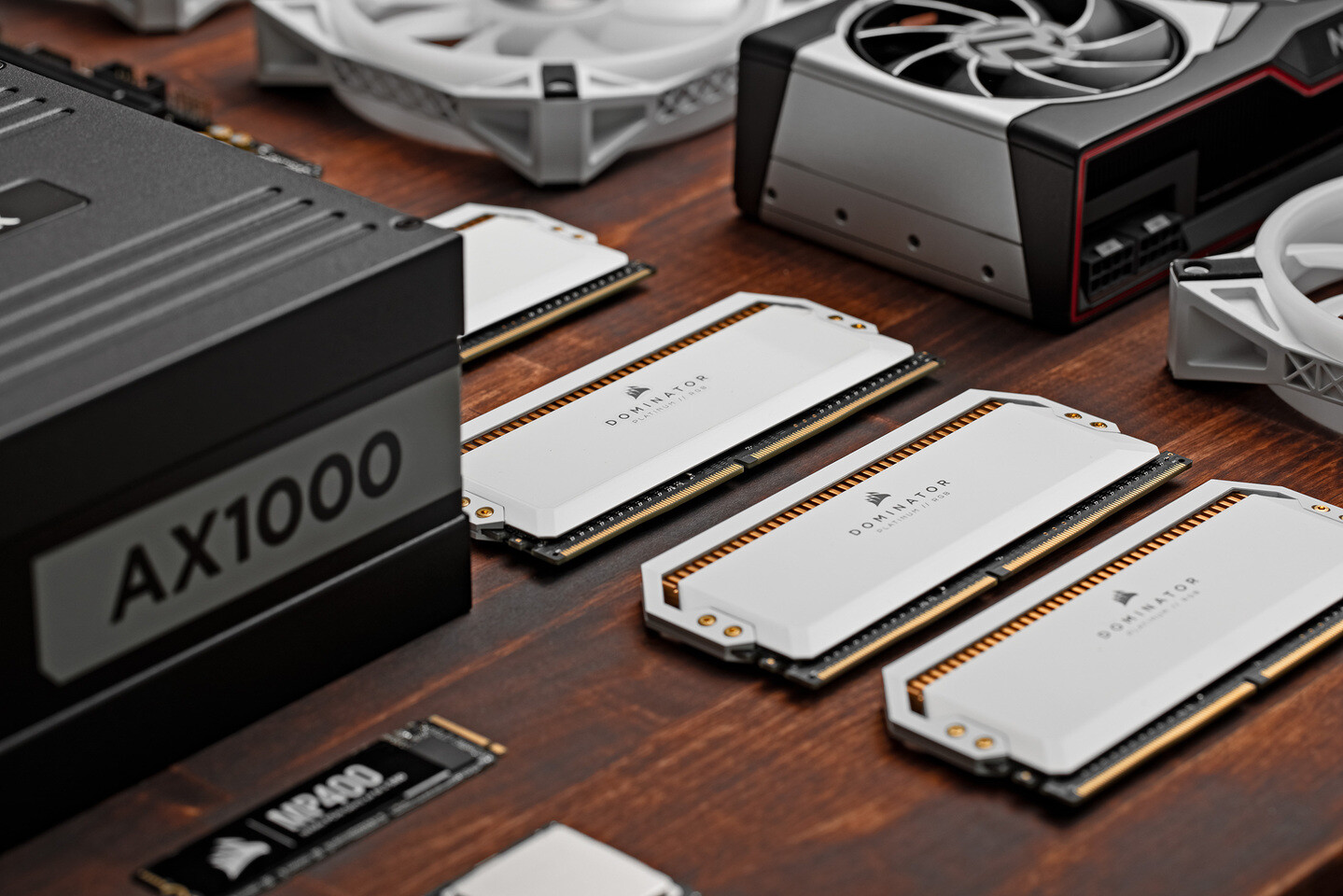
Corsair DIY Marketing Director, George Makris recently confirmed in a recent video that DDR5 memory could "conceivably could run much hotter than DDR4" due to voltage regulation being moved to the memory modules from the motherboard. This was reiterated by Corsair Memory Product Manager, Matt Woithe, who notes that they are prepared to handle this increased heat in Corsair DDR5 modules using their Dual-path Heat Xchange (DHX) technology. The next generation of memory also mandates the inclusion of on-die EEC which while not confirmed by Corsair will also add to the power budget of the modules. Corsair is expecting to release their first DDR5 memory modules towards the end of this year which will coincide with the launch of Intel's 12th Generation Alder Lake processors. AMD fans will need to wait until 2022 with the launch of Zen 4 to take advantage of the new DDR5 memory modules.

ADATA Unveils a New Lineup of Xtreme Innovations

ADATA Technology, a manufacturer of high-performance DRAM modules, NAND Flash products, mobile accessories, gaming products, electric power trains, and industrial solutions, today unveiled a host of new products at its "Xtreme Innovation" online product launch event. The online event showcased the latest products and solutions from both ADATA and XPG, including solid state drives, DRAM modules, memory cards, and PC components, and systems. The event was hosted by XPG's own Mera and coincides with ADATA's twentieth anniversary celebrations taking place throughout 2021.

ADATA also unveiled its next-generation DDR5 memory module, which sports frequencies of 8400 MT/s, up to 163% faster than DDR4. This performance boost will allow files and tools to load faster for seamless multitasking and enhanced creative productivity. What's more, the module will operate at 1.1 V for improved power efficiency and comes with capacities of up to 64 GB.

TEAMGROUP Announces Industrial Wide Temperature DDR5 UDIMM and SODIMM

As a global memory leader with a long-term focus on industrial applications, TEAMGROUP has recognized the tremendous processing needs of the HPC market. To meet the demand for industrial memory can handle sustained high-speed data transmission with low latency, TEAMGROUP has utilized the in-house developed and patent-protected TRUST+ wide temperature technology to provide customers with high stability, durability and wide temperature industrial memory.

Applications for the first DDR5 UDIMM and SODIMM industrial wide temperature memory products include usage in edge computing, Internet of Vehicles, servers, AI, and embedded systems. In response to the stringent demands of efficient computing in the industrial control market, TEAMGROUP has been ready to launch the standard temperature DDR5 IST (TC: 0~85℃) memory series and the wide temperature DDR5 IWT (TA: -40~85℃) memory series. The latter features exclusive "Graphene-coated copper heatsink Technology" (U.S. Utility Patent US 11,051,392 B2), which helps maintain a case temperature (TC) of 85~86℃ under an ambient temperature (TA) of 85℃, ensuring low-latency high-speed computing. Without the heatsink, case temperatures (TC) can reach up to 89~90℃ or more, impairing the high performance of DDR5 and significantly reducing the life span of ICs.

Sudden Drop in Cryptocurrency Prices Hurts Graphics DRAM Market in 3Q21, Says TrendForce

The stay-at-home economy remains robust due to the ongoing COVID-19 pandemic, so the sales of gaming products such as game consoles and the demand for related components are being kept at a decent level, according to TrendForce's latest investigations. However, the values of cryptocurrencies have plummeted in the past two months because of active interventions from many governments, with the graphics DRAM market entering into a bearish turn in 3Q21 as a result. While graphics DRAM prices in the spot market will likely show the most severe fluctuations, contract prices of graphics DRAM are expected to increase by 10-15% QoQ in 3Q21 since DRAM suppliers still prioritize the production of server DRAM over other product categories, and the vast majority of graphics DRAM supply is still cornered by major purchasers.

It should be pointed out that, given the highly volatile nature of the graphics DRAM market, it is relatively normal for graphics DRAM prices to reverse course or undergo a more drastic fluctuation compared with other mainstream DRAM products. As such, should the cryptocurrency market remain bearish, and manufacturers of smartphones or PCs reduce their upcoming production volumes in light of the ongoing pandemic and component supply issues, graphics DRAM prices are unlikely to experience further increase in 4Q21. Instead, TrendForce expects prices in 4Q21 to largely hold flat compared to the third quarter.

Samsung Electronics Announces Second Quarter 2021 Results

Samsung Electronics today reported financial results for the second quarter ended June 30, 2021. Total consolidated revenue was KRW 63.67 trillion, a 20% increase from the previous year and a record for the second quarter. Operating profit increased 34% from the previous quarter to KRW 12.57 trillion as market conditions improved in the memory market, operations normalized at the Austin foundry fab, and as effective global supply chain management (SCM) helped maintain solid profitability for the finished product businesses.

The Semiconductor business saw a significant improvement in earnings as memory shipments exceeded previous guidance and price increases were higher than expected, while the Company strengthened its cost competitiveness. For the Display Panel Business, a one-off gain and an increase in overall prices boosted profits.

Intel Alder Lake-S to See Limited Launch of Enthusiast SKUs in 2021, Other Models Arrive 2022

Intel's 12th Generation Core "Alder Lake-S" desktop processor will see a limited launch in 2021, according to an Igor's Lab report. This will be restricted to PC enthusiast-relevant SKUs bearing the -K and -KF brand extensions, and compatible Socket LGA1700 motherboards based only on the top Z690 (Z590-successor) chipset. The series will ramp up to other (locked) models, along with more affordable chipset models (B560-successor), only by Q1-2022, on the sidelines of the 2022 International CES. Sources tell Igor's Lab that these select few models could be launched between October 25 and November 19.

Intel is expected to make several technological leaps over AMD with "Alder Lake-S." To begin with, it has the first hybrid core technology that combines high-performance "Golden Cove" cores with high-efficiency "Gracemont" cores, in a heterogenous multi-core setup comparable to Arm big.LITTLE. Next up, it is expected to debut the PCI-Express Gen 5 I/O, and DDR5 memory support. While PCIe 5.0 GPUs remain under development, the first devices to take advantage of it are expected to be NVMe SSDs, benefiting from 128 Gbps bandwidth (Gen 5 x4). It is also learned that the next-gen motherboards will retain the current ATX 24-pin + EPS power interface, and Intel won't force adoption of ATX12VO. The new ATX12VO standard increases motherboard costs as it essentially transfers DC-to-DC switching components from the PSU to the motherboard (12 V to 5 V; 12 V to 3.3 V, etc), and adds output connectors.

AMD Zen 4 and RDNA3 Confirmed for 2022, Zen 3 Refresh

AMD CEO Dr Lisa Su, in the company's Q2-2021 financial results call, confirmed that the company is on-track to launch the Zen 4 CPU microarchitecture and RDNA3 graphics architecture, in 2022. Zen 4 would herald the first major desktop platform change since the original Zen architecture, with the introduction of a new CPU socket, and support for DDR5 memory. The RDNA3 graphics architecture, meanwhile, is expected to nearly triple SIMD resources over the previous generation, and introduce even more fixed-function hardware for raytracing.

In the meantime, AMD is preparing a counter to Intel's 12th Gen Core "Alder Lake-S" processor, in the form of Zen 3 with 3D Vertical Cache, which is also being referred to as the Zen 3+ architecture. These processors feature additional last-level cache, and the company claims a 15% gaming performance uplift, which should help it close the gaming performance gap with Intel, and win on sheer core-count of its big cores. It remains to be seen if Zen 3+ remains on Socket AM4 or if it debuts AM5, as AMD will be under pressure to match "Alder Lake" in platform I/O, which includes DDR5. Dr Su also confirmed that AMD has started shipping the Instinct MI200 "Aldebaran" compute accelerator based on the CDNA2 architecture. AMD's first MCM GPU with two logic dies, "Aldebaran" takes the fight to NVIDIA's top A100 series compute accelerators, and has already scored wins with ongoing HPC/supercomputing projects.

SK hynix Reports Second Quarter 2021 Results

SK hynix Inc. today announced financial results for its second quarter 2021 ended on June 30, 2021. The consolidated revenue of the second quarter 2021 was 10.322 trillion won, while the operating profit amounted to 2.695 trillion won and the net income 1.988 trillion won. Operating margin for the quarter was 26% and net margin was 19%.

It was the first time in three years that SK hynix recorded the quarterly revenue of more than 10 trillion won as the memory market condition, which began to recover earlier this year, continued to improve in the second quarter. The company last logged more than 10 trillion won in the third quarter of 2018 when the memory market was booming.

Intel Core i9-12900K Qualification Samples Black-marketed for Roughly $1100

Qualification samples (QS) of Intel's upcoming Core i9-12900K "Alder Lake-S" desktop processors just hit the black market for the equivalent of roughly USD $1,064 to $1,157 (6,500 to 7,500 RMB), in China. The processor maxes out the 10 nm silicon, offering 8 "Golden Cove" P-cores, and 8 "Gracemont" E-cores, along with 30 MB of L3 cache, a dual-channel DDR5 memory interface, in a hybrid processor setup. You can bag yourself this QS, but you'll need to find a compatible motherboard. "Alder Lake-S" debuts the new LGA1700 socket, Intel's first major change in the physical dimensions of its mainstream-desktop CPU socket since 2009, mandating a cooler update.

Xilinx Versal HBM Series with Integrated High Bandwidth Memory Tackles Big Data Compute Challenges in the Network and Cloud

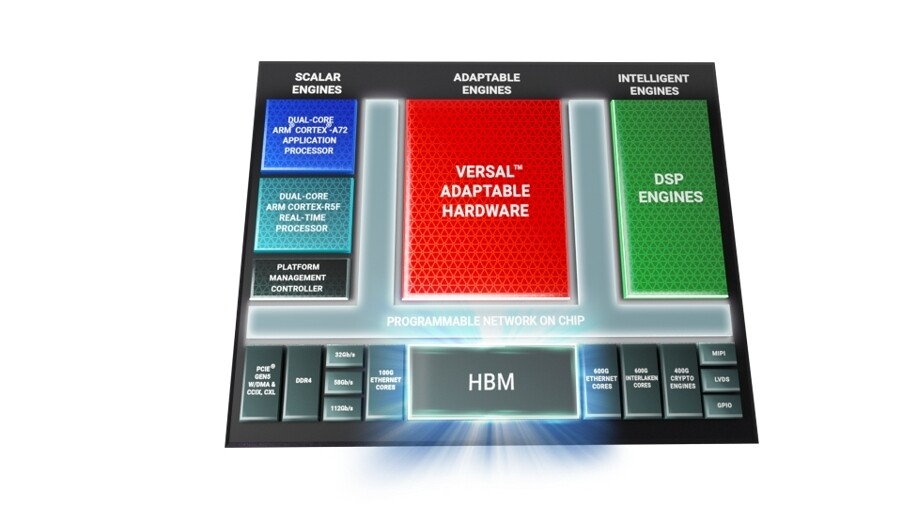
Xilinx, Inc., the leader in adaptive computing, today introduced the Versal HBM adaptive compute acceleration platform (ACAP), the newest series in the Versal portfolio. The Versal HBM series enables the convergence of fast memory, secure connectivity, and adaptable compute in a single platform. Versal HBM ACAPs integrate the most advanced HBM2E DRAM, providing 820 GB/s of throughput and 32 GB of capacity for 8X more memory bandwidth and 63% lower power than DDR5 implementations. The Versal HBM series is architected to keep up with the higher memory needs of the most compute intensive, memory bound applications for data center, wired networking, test and measurement, and aerospace and defense.

"Many real-time, high-performance applications are critically bottlenecked by memory bandwidth and operate at the edge of their power and thermal limits," said Sumit Shah, senior director, Product Management and Marketing at Xilinx. "The Versal HBM series eliminates those bottlenecks to provide our customers with a solution that delivers significantly higher performance and reduced system power, latency, form factor, and total cost of ownership for data center and network operators."

PassMark Software Previews DDR5 Support in MemTest86

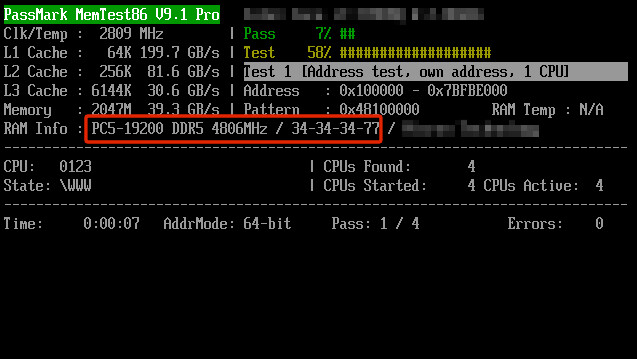
If you even came across a PC system that had a problem with its Ram, there are high chances that you have used PassMark Software MemTest86 software for testing and revealing DRAM errors. The software uses a chain of algorithms, including SIMD and row hammer tests, to try to test if the memory is in a good shape or it has some problems. PC builders have used the software for years to detect and isolate any potential Ram issues that occurred. Today, makers of MemTest86, PassMark Software, previewed initial support for DDR5 memory in their internal software builds. That means that by the time DDR5 memory hits the consumer market, we will have software for testing any possible defective Ram.
Return to Keyword Browsing
Nov 12th, 2026 21:51 PST change timezone

New Forum Posts

Popular Reviews

TPU on YouTube

Controversial News Posts