News Posts matching #DLSS 5

Return to Keyword Browsing

New DLSS 5 Swapper Tool Brings Neural Rendering to Games NVIDIA Never Supported

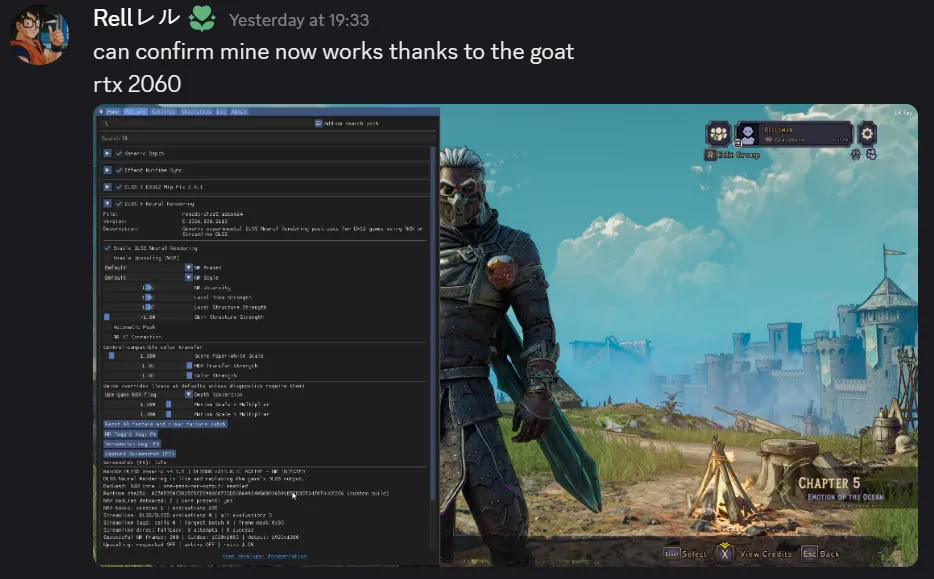
A new tool called DLSS 5 Swapper, published on GitHub by developer rakanki911, automates installing DLSS 5's Neural Rendering into games, including ones that never officially got support for it. Users can drag and drop a game into the app, or let it scan the drive for installed titles on its own. For games that already ship with DLSS, the swap is simple. For everything else, the tool relies on DLSS5-Feeder, a community mod that emulates the DLSS calls required to trigger Neural Rendering, paired with ReShade for the depth buffer and motion data that DLSS needs to work. That combination reportedly runs across titles from DirectX 9 through DirectX 12, and even on a handful of emulators like PCSX2, Dolphin, and Xenia.

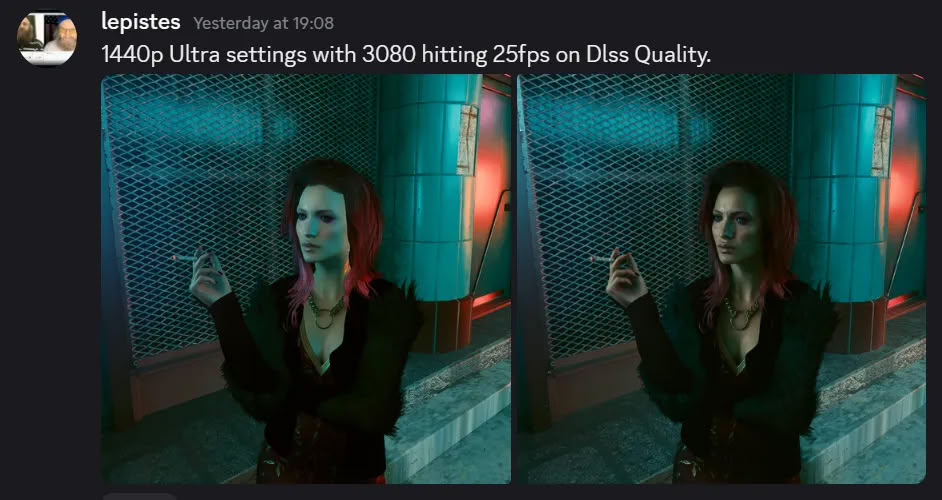
Perhaps even more interestingly, the app also extends DLSS 5 support to RTX 20-series and RTX 30-series graphics cards, sidestepping NVIDIA's RTX 50-series requirement. This tool builds on the same leaked DLSS 5 files that surfaced in NBA 2K27's pre-launch build, files modders have spent weeks getting to run on older GPUs and non-DLSS games. DLSS 5 Swapper mostly bundles that scattered work into a single app; however, since it's unofficial and has no ties to NVIDIA, it's important to verify the download source before installing anything. Given how far these mods have already spread, this tool is likely to become the most popular way for people to try Neural Rendering, at least until NVIDIA offers something similar itself.


Modders Get DLSS 5 Working on AMD Graphics Cards, Though Performance is Rough

A modder has ported DLSS 5 Neural Rendering onto an AMD GPU for the first time, less than a week after the tech started spreading to older NVIDIA cards. Developer danielblnc released a tool called DLSS-NR for AMD, which allows AMD's RDNA 4 GPUs to run NVIDIA's neural rendering model in supported games. The setup works by dropping a small installer and NVIDIA's own nvngx_dlssnr.dll file into a game's bin folder, then toggling neural rendering through an FSR 3 or FSR 4 profile. It has been tested on Cyberpunk 2077 and GTA V: Enhanced so far, with older AMD GPUs reportedly not supported. Anti-cheat games will block the DLL entirely, so this is single-player territory only for now.

According to tests by YouTuber Ancient Gameplays, performance is still the bottleneck. Early builds tanked Cyberpunk 2077 from over 80 FPS down to around 11-12 FPS at 1080p on the Radeon RX 9070 XT. The modder's latest Alpha v0.2.7 update has clawed back roughly 12%, pushing it to about 30 FPS, still a steep cost for a card that handles native rendering well. The reason this works at all is quite straightforward. DLSS 5 runs on FP8 math, and AMD's RDNA 4 architecture, which powers the RX 9000 series, has native FP8 support, just like NVIDIA's RTX 50-series and 40-series cards.

Ball Over Everything in NBA 2K27 Now Available Worldwide

Today, 2K announced that NBA 2K27, the latest iteration of the NBA video game franchise developed by Visual Concepts and published by 2K, is now available worldwide on PlayStation 5 (PS5), XBOX Series X|S, PC via Steam and Nintendo Switch 2. NBA 2K27 arrives with overhauled gameplay and new depth across every mode, from the court to The City to the front office.
Greg Thomas, President at Visual Concepts"With overhauled, balanced gameplay at its core, this year's release introduces a depth of content and features to satisfy every kind of player," "From the new MyCAREER Eras mode and the first Co-Ed City in franchise history, to a 100-year MyNBA Legacy and Player XP on every MyTEAM card, every aspect of NBA 2K27 has been built to give players more ways to compete."

NVIDIA Confirms DLSS 5 for GeForce RTX 40-Series is Coming

NVIDIA has officially confirmed that the company is working to bring DLSS 5 neural rendering to the previous-generation GeForce RTX 40-Series "Ada Lovelace." Previously, it was believed that DLSS 5 technology would be exclusive to the latest GeForce RTX 50-Series "Blackwell" and future models, without looking back. As NVIDIA continues to focus on hardware-software cooptimization, we now have official confirmation that the GeForce RTX 40-Series will also receive a DLSS 5 port. However, the launch of DLSS 5 on the GeForce RTX 40-Series is secondary, as NVIDIA is still preparing and optimizing performance for the GeForce RTX 50-Series to ensure that the model won't significantly impact the final game performance, despite reportedly being very compute-heavy.
NVIDIADLSS 5 is our most computationally demanding model to date. Since we initially announced it in March, we've achieved a 5X performance gain and there's more to come. Our current focus is on optimizing performance for the GeForce RTX 50 Series with model updates expected later this fall. Once RTX 50 Series performance is more fully tuned, we plan to work on expanding official support to the GeForce RTX 40 Series.

RPCS3 Team Won't Touch Leaked DLSS 5, Calls the Output "Slop"

The RPCS3 developers have made their stance on DLSS 5 pretty clear after fans started poking around with a leaked version of the tool on the PS3 emulator. Responding to questions about whether official support was coming, the team posted on X that some users are already testing a leaked DLSS 5 DLL on the renderer, but that they've seen what it produces and want no part of it. Modders are already testing DLSS 5 on emulators such as PCSX2, but the RPCS3 team apparently wants its emulator to avoid it completely. Here's what they posted:
"Whilst the gaming industry pushes more upscalers and frame generation to hallucinate games and hide their lack of optimization, we do not ship any of that slop."

Early DLSS 5 Testing Suggests the RTX 5090's Single Power Connector Might Be the Bottleneck

Community testing of leaked DLSS 5 builds suggests the tech may already be hitting a wall on NVIDIA's own flagship GPU. Tom's Hardware ran the neural rendering model through Cyberpunk 2077, Hogwarts Legacy, and Control on an RTX 5090 Founders Edition, as well as an MSI RTX 5090 Lightning Z. Surprisingly, the results point to power delivery as the potential bottleneck rather than compute horsepower. The test used a community Optiscaler injection method built on the leaked DLSS 5 DLL, not NVIDIA's official Streamline path, though the cost lined up closely with NVIDIA's own published 8 ms-per-frame figure.

The Founders Edition, limited to a single 12V-2x6 connector, dropped framerates by 42 to 49 percent with DLSS 5 enabled and consistently hit its 575 W power limit while doing so. The MSI Lightning Z, with a dual-connector setup and a 1000 W limit, took a smaller hit and held better 1% lows, while pulling far more power. In Hogwarts Legacy, it jumped from 480 W to 720 W with neural rendering active, which is a sizeable 50% increase. That leaves single-connector RTX 5090 cards apparently underprovisioned for a feature this demanding, at least unofficially.

NVIDIA DLSS 5 Launches in NBA 2K27 September 3rd, DLSS Comes to STAR WARS Zero Company, Onimusha: Way of the Sword & The Blood of Dawnwalker

Each week, new games and apps integrating NVIDIA DLSS, NVIDIA Reflex, and advanced ray-traced effects are released or announced, delivering the definitive PC experience for GeForce RTX players. In the last few days, STAR WARS Zero Company and Aliens: Fireteam Elite 2 have launched with DLSS. Crimson Moon launches today, with The Blood of Dawnwalker and Onimusha: Way of the Sword launching this Thursday, along with NBA 2K27, which debuts DLSS 5 with 3D-Guided Neural Rendering.

NC has announced LIKE OR DIE, a new team-based FPS launching next year with DLSS 4.5. New RTX trailers give gamers fresh looks at AION 2, ANANTA, CINDER CITY, CONTROL Resonant, Gears of War: E-Day, SPINE - This Is Gun Fu, and Tides of Annihilation. And Beast of Reincarnation and Breathedge 2 are available now with DLSS.

[Editor's note: You can read our in-depth technical preview of the NVIDIA DLSS 5 here]

DLSS 5 No Longer Needs Two RTX 5090s, NVIDIA Says Model is 5x Faster Since March

NVIDIA has shared its first-party performance numbers for DLSS 5, the neural rendering feature arriving September 3 in NBA 2K27. The company says the model is now five times faster than when it was first shown at GTC in March, which required two RTX 5090 GPUs just to run. It now works on a single card across the whole RTX 50-series lineup, from the RTX 5060 up to the RTX 5090. That is a commendable improvement in a span of just 6 months, but DLSS 5 will still incur a significant performance penalty compared to native rendering, contrary to what we have come to expect from DLSS.

In NBA 2K27, running at 4K with the Ultra preset, ray tracing, and Multi Frame Generation, NVIDIA's own figures put the RTX 5090 at roughly 370 FPS with DLSS 5 on, and the RTX 5080 around 233 FPS. At 1440p, the RTX 5090 gets close to 600 FPS, while even the RTX 5070 stays above 260 FPS. NVIDIA also shared some 1080p benchmarks with the RTX 5090 hitting nearly 800 FPS, but those are not relevant to how these cards will be used in the real world. NVIDIA did not provide performance figures without DLSS 5 enabled.

DLSS 5 Officially Goes Live September 3 With NBA 2K27, Exclusive to RTX 50-series "Blackwell" GPUs

NVIDIA has confirmed that DLSS 5 will officially launch on September 3 alongside NBA 2K27, and it will remain exclusive to GeForce RTX 50-series GPUs. When asked directly at a Gamescom technical briefing whether older cards would ever receive support, NVIDIA gave a flat answer: "It's RTX 50-series only." The model runs on Blackwell's fifth-generation Tensor cores, and there's no fallback path for RTX 40-series or anything older. That confirmation lines up with what modders had already found by digging through the leaked DLSS 5 DLL that surfaced through an early NBA 2K27 build last week, which contained executable code gated specifically to Blackwell hardware.

According to NVIDIA, DLSS 5 is its largest and most complex model to date, and the priority has been optimizing it specifically for RTX 50 hardware rather than stretching it across older Tensor core generations. However, that didn't stop modders from finding workarounds for RTX 40-series, 30-series, and even 20-series GPUs. After the DLSS 5 DLL leaked through an early NBA 2K27 build, a modder patched around the CUDA binaries and got Neural Rendering running on an RTX 4090, with performance dropping by roughly 36 to 39 percent in Control. That's still a significant hit, but nowhere near the collapse seen on RTX 30-series cards, which lack native FP8 support and saw frame rates fall off a cliff in the same tests. Given that the RTX 40-series already has native FP8 acceleration built in, official support for it seems like it could've been on the table, even as a lower-tier experience

Leaked DLSS 5 is Being Tested on RTX 20-series "Turing" GPUs, Now Runs on Emulators and Old DirectX Titles

The leaked DLSS 5 DLL keeps finding new homes, and support has now spread to RTX 20-series "Turing" GPUs. That architecture is three whole generations behind the NVIDIA-recommended "Blackwell," and modders are showing no signs of stopping either. Developer ShortFuse has released new DLSS-NR builds for older RTX hardware, including one described as a "speed boost" build for RTX 20-series. The results are still a mixed bag, however. Some games run, while others crash or fail to initialize. Red Dead Redemption reportedly worked, while Red Dead Redemption 2 did not, and Hogwarts Legacy got stuck in a standby state instead of activating the feature. GTA 5 ran for about ten seconds before the display signal dropped out entirely.

Moreover, X user @DystopianSuns says the community now has DLSS 5 running on RTX 20 and RTX 30 GPUs using an FP16 implementation. This is a change from the FP8 approach that previously tanked performance on Ampere cards. FP16 should suit Turing and Ampere better, since neither generation accelerates FP8 the way Blackwell does. With this approach, users reported respectable performance in many titles on the RenoDX Discord using RTX 30-series cards. The same X user apparently got Manhunt running through the PS2 emulator PCSX2 with DLSS 5 enabled, and other testers report the mod working in older titles built on DirectX 9 and DirectX 11, well outside the APIs NVIDIA has confirmed for the feature.

Warhorse Developer Defends DLSS 5, Says It's Not an AI Slop Filter

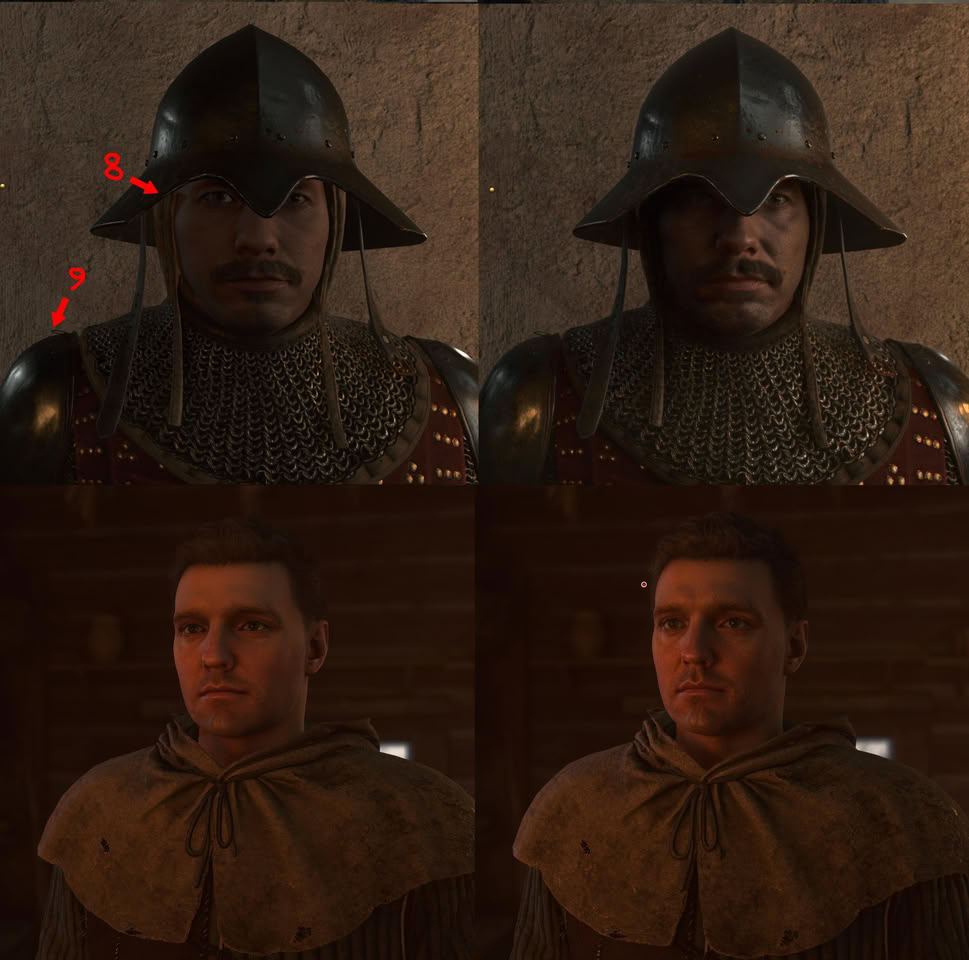
Kingdom Come: Deliverance 2 director Daniel Vávra has praised DLSS 5 again, saying the tech now looks closer to how his team originally envisioned the game's lighting and character faces. Speaking on X, he said character models that once looked flat in-engine finally read the way artists intended, closing the gap between how faces looked on artists' workstations and what actually shipped in the game.

Vávra singled out shadow rendering as a big win. He said Warhorse struggled for years to get shadows from hats, hoods, helmets, and small props like buckles and pouches to render on characters, calling it a persistent frustration during development. DLSS 5 apparently solves this, and Vávra called it an excellent upgrade to the character lighting model, though he noted it roughly halves frame rate in its current form. He also sees potential in DLSS 5 when applied to older games:
"It's not the infamous AI slop we saw couple months ago. I see huge potential here for the future, and it's absolutely great that even older games lighting could be improved this way."

Leaked DLSS 5 Reaches RTX 30 Series "Ampere" GPUs, But Performance Falls Apart

DLSS 5 leaked through an early-access build of NBA 2K27 last week, and since then, the modding community has been hard at work patching it into all sorts of different games. Modders on the RenoDX Discord have now pushed it into RTX 30-series "Ampere" GPUs, despite this generation having no official support for DLSS 5. The results, however, are less than stellar. On the RenoDX Discord, a user with an RTX 3070 laptop GPU running Kingdom Come: Deliverance II saw render latency jump from roughly 29 ms to over 3,300 ms with Neural Rendering enabled, resulting in well under 1 FPS.

Over on X, user @Flourek got it running on an RTX 3080, and it fared little better. It too, however, dropped from around 130 FPS to just 4 FPS in Deep Rock Galactic, while RTX 3050 and RTX 3060 Ti cards reportedly hovered near 1 FPS across Control, FiveM, and Kingdom Come: Deliverance II. Just a couple of days ago, modders got DLSS 5 running on RTX 40-series "Ada Lovelace" cards, and performance held up noticeably better. As we noted in our DLSS-NR deep dive, Ampere lacks native FP8 support, which the leaked DLSS 5 model apparently relies on, so the steep drop isn't surprising. Officially, DLSS 5 only supports RTX 50-series "Blackwell" GPUs, and there's no word about whether NVIDIA even plans to add support for RTX 40-series cards, let alone older ones.

DLSS 5 Patched to Work on RTX 4000 "Ada Lovelace" GPUs Despite No Official Support

The modding community has been hard at work ever since the untimely release of DLSS-NR, a precursor to DLSS 5. Now, modders have gotten NVIDIA's leaked DLSS 5 tool working on RTX 4000 series cards, even though the tool was only built for RTX 5000 Blackwell hardware. The DLL leaked earlier this week via an early-access build of NBA 2K27, and people on the RenoDX Discord quickly got it running in other games using ReShade and RenoDX.

As we noted in our DLSS-NR breakdown, the AI model runs on FP8, which Ada Lovelace GPUs support just fine, but the compiled binaries inside the file only targeted Blackwell's sm_120 architecture, with nothing built for Ampere or Ada. A modder going by "Uncle Burrito" has apparently fixed that by hunting down the incompatible binaries and swapping in ones built for Ada. Tom's Hardware confirmed the patch works on an RTX 4080, and said other developers in the same Discord are working on their own versions of the fix.

DLSS 5 Gets Modded Into Skyrim With Dramatic Changes to Lighting and Character Faces

NVIDIA announced DLSS 5 back in March to a decidedly mixed reaction, as many gamers did not particularly like the modifications it made to character faces. While it is not officially out yet, an early-access build of NBA 2K27 was found to contain a DLSS Neural Rendering DLL, believed to be a precursor to DLSS 5. As expected, modders have been quick to start implementing that Neural Rendering technique in games, and what better game to add a new mod to than The Elder Scrolls V: Skyrim.

YouTuber PureDark implemented the DLSS-NR mod into Skyrim and recorded the results. Skyrim, now 15 years old, has some pretty outdated character models, but this early DLSS 5 implementation really brought those faces into 2026. In these side-by-side shots, a dramatic difference is evident between the two sets of character faces, with superior detailing, lighting, shadows, and even facial structure. The overall lighting behavior of the game is vastly improved too, and it almost looks path-traced in some scenes.

NVIDIA DLSS 5 Neural Rendering DLL Leak Hints at Nearby Launch

NVIDIA's DLSS 5 neural rendering technology might be one of the most controversial announcements, as the gaming community has been quite vocal about their opinions on the new rendering technique. However, the launch of DLSS 5 is expected this fall, and we are already seeing the first DLSS 5 DLL files leaked through games, as confirmed by NBA 2K27 early access, which includes the new DLSS-NR file. The game is now in early access and is already shipping with DLSS Neural Rendering, essentially DLSS 5. This comes as a 158 MB package, which is substantially larger than any previous DLSS DLL file, indicating that NVIDIA has indeed packed a generative model inside the game, with only a tiny footprint considering that a whole generative AI model is running locally on the GPU.

However, this is about twice the size of the current official DLSS 4.5 Ray Reconstruction DLL file, which measures 72 MB. While size is not the only comparable quality of this DLL, we can assume that NVIDIA has included a massive feature set given the added storage space. If users recall, NVIDIA once again showcased its DLSS 5 neural rendering at the SIGGRAPH 2026 event, highlighting that one of the challenges faced with DLSS 5 was maintaining visual identity, object semantics, and character poses, along with output lighting semantics, motion, and art direction. Within these strict parameters, DLSS 5 applies material photorealism to enhance visual appeal. There has been some progress recently, but the fall launch is expected to shed more light on the entire situation and integration.

NVIDIA Shows DLSS 5 Progress and Technical Details at SIGGRAPH 2026

NVIDIA has once again showcased its DLSS 5 neural rendering at the SIGGRAPH 2026 event, currently taking place in Los Angeles. Despite the initial negative reaction from gamers, NVIDIA is continuing to develop the technology, offering improvements and a new demonstration of how DLSS 5 is intended to function. One of the most interesting aspects is that game developers can choose from three DLSS 5 models, each providing a different level of structural intensity, global illumination, texture detail, and more. These models, labeled Model A, Model B, and Model C, can be tailored to specific scenes or character needs, allowing developers to mix and match according to their requirements. Each model carries a different parameter count, meaning that some are more compute and memory-intensive than others. However, they generally fit and run fine on a single GPU without any problems.

Another noteworthy feature is the preservation of artistic intent, which was heavily criticized in the original DLSS 5 demo. Each individual object, scene, and game setting can be customized according to the developer's vision. This is one of the challenges NVIDIA faced with DLSS 5, as maintaining visual identity, object semantics, and character poses, along with output lighting semantics, motion, and art direction, is crucial. Within these strict parameters, DLSS 5 applies material photorealism to enhance visual appeal. Below you can even see the customization of the applied model, where there are adjustable parameters that can be done per scene and per character.

NVIDIA Announces RTX Spark, a Supercomputer-grade Processor for Windows PCs with Agentic User Interfaces

NVIDIA today announced what is arguably its most important product of the year, one that—if done right—could help it break into the consumer PC processor market. NVIDIA envisions a change in the PC user interface paradigm. For over 40 years, the PC human interface contract involved you interacting with software through their toolbars, dialog boxes, and work areas, to get work done. NVIDIA sees AI agents fundamentally change the way consumers interact with PCs. Imagine you opened up Photoshop, and instead of manually running a complex workflow, simply prompted it your agent, and it did the rest. NVIDIA thinks the processor of the future should be able to not just run your applications, perform its core function as a general purpose CPU, but also run large AI models and agents entirely locally, while also fulfilling consumer-segment needs as an entertainment and gaming powerhouse. Enter, the NVIDIA RTX Spark.

Latest NVIDIA 610.47 WHQL Packs DLSS 5 Neural Rendering Profile Settings

Amid news of NVIDIA retiring the legacy Win32 Control Panel application for its graphics driver with its latest GeForce 610.47 WHQL Game Ready driver, an important new development flew under the radar. The driver apparently introduces profile settings related to DLSS Neural Rendering that's part of the next-generation DLSS 5. Warkratos, over at Guru3D Forums discovered three new DLSS NR (Neural Rendering) and DLSS NR SL (Neural Rendering Streamlined) settings in Profile Inspector—"Enable DLSS NR Override," "Enable DLSS NR SL Override," and "Override DLSS NR Presets."

NVIDIA is preparing to launch DLSS 5 and Neural Rendering in Fall 2026, with some of the first titles implementing it being AION 2, Assassin's Creed Shadows, Black State, CINDER CITY, Delta Force, Hogwarts Legacy, Justice, NARAKA BLADEPOINT, NTE Neverness to Everness, Phantom Blade Zero, Resident Evil Requiem, Sea of Remnants, Starfield, The Elder Scrolls IV Oblivion Remastered and Where Winds Meet. The Neural Rendering feature is allegedly exclusive to GeForce RTX 50-series "Blackwell" GPUs, which feature hardware for Neural Rendering.

DLSS 5: Gamers Prefer Original Visuals, Many Await Real-World Results

When NVIDIA announced its Deep Learning Super Sampling (DLSS) 5 technology, which the company describes as the first real-time neural rendering technology to bring photorealism to game textures, the response from gamers was not entirely positive. Many were unhappy with the results, and the backlash grew online. That's why we asked the TechPowerUp readers in a poll to share their opinions on the technology and found a consistent theme in the results. After collecting nearly 20,000 votes, a majority of 58% of gamers expressed that AI should not alter games at all. They prefer to keep their favorite titles original and intact, as envisioned by the original game studio, without any changes to lighting or photorealism. They want no alterations, meaning AI should not change character faces, apply realistic material rendering, or add any other modifications.

Interestingly, the second-largest group is still undecided, waiting to see real-world results in their favorite AAA titles. When DLSS 5 is implemented in major releases, about 28% of gamers who have seen NVIDIA's DLSS 5 demos believe that the final release will shape their opinion, whether positive or negative. This indicates that the technology has not yet fully resonated with the gaming community, who require further convincing. A smaller segment, 8.1% of those polled, believes that DLSS 5-enabled titles actually look better than native rendering, showing some optimism that the technology can improve visuals. Finally, about 6.4% of respondents are willing to accept visual changes if they lead to a significant FPS boost. As with DLSS and other upscaling methods, gamers now expect to see a substantial performance increase from neural rendering, and the situation appears similar with DLSS 5.

Capcom Responds to Resident Evil Requiem DLSS 5 Backlash: "We Got the Design Right"

When NVIDIA first revealed DLSS 5 and its neural rendering, a lot of the online backlash that was leveled at the feature centered around Capcom's Resident Evil character, Grace, and how DLSS 5 changed her facial features. Now, in a recent interview with Eurogamer, Koshi Nakanishi and Masato Kumzawa, the game's director and producer, have responded to the DLSS 5 outrage and to the game's overall reception at and since launch. Addressing the DLSS 5 debacle, Kumzawa took the backlash as a positive indication, commenting that "the fact a lot of players commented they really liked the original design of Grace and didn't want to see it changed was a positive—it meant we got the design right," and that it was an indication that "Grace quickly established herself as a fan favorite." The Nakanishi and Kumzawa did not comment on previous allegations that Capcom had not involved game developers or even inform them of the potential changes to the character designs ahead of time.

[Editor's note: Our in-depth review of Resident Evil Requiem can be found here]

Just 16 days after Resident Evil Requiem launched, it had already sold over 6 million units, making it the fastest-selling Resident Evil game to date. Commenting on the overall success of the game, the pair said that "we were very happy to see the reaction of players around the world after the game launched. In particular, because we were very tight-lipped in order to maintain the surprise for players, especially about what happens after the return to Raccoon City. So, watching people's clips and online reactions, we felt not only pleased that they were enjoying it, but relieved our strategy was right to try and save that for them." Notably, the Resident Evil developer publicly asked gamers not to spoil surprises about the game when the game's plot was leaked online shortly before the official launch.

NVIDIA Readies Rubin-based GeForce RTX 60-series with Massive RT Performance Gains

The rumor mill has started grinding about NVIDIA's next-generation gaming GPU, and it looks like NVIDIA does not want to allow the current market environment to get in the way of implementing its product roadmap, with a roughly 2-year GeForce generation product launch cadence. The next-generation GeForce RTX 60-series will be powered by the "Rubin" graphics architecture. "Rubin" already debuted on NVIDIA's bread-winning AI GPU series, and is making its way to GeForce, reports RedGaming Tech.

The first slice of rumors about GeForce RTX 60-series predicts that NVIDIA will stick to a more conservative approach with foundry nodes, and not go with a sub-2 nm nanosheet-based node. GeForce "Rubin" will be built on some variant of the current TSMC 3 nm FinFET node. They need not be the same N3 node that's in use by Apple, Intel, and others; and NVIDIA might collaborate with TSMC on an exclusive variant just the way it created the NVIDIA 4N node, derived from TSMC N5. Chips in the series will follow the numbering scheme "GR20x," with examples being "GR202" for the biggest part powering the flagship product. The 3 nm node will allow NVIDIA to maintain GPU clock speeds ranging between high 2 GHz and low 3 GHz, which is a minor increase over the current "Blackwell."

Dusk Developer and New Blood CEO Level Harsh Criticisms Against DLSS 5 "At This Rate Why Make Game Art At All?"

DLSS 5 has been under fire almost since the moment NVIDIA revealed the technology. While some, including some game developers and studios, have seen the ML-based technology as a positive for game development, and while there are still questions surrounding the practical applications of DLSS 5, many have criticized both NVIDIA and DLSS 5 for "sloppifying" games and drastically altering the artist's intent. Recently, David Szymanski and Dave Oshry, the game developer behind Dusk and Iron Lung, and the CEO of game studio New Blood Interactive, respectively, spoke about DLSS 5 in an interview with PC Gamer, echoing many of the concerns of gamers and leveling harsh criticisms at NVIDIA for the way it has handled the response to the new tech.

Oshry, who later expanded on the interview in a post on Bluesky, opened his comments by asking "First of all, who asked for this!?" and going on to say that DLSS 5 deviates from the original idea behind DLSS 5, which was fundamentally a technology used to increase frame rates using an upscaled image without substantial detail loss. He criticizes NVIDIA for calling a generative AI product DLSS, stating that "they're hiding this Gen AI bullshit behind the DLSS moniker because they think we're stupid," encouraging gamers to push back against the tech and vote with their wallets, "just like we did with NFTs and crypto games." Oshry mentions that one of the common defenses for DLSS 5 is that its optional, but goes on to question where tech like DLSS 5 leads while criticizing NVIDIA for recent hardware trends: "You know what's not optional? Paying more for less—which is what we've been doing with NVIDIA for years now." He continues along this line further down, comparing the tech to the other NVIDIA tech that either flopped or was left by the wayside, like 3Dvision and PhysX, and more modern tech, like RTX and Path tracing, all of which had their merits, questioning the merits of DLSS 5. "This is fundamentally changing the way video games look based on artificial intelligence that's been trained on Instagram models and Epstein memes. Are you serious?" The game developer closes off by sarcastically asking "At this rate, why make game art at all? Why not just draw some shapes and colors and let AI generate what it thinks it should look like? After all, who cares, the only thing that matters is "realism" right?" Oshry's full statement follows.

Tools Like DLSS 5 May "Bring Into Question What Version of a Game Should Be Preserved" According to Preservation Expert

There's been quite the din about DLSS 5 since NVIDIA previewed the AI-powered tech mid-March, with some gamers calling it "AI slop," NVIDIA's CEO firing back a dismissive response, and an official NVIDIA statement that seems to call into question many of the earlier claims NVIDIA made about the technology's capabilities. Now, Chloe Appleby, a program curator at Sydney's Powerhouse Museum, has weighed in on the issue in an interview with GadgetGuy, expressing concerns about the implications about the repeatability and state of a game when DLSS 5 comes into play.

Part of the driving force behind game preservation is that it allows gamers and researchers to go back and experience games throughout history, but technology like DLSS 5 may make that complicated, as Appleby explains: "If these new AI technologies become essential for making and playing games, it has the potential to not only add another layer of potential copyright complexity but bring into question what version of a game should be preserved. Do we preserve both DLSS off and on? Is the DLSS 5 version consistent amongst players and if not, what version represents the collective experience?"

NVIDIA DLSS 5 Takes 2D Frame and Motion Vectors as Input

The public is still learning more about DLSS 5 technology, and NVIDIA is gradually revealing additional details. In a conversation between YouTuber Daniel Owen and NVIDIA's GeForce Evangelist Jacob Freeman, we discover that DLSS 5 essentially takes 2D frames and motion vectors as input, applying its generative AI model to output frames in a 2D context rather than 3D. This means that while the model is trained on materials that might appear 3D, its actual work is based on 2D imagery. It identifies each frame's motion vectors and anchors the model to them, operating in a 2D space instead of a full 3D environment. This approach to handling graphics is much more computationally efficient, as achieving complete photorealism in 3D would require more GPU power than is currently available. No underlying geometry is changed. Instead, 2D images and motion vectors serve as input, a generative AI model processes textures and applies scene photorealism, resulting in the final output that NVIDIA promotes as DLSS 5.
Below, you can see the complete Q&A exchange between Daniel Owen and Jacob Freeman, which was nicely compiled by VideoCardz. Numbers represent questions from Daniel Owen, while answers are provided by NVIDIA's Jacob Freeman.

NVIDIA DLSS 5 Gets 84% Dislikes on YouTube as Backlash Grows

NVIDIA's latest DLSS 5 technology has faced a significant community backlash, with its approval rating dropping considerably. On the published YouTube video, NVIDIA's official DLSS 5 announcement has received an overwhelming 83.7% dislikes, with only 16.3% likes. This is a substantial negative rating, with 16,107 likes and 82,515 dislikes (and counting) on a video with 1,527,915 views at the time of writing. Other videos published by the NVIDIA GeForce YouTube channel have also recorded surprisingly low approval from the community. The Resident Evil Requiem video only scored a 14.9% positive rating, while Starfield had an 18.2% positive ratio of likes to dislikes. Other demos such as Hogwarts Legacy and EA Sports FC saw positive ratings of 18.7% and 14.5%, respectively. The best rating is now exclusive to a tech demo, not even a real game, which is the Zorah Unreal Tech Demo with a 37% positive ratio.

Gamers' reactions are shifting negatively towards the technology, while NVIDIA CEO Jensen Huang famously noted that gamers are "completely wrong" because these games offer massive programmability and controllability in how DLSS 5 is applied, keeping the artistic intent intact. However, according to game developers from both Capcom and Ubisoft who spoke to Insider Gaming, while the individual studios may have been involved in marketing DLSS 5, the teams who worked on them were just as surprised by the results as the rest of the gaming community. A Ubisoft developer is quoted as saying, "We found out at the same time as the public," while developers at Capcom expressed similar sentiments, stating that it was surprising to see Capcom, which has generally been protective of its IPs when it comes to AI involvement, getting involved in the marketing for DLSS 5. Furthermore, the Capcom developers expressed concern about how DLSS 5 might change Capcom's approach to generative AI and its role in game development.
Return to Keyword Browsing
Nov 18th, 2026 22:56 PST change timezone

New Forum Posts

Popular Reviews

TPU on YouTube

Controversial News Posts