News Posts matching #Drive

Return to Keyword Browsing

Microsoft Hints at WinUI 3 Overhaul for Windows 11's Leftover Legacy Dialogs

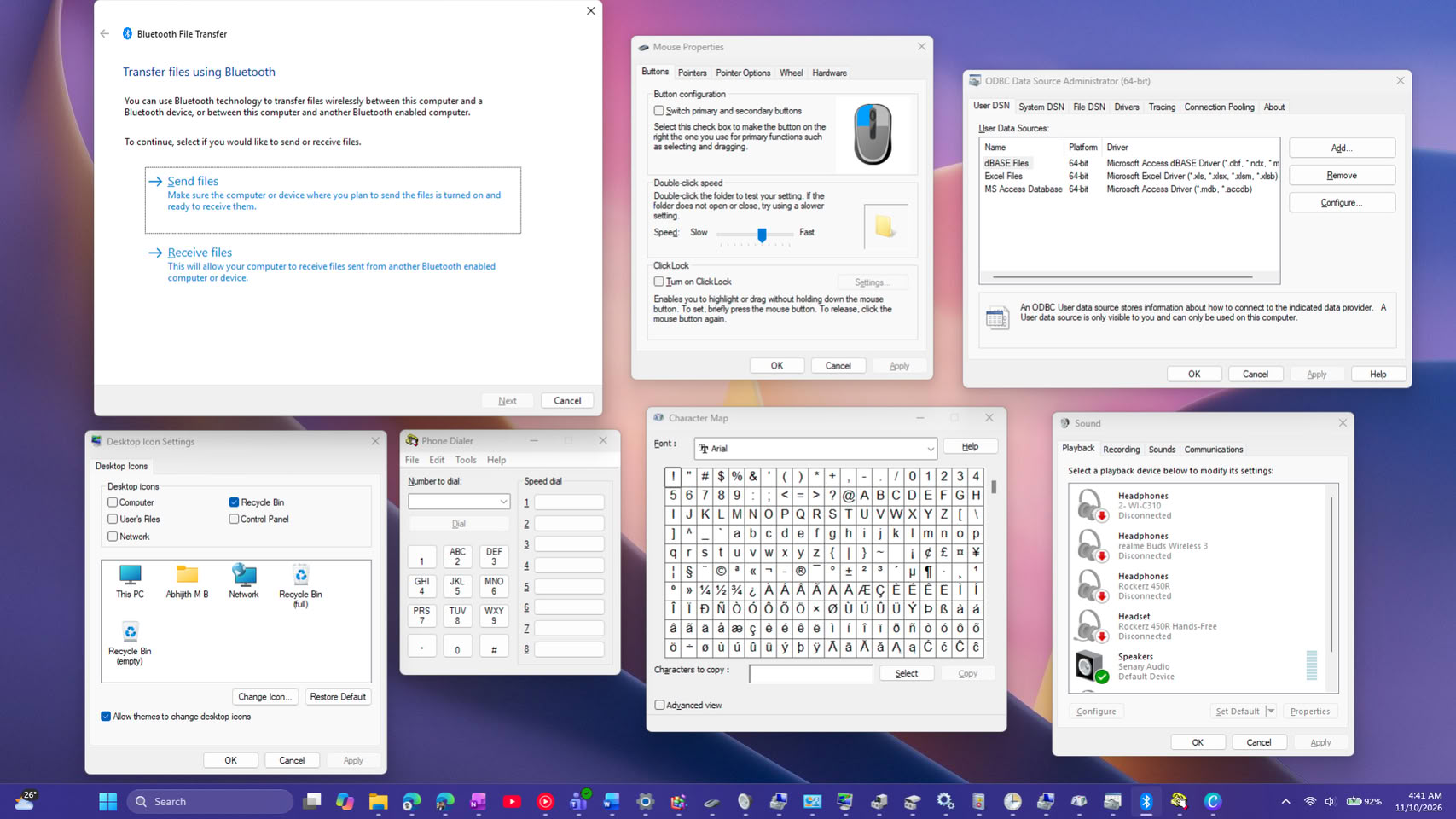
Marcus Ash, Microsoft's design and research lead for Windows and Devices, has hinted that more of Windows 11's old dialogs and admin tools could get a modern makeover. Under Jen Gentleman's post about the new option to silence the Sticky Keys prompt, a user asked Microsoft to "winui-fy" the legacy Win32 dialogs and MMC apps, and to fully move Control Panel into Settings. Ash replied with a short "Noted and working on that too." He didn't give a timeline or name any tools, so it's more like a nod than a roadmap.

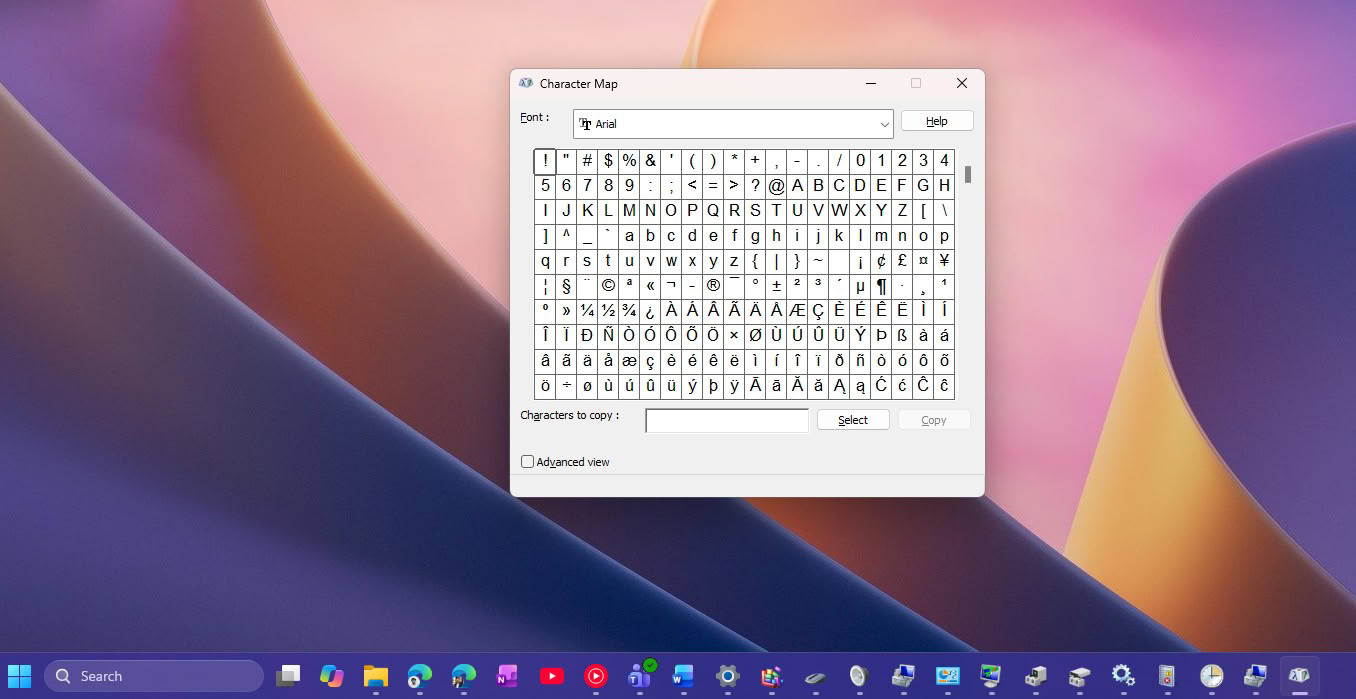
There's plenty to work with, as Windows 11 still ships more than 20 tools with older interfaces, including Defragment and Optimize Drives, Disk Cleanup, Device Manager, Event Viewer, and the DirectX Diagnostic Tool. Folder Options and the Sticky Keys prompt still have no dark mode, and some links in Settings, such as the extra sound and mouse options, open the old Control Panel windows. Microsoft's recent dark mode update for Hyper-V Manager, another legacy tool, also came out incomplete.
Otto Introduces Otto One: the Personal AI Computer for Autonomous Agents

Otto, the company building the operating system for the agentic era, today introduces Otto One, the first purpose-built agent computer: a compact, screenless computer designed for an AI agent to live and work on. Running on Otto OS, its proprietary software layer, Otto One lets people deploy, direct and monitor autonomous agents from a phone or desktop while the device works continuously in the background, even when the user closes their laptop or walks away.

AI agents are finally capable of taking on a persistent role in people's lives. The real opportunity is not a better inbox assistant; it is an agent that can keep a household organized, manage a budget and taxes, coordinate care and appointments, and keep a business moving. To do that well, it needs usable context and the authority to act across the financial, personal and work systems that make up a life.

Microsoft Adds Cloud Rebuild Recovery to Windows 11 in Latest Preview Update

Microsoft has introduced Cloud Rebuild, a recovery option that can wipe and reinstall Windows 11 by pulling a fresh image and the PC's drivers from Windows Update, even when the system refuses to boot. It ships with KB5127936, the optional preview update released on October 28 for Windows 11 25H2 and 26H2, and it's rolling out gradually. If Windows still loads, the option sits under Settings > System > Recovery as "Rebuild PC." If it doesn't, the PC falls back to the Windows Recovery Environment (WinRE) after a few failed boots, where Cloud rebuild shows up under the Troubleshoot menu.

The "Reset this PC" menu has had a Cloud download mode for a while. According to Microsoft, Cloud rebuild goes a step further by grabbing drivers as well and by not depending on the installed copy of Windows being intact. It is a clean slate, though. The system drive gets reformatted, wiping apps, settings, user accounts, and local files, and only data synced to services like OneDrive survives. Anyone handing the PC off can pick a sanitize mode that has the drive securely erase itself first, and IT admins can kick off a rebuild remotely through the Recovery CSP.

Valve Enables CD Drive Support in Steam Frame Kernel After a Single Request

Valve has switched on optical drive support in the Steam Frame's Linux kernel, a day after one owner asked for it on the Steam Community forums. On October 18, user Aiodensghost posted that the Frame couldn't power their detachable disc drive and lacked the drivers to read a disc, which killed their plans to watch movies on the road and install the 2006 racing game Need for Speed Carbon from its disc. Valve developer Gabe Rowe replied on October 19 that the team would look into it, and apparently minutes later, a commit landed in a public mirror of the Frame's kernel sources. It adds CD drive support "for parity with steamdeck/machine."

Rowe enabled three existing options as loadable modules in the Frame's ARM64 kernel config: the generic CD-ROM layer, the SCSI CD-ROM driver that USB optical drives use, and generic SCSI device access. These drivers have been in Linux for decades, so nothing new had to be written. However, a commit isn't an update on your headset. The Frame runs on Valve's own downstream SteamOS kernel builds, and Valve hasn't said when this will reach owners. Power is still a problem too, since the 60 W USB-C hub the poster tried wasn't enough. The Frame is mainly built for streaming from a PC, but it can also play games standalone, so a directly connected drive makes the most sense there. Owners who paid $1,059 or more and want this today would likely have to build a custom kernel from the commit themselves.

Sony Retires Its Last 4K Blu-ray Player in Japan, PS5 Is All That's Left

Sony has stopped shipping the UBP-X700/K in Japan, its last standalone 4K Ultra HD Blu-ray player in the country. Shipments ended on October 22, and according to Sony retailer Kunkoku, the remaining stock on Sony's Japanese store sold out almost immediately. There's no word on a successor. That leaves the disc-equipped PlayStation 5 as the only Sony product in Japan that can still play 4K Blu-ray movies. The UBP-X700/K only launched on May 17, 2025, as a cut-down version of the 2018 UBP-X700 without streaming apps, and it was last listed at ¥58,300. Sony will keep selling the BDP-S1700/K, though that one only handles regular Blu-ray discs.

The PS5 is not a perfect stand-in for home theater enthusiasts either. It handles 4K Blu-ray with HDR10, but it lacks Dolby Vision support, which the UBP-X700/K offered. Sony has also announced that new PlayStation games will stop shipping on disc from January 2028, and it hasn't confirmed whether the PS6 will even have a disc drive, despite an earlier report of a detachable one. If it doesn't, the PS5 becomes Sony's last disc player, and with a successor on the way, its days are numbered too. Sony already announced in February that it would phase out all of its Blu-ray recorders in Japan with no successors, so this was somewhat expected. For now, the player exit seems to be limited to Japan, as Sony's US store still lists the UBP-X700U. However, it's hard to see the standalone player sticking around for long elsewhere if Sony is winding down its disc business at home.

Mchose Launches $69 R9 Wireless Gaming Headphones With AI Noise Cancelling Mic and Lightweight Design

Mchose has officially launched its latest set of affordable wireless gaming headphones, the R9, which retail for $69, but have a pre-order discount of $49. The Mchose R9 headphones focus on a balance of price, sound quality, and comfort, with a lightweight design that comes in at 235 g, a floating headband with a steel frame and leatherette padding that evenly distributes pressure across the top of the head. The Mchose R9 features both Bluetooth 5.4 and 2.4 GHz wireless connectivity, with an optional USB Type-C connection available for listening and charging.

The headband also features a sliding quick-adjust mechanism, 18° of vertical pivot, and 90° of swivel on the earcups. The R9 headset uses 53 mm composite drivers, and it has on-board memory with three customizable sound profiles to quickly adapt to different tasks and media. The EQ is controllable from Mchose's PC or mobile app. The R9 also has a detachable 360° microphone with AI noise reduction. Mchose also says it has tuned the R9 headset in collaboration with the EDG Valorant esports team in order to optimize the stock sound profile for footsteps, gunfire, and in-game audio.

PS4 Exclusive Driveclub Now Runs Natively on PC Through New Recomp

Driveclub, Evolution Studios' 2014 PS4 racer, now runs natively on Windows through DriveClub Recomp, a fan project released on GitHub by OverkillLabs3. While PlayStation emulation has been progressing rapidly, this one doesn't use CPU emulation. The game's own x86-64 code runs directly on the PC's processor, while the PS4 system libraries are reimplemented and GPU commands are translated to Vulkan. The port supports resolutions from 720p to 8K, ultrawide displays, and an unlocked frame rate that doesn't speed up the game. It also replaces the original anti-aliasing with NVIDIA DLAA on RTX cards or AMD FSR 3.1 on any GPU, both at native resolution, and RTX owners can swap between the two in-game with F10.

The developer says the game holds about 60 FPS at 4K in its heaviest scenes on an RTX 5070 Ti paired with a Ryzen 7 5800X3D, and the v0.2.3 update pushed one 4K test race from roughly 62 to 71 FPS. It is still rough around the edges, however. Some reflections look too bright, shaders compile during the first few minutes, slower CPUs drop frames in busy scenes, and online features don't work. It has also only been tested on NVIDIA hardware so far. A second project, DCport by qnfn, takes a similar route with FSR 3.1 and FSR 4 support. Both need the player's own dump of version 1.28. It's in the same vein as how modders recently got Gran Turismo Sport running on PC. These recomps arrive a couple of months after a ShadPS4 patch let Driveclub run at up to 8K, quite the jump for a game that shipped at 1080p and 30 FPS.

AMD "Gainsborough" APU Codename Appears in Driver, Could Power Valve's Steam Deck 2

AnandTech forum user SixPie has spotted a previously unknown AMD codename, Gainsborough, in the Adrenalin 26.9.2 driver, and it may be the chip for Valve's Steam Deck 2. Import and export records show test equipment carrying the name was shipped to Asia several times in late July, and that it uses an FF6 BGA package with 1,179 contacts. AMD's partners who know about the Medusa APUs reportedly have no information on it, which would make sense for a custom part.

As for the Steam Deck 2 link, the name is the main clue. Valve's Steam Deck chips have used Final Fantasy VII codenames such as Aerith and Sephiroth before, and Gainsborough is Aerith's surname, as leaker Kepler_L2 pointed out. Separately, Moore's Law Is Dead claims it's a semi-custom APU built on TSMC N3P with Zen 6 and RDNA 5, possibly arriving in late 2027 or 2028, but none of that is confirmed. Moreover, there are reasons to be cautious. Leakers have reportedly tied the same FF6 package to AMD's upcoming Ryzen Z3 handheld chips, so there's conflicting information about who the customer really is.

Toshiba Launches Canvio Ready Portable HDD With Partly Recycled-Material Cover

Toshiba Electronics Asia (Singapore) (Toshiba) announces the new Canvio Ready 2.5-inch portable external hard disk drive (HDD). The redesigned enclosure features a timeless appearance with grip-enhancing ribbed detailing and the top cover is manufactured using 65% recycled material. The update retains the simple plug-and-play operation and dependable portable storage that users expect from Canvio Ready.

Available in capacities of up to 4 TB, Canvio Ready provides ample space for everyday digital life. Whether backing up family photos, carrying important files or storing a growing media library, the HDD offers a straightforward way to keep content close at hand. Users can simply connect the drive to their computer and start saving, with no software installation or setup required.

Windows 11 Deletes ASUS GPU Drivers After Extended Eco Mode Usage

As was recently discovered by an ASUS ROG Zephyrus G14 owner on Reddit, there is apparently a conflict between Windows 11's built-in driver management tools and ASUS's proprietary power profiles. After leaving their Zephyrus G14 laptop, with an NVIDIA GeForce RTX 5070 Ti dGPU, in Eco Mode for a number of weeks, Reddit user u/OK-Horse-3169 switched their laptop back into performance mode in order to play some games, only to discover that Windows had deleted the GPU driver. According to ASUS's support documentation, this is expected behavior.

As it turns out, on basically any laptop with a MUX switch that disables the dGPU entirely, Windows 11 will automatically remove the drivers, because the driver is no longer necessary for a device that's no longer connected—it treats it much like it would a removable USB drive or peripheral. The source of the problem, as discovered by the redditor, is called pnpclean.dll, a maintenance task that deletes the aforementioned drivers if a device hasn't been connected for 15-30 days. After the driver was deleted, Windows recognized the user's RTX 5070 Ti as a generic display adaptor until the driver was reinstalled.

Xbox CEO Asha Sharma Dodges Questions About Helix Disc Drive

We recently postulated that the early launch of the Xbox disc-to-digital entitlement system meant that the upcoming Xbox Helix console would not launch with a physical disc drive. Although there has been no confirmation that this is the case, it's clear that Microsoft is moving away from physical media, just as Sony is doing the same for its console. In a recent interview with the BBC, Xbox CEO, Asha Sharma, lends credence to this theory with vague comments that dodge the question entirely.

Much of the interview revolved around the current hardware and memory crisis affecting both console and PC hardware, but when it came to the topic of the disc drive in the next-gen Xbox Helix, Sharma's go-to response was to deflect, saying that "This next generation, we have to be thinking about efficiency and affordability alongside performance," adding that "All of the industry needs to start to innovate on affordability and efficiency," although she acknowledged that affordability "is absolutely something all of us need to be thinking about and innovating on and giving people more choice in terms of how they play their console and how they purchase their console."

Devs Port Open-Source Linux AMD Graphics Driver to Windows

The AMD RADV driver is an open-source driver in the Mesa 3D graphics library optimized for running Vulkan games and software. RADV is the default Linux graphics driver on many AMD-powered Linux systems. Until now, Windows has had no open-source drivers for any GPU maker, but Valve is apparently looking to change that by funding development of the AMD RADV driver for Windows.

The actual driver porting is being done by Collabora, who often works with Valve on low-level software development, but Valve has sponsored the first phase of the project, according to a recent blog post by Collabora. The development outfit explains that it has managed to run Counter-Strike 2 on the new driver, but that there are still challenges that need to be solved. One of those challenges holding development back.

Synology Expands All-Flash Enterprise Storage Lineup With the New FlashStation FS6420

Synology today announced the FlashStation FS6420, the newest addition to its all-flash server lineup. Delivering exceptional throughput, it is designed for performance-intensive workloads, including virtual machine storage and protection, file synchronization, and business application hosting.

"The FS6420 meets the increasing need for fast, responsive storage in data-intensive environments," said Susan Yen, Product Manager at Synology. "With unified NAS and SAN capabilities, it provides a flexible storage platform for organizations running a wide range of workloads without the complexity of managing separate infrastructures."

New Intel USB4Stream Driver and Protocol Enables Low-Latency Device-to-Device File Sharing in Linux Kernel 7.2

A new Linux driver developed by Intel maintainer, Mika Westerberg, has been revealed to be merging in the Linux kernel version 7.2, which is slated to launch in June 2026. The new driver will enable users to more easily share files over USB4 while bypassing the network driver. The developer pitches the new protocol as a way to easily back up, transfer, and access files across two or more connected systems, or even share hardware, like a webcam or input peripherals. For now, the protocol requires some setup, currently requiring users to set up devices using the ConfigFS interface, and the developer details a number of examples and commands to configure them. More importantly, because the stream is controlled by the receiving side, it seems as though after a little setup, the protocol could be used by app developers to create apps with similar functionality to LocalSend without the need for a network connection. The upstream request reads:
Introduce USB4STREAM protocol and Linux implementation. This allows two (or more) hosts to transfer data directly over Thunderbolt/USB4 cable through a character device without need to go through the network stack.

Any application that supports read(2) and write(2) in some form should be able to use the device without changes. The data is sent out to the other side over a tunnel inside Thunderbolt/USB4 fabric. The character device is called /dev/tbstreamX where X is the minor number starting from 0.

Forza Horizon 6 Will Target 4K 30 FPS on Xbox Series X—60 FPS Calls for Upscaling

With the official launch of Forza Horizon 6 around the corner, Microsoft and Playground Games have just divulged a little more information about the upcoming driving sim, specifically its world, car line-up, and official console performance modes and expected frame rates. Firstly, and perhaps most importantly Forza Horizon 6 will feature two distinct performance modes on the Xbox Series X and S consoles. Performance Mode will allow the game to run at 60 FPS on both consoles, at 4K resolution with dynamic upscaling on the Series X and 1080p with dynamic scaling on the Series S. Quality Mode, on the other hand, will target 30 FPS on both Xbox variants, at 4K native resolution with "increased visual fidelity" on the Series X and 1440p with dynamic scaling to maintain the target frame rate. Horizon 6 will also feature a number of accessibility features, including AutoDrive, Proximity Radar, High Contrast mode, colorblind filters, and ASL and BSL interpreters for cut-scenes. There is also an option to modify the game speed in offline mode, which should make the game more accessible to kids and those with limited mobility and reflexes, especially when used in conjunction with difficulty settings.

The announcement revealed that gamers can start preloading Forza Horizon 6 on both PC and Xbox already, from the library page for preorderers and Game Pass subscribers, from the Microsoft Store, or using the Xbox app for smartphones if you're planning on buying a physical edition. Microsoft will also be giving Forza veterans login rewards in the form of free special car unlocks that will appear in players' garages after they complete the introductory mission. These cars depend on the game players previously played: 2024 Chevrolet Corvette E-Ray for Forza Motorsport; 2021 Mercedes-AMD ONE for Forza Horizon 5; 2016 Aston Martin Vulcan for Forza Horizon 4; 2016 Lamborghini Centenario LP 770-4 for Forza Horizon 3; 2014 Lamborghini Huracán LP-610-4 for Forza Horizon 2; and 2013 Dodge SRT Viper GTS for Forza Horizon.

HDD and SSD Shortages Drive Customers to Sign 5-Year Supply Contracts

Hard Disk Drives (HDDs) and Solid State Drives (SSDs) are among the most sought-after commodities in computing today, as the expansion of AI data centers consumes everything in its path. According to Seagate, Sandisk, and Western Digital, demand is so high that customers are signing long-term supply agreements lasting up to five years. This duration is significant because customers are now planning their contracts around demand expansion, which is not only substantial but will also bring better balance to the supply chain. With customers driving steady demand, HDD and SSD manufacturers know exactly how much spinning rust or NAND Flash to produce to meet this demand. Over time, this is a positive development for a supply chain that will adapt with expanding production capacity. However, it poses a short-term challenge for PC gamers.

For example, at the start of this year, we reported that HDD prices have soared by an average of 46% since mid-September. These changes have made spinning rust an expensive commodity, but this is minor compared to NAND Flash prices, which have increased 500% in just a few months. The expansion of AI data centers has depleted any remaining inventory of HDDs and SSDs, leaving the consumer PC market to compete for the few remaining units available for gaming PCs. Interestingly, HDDs contain almost no silicon for storage purposes, so their significant price increases are a supply chain issue unrelated to the semiconductor industry. Apart from the controllers that use silicon, HDD platters are made from materials that are not currently in short supply. However, high demand keeps their prices elevated.

Fanatec Unveils New Products and Performance Upgrades at Spring Showcase

Fanatec, a brand of Corsair (NASDAQ: CRSR) and global leader in sim racing hardware, presented a series of product announcements and platform updates during its Spring Showcase event, introducing new hardware and software updates designed to expand flexibility across its ecosystem.

ClubSport Formula V3 launched
Fanatec introduced the ClubSport Formula V3, a reworked version of its iconic Formula-style steering wheel. The new model is a direct replacement for the Formula V2.5 and features a larger display with Intelligent Telemetry Mode, allowing drivers to switch between layouts such as lap times and deltas, tire temperatures, and other telemetry. The diameter increases to 290 mm, with revised ergonomics suited to a wider range of race cars.

Intel Arc GPU Graphics Drivers 101.8724 WHQL Released

Intel today released its latest Arc GPU graphics drivers with the version 101.8724 WHQL bringing support for new hardware and new games. Yesterday, the company launched its Core Series 3 "Wildcat Lake" processors with up to six CPU cores and two Xe3 GPU cores. Expected to land in over 70 different laptop designs, Intel today enabled full gaming support with the Arc GPU driver update. In addition to new hardware, the new driver release adds game-ready support for Pragmata and fixes a lot of the old issues that persisted with the previous releases. These include fixes for flickering in Crimson Desert running DirectX 12, No Man's Sky experiencing corruptions on certain terrains, and importantly issues with Adobe Premier Pro crashing when exporting media based on HEVC codec has been fixed. For a complete picture of fixes and remaining issues, we have posted the changelog below.
DOWNLOAD: Intel Arc Graphics Driver 101.8724 WHQL

Toshiba Adds Metallic Blue Option to Canvio Flex Portable Drives

Toshiba Electronics Europe GmbH (Toshiba) has unveiled a metallic blue casing for its Canvio Flex 2.5-inch portable hard disk drive (HDD). The new color adds a fresh look to the range, alongside the original warm silver option. The new metallic blue model will be available exclusively across EMEA.

Available in 1 TB, 2 TB, and 4 TB capacities, the Canvio Flex is designed for easy storage across multiple devices. Pre-formatted with exFAT, it works seamlessly with Windows PCs and Macs, as well as with compatible Android and iOS tablets and smartphones, without requiring reformatting.

Kensington Expands VeriMark Portfolio with Two NFC+ Hardware Security Keys

Kensington, a worldwide leader of desktop computing and mobility solutions for IT, business, and home office professionals, today announced the expansion of its VeriMark security portfolio with the launch of two new NFC+ hardware security keys: VeriMark NFC+ USB-C Security Key (K64739WW) and VeriMark NFC+ USB-A Security Key (K64738WW).

Both models are FIDO2 Level 2 certified and support the latest FIDO CTAP 2.1 protocol, delivering enterprise-grade, phishing-resistant multifactor authentication (MFA) and passwordless login protection across modern cloud and web-based services.

Piodata Unveils the SecureX Flash Drive

PIODATA today announced the launch of the SecureX Security Flash Drive, a next-generation USB storage solution engineered for professionals who require uncompromising data protection and backup with immediate, offline accessibility. Designed for high-stakes environments—including medical, military, and technology sectors—SecureX delivers a secure, portable alternative to cloud storage that is always within reach and ready to perform.

In an era where critical files often live in the cloud, access and security aren't always guaranteed. Network outages, restricted environments, hackers, or login failures can derail presentations and workflows at the worst possible moment. SecureX eliminates that risk by ensuring your most important files are physically with you, instantly accessible on virtually any device with a USB connection, including PCs, Macs, smartphones, and tablets.

Toshiba Begins Sampling of 30-34 TB SMR Nearline Hard Disk Drives

Toshiba Electronic Devices & Storage Corporation ("Toshiba") has announced the M12 Series of 3.5-inch nearline hard disk drives (HDDs) for hyperscale and cloud service providers operating large-scale data centers. The new series uses Shingled Magnetic Recording (SMR) technology to deliver storage capacities ranging from 30 to 34 TB. Sample shipments have begun and Toshiba also plans to begin sample shipments of M12 drives that use Conventional Magnetic Recording (CMR) to deliver capacities of up to 28 TB in the third quarter of 2026.

Today is World Backup Day, the annual international initiative to remind companies and individuals of the importance of backing up and protecting their data. That need is now greater than ever, as the constant expansion of digital services and video content distribution, the widespread adoption of cloud services, and, most recently, the increasing use of data-hungry AI and data science, are driving forward immense growth in the volumes of data generated and stored worldwide.

NVIDIA Releases GeForce 596.02 Hotfix Beta Driver to Address Game Stuttering

NVIDIA has officially released its second hotfix driver this month, GeForce 596.02 Hotfix, addressing the stuttering issue found in the previous 595.97 WHQL, which was released just yesterday. According to the official driver changelogs, the only game experiencing stuttering was Arknights: Endfield, which was apparently severe enough for NVIDIA to issue a complete hotfix driver. No other changes have been included in this hotfix release. NVIDIA notes that the quality of hotfix drivers is usually unknown, as they go through a much shorter quality testing pipeline than WHQL drivers. These hotfix drivers are designed to provide quick iterations and changes so that gamers who installed the new game-ready or regular WHQL drivers aren't left dealing with game stutters while waiting for the next driver release. Finally, NVIDIA advises that if you aren't experiencing any issues with your current 595.97 WHQL driver, it's best to wait for the next WHQL release to ensure your system remains as stable as possible. The next WHQL release will integrate the changes from the 596.02 Hotfix driver, so you won't have to worry.

DOWNLOAD: NVIDIA GeForce 596.02 Hotfix Beta.

Silicon Motion Showcases Enterprise SSD Controllers and PCIe NVMe Boot Drive Solutions at GTC 2026

Silicon Motion Technology Corporation, a global leader in designing and marketing NAND flash controllers for solid-state storage devices, today announced that it will showcase a rich portfolio of differentiated enterprise SSD controllers and PCIe NVMe BGA boot SSD at NVIDIA GTC 2026, Booth #3015, purpose-built to meet the evolving requirements of the NVIDIA AI ecosystem. As AI models scale, inference architectures are extending beyond HBM and System DRAM into high-performance NAND storage tiers, as reflected in NVIDIA's ICMS initiative. In this new architecture, NAND-based Storage becomes a performance-critical layer that requires deterministic latency and quality-of-service differentiation.

Silicon Motion delivers a vertically integrated storage solution encompassing advanced SSD controller design, full firmware development, and compact Reference Design Kits (RDKs) aligned with leading enterprise form factors such as E1.S, E1.L, E3.S, E3.L, and U.2 for AI server deployments. The company also provides enterprise PCIe NVMe BGA boot SSD with strong endurance and long-term operational stability, deployed in AI systems.

Windows 11 March Update Blocks C:\ Drive Access for Some Users

Microsoft has experienced a few months of relatively smooth Windows 11 updates, but the March update has reportedly caused inaccessible C: drives, widespread system BSODs, and freezing. According to multiple reports from Reddit and other online communities, including Microsoft's Q&A forum, the Windows 11 March 2026 KB5079473 update is causing headaches for users. They are encountering issues such as being unable to access their C: drives, system freezing, random reboots, and an overall laggy user experience. While the official March update page shows no known widespread issues, users report that the update is indeed causing trouble in everyday use and increasing the risk of instability. Some Samsung Galaxy Book owners have reported that this update completely blocked access to the C: drive on their devices.

Microsoft has confirmed that the "C:\ is not accessible - Access denied" issue has been acknowledged, and the company is working on a solution. Microsoft reportedly claims that the Samsung Galaxy Connect application is responsible for the inaccessible C: drive and the issue didn't occur solely because of the Windows 11 March update but coincidentally happened at the same time as other issues that had accumulated earlier. Windows maker claims that the problem affects Samsung Galaxy Book 4 and Samsung Desktop models with Windows 11 versions 24H2 and 25H2, including models with codenames NP750XGJ, NP750XGL, NP754XGJ, NP754XFG, NP754XGK, DM500SGA, DM500TDA, DM500TGA, and DM501SGA. For now, it is unclear if all affected users with inaccessible C: drives are Samsung Galaxy Book owners. It's possible that users experiencing issues are using other OEMs for their laptops or desktop PCs, so we are still waiting for more information. For now, Microsoft claims that only Samsung user are affected, and both are working on a fix.
Return to Keyword Browsing
Nov 11th, 2026 04:20 CST change timezone

New Forum Posts

Popular Reviews

TPU on YouTube

Controversial News Posts