Monday, May 4th 2026
HDD and SSD Shortages Drive Customers to Sign 5-Year Supply Contracts
Hard Disk Drives (HDDs) and Solid State Drives (SSDs) are among the most sought-after commodities in computing today, as the expansion of AI data centers consumes everything in its path. According to Seagate, Sandisk, and Western Digital, demand is so high that customers are signing long-term supply agreements lasting up to five years. This duration is significant because customers are now planning their contracts around demand expansion, which is not only substantial but will also bring better balance to the supply chain. With customers driving steady demand, HDD and SSD manufacturers know exactly how much spinning rust or NAND Flash to produce to meet this demand. Over time, this is a positive development for a supply chain that will adapt with expanding production capacity. However, it poses a short-term challenge for PC gamers.
For example, at the start of this year, we reported that HDD prices have soared by an average of 46% since mid-September. These changes have made spinning rust an expensive commodity, but this is minor compared to NAND Flash prices, which have increased 500% in just a few months. The expansion of AI data centers has depleted any remaining inventory of HDDs and SSDs, leaving the consumer PC market to compete for the few remaining units available for gaming PCs. Interestingly, HDDs contain almost no silicon for storage purposes, so their significant price increases are a supply chain issue unrelated to the semiconductor industry. Apart from the controllers that use silicon, HDD platters are made from materials that are not currently in short supply. However, high demand keeps their prices elevated.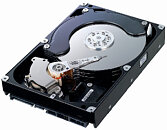 The surge in HDD demand is driven by heavy procurement of high-capacity units by major U.S. cloud service providers and hyperscalers. Concerns about SSD data retention have also led some customers and policymakers to prefer HDDs for certain workloads. Large cloud operators are expanding their exabyte-class storage for AI, analytics, and archival needs. Manufacturers report near-full utilization rates as demand extends beyond traditional surveillance and backup applications. In particular, AI infrastructure requires massive data storage for model training, prompting AI labs to incorporate some HDD-based storage where speed is not a priority.
Source:
Tom's Hardware
For example, at the start of this year, we reported that HDD prices have soared by an average of 46% since mid-September. These changes have made spinning rust an expensive commodity, but this is minor compared to NAND Flash prices, which have increased 500% in just a few months. The expansion of AI data centers has depleted any remaining inventory of HDDs and SSDs, leaving the consumer PC market to compete for the few remaining units available for gaming PCs. Interestingly, HDDs contain almost no silicon for storage purposes, so their significant price increases are a supply chain issue unrelated to the semiconductor industry. Apart from the controllers that use silicon, HDD platters are made from materials that are not currently in short supply. However, high demand keeps their prices elevated.

23 Comments on HDD and SSD Shortages Drive Customers to Sign 5-Year Supply Contracts
Considering some drive makers no longer offer warranty replacements, but rather offer refunds, this is disconcerting if a drive was to fail.
the bubble grew way too quickly, and now everyone is wondering if it will burst or will demand keep up, so it's a difficult position to be in, if they make more factories, and the bubble bursts, they will be screwed big time, so they are inching forward, and the only way they can get stability is to have the big guys pay everything up front for 4+ years, and THEN they can go ahead with more factories
200€ for 4tb hdd is insane. without the synology branding it is 160€
thanks for the reminder for the price increase.
Where did you see this?
I have recently made some radical changes in OBS to cut my recordings to 1/4 of previous size due to the how ridiculous everything storage related is now. Probably at some point need to feed existing recordings through a re encode to reclaim space as well.
Win some and lose some, over the years I have made some very good timed purchases on PC hardware, I also got my Xbox storage expansion within 4 weeks of the price surging upwards, so that was fortunate as well, the lose is about 2-3 months ago I was going to buy some new NAND storage for PC and I was too late. I was even prepared to buy used, but most sellers are savvy to the market. There is one used marketplace where some reasonable deals are to be had, but anything listed there storage related is snapped up within minutes.
I am so desperate to get this SA510 still in my PC retired it looks like the unthinkable, replacing it with a spindle. In my opinion it is as bad as the old Samsung 840s for data rot.
DataHoarder/comments/1sn8uxx/toshiba_no_longer_honoring_warranties_on_large
so, it's the case of HDD companies trying to get away with this (and funny enough, also some RAM makers) that are trying to pay your original cost, and not the current price
but, it's illegal according to the Magnuson-Moss Warranty Act (US), but you may have to sue them to really honor it, and if they do this a lot, the Gov will go after them, so it really isn't wise for them to do this crap
When the market is so volatile and demand is so high, DRAM manufacturers would be better off not signing long term supply contracts, but selling to the highest bidder as and when instead (in hope of higher prices and profit).
Nah, this smells of fear to me. Fear that the surge in demand is just a temporary situation coming to an end slowly but surely.
The only thing we will experience is that prices continue being high while these supply contracts last, even if demand would drop otherwise. Manufacturers are trying to cement current prices in case of a potential AI bubble pop, that's all.Let me just leave this here as food for thought:
Low Supply High Demand : OMG dont stop raise the prices
High Supply High Demand: We will just stop producing or create a fake low supply raise the prices
High Supply Low Demand: Then we will sell it to the wealthy and needy raise the prices
Low Supply Low Demand: We need to profit better than last Q and others will match their prices to us anyway so raise the prices
Inflation? Workers wages are too high thats why
Then, once you hooked up, it becomes significantly more expensive.
In the end, it bleeds you dry.
I can not but notice similarities with consumer / personal computing these days...
Swap the car for an HDD/SSD or even computer and the horse for a pen and paper.
File system and compression matters. I need to create my ext4 backup containers 20% bigger as sometimes 15% will cause the container is too small. when you are stuck with ntfs, good luck on your next storage purchase.
microsoft could esaily reduce storage demands by implementing btrfs with zstd native. amd and some other crap driver companies could lessen the storage by cleaning up their shitty windows 11 pro drivers. I do delete from time to time from my gnu gentoo linux box a lot of files which seems at the end of the day lint. some can not even be nuked in windows 11 pro.
I see it myself, storage consumption only goes up after each time period. DRAM consumption is the same.
*scurries away in shame*