News Posts matching #GDDR7

Return to Keyword Browsing

NVIDIA GeForce RTX 5090 Gets 128 GB VRAM Capacity Mod

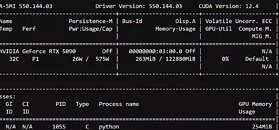
NVIDIA's GeForce RTX 5090 GPU comes with 32 GB of GDDR7 memory by default. However, Chinese modders have experimented with equipping large memory capacities before, especially with the last-generation RTX 4090, which comes in at 96 GB of GDDR6X. This time, the current-generation top-end "Blackwell" consumer GPU, the RTX 5090, gets not double, not triple, but quadruple the memory capacity in the latest mod. According to @I_Leak_VN, the GPU has an astonishing 128 GB of GDDR7 memory and is priced at $13,200. That is over six times the MSRP, for a four times memory increase.

The big-picture question is what is done to the GPU to support this much memory. Currently, no GDDR7 memory modules are surpassing 24 Gbit, or about 3 GB per module, with the smaller capacity ones coming at 16 Gbit, or 2 GB per module. The largest configuration that a dual-sided, sandwiched approach to the PCB modding could support is 96 GB. That is exactly how NVIDIA's ProViz RTX PRO 6000 Blackwell GPU gets its 96 GB GDDR7 capacity. However, given that there are no 4 GB GDDR7 modules, we can only assume that some serious PCB modification was made to accommodate all the modules. Most likely, a PCB riser, tucked away somewhere, or any other interesting solution could be at play. You can take a look at NVIDIA-SMI output, which clearly shows the 128 GB capacity below.

Framework Launches its 2nd Generation Laptop 16 with Upgradable NVIDIA GeForce RTX 5070

We made a lot of major product announcements throughout the year, and we have one more big one for you today. We're excited to announce the new Framework Laptop 16, now with AMD Ryzen AI 300 Series processors and a graphics upgrade to NVIDIA GeForce RTX 5070 Laptop GPU! Pre-orders are open now starting at $1,499 USD, with first shipments this November. We first introduced Framework Laptop 16 in 2023 as a high-performance, desktop-replacement 16" laptop that carried in not only our usual repairability and upgradeability, but two bold new systems: fully customizable input and generational upgradeability of graphics. On the latter, especially since so many other laptop brands have failed at it, we knew that the only way we could prove upgradeability is by actually delivering an upgrade. We've spent the last two years working with the teams at AMD, NVIDIA, and Compal to not only make a new NVIDIA-powered Graphics Module, but also make it fully backwards compatible with the original Framework Laptop 16. That means any current owner can pick up the new module and get the latest generation of graphics!

This is a huge leap in performance and capability. The GeForce RTX 5070 Laptop GPU brings NVIDIA's latest Blackwell architecture with 8 GB of GDDR7 and delivers a 30-40% increase in gaming framerates over our original Radeon RX 7700S Graphics Module. We made a couple of other improvements too. The GeForce RTX 5070 Laptop GPU now enables display output and power input over the rear USB-C port. We also revamped the thermal system, switching to Honeywell phase change thermal interface material and reoptimizing the fan blade geometry and controller IC for reduced noise while supporting 100 W sustained TGP. The discrete GPU in the Graphics Module can send a display signal directly to the internal laptop display through a mux on the Mainboard, and we've updated our 165 Hz 2560x1600 panel to support NVIDIA G-SYNC. We're also keeping the Radeon RX 7700S Graphics Module available as a configuration option with the updated thermal system for all of you who may prefer AMD offerings, especially for the maturity of their open-source Linux drivers.

NVIDIA at Hot Chips 2025 Pushes Blackwell to Power Neural Rendering

NVIDIA's Hot Chips 2025 appearance on the graphics track was less about new silicon and more about a change in emphasis. Blackwell is being presented as a platform that makes machine learning a natural part of rendering rather than an add-on. The company showed how the architecture stretches from big datacenter cards all the way down to laptop GPUs and explained why that range matters. Instead of relying on brute-force raster work, the focus is on neural approaches, such as denoising and learned frame generation, that can reproduce or enhance pixels at far lower cost. To support that shift, NVIDIA is moving toward FP4 math to shrink memory and compute footprints, and it has invested in scheduler improvements like shader execution reordering and heavy integer work so streaming multiprocessors stay busy. The talk also showed an on-chip AI management processor that coordinates data and priorities so graphics shaders and inference kernels do not block one another.

The practical plumbing behind these concepts mattered as much as the models. Blackwell's GDDR7 support delivers more usable bandwidth at lower voltages, which helps both traditional rendering passes and large tensor jobs. NVIDIA described techniques to shorten the time to first token in mixed workloads so interactive agents and graphics can meet different latency needs. The company pushed the idea of a "race to idle," where a system uses learned interpolation or selective inference in place of a full render to save power. Finally, features borrowed from the datacenter world, such as Universal MIG, let a single GPU be split into many smaller virtual GPUs, improving utilization for light clients and yielding sizable gains over simple time slicing. The net message was clear: Blackwell is not just about adding TeraFLOPS. It is about rethinking scheduling and blending ML with graphics to make real-time, efficient experiences practical. Neural rendering is where the graphics world is headed, and NVIDIA wants to accelerate every stage of the pipeline.

MSI Teases WoW "Midnight Edition" GeForce RTX 50 SUPER GPU

MSI will release a limited World of Warcraft Midnight edition GeForce RTX graphics card in 2026, the company previewed at Gamescom in Cologne. Blizzard confirmed at the show that the Midnight expansion is due on or before June 30, 2026, and MSI's prototype borrows the expansion's palette with black, white, and blue accents applied to its Gaming Trio design. The collaboration is clearly meant to marry hardware and game lore, with Midnight itself focused on the clash between the Void and the forces of Light, an assault on the Sunwell, and the long-requested addition of player housing.

Given the timing of the WoW update for mid-2026, MSI's special edition is likely destined to arrive alongside NVIDIA's rumored GeForce RTX 50 SUPER refresh also rumored for the next year, which is expected to feature higher core counts, larger memory configurations, and increased power limits for several SKUs. There are already rumors of models with roughly 10,752 CUDA cores and 24 GB of next-generation GDDR7 for an RTX 5080 SUPER, although MSI has not confirmed any technical details for its Midnight card, and the Cologne sample was shown as a concept rather than a final product. Details on pricing, exact specifications, and preorder dates are expected to arrive from the companies closer to the release.

ASUS Intros GeForce RTX 5060 White Edition Graphics Cards

ASUS has quietly introduced its new Dual GeForce RTX 5060 White Edition graphics card range. This lineup includes four different models, with RTX 5060 and RTX 5060 Ti versions designed for small gaming setups, as each card measures approximately 228-229 mm in length with a 2.5-slot design and requires just one 8-pin power connector. Each card in the lineup uses 8 GB or 16 GB of GDDR7 memory, which operates at 28 Gbps through a 128-bit interface. The RTX 5060 Ti cards feature 4,608 CUDA cores and can handle AI tasks at 758 TOPs. These cards run at 2,572 MHz in normal mode and 2,602 MHz in OC mode. The RTX 5060 non-Ti cards come with 3,840 CUDA cores and manage AI tasks at 613-623 TOPs. They operate at boost clocks between 2,497 MHz and 2,535 MHz depending on the specific model variant.

All models support PCI Express 5.0 connectivity and offer three DisplayPort 2.1b outputs and one HDMI 2.1b port, HDCP 2.3 compatibility and up to 7680 x 4320 maximum resolution. For cooling the graphics cards feature dual Axial-Tech fans with longer blades to improve airflow and dual-ball bearings. A vented metallic backplate aids heat dissipation while maintaining the compact 2.5-slot form factor. Additional features include dual BIOS options and support for OpenGL 4.6. Exact availability and pricing have yet to be announced.

NVIDIA Releases GeForce RTX 5090D v2: Similar Gaming, Lower AI Performance

NVIDIA has quietly replaced the China-bound RTX 5090D on its product pages with a new GeForce RTX 5090D v2 and set the suggested retail price at ¥16,499, the same sticker as the outgoing D model. The new RTX 5090D v2 keeps the GB202 family's compute muscle intact, with 21,760 CUDA cores, Blackwell architecture and a 575 W TGP, but trims the memory to 24 GB of GDDR7 on a 384-bit bus instead of the previous 32 GB on 512 bits. That change appears aimed at preserving a high-end gaming SKU for Chinese buyers while adapting memory and routing to regional supply and compliance realities. Retail listings and product pages from partners show the V2 already replacing prior entries, which suggests NVIDIA will, or has already, phased out the original D variant in that market.

According to EXPreview, hands-on testing suggest a split picture for buyers. In pure gaming, the RTX 5090D and RTX 5090D v2 cards are often virtually tied, with frame rate differences usually within a percent or two, so most current 4K titles will not noticeably feel the missing 8 GB. For AI workloads and model inference, the gap is more apparent, with single-digit to low-double-digit performance drops where extra memory matters. Partners are preparing custom builds with larger coolers and multi-fan designs that will likely sell above the stated price, given tight supply and demand. For gamers who want local warranty and service in China, the RTX 5090D v2 is now the top-tier choice. For teams and shops that rely on the fuller-memory D models for large-scale AI work, procurement strategies may shift, or premiums will have to be paid to secure the remaining 32 GB inventory.

ASUS Unveils ProArt GeForce RTX 50-Series Graphics Cards with USB-C and Wood-Patterned Look

ASUS today announced the ProArt GeForce RTX 50 Series graphics cards, featuring a USB Type-C port for compatibility with monitors that use DisplayPort over USB-C, plus a wood-patterned laminate trim. The GeForce RTX 5080 GPU powers the next generation of ProArt cards. Featuring NVIDIA Blackwell architecture with DLSS 4 upscaling, the ProArt GeForce RTX 5080 series brings potent next-level performance to the table, for gaming and content creation alike. The suite of NVIDIA RTX 50 technologies includes Multi Frame Generation and enhanced Ray Reconstruction, Super Resolution and NVIDIA Reflex 2 with Frame Warp.

A key benefit of ProArt GeForce RTX 5080 cards are their sizable 16 GB pool of GDDR7, which provides sufficient capacity to play nearly any game at high resolutions with maxed-out graphics settings. And with the ability to deliver up to 1858 AI TOPS, each card can deliver next-level performance for AI-intensive tasks. The ProArt GeForce RTX 5080 graphics cards include a wood-patterned laminate trim on their rounded front edges, offering a complementary aesthetic for wood-themed builds. And indirect, minimal Aura Sync lighting customizable in Armoury Crate makes sure that this unique look isn't lost in shadow, once a PC is up and running.

Samsung Electronics Announces Second Quarter 2025 Results

Samsung Electronics today reported financial results for the second quarter ended June 30, 2025. The Company posted KRW 74.6 trillion in consolidated revenue, a decrease of 5.8% compared to the previous quarter. Operating profit decreased to KRW 4.7 trillion.

The Device Solutions (DS) Division reported an increase in revenue on the back of expanded sales of high density, high-performance memory products, but inventory value adjustments in memory and one-off costs related to the impacts of export restrictions related to China in non-memory had an adverse effect on profit. In the Device eXperience (DX) Division, operating profit declined quarter-on-quarter due to a sequential decline in sales volume following the launch of new smartphone models in the first quarter. Looking ahead to H2, the DS Division plans to proactively meet the growing demand for high-value-added and AI-driven products and continue to strengthen competitiveness in advanced semiconductors. The DX Division will seek to minimize the impact of uncertainties stemming from tariff policies that are likely to persist.

Manli Intros Nebula GeForce RTX 5090 Graphic Cards

Manli introduced its newest high-end graphics card, the Nebula GeForce RTX 5090 powered by the NVIDIA Blackwell architecture. This card is Manli's fourth RTX 5090 version and the first time a flagship GPU model has joined Manli's Nebula lineup alongside the Gallardo and Stellar RTX 5090 series. The Nebula RTX 5090 runs at base and boost clock speeds of 2017 MHz and 2407 MHz respectively. The card has 32 GB of GDDR7 memory with a 512-bit interface providing memory speeds of 28.0 Gbps and bandwidth up to 1,792 GB/s.

The graphics card needs 575 W of power and keeps its GPU temperature at a maximum of 90°C. In terms of cooling it features a large heatsink with a triple cooler setup. This includes three 100 mm fans (which stop spinning during idle states) and nine 6 mm heat pipes. For enhanced aesthetics and structural rigidity Manli's Nebula GeForce RTX 5090 features a die-cast cover and a metal backplate. Connectivity-wise, the graphics card offers three DisplayPort outputs and one HDMI port. It measures 345 x 150 x 65 mm and takes up 3.5 slots. It's worth noting that this model is intended for international markets, unlike the 5090 D variants that Manli offers specifically to the Chinese market. Exact pricing and availability are yet to be known.

SK hynix Announces 2Q25 Financial Results

SK hynix Inc. announced today that it has recorded 22.232 trillion won in revenues, 9.2129 trillion won in operating profit (with an operating margin of 41%), and 6.9962 trillion won in net profit (with a net margin of 31%) in the second quarter. Both revenues and operating profits stood at all-time highs, beating the previous best results in the fourth quarter of last year. The company said that an aggressive investment by global big tech companies into AI led to a steady increase in demand for AI memory. Shipments of both DRAM and NAND flash were higher than expected, helping the company log the best quarterly results.

SK hynix expanded sales of 12-high HBM3E in the DRAM space, while registering a growth in sales of NAND for all applications. With the industry-leading competitiveness in AI memory and profitability-first management discipline, the company has maintained a positive earnings trend. With the latest financial results, the company's cash and cash equivalents increased to 17 trillion won at the end of June, up by 2.7 trillion won a quarter earlier. Its debt ratio and net debt ratio stood at 25% and 6%, respectively, as net debt fell by 4.1 trillion won, compared with the previous quarter.

AMD's Upcoming UDNA / RDNA 5 GPU Could Feature 96 CUs and 384-bit Memory Bus

According to one of the most reliable AMD leakers, Kepler_L2, AMD's upcoming UDNA (or RDNA 5) GPU generation will reintroduce higher-end GPU configurations with up to 96 Compute Units (CUs) in the top-end Navi 5X SKU, paired with a 384-bit bus for memory. We still don't know what type of memory AMD will ultimately use, but an early assumption could be that GDDR7 is on the table. When it comes to the middle of the stack, AMD plans a GPU with 64 CUs and a 256-bit memory bus, along with various variations of CUs and memory capacities around that. For the entry-level models, AMD could deliver a 32 CU configuration paired with a 128-bit memory bus. So far, memory capacities are unknown and may be subject to change as AMD finalizes its GPU lineup.

After the RDNA 4 generation, which left AMD without a top-end contender, fighting for the middle-end market share, a UDNA / RDNA 5 will be a welcome addition. We are looking forward to seeing what UDNA design is capable of and what microarchitectural changes AMD has designed. Mass production of these GPUs is expected in Q2 2026, so availability is anticipated in the second half of 2026. A clearer picture of the exact memory capacity and type will emerge as we approach launch.

2,001 W XOC BIOS for GALAX GeForce RTX 5090D HOF Appears

If you remember GALAX's last overclocking triumph, it was thanks to Team OGS and their custom Extreme OC (XOC) BIOS for the RTX 5090D HOF. Now, this special XOC BIOS has surfaced online, courtesy of an eagle-eyed post by OCNet user digitaljack3t. This firmware unlocks a default power limit of 2,001 W, which exceeds NVIDIA's official cap, and even allows you to adjust the TDP down to 400 W if you need to keep temperatures in check. It only works on the 5090D variant, so don't bother trying to flash it onto the regular 5090. That exclusivity makes sense given GALAX's decision to release just one non-D HOF card globally, and it shows that true overclocking headroom is reserved for the 5090D platform.

Using liquid nitrogen cooling and finely tuned voltages, they pushed the core clock up to an astonishing 3,650 MHz and achieved a record time of 39.434 seconds on the GPUPI 32B benchmark. OC momentum carried over into graphics tests as well, where 3DMark Port Royal saw the GPU running at 3,570 MHz on its core and 2,250 MHz on GDDR7 memory, resulting in a score of 47,469 points. Meanwhile, the Unigine Superposition 1080p Extreme preset achieved 38,237 points, nearly 29% above the card's standard performance target. Extreme overclocking is not a dead end, and with this XOC BIOS, another overclocking lab could give it a try and potentially set a new world record.
GALAX GeForce RTX 5090D HOF

LN2-Cooled GALAX GeForce RTX 5090D Reaches 3,650 MHz Core, 36 Gbps GDDR7

Team OGS has demonstrated an impressive feat of extreme overclocking by extracting every last drop of performance from GALAX GeForce RTX 5090D HOF edition. Armed with a custom Extreme OC BIOS, authorized for up to 2,000 W of power, and two 12V-2x6 connectors delivering 1,200 W, the group cooled the card with liquid nitrogen and fine-tuned voltages to push clock speeds far beyond factory limits. In the GPUPI 32B benchmark, the GPU achieved a record-breaking core frequency of 3,650 MHz and a completion time of just 39.434 seconds, securing a new world record for GPU-accelerated Pi calculation.

The team's success extended to graphics tests as well. In 3DMark Port Royal, the GPU operated at 3,570 MHz on its core and 2,250 MHz on its GDDR7 memory, achieving 47,469 points. Under Unigine Superposition's 1080p Extreme preset, they maintained 3,540 MHz and 2,250 MHz, respectively, reaching 38,237 points, an increase of several thousand over previous records. Pushing memory speeds to an effective 36 Gbps translates into 2.304 TB/s of bandwidth, nearly 29% above the standard specifications. These results show the untapped potential of NVIDIA's Blackwell architecture and suggest that, with similar power, cooling, and VBIOS modifications, professional cards like the RTX Pro 6000 series could achieve even more significant gains, given the higher CUDA core count.

Transition between DRAM Generations Drives Diverging 3Q25 Price Trends; Consumer DDR4 Prices Expected to Surge Over 40%

TrendForce's latest findings show that the three major DRAM suppliers are shifting capacity toward high-end products and have begun announcing end-of-life (EOL) plans for PC and server-grade DDR4 and mobile LPDDR4X. This has triggered aggressive restocking of legacy-generation products, further fueled by traditional peak-season demand. Consequently, average contact prices for conventional DRAM are projected to rise by 10% to 15% in 3Q25. Including HBM, overall DRAM prices are expected to increase by 15% to 20%.

TrendForce notes that DDR4 demand remains strong in 3Q25, and suppliers are aiming to raise prices more aggressively. As Taiwanese manufacturers currently lack the capacity and product specifications to fully meet market needs, DDR4 supply is expected to remain tight in the short term. Moreover, DDR4 output is being prioritized for server applications, leaving limited availability for consumer-grade user.

NVIDIA Renames GeForce RTX 5090DD to RTX 5090D v2

NVIDIA has quietly engineered a third variant of its flagship GPU in response to new US export regulations, aiming to maintain performance while avoiding restrictions. A few weeks ago, we got leaks about the GeForce RTX 5090DD, which was supposed to be a new version based on the modified RTX 5090D. The initially released GeForce RTX 5090D was designed to comply with the Department of Commerce's updated rules while delivering virtually identical results to its unrestricted counterpart in both gaming and synthetic benchmarks. Now, the newly named RTX 5090D v2 features the same 21,760 CUDA cores and a 575 W power draw, ensuring that the core Blackwell architecture performs as users would expect, albeit with a reduced 24 GB VRAM buffer.

NVIDIA plans to introduce an updated RTX 5090D v2 model in August. According to reliable industry sources, this refresh will feature 24 GB of GDDR7 memory on a 384-bit bus, down from the original 512-bit interface, while preserving overall thermal and computational characteristics. For most gamers, the reduced VRAM capacity is unlikely to be noticeable, as only a handful of titles require more than 24 GB of VRAM. Ultimately, the success of the v2 will depend on whether it reaches the market at a price point that aligns with the expectations of its flagship. Given that the target market is China, we have to wait for sales and performance figures first. According to a well-known leaker, kopite7kimi, they noted that there is some surprise, indicating that NVIDIA has made a significant change to comply with export regulations, so it could be a firmware update preventing these cards from running AI workloads.

NVIDIA GeForce RTX 5080 SUPER Could Feature 24 GB Memory, Increased Power Limits

Hot on the heels of rumored specs of the GeForce RTX 5070 SUPER and RTX 5070 Ti SUPER, rumored specs of the RTX 5080 SUPER emerged on VideoCardz. Apparently, NVIDIA will not tap into the larger "GB202" silicon to build the RTX 5080 SUPER despite maxing out the "GB203" silicon to build the current RTX 5080. It will take a slightly different approach, by giving the card additional memory and power limits. 24 Gbit GDDR7 memory chips are a distinct feature of RTX 50-series SUPER graphics cards, and much like the RTX 5070 Ti SUPER, the RTX 5080 SUPER will feature 24 GB of GDDR7 memory across a 256-bit wide memory bus.

NVIDIA could possibly use 30 Gbps memory speeds for this SKU to end up with at least the same kind of bandwidth as the regular RTX 5080, which is 960 GB/s. The other interesting aspect of the RTX 5080 SUPER is expected to be its increased TGP (total graphics power) value of 415 W, a 15% increase over the 360 W TGP of the RTX 5080. This increase in TGP will not just support the higher density memory chips, but also allow NVIDIA to increase GPU clock speeds. This will likely be necessary, given that NVIDIA has no headroom to increase shader counts on "GB203," and will need something to increase performance for games without heavy memory demands.

NVIDIA GeForce RTX 5070 Ti SUPER Planned with 24 GB of GDDR7 Memory

We have already covered that NVIDIA is planning a SUPER refresh of its GeForce RTX 50 series GPUs, with the most recent leak revealing the GeForce RTX 5070 SUPER, which is expected to feature a slight increase in CUDA core count and 18 GB of memory. However, NVIDIA is also overhauling its RTX 5070 Ti with the SUPER treatment, now enabling the RTX 5070 Ti SUPER to feature as much as 24 GB of GDDR7 memory with no change in CUDA core count. According to kopite7kimi, the RTX 5070 Ti SUPER will feature the same 8,960 CUDA core configuration as the GB203-350-A1 SKU, based on the PG147-SKU55 PCB. The only difference here is the VRAM surplus resulting from an additional 8 GB of GDDR7, which totals 24 GB capacity, compared to the 16 GB now on the regular RTX 5070 Ti SKU.

This also changes the TBP of the card, where the RTX 5070 Ti SUPER GPU is now rumored to feature a 350 W TBP, an upgrade from the non-SUPER's RTX 5070 Ti, which has a 300 W power rating. Perhaps the extra power is dedicated now not only to more VRAM (which is also a power consumer) but to higher clock speeds, too. It wouldn't be sufficient to call it a SUPER variant without some raw compute increase, so NVIDIA might be selecting better die bins for the SUPER SKU to enable higher default clock speeds at only a 50 W TBP increase. Nonetheless, we expect to hear more details in the coming weeks, especially since the wave of rumors has started to flood social media and leaks are becoming more frequent.

NVIDIA GeForce RTX 5070 SUPER Possible Specs Emerge: 24 Gbit Memory Takes Centerstage

NVIDIA will tap into 24 Gbit (3 GB) GDDR7 memory chips and increase memory sizes across the board for its RTX 50-series SUPER line of GPUs slated for later this year, if leaked specs of the upcoming GeForce RTX 5070 SUPER are anything to go by. Kopite7kimi, a reliable source with NVIDIA leaks, says that the RTX 5070 SUPER will feature 18 GB of memory—that's six 24 Gbit memory chips across a 192-bit wide GDDR7 memory bus. The card has a SKU designation of "PG147-SKU65" and ASIC code of "GB205-400-A1."

Besides 18 GB of memory, the RTX 5070 SUPER reportedly maxes out the "GB205" silicon it's based on, enabling all 50 SM present. The current RTX 5070 has 48 out of 50 SM enabled for 6,144 CUDA cores, whereas the RTX 5070 SUPER, with its 50 SM, should have 6,400 CUDA cores. The marginal increase in shader count will be bolstered by the 50% increase in memory size, and possible increases in GPU boost speeds. The memory bandwidth, however, remains unchanged. It ticks at the same 28 Gbps as on the RTX 5070, which yields 672 GB/s. The TGP will be increased to 275 W, from 250 W.

Eurocom Releases User-Upgradeable 17.3" Nightsky RX517 Laptop Featuring NVIDIA RTX 5070

Eurocom introduces the Nightsky RX517, a customizable and user-upgradeable 17.3-inch laptop built for professionals, creators, and power users who need a balance of screen size, flexibility, and long-term scalability. The Nightsky RX517 comes with large 17.3" internal display for these looking for larger size viewing area. At the core of the Nightsky RX517 is Intel Core Ultra 9 275HX processor with 24 cores / 24 threads and 36 MB cache, paired with the NVIDIA GeForce RTX 5070 Blackwell GPU (4608 CUDA cores, 144 Tensor AI cores, and 8 GB GDDR7 memory). This configuration is ideal for productivity workloads, 2D/3D content handling, development, multi-display environments, and smooth day-to-day performance.

Designed to support up to four active displays with NVIDIA Surround View, the Nightsky RX517 empowers power users to expand their desktop environment for improved multitasking, creative workflows, and visual workspace management. The internal 17.3-inch FHD 144 Hz display delivers smooth visuals and large screen for creative and technical work. Following EUROCOM's user-friendly upgrade philosophy, the Nightsky RX517 offers user-accessible dual SODIMM slots supporting up to 128 GB of DDR5-5600 memory, and three physical M.2 NVMe slots enabling up to 24 TB of SSD storage in RAID 0/1/5 configurations. This allows users to upgrade storage and memory capabilities to meet user changing computing requirements without replacing the laptop.

NVIDIA to Launch China-specific GeForce RTX 5090DD in August

NVIDIA is preparing to launch the China-specific GeForce RTX 5090DD graphics card in August 2025, Benchlife reports. The SKU came to light last week bearing internal codename "PG145-SKU40," and being based on the ASIC "GB202-240-K#-A1." It has the same shader count as the regular RTX 5090, with 21,760 CUDA cores across 170 SM, but with a truncated memory sub-system, with 24 GB of 28 Gbps GDDR7 across a 384-bit wide memory interface, for 1,344 GB/s of memory bandwidth. The card's TGP (total graphics power) remains unchanged from the regular RTX 5090, at 575 W. The idea behind GeForce RTX 5090DD is to comply with U.S. export-controls on GPUs with dual-use as AI accelerators.

ASUS Republic of Gamers Unveils ROG Astral GeForce RTX 5080 Dhahab CORE OC Edition

ASUS Republic of Gamers (ROG) today announced the ROG Astral GeForce RTX 5080 Dhahab CORE OC Edition graphics card, built to take style and performance to new frontiers. With the latest NVIDIA GPU architecture, cutting-edge thermal design and a premium aesthetic, the ROG Astral GeForce RTX 5080 Dhahab CORE OC is built for gamers who want a PC that plays well and looks incredible doing it.

The gold standard of GeForce RTX 5080 performance
The ROG Astral GeForce RTX 5080 Dhahab CORE OC Edition graphics card stands ready to let users reap the benefits of the new Blackwell architecture at the heart of the NVIDIA GeForce RTX 50 Series. This delivers fourth-generation ray tracing cores for incredible performance. Users also get NVIDIA DLSS 4 Super Resolution, Multi-Frame Generation and Ray Reconstruction, which help games run smoothly with graphics cranked up.

Samsung 3 GB GDDR7 Chips Sold in Chinese Retail, Attracts Memory Modders

Samsung-branded 24 Gbit (3 GB) GDDR7 memory chips are being loosely sold in the Chinese retail market. The chips are being sold in OEM packaging meant for PCB pick-and-place machines, although the seller offers to sell these chips on a per-unit basis, priced at RMB ¥72.50, or approximately USD $10 per chip. This opens the door for graphics card memory modders to, in theory, give the GeForce RTX 5090 a 50% memory boost with $160 worth of memory chips. An RTX 5090 with 48 GB of memory would accelerate AI models with larger parameter counts than a stock card.

Given that off-brand RTX 5090 cards are being sold in China in board designs meant for commercial AI acceleration farms, this sale opens the door for off-brand RTX 5090 cards with 48 GB memory. Much of the RTX 5090 gray-market in China runs in complete disregard of U.S. export controls that prevent NVIDIA from selling the RTX 5090 in the Chinese domestic market, instead selling the RTX 5090D, a card with nearly identical gaming performance to RTX 5090, but with reduced AI acceleration and blockchain performance.

EUROCOM Intros Nightsky RX515 Laptop Series Powered by NVIDIA Blackwell GPU

EUROCOM launches the Nightsky RX515 - a remarkable fusion of power, portability, and precision, designed to cater demanding professionals, students creators and gamers. EUROCOM Nightsky RX515 is powered by NVIDIA latest Blackwell RTX 5060 architecture, Intel Core Ultra 9 275HX processor and supports up to 4 active displays, 128 GB of DDR5 memory and up to 24 TB of SSD RAID 0/1/5 NVMe drives.

EUROCOM Nightsky RX515 is a 15.6-inch customizable laptop engineered for users who desire maximum flexibility and connectivity in a lightweight, travel-ready form factor. Whether user is a student, professional, gamer, home user or creator on the move, the Nightsky RX515 offers the freedom to do more wherever the work or pleasure takes user to.

NVIDIA's GeForce RTX 5080 SUPER Gains 24 GB GDDR7, Keeps 10,752 CUDA Cores

With Computex 2025 in full swing, we learn that NVIDIA's next "SUPER" refresh may soon arrive: reliable leaker kopite7kimi has dropped fresh rumors surrounding the upcoming GeForce RTX 5080 SUPER. In a recent post on X, the leaker indicated that this new card will continue to use the GB203 GPU, matching the existing RTX 5080's full capacity of 10,752 CUDA cores. The only SUPER improvement lies in memory capacity and speed. Unlike the base model's 16 GB of GDDR7 running at 30 Gbps, the SUPER variant features 24 GB of GDDR7 at 32 Gbps, giving it a 1 TB/s of theoretical bandwidth. This increase in VRAM could yield noticeable benefits in high-resolution gaming and professional workloads that demand extensive frame buffers. Early bandwidth estimates suggest a 6% uplift in throughput when compared to the standard RTX 5080's 960 GB/s.

At the same time, the higher memory density requires denser 3 GB modules, similar to those already used in the RTX PRO 6000. Power requirements will rise accordingly. The SUPER model is rumored to draw over 400 W, about 40 W more than the vanilla RTX 5080's 360 W rating. Now, only NVIDIA's flagship RTX 5090—with 21,760 cores and 32 GB of GDDR7 across a 512-bit bus—will exceed the 5080 SUPER in both compute and memory resources, not counting the last-generation top-tier RTX 4090. The exact launch date remains unconfirmed. While earlier rumors pointed to a Q4 2025 release, a new schedule could see NVIDIA debut the new card by early 2026 at a major trade show such as CES. Pricing is equally speculative. A possible MSRP target would be between $1,000 and $1,500, and it would be positioned to avoid direct competition with NVIDIA's entry-level professional Blackwell GPUs. As always, until official announcements are made, specifications and launch windows should be taken with a grain of salt.

Manli Launches RTX 5060 Graphics Cards: Nebula & Polar Fox Series

Manli just announced their RTX 5060 cards in two variants: Nebula and Polar Fox. Based on NVIDIA's Blackwell architecture, these cards pack 3,840 CUDA cores, 8 GB of GDDR7 memory running at 28 Gbps, DLSS 4 support, and 5th-generation Tensor Cores. The compact Manli Nebula GeForce RTX 5060 model measures 211 mm x 120 mm x 41 mm, runs at 2280 MHz (base) / 2497 MHz (boost) with 145 W power draw and sports a 9 cm dual-fan cooling design in a two slot format.

The slightly bigger Polar Fox GeForce RTX 5060 OC version measures 240 mm x 126 mm x 50 mm and features higher boost clocks at 2280 MHz (base) / 2550 MHz (boost). It uses 155 W, comes in a 2.5-slot format with enhanced cooling, sporting Manli's well-known anime-styled design that strives to catch users' attention. For output, both graphics cards offer three DisplayPort and one HDMI connectors. Manli did not provide information regarding pricing or availability.
Return to Keyword Browsing
Nov 17th, 2026 20:51 CST change timezone

New Forum Posts

Popular Reviews

TPU on YouTube

Controversial News Posts