News Posts matching #GDDR7

Return to Keyword Browsing

Maxsun's GeForce RTX 5060 and iCraft RTX 5000 Series Graphics Cards Seen at Computex 2025

Maxsun is getting ready to release new graphics cards at Computex 2025, starting with the newly and highly expected entry-level RTX 5060 series that NVIDIA just announced and continuing with some fresh models of its iCraft AIGA series. One of the first that we noticed is the MS GeForce RTX 5060 LP 8G (8 GB 128-bit GDDR7), a low-profile, two-slot version measuring 182 x 69 x 38 mm. This particular implementation uses for cooling three 5 cm fans in combination with a heatsink and dual heat-pipes. The card is powered by a standard 8-pin connector and sports 2x DisplayPort and 2x HDMI output connectors. Still in the RTX 5060 series, we also noticed Maxsun's GeForce RTX 5060 Ti iCraft OC16G AIGA X2 Classic graphics card. This card comes in a more compact format measuring 252 x 124 x 43 mm, is equipped with 16 GB GDDR7 memory and sports two 9 cm fans with intelligent fan control technology and a heatsink with three heat pipes. The design follows Maxsun iCraft AIGA theme and includes iCraft Skylight RGB lighting for a more appealing aesthetics.

In the same iCraft AIGA series, Maxsun's lineup included the RTX 5070 iCraft OC12G AIGA and the RTX 5080 iCraft OC16G AIGA Plus running at 2295 MHz (2617 MHz Boost). The RTX 5070 uses three 9 cm fans with six heat pipes for cooling while for the RTX 5080 Maxsun opted for three 10 cm fans. However, Maxsun products are currently restricted to the Chinese market, so we will not be seeing any of them at Western retailers.

Manli Rep. Confirms Downgrading of GeForce RTX 5090D Graphics Cards - Only 24 GB of GDDR7 VRAM

Around late April, Chinese industry insiders started whispering about a possible halting of NVIDIA GB202 "Blackwell" GPU shipments into the region. Team Green's local board partners released custom "market exclusive" GeForce RTX 5090D 32 GB cards; featuring slightly downgraded flagship silicon. Since launch, Chinese hardcore gaming enthusiasts and DIY AI firms have observed impressive performance credentials, despite the presence of factory limited specifications. On May 6, reports suggested a complete halt of GeForce RTX 5090D sales in China. Fresher rumors indicate NVIDIA's engineering team return to the drawing board; with their alleged preparation of an even weaker GeForce RTX 5090D design.

A group of Baidu tipsters have discussed a key area of (further) compromise: VRAM capacity. The original GeForce RTX 5090D configuration was armed with 32 GB of GDDR7 VRAM; mid-May speculation envisioned a 24 GB variant. Earlier today, harukaze5719 highlighted an intriguing Weibo post. A Manli webshop representative has "confirmed" that revised GeForce RTX 5090D cards will become available around July. Up until recent events, this Chinese brand was selling flagship GPU-based Gallardo (black) and Stellar (white) models. A web chat session was captured and shared on Weibo—in addition, the sales agent disclosed their belief that (NVIDIA's) supply of GeForce RTX 5090D GPUs has been "insufficient since launch" time. On a semi-positive note, customers will not be greeted by price hikes. Manli anticipates "unchanged" price tags; albeit associated with lesser specifications.

NVIDIA Prepares Downgraded GeForce RTX 5090D and RTX 5080 SUPER/Ti SKUs

NVIDIA's rollout of "Blackwell" generation GPUs is not complete, as rumors of a mid-cycle refresh are already gaining momentum. Latest rumors point to a GeForce RTX 5080 SUPER (or "Ti," depending on what NVIDIA calls it) could arrive before the year is out, aiming to fill the gap between the base RTX 5080 and the flagship RTX 5090. Right now, the standard RTX 5080 comes with 16 GB of GDDR7 memory, while the RTX 5090 doubles that to 32 GB. According to a tipster on Baidu, the SUPER/Ti model would slot in at 24 GB, giving memory-hungry games and applications a boost without stepping on the 5090's toes. Beyond that bump in RAM, though, we're still in the dark about core counts, clock speeds, and power targets.

On a related front, the China-only RTX 5090D is reportedly being overhauled because of new US export restrictions. The revamped 5090D is said to lose almost a third of its shader hardware, dropping from 21,760 cores down to 14,080, similar to the professional-grade RTX Pro 5000. Even if NVIDIA cranks up the clock speeds, that cut in cores would almost certainly drag performance back toward last-generation RTX 4090 levels. Memory architecture might take a hit too: the revised 5090D could shift from a 512-bit bus to 384 bits, reducing bandwidth by 25% even while keeping 32 GB of GDDR7. Some leaks even suggest NVIDIA might trim its VRAM to 24 GB, which would oddly line it up with the rumored spec for the upcoming 5080 SUPER.

ASUS Makes Every Day a Snow Day - Fully Introduces GeForce RTX 50 Series White Editions

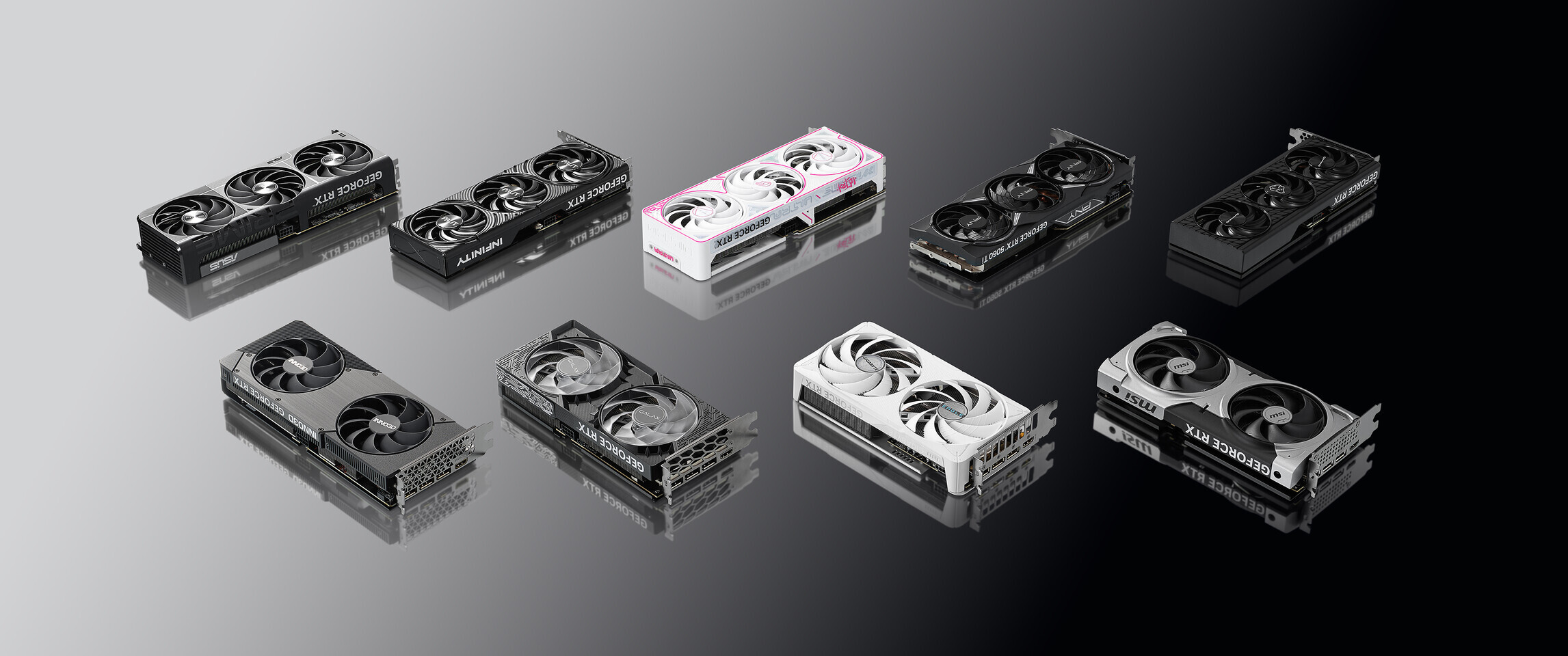
Our diverse lineup of GeForce RTX 50 Series graphics cards is getting even larger with the arrival of new White Editions. With these high-performance, cutting-edge cards, you'll be able to keep your frost-hued battlestation color coordinated. Check out the snazzy new White Edition offerings from ROG, TUF Gaming, and Prime.

Max out your snow-white rig with peak power from ROG Astral
If you want the most power possible in a ravishing white graphics card, consider the ROG Astral GeForce RTX 5090 White Edition 32 GB and ROG Astral GeForce RTX 5080 White Edition 16 GB. These VRAM-loaded cards comprise the top of the power stack. They both feature a quad-fan design for more airflow than last-gen's flagship cards, our patented vapor chamber tech, and eight heatpipes for incredible heat dissipation. These cards also swap out thermal paste for a premium phase-change thermal pad, enhancing the longevity of the graphics card's thermal interface material.

UK Store Lists Lenovo Laptops Equipped with NVIDIA GeForce RTX 5050 Mobile GPUs

NVIDIA's unannounced GeForce RTX 5050 Mobile graphics card has emerged in almost finalized form. According to fresh reports, Laptops Direct UK listed Lenovo's "Legion 5 15IRX10" 15.1-inch (£1349.97) and "LOQ 15IRX10" 15.6-inch gaming (£1149.97) laptop models; the "83LY000AUK" and "83JE000CUK" SKUs (respectively) seem to be equipped with Team Green's truly entry-level "Blackwell" GPU. Both product descriptions hype up the GeForce RTX 5050 8 GB GPU as offering "high-level graphics performance" and being capable of taking "your visuals to new heights." Officially, this "cheapest" mobile model is supposed to be a secret—going back to late last year, leaks revealed the entire laptop-oriented GeForce RTX 50-series product stack.

Unfortunately, the latest NDA-busting disclosure coincides with similar news regarding desktop relatives. Both lines of GeForce RTX 5060 cards are due for launch next week; expertly timed with Computex 2025 events. Given NVIDIA's apparent stealthy approach, VideoCardz posits that GeForce RTX 5050 Desktop and Mobile products could be introduced in a low-key manner. So far, the firm's manufacturing partners have inadvertently let slip very basic information. The Laptops Direct leak did not include overly-detailed specifications, but momomo_us stumbled upon another unnamed example—suggesting the selection of GDDR7 VRAM. Mid-March whispers seemed to link the GeForce RTX 5050 Mobile model's destiny to this advanced memory standard.

Lenovo Reveals Legion GeForce RTX 5070 & 5060 Ti Custom Card Designs

Certain Lenovo Legion pre-built gaming rigs are equipped with intriguing custom graphics card designs; reportedly not available to purchase as (separate) retail packages. As mentioned back in March, the system integrator's Legion 9000K gaming systems were configurable with slick metallic GeForce RTX 5090D and GeForce RTX 5080 options. At the time, Lenovo China hinted about a forthcoming GeForce RTX 5070 offering; also making use of a CNC-machined metal shroud and backplate. Since then, VideoCardz has kept a watchful eye on new product developments—an early April "official" leak suggested an eventual arrival of lower-end GeForce RTX 50-series "Blackwell" Legion models.

As of late last week, Lenovo China's social media accounts have unveiled cheaper Legion 7000K and GeekPro pre-built systems. These new-gen gaming PCs house the brand's fresh GeForce RTX 5070 12 GB (as promised) and GeForce RTX 5060 Ti 8 GB custom cards. VideoCardz reckons that company engineers have adhered to NVIDIA's reference specifications, so potential customers will be considering non-overclocked hardware. The Legion 7000K—starting at 11,999 RMB (~$1658 USD)—traditionally-proportioned enclosure can accommodate a longer card design; as demonstrated by promo shots. The tastefully ARGB-lit Legion GeForce RTX 5070 card's oblong format (2.5-slot) utilizes only two fans. In contrast, Lenovo's compact GeekPro—starter price: 7199 RMB (~$995 USD)—case seems to be formed around a stubbier graphics card volume; still large enough to be dual-fan. Its ridged backplate aesthetic brings previous-gen XFX to mind.

NVIDIA Announces GeForce RTX 5060 Availability Date and Specifications

NVIDIA today announced that the GeForce RTX 5060 (non-Ti) graphics card will be available from May 19, 2025. This includes availability of graphics cards from NVIDIA's board partners, and pre-built desktops with RTX 5060. The RTX 5060 was announced by NVIDIA alongside the RTX 5060 Ti in April, however, availability of the RTX 5060 was pushed to sometime in mid-May. With the 2025 Computex Taipei getting underway on May 20, and the press expected to start their coverage of the expo by May 16 at least; it's highly likely that launch of the RTX 5060 will get obscured by the deluge of Computex content.

NVIDIA also confirmed the specifications of the GeForce RTX 5060. The card is based on the same GB206 silicon as the RTX 5060 Ti, but is configured with 30 streaming multiprocessors (SM) out of the 36 present on the silicon. This works out to 3,840 CUDA cores, 120 Tensor cores, 30 RT cores, 120 TMUs, and 48 ROPs. The GPU is clocked at 2.50 GHz max boost. The RTX 5060 only gets an 8 GB memory option, there's no 16 GB. The 8 GB of GDDR7 memory runs across the GPU's 128-bit wide memory interface. The company didn't mention the memory speed. NVIDIA configured the TGP of the RTX 5060 to be 145 W, a significant reduction from the 180 W of the RTX 5060 Ti, which means most partner cards should make do with a single 8-pin PCIe power connector; it wouldn't surprise us if some cards even come with 6-pin.

NVIDIA GeForce RTX 5090D Sales to China Will Be Fully Halted in Q2

Even after NVIDIA tuned its GB202 SKU for Chinese gamers, it looks like the GeForce RTX 5090D will be banned from selling in China altogether. Back in April, NVIDIA warned its AIC partners about a potential supply cutoff for the GeForce RTX 5090D GPU, more specifically, the restriction of selling the GB202 dies to Chinese AIC customers. Today, we have another report from the Chinese "Channel Gate Vision Convergence," stating that no new NVIDIA GeForce RTX 5090D GPUs will be sold in China in Q2. All new orders being placed for NVIDIA GeForce RTX 5090D kits, which are essentially a GPU die and GDDR7 memory for AICs to add on their PCBs, have been temporarily cancelled, which is an action equivalent to a full-scale sales ban.

The machine-translated post states the following: "NVIDIA RTX5090D series models are basically confirmed that there will be no GPU available in Q2, which means that RTX5090D cannot be sold to the Chinese market, and graphics card brands will not be able to receive GPU orders. NV has basically confirmed that RTX5090D series GPUs will not be able to receive orders in Q2. All orders for 5090D chips that have been placed and undelivered POs have been temporarily canceled, which is equivalent to the RTX5090D being officially banned from sale." As a reminder, NVIDIA optimized the RTX 5090D to comply with export regulations. Despite having 21,760 CUDA cores and 32 GB of memory, the card was intentionally restricted in its AI performance through firmware limitations. This strategy enabled NVIDIA to sell the card in China, a country listed under US export regulations, while the standard RTX 5090 was banned.

Best Buy Lists PNY GeForce RTX 5060 OC SKU - Almost Adheres to NVIDIA's $299 Starter Price

Best Buy USA has updated its webstore with a "PNY GeForce RTX 5060 Overclocked 8 GB GDDR7 PCI Express 5.0 Graphics Card with Dual Fan" black edition card. NVIDIA and several of its board partners have already revealed forthcoming products, but a firm launch date was not announced during "GeForce RTX 5060 Desktop Family" introduction week. Inside track knowledge indicates a potential unveiling at Computex 2025; specifically on May 19. VideoCardz believes that GeForce RTX 5060 (non-Ti) evaluation samples were distributed well in advance of this month's big hardware conference. Two weeks ahead of an alleged simultaneous unveiling/retail launch, a barebones dual-fan PNY factory overclocked offering has appeared online. Best Buy's advertised $299.99 price point hovers just above Team Green's $299 starting line. A reference specced equivalent is present within TechPowerUp's GPU database; will retail outlets sticker this one with a just below $300 tag?

NVIDIA's GeForce RTX 5060 Ti 8 GB design received very little fanfare last month—certain members of the media had to fork out cash from their own wallets ($379 MSRP), in order to secure units for review purposes. Non-TI 8 GB (GB206 GPU-based) cards are not expected to receive widespread critical acclaim, but potential mainstream buyers could be enticed by "perceived value for money." Interestingly, PNY's mid-April "GeForce RTX 5060 Family" PR material teased a forthcoming "Single Fan RTX 5060" model. No promotional renders were provided, but Best Buy's listing has included an exploded depiction of the AIB's dual-fan solution. The contained (and suitably) stubby board design could be transferred quite easily to a smaller enclosure. Unlike GIGABYTE's recently uncovered short configuration, PNY has opted to go with a regular length PCIe interface.

NVIDIA RTX PRO 6000 Appears in Early Listings: $11,000 in Japan, €9,000 in Europe

Despite featuring the biggest GB202 configuration—24,064 CUDA cores distributed across 188 streaming multiprocessors running at up to 2,617 MHz, paired with 96 GB of GDDR7 ECC memory—the RTX PRO 6000 'Blackwell' GPU from NVIDIA is yet to have an official launch date or pricing disclosed. Early European retailer listings show the card starting at €8,982, including 21 percent VAT. Some vendors are already asking for more than €10,900. However, business customers evaluating net costs can anticipate a significant saving, with a rough estimate of €7,430 before tax, subject to local tax regulations and import fees. NVIDIA is expected to offer the RTX PRO 6000 in several variants, including Workstation, Server, and Max-Q editions that tailor power envelopes and cooling designs to different professional environments.

In Japan, pre-release listings place the RTX PRO 6000 at ¥1,630,600 (around $11,326), reflecting a similar premium level. The appearance of these price tags suggests that initial shipments have quietly reached distributors well before any formal announcement. One Redditor even got his hands on it early, preparing for a trial run. Of course, before NVIDIA releases RTX PRO-optimized drivers, the performance will lag behind the gaming GeForce RTX 5090 SKU. Geared toward enterprise workstations and professional workloads that demand high memory capacity and massive compute performance, this pricing profile distinguishes the RTX PRO 6000 from gaming-grade SKUs. Still, it is below the server-grade GB200-based Blackwell GPUs aimed at AI and HPC workloads.

Review Outlet Believes that ASUS is Repositioning ROG Strix as a Sub-sub-flagship Card Brand

ASUS has added a brand-new ROG Strix GeForce RTX 5070 Ti 16 GB GDDR7 OC Edition SKU to its wide-ranging NVIDIA GPU portfolio. The company introduced new generation ROG Strix cards earlier this year, but these offerings were missing during the various GeForce RTX 50-series launch periods. Within the first quarter of 2025, ASUS seemingly concentrated on getting its TUF Gaming and PRIME lines onto retail shelves. As reported by VideoCardz, ROG Strix GeForce RTX 5070 Ti evaluation samples seem to be in the possession of media outlets. BenchLife.info has teased an upcoming full review, but their swift "hands-on" bit of coverage divulged an interesting claim about an alleged reshuffling of ASUS product hierarchies.

The article's author—Chris L.—stated: "ROG Strix RTX 50-series is finally on the market! After finishing GeForce RTX 5060 Ti tests, we return to a GeForce RTX 5070 Ti graphics card. ASUS has made some changes to the GeForce RTX 50-series, replacing ROG Strix with ROG Astral to become the highest-end graphics card product line (for GeForce RTX 5090 and RTX 5080 tiers). As for ROG Strix and TUF Gaming, ProArt, Prime and DUAL series, they provide players with different choices. The flagship ROG Matrix still exists, but we won't see it until it is needed." Currently, new product listings point to ROG Strix being limited to custom (standard and overclocked) GeForce RTX 5070 Ti and RTX 5070 options.

NVIDIA RTX PRO 6000 "Blackwell" Underperforms with Pre-Release Drivers

Today, we are looking at the latest benchmark results for NVIDIA's upcoming RTX PRO 6000 "Blackwell" workstation-class GPU. Based on the new GB202 GPU, this professional visualization card features an impressive 24,064 CUDA cores distributed across 188 streaming multiprocessors, with boost clocks up to 2,617 MHz. It also introduces 96 GB of GDDR7 memory with full error-correcting code, a capacity made possible by dual-sided 3 GB modules. In Geekbench 6.4.0 OpenCL trials, the PRO 6000 Blackwell registered a total score of 368,219. That result trails the gaming-oriented GeForce RTX 5090, which posted 376,858 points despite having fewer cores (21,760 vs. 24,064 of RTX PRO) and a lower peak clock of 2,410 MHz versus the 2617 MHz of RTX PRO.

A breakdown of subtests reveals that the workstation card falls behind in background blur (263.9 versus 310.7 images per second) and face detection (196.7 versus 241.5 images per second), yet it leads modestly in horizon detection and Gaussian blur. These mixed outcomes are attributed to pre-release drivers, a temporary cap on visible memory (currently limited to 23.8 GB), and power-limit settings. If the card ran on release drivers, software (especially OpenCL) could greatly benefit from more cores and higher max frequency. One significant distinction within the RTX PRO 6000 family concerns power consumption. The Max-Q Workstation Edition is engineered for a 300 W thermal design point, making it suitable for compact chassis and environments where quiet operation is essential. It retains all 24,064 cores and the full 96 GB of memory, but clocks and voltages are adjusted to fit the 300 W budget. By contrast, the standard Workstation and Server models allow a thermal budget of up to 600 W, enabling higher sustained frequencies and heavier compute workloads in full-size desktop towers and rack-mounted systems.

NVIDIA RTX PRO 6000 GDDR7 Memory Comes in 3 GB Modules, Sandwiching the PCB on Both Sides

NVIDIA has significantly advanced professional graphics by rebranding its workstation lineup as "RTX PRO" and incorporating an amazing 96 GB of GDDR7 memory capacity into a single RTX PRO 6000 card. This marks the first time 3 GB GDDR7 modules have been employed in a workstation GPU, each supporting error-correcting code for enhanced reliability. By arranging 16 such modules on each side of the PCB, NVIDIA achieves the remarkable 96 GB capacity while maintaining a TDP limit of 300 W for its Max-Q variant (pictured below) and up to 600 W for other SKUs. A recent leak on the Chiphell forum provides a clear insight into the new PCB layout. The customary 12 V-6×2 power connector has been omitted and replaced by four solder points intended for a cable extension.

This design choice suggests preparation for both Server and Max-Q editions, where power inputs are relocated to the rear of the card. Despite the simplified power interface and reduced footprint, the Max-Q model retains the full GB202 Blackwell GPU and the complete memory capacity. At the top of the series, the RTX PRO 6000 Blackwell will be offered in three distinct configurations. The Workstation and Server editions feature 24,064 CUDA cores, 96 GB of GDDR7 ECC memory, and a 600 W power budget, ensuring consistent performance in desktop towers and rack-mounted systems. The Max-Q edition employs the identical GPU and memory configuration but limits power consumption to 300 W through lower clocks and power limits, making it particularly well suited for compact chassis and noise-sensitive environments.

NVIDIA Reportedly Working on GeForce RTX 5080 SUPER 24 GB & RTX 5070 SUPER 18 GB Designs

Mere months after the launch of GeForce RTX 5080 16 GB and RTX 5070 12 GB graphics cards, industry rumors are already swirling about a potential "SUPER" semi-successor. Sections of NVIDIA's previous-gen "Ada Lovelace" GeForce RTX 40-series family received mid-generation refresh treatment around early 2024. It is not clear whether it will take a year+ for the speculated arrival of upgraded "Blackwell" desktop gaming solutions, but members of the Chiphell forum have been openly discussing alleged "in-progress" GeForce RTX 5080 SUPER 24 GB and RTX 5070 SUPER 18 GB card designs. Past weekend theorizations were highlighted by ITHome and VideoCardz—in particular, one Chiphell participant posited the two follow-ups will not be deployed with noticeably "faster" performance.

Larger pools of onboard GDDR7 VRAM could pave the way for improvements in AI productivity, although greater capacities could lead to beneficial conditions in gaming scenarios—e.g. extra provisions for large textures and complex assets. The speculated GeForce RTX 5080 SUPER card could borrow aspects from Team Green's GeForce RTX 5090 Mobile 24 GB model; namely the latter's usage of 3 GB GDDR7 memory modules. Press interpretations—of fresh Chiphell leaks—point to company engineers enabling existing PCB designs with 8×3 GB (24 GB) and 6×3 GB (18 GB) parts; thus preventing a major overhaul of board layouts. Global PC gaming hardware communities have often expressed a dislike of NVIDIA's repeated deployment of 8 GB and 12 GB capacity products. A theoretical GeForce RTX 5070 SUPER 18 GB option could receive a warmer welcome. Very early speculation proposes an introduction—of SUPER "Blackwell" models—just before or during CES 2026.

SK Hynix GDDR7 Memory Overclocked to 34 Gbps on NVIDIA GeForce RTX 5070 Ti

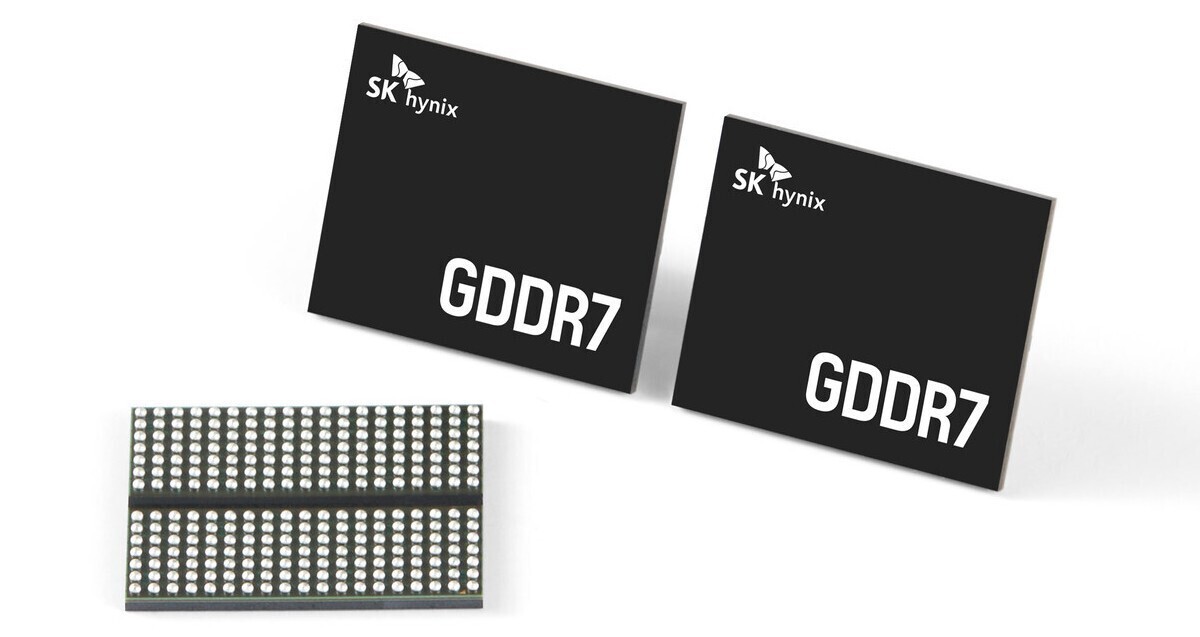
As a GPU supply chain gets regularly updated, NVIDIA quietly added a new memory partner to its GeForce RTX 50 series lineup, bringing SK Hynix on board alongside Samsung for GDDR7 modules. Early mentions suggested that SK Hynix memory would appear on standard RTX 5070 cards. Still, the first sightings were on RTX 5070 Ti models, especially in China, where these cards have arrived ahead of other regions. Users on Chiphell and Baidu, verifying their GPUs with GPU-Z, discovered that the SK Hynix chips, which officially run at 28 Gbps, can be safely overclocked to 34 Gbps. This shows that switching to a second supplier does not hurt performance or overclocking headroom, so enthusiasts can expect the same headroom they've enjoyed with Samsung-sourced modules.

That said, some owners have encountered an obstacle when cross-flashing BIOS files with SKUs that use Samsung memory. Flashing an RTX 5070 Ti BIOS from a Samsung-equipped card onto one built with SK Hynix memory sometimes prevents the GPU from booting. However, dual-BIOS designs let users switch back to factory firmware and restore normal operation without too much fuss. As VideoCardz pointed out, TechPowerUp's BIOS database indicates that current firmware versions from various board partners already include support for GDDR7 modules from Samsung, SK Hynix, and even Micron. This suggests that these flashing issues aren't simply a matter of unrecognized memory. It could be related to board-specific power settings or other configuration quirks, with every GPU maker designing their boards differently, yielding possible errors if the firmware is swapped. Since SK Hynix-based cards run fine out of the box, most users won't have any reason to flash different firmware.

Intel Job Listing Suggests Company Implementing GDDR7 with Future GPU

A recent job listing at Intel for a memory sub-system validation engineer—a person that tests and validates memory with new types with prototype silicon, suggests that Intel is implementing the contemporary GDDR7 memory standard with an upcoming GPU. The position calls for drive-and-deliver pre- and post-silicon validation and characterization of GDDR6 and GDDR7 memory types on Intel's Arc GPU products. Given that Intel is putting this listing out now, in Q2-2025, an actual product that implements GDDR7 could be rather far out, considering typical GPU silicon development timelines. We predict such a chip could be taped out only by 2026, if not later.

A possible-2026 tapeout of a GPU silicon implementing GDDR7 points to the likelihood of this being a 3rd Gen Arc GPU based on the Xe3 "Celestial" graphics architecture. Given Intel's initial success with the Arc B580 and B570, the company could look to ramp up production of the two through 2025, and continue to press home its advantage of selling well-priced 1080p-class GPUs. Intel could stay away from vanity projects such as trying to create enthusiast-class GPUs, sticking to what works, and what it could sell in good volumes to grab market share. This is a business decision even AMD seems to have taken with its Radeon RX RDNA 4 generation.

NVIDIA GeForce RTX 5060 Ti 8 GB Variants Not Made Available to Review Outlets

As expected, NVIDIA lifted its GeForce RTX 5060 Ti graphics card review embargo earlier today (April 16)—TechPowerUp's audience can check out W1zzard's opening day evaluations of six board partner models here. Just ahead of publishing its own verdict, Hardware Unboxed uploaded a video that leveled mild criticism in the direction of Team Green decision makers. VideoCardz swiftly picked up on the Australian PC hardware media outlet's accusations—in summary, only GeForce RTX 5060 Ti 16 GB models were made available to reviewers and influencers. Hardware Unboxed's Tim Schiesser elaborated on circumstances: "while the launch is claimed to be the same day for the two variants, NVIDIA is only sampling the 16 GB card for reviews, so that is what will be covered on launch day. But it goes beyond that because we've been told that AIBs will not be supplying the 8 GB card for reviews and, in fact, cannot supply the 8 GB card for reviews. Despite NVIDIA giving us permission to source 8 GB models for day one reviews, board partners told us they were unable to send us a graphics card in some cases because they weren't ready, but in other cases because NVIDIA had explicitly prevented them from doing so."

Day old press material adverted a simultaneous launch of both variants, but the ($379 MSRP) cheaper option seems to be delayed. An official source disclosed news about this release date anomaly to Schiesser and colleagues: "NVIDIA told us the 8 GB card is coming slightly later, perhaps a week or so after the 16 GB card ($429 MSRP), which would make it launch on a different day. But despite this, they both have the same launch day. Hard to know what's going on there." Additionally, Hardware Unboxed and other news outlets detected mixed messages during Team Green press liaisons—earlier messages focused on 16 GB and 8 GB getting equal billing around launch time. According to follow-up reports, a recent Q&A session indicated the sudden prioritization of GeForce RTX 5060 Ti 16 GB models. As of yesterday evening, VideoCardz detected media talk regarding a surprising lifting of NVIDIA's GeForce RTX 5060 (non-Ti) review embargo. They outlined curious conditions: "GeForce RTX 5060 is supposed to launch in May, (but) will have its review embargo lifted on April 16; the same day as the RTX 5060 Ti. Yes, that means the RTX 5060 won't have official review coverage, and basically, whoever can source the card before launch will not even break the embargo by sharing the results." As covered by TechPowerup's news team, yesterday's Team Green PR blurb was headlined by the "game changing" GeForce RTX 5060 8 GB card and its $299 starting price tag.

NVIDIA Confirms GeForce RTX 5060 Ti Starting MSRPs: $429 for 16 GB, & $379 for 8 GB

Earlier today, NVIDIA's public relations department published their "GeForce RTX 5060 Desktop Family" introductory article. Curiously, the company's brand-new GeForce RTX 5060 Ti graphics cards do not headline Team Green's "dedicated" PR release—instead, the general "game changing" GeForce RTX 5060 series is advertised with a starting price point of $299. Clarification arrives several paragraphs deep into the blurb—as explained with some "PR" magic: "starting April 16th, we're bringing DLSS 4 and Blackwell's suite of innovations to every gamer with the launch of the GeForce RTX 5060 desktop family, beginning with the release of the GeForce RTX 5060 Ti. And in May, the GeForce RTX 5060 arrives, with prices starting at $299." Very specific cost of ownership digits leaked last week; indicating a refreshing reduction over earlier (disappointing) predictions.

Team Green's publicity team has confirmed starting MSRPs of $429 for 16 GB models, and $379 for 8 GB variants. These official numbers are buried three-quarters of the way into NVIDIA's PR document. Older evidence pointed to a possible repeat of lower end GeForce RTX 40-series guide prices—as it turns out, the GeForce RTX 5060 card's $299 "cost of entry" aligns with its predecessor's launch figure. Based on leaked pre-built PC listings, industry watchdogs deduced the $299 MSRP earlier on in the month. Additionally, Team Green's PR material teased the upcoming launch of related mobile hardware: "the same features, innovations and advantages of the GeForce RTX 5060 desktop family are coming to laptops this May, when GeForce RTX 5060 laptops arrive on shop shelves, starting at $1099." Real life scenario prices are expected to remain "sky-high," even for rumored cheaper devices—equipped with GeForce RTX 5050 Mobile GPUs.

ASUS Introduces GeForce RTX 5060 Ti and RTX 5060 Card Lineup: TUF Gaming, Prime & Dual

We've snuggled NVIDIA's brand-new GeForce RTX 5060 and 5060 Ti GPUs inside a variety of ASUS graphics cards to bring game-ready NVIDIA 50 Series graphics power to more PC players. Between NVIDIA's Blackwell architecture and our cutting-edge hardware, these graphics cards offer users an accessible and exciting path to modern PC gaming. We have something for everybody, including rock-solid TUF Gaming GeForce RTX 5060 and 5060 Ti options, versatile Prime GeForce RTX 5060 and 5060 Ti offerings, and ultra-compact Dual GeForce RTX 5060 and 5060 Ti graphics cards. Whether you want something rugged, small form factor (SFF)-ready, or amped with enough VRAM to dig into more serious gaming, we have a graphics card that'll fit your needs.

Next-gen technology, hardware, and features for all
There are many constants across our RTX 5060 and 5060 Ti graphics card spread, ensuring you'll get lots of great features no matter what card you're keen on. All nine of our TUF Gaming, Prime, and ASUS Dual RTX 5060 and RTX 5060 Ti cards benefit from NVIDIA's Blackwell architecture, granting you 4th generation RT cores for improved ray tracing performance. RTX 5060 and RTX 5060 Ti GPUs also pack neural shaders, which game developers can use to compress textures and reduce memory usage. NVIDIA DLSS 4 will supercharge your gaming experience with its own feature suite. Super Resolution, Ray Reconstruction, and Frame Generation all get improvements with the latest version of DLSS, helping your games run well and look their best. And 5th Gen Tensor Cores give these GPUs the power of Multi Frame Gen, smoothing out your AAA gaming like never before. Together, these features help RTX 5060 and RTX 5060 Ti graphics cards punch above their weight class, giving you outsized performance.

NVIDIA Launches GeForce RTX 5060 Series, Beginning with RTX 5060 Ti This Week

NVIDIA today announced the GeForce RTX 5060 series, with a combined announcement of the GeForce RTX 5060, the GeForce RTX 5060 Ti 8 GB, and the RTX 5060 Ti 16 GB. The latter two will be available from tomorrow, 16th April, which is also when media reviews of the RTX 5060 Ti 16 GB and 8 GB go live. The RTX 5060, meanwhile, is expected to be launched in May. The RTX 5060 Ti introduces the new 5 nm "GB206" silicon, which the SKU maxes out. This chip features 36 streaming multiprocessors (SM) across 3 GPCs. These work out to 4,608 CUDA cores, 144 Tensor cores, 36 RT cores, 144 TMUs, and 48 ROPs. The chip features a 128-bit GDDR7 memory interface driving 8 GB of 16 GB of 28 Gbps (GDDR7-effective) memory for 448 GB/s of memory bandwidth, which is a 55% increase over the RTX 4060 Ti.

NVIDIA recommends the RTX 5060 Ti for maxed out 1080p gameplay, including with ray tracing, although we expect it to be unofficially capable of 1440p gameplay with fairly high settings and ray tracing. You get new features being introduced with the RTX 50-series, including Neural Rendering, and DLSS 4 Multi Frame Generation. NVIDIA is pricing the RTX 5060 Ti 8 GB at $375, and the 16 GB sibling about $50 higher, at $425, although these could be fairy tale pricing given the unpredictable world trade environment and scarcity profiteering by scalpers.

ZOTAC Launches GeForce RTX 5080 & 5070 Ti Apocalypse Models in China

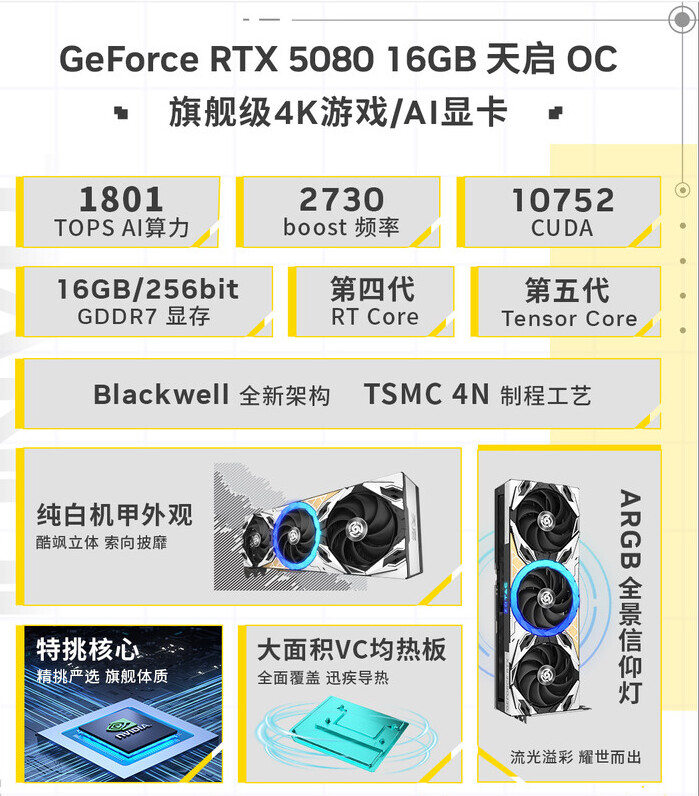
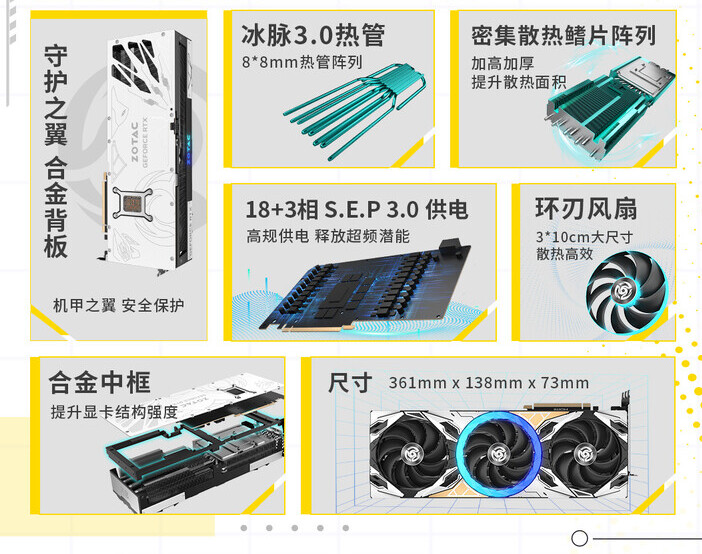
ZOTAC started teasing a refresh of its Apocalypse product line earlier in the year. Two months later, fairly concrete details of the (still) upcoming GeForce RTX 5080 16 GB variant emerged via the NVIDIA board partner's Weibo blog. Unfortunately, ZOTAC's ultra premium 3.5-slot thick/ARGB-lit behemoth design is expected to remain exclusive to the Chinese PC hardware market. Western hardcore gaming enthusiasts are best served by the manufacturer's alternative flagship triple-slotter: GeForce RTX 5080 AMP Extreme INFINITY ULTRA. ZOTAC's mainland China and Hong Kong offices have declared the arrival of brand-new Apocalypse SKUs at retail; utilizing NVIDIA's "Blackwell" GeForce RTX 5080 and RTX 5070 Ti GPUs.

Yesterday's Weibo bulletin commenced with: "when mecha aesthetics collide with technology, and gaming passion merges with extreme performance, the ZOTAC GeForce RTX 50 Apocalypse series graphics cards are born! After (our) continuous R&D, improvement, testing and adjustment—today, newly upgraded flagship graphics cards are officially launched!" The brand has advertised the return of an apparently much-missed product line mascot: "Apocalypse Princess is back with a new look, starting a game/AI exploration journey with you." Promotional imagery and box art feature a prominent illustration of ZOTAC's flagship series heroine—this "mecha artwork" demonstrates a serious sci-fi aesthetic, albeit with a cute female protagonist leading the way. A rival AIB specializes in this type of "marketing"—Yeston's similar-ish presentation language concentrates on enchanting fantasy characters.

NVIDIA Sends MSRP Numbers to Partners: GeForce RTX 5060 Ti 8 GB at $379, RTX 5060 Ti 16 GB at $429

Next week's planned launch of NVIDIA's GeForce RTX 5060 Ti series brings two SKUs differentiated by memory capacity and pricing. Both models leverage the GB206-300 GPU, made on a 5 nm node from TSMC, and feature a 128-bit memory interface paired with GDDR7 chips running at an effective 28 Gbps. According to IT Home, NVIDIA has communicated MSRP figures to its key AIC partners ahead of the mid-April rollout. The entry-level 8 GB variant is set at an MSRP of ¥3,199 (roughly $379), while the 16 GB version carries an MSRP of ¥3,599 (about $429). This is a reduction from the $399 and $499 prices anticipated earlier. NVIDIA is adjusting its pricing strategy for these mid-tier chips to align itself against the competition better and draw more new buyers.

Under the hood, the GB206-300 core activates 36 streaming multiprocessors, delivering a total of 4,608 CUDA cores. The GPU operates at a base clock of 2,407 MHz, boosting to 2,572 MHz under load. Memory runs at 1,750 MHz (28 Gbps effective), routed through the 128-bit bus to yield up to 448 GB/s of bandwidth. Graphics-specific throughput is augmented by 144 texture mapping units and 48 render output units, while 36 dedicated ray-tracing cores handle real-time lighting calculations. Additionally, 144 tensor cores accelerate AI-driven workloads such as DLSS upscaling and machine-learning inference. Power delivery for both cards is managed via a single 16-pin connector, with a total board power of 180 W. Display connectivity includes one HDMI 2.1b port alongside three DisplayPort 2.1b outputs, and the card interfaces with host systems over PCI Express 5.0 x16.

Insider Claims NVIDIA GeForce RTX 50 Series Transitioning to Usage of SK hynix GDDR7 Memory Modules

So far, NVIDIA's GeForce RTX 50xx graphics card models have shipped with Samsung GDDR7 memory modules onboard. According to a fresh MEGAsizeGPU (aka @Zed__Wang) claim, a change in vendor has already occurred. The tenured tracker of Team Green inside track information believes that the company has: "started to use SK hynix GDDR7 for the GeForce RTX 50 series graphics cards. Started with GeForce RTX 5070 first." Officially, NVIDIA's latest board designs can support GDDR7 modules produced by the "big three:" Samsung, SK hynix and Micron (see BIOS info below). Team Green's comfortable market leading position probably grants plenty of negotiation power to pick and choose the best component deals. Day one evaluators performed teardowns on GeForce RTX 50 series review samples; TechPowerUp's W1zzard found Samsung "K4VAF325ZC-SC32" GDDR7 units—rated for 32 Gbps—onboard various GeForce RTX 5080 16 GB models. As outlined by VideoCardz, the rest of NVIDIA's "Blackwell" gaming product stack sticks with 28 Gbps-rated Samsung GDDR7 modules, extending to its Mobile portfolio.

NVIDIA GeForce RTX 5060 Ti Shows up in Furmark Online Database

NVIDIA's upcoming GeForce RTX 5060 Ti performance segment graphics card appeared in alleged Furmark online database entries. These reference the card by its device ID, 10DE-2D04. There are three instances of the card in the database, one of which sees the benchmark being run in a remote desktop session, where the card scores 5634 points or 93 FPS on average, but with its core boosting only up to 1238 MHz. The second, more plausible result sees the card score 10242 points or an average of 170 FPS, with its core going up to 2656 MHz. Both these tests are run at 1080p. The third result sees the GPU score 4411 points or 73 FPS, but at 4K Ultra HD resolution—again, plausible given its score with 2656 MHz maximum boost. The second result has Furmark read the card's maximum TDP to be 180 W.

The GeForce RTX 5060 Ti debuts the new "GB206" GPU, which probably has 36 or 40 SM. The RTX 5060 Ti is configured with 36 SM for 4,608 CUDA cores, 144 Tensor cores, 36 RT cores, 144 TMUs, and an unknown number of ROPs (probably 64). The GPU has a 128-bit wide GDDR7 memory interface, and comes with 16 GB and 8 GB memory variants. We gather from these Furmark screenshots that the GPU boosts over 2600 MHz, and it's possible that the memory ticks at 28 Gbps, yielding 448 GB/s of memory bandwidth. The 180 W TDP shown in one of these screenshots means that some if not all custom-design RTX 5060 Ti cards could feature 8-pin PCIe power connectors (150 W from the connector, plus 75 W from the slot). All rumors point to a mid-April launch of the RTX 5060 Ti.

HP OMEN 16L Pre-builds Listed with GeForce RTX 5060 Ti 16 GB & 8 GB Memory Configs

HP New Zealand's own webstore and Best Buy Canada have both listed OMEN 16L pre-built compact gaming PC systems with GeForce RTX 5060 Ti graphics cards. At this stage in time, NVIDIA's lower end "Blackwell" gaming GPUs are no longer big secrets—"full specifications" leaked out last week, and industry watchdogs recently predicted an April 16 launch day. As per usual, momomo_us sniffed out HP NZ's accidental publication of NDA-busting material—at the time of writing, the company's Kiwi branch has scrubbed these offending items from their webshop. Judging from preserved screenshots, both models were specced with GeForce RTX 5060 Ti 8 GB graphics cards.

Best Buy Canada's listing is still active, and advertises HP's upcoming white OMEN 16L variant as: "powered by an AMD Ryzen 7 8700F processor and 16 GB DDR5 RAM, it ensures smooth gaming and multitasking. NVIDIA's GeForce RTX 5060 Ti graphics card with dedicated memory enhances immersion with seamless visuals...(the) GeForce RTX 5060 Ti graphics card with 16 GB GDDR7 dedicated memory ensures fluid visuals." Cost of ownership is listed as $1799.99 CAD (~$1263 USD), with a May 16 release—potentially placeholder information. Insiders reckon that Team Green's GeForce RTX 5060 (non-Ti) launch is delayed to mid-May. Roughly two weeks ago, a GeForce RTX 5060-based Acer pre-built gaming PC turned up online.
Return to Keyword Browsing
Nov 17th, 2026 20:51 CST change timezone

New Forum Posts

Popular Reviews

TPU on YouTube

Controversial News Posts