News Posts matching #Google

Return to Keyword Browsing

Microsoft Admits Not Everyone Wants AI in Bing, Offers Options to Disable It

Bing users who would rather skip the AI answers now have two official ways to do it, according to a new post on Microsoft's Bing Search Blog. The first is the Microsoft Bing AI Search Choice extension for Chrome and Edge, which adds a single toggle for AI-generated answers that applies to every Bing search. The second needs no install: adding "-ai" to the end of a query removes the AI answer for that one search. Microsoft says its research shows users want "to choose whether or not AI is involved in every session," though it hasn't published that research.

Installing the extension also makes Bing the browser's default search engine, and there doesn't seem to be a way to get one without the other, so it looks like a play for Chrome users as well. It's also still labeled a preview, and it isn't new, since Microsoft's head of search, Jordi Ribas, first announced it back in June. Bing doesn't appear to have a matching switch in its own settings either, so anyone on another browser has to type the operator every time.

Google Extends Tensor Processor Unit Series with TPU 8tx and 8i Max

While we've always co-designed our TPUs in partnership with Google DeepMind, we're now increasingly getting feedback from external organizations on their specific needs. With computing moving from human to agent scale, businesses are asking for accelerators that can reason across AI models' massive context windows. In addition, some highly regulated customers are asking for specialized encryption capabilities for unique workloads.

The new TPU systems we are announcing today address this new reality. Coupled with our recent PyTorch announcements, our aim is to make TPUs more easily accessible to every developer and Cloud customer. By combining modular custom silicon with an open and easy-to-use software stack, we can deliver new hardware and system configurations at the pace of the AI industry.

Googlebook Update Frees Up RAM From On-Device AI

Google has started rolling out the November update for Googlebook, and the biggest change is how much memory the platform's on-device AI takes up. On the Acer Googlebook 14, ASUS Googlebook 14, and Lenovo Googlebook 15, Google's release notes say it has improved memory usage for on-device AI to make multitasking more stable on 16 GB devices. Apparently, this comes down to updated memory management in the NPU driver, which reportedly frees up between 3 GB and 6 GB of system RAM and lets the OS claw back memory when Chrome needs more of it. The Help Center notes don't put a number on it, though, and the 3 GB to 6 GB figure comes from Google's announcement on Reddit.

The update, build CL3B.260622.286.R2, carries the November 1 security patch and around 30 fixes in total. Among them are keyboard and trackpad input dropping out on convertibles, black screens with DRM-protected video on external monitors, external USB microphones not working, Zoom crashes with background effects, and bootloops when an update gets interrupted. HP and Dell owners also get a fix for Bluetooth audio lip-sync issues, and the Linux Terminal gets several reliability fixes. All three models getting the memory fix ship with 16 GB of RAM. Freeing up to 6 GB on those machines is a big deal, since that's over a third of the total memory. The update is rolling out gradually, and owners can check for it under Settings > System > Software updates > System update.

Google Says Detachable Googlebooks Are Next in Line

Google has confirmed that Googlebooks with removable keyboards are on the way. During its Android Dev Summit 2026 keynote last week, the company said its Chromebook successor "spans across large screen form factors from clamshells, convertibles, and soon detachables." That's all Google said, so there's no date, price, or specific device attached to it yet. The current lineup is mostly made up of clamshells, and the Acer Googlebook 14, with its 360-degree hinge, is the only convertible in it.

Reports claim that the first detachable will most likely come from Lenovo, which already sells the Googlebook 15. Its Googlebook Duet m, codenamed "Sapphire," showed up in the Bluetooth SIG database back in August, and a matching keyboard and Lenovo Pen Pro stylus have now cleared the FCC under the IDs O57DUET13BTKB and O57AP501U1. The keyboard schematics carry Googlebook branding on the left palm rest, and it seems to work both through pogo pins when attached and over Bluetooth LE on its own battery. Leaks point to a 13-inch OLED panel and a MediaTek chip, though reports disagree on which one, and Lenovo hasn't confirmed any of it.

Reddit Will Protect its "Extremely Valuable Corpus of Data" from Google's AI Search With Forced Logins

Since before the advent of AI-powered web search, Google has leaned heavily on Reddit in particular, often with mixed results, and this was, by-and-large, a mutually beneficial relationship, with Google's AI Overview driving traffic to the forum site. However, as of Reddit's latest Q3 2026 financial results, this arrangement appears to be changing. Following the release of the financial results, there was a Q&A session in which Reddit's CEO, Steve Huffman explained that Reddit would be locking its data behind a login requirement in order to protect it from a changing web landscape.
Web search is evolving from a gateway to the web to becoming an AI-powered destination itself. While extraordinarily useful and powerful, AI search solves a different problem than Reddit. AI does not fulfill people's fundamental need for community, connection, and belonging with other people, and it lacks context and nuance... Logged in and app dial are our most valuable users, and they are our primary focus.

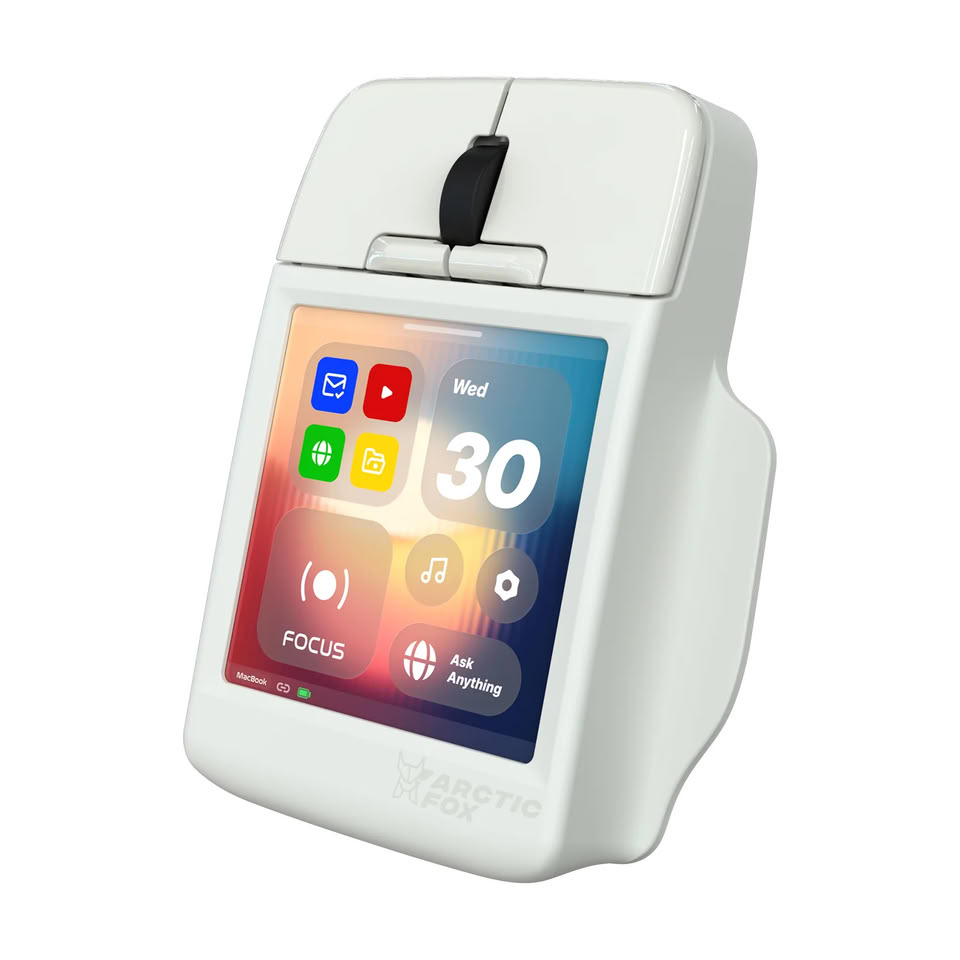
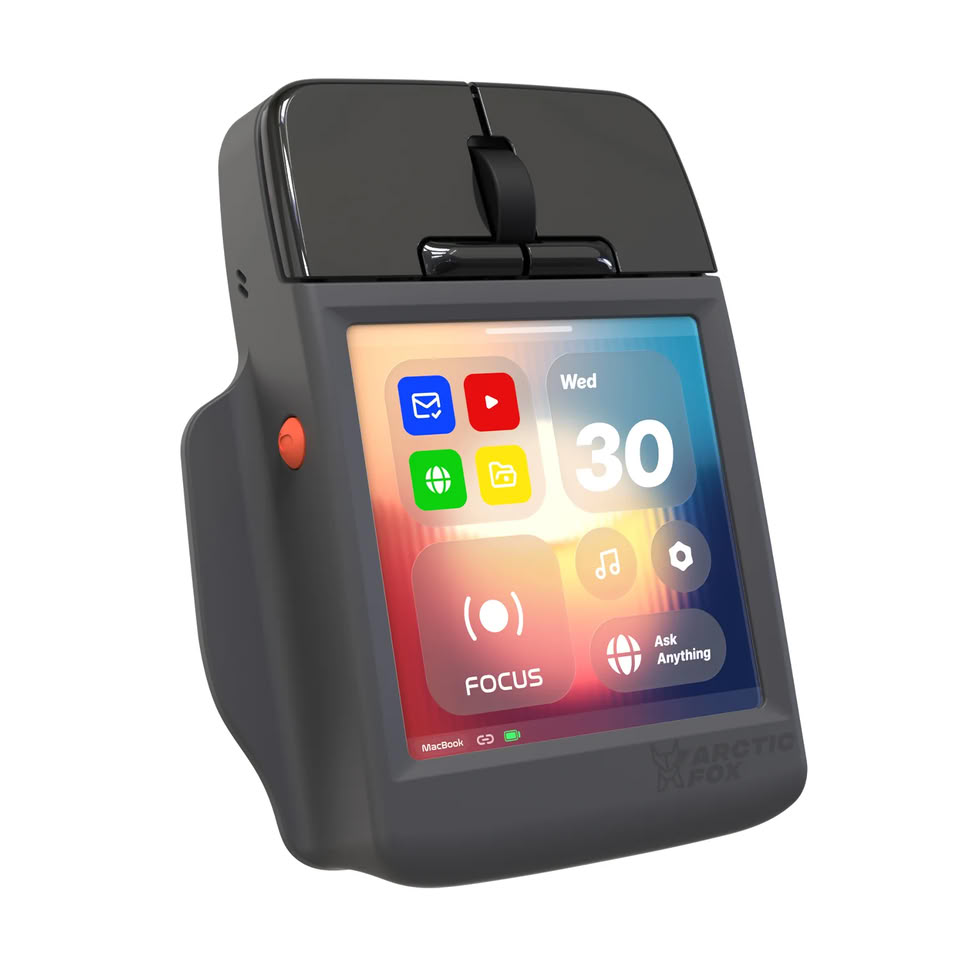
The Arctic Fox Super Mouse Has a 3.1-Inch 720p Touchscreen and Asks "What if It Did Everything?"

2026 has been a bit of a watershed moment for computer mice, especially in the gaming space, with features like rapid trigger, adjustable actuation, and haptic feedback making it into mice like the Logitech G Pro X2 Superstrike (read TechPowerUp's in-depth review here) and X3 Superstrike, but Arctic Fox has taken a different approach to innovation and mouse features with the somewhat perplexing Super Mouse. The Super Mouse is a productivity mouse aimed more at office workers and multitaskers than gamers—to the point that the brand hasn't even disclosed what sensor the mouse is using nor its sensitivity specs.

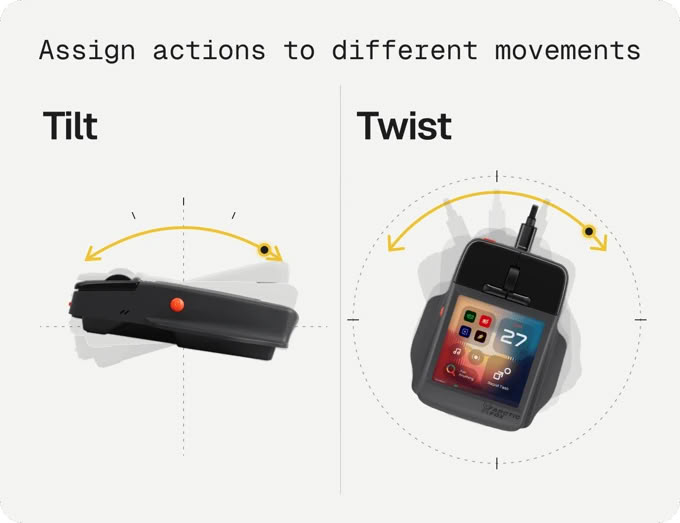
The Super Mouse's claim to fame is its 3.1-inch, 720p touchscreen on the top, which Arctic Fox has loaded with a bunch of productivity functions, including customizable shortcuts to launch applications on Windows or macOS, a full virtual keyboard, multistep macros and routines, trackpad and gesture functionality, and productivity tracking. The Super Mouse even has built-in voice input for speech-to-text input, and it has full Google Calendar integration via OAuth 2.0, which the brand claims keeps your data private alongside user-defined permissions control, encrypted calendar data, and local calendar data storage. There is also claimed built-in gyro control for 3D navigation.

Discord Makes Content on Discoverable Servers Searchable on Google and Other Search Engines

Discord has apparently realized that more and more companies and game studios have moved content, like announcements, guides, and product support, that would ordinarily have been hosted on blogs and forums to official Discord servers, effectively locking that content behind a Discord account and making it extraordinarily difficult to find in some cases. In response, the chat service provider has officially announced the roll-out of Server Web Pages in an effort to make discoverable Discord servers—those publicly available servers often used for support and announcements—more easily discoverable using search engines, like Google and DuckDuckGo.
Prior to Discord's launch, message boards were common, ranging from community-driven forums to official ones run by game studios. These message boards excelled at hosting long-form, structured conversations about helping people, theory crafting, and more. While they still exist today, many have moved into Discord servers. This has led to valuable information being locked in Discord conversations, inaccessible to the wider internet. We want to fix this.

Anthropic Files to Go Public on Nasdaq, Reveals $16.3 Billion in First-Half Revenue

Anthropic has publicly filed for an IPO, submitting an S-1 to the SEC on October 26 with plans to list on the Nasdaq under the ticker "ANT." The filing leaves the price range and share count blank for now, but the Wall Street Journal reports the offering could raise $100 billion or more at a valuation of $1.5 to $2 trillion. If that ends up being the case, it would top the record SpaceX set with its June IPO. Goldman Sachs and Morgan Stanley head a long list of underwriters, and trading is reportedly targeted for the week of November 16. The prospectus also gives the first official look at Anthropic's books.

Revenue for the first half of 2026 came in at a massive $16.3 billion, up from $1.16 billion a year earlier. The company also posted an $80.7 billion net loss. However, about $72.4 billion of that is a non-cash charge tied to the changing value of convertible notes and similar instruments, and the operating loss was a much smaller $693 million. Anthropic says more than 11,900 customers now spend at least $100,000 a year, and it holds about $131.7 billion in cash and short-term investments. It has also signed huge compute commitments, including up to $114.5 billion with Google, at least $110 billion with Amazon, and a separate deal for AMD Instinct MI450 GPUs. Of course, the filing comes with the usual warnings, as Anthropic says it may not reach or sustain profitability and expects costs to keep rising. OpenAI, meanwhile, says it doesn't expect to go public until next year.

YouTube Sets Early 2027 Target for AV2 Streams on the Web

The Alliance for Open Media (AOMedia) shared an update on AV2 this week, and the clearest date in it comes from YouTube. Des Keane, Engineering Director at YouTube, confirmed the platform will begin streaming in AV2, which is the royalty-free successor to AV1 that AOMedia says offers roughly 30% better compression. In practice, that means either sharper video at the same bitrate or the same quality using less bandwidth, and the codec also adds support for multi-stream and multi-view video, higher frame rates, and improved HDR. Keane put it plainly: "YouTube AV2 streams will be available for Web as soon as early 2027."

Chrome is the other half. Jim Bankoski, VP of Engineering for Google Chrome, said AV2 playback has been demonstrated in the browser, though Google hasn't said which Chrome version will get it or whether it will be on by default. That demo dates back to CES 2026, where Google streamed AV2 videos from YouTube to a gaming laptop at 1080p and 24 FPS using a custom Chrome build with the reference decoder. Netflix and Prime Video are also exploring the format, but neither has shared a timeline. Meta wants to repeat its AV1 rollout with AV2, and Intel is working on SVT-AV2.

Server CPU Shipments Projected to Grow Over 40% YoY in 2027, with Arm-Based Products Continuing to Gain Market Share

TrendForce's latest AI server industry research indicates that demand for server CPUs has grown steadily since the second half of 2025 as AI server providers actively introduce AI agent applications. Server CPU shipments are projected to increase 31% YoY in 2026.

In 2027, continued growth in AI inference demand and rising adoption of agentic AI services are expected to drive server CPU shipments up by more than 40% YoY, potentially reshaping a market landscape traditionally dominated by x86 processors.

Synaptics Announces Astra SR200 Multimodal Edge AI Processors with Google Coral NPU

Synaptics Incorporated (Nasdaq: SYNA) today introduced the xMCU, a new class of microcontrollers that runs multimodal Edge AI, with the launch of the Synaptics Astra SR200 Series. Unlike conventional MCUs constrained by limited on-chip memory and compute, the xMCU combines heterogeneous, AI-native compute and acceleration with integrated high-bandwidth custom DRAM scalable to hundreds of megabytes, enabling larger AI models and richer multimodal workloads to run entirely on-device. The Astra SR200 Series of xMCUs is designed for the next generation of AI wearables, battery-powered sensing devices, connected cameras, streamers, and industrial vision and voice systems.

The SR200 Series is powered by the Synaptics Torq AI engine, which brings a standards-based hardware architecture and unified developer experience featuring the Coral NPU from Google Research. It also comes with the industry's first pairing of the Arm Cortex -M85 and Cortex -M52. Together with integrated vision and audio capabilities and hardware-rooted security, the SR200 Series brings unmatched system design efficiency and cost benefits to Edge and Physical AI designs.

Apple Announces HomeView, a $299 Smart Home Hub

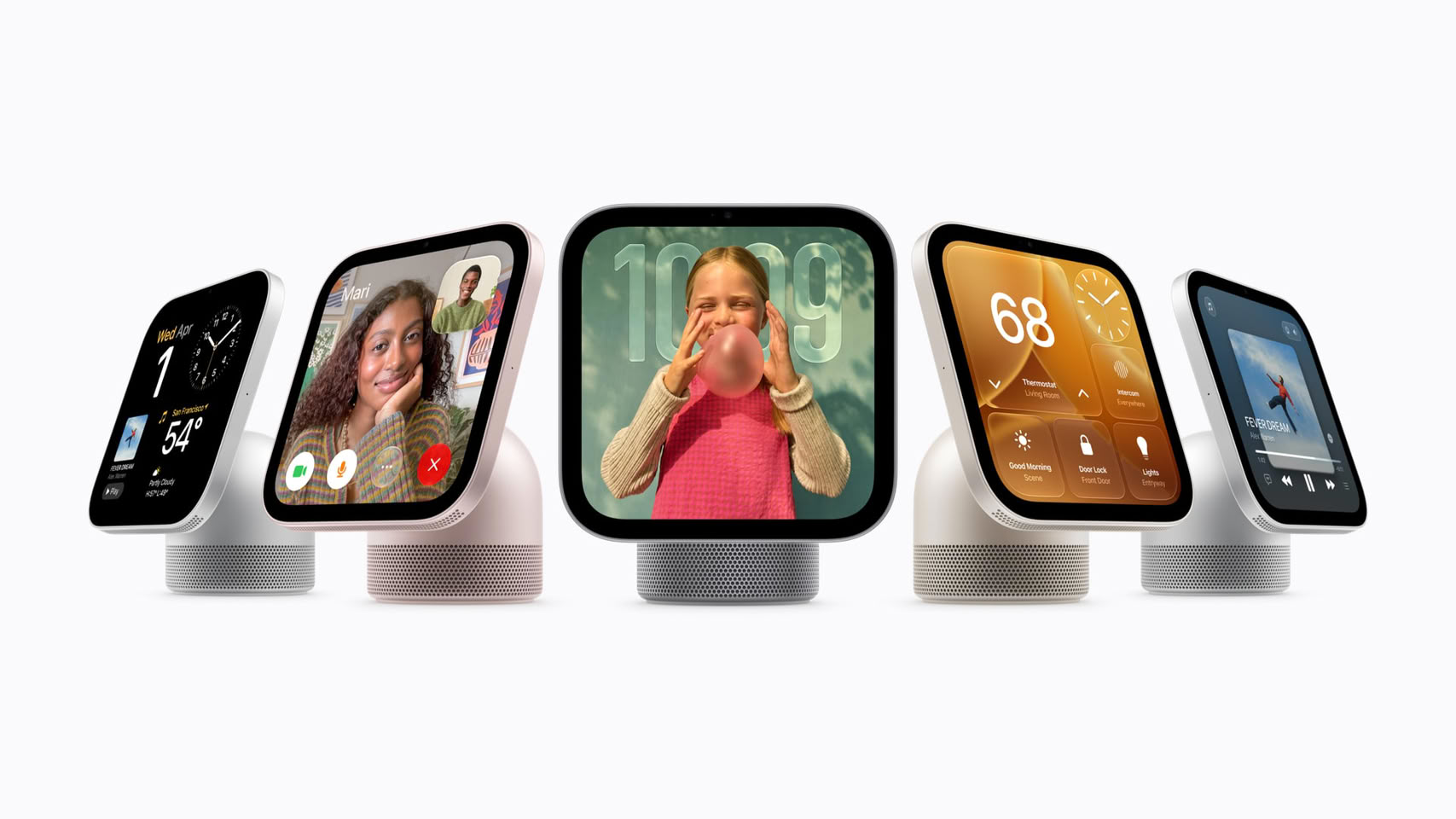
Apple has officially announced HomeView, its long-rumored smart home hub, priced at $299 in the US. It comes in two versions, a tabletop model and a wall-mounted one, both built around a 7-inch Liquid Retina display with True Tone that ranges from 500 nits down to just 0.3 nits. The tabletop model sits on a domed speaker base with a down-firing woofer, attached through a tilting stainless steel hinge. Inside, there's an A18 chip with Secure Exclaves, which Apple says keeps camera and microphone data separate from the rest of the system.

HomeView leans heavily on Apple's new Siri AI, which is still in beta on the device. Personal context features need a paired Apple Intelligence-capable iPhone or iPad, and some server-side features come with daily limits, with paid expanded access planned for later. The hub also recognizes up to six people by face, each with their own Home Screen. Smart home control covers Matter accessories as well as Apple's new Home Collection, designed with LG and Schneider Electric and arriving in December.

Modder Boots Googlebook OS on Apple Silicon Macs

Googlebook laptops arrived only a few weeks ago, and Googlebook OS is already running on hardware Google never built it for. Developer Skylar Taylor-Barrick has published gbos-vm, an open-source project that boots the OS inside a GPU-accelerated virtual machine on Apple Silicon Macs, with Chrome working. Apparently, the install script downloads Google's own recovery image for the Dell XPS Googlebook, an ARM64 build based on Android 17, replaces the hardware-specific vendor partition with virtual device components from Google's Cuttlefish project, and boots it under QEMU.

The Dell is one of the Snapdragon X-powered Googlebooks, so its Arm image runs on the Mac's hypervisor without emulation. That also means Intel Macs are out. Googlebook OS renders through Vulkan while Macs use Metal, so the project passes Vulkan calls through MoltenVK. The README asks for 16 GB of RAM, 60 GB of free storage, Xcode command line tools, and the Android SDK with NDK, plus a hefty 9 GB of downloads. First boot takes about 45 seconds on an M5 MacBook, which is the only machine the developer lists as tested.

Google Japan Reveals a Conveyor Belt "Gag" Keyboard for One-Handed Typing

Google Japan has revealed the 15th entry in its joke keyboard series, the Gboard Conveyor Belt Version, and it is not a real product. The Gboard team used to publish these gag designs on April Fools' Day, and moved the tradition to October 1 a few years ago as a nod to 101-key keyboards. The device stands upright and carries its keys on four belts with 29 keys each. The belts keep rotating, so the user rests one hand at the base and presses each key as it rolls past. Waiting for each letter to come around, of course, makes it far slower than a regular keyboard, and that seems to be the whole gag. Google's tongue-in-cheek blog post even suggests building a second unit for two-handed typing. Color variants, a high-speed mode, and longer or shorter versions are said to be under consideration.

As expected, there are no plans to sell it, and the project's GitHub page states that it is not an official Google product. The prank is at least meant to be buildable, as Google has posted 3D-printable STL files, KiCad board data, and firmware. The build guide lists 157 printed parts, 116 Kailh Choc V1 low-profile switches, an M5Stack AtomS3 Lite controller, and a single 6 V N20 gear motor that drives all four belts. The repository still looks unfinished, however. Only the motorized "Moving Keys Edition" is documented so far, while the board documentation and a "functional Bluetooth keyboard" edition are both marked as coming soon. It's not clear whether a fully working unit can be built from the files just yet, but it's a fun bit regardless.

The Witcher's Henry Cavill Will Build a Video Game on a Googlebook This November

Google has announced that actor Henry Cavill will build a video game on a Googlebook this November, as part of a marketing partnership for its new Android-based laptops. In its blog post, Google describes Cavill as an actor, producer, and tech enthusiast with his own production company and a passion for gaming and fantasy lore, and says he is already using the laptop for personal passion projects. Google hasn't shared the genre, the game engine, who else is involved, or what form the end result will take. Updates are apparently coming through a landing page and an Instagram account. Here's what Cavill had to say about the project.
"When Google reached out to me and explained what they are doing with Googlebook, and all of its new, integrated tools, it had me intrigued. So, I asked for the opportunity to have a play with it ahead of release. After being hands on and spending some time with their team, I believe this has the potential to be the start of something rather special. Time and technology are marching forward at a breakneck pace, this, and all that Google are trying to do with it, has the whispers of the next generation."

Lenovo Introduces Its First Googlebook, Delivering Premium AI Experiences in a Sleek, Lightweight Design

Lenovo today introduced the Lenovo Googlebook 15, its first Googlebook, expanding the company's laptop portfolio by combining Google's computing experiences with Lenovo's signature design, engineering, and user-focused innovation. Powered by Intel Core Ultra 5 processors with built-in Gemini Intelligence, up to 32 GB of memory and up to 512 GB of storage, the Lenovo Googlebook 15 helps users stay productive and connected - no matter where the day takes them.

Designed for professionals, creators and business owners, the Lenovo Googlebook 15 delivers up to 47 TOPS of performance while weighing under 3 lbs., making it the lightest 15-inch device in Lenovo's portfolio.

NVIDIA GeForce NOW Coming Soon to Googlebooks, Gets Nine New Games This Week

A warped Manhattan is waiting in the cloud this week. Remedy Entertainment's CONTROL Resonant brings Dylan Faden's extraordinary abilities and a paranatural crisis to GeForce NOW at launch. With the release comes the final days of the CONTROL Resonant Ultimate Membership Bundle. Purchase a 12-month GeForce NOW Ultimate membership through Sunday, Sept. 27, and receive CONTROL Resonant at no additional cost. GeForce NOW support is coming soon to Googlebooks, a new category of laptops bringing together the best of ChromeOS and Android. To top it off, DragonSword: Awakening leads nine new games this week, bringing an anime-style open world to supported devices.

Take Control on the Cloud
Explore a warped Manhattan on the brink of paranatural annihilation in Remedy Entertainment's CONTROL Resonant. Harness Dylan Faden's extraordinary abilities to battle the Hiss, the Mold and other reality-bending threats while searching for his sister, Federal Bureau of CONTROL Director Jesse Faden. Dylan must master his new powers and the ever-changing forms of the Aberrant, his paranatural melee weapon, to face a cosmic threat that has escaped the Oldest House and swept through the city.

Discord Updates Age Verification Process With "Privacy-Preserving" Methods

Discord was met with substantial backlash when it first announced that it would be adding age verification requirements globally, with the platform almost immediately rolling back the ID requirements after the backlash. It has since announced that it will be introducing new age verification methods, including credit card verification, Apple Store and Google Play Store verification, Google Wallet, and AgeKey—a third-party reusable age credential that can be used for multiple platforms. It will use these services to place its users in an age group—13-17 years and 18+ years—which will allow them access only to content appropriate for their age. While these new methods will apply to international users, users in the UK, Brazil, Australia, and the US state of Texas will have to follow different guidelines.

However, these new systems will not be the first resort for age determination. Discord says that, following the controversy with the ID requirement for age verification, it will prefer other ways to verify the age of its users, including account signals—account age and which servers users are part of, specifically. It says that these signals match biometrics on accuracy. Only in cases where there aren't sufficient signals to confirm user age, will Discord require users to verify their age using one of the aforementioned age assurance options. Users in the teen group will not have access to sensitive media, while messages to teens from non-friends will be filtered through message requests, and other users will not be able to see teens' full profiles or activity. They will also not be able to join age-restricted servers without confirming their age.

Googlebook Launches With Intel Core Ultra Series 3 Processors

Intel today announced the first Googlebook devices powered by Intel Core Ultra Series 3 processors (codenamed Panther Lake), bringing together Google's next-generation computing with the proven performance, best-in-class connectivity and efficiency of Intel's flagship client platform. Launching with premium devices from Acer, ASUS and Lenovo, Intel-powered Googlebook laptops are thoughtfully designed and engineered to support the way people work, play and create.

Whether collaborating with colleagues, exploring new ideas, streaming content, or multitasking across apps, Intel-powered Googlebook laptops enable responsive performance and long battery life in sleek, modern designs, creating a fast, intelligent and seamless computing experience.

Snapdragon X Series Powers Googlebook: the First Laptops Designed for Gemini Intelligence

Qualcomm Technologies, Inc. today announced its collaboration with Google to bring the Snapdragon X Elite platform to the first Googlebook laptops. The collaboration builds on the leading performance, power efficiency and AI capabilities of Snapdragon X Elite paired with Googlebook, with built-in Gemini Intelligence to deliver proactive and personalized help that keeps you a step ahead. This new category of premium laptops enables cross-device experiences with Android phones and tablets powered by Snapdragon, including support for native Android applications and games for a seamless personal computing ecosystem.

Googlebook laptops powered by Snapdragon X Elite combine Google's Gemini with the incredible performance, efficiency, and connectivity of Snapdragon X Elite. Features like Cast my Apps, Magic Pointer, and Rambler help you stay more productive without breaking your flow by surfacing relevant information from emails, calendars, and on-screen content, delivering seamless phone integration and advanced security features, and building on native Android apps to enable connected, intelligent, and secure computing experiences from virtually anywhere. The global Android ecosystem enables users to create, learn, and even game on Snapdragon - with popular Snapdragon Elite Gaming features like faster frame rates and enhanced graphics also available on Googlebook laptops powered Snapdragon X Elite.

ASUS Announces the New ASUS Googlebook 14

ASUS today announced ASUS Googlebook 14 (CX9406CAA), a 14-inch ultraportable laptop that's the first ever ASUS laptop designed for Gemini Intelligence. Built for users who want a more connected experience with their Android phone, ASUS Googlebook 14 combines effortless portability, strong performance, and a premium-crafted design that keeps productivity moving seamlessly throughout the day.

ASUS Googlebook 14 comes with 12 months of Google AI Pro. Users can get expanded access to powerful features in Gemini, Flow, and Gemini Notebook as well as Gemini directly in the Google apps they know and use. Plus, they get 5 TB of cloud storage to keep photos and files backed up.

HP Googlebook 14 Brings Premium Craftsmanship to Google's Newest Connected Platform

Today, HP Inc. (NYSE: HPQ) announced the HP Googlebook 14, a premium laptop designed to bring the best of HP craftsmanship and the performance and efficiency of the Snapdragon X Elite processor to the new Googlebook experience. Built for people who move fluidly between their phones, laptops, work, creativity and life, the HP Googlebook 14 combines Google Gemini, seamless Android phone synchronization and the premium performance and mobility needed to keep up with demanding days.

Designed to work seamlessly with supported Android devices, the HP Googlebook 14 helps bring phone and laptop together in a more connected experience. With features like Quick Access and Cast my Apps, users can move tasks from phone to laptop, access phone files directly from their laptop's file browser, open supported phone apps without additional installs, and move naturally between devices throughout the day.

Googlebook Laptops Arrive with Designs from ASUS, Acer, Dell, HP, and Lenovo

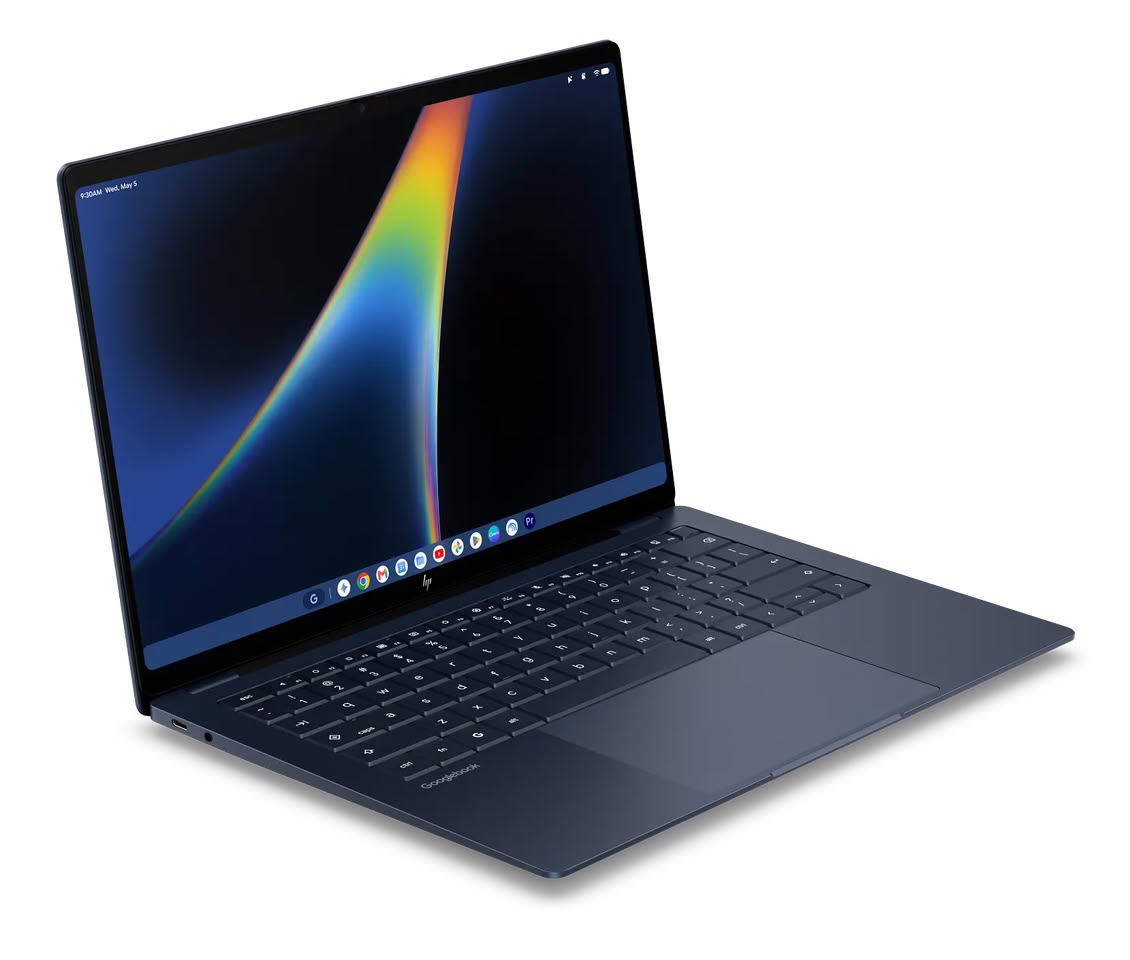
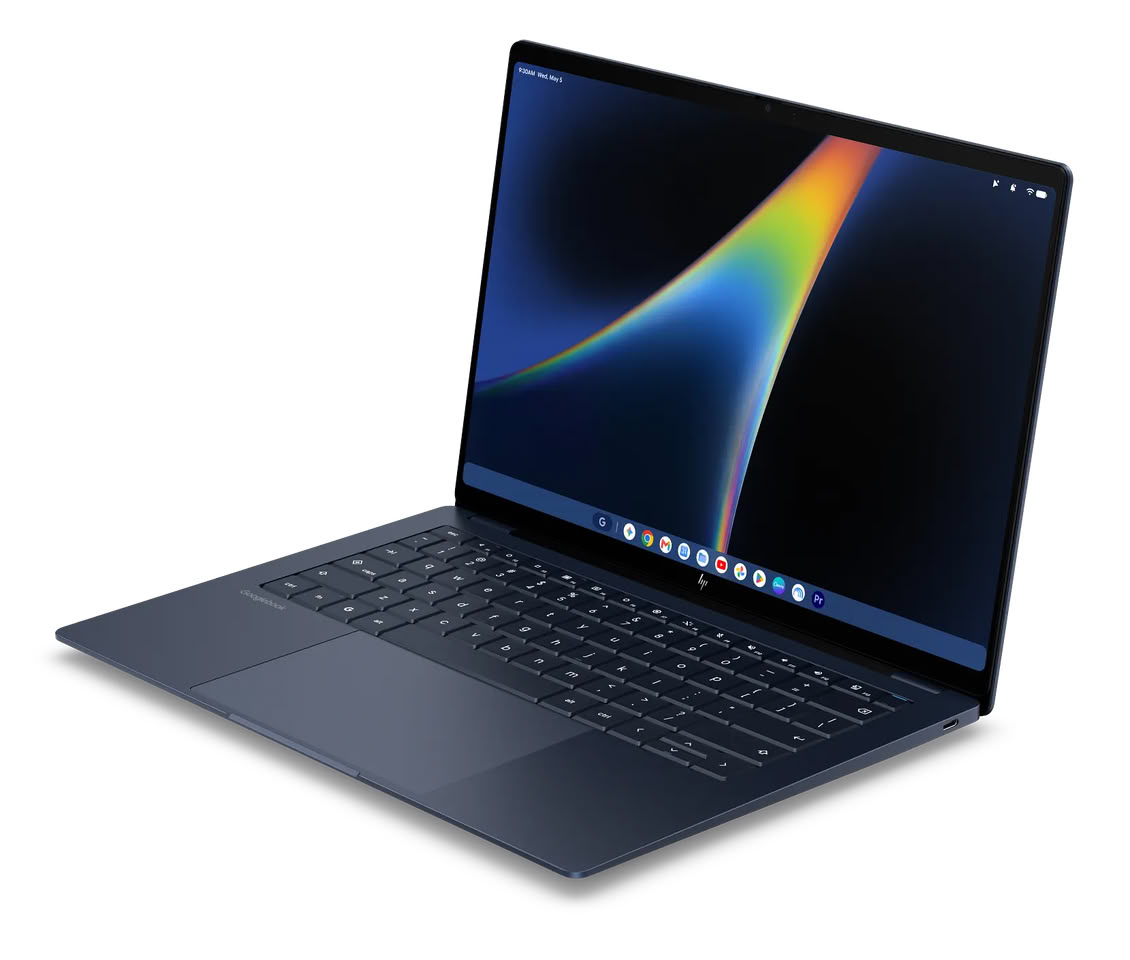
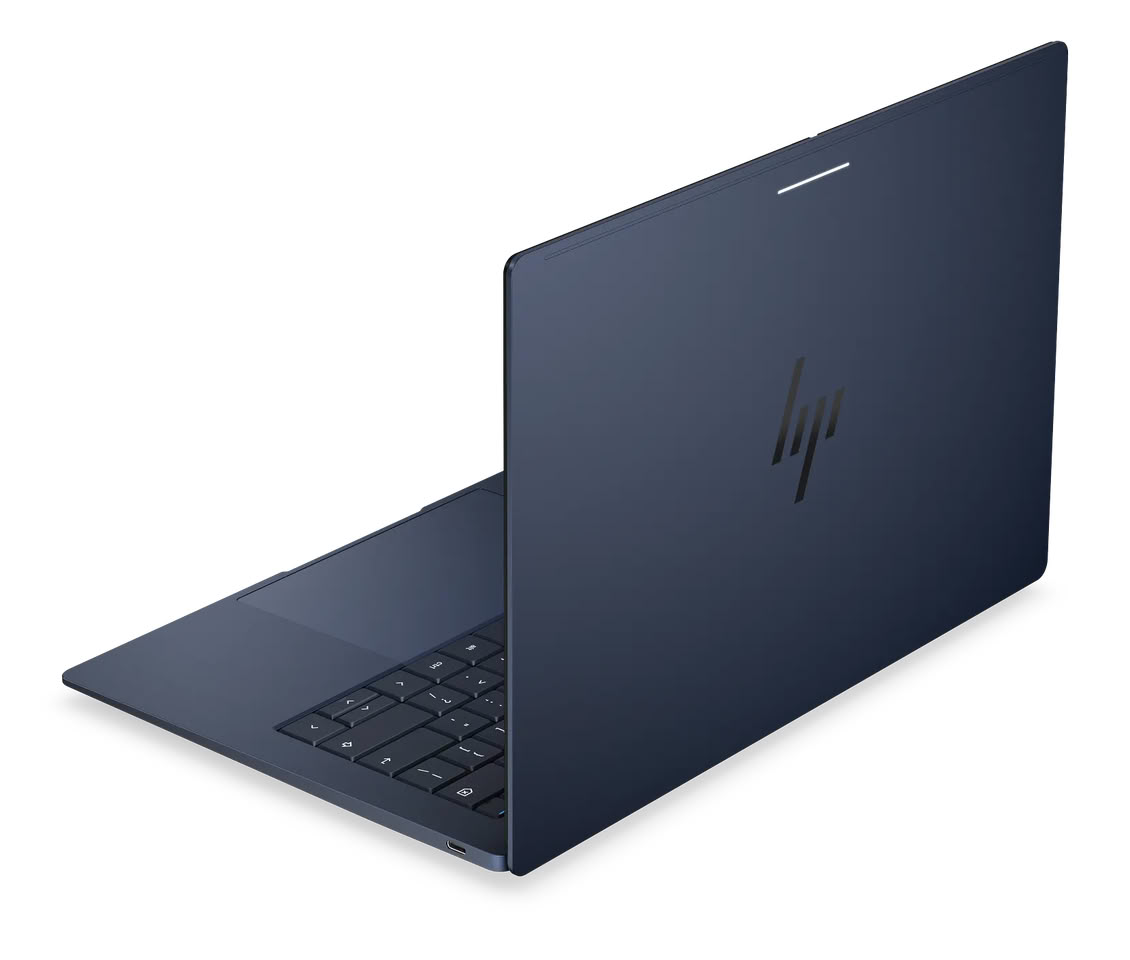
Google's collective effort to introduce a new generation of Gemini-powered laptops, called "Googlebook," has officially launched today. Now available on the Google storefront, Googlebooks are being produced by some of the biggest laptop OEMs, including ASUS, Acer, Dell, HP, and Lenovo. Starting with ASUS, the company has prepared a 14-inch Googlebook 14, powered by the Intel "Panther Lake" Core Ultra Series 3, with 16 GB of RAM and a 512 GB SSD. Acer offers a similarly named Googlebook 14 with comparable specifications, while Lenovo uses the same base but delivers a 15-inch screen. Dell and HP provide Googlebooks in a 14-inch body, powered by Qualcomm's Snapdragon X Elite processors, with 16 GB of memory and 512 GB of storage. Pricing ranges from $899 to $1,299, depending on the manufacturer and specifications.

Generally, Googlebooks follow a consistent philosophy across all models, featuring premium materials like aluminium, magnesium, and carbon fiber instead of traditional plastic. The screens on these models are also higher resolution. A key feature of these laptops is the integration of Android applications and Glowbar, along with Gemini intelligence throughout the operating system experience. Powered by Googlebook OS, the operating system is essentially a desktop version of Android that runs Android applications through the Google Play Store. The OS can run a Linux terminal, and since Android is a heavily modified version of Linux, Linux applications are also supported.

Google Confirms Googlebook Pre-Orders Start September 21

Google will open pre-orders for its first Googlebook laptops on September 21 at 9 AM ET. The company confirmed the date in an email to people who signed up for updates, and the same date now appears on Google's official Googlebook website. That's the first firm date tied to the product since Google teased a fall launch back in May. Acer, ASUS, Dell, HP, and Lenovo are all lined up as first-wave Googlebook manufacturers, and several of their machines have already leaked ahead of launch.

The Lenovo Googlebook 15 is probably the most exposed so far, reportedly pairing an Intel Core Ultra 5 325 "Panther Lake" chip with up to 32 GB of LPDDR5X memory, a 15.3-inch 120 Hz OLED touchscreen, and Google's colorful Glowbar light strip. That same Core Ultra 5 325 keeps showing up across leaked Acer and ASUS models too, which is a change from how Chromebooks have typically launched with entry-level Intel silicon. Google still hasn't said which models will actually be available on September 21, and it hasn't shared a shipping date either, only that units will arrive this fall.

NVIDIA Invests $3.5 Billion in MediaTek, Partners on NVLink Fusion

NVIDIA announced today that it is investing $3.5 billion in MediaTek and adding new layers of collaboration between the two silicon giants. It's important to note that NVIDIA and MediaTek are already working together, as MediaTek designed an SoC called GB10 that powers NVIDIA's RTX Spark consumer products and DGX Spark mini workstations. Both companies have confirmed that they will be approaching the collaboration through NVIDIA's NVLink Fusion ecosystem. NVLink Fusion serves as an IP and chiplet framework that allows non-NVIDIA processors and accelerators to become key participants in the company's data center fabric.

MediaTek will offer the NVLink Fusion platform to its customers, which include numerous ASIC clients like Google, enabling them to connect their XPUs to the NVLink Fusion scale-up fabric using photonic or classical copper interconnects. This includes the NVLink-C2C high-bandwidth fabric, which can connect multiple nearby XPUs and is also used in the upcoming NVIDIA "Rosa" CPUs. Additionally, MediaTek will offer customers NVIDIA's newly announced NVHBM, which integrates the controller into the 3D HBM stack, significantly enhancing performance and efficiency. Compared to standard HBM4E, NVIDIA claims up to 30% more memory bandwidth, 15% lower HBM power consumption, and up to 25% more usable compute die area on the processing unit.
Return to Keyword Browsing
Nov 15th, 2026 16:10 CST change timezone

New Forum Posts

Popular Reviews

TPU on YouTube

Controversial News Posts