News Posts matching #Intel

Return to Keyword Browsing

Acer's Predator Orion 7000 Named The Official 2025 Tournament PC of Intel Extreme Masters

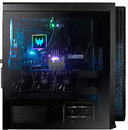
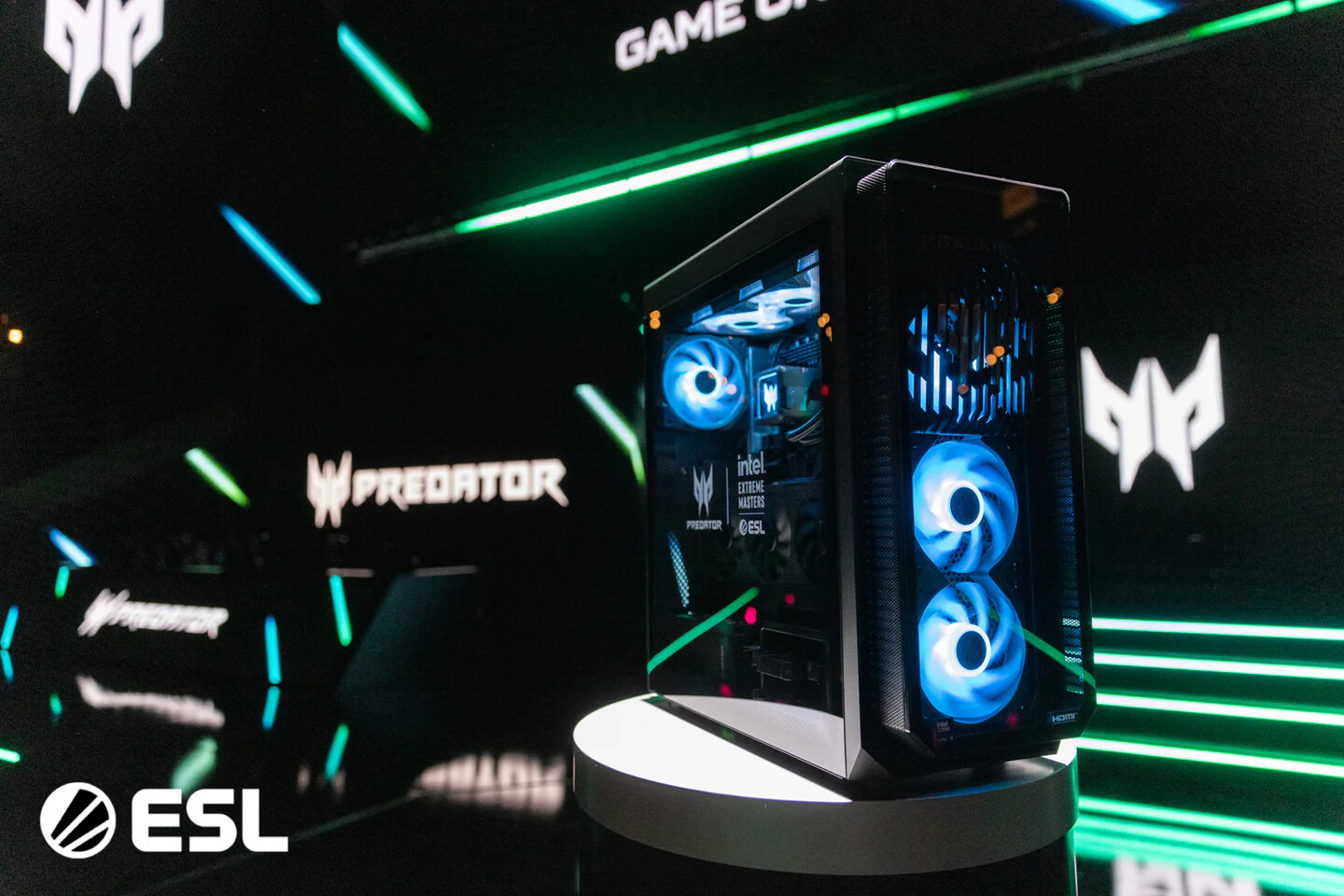
ESL FACEIT Group (EFG), the leading esports and video game entertainment company, in partnership with Acer and Intel, is proud to announce that the Predator Orion 7000 has been named the Official 2025 Tournament PC of Intel Extreme Masters (IEM). Debuting at IEM Cologne 2025, this marks the first time in IEM history that fans can now play on and purchase the hardware used by the world's top Counter-Strike professionals.

The Predator Orion 7000 is built for elite gaming performance, powered by an Intel Core Ultra 9 285K processor, up to an NVIDIA GeForce RTX 5090 GPU, and support for up to 128 GB of DDR5 memory. Its advanced Predator CycloneX 360 cooling system ensures optimal thermal performance, while transparent tempered glass side panels showcase its cutting-edge internals. Designed for 4K gaming, streaming, and competitive play, the Predator Orion 7000 delivers the speed, thermal efficiency, and visual edge trusted by the best esports athletes.



Intel Opens Up XeSS 2 to NVIDIA and AMD GPUs with SDK 2.1.0

Intel on Thursday released the XeSS 2 SDK version 2.1.0, with which it announced support for non-Intel GPUs. This would be any GPU that supports Shader Model 6.4, which are GeForce GTX 10-series "Pascal" or newer from NVIDIA, and Radeon RX 5000 RDNA from AMD, or newer. The update opens up not just super resolution (XeSS SR), but also frame generation (XeSS FG) and low latency (XeLL), however, using XeLL requires XeSS FG to be enabled, it cannot be exclusively used.

The release of XeSS 2 SDK would make it possible for game developers to update their binaries to support XeSS 2, and expose the feature-set to even non-Intel GPUs. At a hardware-level, XeSS 2 would rely on DP4a compute to run its super resolution and frame generation models. Only on Intel Arc "Alchemist" or "Battlemage" GPUs will the technology leverage XMX accelerators.

Mafia: The Old Country PC System Requirements and Features Detailed

2K Games and Hangar 13 have detailed the full PC features and graphics settings, as well as official system requirements for the upcoming Mafia: The Old Country game that will launch on August 8th. It is interesting to see that the game will support AMD's FSR 4, NVIDIA's DLSS 4, and Intel's XeSS 2 with Frame Generation FSR, DLSS, and XeSS on supported hardware, but there is no ray tracing. It will also support Unreal Temporal Super Resolution (TSR), have uncapped frame rate during gameplay, ultrawide monitor and HDR support.

The list includes minimum, recommended and epic preset requirements, and all are using Unreal TSR set to either Balanced or Quality mode. The minimum requirements target 1080p resolution with graphics settings set at Medium and Unreal TSR set at Balanced. You will need at least an AMD Ryzen 7 2700X or Intel Core i7-9700K CPU, 16 GB of RAM, and either an AMD Radeon RX 5700 XT or NVIDIA RTX 2070 graphics card. The recommended requirements target 1440p resolution with graphics quality preset set to High and Unreal TSR set to Quality. These settings require an AMD Ryzen 7 5800X or Intel Core i7-12700K CPU, 32 GB of RAM, and either an AMD Radeon RX 6950 XT or an NVIDIA RTX 3080 Ti graphics card.

Intel Adds Three Entry-Level Arrow Lake Processors to Ultra 5 Series 2

Intel has quietly rolled out three new Arrow Lake processors as part of its Ultra 5 lineup, enhancing its entry-level options with the Ultra 5 235A, 235TA, and 235UA models. The Ultra 5 235A and 235TA processors are quite similar, both featuring a total of 14 cores—six of which are performance cores and eight are efficient cores with 14 threads. They can both reach turbo frequencies of 5 GHz on their performance cores, while the efficient cores can go up to 4.4 GHz. The main difference between the two CPUs is the power consumption and base frequencies. The Ultra 5 235A runs at 65 W with its performance cores clocking at a base frequency of 3.4 GHz. The Intel Ultra 5 235TA is designed to be more power-efficient, operating at just 35 W with its performance cores running at a base frequency of 2.2 GHz. Both of these desktop models are built using TSMC's N3B manufacturing process and come equipped with 24 MB of Smart Cache.

Update 19:03 UTC:
The Ultra 5 235UA has an identical device ID to the Ultra 7 265U, a Meteor Lake based CPU that uses Redwood Cove P-Cores and Crestmont E-Cores, thus, the CPU does actually have 12 cores and 14 threads, due to the two P-Cores offering Hyper-Threading, which was removed in Arrow Lake's Lion Cove P-Core design, for security, area efficiency, and performance reasons. This is quite confusing, since the product is marketed as an Arrow Lake "Series 2" CPU, but is actually based on the preceding mobile only Meteor Lake "Series 1" architecture. The only differences between the 235UA/265U and the Meteor Lake 165U is the process node the chip is built on, with the 165U being fabbed on Intel 4, and the 265U/235UA refresh chips being fabbed on Intel 3, which allows for a slight clock speed bump within the same power budget.

MSI Prestige 16 AI+ Mercedes-AMG Motorsport Limited Edition Laptop Now Available

MSI, a world-leading premium laptop brand renowned for its luxurious aesthetics, extreme performance, and innovative technology, proudly announces the global availability of the Prestige 16 AI+ Mercedes-AMG Motorsport Limited Edition. This exclusive collaboration combines MSI's advanced engineering with the iconic spirit of Mercedes-AMG Motorsport, creating a laptop that embodies precision, performance, and unmistakable style.

"The Prestige 16 AI+ Mercedes-AMG Motorsport Edition is more than just a laptop; it's a statement of design excellence," said Eric Kuo, Executive Vice President & NB BU GM of MSI. "Like all our Business & Productivity models, it offers a thin and light design, rich connectivity, and strong security. Through this AMG collaboration, we also aim to show MSI's commitment to delivering premium, reliable business laptops for everyone."

Intel Foundry Services "Unsuccessful" at Attracting External Customers: 10-Q Filing

Intel in its latest 10-Q filing with the US SEC revealed that the company has been "unsuccessful to date" in attracting significant customers to its external foundry business. Traditionally dedicated to manufacturing Intel products, the company's foundry had over the years reorganized itself into Intel Foundry Services, and opened its doors to manufacturing chips for external customers the way Samsung Electronics does. While Samsung's foundry manufactures SoCs, DRAM, and NAND flash products for itself, it's also been a contract manufacturer of cutting edge logic chips. For example, NVIDIA's GeForce "Ampere" GPUs were made on a Samsung 8 nm node. Intel was eying a similar future for its foundry, however, major chip designers seem less than enthusiastic.

Intel battled foundry woes since the second half of the 2010s, when its switch from 14 nm to 10 nm took much longer than expected, and a resurgent AMD building chips on TSMC 7 nm adding pressure on Intel Products to court TSMC. The company's current "Arrow Lake" processor is made almost entirely on TSMC nodes, with its Compute tile being built on TSMC 3 nm, Graphics tile on TSMC 5 nm, and SoC tile on TSMC 6 nm. Only its Base tile (active interposer) is made on a mature Intel 22 nm node. This probably does not help Intel attract customers to its latest foundry nodes such as Intel 4, much less its upcoming sub-2 nm class nodes such as the upcoming Intel 14A. Intel Foundry Services in the filing disclosed that in the YTD, it raked in revenues from external customers of just $50 million. These are probably low-volume chip designers from the defense industry that are mandated to manufacture chips on US soil.

AMD Radeon RX 9060 XT Leads TechPowerUp Frontpage Poll for its Price-Performance

The mainstream gaming GPU market segment is a jungle, with dozens of graphics card models from NVIDIA, AMD, and Intel fighting for a share of the largest segment of the market. With products priced between $250 and $450, these graphics cards are competing with value-ended gaming consoles such as the Xbox Series S. We drew up a list of graphics cards available in the market, and threw the question up to our readers on which card they'd buy given their pricing. The results are fascinating, and point to AMD getting the price-performance of its Radeon RX 9060 XT 16 GB graphics card just right. Our survey sample size is 16,333 responses.

Three key products emerge from our survey, with the rest being minor or academic choices. AMD Radeon RX 9060 XT 16 GB at $370 is a simple-majority winner, with 52.4% or 8.552 responses backing it. NVIDIA GeForce RTX 5060 Ti 16 GB at $440 is a distant second, with 21.6% or 3,520 votes in its favor. Intel Arc B580 12 GB at $250 is an interesting third place, with 10.1% or 1,648 votes backing it. The rest of the poll options are marginal choices, with none of the entries crossing 3.1%. The results highlight that there are three price-bands driving the 1080p gaming GPU segment—$250, $350, and $450.

Intel Considering Spinning Off its Network and Edge Group

According to a report over at CRN, Intel is looking at spinning off its Network and Edge Group—also known as NEX—and is now looking for investors to take over the business unit. This is according to an internal memo that CRN has been privy to, and it was sent out by the Network and Edge Group lead, Sachin Katti, who has recently been promoted to Chief Technology and AI Officer at Intel. For those not familiar with the Network and Edge Group at Intel, this is the division that makes Intel's Ethernet chips and communications products, as technically it's no longer doing edge computing, since that business was merged with its Client Computing Group in September 2024.

It appears that Intel won't divest the group entirely, as the company "will remain an anchor investor in the new company." This would make sense, as it would allow Intel to continue to influence the direction of product development and still have direct access to the products the new entity will produce. Katti also wrote that this should help NEX "expand into new segments more effectively," whatever those might be, although it's unclear why Intel was unable to do this on its own. Katti continued the memo with "What we expect to change is our ability to operate with greater focus, speed and flexibility—all to better meet your needs," suggesting that Intel's customers have found other partners that better suit their requirements. Over the past few years, Intel has struggled with some of its recent 2.5 Gbps Ethernet products, as they've had several bugs that haven't been properly resolved in some cases, despite multiple hardware revisions. The company launched new 2.5 and 10 Gbps Ethernet products in the E610-series earlier this year, but there doesn't appear to have been much market uptake of the new products either. The question now is how many more business units Intel can shed, until there's nothing but the core CPU business left.

Intel's Foundry Business Hinges on 14A Node Success

In response to a question about Intel's foundry strategy from Timothy Curry—a UBS analyst—Intel CEO Lip-Bu Tan mentioned that although the company has a team that is laser focused on developing its 14A node, the node hinges on customer commitment at the moment. This obviously includes Intel itself, but also its potential third party customers and if there will be enough business for Intel to make money on the upcoming node. Lip-Bu Tan said that it "has to meet my requirement in terms of performance and yield. It's a lot of responsibility to be serving our customers, make sure that we can deliver the result—consistent, reliable result—to them, so that their revenue can depend on us."

It's clear that Intel's new CEO is very focused on revenue for the company and its customers, which makes sense considering the current situation at Intel. However, the question is if TSMC will be able to handle potential future business from Intel, as they will most likely be the only viable option for Intel, if the company decides that the investment into its 14A node doesn't make financial sense. The company has already announced that it will "further slow the pace of construction in Ohio to ensure spending is aligned with market demand" while cancelling its announced fab in Germany altogether. Admittedly the German fab was never intended to be a leading edge fab, but with so many cancelled projects, one has to wonder where Lip-Bu Tan will take the company and without third party customers, it sounds like Intel's foundry business might soon give up on trying to be a cutting edge foundry. For now, a lot hinges on its current 18A node and if it can attract enough third party interest for it.

AAEON Announces Dual Desktop Network Devices for SD-WAN and Edge Security Markets

Leading white box provider AAEON has released two new additions to its desktop network appliance range, the FWS-2291 and FWS-2292, designed for SD-WAN, uCPE, and UTM applications. The FWS-2291 and FWS-2292 host the Intel Processor N97 and Intel Processor N150 by default, respectively. However, AAEON notes that the two devices are each able to support CPUs from across the Intel Atom x7000RE, Intel Atom x7000C, and Intel Processor N-series ranges (formerly Twin Lake, Alder Lake-N, and Amston Lake).

While both devices suit similar types of networking applications, they offer unique benefits depending on project need. For the FWS-2291, this is reflected in its four 2.5GbE copper RJ-45 and two GbE SFP ports with two-pair LAN bypass, designed for hybrid environments requiring both long-distance fiber uplinks and local high-speed LAN capabilities. Meanwhile, the FWS-2292 is more equipped for edge firewall, UTM, or SD-Branch applications, given its six RJ-45 ports, all of which offer 2.5GbE speed, also with two-pair LAN bypass.

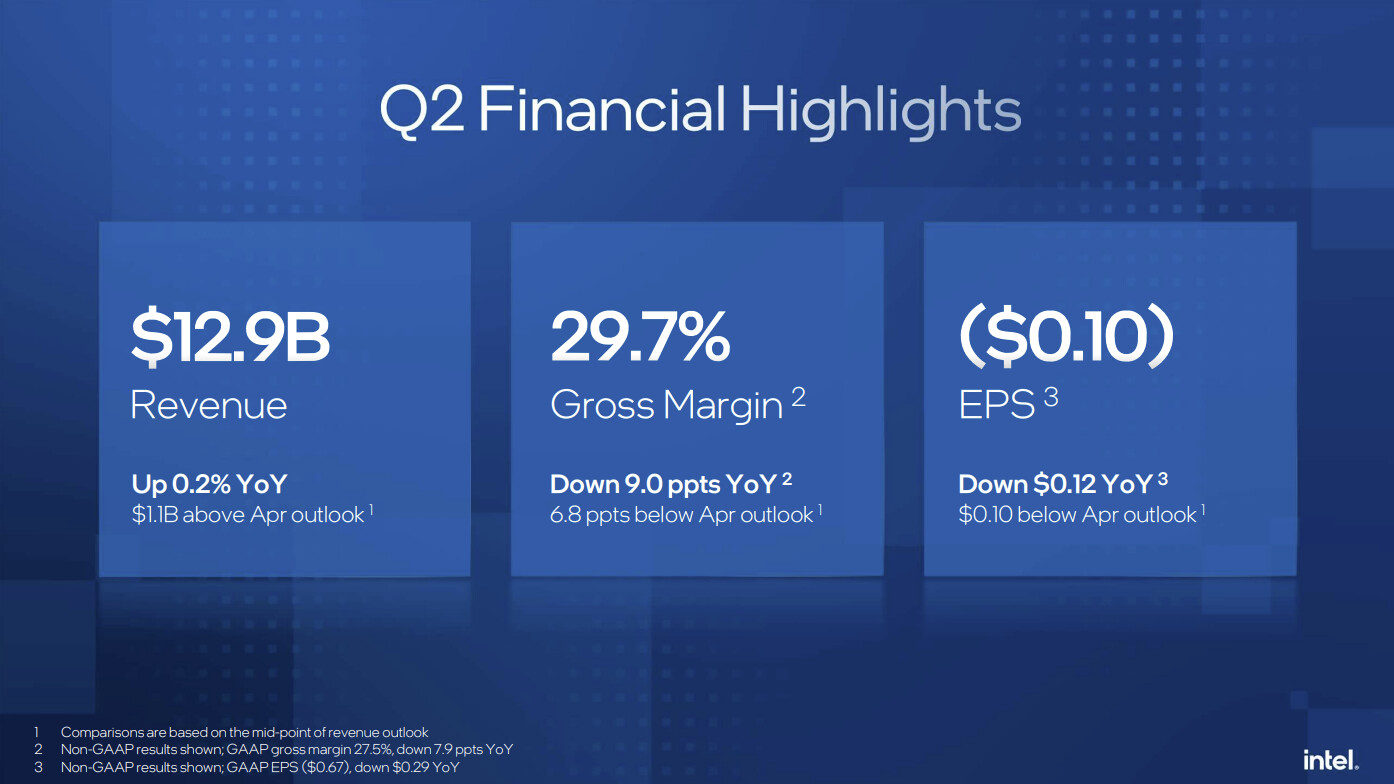
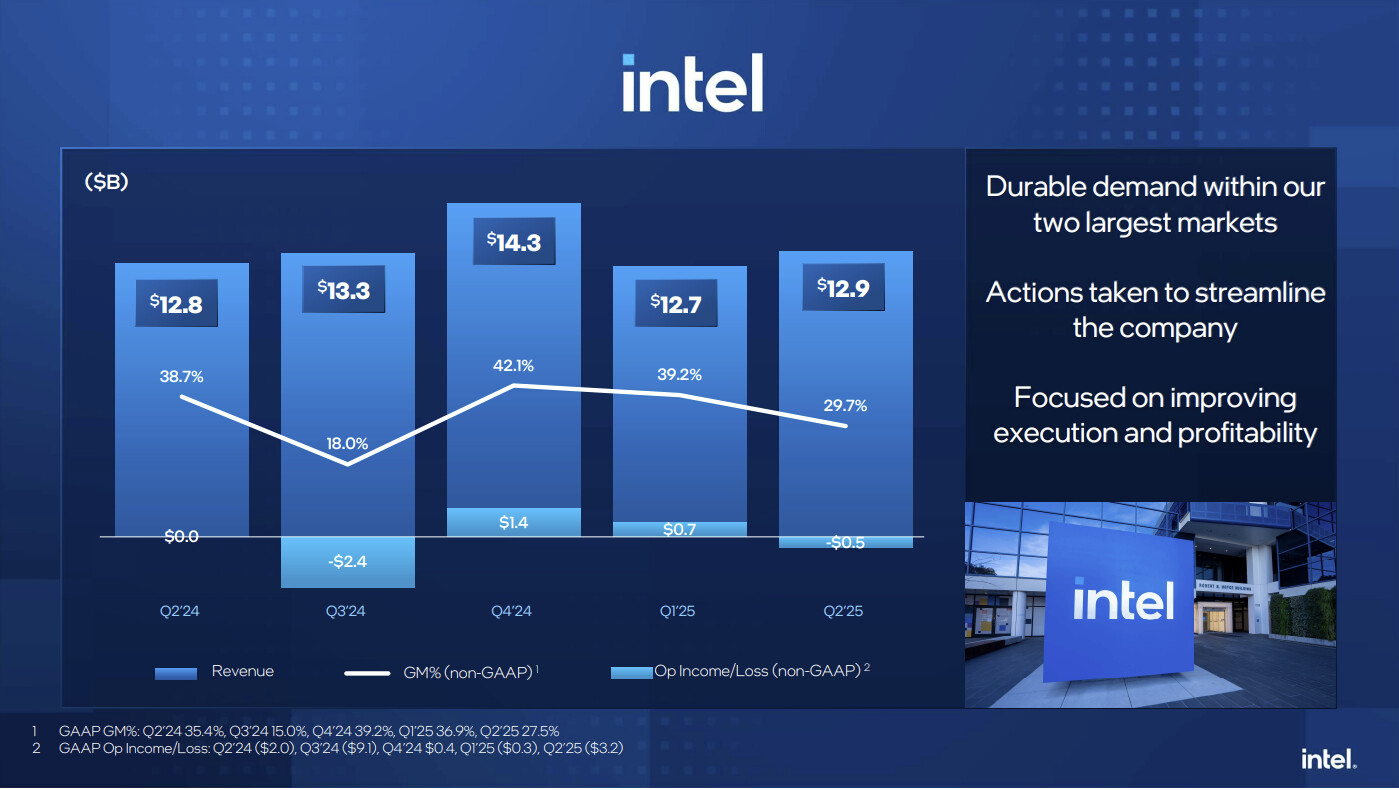
Intel Reports Second-Quarter 2025 Financial Results

Intel Corporation today reported second-quarter 2025 financial results.

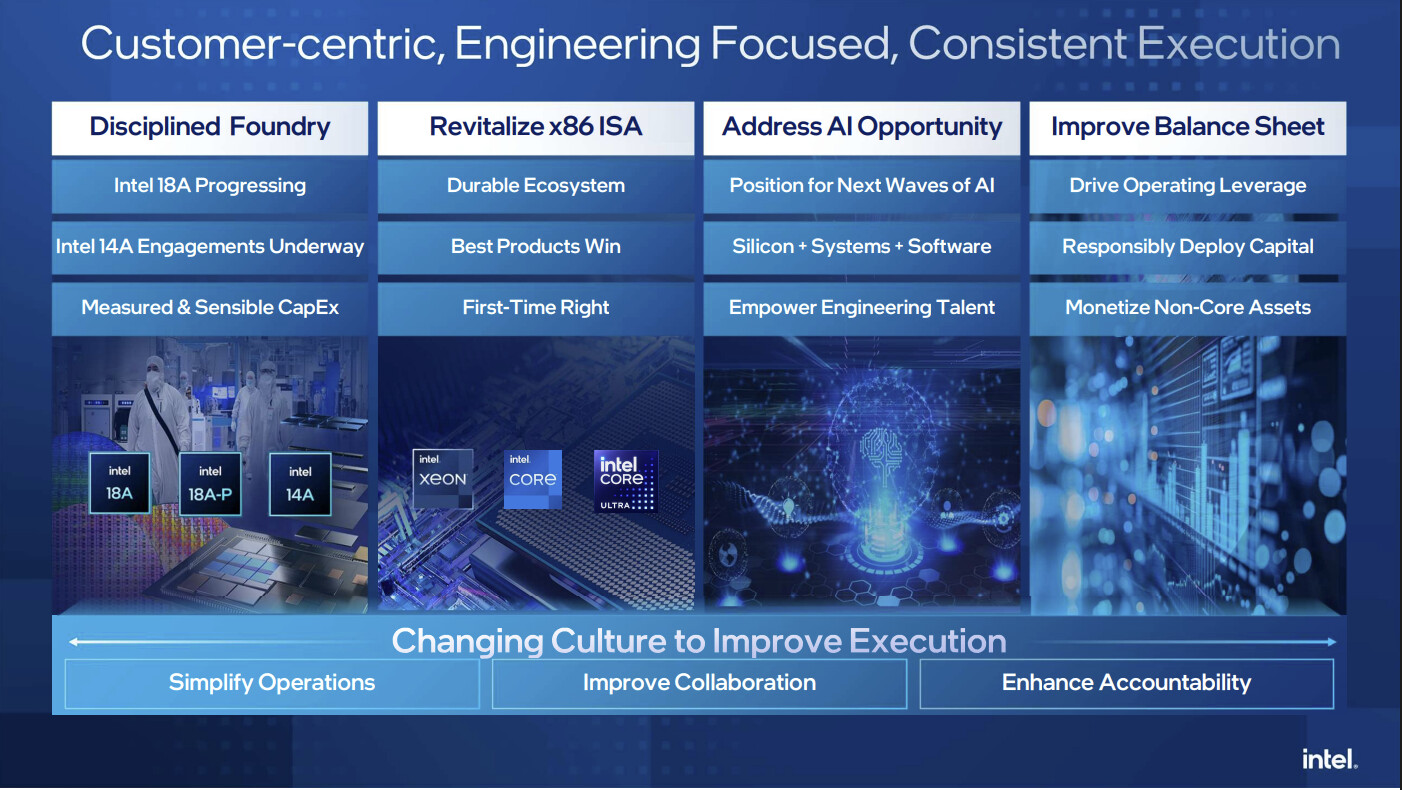
"Our operating performance demonstrates the initial progress we are making to improve our execution and drive greater efficiency," said Lip-Bu Tan, Intel CEO. "We are laser-focused on strengthening our core product portfolio and our AI roadmap to better serve customers. We are also taking the actions needed to build a more financially disciplined foundry. It's going to take time, but we see clear opportunities to enhance our competitive position, improve our profitability and create long-term shareholder value."

MAINGEAR Drops Retro95: A 90s Throwback with 2025 Firepower

MAINGEAR, the leader in premium-quality, high-performance gaming PCs, today announced Retro95, a limited-edition PC drop that brings back the unmistakable style of a '90s-era horizontal desktop, now supercharged with cutting-edge hardware. Built for gamers who remember LAN parties, floppy disks, dial-up, and CD-based drivers, Retro95 is a nostalgic love letter to the golden age of PC gaming, reimagined for today's most demanding titles.

With its beige finish, boxy profile, and horizontal layout, Retro95 looks like it booted straight out of 1995, but don't let the exterior fool you. Inside, it can be configured with some of today's most powerful components, including CPU options from AMD and Intel, up to the Ryzen 7 9800X3D, NVIDIA GeForce RTX 5080 graphics card, 96 GB of DDR5 memory, 8 TB of Gen 4 NVMe storage, Noctua fans and an 850 W PSU. Retro95 may flaunt '90s flair, but it's also engineered with modern thermals and whisper-quiet air cooling for high performance with low noise.

Intel Releases Arc GPU Graphics Drivers 101.6972 Beta

Intel today released the latest version of Arc GPU Graphics Drivers. Version 101.6972 Beta comes with optimization for "Killing Floor 3," "Valorant" Unreal Engine 5 Update, and "Wuchang: Fallen Feathers." The drivers also improve performance for "Rematch" for Arc B-series discrete GPUs, with up to 12% seen at 1440p with Ultra settings, and up to 9% seen at 1080p with Ultra settings.

Among the game-related issues fixed are a problem with "Returnal" that causes it to crash during gameplay when ray tracing is enabled; "Fragpunk" experiencing black screen corruption on certain textures; and MS Flight Simulator 2024 experiencing an intermittent crash in free flight mode. For Arc "Battlemage" based iGPUs on Core Ultra Series 2 processors, a bug has been fixed for PugetBench for Photoshop, where it runs into errors during the benchmark; and Topaz Video AI experiencing lower than expected performance. Grab the drivers from the link below.

DOWNLOAD: Intel Arc GPU Graphics Drivers 101.6972 Beta

DDR6 Memory Arrives in 2027 with 8,800-17,600 MT/s Speeds

The semiconductor industry has officially accelerated its next-generation memory development, with DDR6 standard now coming soon. Although enthusiasts won't find these modules available until 2027, key players, Samsung, Micron, and SK Hynix, have already moved past prototype stages and embarked on rigorous validation cycles. In partnership with Intel, AMD, and NVIDIA, they're targeting an initial throughput of 8,800 MT/s, with plans to scale up to a staggering 17,600 MT/s, almost doubling the ceiling of today's DDR5. This increase is driven by DDR6's 4×24-bit sub-channel architecture, which requires entirely new approaches to signal integrity. Additionally, it also differs from DDR5's current 2x32-bit sub-channel structure. To overcome the physical limits that DIMM form factors faced at higher speeds, the industry is betting on CAMM2. Early indication is that server platforms will lead the change, with high-end notebooks following suit once manufacturing ramps up.

Behind the scenes, timelines are being mapped: platform validation is slated for 2026, server deployments in 2027, and broader consumer availability thereafter. This phased rollout mirrors the DDR5 journey; however, analysts predict that DDR6's architectural leap could accelerate adoption in AI and high-performance computing environments. Of course, cutting-edge technology comes with a premium: initial DDR6 modules are expected to carry price tags reminiscent of DDR5's 2021 debut, potentially limiting early adoption to hyperscale data centers and AI research labs. Yet with HPC and AI appetite for bandwidth, memory makers are targeting launch as soon as possible to satisfy the massive deployment of compute. By 2027, CAMM2-based modules running at DDR6 speeds may well define the new standard for high-performance systems.

Corsair Launches VENGEANCE 7000 AIR Series Gaming PC

Corsair, maker of award-winning prebuilt gaming PCs, is proud to launch the VENGEANCE 7000 AIR Series Gaming PCs, a high-powered prebuilt gaming PC designed for gamers and creators who demand next-gen power, precision engineering, and stunning aesthetics. Housed in the FRAME 4000D case, the VENGEANCE 7000 AIR Series redefines what you can expect from a plug-and-play PC, delivering optimized performance, expert craftsmanship, and a future-ready platform. Built around the modular and upgrade-friendly FRAME 4000D case, the VENGEANCE 7000 AIR Series leverages the latest components to power everything from 4K gaming to demanding content creation workflows. Featuring GPU options up to the NVIDIA GeForce RTX 5090, and processor configurations that include up to the AMD Ryzen 9 9950X3D or Intel Core Ultra 9, this powerhouse delivers uncompromising speed and multi-threaded performance to tackle any task with ease.

At the heart of the VENGEANCE 7000 AIR Series is the FRAME 4000D case, giving a significant edge in both form and function. With three radiator mounting locations—front, roof, and side—and a 3D Y-Pattern front airflow panel, the case ensures efficient cooling to keep components running smoothly to maximize the efficiency of high-performance GPUs and CPUs under heavy workloads. The front I/O panel features two USB 3.2 Gen 1 Type-A ports and a USB 3.2 Gen 2 Type-C port, offering versatile connectivity for peripherals and accessories.

Eurocom Unveils Raptor X18 Supercomputer and Launches Forensic Lab on-the-Go

Eurocom, a leader in high-performance mobile computing, today announced the launch of the Raptor X18, a mobile supercomputer engineered to serve as a complete "forensic lab on the go." Designed for the intense demands of digital forensics, corporate incident response, and intelligence operations, the Raptor X18 gives investigators the power to acquire, process, and analyze massive datasets directly in the field, eliminating critical delays and accelerating time-to-insight. Eurocom redefines mobile forensics with Raptor X18 Supercomputer, delivering full Lab capabilities to the field. New flagship 'Lab-on-the-Go' platform empowers forensic teams to conquer massive datasets, break through encryption, and slash investigation times directly at the source.

The mounting challenge in modern investigations is that today's investigators face a crisis of scale and complexity. Data volumes are exploding into petabytes, fragmented across countless devices, cloud platforms, and IoT networks. Simultaneously, adversaries are using sophisticated encryption and anti-forensic techniques to hide their tracks. This forces forensic teams into a reactive posture, where critical evidence is transported back to a centralized lab, creating bottlenecks that can last days or weeks—a delay that can be catastrophic in a fast-moving corporate breach or time-sensitive criminal investigation.

AMD FSR 4 Now Available in Any DX11/12 Title via OptiScaler

AMD's AI-driven FSR 4 upscaler has been limited to the relatively small number of titles released alongside the RX 9000 series until now. A weekend patch to the open-source utility OptiScaler changes this by adding full redirection support for FSR 4 in version 2025.7.19. Any DirectX 11 or DirectX 12 game that originally shipped with FSR 2, DLSS 2, or Intel XeSS can now utilize AMD's latest libraries instead. Early adopters can take advantage of FSR 4 enhancements, provided they have an RDNA 4 GPU and are willing to follow a few manual steps. You simply drop OptiScaler's FSR 4 proxy DLL into the game's installation folder, open OptiScaler's interface or its configuration tool to select "fsr4" as the backend, and turn off any built-in anti-lag or frame-generation module to prevent timing conflicts between two low-latency systems.

Once these steps are complete and you are running on DirectX 11 or 12 without an incompatible anti-cheat or a Vulkan render path, you can launch the game, and OptiScaler will seamlessly drive FSR 4 in place of the original upscaler. There are still some caveats. OptiScaler does not yet support Vulkan render paths, and online titles protected by Easy Anti-Cheat or BattlEye will refuse to launch when they detect the proxy DLL. Additionally, there is no universal installer, so each game directory must be modified individually. Even so, for single-player or LAN-only releases, this tool immediately extends FSR 4's reach from the current 65 native titles to potentially hundreds of legacy games.

AAEON Releases PICO-TWL4, a Robust, Efficient 2.5-inch SBC for the Industrial Automation Market

Premier embedded computing provider AAEON, has announced the release of the PICO-TWL4, a compact Pico-ITX board powered by Intel Processor N-series processors (formerly Twin Lake). The board is available in SKUs featuring both the 6 W, quad-core Intel Processor N150 and the 15 W, octa-core Intel Core 3 Processor N355. On its ultra-small 100 mm x 72 mm PICO-ITX form factor, the PICO-TWL4 leverages the optimized single and multi-thread performance of the newest efficiency-focused Intel processing platform while retaining the robust industrial design that AAEON's Pico-ITX line is known for.

The board offers up to 16 GB of DDR5 memory via SODIMM slot, two LAN ports (2.5GbE and 1GbE), and six USB interfaces, made up of two physical USB 3.2 Gen 2 ports and four USB 2.0 via pin header. For display, the PICO-TWL4 has both LVDS and HDMI, with the board's LVDS co-layed with eDP, providing greater variety to users based on project requirements.

Intel Shuts Down "Clear Linux" Distribution Development

Linux enthusiasts gather to hear the latest news: Intel is officially shutting down its Clear Linux distribution after ten years of development and optimizations. As many recall, Clear Linux is an Intel-optimized Linux distribution that serves as a high-performance, optimized OS designed to extract every last ounce of performance from Intel hardware, especially Intel Xeons. As software optimizations, such as AVX-512, became more common, Intel consistently pushed these optimizations and specific pre-compiled software with compiler flags and kernel optimizations that increased performance on Intel and even AMD CPUs by a few percents. Traditional Linux distributions weren't optimized in that regard as they were mostly compiled to run on every x86 or Arm CPU, without any special flags raised for performance. This has enabled compatibility, but lacks a few percentage points of performance that Clear Linux managed to extract. As of now, these efforts are essentially terminated, and the distribution will cease to receive security and quality of life improvements, effective immediately. Users are advised to switch to another distribution. The complete statement follows.

Intel Skips NPU Upgrade for Arrow Lake Refresh, AMD Cancels Medusa Halo in Latest Rumors

Intel's Arrow Lake-S desktop update set for the latter part of 2025 might not bring the expected boost in AI capabilities. New information from Jaykihn, a leaker known for sharing regular updates on Intel roadmaps hints that this update will keep the current NPU 3 design instead of using the more advanced NPU 4 found in Intel's Lunar Lake laptop chips. The existing Arrow Lake desktop line uses NPU 3, which came out in 2023 with Meteor Lake and offers 11.5 TOPS of AI power. This falls well short of the 40 TOPS needed for Microsoft Copilot+ certification. Intel's Lunar Lake laptop processors have the upgraded NPU 4, which can reach up to 48 TOPS making them Copilot+ ready. By sticking with NPU 3 in the desktop update, Intel's desktop chips will still trail behind laptop offerings from AMD and Apple in AI speed. Without NPU upgrades, the Arrow Lake update seems to offer small increases in clock speed and continued production on Intel's 20A process. This small step forward might not be enough, given Intel's shrinking market share and the need for bigger design improvements to stay competitive.

At the same time AMD might face some problems with reports suggesting that Medusa Halo, which was supposed to come after Strix Halo, has been scrapped. This news comes from HXL, a leaker with a decent track record. This could mean that Intel's Nova Lake-AX is left without any real competition in a market where Strix Halo and Apple's chips are the big players. If this is true, it shows a big change in AMD's plans for high-end mobile computing.

Intel and Weizmann Institute Speed AI with Speculative Decoding Advance

At the International Conference on Machine Learning (ICML), researchers from Intel Labs and the Weizmann Institute of Science introduced a major advance in speculative decoding. The new technique, presented at the conference in Vancouver, Canada, enables any small "draft" model to accelerate any large language model (LLM) regardless of vocabulary differences. "We have solved a core inefficiency in generative AI. Our research shows how to turn speculative acceleration into a universal tool. This isn't just a theoretical improvement; these are practical tools that are already helping developers build faster and smarter applications today," said Oren Pereg, senior researcher, Natural Language Processing Group, Intel Labs.

Speculative decoding is an inference optimization technique designed to make LLMs faster and more efficient without compromising accuracy. It works by pairing a small, fast model with a larger, more accurate one, creating a "team effort" between models. Consider the prompt for an AI model: "What is the capital of France…" A traditional LLM generates each word step by step. It fully computes "Paris," then "a", then "famous", then "city" and so on, consuming significant resources at each step. With speculative decoding, the small assistant model quickly drafts the full phrase "Paris, a famous city…" The large model then verifies the sequence. This dramatically reduces the compute cycles per output token.

Intel "Nova Lake-AX" Specifications Surface: 28 CPU Cores, 48 Xe3 GPU Cores, and LPDDR5X

Yesterday, we covered the leak of Intel's plan to take on AMD in the APU space with a "Nova Lake-AX" SoC that features a relatively powerful CPU core configuration paired with an enhanced Xe3 GPU core cluster. Today, one of the most reliable leakers, Raichu, confirms what the new Nova Lake-AX configuration could look like. When it comes to the CPU, the AX SKUs will feature a downsized CPU cluster, utilizing only a single tile with eight "Coyote Cove" P-cores and 16 "Arctic Wolf" E-cores, alongside the four-core LPE island, totaling 28 cores. Where the Nova Lake-S is expected to have up to two of those CPU tiles, the AX variant cuts out the second tile to make space for one of the biggest iGPUs we've seen Intel put in its SoCs.

Coming in at 384 Execution Units (EUs), this roughly translates into 48 Xe3 cores, assuming the standard eight EUs per Xe core configuration. However, there could be some internal changes to the way Xe3 cores handle render slices, so the total number of Xe3 cores remains unknown, except for the 384 EU count. Intel is also pairing this SoC with LPDDR5X memory, which operates at 9,600 or 10,667 MT/s, providing sufficient bandwidth to the 28 CPU cores and 384 EUs over a 256-bit bus. Additionally, Raichu claims that the launch is uncertain, which means that Intel is likely evaluating the platform for profitability if it decides to produce it in high volumes. Similarly to AMD's APU, there could be significant interest, so we will have to wait and see if Intel greenlights the project for the masses. The picture below is our own modification of Arrow Lake-H breakdown, and not what the actual Nova Lake-AX SoC would look like.
Intel Nova Lake-AX

Samsung and SK Hynix Delay DDR4 Memory Phase-out Amidst Unexpected Demand

Late last month, we reported an unexpected surge in DDR4 DRAM chip spot-pricing, just as leading memory chipmakers in Taiwan and South Korea announced plans to phase out the standard, leaving behind residual inventories to deal with leftover demand. It turns out that the nearly 1 decade-long market presence of the DDR4 standard, beginning with the 2013 6th Gen Intel Core "Skylake" processor, and continuing on until 14th Gen Core "Raptor Lake Refresh," along with AMD Ryzen Socket AM4 along the way, meant that there are simply too many devices out there with DDR4 memory and users looking for upgrades.

Digitimes now reports that South Korean memory chipmakers such as SK Hynix and Samsung Electronics, have put on hold their phase-out plans for DDR4 chips, and may continue supply until they see spot pricing sufficiently falling behind that of DDR5. At the same time, the two will be walking a tight rope with supply to ensure they don't end up with bloated inventories.

ASUS Announces ExpertCenter P500 SFF, a Compact Desktop PC

ASUS today announced ASUS ExpertCenter P500 SFF (P500SV), an 8.6-liter compact desktop PC designed to redefine value and performance for small businesses. With the innovative compact air cooler thermal design and powered by an up to Intel Core i7 processor, P500 SFF unleashes up to 45 W TDP. Thanks to its enhanced thermal design, it also delivers whisper-quiet performance, generating just 30.8 dB even in Performance mode - or as serene as rustling leaves. This makes it ideal for focused, professional environments.

Security is paramount with ExpertCenter P500 SFF, so it's backed by the reassurance of multiple ASUS ExpertGuardian protections. This powerhouse meets commercial-grade standards with a NIST SP 800-155-compliant BIOS, while ASUS assures at least five years of BIOS and driver updates to protect critical data. Enhanced with ASUS AI ExpertMeet, ExpertCenter P500 SFF revolutionizes virtual meetings through advanced AI tools like real-time translation and automated summaries, making collaboration seamless. In short, ExpertCenter P500 SFF sets a new standard for small-business desktops, combining power, security and efficiency with incredible value - ready to empower professional excellence.

Gigabyte Aero X16 and Gigabyte Gaming A16 Now Officially Available

Following the successful debut of the AORUS MASTER 18 and 16, GIGABYTE, the world's leading computer brand, now announces the availability of the GIGABYTE AERO X16 and GAMING A16, expanding its 2025 AI PC lineup. Built to meet the needs of gamers, hybrid users, and creators, both models combine next-gen NVIDIA GeForce RTX 50 Series Laptop GPUs with GIGABYTE's exclusive GiMATE AI Agent for intelligent system control, AI-enhanced workflows, and immersive experiences.

Both laptops feature up to NVIDIA GeForce RTX 5070 Laptop GPUs, powered by the Blackwell architecture and NVIDIA DLSS 4 for AI-accelerated performance. The AERO X16 supports up to 85 W Max Graphics Power, while the GAMING A16 reaches up to 80 W. Integrated GiMATE AI Agent enables intuitive "Press & Speak" voice control, smart tuning, and privacy features. Built on an AI-ready platform with NVIDIA NIM, users can create personal AI agents and streamline workflows. With up to 14 hours of bat tery life, PD 3.0 fast charging, and Dolby Atmos audio, both laptops support modern AI-driven lifestyles.
Return to Keyword Browsing
Nov 17th, 2026 14:05 CST change timezone

New Forum Posts

Popular Reviews

TPU on YouTube

Controversial News Posts