News Posts matching #Intel

Return to Keyword Browsing

Cyberpunk 2077 Update v2.3 Brings FSR 4, XeSS Frame Generation, VRR for Consoles, and Much More

Tomorrow at 10:00 CET, CD Projekt Red will release Cyberpunk 2077 Update 2.3 across PC, PlayStation 5, and Xbox Series X|S, bringing a renewed pulse to Night City. Players on compatible hardware can now activate AMD FSR 4 and FSR 3.1 frame generation, Intel XeSS 2 with frame generation, Intel HDR10+ Gaming, and, for the first time, Variable Refresh Rate on consoles. A native Apple Silicon build also debuts on the Mac App Store. Four new vehicles arrive through narrative side jobs: the Yaiba ARV-Q340 Semimaru, Rayfield Caliburn "Mordred," Yaiba ASM-R250 Muramasa, and Chevillon Legatus 450 Aquila. Once earned, each can be piloted hands-free with the new AutoDrive system or summoned as a self-driving Delamain cab after completing "Don't Lose Your Mind."

Rayfield's CrystalCoat technology now coats partner-brand cars and motorcycles, supported by twin-tone paint packages and a community cracked variant for budget builds. Photo Mode expands with twenty-seven additional NPC spawns, wardrobe swapping, new stickers, frames, and colour balance tools. Quality of life updates include inverted-mouse detection, replayable tutorials, quieter radio balance, and a host of quest, gameplay, and stability fixes. The complete list of changes is very long, and you can check it out here.


Intel's New Tool Measures Video Game Image Quality in Real Time

Intel has introduced the Computer Graphics Visual Quality Metric (CGVQM) tool, the first open-source metric specifically designed to evaluate real-time game imagery with nearly the same accuracy as humans. At its core is the CG-VQD dataset, which contains 80 three-second clips from 15 open-source 3D scenes, ranging from Amazon's Bistro demo to custom environments like House and Bridge, each processed by one of six modern rendering methods, such as neural supersampling, path tracing, or Gaussian splatting. Intel researchers began with a pre-trained 3D ResNet-18 network and fine-tuned its channel weights to align its outputs with volunteer ratings. The result, CGVQM-5, outperforms all existing full-reference metrics and comes very close to matching human agreement.

Behind the scenes, CGVQM splits each video into smaller patches, extracts key visual features using a 3D ResNet backbone, and then adjusts a small set of channel-wise weights so that its predicted scores closely match the quality ratings given by human testers. CGVQM 5 digs deep into all five ResNet blocks for top accuracy. To make the tool practical for swift build pipelines, the team also created CGVQM-2, a lighter version that uses only the first two ResNet blocks. By removing most of the latter features, it runs substantially faster while still beating every rival metric. Both variants produce error maps that clearly highlight artifacts, such as ghosting or flicker, allowing artists to spot and fix issues without running complete user tests. Game developers can clone the GitHub repository and add Vulkan hooks or Unreal Engine plugins to integrate CGVQM directly into their workflows, enabling them to run evaluations on the fly.

Intel's Core Ultra 5 245HX Laptop CPU Outruns Its Desktop Twin

An early PassMark entry posted on X by the account "X86 is dead&back" offers a glimpse of Intel's Core Ultra 5 245HX notebook processor. The 14-core "Arrow Lake-H" mobile chip quietly outpaced its desktop counterpart, the Core Ultra 5 245, in both single-core and multi-core tests. The numbers themselves are straightforward. The 245HX recorded 4,706 points in single-core and 41,045 points in multi-core runs. By comparison, the desktop Core Ultra 5 245 logged 4,409 and 37,930, respectively, handing the notebook silicon a 7% lead in single-core results and an 8% advantage when all cores are engaged. Against the Core i5-14500, the 245HX is 19% faster in single-core work and 30% faster in heavily threaded tasks.

The gap widens further versus last year's mobile i5-14500HX, where the newcomer enjoys a 30% single-core margin and a 41% multi-core edge. The explanation is partly thermal. Intel grants the 245HX a maximum turbo power envelope of 160 W, well above the 121 W ceiling of the desktop 245. Clock speeds peak at 5.1 GHz, and the core configuration remains identical, pairing six performance cores with eight efficient cores. The higher TDP gives the HX version a chance to run at higher clocks for longer. Notebook manufacturers are expected to reveal Arrow Lake-HX systems later this quarter. Real-world gaming is a different arena, and PassMark is only one ruler. Yet the signs are hard to ignore: a mid-range laptop processor now outworks desktop counterparts.

Intel "Nova Lake-S" Tapes Out on TSMC N2 Node

Intel's next-generation client CPU staple product, "Nova Lake-S", has reportedly taped out of TSMC's fabs in Taiwan. Our previous speculation from the rumor mill suggested that Intel would utilize its own internal 18A node, with help from TSMC's 2 nm high-volume manufacturing. According to SemiAccurate, Intel has taped out a compute tile on TSMC's N2 node, meaning that Nova Lake-S will likely utilize a mix of 18A and TSMC N2 for its compute tiles. A possible reason for this decision is that Intel is building a chain of fall-backs to rely on in case its 18A node doesn't deliver, or it anticipates demand so high that its internal manufacturing capacity can't provide. Either way, clients can expect the product to be delivered on time in H2 of 2026, but under the hood, some interesting solutions may be present.

As far as the exact date, the time from a tapeout to final product is months away. Right now, the taped-out silicon tile is being powered on in Intel's labs and tested, running various test cases that stress out the silicon for multiple use cases and check for correctness of operation. Typically, power on takes a few weeks to a month to achieve, and final high-volume manufacturing will commence only a few months later. From that point, another two to three months are needed for manufacturing and shipping the product, meaning that Q3 of 2026 is the most likely target for Nova Lake-S. As a reminder, the CPU will combine 52 cores (16 P-cores, 32 E-cores, and four LPE-cores) paired with 8,800 MT/s memory controller and Xe3 "Celestial" for graphics rendering and Xe4 "Druid" for media and display duties, making it definitely an interesting product, as well as a difficult manufacturing target due to the heterogenous complexity.

Sparkle Intros Arc B580 Titan OC Nox Graphics Card

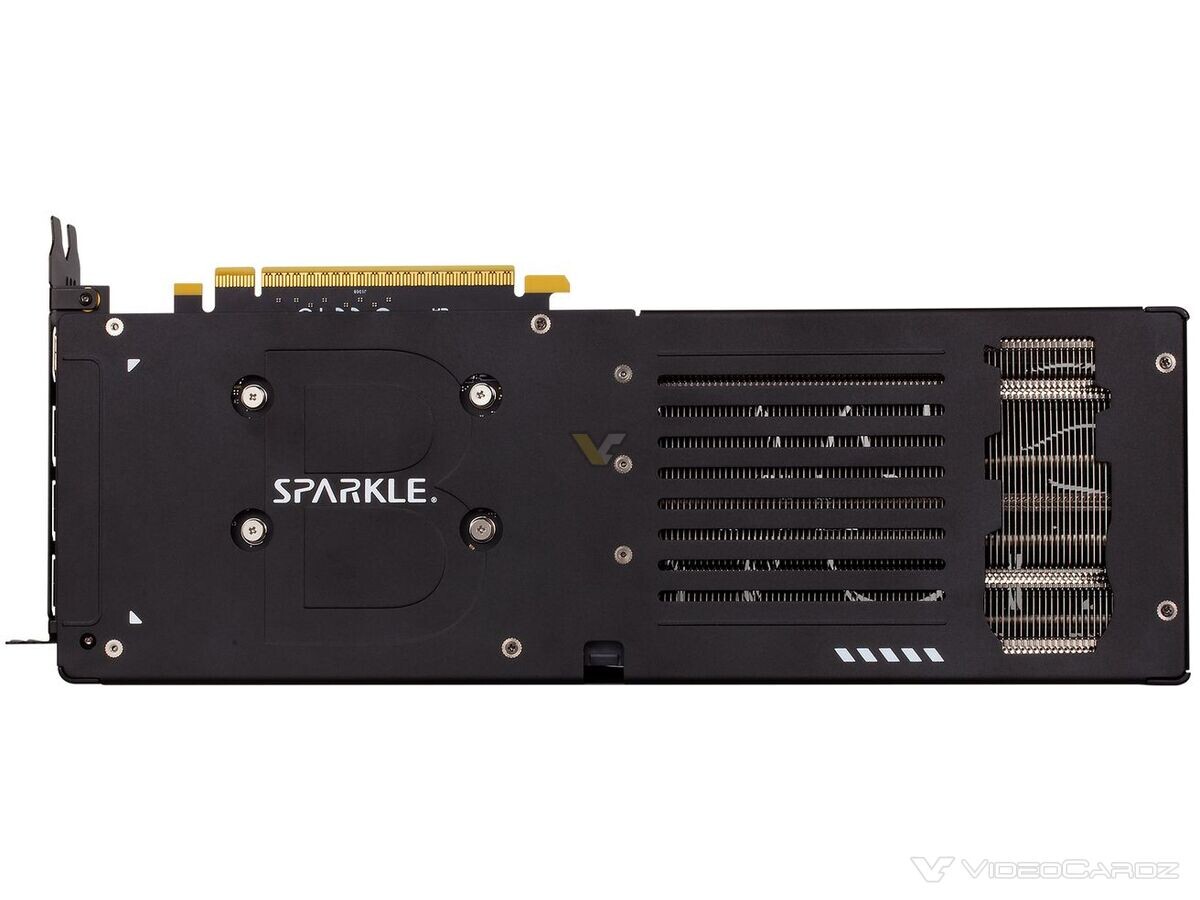
Sparkle unveiled the Arc B580 Titan OC Nox graphics card. This is essentially a color variant of the blue-colored Sparkle B580 Titan OC, and the white Sparkle B580 Titan Luna OC. The Titan OC Nox comes in an all-black color scheme with a few red accents. The card is 2 slots thick, but is 31.5 cm long, with a metal backplate. The cooler uses three 70 mm axial airflow fans to ventilate an aluminium fin-stack heatsink. Design aside, the Nox comes with identical specs to the Luna OC and the original Titan OC, with GPU boost frequency of 2740 MHz against 2670 MHz Intel reference speeds. The total board power (TBP) limit is set to 200 W, and the card relies on a single 8-pin PCIe power connector, besides the PCI-Express slot for power.

Shuttle Launches New XPC nano NE10N Fanless Mini PC Platform

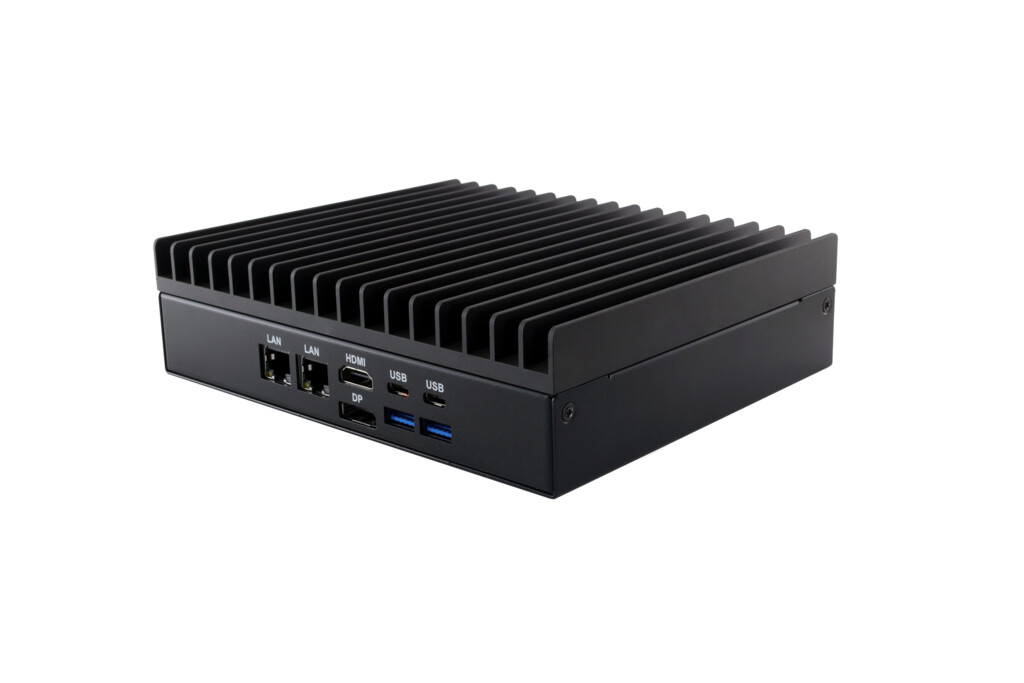
With the XPC nano NE10N, Shuttle introduces a fanless mini PC platform that impresses with its compact design and robust technology. Developed for reliable 24/7 continuous operation, the barebone is particularly suitable for digital display solutions, control systems, POS applications and for use in office and media environments.

Inside the NE10N is a 12th generation Intel N100 processor (Alder Lake-N), which offers solid computing power with completely passive cooling despite a TDP of only 6 watts. The absence of active fans ensures silent operation and reduces maintenance requirements - a clear advantage in sensitive or hard-to-reach installations. Despite a housing volume of only 0.6 liters, the system offers a wide range of expansion options: a DDR4 SO-DIMM slot for up to 16 GB RAM, an M.2 2280 slot for NVMe or SATA SSDs, and an optional M.2 2230 slot with pre-installed WLAN antennas for wireless network connection. The integrated Intel UHD graphics unit enables simultaneous operation of two Ultra HD displays via HDMI 2.0 and DisplayPort 1.4.

IBASE Unveils New MBB1005 ATX Motherboard with Intel Core Ultra 200S for Industrial Edge Computing

IBASE Technology Inc. (TPEx: 8050), a leading provider of industrial panel PC and embedded computing solutions, introduced the MBB1005, a robust ATX motherboard crafted for industrial edge computing, AI acceleration, and automation platforms. Powered by Intel Core Ultra 200S processors on the LGA1851 socket, this board delivers outstanding compute performance, modular expansion, and rugged reliability, enabling OEMs to scale up fast in industrial and embedded markets.

The MBB1005 offers four DDR5 U-DIMM slots, supporting up to 192 GB memory. Its integrated graphics controller supports one HDMI 2.0b and three DisplayPort 1.4a outputs, enabling multi-display configurations essential in industrial monitoring. Networking is handled by dual Intel 2.5GbE ports—the I226LM with iAMT 19.0 for remote maintenance and the I226V for standard communication. For storage and modular expansion, the board offers four SATA III ports and four M.2 slots: two M-Key (2280) for NVMe, one B-Key (3052) for cellular modules, and one E-Key (2230) for WiFi or Bluetooth.

G.SKILL Announces Availability of High-Capacity Overclocked Memory Kits, Up To DDR5-6000 256GB (64GBx4)

G.SKILL International Enterprise Co., Ltd., the world's leading brand of performance overclock memory and PC components, is thrilled to announce the retail availability of its new high performance 64 GB DDR5 modules, with overclock specifications of up to DDR5-6000 CL32 256 GB (64 GB x4) and DDR5-6400 CL36 128 GB (64 GB x2) memory kits. Designed for high-performance computing, content creation, AI applications, and professional workstations, these new kit specifications combine ultra-low latency with massive memory capacity based on 64 GB modules to deliver powerful multitasking and data-intensive performance on the latest platforms.

G.SKILL readies a range of high-density kits based on high-performance 64 GB DDR5 memory modules, with overclock specifications of up to DDR5-6000 CL32-44-44-96 with 256 GB (64 GB x4) total kit capacity. Offering a combination of speed, latency, and capacity, these newly released memory kits are ideal for professional creators and users that demand the utmost from their systems. Featuring the AMD EXPO overclocking profile, these specifications are optimized for compatible AMD Ryzen DDR5 desktop platforms and will join the G.SKILL Trident Z5 Neo RGB and Flare X5 series.

Intel Begins Massive Layoffs in Foundry, Auto Unit, and Marketing

Intel has kicked off a widespread round of job cuts this week, informing staff members individually about their future with the company. CEO Lip-Bu Tan first advised employees in April to expect significant layoffs, following years of production challenges and declining sales. Although Intel has not provided a total headcount for the reductions, the process will unfold over several weeks, with some workers receiving immediate notice and others awaiting final decisions. Within Intel's manufacturing division, known as Intel Foundry, the company plans to eliminate approximately 15% to 20% of technician, engineer, and researcher positions in its Oregon facilities. At the same time, Intel will close its automotive technology unit, resulting in layoffs for most employees in that business, and outsource marketing activities to Accenture under a new arrangement designed to harness AI for greater efficiency.

Initial layoff notices have gone out in California, and further announcements are expected soon in Arizona and Oregon, Intel's largest US sites. These cuts follow last summer's reduction of 15,000 roles, which left Intel with roughly 109,000 employees worldwide. In 2024, the company reported a $19 billion loss as rivals such as TSMC, AMD, and NVIDIA outpaced Intel with more advanced and cost-effective chips. Plans to expand fab capacity in Ohio, Germany, and Israel have been put on hold due to diminished revenue and shifting market priorities. Intel is counting on its next-generation 18A process node, due for release later this year, to restore its competitive edge. For external customers, the interest is drawn from 18A-P and 14A.

DXVK 2.7 Optimizations Give Intel Arc GPUs a Performance Boost on Linux

Intel GPU-based Linux gamers are about to receive a performance uplift. According to the latest update to DXVK, a Vulkan-based translation layer for DirectX 8/9/10/11, Intel's "Battlemage" dGPUs and "Lunar Lake" Arc iGPUs now support memory defragmentation by default, helping Intel GPUs reduce VRAM usage and increase performance, which provides a smoother gaming experience when using the DXVK translation layer. In version 2.7, DXVK forces discrete GPUs to adhere to driver-set memory budgets whenever possible and dynamically frees unused resources to system memory when applications place a significant VRAM load. DXVK v2.7 release notes state that this will be particularly beneficial to Unity Engine and VRAM-constrained titles. This optimization will also enable higher texture quality in game settings, maintaining the same performance as before, and further building upon the memory optimization.

As a critical component of Valve's Proton software stack, this DXVK update also provides Intel-based handhelds, such as the MSI Claw, with increased performance when running SteamOS. Given that we measured a sizable crowd, comprising 3.4% of all handheld users, playing with MSI Claw, many handheld gamers considering running SteamOS on their device will find this DXVK update quite welcome.

Here is a complete DXVK v2.7 changelog.

Intel "Diamond Rapids" Xeon CPU to Feature up to 192 P-Cores and 500 W TDP

Intel's next-generation "Oak Stream" platform is preparing to accommodate the upcoming "Diamond Rapids" Xeon CPU generation, and we are receiving more interesting details about the top-end configurations Intel will offer. According to the HEPiX TechWatch working group, the Diamond Rapids Intel Xeon 7 will feature up to 192 P-cores in the top-end SKU, split across four 48-core tiles. Intel has dedicated two primary SKU separators, where some models use eight-channel DDR5 memory, and the top SKUs will arrive with 16-channel DDR5 memory. Using MRDIMM Gen 2 for memory will enable Intel to push transfer rates to 12,800 MT/s per DIMM, providing massive bandwidth across 16 channels and keeping the "Panther Cove" cores busy with sufficient data. Intel planned the SoC to reach up to 500 W in a single socket.

As one of the first mass-produced 18A node products, Diamond Rapids will be the first to support Intel's APX, also featuring numerous improvements to the efficiency of AMX. Intel also plans to embed native support for more floating-point number formats, such as NVIDIA's TF32, and lower-precision FP8. As most of the world's inference is good enough to run on a CPU, Intel aims to accelerate basic inference operations for smaller models, enabling power users to run advanced workloads on CPUs alone. With a 1S, 2S, and 4S LGA 9324 configuration, Diamond Rapids will offer 768 cores in a single server rack, with a power usage of only 2000 W. Supporting external accelerators will be provided via the PCIe Gen 6 connector. Scheduled for arrival in 2026, Intel could time the launch to coincide with its upcoming "Jaguar Shores" AI accelerators, making a perfect pair for a complete AI system.

Biostar Introduces EdgeComp MS-1335U Industrial System

BIOSTAR, a leading manufacturer of edge computing solutions, motherboards, graphics cards, and storage devices, is excited to unveil the EdgeComp MS-1335U, a standout addition to its EdgeComp embedded edge computing system lineup. Designed to meet the evolving demands of smart cities and connected infrastructure, the MS-1335U combines powerful processing, quiet fanless operation, and flexible connectivity, making it an ideal choice for system integrators, municipal projects, digital signage networks, and next-generation kiosks where performance and efficiency are paramount.

Featuring a compact, fanless design, the EdgeComp MS-1335U is powered by Intel Raptor Lake SoC processors, delivering a powerful balance of performance and energy efficiency for demanding edge applications. With up to 10 cores and speeds reaching 4.6 GHz, it ensures responsive multitasking while operating silently, even in noise-sensitive environments. Supporting up to 96 GB of high-speed DDR5 5200 MHz memory, ultra-fast PCIe Gen 4 storage, and SATA III support for flexible storage options, the MS-1335U is perfectly suited for smart kiosks, interactive digital signage, self-service terminals, and municipal systems that require reliable, space-saving computing with seamless 4K visual output.

Axiomtek Introduces KIWI330, an Ultra-Compact 1.6-inch AIoT Embedded Board

Axiomtek - a world-renowned leader relentlessly devoted to the research, development, and manufacture of innovative, highly efficient, and reliable industrial computer products - is pleased to introduce the KIWI330, an ultra-compact 1.6" embedded board built to accelerate AIoT development and streamline device integration. Powered by the Intel processor N50, the KIWI330 is equipped with 4 GB of onboard LPDDR5 memory and a 64 GB NVMe SSD, delivering energy-efficient performance in an ultra-small form factor - ideal for space-constrained applications. With its high integration, flexible expansion capabilities, and consistent industrial-grade quality, the KIWI330 is the perfect solution for developers building the next generation of compact AIoT systems.

"The KIWI330 is purpose-built for developers who require performance, modularity, and compactness in a single reliable embedded board," said Irene Su, Product Manager of the IDS Division at Axiomtek. "With powerful computing capabilities, USB Type-C expandability, and flexible MIO module support, the KIWI330 significantly shortens development cycles and time to market."

NVIDIA GeForce RTX 50-series GPUs Make a Dent in Latest Steam Hardware Survey

NVIDIA's freshly completed GeForce RTX 50 family, powered by the new Blackwell architecture, has begun to register meaningful numbers in Steam's June 2025 Hardware Survey. Since first appearing in May, cards from this lineup, except for the as-yet-unavailable RTX 5050, now account for 3.69% of surveyed systems. Leading the pack among the newcomers, the RTX 5070 grabs nearly 1% of overall share, up substantially from its debut, while the RTX 5080 and RTX 5070 Ti follow closely behind. The more budget-oriented RTX 5060 Ti and RTX 5060 have also made their mark, and even the top-end RTX 5090 has registered on enough machines to appear in the survey.

These figures show a swift uptake by desktop gamers eager for improved performance and AI-driven features, even as the tried-and-true RTX 4060 Laptop GPU holds onto its position as the most prevalent NVIDIA part, with just under 5% of the installed base. Meanwhile, AMD's latest Radeon RX 9000 series and Intel's Arc B-series remain absent from the survey results, suggesting that shipment volumes for those cards have not yet reached the critical mass needed to register with Valve's monthly sampling of millions of Steam users. This demonstrates NVIDIA's continued dominance in add-in board sales, where it has consistently captured over 90% of the market.

Giga Computing Unveils Liquid and Air-Cooled GIGABYTE AI Servers Accelerated by NVIDIA HGX B200 Platform

Giga Computing, an industry innovator and leader in enterprise hardware and advanced cooling solutions, today announced four new GIGABYTE servers built on the NVIDIA HGX B200 platform. This expansion of the GIGABYTE GPU server portfolio brings greater thermal design flexibility and support for the latest processors, including the new AI-optimized Intel Xeon 6 CPUs, giving customers more options as they tailor their systems for workloads and efficiency.

NVIDIA HGX B200 propels the data center into a new era of accelerating computing and generative AI. Built on NVIDIA Blackwell GPUs, the HGX B200 platform features 15X faster real-time inference on trillion-parameter models.

Landmark Esports Suite Launches on UK Aircraft Carrier as Royal Navy and British Esports Partner for Unique Facility

The floating esports suite will allow the ship's company of HMS Prince of Wales to compete against each other in an immersive gaming environment as part of a partnership between the Royal Navy and the British Esports Federation. While the classic Royal Navy game 'Uckers' is still going strong, the suite will allow further opportunities for ship's company to enhance digital skills and an additional space to decompress in their down time.

It's the result of a partnership between the Royal Navy and the British Esports Federation, the national body for esports in the United Kingdom. The facility includes 12 high-end Alienware Aurora R15 gaming desktop PCs, powered by NVIDIA GeForce RTX 4080 and Intel Core i7 processors. It will join other sports facilities onboard, including gyms, a boxing ring, plus areas for table tennis and running.

Intel Abandons In-House Glass Substrate R&D, Leans on External Suppliers

Under its new CEO, Lip-Bu Tan, Intel is stepping back from building its glass substrate technology in favor of sourcing ready-made solutions from specialized vendors. Driven by Tan's strategy to concentrate resources on Intel's primary lines, CPU/GPU development, and foundry, Intel's operations are becoming leaner. By outsourcing glass substrates, Intel can significantly reduce development timelines and mitigate the financial risk associated with pioneering novel substrate manufacturing. Crucially, this model grants Intel the freedom to evaluate multiple suppliers, pivot quickly if performance or cost benchmarks change, and integrate advanced packaging more rapidly than if it continued to develop substrates internally. Just as the company is focusing on 14A and 18A-P(T), abandoning in-house glass substrate development is a step in the right direction to reduce costs and achieve profitability.

Meanwhile, the glass-substrate sector is gathering momentum, particularly among South Korean firms. SK Hynix, in partnership with Applied Materials, has been trialing its Absolics pilot line for some time, while Samsung has recently scaled up its efforts in this niche. JNTC celebrated the opening of its first glass-substrate plant in May, announcing sixteen prospective clients and projecting revenues to climb from $14.7 million this year to $147 million in 2026, and ultimately hitting $735 million by 2028. A complementary facility under construction in Vietnam will triple the original plant's output, targeting a combined annual production of roughly 500,000 substrates. Intel hasn't yet named which suppliers it will partner with. Still, the company plans to tap into this growing network, potentially joining JNTC's customer roster, to support its advanced packaging roadmap and accelerate product rollouts.

Intel Considers Abandoning 18A Node for 14A Chipmaking Process

Intel's CEO Lip-Bu Tan is looking at a big change to how the company makes chips for others, Reuters reports citing people who know about it. The new plan might mean Intel stops offering its 18A process technology to other companies. This is different from the strategy of the former CEO, Pat Gelsinger, who had invested heavily in the 18A manufacturing process. Since assuming leadership in March, Tan has been working to reduce costs and find new approaches to revive the struggling chipmaker. By June, he began expressing concerns that the 18A process was failing to attract new customers. Abandoning external sales of 18A technology and focusing on its 14A process would require Intel to take substantial write-offs on the billions invested in its development. Industry analysts suggest these charges could reach hundreds of millions or potentially billions of dollars.

Intel plans to show the board these options later this month. However, a final decision is not expected until this autumn given the complexity and financial stakes involved. Even if they change plans, Intel will still keep its promises about 18A process including producing small amounts of chips for Amazon and Microsoft, and making its own "Panther Lake" laptop processors scheduled for late 2025. Along with standard 18A, Intel is creating two upgraded versions: 18A-P launching in 2026 and 18A-PT arriving in 2028.

G.Skill CAMM2 DDR5 Memory Module Demonstrates DDR5-10000 Overclock Speed on ASUS Z890 Motherboard

G.SKILL International Enterprise Co., Ltd., the world's leading brand of performance overclock memory and PC components, is working closely with the ASUS ROG team to explore the overclock potential of the new DDR5 CAMM2 form factor and have successfully reached the early milestone of Memtest-stable at DDR5-10000 memory speed with a 64 GB capacity CAMM2 module on a modified custom ASUS ROG Maximus Z890 Hero CAMM2 motherboard with an Intel Core Ultra 7 265K desktop processor.

Overclocked CAMM2 Reaches DDR5-10000 Memtest-Stable Milestone
G.SKILL is always seeking out overclock memory performance wherever possible. With the in-development CAMM2 form factor and in cooperation with the ASUS ROG team, demonstrating stability is the first step toward enabling overclock memory specifications on future hardware platforms.

ASUS IoT Unveils R680EA-IM-Z Industrial Motherboard

ASUS IoT, a leader in AIoT solutions, today introduces R680EA-IM-Z, a high-performance industrial ATX motherboard built to empower advanced industrial applications with exceptional processing power and robust reliability. Powered by 14th Gen Intel Core processors, R680EA-IM-Z delivers up to 21%-faster CPU performance, providing the optimal foundation for AI-enabled machine vision, robotics and real-time data analysis.

Optimized for data-heavy industrial workloads, R680EA-IM-Z efficiently handles high-resolution image processing and complex algorithmic tasks. Its advanced computing capability ensures seamless integration into intelligent manufacturing and automation systems - where real-time responsiveness and unwavering reliability are essential.

Intel Arc GPU Graphics Drivers 101.6913 WHQL Released

Intel today released the latest version of the Arc GPU Graphics Drivers. Version 101.6913 WHQL comes with optimization for "Mecha BREAK." The release also fixes a handful of issues. For Intel Arc B-series "Battlemage" discrete GPUs, a couple of issues are fixed. A bug that causes "Returnal" to experience an application crash during gameplay with ray tracing enabled, has been fixed. An intermittent application freeze with SPECapc for Maya 2024 during benchmark, has been fixed. The release also fixes a bug specific to the Arc "Battlemage" iGPUs of Core Ultra 200-series "Lunar Lake" processors, specifically, "Valorant" being unable to enumerate supported resolutions in game settings. Grab the drivers from the link below.

DOWNLOAD: Intel Arc GPU Graphics Drivers 101.6913 WHQL

Intel CSO to Leave the Company in Another Management Overhaul

Safroadu Yeboah-Amankwah, Intel's Chief Strategy Officer will be leaving the company as of today, in another management overhaul. The news broke on Friday via Reuters and it's currently unclear if it was mutually agreed upon or if Saf—as he was known as in the company—was forced out. The Reuters piece mentions that he has "overseen growth initiatives, strategic partnerships and equity investments for Intel" as part of his role at the company. He was originally hired as Senior VP and Chief Strategy Officer and much of his work at Intel seems to have been related to Intel Capital, Intel's investment arm, which was spun off earlier this year.

Yeboah-Amankwah has held his position as CSO at Intel since September 2020 and he might just be one of the approximate 21,000 head cuts that company is planning this year. Reuters further reports that Sachin Katti, Intel's Chief Technology & AI Officer will be taking on some of his responsibilities. Time will tell if Lip-Bu Tan's new strategy of trying to build a leaner Intel will work in the long term, as although he's pledged to get rid of middle management, this appears to be something else, at least to an outside observer. The company hasn't issued an official statement, but Reuters got a statement confirming the departure that said "We are grateful for Saf's contributions to Intel and wish him the best."

Intel Xeon 6 Slashes Power Consumption for Nokia Core Network Customers

Intel and Nokia are expanding their long-standing and strategic collaboration to advance core network infrastructures with the deployment of Intel Xeon 6 processors with Efficient-cores (E-cores) in the Nokia NFVI v5.0 and Nokia Core Networks Applications. With breakthrough energy efficiency, capacity and scalability for 5G core workloads, this joint infrastructure initiative will provide Nokia customers with up to a 60% reduction in power consumption, a 60% smaller server footprint and a 150% performance boost compared to widely deployed previous-generation servers.

"The combination of Intel Xeon 6 E-core processors - engineered for power-efficient, high-density compute - and Intel Infrastructure Power Manager, which delivers stable run-time power savings, provides a robust foundation for the most energy-efficient 5G core networks. We're proud to see Nokia Core Networks continue to lead with Intel Xeon processors, helping communications service providers reduce both power use and infrastructure footprint at scale," said Alexander Quach, Intel vice president and general manager of the Wireline and Core Network Division.

Some Intel Nova Lake CPUs Rumored to Challenge AMD's 3D V-Cache in Desktop Gaming

Looking to challenge AMD's gaming CPU supremacy, Intel is reportedly developing Nova Lake processors with enhanced cache technology that could rival the popular 3D V-Cache found in X3D chips. According to leaker @Haze2K1, Intel plans to add "bLLC" (big Last Line Cache) to at least two Nova Lake models. This improved L3 cache is similar to AMD's 3D V-Cache, which has made X3D chips the top pick for enthusiast gamers since 2022. The new processors with bLLC will have 8 P-cores and 4 LP-E-Cores. One version will include 20 E-cores, while another will have 12 E-cores. Both are expected to keep a 125 W TDP rating.

Intel's bLLC technology already exists in Clearwater Forest server processors where local cache integrates into the base tile positioned beneath active tiles. This structural approach mirrors AMD's current 9000-series X3D design, where V-Cache attaches to the bottom of CPU dies—a significant improvement over earlier generations that placed cache on top, causing thermal issues and clock speed limitations. Yet, Intel said no to consumer plans for a technology similar to AMD's 3D V-Cache. In November 2024, Intel's Tech Communications Manager Florian Maislinger told YouTubers der8auer and Bens Hardware that they didn't plan such a desktop version. The Nova Lake-S family is set to hit the market in late 2026 or early 2027, with at least six desktop models using new LGA 1954 packaging. The lineup will start from the top-end Core Ultra 9 485K with 52 cores and 150 W TDP and go down to the basic Core Ultra 3 415K offering 12 cores at 125 W TDP.

Intel's Server Share Slips to 67% as AMD and Arm Widen the Gap

In just a few years, AMD has gone from the underdog to Intel's most serious challenger in the server world. Thanks to its EPYC processors, AMD now captures about a third of every dollar spent on server CPUs, up from essentially zero in 2017. Over that same period, Intel's share has slipped from nearly 100% to roughly 63%, signaling a significant shift in what companies choose to power their data centers. The real inflection point came with AMD's Zen architecture: by mid-2020, EPYC had already claimed more than 10% of server-CPU revenues. Meanwhile, Intel's rollout of Sapphire Rapids Xeons encountered delays and manufacturing issues, leaving customers to look elsewhere. By late 2022, AMD was over the 20% mark, and Intel found itself under 75% for the first time in years.

Looking ahead, analysts at IDC and Mercury Research, with data compiled by Bank of America, expect AMD's slice of the revenue pie to grow to about 36% by 2025, while Intel drops to around 55%. Arm-based server chips are also starting to make real inroads, forecast to account for roughly 9% of CPU revenue next year as major cloud providers seek more energy- and cost-efficient options. By 2027, AMD could approach a 40% revenue share, Intel may fall below half the market, and Arm designs could capture 10-12%. Remember that these figures track revenue rather than unit sales: AMD's gains come primarily from high-end, high-core-count processors, whereas Intel still shifts plenty of lower-priced models. With AMD poised to launch its Genoa and Bergamo EPYCs and Intel banking on the upcoming E-core Xeon 6 series to regain its footing, the fight for server-CPU supremacy is far from over. Still, Intel's once-unbeatable lead is clearly under threat.
Return to Keyword Browsing
Nov 17th, 2026 14:01 CST change timezone

New Forum Posts

Popular Reviews

TPU on YouTube

Controversial News Posts