News Posts matching #Leak

Return to Keyword Browsing

Lenovo Legion Go Beam Handheld Leaks Sans Iconic Trackpad

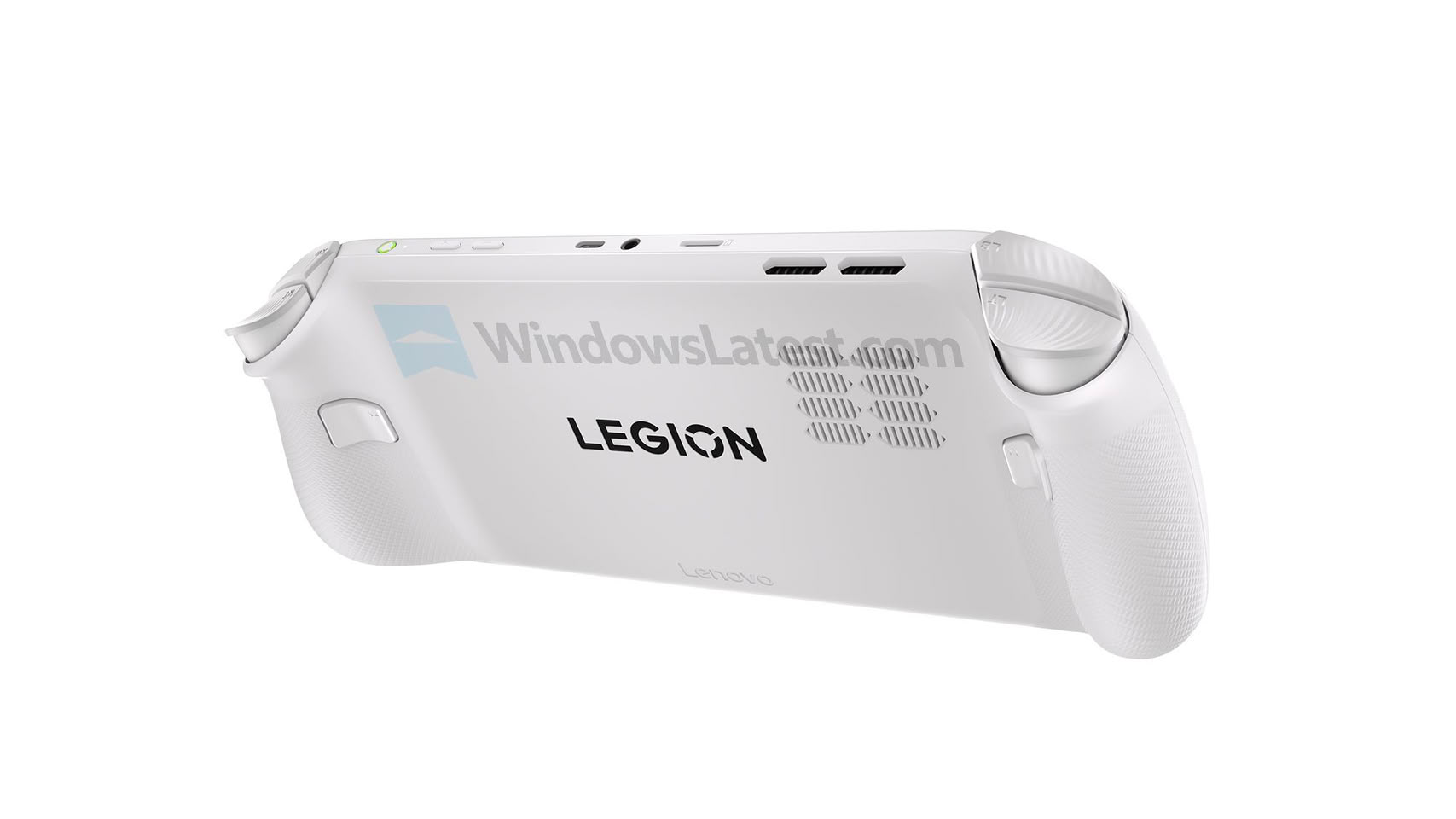
Following the launch of the Legion Go 2, which has apparently had a rough time of things, with a recent RAMpocalypse-induced price hike resulting in a retail price of over $2,000 for some Legion Go 2 models. Now, it seems as though Lenovo may be responding to the RAM crisis by making a cheaper Legion Go gaming handheld under the Legion Go Beam moniker. The new devices leaked via a Windows Latest report, showing off a white case design with lime green accents on some parts of the gaming handheld.

It's so far unclear what exactly the differences will be between the Legion Go and the Legion Go Beam devices, but the Legion Go Beam appears to be an even more affordable version of the Legion Go S, with a cut-back feature set, targeting severely budget-constrained buyers. Some of the most notable changes, aside from the new lick of paint, are more rounded grips, larger display bezels, and forward-facing speakers, all of which would theoretically address complaints leveled at the original Legion Go and the Legion Go 2.

Intel Razor Lake Gets a 12 P-Core bLLC Chip With No E-Cores, Per Leak

Intel's Razor Lake desktop lineup could include an unlocked gaming chip with 12 P-cores and no regular E-cores at all. Well-known Intel leaker Jaykihn shared the "12+0+4" configuration on X, which pairs those 12 P-cores with four low-power E-cores and Intel's big Last Level Cache (bLLC), the company's answer to AMD's X3D chips. In a follow-up post, he said this SKU replaces a locked 8+0+4 bLLC part that was rumored earlier. Apparently, all 12 P-cores sit on a single compute die designed only for P-cores, rather than a hybrid die with its E-cores switched off, and Jaykihn later said that tile is built on Intel's own 18A-P node. That would make it an outlier, since most Razor Lake compute tiles are reportedly headed to TSMC.

Jaykihn also claims the 125 W 6+12+4 bLLC chip, one of the two 22-core Nova Lake-S parts that leaked back in July, has been pushed from Nova Lake to Razor Lake. If that's accurate, it seems Nova Lake-S will launch with one less bLLC option than expected. There's no word on the 65 W version. Razor Lake-S is currently a 2028 product that should use the same LGA-1954 socket as Nova Lake-S, according to Jaykihn's earlier posts. Intel has listed Razor Lake model IDs in its ISA reference, but none of these specs are official. Plans this far out can change, so it's reasonable to treat the 12 P-core chip as just a target for now.

TSMC Confirms Employee Data Leak, Points to Cloud Provider

TSMC has confirmed that personal data of some current and former employees was posted on an external website without authorization. The chipmaker disclosed the incident in a Form 6-K filing on November 12, the same day Taiwan's United Daily News reported that someone was selling roughly 46,000 employee records on DarkForums and BreachForums. Apparently, the asking price for the 6.9 GB dump is three bitcoin (about NT$7.4 million), and the seller threatened to publish all of it if no buyer turned up within a week.

A sample file shared with the listing reportedly holds 499 records with 19 fields each, including names, dates of birth, job titles, national ID numbers, home addresses, phone numbers, emails, bank details, and emergency contacts. The 46,000 figure hasn't been verified yet. TSMC says it has found nothing to suggest its own systems were breached. Its initial findings point to a cloud service provider instead, since the leaked data matches records stored with that vendor. The company hasn't named the provider or said how many people are affected.

Leak Tips Rainbow Six: Vegas Series Slated To Return From 18-Year Hiatus

The last Rainbow Six: Vegas game launched as far back as 2008, and the series has more or less been dormant since then. However, a recent report out of Insider Gaming claims that an insider at Ubisoft has confirmed that a new Rainbow Six: Vegas game is in the works.

Not much is known about the new Rainbow Six: Vegas game other than that it is in development and that Ubisoft is developing the game in its new Vantage Studios subsidiary, which is partially owned by Tencent. The new game in the Vegas series is known internally by the codename "Spades," and it is one of three new games Ubisoft is working on at Ubisoft Montreal. This also isn't the only Rainbow Six game in development, after Ubisoft's August reveal of Rainbow Six Tactics.

PlayStation 6 Is on Track, but Sony Wants to Be Careful With How Much It Spends

Sony says work on its next-generation PlayStation, presumably the PS6, is still on schedule despite the ongoing memory crunch. During the company's Q2 FY2026 earnings call, CFO Lin Tao said development is "progressing as scheduled," adding that investment in the new platform will ramp up from next fiscal year, which begins in April 2027. On the memory front, Sony says it has offset rising memory prices on the PS5 through pricing, promotions and cost cuts, and has already agreed with suppliers on how much memory it needs for next year's projected hardware sales. Here's what Tao said about the next generation in her prepared remarks:
Although new PS5 unit sales are gradually declining as expected in this stage of the console life cycle, the PS platform continues to expand and grow in a stable manner. Looking ahead to next fiscal year, we aim to continue to enhance user engagement and further strengthen monetization through the release of strong titles and the expansion of our service. We also intend to make solid progress in preparing for the next generation platform.
Later, during the Q&A, she added:
For future growth, we have to attach great importance to our new platform. We have to make the necessary investments for that. But we have to support this soundness of our platform and try to think how rationally we can invest in our platform.

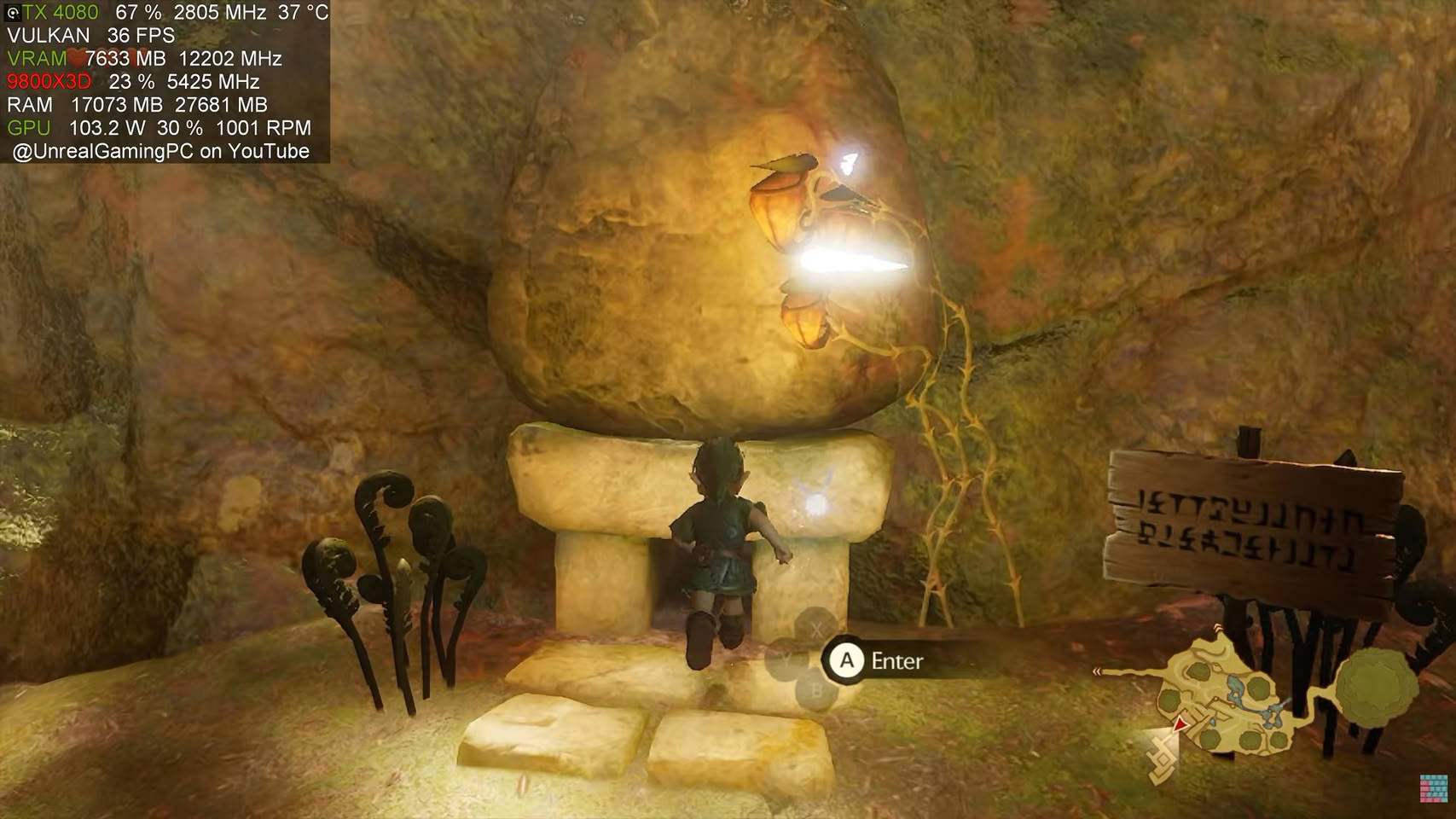
Zelda: Ocarina of Time Remake Runs on PC Through Switch 2 Emulator on Launch Day

Nintendo's The Legend of Zelda: Ocarina of Time remake launches on Switch 2 today, but it looks like PC users got there first. A dump of the game was already making the rounds before launch, which Brazilian account Senhor Linguica Pro confirmed on X while noting that no emulator could run it properly at the time. That didn't last long. Footage now shows the remake running on PC through Lichii, a Switch 2 emulator that reportedly traces its roots back to Yuzu, the Switch emulator Nintendo took to court in 2024.

Running is a generous word, though. Users report white or washed-out visuals, gameplay scenes where only the HUD shows up, and terrain poking through objects, while some setups can't even get past the title screen. Gameplay clips show the frame rate swinging anywhere between 20 and 60 FPS, with regular stutters along the way. For comparison, Digital Foundry's look at the Nintendo Direct footage showed the remake running at 1080p and 60 FPS on Switch 2, so the emulator still has a long way to go. The emulator can load the dumped files now, but that doesn't mean other Switch 2 games will work, and it's going to take a lot more fixes before anyone can play this one properly.

CPUID Readies CPU-Z for Intel Razor Lake, Two Generations Out

CPUID has released CPU-Z 3.02, and the first line of its changelog simply reads "Intel Razor Lake support." Razor Lake is the processor family expected to follow Nova Lake, and Intel has yet to officially announce it. The changelog doesn't say which Razor Lake variants are covered or how deep that support goes, so this could be anything from basic detection to early groundwork. The November 4 update also adds the AMD Radeon AI PRO R9700, along with fixes for an SPD reading issue on Intel Broadwell-E and a validation problem on Windows XP.

Of course, system tools tend to pick up new chips well before they reach store shelves. HWiNFO added early Nova Lake support back in August 2025, and the first Nova Lake-S desktop chips still aren't expected until Q1 2027. HWiNFO also added preliminary support for Razor Lake-AX in August this year, the rumored large APU that could pack up to 32 Xe3 GPU cores alongside on-package memory.

Google Says Detachable Googlebooks Are Next in Line

Google has confirmed that Googlebooks with removable keyboards are on the way. During its Android Dev Summit 2026 keynote last week, the company said its Chromebook successor "spans across large screen form factors from clamshells, convertibles, and soon detachables." That's all Google said, so there's no date, price, or specific device attached to it yet. The current lineup is mostly made up of clamshells, and the Acer Googlebook 14, with its 360-degree hinge, is the only convertible in it.

Reports claim that the first detachable will most likely come from Lenovo, which already sells the Googlebook 15. Its Googlebook Duet m, codenamed "Sapphire," showed up in the Bluetooth SIG database back in August, and a matching keyboard and Lenovo Pen Pro stylus have now cleared the FCC under the IDs O57DUET13BTKB and O57AP501U1. The keyboard schematics carry Googlebook branding on the left palm rest, and it seems to work both through pogo pins when attached and over Bluetooth LE on its own battery. Leaks point to a 13-inch OLED panel and a MediaTek chip, though reports disagree on which one, and Lenovo hasn't confirmed any of it.

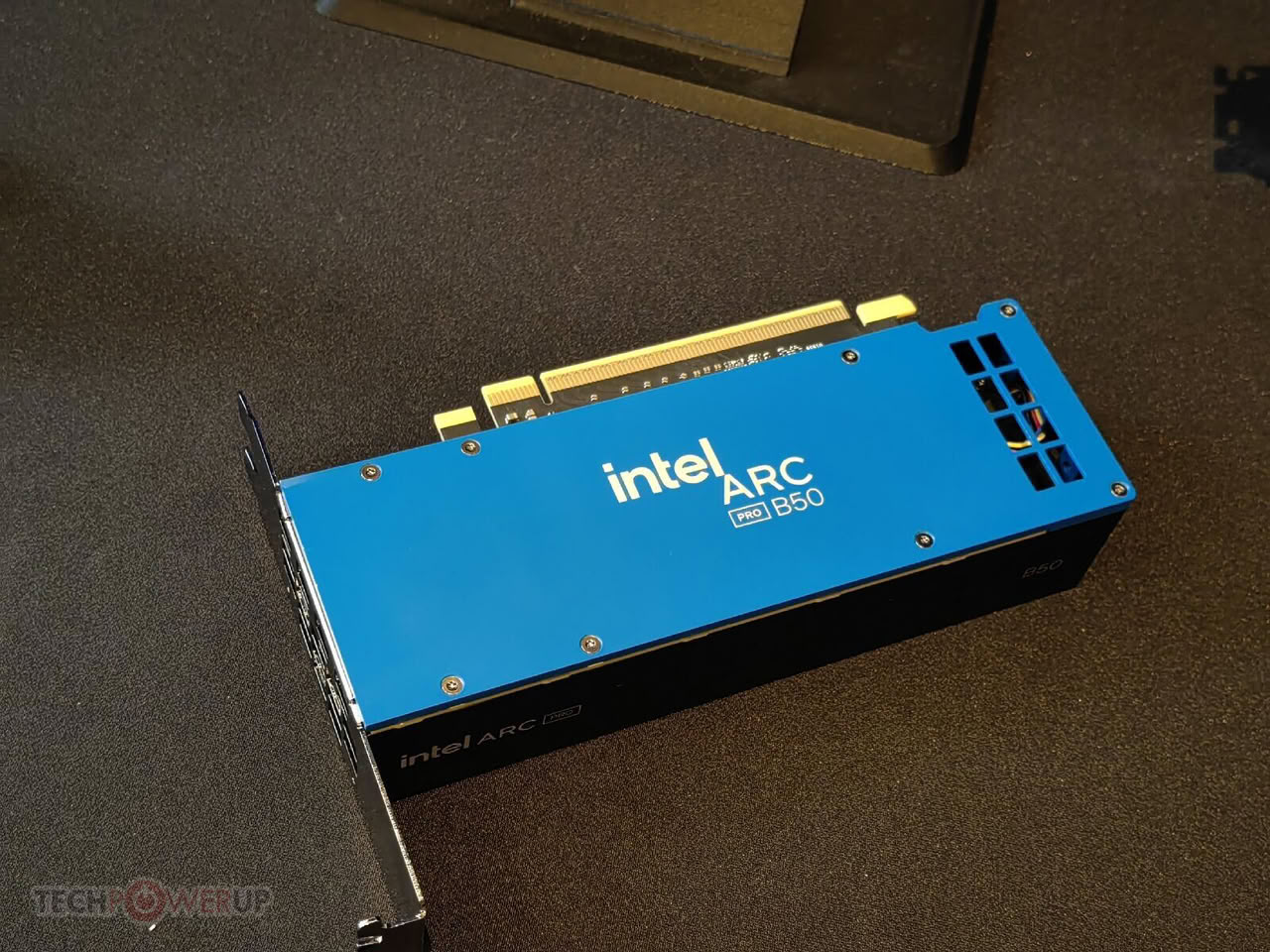
Intel Might Discontinue the Arc B580 to Prioritize Higher-Margin Arc Pro Cards

Leaker Haze2K1 says on X that Intel might put the Arc B580 on the end-of-life (EOL) list. Apparently, Intel wants to prioritize workstation and AI inference cards like the Arc Pro B50, which are reportedly selling really well and carry higher margins. Intel hasn't confirmed anything, and Haze2K1 only says the card "might" go EOL, so this is only a rumor for now. However, the logic checks out. The Arc B580 launched in December 2024 at $249 and beat the RTX 4060 in TechPowerUp's review. The Arc Pro B50 and B60 use the same BMG-G21 silicon, and the B60 pairs the same 20 Xe cores with 24 GB of memory instead of 12 GB. Intel estimated the B60 at around $500 at launch, roughly double the B580's price. Clearly, Intel stands to gain more monetary benefit from the workstation cards.

As for the consumer GPUs, their supply already looks quite thin. The B580 is reportedly out of stock at most retailers, and prices have also climbed well above MSRP. The leaker doesn't mention the Arc B570, so we don't know if Intel has similar plans for that card as well. Intel's larger BMG-G31 chip also showed up in March in the workstation-only Arc Pro B70 and B65, so the shift toward pro cards seems to be underway already. If the B580 does go away, gamers will lose one of the more affordable 12 GB cards, even though the Arc B580 was selling above its MSRP. That said, I wouldn't expect cheaper Arc cards anytime soon

AMD Zen 7 "Grimlock" APUs to Feature New RDNA 5+ Graphics in 2029, Leaker Claims

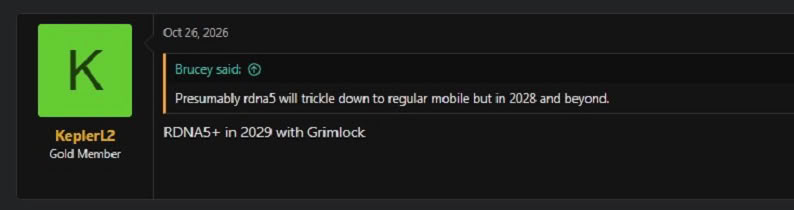
Leaker Kepler_L2 says AMD will bring RDNA 5+ to its Zen 7 "Grimlock" APUs in 2029. He posted on the NeoGAF forum, replying to a user who guessed RDNA 5 would trickle down to regular mobile chips in 2028 or later. His answer was "RDNA5+ in 2029 with Grimlock." He gave no details on how RDNA 5+ differs from RDNA 5, and AMD hasn't confirmed the name or timing. Grimlock is the codename for the Zen 7 Ryzen generation. This update follows Kepler_L2's January claim that AMD is splitting its APU roadmap in two. Products that don't need strong integrated graphics, like office laptops or laptops with a high-end discrete GPU, stay on RDNA 3.5 until 2029, while "premium" parts get RDNA 5. Medusa Halo is expected to be one of those.

The picture is messy, though. We previously reported that Medusa Point should get RDNA 4m, a tweaked RDNA 3.5 with FSR 4 support, and AMD's HIPRT 3.2 release notes list Medusa support for gfx1170, gfx1171 and gfx115E. The gfx115x family is RDNA 3.5, so it looks like at least one Medusa chip could stick with it. If this ends up being true, anyone waiting on a mainstream Ryzen laptop or handheld with RDNA 5 graphics may be waiting a long time. That's a long run for one iGPU architecture, but of course, this is all leak territory until AMD says something concrete.

Fans Rebuild Valve's Scrapped Portal Prequel "F-Stop" From Three Separate Leaks

F-Stop, the Portal prequel Valve canceled in 2007, is now playable after the community stitched it together from several leaks. Most of its assets were already sitting in the gigantic 12 TB Steam2 archive that leaked in August, but that dump didn't include the game's source code or its mapsrc data, Valve's folder for map source files. Those two missing pieces showed up on the Valve Cut Content project's Discord server over the past few days, where the team verified the map files before everything was merged into one build. It isn't fully complete, as some textures and dialogue are still missing, but YouTube playthroughs suggest it's largely stable, and the campaign wraps up in under an hour. Getting a copy yourself is another matter, since the Discord server apparently went invite-only after all the attention.

F-Stop came out of what Gabe Newell later called the Directed Design Experiments, a three-month stretch where Valve split into five teams, each building its own prototype. Its central idea is an Aperture Science camera that photographs an object so you can place it elsewhere to solve puzzles, a concept the 2023 game Viewfinder later explored. Valve staff apparently liked it, but playtesters were less impressed. It was shelved, and some of its dialogue, characters, and mechanics were reworked into Portal 2. The playthroughs show an early Cave Johnson talking to the player (without J.K. Simmons' voice), along with personality cores acting as puzzle companions. Valve hasn't commented on this project, and there's no indication of an official release.

Intel Nova Lake-S Promises Up To 17% Single-Thread and 20% Gaming Performance Improvements

A lot of information relating to Intel Nova Lake-S has emerged leading up to the official launch in early 2027, including official information from Intel detailing the Nova Lake architecture and a recent benchmark leak that promised significant single-thread performance improvements on a 28-core Nova Lake-S part. However, a recent leak out of @Haze2K1 on X, shared by VideoCardz, purports that the real-world performance improvements for Intel's Nova Lake desktop CPUs are in the double digit range.

While the leaker has been around for a while, there is no guarantee that this information is accurate, since the only cited source is "circulating chatter," however, the claim is that Intel's Nova Lake will outperform comparable last-generation Arrow Lake CPUs by 8-17% in raw single-thread performance, 15% in general-purpose workloads, and up to 20% in gaming. There is some nuance to these claims, with the 17% improvement figure exclusive to the higher-end CPUs that feature bLLC, while the 17% boost allegedly comes from the implementation of Intel's new Advanced Performance Extensions.

Nintendo Switch 2 Exclusives Already Booting on iPhone and PC, Days After First Jailbreak

Less than a week after the Switch 2's first jailbreak went public, Switch 2 exclusives are already showing up on hardware Nintendo doesn't make. Developer Will Faust posted footage of Mario Kart World running on an iPhone 18 Pro through a private fork of nxnative, a project that runs original Switch games natively on Apple Silicon. That came a day after his macOS demo, which had missing geometry and wrong colors, so many people called it fake. Faust says the iPhone build uses just under 6.5 GB of physical memory thanks to a swap-like, file-backed memory setup. Switch 2 support needed extra work on NVN2, the console's newer graphics API, and Faust has said he won't release the code.

On PC, developer Sheepish got Splatoon Raiders booting in a private build of the Eden emulator. It now reaches character select, though it lags quite a bit, has no VSync, and is missing plenty of features. Sheepish credited AI-assisted development and hinted at a public release later this week. Centro LEAKS also posted that DK Bananza is running on PC, though only an image was shared, and it's unclear who is behind it.

28-Core Intel Nova Lake-S CPU Shows Promising Performance Boost in Leaked Benchmark

It looks as though the upcoming Intel Nova Lake-S CPU family will launch soon, headed-up by a 28-core Core Ultra 9 CPU. A new PassMark benchmark spotted by VideoCardz now purports to show expected performance of that 28-core Nova Lake-S CPU in two separate benchmark runs. The CPU, which is listed as "Nova Lake Client Platform," with the motherboard model giving it away as "NVL-S Embedded CRB 1 Fab2 Board," appears alongside an eight-core NVL-S CPU, and both CPUs achieve decent scores in the single-threaded performance benchmarks.

According to the PassMark database scores, the eight-core NVL-S scores up to 5,085 points, while the 24-core variant tops out at 5,210 points. Meanwhile, the 28-core—ostensibly the Core Ultra 9 4970K BFC—scores as high as 61,509 points in the multithreaded CPU test, and the eight-core variant, likely a Core Ultra 3 or 5 CPU, scores 23,478 points. If these PassMark scores are accurate, this puts the Core Ultra 9 4970K BFC at around 85% of the performance of an AMD Ryzen 9 9950X3D in multicore performance, while the CPU beats out the Intel Core Ultra 9 285K on single-threaded performance but misses out on matching the outgoing Intel chip by 5,721 points or around 8.5%.

AMD EPYC 9996 Geekbench Listing Offers First Look at Zen 6 Single-Core Gains

AMD's Zen 6 just got one of its first rough per-clock comparisons against Zen 5, and the early numbers look good. Leaker HXL spotted a Geekbench 7.1.0 listing for the 256-core EPYC 9996, the flagship "Venice" chip AMD launched in July, scoring 2,847 points in single-core on a Dell PowerEdge R9815 server running Linux. User three twenty six on X then locked a Ryzen 7 9700X to 4.1 GHz, matching the EPYC 9996's maximum boost, and got 2,444 points on the same Geekbench version. That works out to roughly 16.5% higher single-core performance for Zen 6 at the same frequency. Apparently, Zen 6 came out ahead in all 15 single-core subtests, with gains ranging from 8.2% in File Compression to 25.7% in HTML5 Browser.

Of course, these scores only give us a general idea about the gains. The EPYC 9996 uses the dense Zen 6c cores, not the full Zen 6 cores expected in desktop Ryzen chips, so it's hard to say how closely these numbers will carry over. The two systems are also wildly different, with a server platform on one side and a 9700X running DDR5-6000 CL34 under CachyOS Linux on the other, and the EPYC listing has since been pulled from the Geekbench database. Still, a double-digit per-clock gain from the dense core variant is quite encouraging. AMD has already confirmed that "Olympic Ridge" desktop CPUs will stay on AM5, though they reportedly won't arrive until 2027, so we can expect more comprehensive performance leaks well before then.

Razer Leak Tips New Inductive Mouse, Viper Mini HyperSpeed, and V4 Special Edition

The Razer Viper Mini has been a highly sought-after mouse since it launched, with the Razer Viper Mini Signature Edition being held in even higher regard by small-mouse enthusiasts. Now, it seems as though Razer may finally be moving to update the internals of the Viper Mini series, six years after the original Viper Mini launched in 2020. Alongside new leaks purportedly tipping the existence of what appears to be a Razer Viper Mini HyperSpeed and a new Razer mouse with some sort of magnetic tech to challenge Logitech HITS, new images have appeared of a potential special edition Viper V4 Pro.

[Editor's note: Our in-depth review of Razer Viper V4 Pro is now live]

The Razer Viper Mini HyperSpeed was revealed to be launching sometime in Q1 or Q2 2027, and the Razer HITS mouse at some point in Q2 or Q3. It's still unclear how exactly Razer's HITS competitor will work, but the leaker calling it HITS may suggest that it will also feature the haptic feedback featured in Logitech's system. In slightly less exciting news, Razer also appears to be launching a new special edition colorway of the Viper V4 Pro gaming mouse with a black and green mesh pattern on the top, almost resembling something between a topographic map and tattered material. The leak comes courtesy of screenshots of an OLX listing in Brazil that was shared on X.

Leaked Trailer Shows the Mass Effect Game BioWare Was Making Before EA Shut It Down

A day after EA shut down BioWare, a trailer for the canceled next Mass Effect game has leaked online, and it seems the game was going to be called Mass Effect: Universe. Reddit user Random_Hyabusa_Ninja posted the roughly two-minute clip on r/masseffect on October 22, first in the replies of another post, and then as a standalone post. Bloomberg's Jason Schreier has since confirmed on Bluesky that it's a real trailer for the Mass Effect game BioWare was working on up until the closure. The clip is a cinematic rather than gameplay. It follows a new human protagonist, with no sign of Shepard, through a tense bar conversation with an Asari who appears to be Liara T'Soni, cuts to a few gunfights and a Krogan, and ends on the Mass Effect: Universe logo.

The leak also raises questions about how far along the game actually was. EA's internal memo described it as being in early development, and around 50 of the 400 jobs EA is cutting were tied to it. However, a Reddit user claiming to be an EA employee said the trailer had been ready for months and that the project was further along than people think. BioWare first teased the game back in 2020, so that claim doesn't seem far-fetched, but its source is questionable at best. There's no word from EA on the leak so far, though it's reasonable to expect takedown requests to follow.

Valve Sparks New Half-Life 3 Hype with Official HLX Mention

At this point, Half-Life 3 has become a meme for its ability to get gamers excited at even the slightest whiff of a mention of its name. For a while now, however, there have been rumors circulating about a Valve project called HLX, which is ostensibly Valve's internal name for a new Half-Life project that some have theorized may be Half-Life 3.

In a recent clip from a Valve Q&A panel at GameSoundCon (shared by @Tyler_McV on X), while addressing a question about HDR implementations in different games, a Valve employee, Mike Morasky, says that "I think Deadlock has their own version of HDR. HLX has its own version, so on and so forth." This mention of HLX is what Half-Life 3 hopefuls have latched onto as evidence of confirmation of the game by Valve itself.

Microsoft Reportedly Cutting Specs on Entry-Level 12-Inch Surface, AMD Arm Chip in the Mix

Microsoft might be working on a cheaper 12-inch Surface, and Apple's MacBook Neo looks like the reason. DigiTimes reports, citing supply chain sources, that Microsoft is reviewing the specifications of its entry-level 12-inch Surface to bring costs down, and is also rethinking which processor goes inside. The report's headline, spotted by harukaze5719 on X, goes as far as saying Apple is forcing Microsoft to downgrade the device, and hints at a comeback for AMD with an Arm chip. Reportedly, the processor, memory, camera, battery, and chassis are all being looked at, though nothing seems to be finalized yet.

The pricing gap between the two laptops is quite large. Microsoft only just refreshed the 12-inch Surface Pro with Snapdragon X2 Plus, and it now starts at $1,149, up from $799 last year, partly because the 8 GB base configuration was dropped. Apple launched the MacBook Neo at $599, and even after a $100 increase in June that Apple blamed on memory costs, it still sits at $699. As for the chip, AMD's "Sound Wave" Arm APU was previously linked to Microsoft's 2026 Surface lineup and has even shown up in shipping manifests, so it looks like a candidate. Leaks put it at 2 performance and 4 efficiency Arm cores, RDNA 3.5 graphics with 4 CUs, and a 5 W to 10 W power target. Then again, Microsoft could just as well stick with Qualcomm, and neither Microsoft nor AMD has confirmed anything.

Leak: Intel Core Ultra 9 4995HX Leads Nova Lake Laptop Lineup

Intel's Core Ultra 9 4995HX looks set to be the fastest Nova Lake chip for laptops. Leaker Jaykihn on X has confirmed that the 4995HX uses an 8+16+4+2 layout, meaning 8 P-cores, 16 E-cores, 4 LPE cores, and 2 Xe3 GPU cores. That adds up to 28 CPU cores, four more than Intel's current Arrow Lake-HX chips, with the extra cores coming from the LPE cluster Arrow Lake-HX lacked. The overall layout matches the 8P+16E+4LP ceiling earlier reports pointed to, and the name itself fits the Core Ultra 4000 branding said to be extending to HX parts. Intel hasn't confirmed any of this, and clocks, cache, and power figures are still unknown.

The same post lists the Core Ultra 9 4970H as 4+8+4+12, so 16 CPU cores and a 12-core Xe3P iGPU. That is the same core count as Panther Lake's flagship Core Ultra X9 388H, so any gains here should come from the new Coyote Cove P-cores, Arctic Wolf E-cores, and Xe3P graphics rather than extra cores. The tiny iGPU on the 4995HX is less of a concern, since HX chips almost always end up paired with a discrete GPU anyway. Jaykihn also put the final 8+16 HX compute tile, built on TSMC N2P, at 14.8 x 6.6 mm, or roughly 98 mm², shortly after die shots of both chips surfaced. Current reports point to the first Nova Lake-H and HX laptops showing up around CES 2027, though that timing should be treated as tentative for now.

Cyberpunk 2077 Update 2.5 Leaks Early, Brings Console Mods and Dual-Wielding Pistols

CD Projekt RED's Cyberpunk 2077 Update 2.5 isn't out until October 22, but most of its content has already leaked. YouTuber WesNemo apparently published a video covering the update too early, and while it has since been pulled, players on r/GamingLeaksAndRumours had already summarized it. According to WesNemo, CD Projekt gave him and other creators early access to the update ahead of its official presentation. The studio itself has only confirmed dual-wielding and cyberware customization so far, so treat the rest as unofficial until the patch notes go live.

Apparently, dual-wielding is limited to pistols and comes through a new "Double Trouble" perk in the Cool skill tree. The leak also lists a new Edgerunners 2 gig called "Clampdown," which reportedly acts as a prequel to the anime that premiered on Netflix on October 20, plus a mystery Night City tour sidequest. Glamdoc shops will let players change the look of arm cyberware like Mantis Blades and Gorilla Arms, and there are five new clothing sets, new hairstyles for both male and female V, Quadra skins through Twitch Drops, and a radio station playing Edgerunners music.

NVIDIA Has January Discontinuation Dates Set for RTX 5090 and RTX 5080 16 GB, Claims Leaker

Earlier this month, leakers claimed NVIDIA had stopped allocating GB202 silicon to the GeForce RTX 5090, effectively discontinuing the Blackwell flagship. NVIDIA denied it a few days later, with SVP Jeff Fisher saying the RTX 5090 hasn't been discontinued and will keep shipping. Now, Moore's Law Is Dead (MLID) says the plans are still in place, and the RTX 5080 is part of them too. In the latest Broken Silicon episode, MLID read out a message from what he calls one of his oldest sources, apparently a major retailer, saying NVIDIA has set discontinuation dates for both cards in the first half of January 2027.

According to that source, the last RTX 5090 shipments arrived in September, while the final RTX 5080 batch should land by the end of October and sell through Thanksgiving. We recently reported that Micro Center has already marked its RTX 5090 listings as "Not Carried," which could be further evidence of the RTX 5090 leaving shelves. The retailer from MLID's video also says its system already has a placeholder SKU for an RTX 5080 24 GB, which aligns with BenchLife's earlier report of a Q1 2027 launch.

Rumored Steam Deck 2 APU Appears in Leaked Benchmarks with 50% More CPU Cores

A new AMD Gainsborough APU, which has been identified as a potential candidate for the Valve Steam Deck 2, has apparently been leaked onOpenBenchmarking. The new engineering sample shows a total of six cores and twelve threads on the CPU, an increase of 50% over the current Steam Deck APU, and a base clock of 2.4 GHz.

Another notable change from the original Steam Deck is that the Gainsborough APU in question has 24 GB of LPDDR5 RAM, instead of 16. That memory was also running at a whopping 9600 MT/s, as opposed to the Steam Deck's 6400 MT/s. This isn't necessarily to say that the Steam Deck 2 will have 24 GB of memory, but it's an indication that AMD, Valve, or some other OEM is testing that configuration. In the benchmark results, the APU reaches 3,508 points in Furmark. While it's not directly comparable, since the Gainsburough APU was running at 1024 × 768 the Valve Steam Deck achieved 3,323 in Furmark at 1280 × 800. Those two results are close, especially given the higher resolution in the Steam Deck testing, but if this is on early drivers, it's a good sign for GPU performance on the Steam Deck 2.

PS6 RAM and Storage Alone Reportedly Cost Sony Over $680, Claims Leaker

The memory crunch looks like it is hitting the PlayStation 6 harder than expected. Hardware leaker KeplerL2 claims on NeoGAF that the RAM and NAND flash storage in Sony's next console alone cost over $680. He posted it as a reply to a forum member who floated $680 as a possible subsidized retail price, which pretty much puts that idea to rest. Keep in mind that figure covers only memory and storage, before the APU, cooling, power supply, and the rest of the hardware are counted. This is not the first time Kepler has updated his estimate. Back in March, he put the console's bill of materials at around $760, and by July, that had climbed to roughly $960.

Current leaks suggest the PS6 uses GDDR7 memory on a 160-bit bus with support for up to 40 GB, with 30 GB considered the more likely configuration. There have also been reports that Sony looked into cutting memory capacity to keep costs down, and the culprit is the same as everywhere else: AI data centers are soaking up DRAM and NAND supply, which pushes prices up for everyone. Sony has said nothing official about PS6 pricing, so it's reasonable to treat all of this with some caution. That said, if memory prices stay where they are, a PS6 that costs significantly more than the PS5 Pro seems likely, and a $1,000 price tag now looks quite possible.

HWiNFO Lists PTL-080, a Smaller Panther Lake Chip for Arc G-Series Handhelds

Intel seems to be preparing a smaller chip for its Arc G-series handheld lineup, and the first trace of it has appeared in HWiNFO. The monitoring tool's list of upcoming changes now includes support for "Panter Lake-H 080," typo and all. Leaker Jaykihn spotted the entry on X and says the chip, PTL-080, is an Arc G-series part with a 0+8+0+4 configuration. If that follows the same P-core, E-core, LPE core and Xe3 order Jaykihn has used before, it works out to eight E-cores, no P-cores or LPE cores, and a four-core Xe3 GPU. For comparison, the Arc G3 and Arc G3 Extreme both use a 14-core 2+8+4 CPU, paired with 10 and 12 Xe3 cores respectively.

This isn't the first smaller Arc G chip to surface. Back in August, Jaykihn posted a "4+0+4+4" handheld layout, which pointed to an entry-level part with four P-cores, four LPE cores and the same four Xe3 cores, and a later report put its power target at 8 W to 25 W. The new listing keeps the GPU size but drops the P-cores entirely. Apparently, the two might not ship side by side either. In a follow-up post, Jaykihn said the 4+0+4+4 design may be wholly replaced by 0+8+0+4, and that he'll share an update if and when that's finalized. Intel hasn't announced anything officially yet, so clocks, power limits, naming and pricing are all unknown. A four-core Xe3 GPU will likely trail the G3 parts by a wide margin in games, so it's reasonable to expect this chip in lower-priced devices.
Return to Keyword Browsing
Nov 24th, 2026 04:02 CST change timezone

New Forum Posts

Popular Reviews

TPU on YouTube

Controversial News Posts