News Posts matching #Leak

Return to Keyword Browsing

Apple "Vision Pro 2" Components Reportedly Being Mass Produced in China

Since its summer 2023 launch, Apple's pricey Vision Pro mixed reality headset has not exactly attracted a mainstream audience. Roughly a year later, rumors of a (then) recently canceled successor appeared online—insiders posited that company engineers had pivoted onto the development of a cheaper alternative model. Vision Pro "Version 1.0" arrived with an intimidating $3499 price tag; thus eliminating interest from a wide swath of potential AR/VR headset enthusiast customers. Industry insiders reckon that Apple had "abruptly reduced production" of the current-gen model last October, with further whispers suggesting a complete cessation of manufacturing activities by the end of 2024. Yesterday, an ITHome article cited compelling claims made by supply chain insiders—the initiation of mass production for a speculated second generation "Apple XR/Vision Pro" device.

The online report stated that: "multiple independent sources (have) confirmed that the panels, shells and other key components of the second-generation Apple XR headset are already in production." Very specific leaked information indicates Lens Technology being the exclusive supplier of glass panel pieces, and Changying Precision tasked with the making of the next-gen model's casing. Additionally, several contract circuit manufacturers are supposedly "rushing to complete orders." Secretive figures posit that Apple will release its sequel mixed reality headset later on in 2025. Differing "expert opinions" have not determined whether this incoming set of fancy goggles will be the predicted "cheaper" model, or a proper "M5 SoC-powered" successor.

Insider Claims NVIDIA GeForce RTX 50 Series Transitioning to Usage of SK hynix GDDR7 Memory Modules

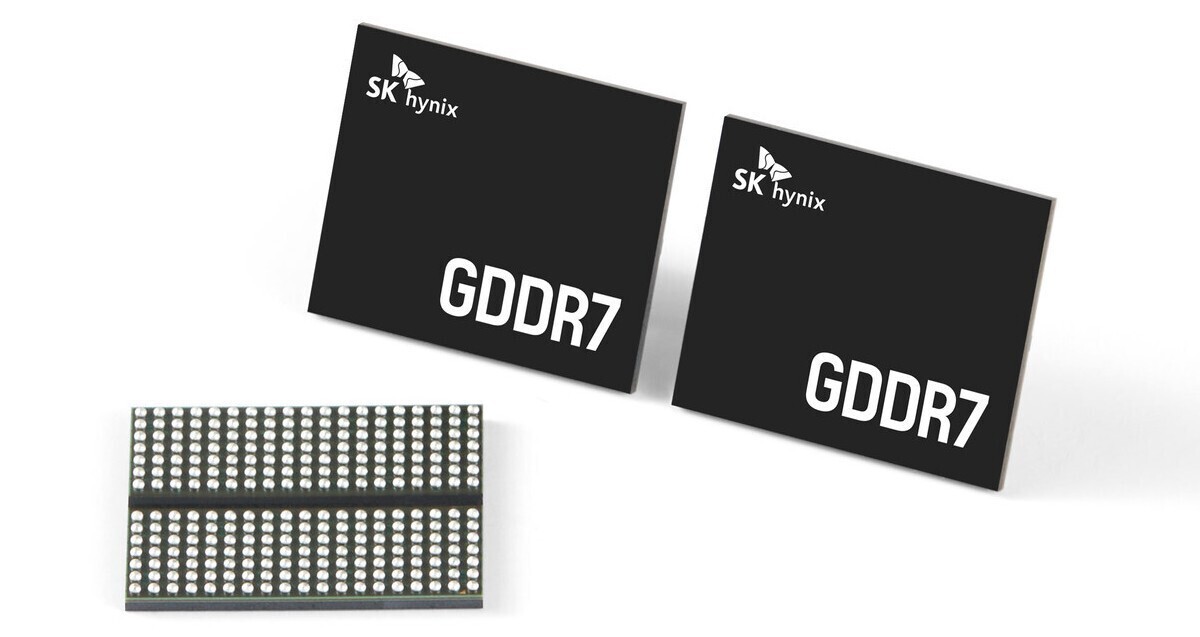
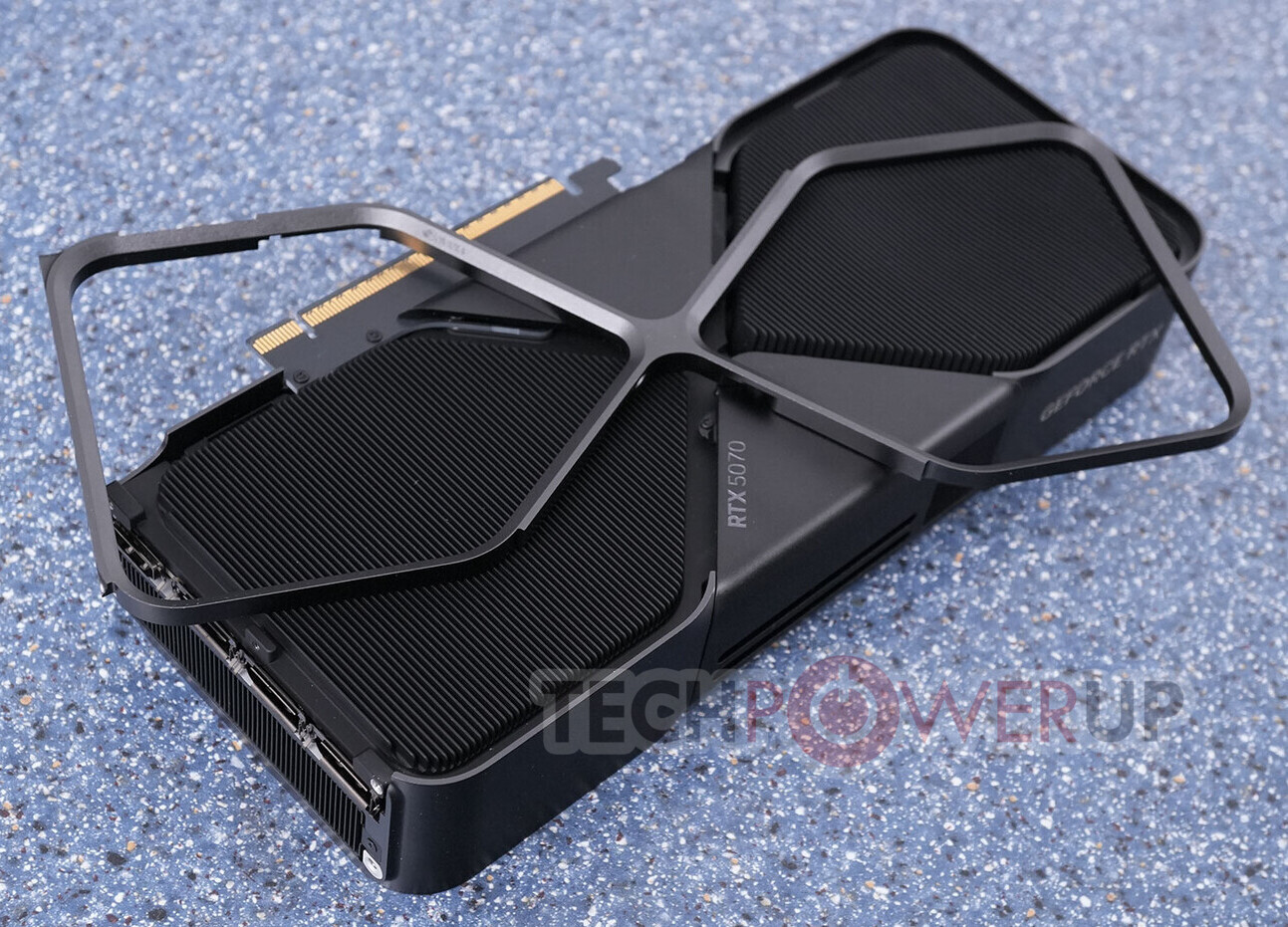
So far, NVIDIA's GeForce RTX 50xx graphics card models have shipped with Samsung GDDR7 memory modules onboard. According to a fresh MEGAsizeGPU (aka @Zed__Wang) claim, a change in vendor has already occurred. The tenured tracker of Team Green inside track information believes that the company has: "started to use SK hynix GDDR7 for the GeForce RTX 50 series graphics cards. Started with GeForce RTX 5070 first." Officially, NVIDIA's latest board designs can support GDDR7 modules produced by the "big three:" Samsung, SK hynix and Micron (see BIOS info below). Team Green's comfortable market leading position probably grants plenty of negotiation power to pick and choose the best component deals. Day one evaluators performed teardowns on GeForce RTX 50 series review samples; TechPowerUp's W1zzard found Samsung "K4VAF325ZC-SC32" GDDR7 units—rated for 32 Gbps—onboard various GeForce RTX 5080 16 GB models. As outlined by VideoCardz, the rest of NVIDIA's "Blackwell" gaming product stack sticks with 28 Gbps-rated Samsung GDDR7 modules, extending to its Mobile portfolio.

OpenAI Reportedly Considering ~$500 Million Takeover of io Products - a Smart AI Device Startup Founded by Sam Altman

At some point in 2023, Sam Altman founded a new AI hardware device firm: io Products. Last September, Jony Ive confirmed his involvement in this startup tech company. Industry whispers suggest that Open AI's CEO (Altman) and the former Apple chief designer (Ive) were collaborating on the making of voice-enabled smart AI assistant household products. According to a (paywalled) The Information news article, this fledgling operation attracted an "undisclosed amount of funding" from wealthy benefactors. The "small team" is reportedly working on some type of "revolutionary" screenless AI phone, but this rumored project is likely in a very early stage of development—so moles have not disclosed exact details.

The report posits that Ive has recruited Tang Tan and Evans Hankey—both high-level ex-Apple industrial leads, with long-term iPhone design experience. The Information's anonymous inside sources believe that Ive's LoveFrom boutique agency will determine the visual setup for forthcoming io Products smart devices. Additionally, the report extends to a potential takeover bid—valued at around $500 million (USD)—coming from Altman's main gig. Open AI's leadership is supposedly weighing up its options. The Information disclosed an alternative avenue; a simple partnership—rather than a comprehensive takeover.

NVIDIA GeForce RTX 5060 & 5050 Mobile GPUs "Officially" Leaked by Laptop Manufacturers

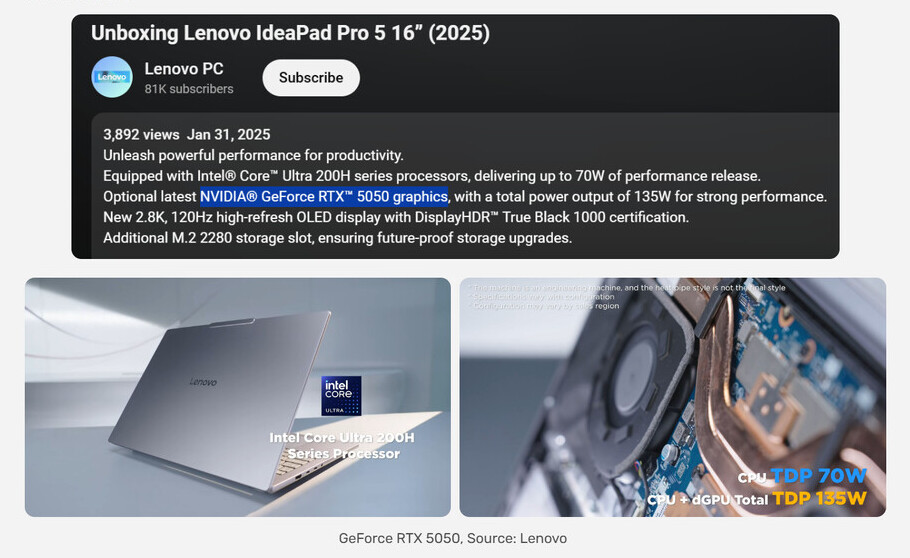
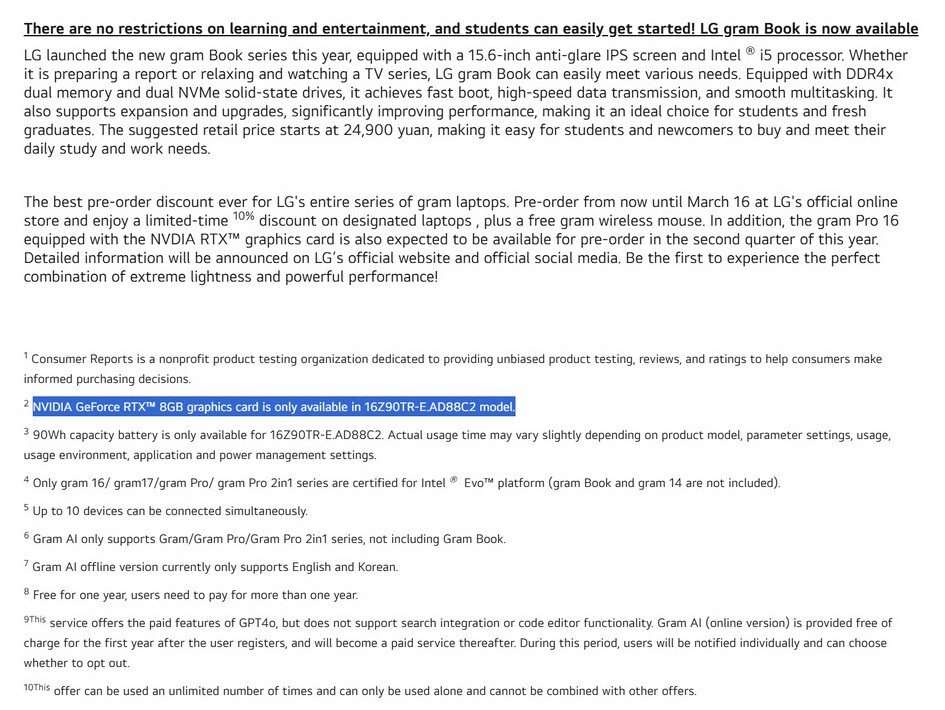
NVIDIA is expected to reveal its GeForce RTX 5060 Mobile and RTX 5050 Mobile GPUs later this month, but a series of leaks—going back to last summer—have already spoiled the fun. Last month, leaks pointed to Razer and MSI's preparing cheaper of "cheaper" portable gaming PCs—featuring lower end "Blackwell" Mobile hardware. VideoCardz has spent time looking for more examples—recent detective work has unearthed further evidence of an imminent launch. Yesterday's investigative article put spotlights on Razer, Lenovo and LG. Team Green's manufacturing partners have inadvertently published official web material with multiple mentioning of pre-release GeForce RTX 5060 and GeForce RTX 5050 laptop-oriented solutions. Razer China has already reacted to VideoCardz's report; their Razer Blade 16 (2025) splash page no longer lists an NDA-busting GeForce RTX 5060 Mobile option.

Similarly, LG's Taiwanese office has scrubbed "5050" from a recently published new LG gram AI notebook press release. The edited line states: "NVIDIA GeForce RTX 8 GB graphics card is only available in 16Z90TR-E.AD88C2 model." On January 31 (2025), the Lenovo PC YouTube channel uploaded an unboxing of their refreshed Lenovo IdeaPad Pro 5 16" model. The video's description let slip crucial pre-release information, regarding an upcoming discrete graphics configuration: "optional latest NVIDIA GeForce RTX 5050 graphics, with a total power output of 135 W for strong performance." VideoCardz has deduced a speculative 65 W TDP rating for Team Green's entry level "Blackwell" mobile SKU. At the time of writing, Lenovo has not edited out the offending descriptor from their Lenovo IdeaPad Pro 5 16" (2025) featurette.

Xiaomi's Proprietary Flagship Mobile SoC Reportedly Downgraded to TSMC "N4P"

According to reports from last year, Xiaomi was expected to unveil an oft-rumored proprietary mobile chipset design at some point in 2025. By October 2024, the Chinese technology giant allegedly reached the tape-out phase of its first 3 nm SoC—at the time, insiders posited that Xiaomi was seeking a manufacturing partner. Months earlier, a prototype design was linked to TSMC's 4 nm "N4P" node process—this rumor raised many smartphone watchdog eyebrows. Unlike many other Chinese firms, Xiaomi was reportedly allowed to select a fairly advanced manufacturing process at Taiwan's premier foundry service. In a past weekend news article, Wccftech outlined interesting circumstances: "(US) export controls have yet to affect Xiaomi, which is supposedly on track to launch its first in-house chipset later this year. However, while we reported last year that the company was scheduled to unveil its custom 3 nm SoC in 2025, we were disappointed to learn just the specifications of this version that will utilize TSMC's 'N4P' process. According to more details, this silicon will not sport any homegrown cores like Qualcomm has adopted for the Snapdragon 8 Elite."

Late last week, Jukanlosreve highlighted another leaker's prediction—regarding the technological foundations of Xiaomi's mystery flagship mobile processor. Fixed Focus Digital's Weibo post mentioned the "N4P" node, as well the utilization of current generation Arm Cortex-X925, Cortex-A725 and Cortex-A520 units. A speculated Imagination Technologies "IMG DXT 72-2304" integrated graphics solution is touted to outperform Qualcomm's Adreno 740 iGPU; as featured in their Snapdragon 8 Gen 2 (2022) SoC. As highlighted by Wccftech's report, one of the publication's associates has deemed Fixed Focus Digital to be an unreliable source of inside track info. In response to Jukanlosreve's tweeted question, Mochamad Farido Fanani opined: "that's right, how does Xiaomi use N4P in its new chipset? But this guy always guesses blindly." Older leaks—based on "N4P" rumors—projected performance levels roughly on par with Qualcomm's first generation Snapdragon 8 chip. This model was introduced at the tail end of 2021.

NVIDIA GeForce RTX 5060 Ti & 5060 128-bit Memory Interfaces "Confirmed" by Leaked Shipping Manifest

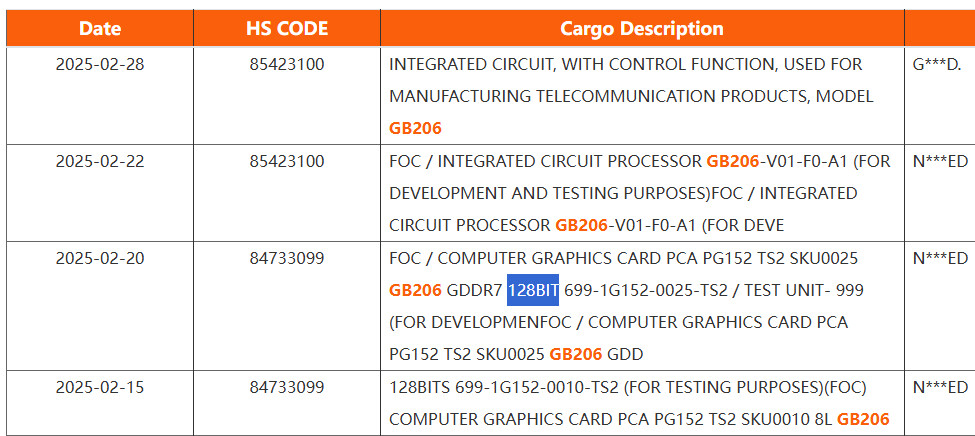
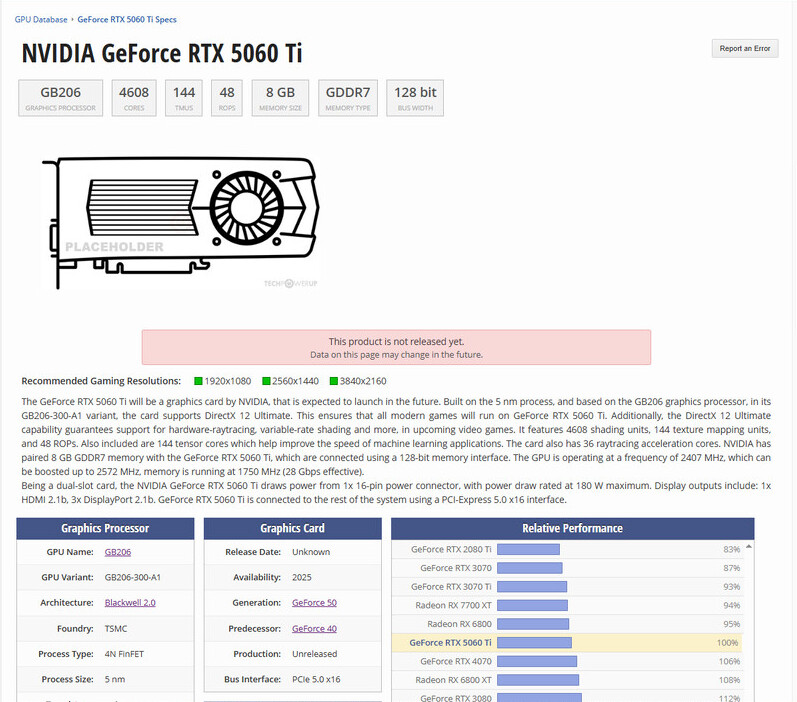
Last month, PG152 board designs were linked to NVIDIA's rumored lineup of upcoming GeForce RTX 5060 Ti, RTX 5060, and RTX 5050 "Blackwell" GPUs. Despite the emergence of fairly legitimate looking "incomplete" technical information, claimed "128-bit memory bus" spec points (for all lower end cards) did not sit well with a portion of the PC gaming hardware community. In theory, Team Green could roll out truly next-generation budget offerings with 192-bit buses, rather than repeat some of its GeForce RTX 4060 "Ada Lovelace" series homework. Two weeks ago, a GeForce RTX 5060 Ti-specific "full specification" leak reiterated the design's (alleged) 128-bit wide GDDR7 memory interface.

Earlier today, VideoCardz unearthed another example—sourced from shipping manifests—of NVIDIA outfitting PG152 boards with a 128-bit memory bus. The "PG152 SKU 25" and "PG152 SKU 10" identifiers seem to confirm the existence of GeForce RTX 5060 and GeForce RTX 5060 Ti graphics cards (respectively)—the latter design is reportedly due for launch next week. The "wallet friendly" end of Team Green's "Blackwell" GPU spectrum is expected to utilize GDDR7 memory; thus elevating new-gen options above preceding hardware. An advantageous generational leap grants bandwidths of 448.0 GB/s, rather than 288.0 GB/s.

"Snapdragon 8 Elite Gen 2" SoC Tipped to Support LPDDR5X/LPDDR6 Memory

Late last month, speculative Snapdragon 8 Elite Gen 2 (aka SM8850) technical details emerged online. Up until then, Digital Chat Station's Weibo channel has delivered all sorts of pre-release information—mostly concentrating on Qualcomm's alleged redeployment of a familiar "2 + 6" core configuration, and selection of TSMC's 3 nm "N3P" node process. Earlier today, the veteran leaker predicted a couple of new-gen improvements—first concentrating on the alleged mobile chipset's "Adreno 840" integrated graphics solution. Digital Chat Station (DCS) believes that the company's engineering team has increased their iGPU design's independent cache size "from 12 MB to 16 MB," leading to: "early setting performance increased by 30%±." It is not clear whether this rumored upgrade has affected the SoC's L2 or L3 cache provisions, but the current-gen Snapdragon 8 Elite mobile processor makes do with 12 MB of L2 cache per cluster. Additionally, DCS reckons that an enlargement of caches has resulted in performance of Qualcomm's "second-generation self-developed CPU architecture" increasing "by 25%±."

As interpreted by Wccftech: "the upcoming SoC will now feature 32 MB of L2 cache, with the L3 count currently unknown at this time. The initial test results revealed that the 'Snapdragon 8 Elite Gen 2' delivered a 30 percent performance increase, but it is unconfirmed if this delta exists between the Snapdragon 8 Elite or some other silicon." DCS has heard whispers about the upcoming chip supporting "new generations of high-speed LPDDR5X/LPDDR6" memory. The mentioning of LPDDR5X is not surprising; given that the current Snapdragon 8 Elite model is already up to snuff with this spec. Just over a year ago, JEDEC was reportedly working on the finalization of LPDDR6 standards for mobile platforms. Shortly thereafter, smartphone industry watchdogs started to theorize about the arrival of a so-called "Snapdragon 8 Gen 4" chip with LPDDR6 RAM in 2025. Fast-forward to the present day; fresh reports suggest that manufacturers will have the option to outfit next-gen flagship devices with "bog-standard" LPDDR5X or faster/more efficient LPDDR6 memory.

ASUS GeForce RTX 5060 Ti TUF Gaming & PRIME SKUs Leaked; 16 GB & 8 GB Variants Listed

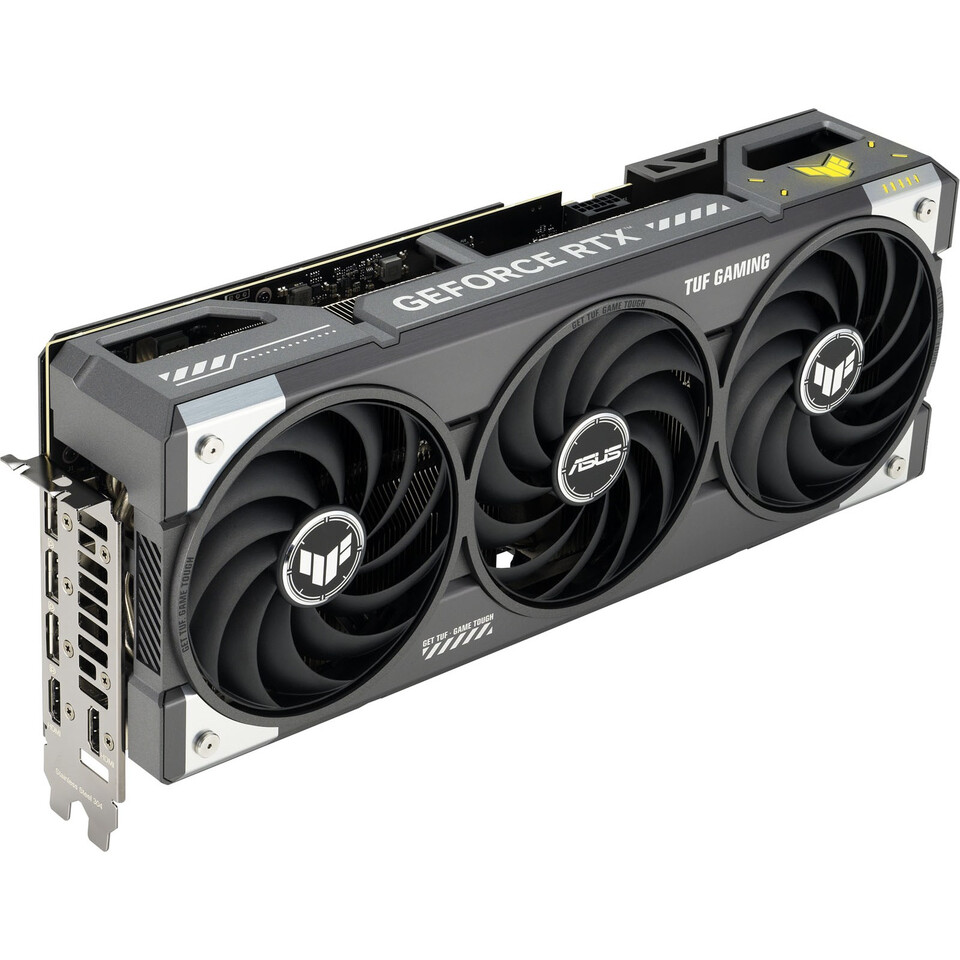
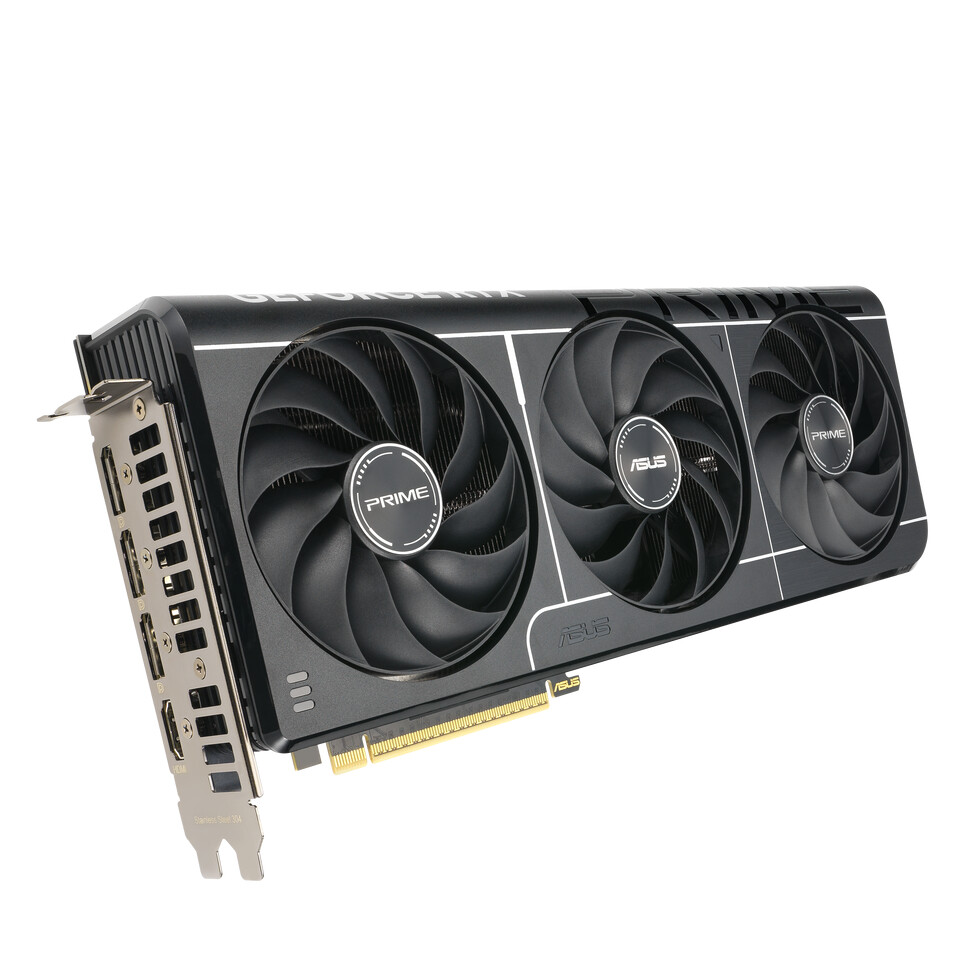
A past weekend leak has presented five unannounced custom GeForce RTX 5060 Ti graphics card models, courtesy of a momomo_us discovery. ASUS seems to be readying day one options in TUF Gaming and PRIME guises, configured with pools of 16 GB and 8 GB VRAM. NVIDIA and involved board partners are expected to launch new lower end "Blackwell" GPU products next week. Industry whispers suggest that Team Green will lift its GeForce RTX 5060 Ti review embargo on April 15.

Alleged benchmark results were highlighted last weekend, preceded by speculative price points—suggesting an imminent arrival. momomo_us did not disclose the origin of the mystery ASUS GeForce RTX 5060 Ti model identifiers, but VideoCardz has found various TUF Gaming and PRIME listings on retail and distributor web presences. Their short investigative piece envisions the eventual arrival of GB206 GPU-based budget-friendly DUAL and premium tier ROG Strix cards.

Two Unannounced AMD Ryzen Z2 APU Models Leaked, Flagship Could be "AI Z2 Extreme"

Three months ago, AMD unveiled its Ryzen Z2 APU series at CES 2025—purpose made for deployment in next-gen handheld gaming PCs. The officially announced flagship—Ryzen Z2 Extreme "Strix Point," utilizing Zen 5 and RDNA 3.5 technologies—was previously alluded to by leakers in late 2024; albeit with some curious claims regarding an "odd 3+5 core configuration." Last week, Hoang Anh Phu (@AnhPhuH) presented an alleged expanded lineup of Ryzen Z2 processors—headlined by a mysterious "Ryzen AI Z2 Extreme" SKU.

PC hardware watchdogs believe that this speculative variant will eventually arrive with an enabled XDNA 2 NPU (a first for the series); likely readied to take on Intel's Core Ultra 200V "Lunar Lake" processor family. MSI's Core Ultra 7 258V-powered Claw 8 AI+ and Claw 7 AI+ handhelds launched not too long ago, boasting all sorts of Microsoft Copilot+ capabilities. Mid-way through March, an Xbox executive introduced "Copilot for Gaming." Team Red and manufacturing partners are likely jumping onto this "AI gaming" bandwagon with the aforementioned "AI Ryzen Z2 Extreme" chip, as well as Phu's fanciful "Ryzen Z2 A" model. The latter could be a spin-off of AMD's vanilla Ryzen Z2 "Hawk Point" design, with a "switched on" XDNA NPU.

China's Largest AI Firms Reportedly Forked Out ~$16 Billion Total for NVIDIA H20 GPU Supplies in 2025

Last week, industry reports pointed to evidence of NVIDIA H20 AI GPU shortages in China—supply chain insiders expressed frustration about limited availability, and alleged price hikes. Days later, local media outlets have disclosed staggering sales figures. Two unnamed sources opine that the likes of Tencent, Alibaba and ByteDance have spent roughly US$16 billion on H20 purchases, across the first three months of 2025. Back in February, Reuters noted an extraordinary surge in orders for: "(Team Green's) H20 model—the most advanced AI processor legally available in China under U.S. export controls—driven by booming demand for Chinese startup DeepSeek's low-cost AI models." The unprecedented rush—to secure precious AI-crunching hardware—was likely motivated by whispers of elevated restrictions; coming from across the Pacific Ocean.

Curiously, local government bodies have allegedly "advised" a stoppage of H20 orders—a recent Financial Times article suggested that this message was directed at the nation's largest AI players (mentioned above). A few industry moles believe that NVIDIA's engineering department is working on another Chinese market exclusive AI chip, although it is not clear whether a new entrant will be designed to conform to recently introduced "not very strict" environmental regulations. Anonymous sources have made noise about an upgraded H20 variant; sporting fancy HBM3E modules.

Multiple Pre-built Gaming PCs Listed with "~$299" NVIDIA GeForce RTX 5060 Graphics Cards

Within the past few days, Best Buy updated its product inventory with brand-new CyberPowerPC GamerMaster desktop SKUs, featuring NVIDIA's unannounced GeForce RTX 5060 8 GB graphics card. Earlier today, the ever watchful momomo_us spotted NDA-busting listings on the North American retail chain's webstore. Similar information turned up weeks ago, albeit from a French vendor. At the time of writing, CyberPowerPC's "GMA2600BSTV2" and "GMA2600BST" models are no longer visible/accessible on BestBuy.com.

Thankfully, VideoCardz's investigative article contains preserved screengrabs—their fresh news piece also extends to coverage of Newegg's premature listing of upcoming GeForce RTX 5060 Ti and RTX 5060-based STORMCRAFT pre-built SIRIUS desktop gaming systems. The online publication has deduced a possible $299 price point for Team Green's lower end GB206 GPU-driven, given fresh rumors of GeForce RTX 5060 Ti 16 GB and RTX 5060 Ti 8 GB being tagged with speculative guide figures: $499 and $399 (respectively). A guesstimated verdict was reached following their analysis of (now removed) CyberPowerPC and STORMCRAFT product pages, with a comprehensive comparison of leaked system integrator price tags vs. speculative GeForce RTX 5060 Ti guide digits.

Inside Info Suggests AMD Prepping Radeon RX 9070 GRE 12 GB Model as Chinese Market Exclusive

Early last month, a source in China leaked very speculative information regarding AMD's—not-yet-official—Radeon RX 9070 GRE model. PC hardware news outlets have just picked up on this low-key prediction—according to rumors, Team Red is readying a cheaper Radeon RX 9070 series SKU. RDNA 4's first "Great Radeon Edition" (GRE) card is tipped for launch prior to AMD's officially announced Radeon RX 9060 series—at some point in Q2 2025. The original leaker suggested that Team Red's Radeon RX 9070 GRE would offer a "better price-performance ratio" when compared to the current-generation flagship: Radeon RX 9070 XT. Yesterday, Benchlife.info disclosed fundamental spec points—Navi 48 die, 12 GB VRAM, 192-bit memory bus—likely procured from contacts within the board partner industry. The online publication believes that AMD and involved AIBs will release Radeon RX 9070 GRE 12 GB cards for the Chinese market, in the near future.

Historically, GRE models have always launched as regional exclusives—starting with RDNA 3's Radeon RX 7900 GRE. Upon arrival—in July 2023—Team Red's curious Navi 31 GPU-based offering was linked to a potential global rollout. This milestone goal was achieved, albeit many months later—following various periods of "testing the waters" in smaller European regional markets. Since then, AMD China has pushed out other GRE options—most notably their extremely popular Radeon RX 6750 GRE 12 GB and 10 GB cards. Post-internationally available Radeon RX 9070 GRE, nothing else GRE-related has experienced widespread distribution outside of China. Back in February, board partners introduced custom Radeon RX 7650 GRE 8 GB designs, as "step-ups" from already launched Radeon RX 7600 cards. Potentially, AMD could gauge local uptake of the nascent Radeon RX 9070 GRE 12 GB model—with healthy sales figures (in China) paving the way for a wider release.

NVIDIA GeForce RTX 5060 Ti 16 GB SKU Likely Launching at $499, According to Supply Chain Leak

NVIDIA's unannounced GeForce RTX 5060 Ti 16 GB and 8 GB models are reportedly due for an official unveiling mid-way through this month; previous reports have suggested an April 16 retail launch. First leaked late last year, the existence of lower end "Blackwell" GPUs was "semi-officially" confirmed by system integrator specification sheets—two days ago, reportage pointed out another example. Inevitably, alleged launch pricing information has come to light as we close in on release time—courtesy of Board Channels; an inside track den of some repute. The "Expert No. 1" account has alluded to fresh Team Green rumors; they reckon that the company's incoming new model pricing will be "relatively aggressive."

Supply chain whispers indicate that NVIDIA will repeat its (previous-gen) MSRP guide policies, due to the GeForce RTX 5060 Ti cards offering "estimated similar performance" to GeForce RTX 4060 Ti options. Speculative guide price points of $499 and $399 are anticipated—according to industry moles—for the GeForce RTX 5060 Ti 16 GB and RTX 5060 Ti 8 GB SKUs (respectively). Expert No. 1 has tracked recent GeForce RTX 4060 Ti price cuts; intimating the clearing out of old-gen stock. Team Green's GeForce RTX 5060 design is reportedly a more distant prospect—slated for arrival next month—so supply chain leakers have not yet picked up on pre-release MSRP info.

"Titanfall 3" Tipped for Reveal at TGA 2025, Data Miner Predicts 2026 Launch

Early last month, video game industry watchdogs posited that Respawn Entertainment's reportedly canceled "unannounced incubation project" was some type of Titanfall IP. Certain insiders believed that the recently scrapped project was a "smaller-scale" multiplayer-focused game, rather than a full sequel to 2016's franchise entry. The long dormant first-person shooter sci-fi series has attracted a cult following, but Respawn pivoted with the IP's universe into producing Apex Legends—an extremely popular free-to-play online shooter. Hopes for a third Titanfall title have been revived once more; courtesy of two notorious Apex Legend data miners—YOROTSUKI and Osvaldatore. Earlier today, the latter figure uploaded a cryptic "Titanfall 3" logo to social media. In a more elaborate follow-up post, YOROTSUKI leaked some alleged "inner circle" info.

They dismissed comments about their collaborator simply playing a prank—too late for April Fool's day. They referred back to December, when they openly discussed Respawn's "development of a secret game." These past Discord conversations are now linked forward to an alleged still alive "Titanfall 3" project. YOROTSUKI predicts an unveiling to the public during The Game Awards 2025—so December, at the earliest. An official launch window is allegedly on the EA release calendar for 2026. As interpreted by MP1st, this new leak should be absorbed with maybe more than one grain of salt—the online publication has spent time sniffing out a Respawn Entertainment-adjacent property. Allegedly "Project Bruno" is Bit Reactor's "Star Wars turn-based tactics game," due for an official reveal later this month.

Nintendo Confirms Switch 2's DLSS & Ray Tracing Support, No Comment on "NVIDIA SoC"

As expected, Nintendo's lengthy Switch 2 presentation contained very little technical information—the upcoming hybrid console's feature set, software library and user experience were showcased extensively. A series of leaks and plenty of online speculation—going back to earlier in the decade—pointed to the highly-anticipated Switch successor being based on an NVIDIA hardware foundation. A mysterious "Tegra 239" chipset emerged as the "logical" choice for Nintendo's next-gen system, but company representatives will likely not comment on the exact nature of internal components. Several months after the launch of Wii U, independent analysis (by Chipworks) of the host console's "Latte" GPU core verified a Radeon 4650/4670-class design. To the surprise of many industry watchdogs, a Nintendo employee has officially confirmed Switch 2's support of NVIDIA graphics technologies.

As disclosed to IGN—during a press junket—Takuhiro Dohta (senior director of the firm's Planning & Development Division) stated: "we use DLSS upscaling technology and that's something that we need to use as we develop games. And when it comes to the hardware, it is able to output to a TV at a maximum of 4K. Whether the software developer is going to use that as a native resolution, or get it to upscale is something that the software developer can choose. I think it opens up a lot of options for the software developer to choose from. Yes, the GPU does support ray tracing. As with DLSS, I believe this provides yet another option for the software developers to use and a tool for them." When pressed about the exact origins of the console's beating heart, Dohta deflected responsibility in the direction of Team Green: "Nintendo doesn't share too much on the hardware spec...What we really like to focus on is the value that we can provide to our consumers. But I do believe that our partner—NVIDIA—will be sharing some information." As pointed out by VideoCardz, Nintendo's hardware technical manager only mentioned options for the development side of things, not end user features. Yesterday's Metroid Prime 4: Beyond preview segment indicated that the title's Switch 2 Edition will arrive with four profiles; VideoCardz theorizes that DLSS will be used for differing levels—quality/performance—in handheld or docked operation.

AMD Radeon RX 9070 GRE 12 GB Graphics Cards Allegedly in the Pipeline

AMD and its board partners cleared "phase one" of RDNA 4 earlier on in March, with the launch of Radeon RX 9070 Series graphics cards. At the tail end of special introductory events, Team Red representatives—on both sides of the Pacific—teased a second quarter release of lower end Radeon RX 9060 Series models. A handful of AIBs have registered multiple custom Radeon RX 9060 XT 16 GB and 8 GB SKUs, so expectations have been set for an imminent arrival. A fresh insider leak suggests that AMD has something else Navi 48 GPU-related in the pipeline; possibly scheduled for launch before rumored Radeon RX 9060 XT cards. Earlier today, IT Home picked up on chatter regarding a mysterious Radeon RX 9070 GRE model. Apparently Zhongzheng Computer (note: machine translated name) issued an intriguing tidbit on its WeChat official account—the March 9 bulletin stated: "friends who don't have enough budget for Radeon RX 9070 XT can wait for RX 9070 GRE, which will have a better price-performance ratio. Radeon RX 9060 XT will have to wait for a while."

Based on this news, VideoCardz believes that Chinese market stock of custom Radeon RX 9070 16 GB (non-XT) cards was not topped up last week. Local sources have observed regional market conditions with almost zero availability—conjecture points to Team Red's local office "deliberately" paving the way for "gap-filling" Radeon RX 9070 GRE 12 GB options. As reported by TechPowerUp on multiple occasions, AMD's "GRE" (aka Golden Rabbit Edition) nomenclature debuted with their introduction of a Radeon 7900 GRE 16 GB model back in 2023—the Year of the Rabbit. This (now) very out-of-date naming scheme was revised earlier this year—with a modernized abbreviation of "Great Radeon Edition." Benchlife.info weighed in on rumors regarding a new-generation GRE package: "(it) uses the same Navi 48 die, that is, the RDNA 4 GPU architecture, as the Radeon RX 9070 XT and Radeon RX 9070 currently on sale, but the memory will be reduced to 12 GB and the memory interface will be 192-bit. Our sources have informed us that the Radeon RX 9070 GRE 12 GB is currently being planned by AIB partners and is ready to enter mass production." VideoCardz has kindly assembled a relevant comparison chart—see below. Naturally, these theorized specifications place the incoming GRE somewhere in between the already released Radeon RX 9070 16 GB cards, and a rumored Radeon RX 9060 XT class.

Lenovo Legion Tower 5i Gen 10 Pre-builds "Coming Soon" w/ GeForce RTX 5060 Ti & 5060 Cards

NVIDIA has not formally announced the GeForce RTX 5060 Ti GPU, but its existence was leaked months ago via usual insider channels. Despite whispers of a launch happening mid-way through this month, Team Green did not host a rumored special preview event back in March. Premature listings of lower end "Blackwell" GPU-powered pre-built gaming systems have popped up online; Lenovo is the latest company to join in one the fun. Their "Legion Tower 5i Gen 10" pre-build is advertised as "coming soon," and configurable with GeForce RTX 5070, RTX 5060 Ti and RTX 5060 discrete graphics solutions. Curiously, Lenovo is prepping this model with an "Intel ARL-HX customized HM870" microATX motherboard—implying that the Core Ultra 9 APU (285HX or 275HX) will be soldered on.

Lenovo's NDA-busting product page does not go into as much (GPU-related) detail as HP New Zealand's webstore and Best Buy Canada's listings. Last week, reports focused on a new-generation OMEN 16L compact pre-built series—providing further evidence of GeForce RTX 5060 Ti graphics cards being readied with 16 GB and 8 GB pools of VRAM. Interestingly, TechPowerUp's GPU curator has scrubbed the alleged GeForce RTX 5060 Ti 16 GB model's page from the site's database. VideoCardz has trained its expert eye on the Legion Tower 5i Gen 10 model's spec sheet and promotional imagery—their investigation put a spotlight on Lenovo's pre-rendered mock-up of a dual-fan card design that sports a single 8-pin power connector. In the recent past, AIB insiders have alluded to several custom models being configured with this older standard. VideoCardz noted that the forthcoming Legion pre-build is listed with "limited DisplayPort 1.4 support." This could be a pre-release mistake (based on placeholder material), or an indication of NVIDIA's cheaper GeForce RTX 50-series options arriving without DisplayPort 2.1 capabilities.

Samsung's "All-Solid State" Battery Tech Reportedly Coming to Next-Gen Wearables, No Mention of Deployment in Smartphones

According to a fresh Money Today SK news article, Samsung is expected to launch a next-generation Galaxy Ring model later this year—this tiny wearable device is touted to operate with a "dream battery" design. The South Korean giant's Electro-Mechanics division is reportedly tasked with the challenging development of "all-solid-state" batteries for all manner of ultraportable products. Yesterday's report suggests that Samsung's upcoming Galaxy Ring sequel—apparently scheduled for launch within Q4'25—will be driven by the Electro-Mechanics team's pioneering effort. The production of all-solid-state battery units is an expensive endeavor, so industry watchdogs have predicted tough retail conditions for the forthcoming "Galaxy Ring 2" rollout—the original unit was not exactly a "hot property" in terms of sales figures.

Money Today's inside sources reckon that the Electro-Mechanics branch will—eventually—fit all-solid-state battery designs inside new-gen earphones (aka Galaxy Buds) by Q4 2026, and very futuristic smartwatches by the end of 2027. Given cost considerations, larger all-solid-state solutions—potentially for usage in smartphones—are not in the pipeline. Around early February of this year, the development of Samsung's (inevitable) "Galaxy S26" mobile series was linked to alleged 6000+ mAh silicon-carbon battery units. The South Korean's smartphone engineering team is reportedly trying to play catch up with more advanced solutions, as devised by competitors in China. The status of Samsung's proprietary silicon-carbon prototype is the subject of much online debate, but certain insiders believe that employees are still working hard on the perfection of an ideal "battery formula."

Apple Reportedly Eyeing Late 2025 Launch of M5 MacBook Pro Series, M5 MacBook Air Tipped for 2026

Mark Gurman—Bloomberg's resident soothsayer of Apple inside track info—has disclosed predictive outlooks for next-generation M5 chip-based MacBooks. Early last month, we experienced the launch of the Northern Californian company's M4 MacBook Air series—starting at $999; also available in a refreshing metallic blue finish. The latest iteration of Apple's signature "extra slim" notebook family arrived with decent performance figures. As per usual, press and community attention has turned to a potential successor. Gurman's (March 30) Power On newsletter posited that engineers are already working on M5-powered super slim sequels—he believes that these offerings will arrive early next year, potentially reusing the current generation's 15-inch and 13-inch fanless chassis designs.
In a mid-February predictive report, Gurman theorized that Apple was planning a major overhaul of the MacBook Pro design. A radical reimagining of the long-running notebook series—that reportedly utilizes M6 chipsets and OLED panels—is a distant prospect; perhaps later on in 2026. The Cupertino-headquartered megacorp is expected to stick with its traditional release cadence, so 2025's "M5" refresh of MacBook Pro models could trickle out by October. Insiders believe that Apple will reuse existing MacBook Pro shells—the last major redesign occurred back in 2021. According to early February reportage, mass production of the much-rumored M5 chip started at some point earlier in the year. Industry moles posit that a 3 nm (N3P) node process was on the order books, chez TSMC foundries.

TSMC Reportedly Preparing New Equipment for 1.4 nm Trial Run at "P2" Baoshan Plant

Industry insiders posit that TSMC's two flagship fabrication facilities are running ahead of schedule with the development of an advanced 2 nm (N2) process node. A cross-facility mass production phase is tipped to begin later this year, which leaves room for next-level experiments. Taiwan's Economic Daily News has heard supply chain whispers about the Baoshan "P2" plant making internal preparations for a truly cutting edge 1.4 nm-class product. According to the report, unnamed sources have claimed that: "TSMC has made a major breakthrough in the advancement of its 1.4 nm process. (The company) has recently notified suppliers to prepare the necessary equipment for 1.4 nm, and plans to install a trial production 'mini-line' at P2 (Baoshan Fab 20)."

Their Hsinchu-adjacent "Fab 20" site is touted as a leading player in the prototyping of this new technology. Industry moles reckon that "1.4 nm expertise" will eventually trickle over to nearby "P3 and P4 plants" for full production phases. Allegedly, these factories were originally going to be involved in the manufacturing of 2 nm (N2) wafers. Additionally, TSMC's "Fab 25" campus could potentially play host to trial 1.4 nm activities—the Economic Daily News article proposes that four plants based in the Central Taiwan Science Park are pitching in with collaborative work. As interpreted by TrendForce, "P1" could begin "risk trial production" by 2027, followed by full-scale output within the following year.

Leaker Claims that Samsung Will Stop Using "Exynos" Nomenclature, Next-gen 2 nm Mobile SoC Tipped for Rebrand

Over the past weekend Jukanlosreve declared via social media that Samsung's: "Exynos 2600 (mobile SoC) is definitely back, and it will be used in the Galaxy S26 series. But the chip volume is so limited that it'll likely be similar to the Exynos 990 situation. I'm not sure if SF2 is actually any good." Mid-way through March, the keen observer of semiconductor industry conditions posited that Samsung's Foundry business could abandon a 1.4 nm (SF1.4) process node. SF2 (aka 2 nm GAA) seems to be in a healthier place, according to insiders—thanks to rumored assistance from an external AI-specialist partner. The development of next-generation flagship Exynos smartphone processors are allegedly closely tied with Samsung Foundry's 2 nm GAA manufacturing process.

As alluded to by Jukanlosreve's recent prediction, the statuses of leaked 2 nm-based "Exynos 2600" and "Exynos 2500" chips were often questioned by industry watchdogs in the past. The latter is purportedly destined for rollout in forthcoming affordable "Galaxy Z Flip FE" models, albeit in mature 4 nm form. Vhsss_God—another source of inside track info—has weighed in on the topic of Samsung's next-gen chipset roadmap. Compared to Jukanlosreve's musings, their similarly-timed weekend projection seemed to be quite fanciful: "exclusive leak...Samsung doesn't want to use Exynos or Qualcomm Snapdragon chips anymore. S26 line is targeted to launch with the new Samsung developed chip (2 nm)—formerly referred to as Exynos 2600. (The company) will try its hardest to ditch Snapdragon on the entire Galaxy line next year." Perhaps there is too much of a negative stigma attached to Samsung's long-running chipset nomenclature, but the majority of foundry moles continue to label incoming designs as Exynos processors.

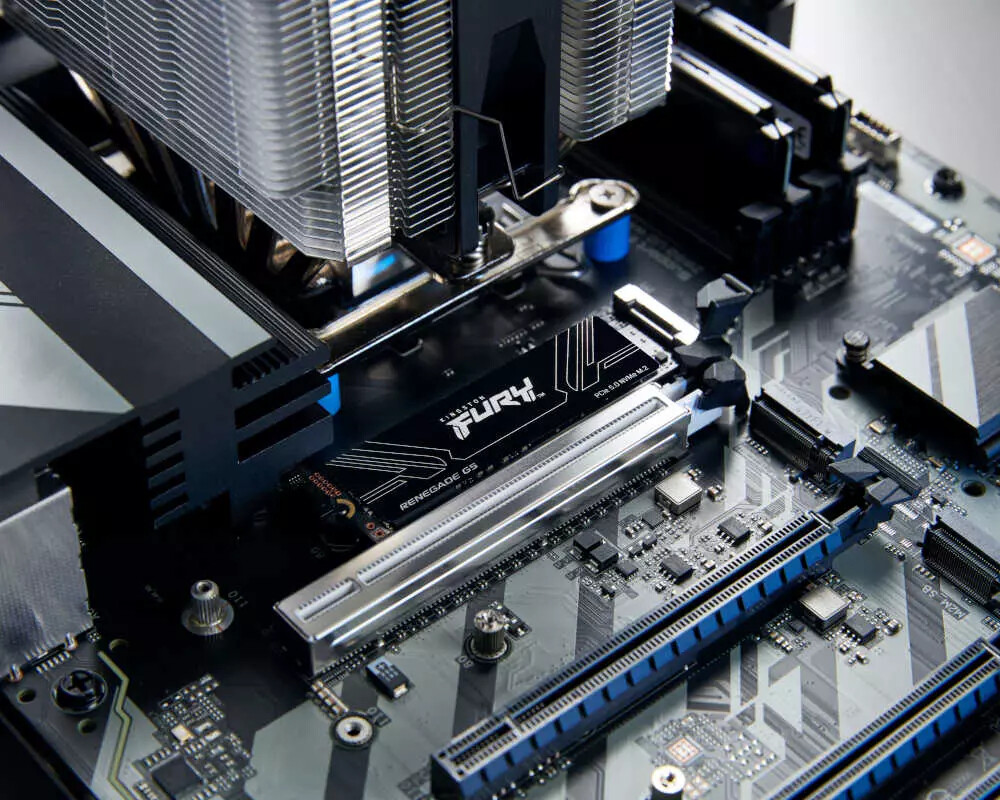
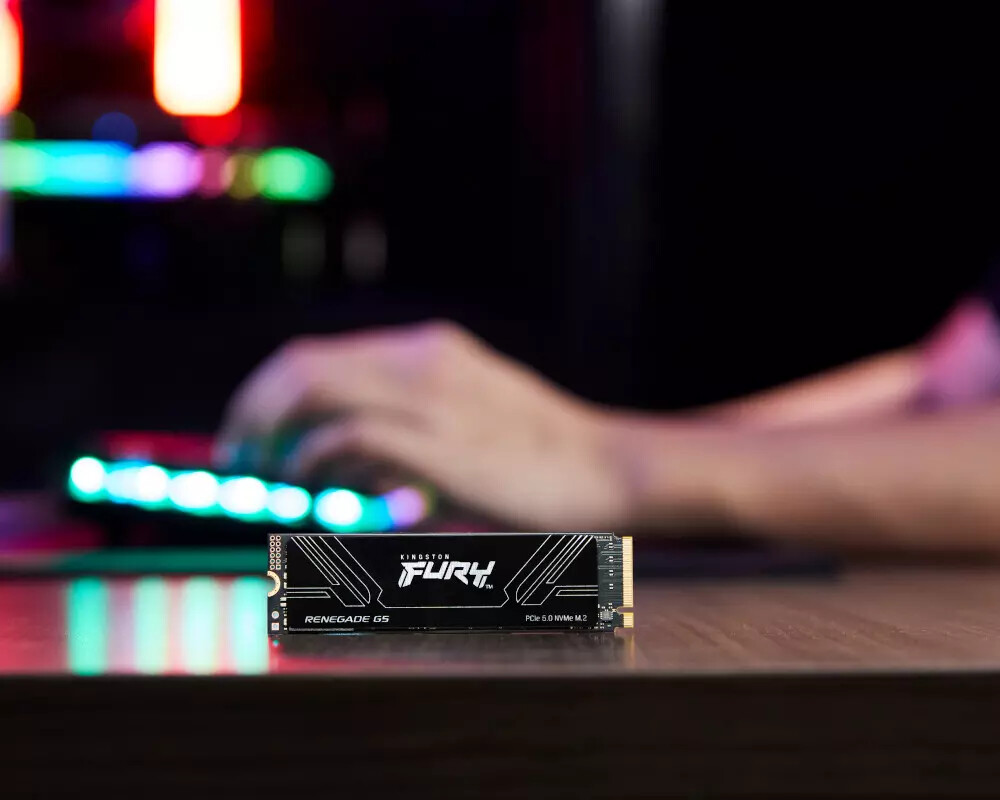
Kingston Fury Renegade G5 SSD Series Leaked, PCIe Gen 5 Design Boasts 14,800 MB/s Max. Transfers

PC hardware media outlets have uncovered a not yet officially announced Kingston Fury Renegade G5 SSD product family. Promotional images and fairly detailed specifications were reportedly sourced directly from the North American manufacturer's main web presence. Three next-gen PCIe 5.0 SSD options were highlighted; likely coming soon—in quick response to Samsung's recently launched 9100 PRO Series. The South Korean megacorp's cutting-edge proprietary Presto
S4LY027-controlled offerings are considered to be the world's fastest SSDs, but this elite level of performance has arrived with substantial price tags. At several points, W1zzard's evaluation of the $300 Samsung 9100 Pro 2 TB model touched upon cost-performance considerations. Kingston's forthcoming Fury Renegade G5 4 TB, 2 TB, and 1 TB SSD NVMe M.2 2280 SKUs possess the potential to match main rivals—according to a leaked spec chart, the flagship boasts up to 14,800 MB/s read and 14,000 MB/s write speeds.

The apparent selection of Silicon Motion's SM2508 controller is a key point of interest—this "superior performance" low-power PCIe Gen 5 x4 NVMe 2.0 SSD solution was announced late last summer. September preview material painted a promising picture, in terms of promised power efficiency. By late December, a Chinese manufacturer demonstrated 14.5 GB/s sequential reads enabled by Silicon Motion's flagship controller. At CES 2025, TechPowerUp staffers documented a handful of previewed SM2508-controlled commercial products. Returning to the present day, Kingston's inadvertent self-leak did not reveal Fury Renegade G5's eventual launch window or price brackets—these facts are expected to arrive online with a possible imminent issuing of official press material.

Alleged Old Build Screenshots of Bit Reactor's "Star Wars Turn-Based Tactics Game" Leaked

Over three years ago, Bit Reactor was announced as the lead development partner on a mysterious "Star Wars strategy game." According to an early 2022 press release, Respawn Entertainment would collaborate on this new IP project. As disclosed in a recent Star Wars Celebration LIVE! schedule, company representatives will present a "first look at a new Star Wars turn-based tactics" title on Saturday, April 19. MP1st has somewhat spoiled this upcoming public reveal, by publishing an article that contains an impressive collection of "sneak peek" screenshots from project "Bruno." This alleged internal codename was uncovered when the online publication "procured" images from an unnamed Bit Reactor artist's portfolio. MP1st claims that the leaked images are: "dated to mid-2023, indicating that they belong to an early build of the game...The gameplay screenshots showcase elements common to the turn-based genre, like an isometric view and a party of characters."

Familiar Star Wars faction designs and technologies are showcased in captures of this older "Bruno" build. Gameplay and user interface concepts seemingly demonstrate where Bit Reactor's collective expertise lies. The Baltimore metropolitan area-based studio is headed by Greg Foerstch (formerly of Firaxis Games); a tenured artistic director of multiple turn-based strategy favorites. His indie outfit describes how members have (previously): "developed some of the most successful games you've heard of, such as XCOM, Civilization, Gears of War, and Elders Scrolls Online. We learned from the best and reached the pinnacle with the highest accolades, including Game of the Year and BAFTA." As interpreted by MP1st, the leaked early interface mock-ups suggest a multi-platform release—with "controller button" prompts spotted on several shots.

Report Suggests TSMC's Successful Completion of 2 nm Trial Phase, Cross-facility Mass Production Expected by End of Year

Going back to the start of this year, TSMC's trial run of a cutting-edge 2 nm (N2) node process was reportedly progressing beyond initial expectations. According to industry moles, two flagship fabrication facilities are "optimistically" tipped to pump out 80,000 units per month (by the end of 2025). This cross-facility total figure was linked to TSMC's Baoshan—located near the Northern Taiwanese city of Hsinchu—and Kaohsiung (in the South) plants. The latest regional reports suggest that the aforementioned trial phase was a resounding success, with pleasing results pointing to an "ahead of schedule" transfer to mass production phases. Insiders previously heard about the Kaohsiung production hub's schedule; with mass production set to start by early 2026—according to fresh rumors, revised calendars have a kick-off window repositioned somewhere in late 2025. Apparently a special "2 nm plant expansion ceremony" took place in that location, earlier today.

A noted semiconductor business analyst—Ming-Chi Kuo—reckons that recent 2 nm pilot yields have progressed well over the 60% mark, meaning that the involved foundry teams are more than ready to move onto kicking things into high gear. Taiwan's Economic News Daily anticipates significant financial gains, due to TSMC N2 products already being in high demand: "the quarterly revenue in the second half of the year is expected to reach one trillion yuan (~US$30.1 billion) for the first time, and it is poised to challenge the goal of earning twice the share capital in a quarter and rewrite the record for a single quarter." The local publication claims that TSMC Baoshan's "first batch of production capacity" is fully reserved for Apple, while Kaohsiung will take care of orders for other (i.e. less) important customers.

AMD "Ryzen 9000G" Desktop APU Series Tipped For Q4 2025 Launch

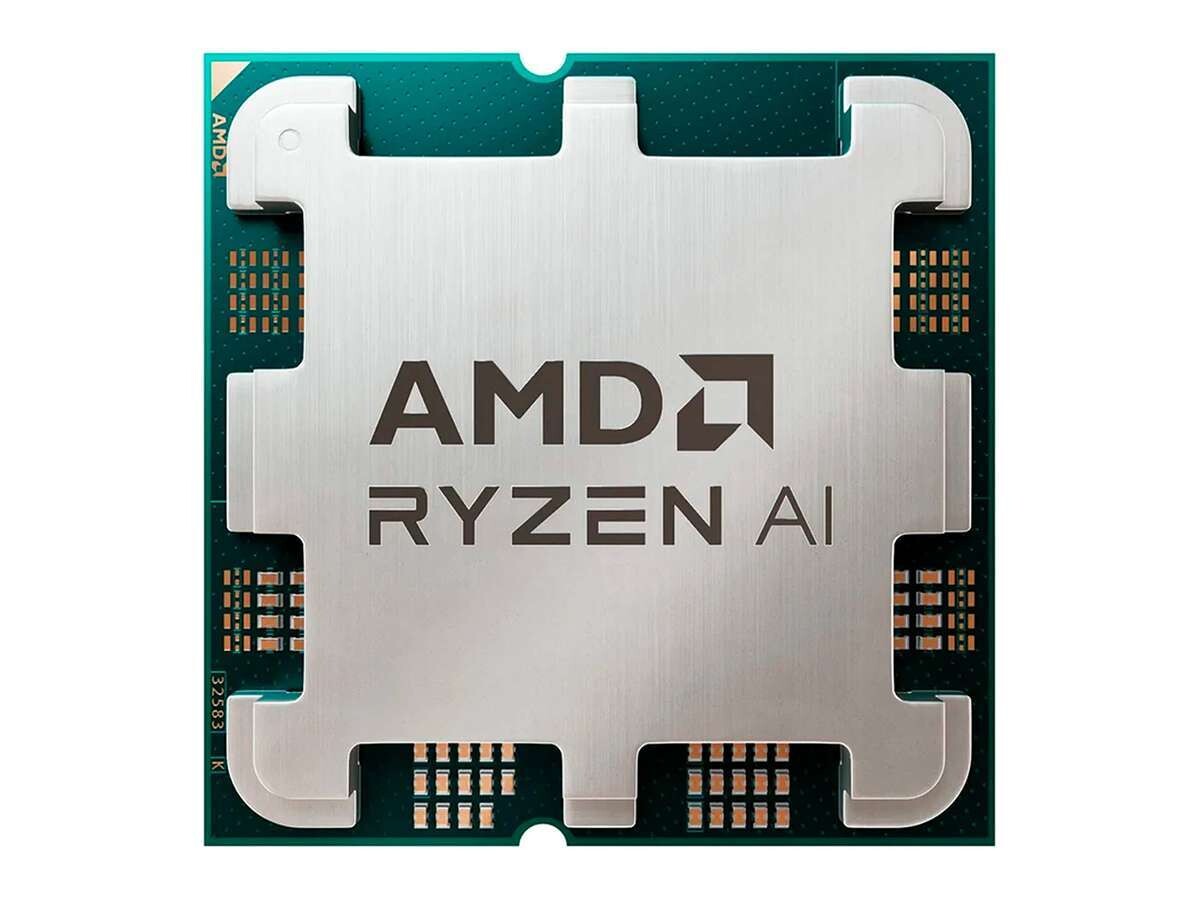
Successors to AMD's current-generation lineup of Ryzen 8000G desktop APUs are reportedly in the pipeline—according to the latest HXL/9550pro predictive declaration, finalized units could arrive at retail later this year. They propose that an "AMD AM5 New APU" family could arrive alongside an unannounced MSI Unify-X enthusiast-grade motherboard design, within the final quarter of 2025. Press interpretations of this inside track information point to possible upcoming "Ryzen 9000G" processors, utilizing Team Red's Zen 5 and RDNA 3.5 technologies. This potent combination already exists, albeit in mobile form—namely within Team Red's stable of Ryzen AI "Strix Halo, Strix Point," and "Krackan Point" APUs.

Industry experts opine that AMD will most likely deploy high-end "Strix Point" silicon to desktop, or more fancifully: "Gorgon Point." The latter codename turned up via leaks last week. Around early 2024, we witnessed Team Red's transfer of "Phoenix"—from original mobile formats—to their AM5 desktop platform. TechPowerUp's W1zzard evaluated the Ryzen 5 8500G "Phoenix 2" APU last summer; this plucky budget-friendly model sports Zen 4 and Zen 4c cores. Theoretically a flagship "Ryzen 9000G" SKU could emerge with twelve processor cores (4x "Zen 5" + 8x "Zen 5c"), a Radeon 890M iGPU, and an XDNA 2 NPU.
Return to Keyword Browsing
Nov 24th, 2026 04:17 CST change timezone

New Forum Posts

Popular Reviews

TPU on YouTube

Controversial News Posts