News Posts matching #NVIDIA

Return to Keyword Browsing

Global Top 10 IC Design Houses See 49% YoY Growth in 2024, NVIDIA Commands Half the Market

TrendForce reveals that the combined revenue of the world's top 10 IC design houses reached approximately US$249.8 billion in 2024, marking a 49% YoY increase. The booming AI industry has fueled growth across the semiconductor sector, with NVIDIA leading the charge, posting an astonishing 125% revenue growth, widening its lead over competitors, and solidifying its dominance in the IC industry.

Looking ahead to 2025, advancements in semiconductor manufacturing will further enhance AI computing power, with LLMs continuing to emerge. Open-source models like DeepSeek could lower AI adoption costs, accelerating AI penetration from servers to personal devices. This shift positions edge AI devices as the next major growth driver for the semiconductor industry.


GIGABYTE Showcases Cutting-Edge AI and Cloud Computing Solutions at CloudFest 2025

Giga Computing, a subsidiary of GIGABYTE, a global leader in IT technology solutions, is thrilled to announce its participation at CloudFest 2025, the world's premier cloud, hosting, and internet infrastructure event. As a key exhibitor, Giga Computing will highlight its latest innovations in AI, cloud computing, and edge solutions at the GIGABYTE booth. In line with its commitment to shaping the future of AI development and deployment, the GIGABYTE booth will showcase its industry-leading hardware and platforms optimized for AI workloads, cloud applications, and edge computing. As cloud adoption continues to accelerate, Giga Computing solutions are designed to empower businesses with unparalleled performance, scalability, and efficiency.

At CloudFest 2025, Giga Computing invites attendees to visit booth #E03 to experience firsthand its cutting-edge cloud computing solutions. From state-of-the-art hardware to innovative total solutions, a comprehensive suite of products and services designed to meet the evolving needs of the cloud industry are being showcased.

NVIDIA Details DLSS 4 Design: A Complete AI-Driven Rendering Technology

NVIDIA has published a research paper on DLSS version 4, its AI rendering technology for real-time graphics performance. The system integrates advancements in frame generation, ray reconstruction, and latency reduction. The flagship Multi-Frame Generation feature generates three additional frames for every native frame. The DLSS 4 later on brings the best looking frames to the user quickly to make is seem like a real rendering. At the core of DLSS 4 is a shift from convolutional neural networks to transformer models. These new AI architectures excel at capturing spatial-temporal dependencies, improving ray-traced affect quality by 30-50% according to NVIDIA's benchmarks. The technology processes each AI-generated frame in just 1 ms on RTX 5090 GPUs—significantly faster than the 3.25 ms required by DLSS 3. For competitive gaming, the new Reflex Frame Warp feature reduces input latency by up to 75%, achieving 14 ms in THE FINALS and under 3 ms in VALORANT, according to NVIDIA's own benchmarks.

DLSS 4's implementation leverages Blackwell-specific architecture capabilities, including FP8 tensor cores and fused CUDA kernels. The optimized pipeline incorporates vertical layer fusion and memory optimizations that keep computational overhead manageable despite using transformer models, which are twice as large as previous CNN implementations. This efficiency enables real-time performance even with the substantially more complex AI processing. The unified AI pipeline reduces manual tuning requirements for ray-traced effects, allowing studios to implement advanced path tracing across diverse hardware configurations. The design also addresses gaming challenges like interpolating fast-moving UI elements and particle effects and reducing artifacts in high-motion scenes. NVIDIA's hardware flip metering and Blackwell-induced display engine integration ensure precise frame pacing of newly generated frames for smooth, high-refresh-rate gaming, with accurate imagery.

MSI Doesn't Plan Radeon RX 9000 Series GPUs, Skips AMD RDNA 4 Generation Entirely

MSI has officially confirmed that it will not manufacture graphics cards based on AMD's latest RDNA 4 architecture, effectively bypassing the entire Radeon RX 9000 series lineup. In a statement to Tom's Hardware, an MSI representative briefly noted the company "is not manufacturing AMD GPUs this generation," pausing its AMD partnership while leaving the door open for future collaborations. Data compiled by Tom's Hardware shows MSI produced 45 distinct models during the RDNA 2 generation (RX 6000-series), but dramatically scaled back to just four custom designs for RDNA 3 (RX 7000-series)—representing a 91% reduction in AMD SKU diversity. Those limited RDNA 3 offerings, including the flagship RX 7900 XTX, notably reused cooling solutions from previous-generation AMD cards, indicating reduced R&D allocation compared to the company's NVIDIA lineup.

MSI's withdrawal from offering AMD-based solutions is due to several factors. NVIDIA's dominance in market share (83%, according to Steam hardware surveys) provides partners with stronger return-on-investment potential, while EVGA's 2022 exit from the GPU market created an opportunity for MSI to strengthen its position as a premier NVIDIA partner. There were reportedly delays in finalizing the MSRP for the RX 9000 series, which complicated manufacturers' calculations, production planning, and shipments. The vacuum left by MSI creates potential opportunities for other emerging players like Acer, which has been slowly expanding its AMD graphics card presence. However, MSI's decision—likely finalized during earlier strategic planning cycles—could potentially push away AMD enthusiasts despite strong projected demand for the Radeon RX 9070 series. Whether this represents a permanent strategic realignment or a temporary market response, we are yet to find out. AMD plans to return to the high-end GPU segment with its UDNA generation, so we have to wait and see if MSI makes a comeback here. For AIBs, partnerships with GPU makers are essential to get R&D resources behind a new product. Once partnerships pause, it is hard to get that wheel going again.

NVIDIA GeForce RTX 5060 Ti & RTX 5060 Speculative Prices Leaked in China

The PC hardware rumor mill theorized that NVIDIA would unveil its GeForce RTX 5060 Ti and RTX 5060 graphics cards today (March 13). An official announcement has not yet transpired—at the time of writing. Earlier in the week, specification sheets for Team Green's cheaper Blackwell GPU models were leaked online—courtesy of kopite7kimi, a noted inside tracker of NVIDIA activities. Not long after that disclosure, reportage focused on an Acer Nitro N50 pre-built gaming PC—featuring an unannounced GeForce RTX 5060 GPU with 8 GB of GDDR7 SDRAM. The relatively rapid delivery of GB206 related leaks suggests that something is on the imminent release horizon.

An anonymous tip-off from a Chinese audience member has resulted in the publication of another VideoCardz investigative article. Apparently an unnamed local e-tailer provided pre-release price points (presumably including VAT) for GeForce RTX 5060 Ti and RTX 5060 graphics card; 4299 RMB and 3799 RMB (respectively). For reference, the tipster's screenshot also included prices for various GeForce RTX 5070 models—the cheapest being 4799 RMB (~$663 USD). As noted by VideoCardz, Chinese baseline MSRP for the RTX 5070 is 4599 RMB (~$635 USD). Curiously, the webstore's entry for a non-specific GeForce RTX 5060 card designates it as a 12 GB variant. This could be a pre-launch error, based on placeholder material—recent leaks have indicated the existence of a lone GeForce RTX 5060 SKU, with 8 GB of VRAM. The GeForce RTX 5060 Ti is tipped to arrive in two forms: with 8 GB or 16 GB VRAM configurations onboard. VideoCardz has heard whispers from industry moles about a possible official lifting of new product embargoes, ahead of next week's GTC 2025 conference.

NVIDIA ACE Autonomous Game Characters Debut This Month In inZOI and NARAKA: BLADEPOINT MOBILE PC VERSION

NVIDIA ACE is a suite of RTX-accelerated digital human technologies that bring game characters to life with generative AI. Earlier this year, we unveiled AI-powered NVIDIA ACE Autonomous Game Characters, adding autonomous teammates, NPCs, and enemies to games, unlocking a whole new set of gameplay possibilities. These ACE autonomous game characters make their debut later this month in two titles. In the life simulator inZOI, players can customize "Smart Zoi" NPCs with life goals that in turn use AI to guide behavior and interactions with other NPCs.

In NARAKA: BLADEPOINT MOBILE PC VERSION, NVIDIA ACE-powered teammates help players battle enemies, hunt for loot, and fight for victory. Additionally, NVIDIA ACE technologies continue to advance, incorporating new vision and audio language models, enhancing facial animation with new model architectures, and accelerating game development with updated ACE plugins for Maya and Unreal Engine for offline authoring.

ASUS Showcases Servers Based on Intel Xeon 6, Intel Gaudi 3 at CloudFest 2025

ASUS today announced its showcase of comprehensive AI infrastructure solutions at CloudFest 2025, bringing together cutting-edge hardware powered by Intel Xeon 6 processors, NVIDIA GPUs and AMD EPYC processors. The company will also highlight its integrated software platforms, reinforcing its position as a total AI solution provider for enterprises seeking seamless AI deployments from edge to cloud.

Intel Xeon 6-based AI solutions and Gaudi 3 Acceleration for generative AI inferencing and fine tuning training
ASUS Intel Xeon 6-based servers leverage the Data Center Modular Hardware System (DC-MHS) architecture, providing unparalleled scalability, cost-efficiency and simplified maintenance. ASUS will showcase a comprehensive Intel Xeon 6 family of processors at CloudFest 2025, including the RS700-E12, RS720Q-E12. and ESC8000-E12P-series servers. The ESC800-E12P-series servers will debut the Intel Gaudi 3 AI accelerator PCIe card. This lineup underscores the ASUS commitment to delivering comprehensive AI solutions that integrate cutting-edge hardware with enterprise-grade software platforms for seamless, scalable AI deployments, highlighting Intel's latest innovations for high-performance AI training, inference, and cloud-native workloads.

NVIDIA DLSS With Multi Frame Generation Available in Over 100 Games and Apps

More than 700 games and applications feature RTX technologies, and each week new games integrating NVIDIA DLSS, NVIDIA Reflex, and advanced ray-traced effects are released or announced, delivering the definitive PC experience for GeForce RTX players. With the addition of the latest DLSS 4 with Multi Frame Generation games, our newest performance multiplier is now available in over 100 games and apps, making it the most rapidly adopted NVIDIA game technology of all time.

Additionally, we can today reveal that Lost Soul Aside, Mecha BREAK, Phantom Blade Zero, Stellar Blade, Tides of Annihilation, and Wild Assault will all launch with DLSS Multi Frame Generation, and our suite of other DLSS technologies, giving GeForce RTX gamers the definitive PC experience in each. Furthermore, today we released an updated Zorah demo, built in Unreal Engine 5, that showcases the latest advancements in neural rendering powered by GeForce RTX 50 Series and AI.

NVIDIA GeForce NOW Brings More Blizzard Gaming to the Cloud

Bundle up - GeForce NOW is bringing a flurry of Blizzard titles to its ever-expanding library. Prepare to weather epic gameplay in the cloud, tackling the genres of real-time strategy (RTS), multiplayer online battle arena (MOBA) and more. Classic Blizzard titles join GeForce NOW, including Heroes of the Storm, Warcraft Rumble and three titles from the Warcraft: Remastered series. They're all part of 11 games joining the cloud this week, atop the latest update for hit game Zenless Zone Zero from miHoYo.

Blizzard Heats Things Up
Heroes of the Storm, Blizzard's unique take on the MOBA genre, offers fast-paced team battles across diverse battlegrounds. The game features a roster of iconic Blizzard franchise characters, each with customizable talents and abilities. Heroes of the Storm emphasizes team-based gameplay with shared experiences and objectives, making it more accessible to newcomers while providing depth for experienced players.

NVIDIA and Microsoft Open Next Era of Gaming With Groundbreaking Neural Shading Technology

NVIDIA today announced ahead of the Game Developers Conference (GDC) groundbreaking enhancements to NVIDIA RTX neural rendering technologies. NVIDIA has partnered with Microsoft to bring neural shading support to the Microsoft DirectX preview in April, giving developers access to AI Tensor Cores in NVIDIA GeForce RTX GPUs to accelerate neural networks from within a game's graphics pipeline. Neural shading represents a revolution in graphics programming, combining AI with traditional rendering to dramatically boost frame rates, enhance image quality and reduce system resource usage.

"Microsoft is adding cooperative vector support to DirectX and HLSL, starting with a preview this April," said Shawn Hargreaves, Direct3D development manager at Microsoft. "This will advance the future of graphics programming by enabling neural rendering across the gaming industry. Unlocking Tensor Cores on NVIDIA RTX will allow developers to fully leverage RTX Neural Shaders for richer, more immersive experiences on Windows."

Half-Life 2 RTX Demo Coming on March 18

NVIDIA has announced that the Half-Life 2 RTX Demo will be available on March 18th and include a two-hour gameplay demo with full ray tracing, remade assets, and animations. The demo is remastered with RTX Remix by Orbifold Studios and will be a free mod on Steam for all Half-Life 2 owners.

The demo will feature NVIDIA DLSS 4, NVIDIA RTX Neural Radiance Cache, RTX Skin, RTX Volumetrics, and other new NVIDIA technologies. The release of Half-Life 2 RTX Demo marks the official release of RTX Remix, which was released a year ago in beta. According to NVIDIA, over 30,000 modders have since used the platform to mod a bunch of classic titles, with over 1 million gamers playing those modded games like Portal with RTX and Portal: prelude RTX. As said, the new demo will go live on Steam on March 18th.

Cooler Master Unveils the HAF 5 Pro Gaming System

Cooler Master, a leading provider of PC components, gaming peripherals, and tech lifestyle solutions, today announced the HAF 5 Pro, a fully built gaming system designed to deliver robust performance and seamless gameplay. Powered by an Intel Core i7-12700F processor and NVIDIA GeForce RTX 4060 Ti, the HAF 5 Pro leverages Cooler Master's expertise in high airflow cases, efficient cooling, and premium power delivery—paired with the enhanced gaming features of Windows 11.

"We've taken our hallmark high-airflow concept and built a system that's both powerful and visually striking," said Jimmy Sha, CEO of Cooler Master. "Our customers know and trust the HAF lineup for cooling prowess, so outfitting it with top-tier components, a dedicated VGA fan, and Windows 11's advanced gaming capabilities was a natural progression to offer an all-in-one experience."

NVIDIA GeForce RTX 5050 Laptop Might Sport GDDR7 Memory, Prices Likely To Remain Sky-High

As we have witnessed in the past few weeks, leaked retailer listings are undoubtedly an interesting way to gain more information regarding upcoming hardware. A set of recent listings by the retailer PC21, as well as Acer Hong Kong, have revealed some details regarding the upcoming NVIDIA GeForce RTX 5060 Laptop and RTX 5050 Laptop GPUs. First of all, it appears that we now have concrete information regarding the launch date for the RTX 5060 laptop GPU. According to Acer, the RTX 5060 Laptop-equipped producs will start shipping sometime in May. Moreover, as the leaked listing has revealed, RTX 5060 and RTX 5050 Laptop GPUs will arrive with 8 GB of VRAM, both based on the new GDDR7 spec.

This is quite an interesting development, considering that the RTX 5050 Desktop GPU is expected to ship with GDDR6 memory, so it does appear that the Laptop variant will have superior memory speeds. Considering that the RTX 5070 laptop GPU will also boast 8 GB of GDDR7 memory, it is clear that the primary differences between the RTX 5050, RTX 5060, and RTX 5070 Laptop variants will be limited to core counts. Those who demand more than just 8 GB of VRAM will have to shell out extra for the RTX 5070 Ti Laptop, which is expected to ship with 12 GB of GDDR7 memory on a 192 bit bus. As for pricing, the leaked MSI VenturePro 16 with a Core 7 240H CPU, 16 GB DDR5 memory, 512 GB SSD and an RTX 5050 Laptop GPU is seemingly priced at €1580, or roughly $1720. Clearly, even the lowest-end of Blackwell GPUs are all set to boast price tags lofty enough to make even those with deep pockets weep.

MSI Debuts SHADOW 2X Design - Starting with GeForce RTX 5070 Models

A week ago, MSI introduced its lineup of custom GeForce RTX 5070 graphics card models—headlined by their premium VANGUARD option, with a product stack going down to a budget friendly INSPIRE 3X offering. Since then, the Taiwanese manufacturer has added another entry to its NVIDIA "Blackwell" GB205 GPU-based family. As observed by VideoCardz, MSI is overpopulating its GeForce RTX 5070 stack with two more models. The SHADOW 2X OC and SHADOW 2X (non-OC) have—very recently—popped up on the company's website, with absolutely zero PR fanfare. The triple-fan SHADOW 3X designs received a similar treatment last month—brand-new stealth-black GeForce RTX 5080 and RTX 5070 Ti custom designs seemingly appeared overnight.

As befits the nomenclature, MSI's SHADOW 2X design sports a TORX 5.0 dual-fan cooling solution. As covered by TechPowerUp's news section in the past, the SHADOW series shares similarities with VENTUS—both families serve as "baseline MSRP" conformant products, due to a minimalistic aesthetic and barebones feature set (i.e. focused on the essentials). MSI marketing blurb describes SHADOW as: "a performance-focused design that delivers the gaming experience players want, making it the ideal choice when upgrading or building a gaming rig." The company has courted controversy in recent times; VideoCardz and other media outlets have leveled plenty of criticism throughout February and March—the lack of "MSRP" models and reported price hiking at launch became major sticking points. Industry watchdogs believe that the freshly unveiled SHADOW 2X models will be in short supply for the foreseeable future.

NVIDIA Reportedly Prepares GeForce RTX 5060 and RTX 5060 Ti Unveil Tomorrow

NVIDIA is set to unveil its RTX 5060 series graphics cards tomorrow, according to VideoCardz information, which claims NVIDIA shared launch info with some media outlets today. The announcement will include two desktop models: the RTX 5060 and RTX 5060 Ti, confirming leaks from industry sources last week. The upcoming lineup will feature three variants: RTX 5060 Ti 16 GB, RTX 5060 Ti 8 GB, and RTX 5060. All three cards will utilize identical board designs and the same GPU, allowing manufacturers to produce visually similar Ti and non-Ti models. Power requirements are expected to range from 150-180 W. NVIDIA's RTX 5060 Ti will ship with 4608 CUDA cores, representing a modest 6% increase over the previous generation RTX 4060 Ti. The most significant improvement comes from the implementation of GDDR7 memory technology, which could deliver over 50% higher bandwidth than its predecessor if NVIDIA maintains the expected 28 Gbps memory speed across all variants.

The standard RTX 5060 will feature 3840 CUDA cores paired with 8 GB of GDDR7 memory. This configuration delivers 25% more GPU cores than its predecessor and marks an upgrade in GPU tier from AD107 (XX7) to GB206 (XX6). The smaller GB207 GPU is reportedly reserved for the upcoming RTX 5050. VideoCardz's sources indicate the RTX 5060 series will hit the market in April. Tomorrow's announcement is strategically timed as an update for the Game Developers Conference (GDC), which begins next week. All models in the series will maintain the 128-bit memory bus of their predecessors while delivering significantly improved memory bandwidth—448 GB/s compared to the previous generation's 288 GB/s for the Ti model and 272 GB/s for the standard variant. The improved bandwidth stems from the introduction of GDDR7 memory.

AMD Radeon RX 9070 XT Reportedly Outperforms RTX 5080 Through Undervolting

AMD's Radeon RX 9070 XT is demonstrating unexpected performance gains through aggressive undervolting, with overclocking specialists documenting significant improvements that push the GPU past NVIDIA's pricier GeForce RTX 5080 in specific benchmarks. Recent tests by Der8auer using a PowerColor Red Devil RX 9070 XT revealed a 10% frame rate increase in Cyberpunk 2077 at 4K Ultra settings by applying a -170 mV voltage offset while increasing the power target to 110%. This modification enabled the GPU to reach clock speeds of 3.36 GHz, compared to 2.90 GHz at stock settings, resulting in 66 FPS versus the RTX 5080's 65 FPS in identical testing environments. The undervolting phenomenon appears consistent across the product line, with YouTuber Alva Jonathan achieving similar 10% performance improvements on the standard RX 9070 using ASRock's Steel Legend model.

Both testers discovered that traditional core clock overclocking yielded negligible results, suggesting these factory-overclocked cards are already operating near their architectural limits. The voltage-frequency curve adjustments effectively lower the voltage required for higher frequencies. Memory overclocking proved counterproductive, with error correction mechanisms actually reducing in-game performance when pushed beyond stable parameters. These results come with important caveats—both tested units are premium variants with enhanced power delivery and cooling solutions that sell significantly above AMD's MSRP. The PowerColor Red Devil commanded a $200 premium over the RX 9070 XT's $599 launch price, while the ASRock Steel Legend carried a $90 markup over the RX 9070's base $550 MSRP. Even with these premiums, however, the high-end RX 9070 XT models remain approximately $200 less expensive than NVIDIA's RTX 5080 while delivering comparable rasterization performance after optimization, despite NVIDIA's ongoing advantages in ray tracing capabilities and software ecosystem.

GALAX RTX 5090D HOF XOC LE Card Overclocked to 3.27 GHz, Record Breaking Prototype Enabled w/ Second 12V-2×6 Connector

As reported last month, GALAX had distributed prototypes of its upcoming flagship "Hall of Fame" (HOF) card—based on NVIDIA's Chinese market exclusive GeForce RTX 5090D GPU—to prominent figures within the PC hardware overclocking community. Earlier examples sported single 12V-2×6 power connectors, although GALAX's exposed white PCB design showed extra space for an additional unit. Evaluators conducted experiments involving liquid nitrogen-based cooling methods. The most vocal of online critics questioned the overclocking capability of initial GeForce RTX 5090D HOF samples, due to limitations presented by a lone avenue of power delivery. A definitive answer has arrived in the form of the manufacturer's elite team-devised GeForce RTX 5090D HOF Extreme Overclock (XOC) Lab Limited Edition candidate; a newer variant that makes use of dual 12V-2×6 power connectors. Several overclocking experts have entered into a GALAX-hosted competition—Micka:)Shu, a Chinese participant, posted photos of their test rig setup (see below).

Micka's early access sample managed to achieve top placement GPU on UL Benchmarks' 3DMark Speed Way Hall of Fame, with a final score of 17169 points. A screenshotted GPU-Z session shows the card's core frequency reaching 3277 MHz. Around late January, ASUS China's general manager (Tony Yu) documented his overclocking of a ROG Astral RTX 5090 D GAMING OC specimen up to 3.4 GHz; under liquid nitrogen cooled conditions. GALAX has similarly outfitted its flagship model with selectively binned components and an "over-engineered" design. The company's "bog-standard" HOF model is no slouch, despite the limitation imposed by a single power connector. The GALAX OC Facebook account sent out some appreciation to another noted competitor (and collaborator): "thanks to Overclocked Gaming Systems—OGS Rauf for help with the overclock of GeForce RTX 5090D HOF, and all of (our) GALAX products." The OGS member set world records with said "normal" HOF card—achieving scores of 59,072 points in 3DMark's Fire Strike Extreme project, and 25,040 points in Unigine Superposition (8K-optimized).

Acer Nitro N50 Pre-built PC with GeForce RTX 5060 GPU Listed in France

A curiously-specced Acer Nitro N50 (N50-656) pre-built gaming PC system was spotted and then reported online, courtesy of momomo_us's diligent eye—trained on all manner of international retail and e-tail webstores. EvoPC—a small indie outfit, located in Nancy, France—has inadvertently hinted about a potential upcoming launch of NVIDIA's unannounced GeForce RTX 5060 model. VideoCardz believes that Team Green will be unveiling the lower end of its gaming-oriented "Blackwell" GPU product stack.

An imminent announcement—reportedly marked down for this week—could include another GB203-based variant; the GeForce RTX 5060 Ti—in addition, they reckon that NVIDIA will reveal a next-gen "entry-mainstream" offering; in the shape of GeForce RTX 5050. Comprehensive details leaked onto the internet over the past weekend. EvoPC's webshop advertises the "currently unavailable" Acer Nitro N50-656 system with a steep €1589 (~$1735 USD) price tag (subject to change). Their basic rundown of internal parts lists: an Intel Core i7-14700F processor, 32 GB (2 x 16 GB) DDR5 RAM, and NVIDIA's GeForce RTX 5060 GPU with 8 GB of GDDR7 SDRAM.

NVIDIA CEO Jensen Huang Will Deliver First Keynote at COMPUTEX 2025

One of COMPUTEX's organizers, TAITRA (Taiwan External Trade Development Council), announced that NVIDIA founder and CEO Jensen Huang will deliver the first keynote at COMPUTEX 2025, outlining the latest advancements and breakthroughs in AI and accelerated computing technologies.

The keynote will take place at the Taipei Music Center and be livestreamed at 11 a.m. Taiwan Time on Monday, May 19 (Sunday, May 18, 8 p.m. PT), with a replay available on COMPUTEX Keynote website.

GIGABYTE Showcases Future-Ready AI and HPC Technologies for High-Efficiency Computing at SCA 2025

Giga Computing, a subsidiary of GIGABYTE and a pioneer in AI-driven enterprise computing, is set to make a significant impact at Supercomputing Asia 2025 (SCA25) in Singapore (March 11-13). At booth #D5, GIGABYTE showcases its latest advancements in liquid cooling, solutions for AI training and high-performance computing (HPC). The booth highlights GIGABYTE's innovative technology and comprehensive direct liquid cooling (DLC) strategies, reinforcing its commitment to energy-efficient, high-performance computing.

Revolutionizing AI Training with DLC
A key highlight of GIGABYTE's showcase is the NVIDIA HGX H200 platform, a next-generation solution for AI workloads. GIGABYTE is presenting both its liquid-cooled G4L3-SD1 server and its air-cooled G893 series, providing businesses with advanced cooling solutions tailored for high-performance demands. The G4L3-SD1 server, equipped with CoolIT Systems' cold plates, effectively cools Intel Xeon CPUs and eight NVIDIA H200 GPUs, ensuring optimal performance with enhanced energy efficiency.

Insiders Predict Introduction of NVIDIA "Blackwell Ultra" GB300 AI Series at GTC, with Fully Liquid-cooled Clusters

Supply chain insiders believe that NVIDIA's "Blackwell Ultra" GB300 AI chip design will get a formal introduction at next week's GTC 2025 conference. Jensen Huang's keynote presentation is scheduled—the company's calendar is marked with a very important date: Tuesday, March 18. Team Green's chief has already revealed a couple of Blackwell B300 series details to investors; a recent earnings call touched upon the subject of a second half (of 2025) launch window. Industry moles have put spotlights on the GB300 GPU's alleged energy hungry nature. According to inside tracks, power consumption has "significantly" increased when compared to a slightly older equivalent; NVIDIA's less refined "Blackwell" GB200 design.

A Taiwan Economic Daily news article predicts an upcoming "second cooling revolution," due to reports of "Blackwell Ultra" parts demanding greater heat dissipation solutions. Supply chain leakers have suggested effective countermeasures—in the form of fully liquid-cooled systems: "not only will more water cooling plates be introduced, but the use of water cooling quick connectors will increase four times compared to GB200." The pre-Christmas 2024 news cycle proposed a 1400 W TDP rating. Involved "Taiwanese cooling giants" are expected to pull in tidy sums of money from the supply of optimal heat dissipating gear, with local "water-cooling quick-connector" manufacturers also tipped to benefit greatly. The UDN report pulled quotes from a variety of regional cooling specialists; the consensus being that involved partners are struggling to keep up with demand across GB200 and GB300 product lines.

NVIDIA RTX PRO 6000 "Blackwell" Features 24,064 Cores Paired with 96 GB GDDR7 ECC Memory

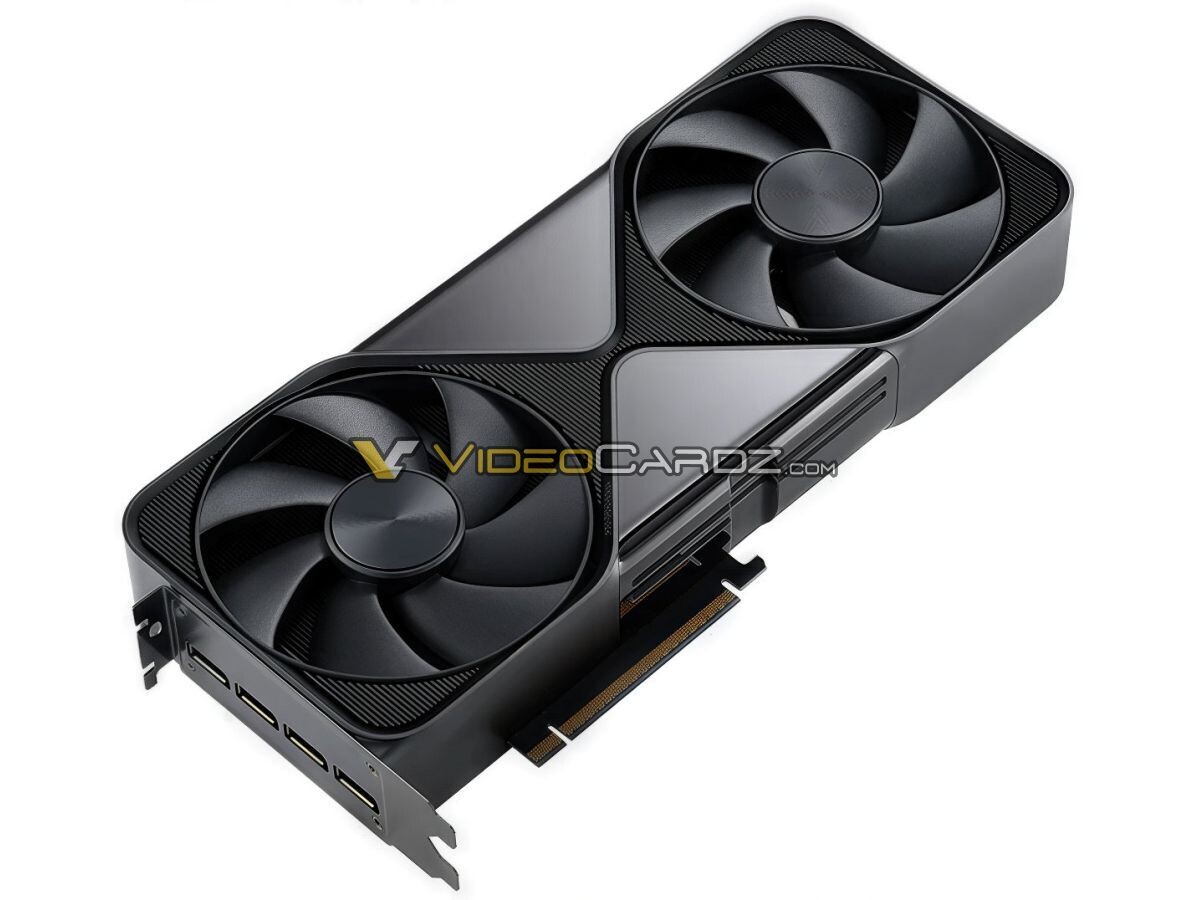
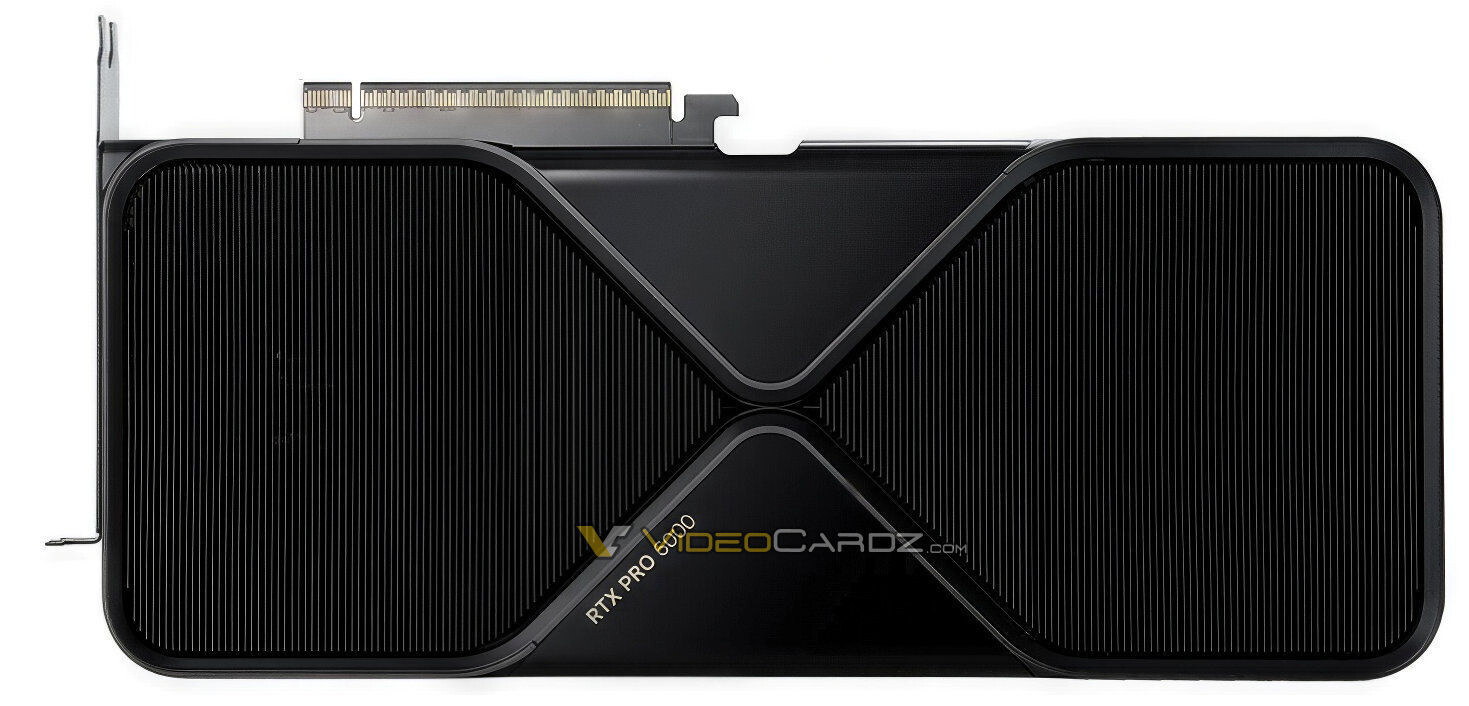
NVIDIA has prepared a "Blackwell" Titan equivalent—RTX PRO 6000 Blackwell GPU for professional visualization and local AI solutions. Based on the GB202 silicon, the RTX PRO 6000 is the closest solution to the full power of NVIDIA's prosumer-oriented Blackwell SKUs. With 24,064 CUDA cores on board, this configuration is just 512 CUDA cores shy from the complete GB202 24,576-core configuration. This is likely due to the yield defects, meaning that this is perhaps the highest CUDA core count model we will see based on GB202. Additionally, at 24,064 core RTX PRO 6000 Blackwell is carrying 2,340 more cores than the top-end consumer GeForce RTX 5090 with 21,760 CUDA cores. Based on the 600 W TGP, the new RTX PRO 6000 Blackwell should have lower clocks, given its bigger core count to maintain the TGP for its massive memory configuration. Remember, GDDR7 memory modules consume power, too.

With 96 GB of GDDR7 memory and ECC memory correction on board, it will primarily target professionals in 3D rendering, simulations, and local AI development. To cool the beastly configuration, NVIDIA opted for a double-flow-through cooler used on the RTX 5090, with an open-air design. Operating on a PCIe 5.0 x16 interface with four DisplayPort 2.1 connectors, the design remains double-slot in thickness. VideoCardz obtained pictures of it, which you can see below. Interestingly, the color accents of the new cooler are darker. We can expect to see more from NVIDIA and its new RTX PRO 6000 Blackwell GPU from the upcoming GTC 2025 on March 17.

NVIDIA Readies RTX 5050 Series for the Entry-Mainstream

NVIDIA is readying an entry-mainstream graphics card in the RTX 50-series "Blackwell" generation, likely called the GeForce RTX 5050. There is also the possibility of an RTX 5050 Ti positioned a notch above this, below the RTX 5060. The RTX 5050 is intended to be a successor to the RTX 3050. The RTX 40-series "Ada" generation did not have SKU in this segment, and its absence was felt recently when Intel launched the Arc B580 offering high performance/price under the $300-mark. There are no known specs of the RTX 5050 and RTX 5050 Ti, except that both feature 8 GB of memory size—something that turned the tide in Intel's favor with the B580 having 12 GB of it—and both SKUs come with a total graphics power (TGP) of around 135 W.

The two will be intended for 1080p gaming with mid-thru-high settings. It remains to be seen if NVIDIA implements Multi Frame Generation, because MFG is not a magic toggle that turns unplayable framerates to 60 FPS, however DLSS 4 with transformer upscaling, and perhaps even single frame generation could make it. NVIDIA is looking to target price-points of $199 and $249 with the RTX 5050 and RTX 5050 Ti, respectively. As for probable launch-date, Wccftech says that the cards could launch in the second half of April 2025, following the launch of the RTX 5060.

NVIDIA to Inspect Laptop RTX 50 Series for ROP Anomalies, Deliveries Delayed to April

After just a few weeks from our initial report of missing ROPs on NVIDIA GeForce RTX 50 series "Blackwell" for desktop, it appears that the laptop versions of these GPUs could also be prone to the same issue: missing ROP (Raster Operations Pipeline) units, which degrades performance by up to 14%. According to the German publication Heise Online, NVIDIA is working with laptop manufacturers to inspect any case of missing ROPs on its GeForce RTX 50 series cards, which the company claims affect only 0.5% of the entire supply. To avoid giving consumers GPUs with missing ROPs, NVIDIA is working overtime with OEMs to ensure that the GPUs are correctly operating and offering the hardware true to the specification sheet.

With NVIDIA Blackwell laptop SKUs announced at CES and pre-orders in February, NVIDIA expected to hand these GPUs through its partner laptop manufacturers to consumers in March, but it's currently scheduled for April, which is a whole month later. Here is what Heise Online said:
As we have learned from several notebook manufacturers, they are currently working overtime in the Far East to prevent the drama from escalating into the next act: NVIDIA has instructed manufacturers to inspect already-produced notebooks with the new mobile GeForce RTX 5000 graphics chips. The focus is on GPUs where fewer ROPs are active than specified in the datasheet. This can lead to potentially significant losses in 3D performance.

Alphacool Also Adds New Core GPU Water Blocks For Inno3D and Palit GeForce RTX 5070 SKUs

Alphacool International GmbH, based in Braunschweig, has been a pioneer in PC water cooling technology for over 20 years. With one of the most comprehensive product portfolios in the industry and over 20 years of experience, Alphacool is now expanding its portfolio with the new Core graphics card water coolers for the NVIDIA GeForce RTX 5070.

The GPU water coolers have been completely redesigned. Precise adjustments to the spacing between the cooler and the PCB, along with optimized water flow simulations and extensive practical testing, have resulted in significant improvements to the cooler base and jetplate. These enhancements ensure maximum cooling performance for the newest NVIDIA GeForce RTX generation. The GPU water coolers feature a precisely machined copper base with high-quality chrome plating for exceptional durability and a smooth surface. The design is further complemented by robust brass fittings with a nylon cover, ensuring maximum safety and reliability.
Return to Keyword Browsing
Nov 27th, 2026 18:51 CST change timezone

New Forum Posts

Popular Reviews

TPU on YouTube

Controversial News Posts