News Posts matching #NVIDIA

Return to Keyword Browsing

NVIDIA DLSS 4 With Multi Frame Generation Available This Week In Marvel Rivals, Delta Force: Black Hawk Down, and Indiana Jones and the Great Circle

More than 700 games and applications feature RTX technologies, and each week new games integrating NVIDIA DLSS, NVIDIA Reflex, and advanced ray-traced effects are released or announced, delivering the definitive PC experience for GeForce RTX players. Following the release of DLSS 4 with Multi Frame Generation for Avowed (via NVIDIA app DLSS Overrides) and Star Wars Outlaws, this week sees the addition of the performance multiplying tech to Delta Force: Black Hawk Down, Indiana Jones and the Great Circle, and Marvel Rivals. Additionally, DLSS Super Resolution and DLSS Frame Generation are available at launch in Legend of Ymir, Like a Dragon: Pirate Yakuza in Hawaii, and Lost Records: Bloom & Rage. For all the details, read on.

Marvel Rivals DLSS 4 with Multi Frame Generation Update Launches Tomorrow
NetEase Games' Marvel Rivals is one of the top 5 most played games on Steam. If you're unfamiliar with Marvel Rivals, it's a Super Hero, team-based PvP shooter set in the Marvel universe. Assemble an all-star Marvel squad, devise countless strategies by combining powers to form unique Team-Up skills, and fight in destructible, ever-changing battlefields.


GIGABYTE Showcases Comprehensive AI Computing Portfolio at MWC 2025

GIGABYTE, a global leader in computing innovation and technology, will showcase its full-spectrum AI computing solutions that bridge development to deployment at MWC 2025, taking place from March 3-6.

"AI+" and "Enterprise-Reinvented" are two of the themes for MWC. As enterprises accelerate their digital transformation and intelligent upgrades, the transition of AI applications from experimental development to democratized commercial deployment has become a critical turning point in the industry. Continuing its "ACCEVOLUTION" initiative, GIGABYTE provides the comprehensive infrastructure products and solutions spanning cloud-based supercomputing centers to edge computing terminals, aiming to accelerate the next evolution and empower industries to scale AI applications efficiently.

MSI Announces Custom NVIDIA GeForce RTX 5070 Ti Series Lineup

MSI proudly announces its latest lineup of graphics cards powered by the newly unveiled NVIDIA GeForce RTX 5070 Ti GPU, including the VANGUARD, GAMING TRIO, INSPIRE, and VENTUS series. Built with advanced graphics technology and enhanced thermal solutions, these cards cater to a wide range of users, from high-performance gaming to AI applications and content creation. Designed for efficiency, they deliver powerful performance while maintaining low temperatures and quiet operation, ensuring an optimal experience.

Powered by NVIDIA Blackwell, the GeForce RTX 50 Series GPUs revolutionize gaming and creativity with unprecedented AI horsepower. Unlock next-level performance and graphics fidelity with NVIDIA DLSS 4, generate images at record-breaking speeds, and unleash creative potential with NVIDIA Studio.

NVIDIA GeForce RTX 5090 Delivery Could Take 14 Weeks, Notes UK Retailer

Overclockers UK, one of the largest PC retailers in the UK, has shared insights on their X account about the estimated time of arrival (ETA) for GPU restocking. Starting with the newest GeForce RTX 5070 Ti GPUs, the OCUK post notes that RTX 5070 Ti is sold out, and pre-orders are open now, with more GPU stock arriving in two to four weeks. Next up is the GeForce RTX 5080, which is sold out with limited stock arriving weekly, with an ETA of one to three weeks. However, the worst ETA stock re-supply is for the RTX 5090. OCUK notes that the RTX 5090 is sold out, and pre-orders have ceased. The ETA schedule ranges between 2-14 weeks, which is almost 100 days of waiting for RTX 5090 in the UK.

We previously reported that NVIDIA's GeForce RTX 5070 and RTX 5060 have faced some production issues with NVIDIA working on it to push out new stock in the coming weeks. However, the situation is not exclusive to these upcoming GPUs, as the stock of the current GPUs is getting grabbed by each minute. OCUK also noted that: "If you have purchased any RTX 50 series GPU but not yet received a dispatch confirmation email, your order is now in a pre-order queue and we are working with our supply chain to fulfil within the ETAs above, or sooner if possible. As always, anyone who does not wish to wait is welcome to cancel for a full refund."

NVIDIA Revives Verified Priority Access System, Starting with GeForce RTX 5090 & 5080 FE Editions

Three weeks after the launch of its GeForce RTX 5090 and RTX 5080 "Blackwell" GPUs, NVIDIA has introduced a "Verified Priority Access" scheme for North American customers. Approximately eighteen hours ago, the Tim@NVIDIA account posted an announcement on the company's official GeForce discussion forum: "we know it's challenging to purchase a GeForce RTX 50 Series graphics card...It will give a limited number of verified GeForce gamers & creators in the United States the opportunity to purchase one GeForce RTX 5090 or RTX 5080 Founders Edition graphics card from the NVIDIA Marketplace." Team Green graphics card enthusiasts have experienced less than ideal buying conditions since the end of January (2025)—Jensen & Co. have likely absorbed a massive dose of feedback and reacting accordingly, but many pundits will question the relatively late rollout of an anti-scalping system.

A previous iteration of NVIDIA's "Verified Priority Access" program was tested soon after the launch of GeForce RTX 40-series "Ada Lovelace" GPUs. Founders Edition cards are (normally) offered at baseline MSRP, but scalpers have swiftly depleted initial stock allocations. Team Green's revived program presents some strict conditions: "users who have an NVIDIA Account created on or before January 30th, 2025 at 6AM Pacific Time can submit their interest for Verified Priority Access through this form. If selected, users will be notified at the email address of the NVIDIA account they enrolled with. Invites will begin rolling out next week." The Team Green staffer stated that the scheme is—"at this time"—limited to GeForce RTX 5090 and RTX 5080 Founders Edition cards. It should be noted that the just launched GeForce RTX 5070 Ti GPU will not arrive in Founders Edition form; potential buyers will have to navigate a jagged landscape of AIB custom designs.

NVIDIA GeForce RTX 5070 and RTX 5060 Reportedly Faced Production Issues

NVIDIA's GeForce RTX 5070 Ti today goes on sale, and we have reviewed a few of them. However, the RTX 5070 non-Ti variant has reportedly faced some production issues. According to CTEE reports, volume production was pushed back by one month, with manufacturing expected to reach full capacity by mid-March. Given that RTX 5070 is officially coming on March 5, we are left to wonder if enough capacity will be available for the launch day or if it will follow the same footsteps of scarcity that current RTX 5090 and RTX 5080 have experienced.

The unannounced RTX 5060's mass production has been pushed to mid-April, with both models requiring additional debugging due to unexpected issues. NVIDIA's engineers are ironing out all bugs to ensure stable GPU and drivers arrive on time. With the RTX 5070 using the GB206 GPU, the RTX 5060 is expected to implement a GB206 variant, with the in-development RTX 5060 Ti featuring a slightly larger GB205 GPU. For memory, RTX 5070 is expected to utilize 12 GB of GDDR7, and RTX 5060 should come with an 8 GB GDDR7 configuration.

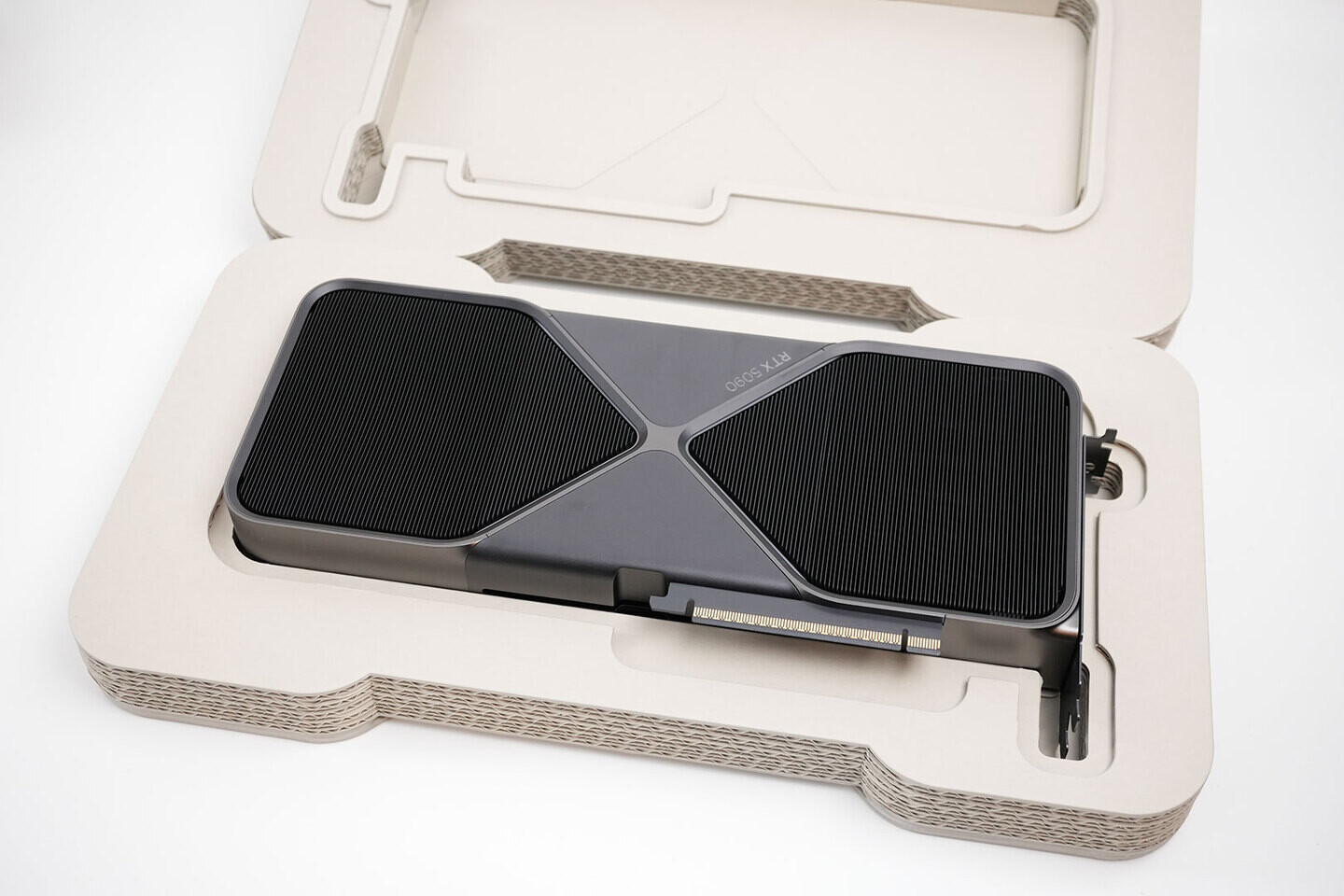
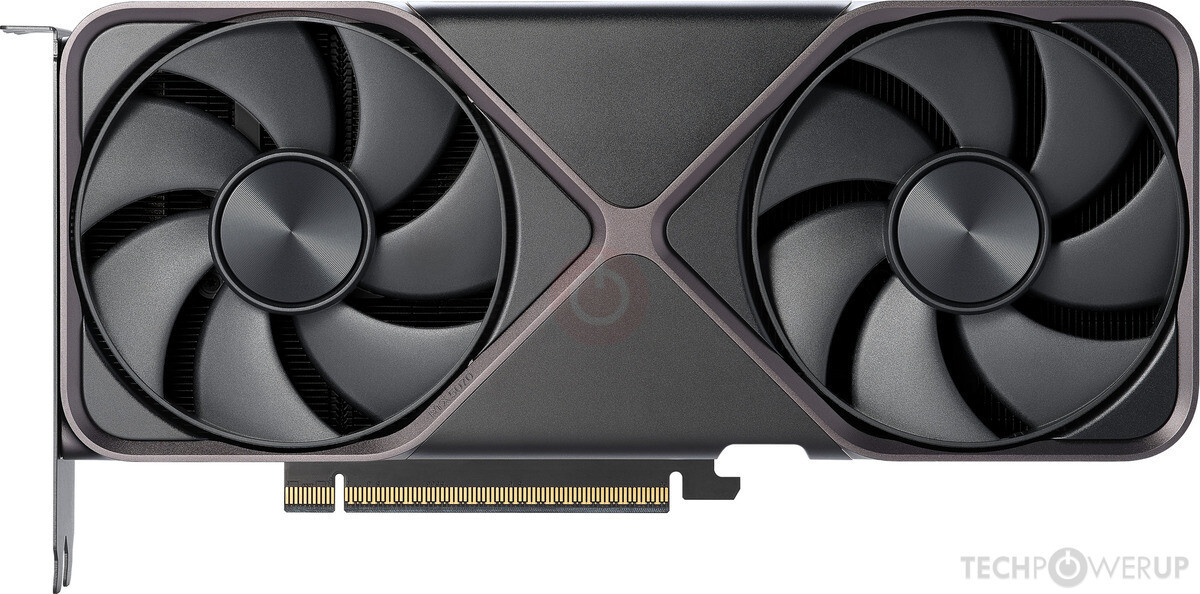
Gigabyte GeForce RTX 50 Series Graphics Cards Now Available

GIGABYTE, the world's leading computer brand, announced the GeForce RTX 50 Series graphics cards powered by NVIDIA Blackwell architecture, including the GeForce RTX 5090, RTX 5080, RTX 5070 Ti, which are now available, while the RTX 5070 will be available on March 5th. With cutting-edge cooling innovations and AI-powered performance enhancements, GIGABYTE delivers superior thermal efficiency and optimized airflow for an elevated gaming experience. By integrating an innovative fan design and advanced thermal interface materials, these new graphics cards ensure long-lasting durability and top-tier performance for enthusiasts, gamers, and AI computing professionals alike.

GIGABYTE offers GeForce RTX 50 air-cooled and water-cooled variants, ensuring a solution for every gaming setup. Both variants are applied with server-grade thermal conductive gel for better heat dissipation efficiency without shifting for long-term usage. The AORUS XTREME WATERFORCE series provides enthusiasts with high-performance liquid cooling, available in all-in-one (AIO) liquid cooling and water block configuration, while AIO solution is applied with liquid metal thermal grease to enhance heat dissipation. Meanwhile, air-cooled models incorporate advanced thermal technologies, featuring composite metal grease, the new Hawk Fan design which results in up to a 53.6% increase in air pressure and a 12.5% increase in air volume without compromising acoustics. Additionally, the AORUS RTX 5090 MASTER integrates superconducting heat pipes, while the AORUS RTX 5080 above MASTER models come with Screen Cooling Plus for superior airflow and cooling balance.

NVIDIA GeForce NOW Adds Obsidian Entertainment's Avowed to the Cloud

Wield magic and steel as GeForce NOW's fifth-anniversary celebration summons Obsidian Entertainment's highly anticipated Avowed to the cloud. This first-person fantasy role-playing game is ready to enchant cloud gamers, leading the charge of six titles joining the over 2,000 games in the cloud gaming library. GeForce NOW day passes are available to purchase again, in limited quantities each day. Members can currently purchase one day at a time, based on available capacity. Day pass users get 24-hour access to powerful cloud gaming with all the benefits of a GeForce NOW Ultimate or Performance membership. Stay tuned for updates as more membership options become available.

Choose Your Own Adventure
Embark on a thrilling adventure in Avowed, set in the captivating world of Eora. As an envoy of Aedyr, explore the mysterious Living Lands, an island teeming with ancient magic and shifting secrets, as a dire threat looms over the realm: a mysterious plague that defies nature and reason, spreading chaos across the sprawling wilderness. The Living Lands offer a diverse array of environments to explore, each with a unique ecosystem. Engage in visceral combat by mixing and matching swords, spells, guns and shields. Companions of various species, each with their own abilities and quests, will join the adventure, their fates intertwined with the players' choices. As the story unfolds, every decision will ripple across the Living Lands, shaping the future of its inhabitants and testing the players' resolve in the face of intrigue, power and danger.

NVIDIA GeForce RTX 5070 Ti Goes on Sale - Screenshots Document How Quickly they Sold Out

NVIDIA GeForce RTX 5070 Ti, the company's third graphics card from its GeForce RTX 50-series "Blackwell" generation, started selling. Although it comes with a starting price of $750, there are very few models actually at the price, which are marked up by retailers. Premium custom-design cards by NVIDIA add-in card (AIC) partners are priced as much as 33% higher than the baseline, even crossing the $1,000-mark in some cases, which are further scalped by another 20%. The GeForce RTX 5070 Ti is on paper a performance-segment GPU recommended by NVIDIA for 1440p high refresh-rate gaming, although it's capable of 4K Ultra HD with nearly maxed out settings or DLSS.

The RTX 5070 Ti is based on the same 5 nm "GB203" silicon as the RTX 5080, with 70/84 streaming multiprocessors (SM), across 6/7 GPCs enabled, along with 48 MB out of the 64 MB of on-die L2 cache. These work out to 8,960 CUDA cores, 280 Tensor cores, 70 RT cores, 280 TMUs, and 96 ROPs. The memory configuration is largely carried over from the RTX 5080, with 16 GB of 28 Gbps GDDR7 across a 256-bit wide memory bus (the RTX 5080 uses slightly faster 30 Gbps memory). The GPU ticks at 2452 MHz boost, and is given a total graphics power (TGP), a de facto power limit, of 300 W.

Check out our six reviews of the card: MSI RTX 5070 Ti Gaming OC+ | MSI RTX 5070 Ti Vanguard SOC | ASUS TUF Gaming RTX 5070 Ti OC | Palit RTX 5070 Ti GameRock OC | MSI RTX 5070 Ti Ventus 3X OC | Galax RTX 5070 Ti 1-Click OC

The images below show a timeline of supply levels at Newegg, at 6:04 AM, 6:19 AM, 6:35 AM and 6:49 AM—all gone now.

NVIDIA Releases GeForce 572.47 Game Ready Drivers with Support for RTX 5070 Ti

NVIDIA today released the latest version of its GeForce Game Ready drivers. Version 572.47 WHQL comes with support for the new GeForce RTX 5070 Ti graphics card that goes on sale from today. The drivers also add optimization for "Marvel's Rivals," including support for DLSS 4 Multi Frame Generation. The update also addresses a driver stability issue when the PC wakes up its monitor from an extended sleep time.

DOWNLOAD: NVIDIA GeForce 572.47 WHQL

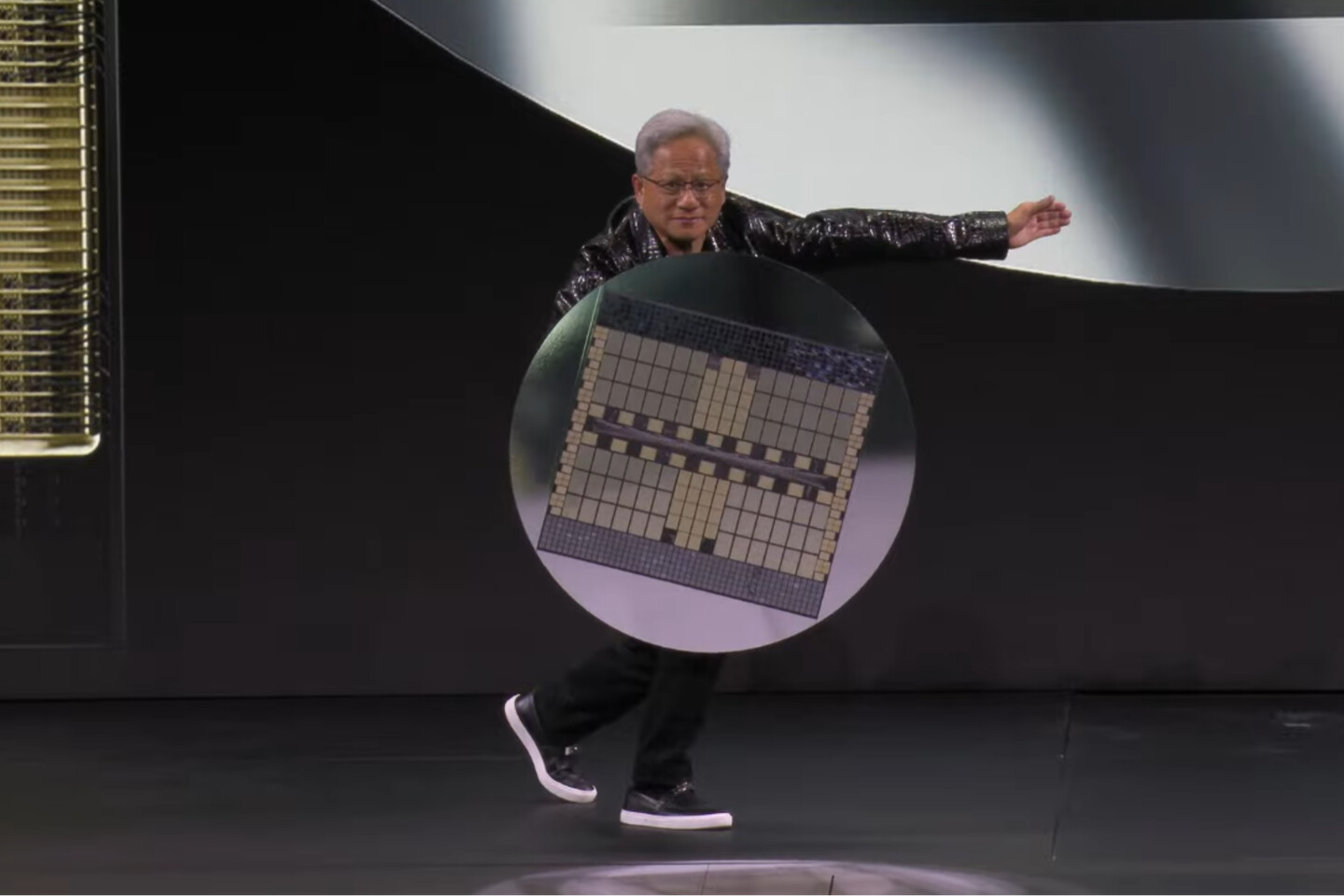
NVIDIA to Consume 77% of Silicon Wafers Dedicated to AI Accelerators in 2025

Investment bank Morgan Stanley has estimated that an astonishing 77% of all globally produced silicon wafers dedicated to AI accelerators will be consumed by none other than NVIDIA. Often, investment research by large investment banks like Morgan Stanley includes information from the semiconductor supply chain, which is constantly expanding to meet NVIDIA's demands. When looking at wafer volume for AI accelerators, it is estimated that in 2024, NVIDIA captured nearly 51% of wafer consumption for its chips, more than half of all demand. With NVIDIA's volume projected to grow to 77%, this represents more than a 50% year-over-year increase, which is incredible for a company of NVIDIA's size. Right now, NVIDIA is phasing out its H100 accelerators in favor of Blackwell 100/200 and the upcoming 300 series of GPUs paired with Grace CPUs.

NVIDIA is accelerating its product deployment timeline and investing a lot in its internal research and development. Morgan Stanley also projects that NVIDIA will invest almost $16 billion in its R&D budget, enough to endure four to five years of development cycles running three design teams sequentially and still delivering new products on an 18-24 month cadence. The scale of this efficiency and development rivals everyone else in the industry. With all this praise, NVIDIA's Q4 revenue report is coming in exactly a week on February 26, so we have to see what its CEO, Jensen Huang, will deliver and show some estimates for the coming months.

NVIDIA's Latest "State of AI in Telecommunications" Survey Highlights Increased Integration

The telecom industry's efforts to drive efficiencies with AI are beginning to show fruit. An increasing focus on deploying AI into radio access networks (RANs) was among the key findings of NVIDIA's third annual "State of AI in Telecommunications" survey, as more than a third of respondents indicated they're investing or planning to invest in AI-RAN.

The survey polled more than 450 telecommunications professionals worldwide, revealing continued momentum for AI adoption—including growth in generative AI use cases—and how the technology is helping optimize customer experiences and increase employee productivity. Of the telecommunications professionals surveyed, almost all stated that their company is actively deploying or assessing AI projects.

HP Lists Victus 15 Gaming Laptop Model with GeForce RTX 5060 & 5050 Mobile GPUs

Last December, details of NVIDIA's RTX GeForce 50-series of mobile GPUs leaked online—fast-forward to the present day; Team Green and hardware partners are touted to release higher-end devices at some point next month, following a pre-order period. Lower-end offerings seem to be distant prospects; industry moles suggest a May launch window. Last week rumors emerged online; notebook supply chain insiders reckon that a "significant delay" will affect initial shipments of GeForce RTX 50-equipped laptops. It is not clear whether these issues will impact the rumored GeForce RTX 5060 and RTX 5050 mobile models, but HP has accidentally confirmed that an updated Victus laptop will utilize the aforementioned budget-friendly GPUs.

VideoCardz has preserved an intriguing screenshot. Their report alleges that a refreshed HP Victus 15 laptop variant (FA2) utilizes Intel 13th Gen "Raptor Lake" processors, paired with unannounced "hybrid graphics" options. HP's product component list includes last-gen Core 7 240H, Core 5 230H, Core i7-13620H, and Core i5-13420H processor SKUs. Older configurations of this 15.6" gaming laptop sported mobile GeForce RTX 4050, RTX 3050, RTX 3050A, and RTX 2050 GPUs. The leaked document suggests that modernized graphics packages are in the pipeline, but HP has not confirmed any concrete timelines.

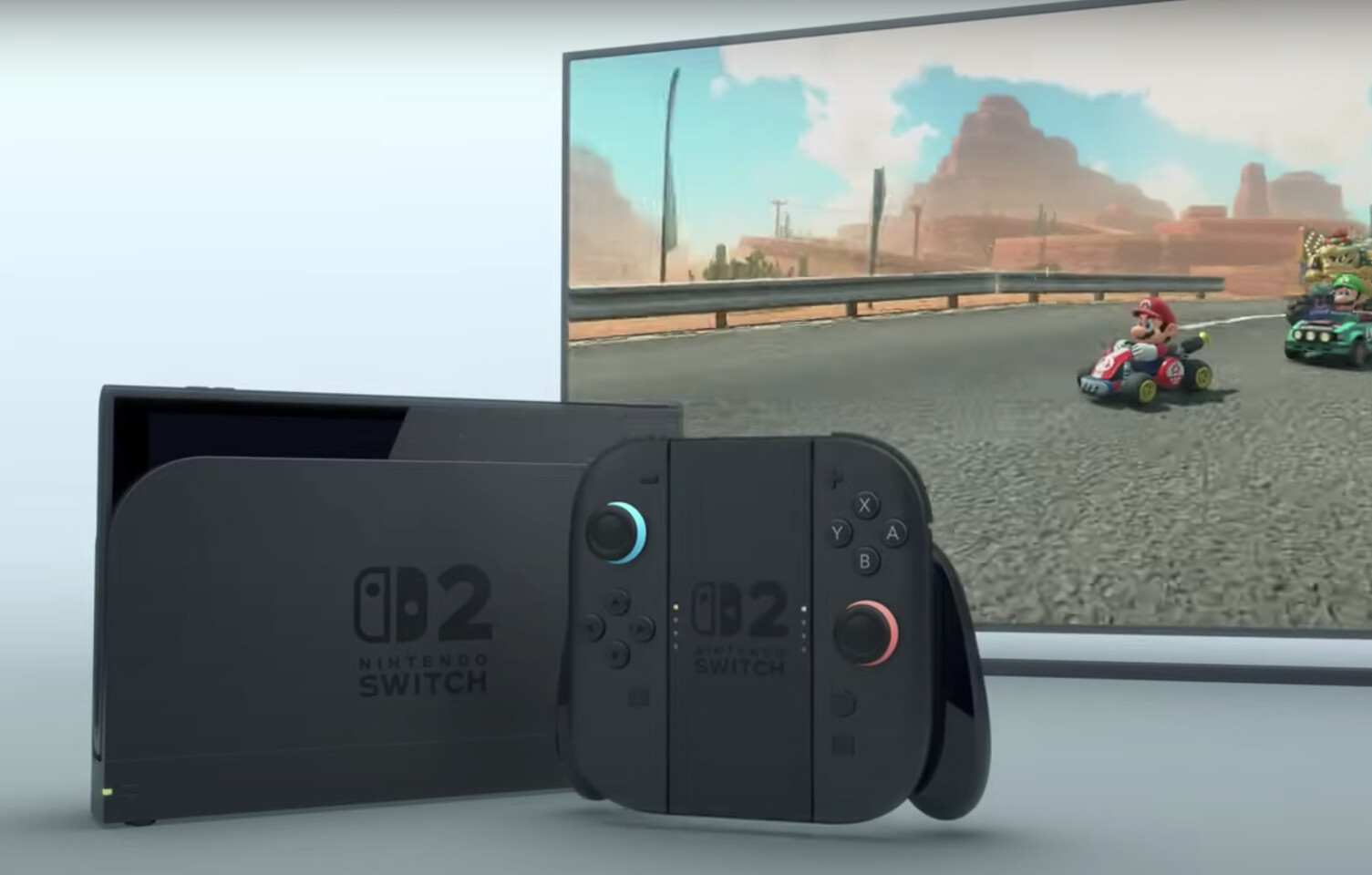
Analyst Asserts Nintendo Switch 2 Likely To Be Priced at $399

According to a recent report by Joost van Dreunen - founder of SuperData research firm - the Nintendo Switch 2 is expected to boast a price tag roughly around $399. This would make the highly awaited gaming handheld $100 more expensive than its direct predecessor, and $50 more expensive than the OLED variant of OG Switch. According to van Dreunen, the pricing would allow Nintendo to have a net positive margin on its hardware, while also undercutting other handhelds in price that are 'distinctly' a few tiers above the Switch 2 in terms of performance, as well as capabilities. Of course, considering Nintendo's primary selling point for the Switch - the ecosystem of family-friendly Switch games - the pricing is unlikely to hold back customers who are already knee-deep in Switch games.

The Nintendo Switch 2 is almost confirmed to launch on the 2nd of April, with a larger display and improved magnetic, hall-effect Joy Cons. Like its predecessor, the Switch 2 does not intend to be a powerhouse, and will settle for an NVIDIA Tegra T239 SoC with an Ampere iGPU that should be good for up to 3.1 TFLOPS of raw performance. With the help of DLSS, the Switch 2 should be able to pull off a decent gaming experience at 1080p, or perhaps even at 4K. A fee patents and rumors have indicated that the Joy Cons will have some sort of mouse-like functionality, which was also hinted at by the device's trailer, although no confirmations exist for now. Of course, all of this is mere speculation at this point, but van Dreunen is a respected name in the industry, and his reasoning certainly does make sense.

NVIDIA's 32-Bit PhysX Waves Goodbye with GeForce RTX 50 Series Ending 32-Bit CUDA Software Support

The days of 32-bit software support in NVIDIA's drivers are coming to an end, and with that, so does the support for the once iconic PhysX real-time physics engine. According to NVIDIA's engineers on GeForce forums, the lack of PhysX support has been quietly acknowledged, as NVIDIA's latest GeForce RTX 50 series of GPUs are phasing out support for 32-bit CUDA software, slowly transitioning the gaming world to the 64-bit software entirely. While older NVIDIA GPUs from the Maxwell through Ada generations will maintain 32-bit CUDA support, this update breaks backward compatibility for physics acceleration in legacy PC games on new GPUs. Users running these titles on RTX 50 series cards may need to rely on CPU-based PhysX processing, which could result in suboptimal performance compared to previous GPU generations.

A Reddit user reported frame rates dropping below 60 FPS in Borderlands 2 while using basic game mechanics with a 9800X3D CPU and RTX 5090 GPU, all because 32-bit CUDA application support on Blackwell architecture is depreciated. When another user booted up a 64-bit PhysX application, Batman Arkham Knight, PhysX worked perfectly, as expected. It is just that a massive list of older games, which gamers would sometimes prefer to play, is now running a lot slower on the most powerful consumer GPU due to the phase-out of 32-bit CUDA app support.

Accusations Directed at ASUS over Anticipated PRIME RTX 5070 Ti Series Price Manipulation

GeForce RTX 5070 Ti graphics cards are due to hit international markets this Thursday (February 20), only in custom design form. NVIDIA will not be rolling out a Founders Edition model for this mid-to-high GPU product tier. Yesterday, an NDA-busting leak emerged online; hinting at a mixed bag of synthetic benchmark scores. When compared to new-gen and past-gen siblings, the incoming GB203 GPU-based family's "price-to-performance ratio" was greeted with plenty of online community skepticism. Considering that only a minority of AIB companies are reportedly engaged in the supply of cheaper offerings, the early outlook for overall GeForce RTX 5070 Ti launch pricing is generating further dissatisfaction. Team Green's first wave of "Blackwell" gaming GPUs launched late last month, straight into chaotic market conditions.

At CES 2025, NVIDIA set a baseline MSRP of $749. Fresh reports suggest that hardware review outlets will be delivering comprehensive verdicts tomorrow. VideoCardz believes that the lifted review embargo will be "exclusively for MSRP cards," based on information gleaned from their network of press contacts. The GPU specialist publication has kept tabs on fluctuating GeForce RTX 50-series prices for a while—several recent reports have levelled criticism at prominent Team Green board partners; namely ASUS and MSI. Plenty of venom was directed at the former, due to last month's launch of the: "GeForce RTX 5080 PRIME non-OC model at MSRP, and it was covered in the first reviews...Except, it was increased by 26% the following week. This way, ASUS has cheated the system and got both the early coverage and was still able to sell cards at a higher price." VideoCardz predicts a similar pattern for this week's release of custom GeForce RTX 5070 Ti designs, in particular ASUS PRIME and TUF Gaming SKUs. Their latest report directed additional ire toward the source of all things Blackwell: "unless NVIDIA has no problem with this, this is not how MSRP cards should be announced. It is very misleading for customers and puts reviewers in a very bad light. Their conclusions might be completely different if the card is said to cost much more."

EMTEK Releases Debut "Blackwell" Model - GeForce RTX 5080 MIRACLE WHITE D7 16 GB

As reported almost a year ago, EMTEK graphics cards do not make regular appearances via Western reportage. The South Korean manufacturer has prepared its debut NVIDIA "Blackwell" GeForce RTX 50-series desktop product; as spotted by VideoCardz. The brand new EMTEK GeForce RTX 5080 MIRACLE WHITE D7 16 GB model has appeared online via Danawa's online price comparison engine. The lowest price comes in at 2,656,000 KRW (~$1841 USD), so there is clear evidence of major price hiking activities going on in South Korea. One store is offering EMTEK's cutting-edge white custom model for a cool 4,000,000 KRW (~$2773 USD).

EMTEK's GeForce RTX 5080 MIRACLE WHITE D7 16 GB graphics card conforms to Team Green's reference specifications; making the higher than expected entry fee even more painful to bear. We hope that prices level-off to reasonable lines in the near future. This snow-white custom design seemingly carries a couple of premium features; namely translucent ARGB-lit fans in a triple-formation. This integrated "dynamic lighting" system can be controlled through Windows 11 (via a USB-C connection), rather than proprietary software. VideoCardz reports that the South Korean graphics producer is not known to release its own RGB control suite. A cutaway render shows a very robust cooling solution that houses eight 6 mm heat pipes. Unfortunately, the PCB's shape is not as radical as the one found in an Ada Lovelace-based sibling. Judging from the internal promo shots, EMTEK has missed another opportunity to bung in a white board design, and attach similarly pale parts. Many NVIDIA AIBs should spend more time copying GALAX, Yeston, and PowerColor's (AMD-powered) homework—the latter's Spectral White Editions usually nail the almost all-white aesthetic.

ZOTAC Registers GeForce RTX 5060 Ti, 5060, & 5050 GPUs - Spotted in ECC Filing

Last Wednesday (February 12), an intriguing filing appeared online—the Eurasian Economic Commission (EEC) has received multiple registrations of NVIDIA GPUs; courtesy of OEM Global Technologies Ltd. The parent company of ZOTAC Technology Limited has registered a wide span of Team Green SKUs, going back many generations to 2014's GeForce GT 710 "Kepler 2.0" design. When ignoring everything south of the latest "Blackwell" GPU lineup, harukaze5719 noticed three lower-end additions. The rumor mill has NVIDIA launching its more budget-friendly GeForce RTX 5060 Ti and RTX 5060 (non-Ti) models at some point next month.

Board partner supply chain insiders believe that Team Green is clearing the current-gen flock; thus making way for lower-end "Blackwell" GPUs, but the newly-discovered registration of a GeForce RTX 5050 SKU has raised watchdog eyebrows. A rumored entry-level RTX 5050 Mobile variant turned up last December, but we have not heard much about a discrete desktop equivalent in 2025. NVIDIA had plans for a GeForce RTX 4050 model, but desktop "Ada Lovelace" AD107 GPU-based products did not emerge into existence. The latest ECC filing suggests that a next-gen successor could be on the way. Industry soothsayers predict a sub-$300 price point for alleged GeForce RTX 5050 8 GB graphics cards—potentially lined up for battle with Intel's current-gen B580 and B570 offerings.

NVIDIA Preparing "SOCAMM" Memory Standard for AI PCs Similar to Project DIGITS

NVIDIA and its memory partners, SK Hynix, Samsung, and Micron, are preparing a new memory form factor called Small Outline Compression Attached Memory Modules—SOCAMM shortly. This technology, adapting to the now well-known CAMM memory module standard, aims to bring additional memory density to NVIDIA systems. Taking inspiration from NVIDIA's Project DIGITS, it has now been developed independently by NVIDIA outside of any official memory consortium like JEDEC. Utilizing a detachable module design, SOCAMM delivers superior specifications compared to existing solutions, featuring 694 I/O ports (versus LPCAMM's 644 and traditional DRAM's 260), direct LPDDR5X memory substrate integration, and a more compact form factor.

For reference, current-generation Project DIGITS is using NVIDIA GB10 Grace Blackwell Superchip capable of delivering one PetaFLOP of FP4 compute, paired with 128 GB of LPDDR5X memory. This configuration limits the size of AI models that run locally on the device, resulting in up to 200 billion parameter models running on a single Project DIGITS AI PC. Two stacked Project DIGITS PCs are needed for models like Llama 3.1 405B with 405 billion parameters. Most interestingly, memory capacity is the primary limiting factor; hence, NVIDIA devotes its time to developing a more memory-dense SOCAMM standard. Being a replacement compatible with LPDDR5, it can use the same controller silicon IP with only the SoC substrate being modified to fit the new memory. With NVIDIA rumored to enter the consumer PC market this year, we could also see an early implementation in consumer PC products, but the next-generation Project DIGITS is the primary target.

Supplier Production Cuts and AI Demand Expected to Drive NAND Flash Price Recovery in 2H25

TrendForce's latest findings reveal that the NAND Flash market continues to be plagued by oversupply in the first quarter of 2025, leading to sustained price declines and financial strain for suppliers. However, TrendForce anticipates a significant improvement in the market's supply-demand balance in the second half of the year.

Key factors contributing to this shift include proactive production cuts by manufacturers, inventory reductions in the smartphone sector, and growing demand driven by AI and DeepSeek applications. These elements are expected to alleviate oversupply and support a price rebound for NAND Flash.

NVIDIA GeForce RTX 5070 Ti Allegedly Scores 16.6% Improvement Over RTX 4070 Ti SUPER in Synthetic Benchmarks

Thanks to some early 3D Mark benchmarks obtained by VideoCardz, NVIDIA's upcoming GeForce RTX 5070 Ti GPU paints an interesting picture of performance gains over the predecessor. Testing conducted with AMD's Ryzen 7 9800X3D processor and 48 GB of DDR5-6000 memory has provided the first glimpse into the card's capabilities. The new GPU demonstrates a 16.6% performance improvement over its predecessor, the RTX 4070 Ti SUPER. However, benchmark data shows it is falling short of the more expensive RTX 5080 by 13.2%, raising questions about the price-to-performance ratio given the $250 price difference between the two cards. Priced at $749 MSRP, the RTX 5070 Ti could be even pricier in retail channels at launch, especially with limited availability. The card's positioning becomes particularly interesting compared to the RTX 5080's $999 price point, which commands a 33% premium for its additional performance capabilities.

As a reminder, the RTX 5070 Ti boasts 8,960 CUDA cores, 280 texture units, 70 RT cores for ray tracing, and 280 tensor cores for AI computations, all supported by 16 GB of GDDR7 memory running at 28 Gbps effective speed across a 256-bit bus interface, resulting in an 896 GB/s bandwidth. We have to wait for proper reviews for the final performance conclusion, as synthetic benchmarks tell only part of the story. Modern gaming demands consideration of advanced features such as ray tracing and upscaling technologies, which can significantly impact real-world performance. The true test will come from comprehensive gaming benchmarks tested over various cases. The gaming community won't have to wait long for detailed analysis, as official reviews will be reportedly released in just a few days. Additional evaluations of non-MSRP versions should follow on February 20, the card's launch date.

Finally, Some Good News: GeForce RTX 5090 Supply to Increase in Coming Months

It would be safe to state that the NVIDIA GeForce RTX 5090 and RTX 5080 launch was anything but ideal. Gamers had to deal with whacky NVIDIA marketing material with absurd performance claims, followed by disappointing generational improvement for the RTX 5080, only to be left dealing with abysmal supply leading to obscene shortages and scalper-induced price inflation. However, it does seem like things are about to take a positive turn - NVIDIA is rumored to have ramped up production for its GB202 GPU, which the RTX 5090 is based on, according to a reliable source.

Spotted by VideoCardz, MEGAsizeGPU has claimed that the supply for the GeForce RTX 5090 GPU will soon be "stupidly high", which is absolute music to our ears. In a reply thread, the source further claimed that at least one AIB partner already has "tons of cards", which sure does paint a promising picture for the future. As such, the source expects that the supply will reach customers in about a month, which is to be expected since production has been cranked only recently. Apparently, demand for the GB200 GPU has been lower than usual, forcing NVIDIA to switch to producing GeForce GPUs instead. Of course, the margins for the gaming GPUs are lower, but the production capacity has to go somewhere.

DeepSeek Reportedly Pursuing Development of Proprietary AI Chip

The notion of designing tailor-made AI-crunching chips is nothing new; several major organizations—with access to big coffers—are engaged in the formulation of proprietary hardware. A new DigiTimes Asia report suggests that DeepSeek is the latest company to jump on the in-house design bandwagon. The publication's insider network believes that the open-source large language model development house has: "initiated a major recruitment drive for semiconductor design talent, signaling potential plans to develop its proprietary processors." The recent news cycle has highlighted DeepSeek's deep reliance on an NVIDIA ecosystem, despite alternative options emerging from local sources.

Industry watchdogs believe that DeepSeek has access to 10,000 of sanction-approved Team Green "Hopper" H800 AI chips, and (now banned) 10,000 H100 AI GPUs. Around late January, DeepSeek's Scale AI CEO—Alexandr Wang—claimed that the organization could utilize up to 50,000 H100 chips for model training purposes. This unsubstantiated declaration raised eyebrows; given current global political tensions. Press outlets have speculated that DeepSeek is in no rush to reveal its full deck of cards, but they appear to have a competitive volume of resources; when lined up against with Western competitors. The DigiTimes news article did not provide any detailed insight into the rumored in-house chip design. DeepSeek faces a major challenge; the Chinese semiconductor industry trails behind market leading regions. Will local foundries be able to provide an advanced enough node process for required purposes?

Multiple GeForce RTX 5070 Ti Models Listed in Europe & US, Two "Baseline MSRP" SKUs Spotted

Yesterday, NVIDIA confirmed that board partner GeForce RTX 5070 Ti graphics cards (minus a Founders Edition) will be hitting global retail markets on February 20. Team Green has set a baseline MSRP of $749 (USD) for North America, and €884 (plus region variable VAT) for European territories. Recent accidental e-tail listings have presented daunting price points (in Austria and France), that sit far higher than NVIDIA's guideline figure. A fresh VideoCardz news report piles on extra pain; various readership tip-offs have indicated that next week's population of launch products will be composed of mostly very expensive offerings. CaseKing.de has listed a grand total of twelve ASUS, GIGABYTE and MSI GeForce RTX 5070 Ti cards—the cheapest non-overclocked option comes in at €1149 (including customary 19% sales tax), plus shipping costs starting at €4.99. GIGABYTE's premium-tier AORUS RTX 5070 Ti MASTER is priced at €1399 (incl. VAT). This German retail outlet is not known to implement generous discounts, especially early on in a product's lifespan. VideoCardz looked elsewhere for evidence of baseline MSRP conformant AIB cards. Press outlets could be analyzing placeholder numbers, so things could change closer to release day.

Proshop in Denmark and Finland seem to be the only e-tail outlets (in Europe/Scandinavia) that offer a model that conforms to official NVIDIA minimum pricing decree. The non-overclocked barebones Inno3D RTX 5070 Ti X3 card is priced at 6899 kr (incl. VAT) in Denmark, and €924 (incl. VAT) in Finland. An extra €75 premium grants access to an overclocked sibling: Inno3D RTX 5070 Ti X3 OC. Potential buyers—in North America—have one baseline MSRP-friendly option, courtesy of Micro Center. VideoCardz highlighted the PNY RTX 5070 Ti Overclocked Triple Fan model's price point of $750. At the time of writing, they believe that this is the only example of a factory-overclocked card sticking to Team Green guidelines. AMD's incoming Radeon RX 9070 GPU series is set to battle it out with NVIDIA's next wave of "Blackwell" GPUs. According to industry whispers, Team Red will be deeply involved in analysis of GeForce RTX 5070 Ti market performance. Speculative first wave RDNA 4-based graphics card pricing has leaked online this week; will they commit to undercutting their main competition?

Insiders Predict Delay of NVIDIA GeForce RTX 50-series Laptops

Retailers are set to open up pre-order floodgates for upcoming GeForce RTX 50-series laptops on February 25, as we learned earlier this week. According to a new DigiTimes report, the launch of mobile devices—sporting Team Green "Blackwell" GPUs—is expected to be "significantly delayed." A loose March launch window was teased during Jensen Huang's keynote presentation at CES 2025, but supply chain insiders have claimed that high-end RTX 50 laptops were "originally planned to be launched in January 2025." Additionally, they surmise that mid-range and low-end offerings are postponed to April. DigiTimes believes that the rumored postponements have surprised supply chain moles; Team Green is not known to delay product launches. Extenuating circumstances are cited as the reason behind alleged deferred release windows, but insiders have not yet determined the extent of lengthened launch parameters.

An anonymous source stated: "NVIDIA, which has never been late in the past, also encountered this situation. It is probably related to NVIDIA's full sprint to AI servers. Even though there are differences in server and PC chip design and manufacturing processes, the company's resource allocation may still affect the debugging efficiency of new products." Other insiders have murmured about GeForce RTX 50-series mobile GPU performance not meeting expectations. Rumors have swirled about problems with early sample units; most notably the encountering of major screen issues when the "hardware is turned on." Laptop/notebook supply chain insiders reckon that manufacturers have anticipated a healthy level of growth in 2025—thanks to the emergence of new NVIDIA graphics cards—but targets have been reduced, due to anticipated delays. Optimistic industry chatter predicts higher education students and esport enthusiasts driving unit sales upward, following a stagnant 2024 market.
Return to Keyword Browsing
Nov 27th, 2026 18:51 CST change timezone

New Forum Posts

Popular Reviews

TPU on YouTube

Controversial News Posts