News Posts matching #NVIDIA

Return to Keyword Browsing

Final Fantasy VII Rebirth Available Now on PC

FINAL FANTASY VII REBIRTH, winner of over 40 Game of the Year awards globally, is now available worldwide on PC via Steam and Epic Games Store. The award-winning RPG is also available now on the PlayStation 5 (PS5) console, with enhanced support for the PlayStation 5 Pro. Heralded as "the best Final Fantasy of the century" by The Washington Post and recipient of over 110 perfect review scores, FINAL FANTASY VII REBIRTH comes to the PC platform with a variety of new features and customizations that deliver a new level of realism and immersion to the unknown journey including:
  • Improved lighting across the entire game renders the adventure with even greater beauty and clarity.
  • 4K resolution and 120 FPS are supported on top-spec PCs.
  • Greater polygon and texture density can be achieved through optional settings. FINAL FANTASY VII REBIRTH has never looked better.
  • With DualSense controller support, enjoy the same controls and immersive haptic feedback as on the PS5 console.
  • NVIDIA DLSS allows for upscaled image quality and enhanced framerates.
  • Variable refresh rate (VRR) enables smoother gameplay with compatible hardware.
  • Full control rebinding, plus mouse and keyboard support. Freely customize controls between world exploration and combat or mini-games.
  • FINAL FANTASY VII REBIRTH is Steam Deck Verified for an optimized handheld experience.

NVIDIA AI Helps Fight Against Fraud Across Many Sectors

Companies and organizations are increasingly using AI to protect their customers and thwart the efforts of fraudsters around the world. Voice security company Hiya found that 550 million scam calls were placed per week in 2023, with INTERPOL estimating that scammers stole $1 trillion from victims that same year. In the U.S., one of four noncontact-list calls were flagged as suspected spam, with fraudsters often luring people into Venmo-related or extended warranty scams.

Traditional methods of fraud detection include rules-based systems, statistical modeling and manual reviews. These methods have struggled to scale to the growing volume of fraud in the digital era without sacrificing speed and accuracy. For instance, rules-based systems often have high false-positive rates, statistical modeling can be time-consuming and resource-intensive, and manual reviews can't scale rapidly enough.

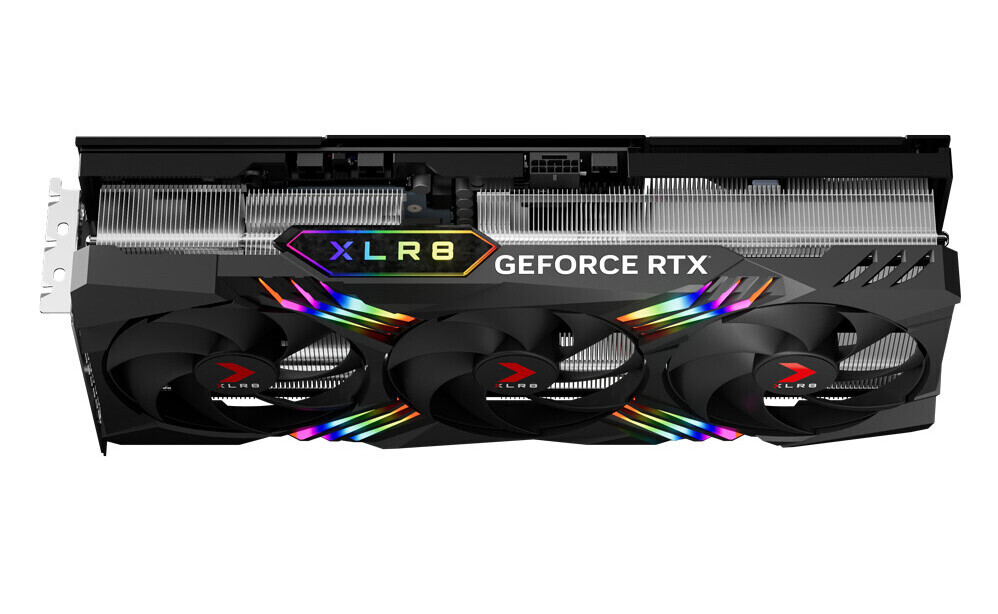
Quad-Slot NVIDIA GeForce RTX 5090 Prototype Appears, Features Three-Fan Stair-Step Configuration

NVIDIA has unveiled a radical graphics card prototype that never reached production, offering insight into its design process. In a YouTube video called "Designing the Founders Edition | GeForce RTX 5090", NVIDIA showcases an unreleased design that would have occupied four PCIe slots, featuring a "three-thirds flow-through" cooling system with an unconventional three-fan stair-step configuration. NVIDIA ultimately rejected the quad-slot concept as impractical for most computer systems.
Engineers refined the cooling approach for the RTX 50-series, developing a more streamlined "two-thirds flow-through" design that maintains thermal performance while reducing the card's footprint to two PCIe slots.

Technical challenges emerged during development, particularly in connector design. The team struggled to create a ribbon cable supporting high-bandwidth UHBR20 DisplayPort 2.1b and HDMI 2.1b connections. Their solution involved infusing glass fibers into the cable, enabling support for three DisplayPort and one HDMI connector. Critical engineering focus was placed on the liquid metal thermal interface material. Extensive stress testing ensured reliability across various orientations, with particular attention to preventing oxidation. Given the electrically conductive nature of liquid metal, an air-tight seal around the GPU die became crucial to prevent potential hardware failure.

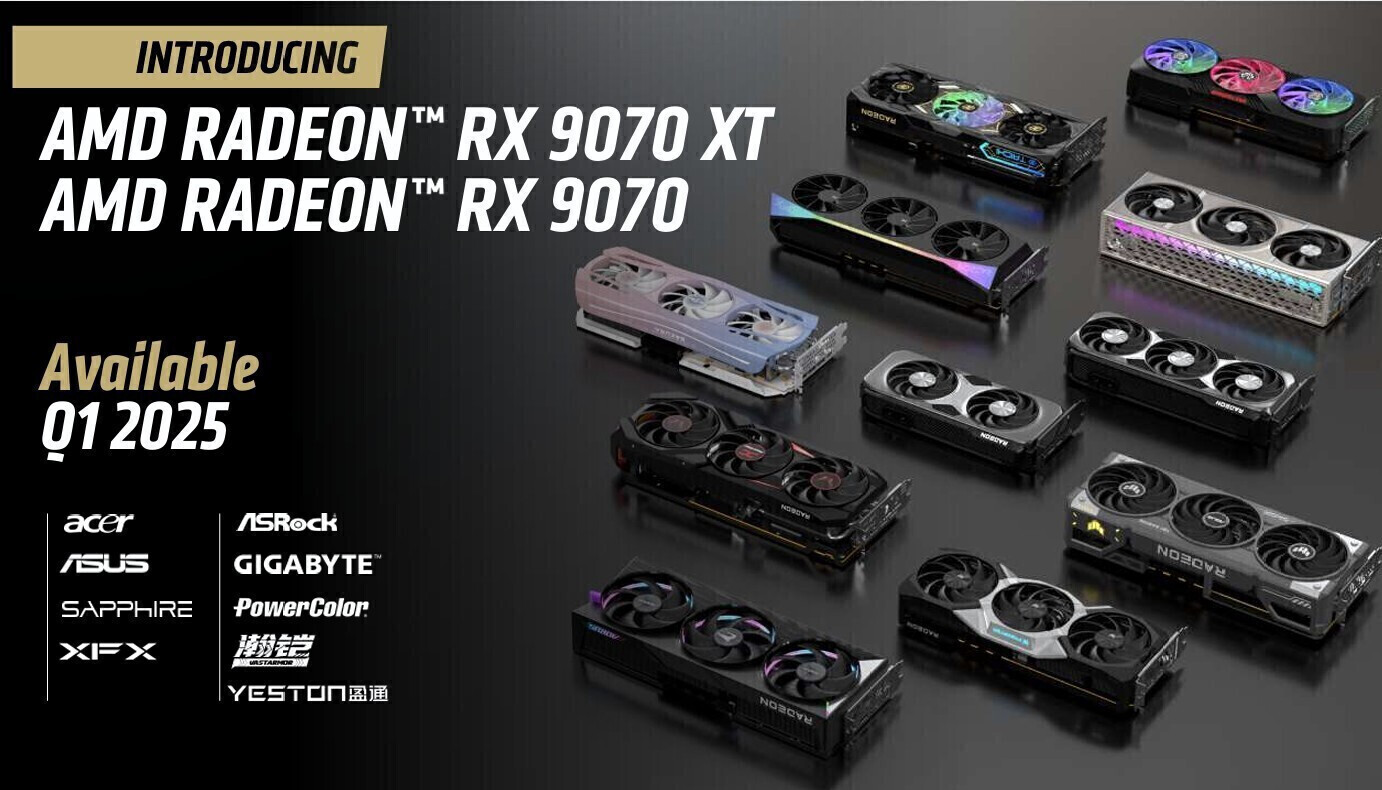
AMD is Taking Time with Radeon RX 9000 to Optimize Software and FSR 4

When AMD announced its upcoming Radeon RX 9000 series of GPUs based on RDNA 4 IP, we expected the general availability to follow soon after the CES announcement. However, it turns out that AMD has scheduled its Radeon RX 9000 series availability for March, as the company is allegedly optimizing the software stack and its FidelityFX Super Resolution 4 (FSR 4) for a butter smooth user experience. In a response on X to Hardware Unboxed, AMD's David McAfee shared, "I really appreciate the excitement for RDNA 4. We are focused on ensuring we deliver a great set of products with Radeon 9000 series. We are taking a little extra time to optimize the software stack for maximum performance and enable more FSR 4 titles. We also have a wide range of partners launching Radeon 9000 series cards, and while some have started building initial inventory at retailers, you should expect many more partner cards available at launch."

AMD is taking its RDNA 4 launch more cautiously than before, as it now faces a significant problem with NVIDIA and its waste portfolio of software optimization and AI-enhanced visualization tools. The FSR 4 introduces a new machine learning (ML) based upscaling component to handle Super Resolution. This will be paired with Frame Generation and an updated Anti-Lag 2 to make up the FSR 4 feature set. Optimizing this is the number one priority, and AMD plans to get more games on FSR 4 so gamers experience out-of-the-box support.

NVIDIA RTX "Blackwell" GPU with 96 GB GDDR7 Memory on 512-Bit Bus Appears

Recent shipping manifests suggest that NVIDIA works on a graphics card with 96 GB of GDDR7 memory. Documents reveal a product utilizing a 512-bit memory bus and a clamshell (memory on both PCB sides) design that combines two 3 GB modules per memory controller. This setup effectively doubles the memory capacity of existing workstation-oriented cards. The product is believed to use the GB202 chip, the only Blackwell desktop GPU with a 512-bit interface. The documents refer to a board labeled PG153, a designation not seen in any of NVIDIA's existing consumer GPUs. This finding points toward a professional or workstation model rather than a gaming product. There is a possibility that it could be part of the RTX 6000 Blackwell or RTX 8000 Blackwell series.

NVIDIA's current top workstation card, the RTX 6000 "Ada," features 48 GB of memory. A move to 96 GB would be a substantial jump, enabling more complex workloads for content creation, data analysis, and AI. This GPU could carry a significantly higher power target than current workstation models. However, professional GPUs often maintain lower clock speeds to keep power consumption within limits that accommodate more stable operation in professional environments. There is no confirmed information regarding the card's official name or final specifications, such as core count or actual clock frequencies. NVIDIA's workstation GPUs have historically provided a higher core count than their gaming counterparts. If the rumored 96 GB GPU follows this pattern, it may surpass even the potential GeForce RTX 5090, which comes with 32 GB of GDDR7. NVIDIA is expected to hold its annual GPU Technology Conference in March. This event is viewed as a likely venue for official announcements. Until then, these details remain unverified.

NVIDIA GeForce RTX 50 Series Supply Woes Predicted to Last Up To Three Months

NVIDIA's GeForce RTX 50 Series of "Blackwell" GPUs are set to launch at the tail end of this month, but market conditions are not looking favorable for day one customers. Recent news articles have highlighted alleged regional supply issues, and industry insiders believe that it will be very difficult to obtain the two higher-end models (RTX 5090 and RTX 5080). Monday's report posited that delays could result in stock not turning up until a month after Team Green's official kick-off on January 30. VideoCardz has pointed to a root cause; Team Green's alleged late issuing of finalized BIOSes—board partners were reportedly not able to prepare stock until very late in 2024.

Unfortunately, further disappointing disclosures have trickled out mid-week—PowerGPU's social media account sent out a stern warning: "the launch of the RTX 5090 will be the worst when it comes to availability. Already being told to expect it to be that way for the first three months." Benchlife piled on with more bad news—their report suggests that problems will emerge further down in Team Green's "Blackwell" product stack: "we can confirm that there are not many supplies on the market. This is mainly due to some communication issues between NVIDIA and AIC partners, as well as the Spring Festival Factors are expected to improve in February. In addition, we expect to see the GeForce RTX 5070 Ti starting to appear on the channel in mid-to-late February. As for the $549 GeForce RTX 5070, we may have to wait until early March."

MediaTek Adopts AI-Driven Cadence Virtuoso Studio and Spectre Simulation on NVIDIA Accelerated Computing Platform for 2nm Designs

Cadence today announced that MediaTek has adopted the AI-driven Cadence Virtuoso Studio and Spectre X Simulator on the NVIDIA accelerated computing platform for its 2 nm development. As design size and complexity continue to escalate, advanced-node technology development has become increasingly challenging for SoC providers. To meet the aggressive performance and turnaround time (TAT) requirements for its 2 nm high-speed analog IP, MediaTek is leveraging Cadence's proven custom/analog design solutions, enhanced by AI, to achieve a 30% productivity gain.

"As MediaTek continues to push technology boundaries for 2 nm development, we need a trusted design solution with strong AI-powered tools to achieve our goals," said Ching San Wu, corporate vice president at MediaTek. "Closely collaborating with Cadence, we have adopted the Cadence Virtuoso Studio and Spectre X Simulator, which deliver the performance and accuracy necessary to achieve our tight design turnaround time requirements. Cadence's comprehensive automation features enhance our throughput and efficiency, enabling our designers to be 30% more productive."

NVIDIA GeForce RTX 5090 3DMark Performance Reveals Impressive Improvements

The RTX 50-series gaming GPUs have the gaming community divided. While some appreciate the DLSS 4 and MFG technologies driving impressive improvements in FPS through AI wizardry, others are left disappointed by the seemingly poor improvements in raw performance. For instance, when DLSS and MFG are taken out of the equation, the RTX 5090, RTX 5080, and RTX 5070 are around 33%, 15%, and 20% faster than their predecessors respectively in gaming performance. That said, VideoCardz has tapped into its sources, and revealed the 3DMark scores for the RTX 5090 GPU, and the results certainly do appear to exceed expectations.

In the non-ray traced Steel Nomad test at 4K, the RTX 5090 managed to score around 14,133 points, putting it roughly 53% ahead of its predecessor. In the Port Royal test, which does utilize ray tracing, the RTX 5090 raked in 36,667 points - a 40% improvement over the RTX 4090. The results are much the same in the older Time Spy and Fire Strike tests as well, indicating at roughly a 31% and 38% jump in performance respectively. Moreover, according to the benchmarks, the RTX 5090 appears to be roughly twice as powerful as the RTX 4080 Super. Of course, synthetic benchmarks do not entirely dictate gaming performance, and VideoCardz clearly mentions that gaming performance (without MFG) will witness a substantially more modest improvement. There is no denying that Blackwell's vastly superior memory bandwidth is helping a lot with the synthetic tests, with the 33% extra shaders doing the rest of the work.

NVIDIA Claims 16-Pin Power Connector Issues are Over, No More Melting

During a recent press event in South Korea, NVIDIA addressed concerns about power connector safety for their upcoming RTX 5090 graphics card. The new GPU will consume 575 watts of power, marking a massive 225-watt increase from its predecessor, the RTX 4090. The previous generation RTX 4090 faced significant issues with melting 12VHPWR power connectors, especially with third-party adapters, where incomplete connections led to overheating and connector damage. When questioned about potential risks with the RTX 5090's higher power draw, NVIDIA representatives stated they've implemented an updated 12V-2×6 power connector across the RTX 50 series. Unlike the 12VHPWR 16-pin connector, the new 12V-2x6 has sense pins having recessed further back to ensure proper contact before the GPU can request higher power outputs.

"It is expected that such issues will not occur with the RTX 50 series," a company representative explained during the Q&A session. "After about two years, we believe these problems have been resolved." While the company maintains that user error was the leading cause of failures, the extended timeframe required for developing and shipping revised connectors raised questions about the initial design's reliability. Despite NVIDIA's assurances, the RTX 5090's exceptional power requirements could potentially amplify any unexpected technical issues. The company's previous experience showed that problems became more pronounced in cards with higher power demands, as demonstrated by the RTX 4090 having more incidents than the lower-powered RTX 4080 series. So, more power means more trouble, but the company has worked on it to ensure no future problems arise.

NVIDIA DLSS Coming To Eternal Strands, Orcs Must Die! Deathtrap, Virtua Fighter 5 R.E.V.O. and More Games

More than 700 games and applications feature RTX technologies, and each week new games integrating NVIDIA DLSS, NVIDIA Reflex, and advanced ray-traced effects are released or announced, delivering the definitive PC experience for GeForce RTX players. On January 30th, we're upgrading DLSS once again with the release of DLSS 4, featuring DLSS Multi Frame Generation for GeForce RTX 50 Series graphics cards and laptops, and upgrades to all other DLSS technologies. 75 DLSS games and apps featuring Frame Generation can be upgraded to DLSS Multi Frame Generation on GeForce RTX 50 Series GPUs via the NVIDIA app. And several games and apps will be updated with native in-game support for DLSS Multi Frame Generation.

In the meantime, there are new games arriving that you can accelerate and enhance with our suite of AI-powered DLSS technologies, including Eternal Strands, Jotunnslayer: Hordes of Hel, Orcs Must Die! Deathtrap, and Virtua Fighter 5 R.E.V.O. - full details below.

US Prepares for Stargate Project: 500 Billion Dollars of AI Infrastructure Buildout

On Tuesday, the newly inaugurated United States president, Donald Trump, announced a massive AI infrastructure expansion in the US called Stargate Project. Stargate is an idea that brings private investments across the US land, with up to 500 billion US dollars committed to the project over the next four years. This is single-handedly one of the most significant infrastructure projects ever planned, and this time it is all about AI and data centers. The initial phase involves deploying 100 billion US Dollars immediately, while the remaining 400 billion will be deployed periodically over the next four years. OpenAI and SoftBank are leading this project, with Softbank's CEO Masayoshi Son being the project's chairman. Major equity partners include SoftBank, OpenAI, Oracle, and MGX. Major technology partners who will supply the know-how, planning, software, and hardware are Arm, Microsoft, NVIDIA, Oracle, and OpenAI.

Leading the entire operation will be up to OpenAI, who is gaining operational lead in the project, while Softbank oversees financial planning. Interestingly, the buildout has already begun. OpenAI is currently exploring a few sites in Abilene, Texas, which includes ten 500,000 sq. ft. data centers with 20 planned for the future. Interestingly, the infrastructure expansion will most likely be present in every US state that can provide ample land and power capacity. OpenAI is looking for partners to help with the massive data centers' power, land, and construction. The most significant impact of this project will be on the power grid, which will require additional buildout and implementation of small nuclear reactors running locally nearby to satisfy the power draw from hundreds of thousands and even millions of GPUs. OpenAI is praising NVIDIA for its almost decade-long partnership, meaning that most GPUs will likely be NVIDIA-sourced.

Kingpin Skipping GeForce RTX 50 Generation, Cites "Impossible" Logistics

Vince "Kingpin" Lucido's latest "Let's Talk" video blog has revealed difficult circumstances—affecting the development of a new-generation "KP Card." The extreme overclocker has announced a planned move back to North America (prioritizing his family) around mid-2025—he has lived in Taiwan for fifteen years—along with a sad project cancellation. Kingpin stated that: "there's no 'my card' this generation. It can't come for Gen 5. It's impossible. There are just too many issues over here, and it would create a lot of problems if I jumped on board so quickly." Mid-last year, Kingpin partnered with PNY—this collaboration reached a "wishlist" phase following tests performed in 3D Mark, according to today's VLOG.

Timing is cited as a major factor in his decision-making—he did not want to sign a Taiwanese vendor's contract and commit significant man-hours during a trying life period. He reckons that he has options further down the line—potentially with US-based companies. His next Kingpin card design (skipping a generation) could be something "unbelievable" and he hinted about it being a surprise. On this subject he stated: "I can't really say much about that. Well, because it has to do with my previous contractual stuff. I love graphics cards. I love making graphics cards, and for sure, I don't think that's going to die. But I think we'll have to wait-still have to wait for another generation. And who knows? Maybe it won't be Team Green; maybe it'll be another color."

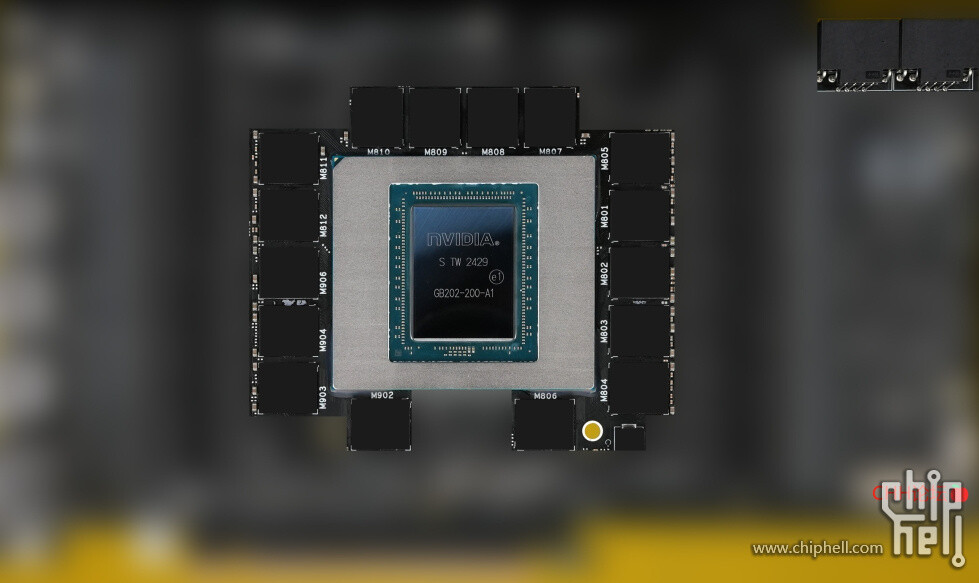
Curious NVIDIA GB202-200-A1 ASIC Spy Shot Hints at RTX TITAN Blackwell

Is NVIDIA reviving the RTX TITAN brand of halo-segment graphics cards with "Blackwell"? A curious-looking GB202-200-A1 spy-shot making rounds on ChilHell hints at the possibility. The upcoming GeForce RTX 5090 is the company's flagship product from the RTX 50-series "Blackwell" generation, although it does not max out the 4 nm "GB202" silicon on which it is based. The RTX 5090 enables 170 out of the 192 SM (streaming multiprocessors) physically present on the "GB202." This leaves NVIDIA with a lot of room to carve out either a halo-segment SKU such as the RTX TITAN Blackwell, or a Pro-Vis (professional visualization) product that also targets the AI research community.

NVIDIA's top Pro-Vis product tended to have more SMs enabled than the top GeForce RTX product, while having lower clock speeds, so its target users have access to more FP64-capable CUDA cores, more Tensor cores, etc. However, over the past two generations, NVIDIA discontinued the practice of giving its RTX GPUs large numbers of FP64 cores that are disabled on GeForce RTX products, to make die-space for the Tensor cores. This hence makes it more likely that a maxed-out "GB202" is the RTX TITAN Blackwell, and not a Pro-Vis product.

MAXSUN Dips Back into NVIDIA GT 730 GPU Pool

Recent MAXSUN activities have been very Intel Arc "Battlemage" B-series GPU-focused—most notably, a leaked design that leverages dual M.2 slots. Earlier today, ITHome reported on the fresh retail release of two sort-of-new MAXSUN graphics cards in China (on JD.com)—MS-GT730 PH 4 GB (¥359/~US$49) and MS-GT730 PH 2 GB (¥329/~US$45). These super low budget offerings signal a dip back into technologies of old: NVIDIA's GK208 "Kepler 2.0" GPU—of 2014 vintage. This is a curious choice, given that Team Green's "Kepler" GPU generation has not received new drivers since the release of R470 (back in 2021), and the last security update arrived with NVIDIA's 473.47 WHQL driver.

ITHome reckons that MAXSUN has simply recycled its existing MS-GT730 Heavy Hammer 4G and MS-GT730 Heavy Hammer 2G card designs for an early 2025 market launch—TechPowerUp's GPU database produces another very similar looking model: the GT 730 Transformers III 2G. The online publication reached out to MAXSUN's JD storefront customer service for comment on the apparent refresh of old products. ITHome discovered that the renamed reissues are a result of demands generated by "internal supply chain management." MAXSUN stated that its production batch have changed, and it: "emphasizes that the performance (of their new models) is consistent with the old version(s)."

Manli Announces Gallardo, Stellar, Polar Fox and Nebula GeForce RTX 50 Series Graphics Cards

Manli announced in a recent press release, which somehow went unnoticed most likely due to the CES 2025 event, that new Gallardo, Stellar, Polar Fox, and Nebula series graphics cards based on the NVIDIA Blackwell series are ready to join the GeForce RTX 50 lineup. While Manli didn't yet provide exact specifications, they showcased a bit more details regarding the design and the Drag Reduction System (DRS) feature that equips its Gallardo RTX 50 series.

The company seems to be a bit secretive at this moment, however, they say that the Drag Reduction System (DRS) has its inspiration in motorsports. Most likely this implies a dedicated design that use the heatsinks and spoilers to direct airflow towards specific areas. Manli Stellar, Polar Fox, and Nebula RTX 50 series are all based on a dual-slot format with triple fans on top. Although the press release mentioned that the new Manli 50 series graphics cards are available, there's no information about the exact lineup or pricing, and currently, the cards are not listed on the company website.

NVIDIA GeForce RTX 5090 And RTX 5080 Likely to Be Extremely Hard to Get at Launch

Recently, we covered a rumor arising from PCGH which stated that the RTX 5090, and perhaps even the RTX 5080, are gearing up to face an extremely stock-limited launch in Germany. Now, it appears that customers in North America will likely face very similar circumstances, if the claims made by tipster Moore's Law is Dead's sources are taken to be true. MLID spoke with several sources, including distributors and AIBs, all of whom had the same thing to say - it is going be quite hard to snag an RTX 5090 or RTX 5080 at launch.

One of the distributors that MLID apparently spoke with, went as far as to comment that they simply won't be having any RTX 5090s at all in the first month of launch. Further, while they received almost 200 RTX 4080s during the previous launch season, they only expect to get 20 units of the RTX 5080 this time around. As for the RTX 5090, they do not foresee inventory before late Q1, or even Q2 of this year. A second source, who claimed to be from an AIB partner, stated that while they will have RTX 5080s ready at launch, they are "only a fraction" of the RTX 4080s they had last time. Moreover, the number of RTX 5090s they claim to have matches that of the RTX 3090s they had, which, for those who don't remember, suffered from severe supply shortages at launch.

NVIDIA Fixes High-Risk GPU Driver Vulnerabilities That Allow Code Execution and Data Theft

NVIDIA has released urgent security patches addressing eight vulnerabilities in its GPU drivers and virtual GPU software that affect both Windows and Linux systems. The January 16 update targets multiple security flaws that could enable attackers with local access to execute malicious code, steal data, or crash affected systems. Two high-severity vulnerabilities stand out among the patches. The first (CVE-2024-0150) involves a buffer overflow in the GPU display driver that could lead to system compromise through data tampering and information disclosure. The second critical issue (CVE-2024-0146) affects the virtual GPU Manager, where a compromised guest system could trigger memory corruption, potentially leading to code execution and system takeover. For Windows systems, users must update to version 553.62 (R550 branch) or 539.19 (R535 branch). Linux users need to install version 550.144.03 or 535.230.02, depending on their driver branch.

The updates cover NVIDIA's RTX, Quadro, NVS, and Tesla product lines. Enterprise environments using NVIDIA's virtualization technology face additional risks. One vulnerability (CVE-2024-53881) allows guest systems to launch interrupt storms against host machines, potentially causing system-wide outages. To patch these security holes, virtual GPU software users must update to version 17.5 (550.144.02) or 16.9 (535.230.02). The vulnerabilities specifically target systems where attackers have local access, which means remote exploitation is unlikely. However, in virtualized environments where multiple users share GPU resources, these flaws pose a significant security risk. System administrators can download the security updates from NVIDIA's Driver Downloads page, while enterprise vGPU customers should obtain patches through the NVIDIA Licensing Portal. NVIDIA recommends immediate installation of these updates across all affected systems.

NVIDIA's Frame Generation Technology Could Come to GeForce RTX 30 Series

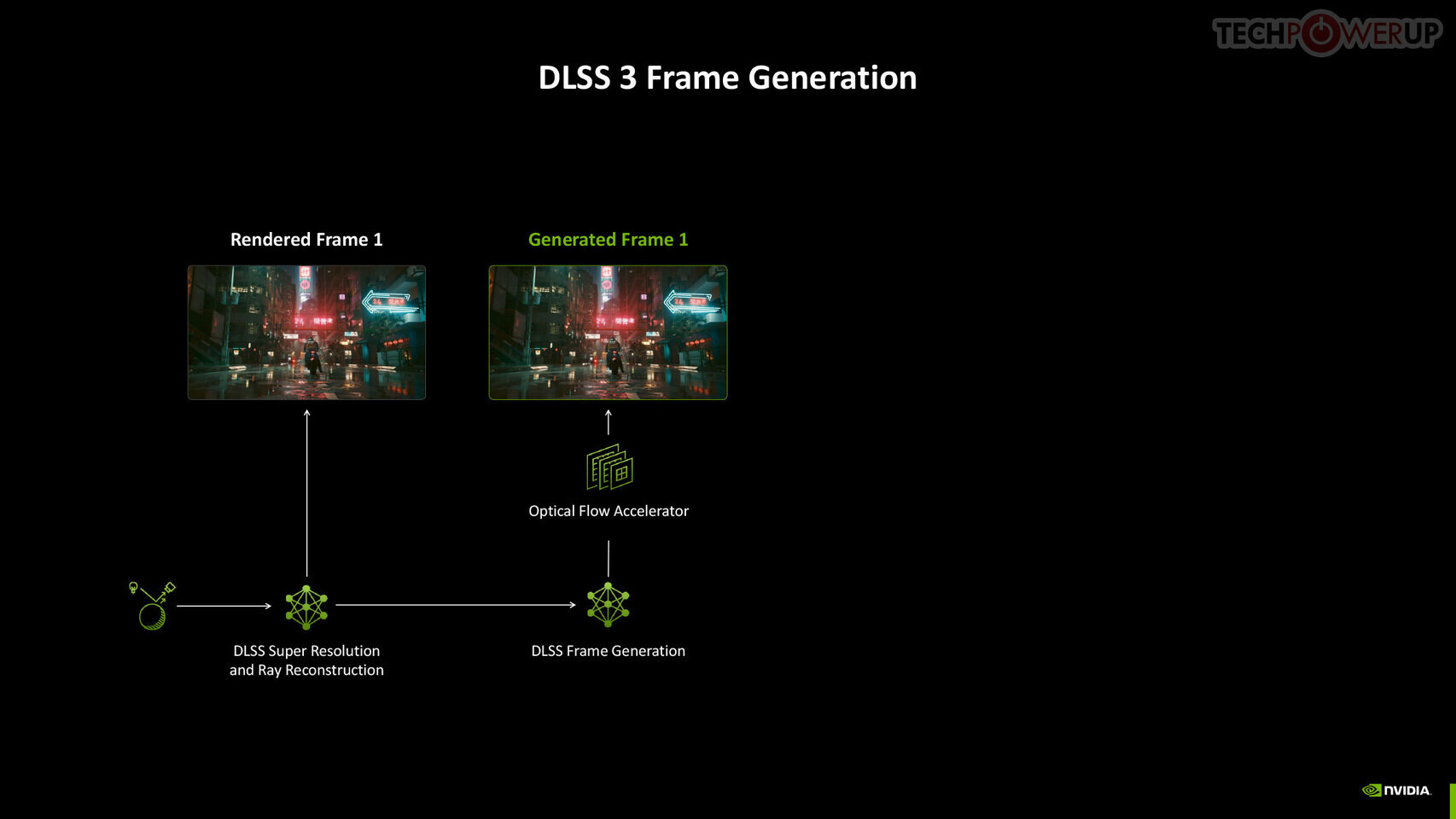
NVIDIA's deep learning super sampling (DLSS) has undergone many iterations to the current version 4 with the transformer model, delivering new technologies such as DLSS Multi Frame Generation, predicting multiple frames in advance to generate the upcoming frame, and increasing the frame output per second. However, not every NVIDIA GPU generation supports these more modern DLSS technologies. In an interview with Digital Foundry, Bryan Catanzaro, VP of Applied Deep Learning Research at NVIDIA, commented on trickling down some DLSS technologies to older GPU generations. For example, DLSS Ray Reconstruction, Super Resolution, and Deep Learning Anti-Aliasing (DLAA) work on NVIDIA GeForce RTX 20/30/40/50 series GPUs. However, the RTX 40 series carries an exclusive DLSS Frame Generation, and the newest RTX 50 series carries the DLSS Multi Frame Generation as an exclusive feature.

However, there is hope for older hardware. "I think this is primarily a question of optimization and also engineering and then the ultimate user experience. We're launching this Frame Generation, the best Multi Frame Generation technology, with the 50 Series, and we'll see what we're able to squeeze out of older hardware in the future." So, frame generation will most likely arrive on the older RTX 30 series, with even a slight possibility of the RTX 20 series getting the DLSS frame generation. Due to compute budget constraints, the multi-frame generation will most likely stay an RTX 50 series exclusive as it has more raw computing power to handle this technology.

Digital Foundry Believes that Nintendo Switch 2's Tegra T239 SoC is 8 nm Part

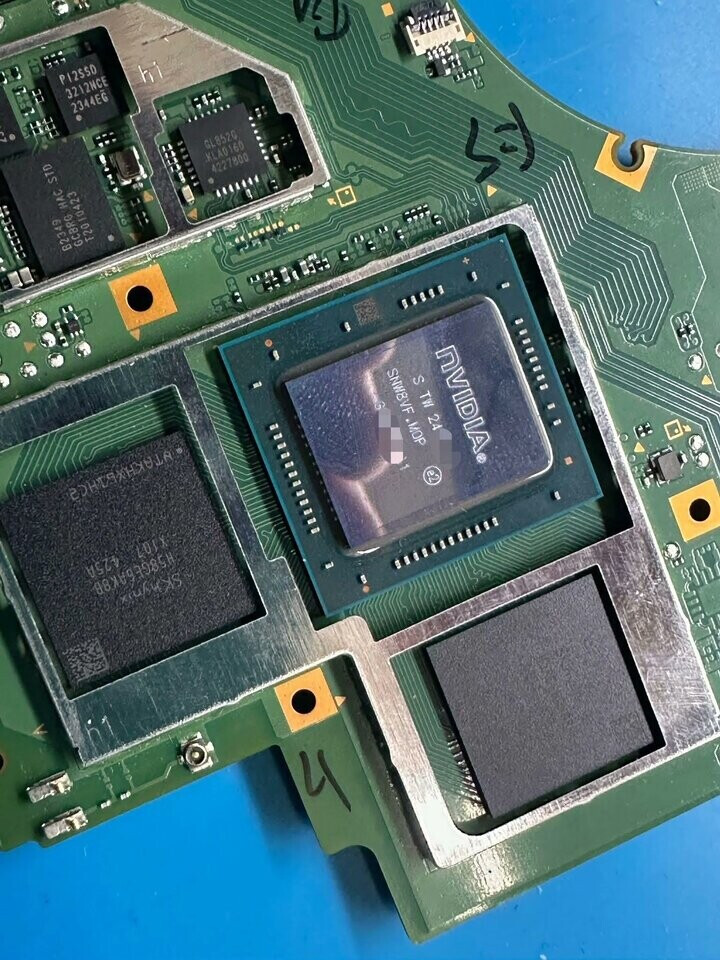
Yesterday, Nintendo officially unveiled its Switch 2 handheld via a first look video presentation. Featured content did not come as a surprise to many gaming enthusiasts—a steady flow of leaks have already revealed outer and inner workings. Earlier today, the Digital Foundry team has offered their collective opinion on Nintendo's formal announcement. Their roundtable discussion first focused on the Switch 2's physical appearance—mainly a showcased physical increase in size, when lined up against the preceding (standard) model. Conversation quickly moved onto technical matters—a topic that Nintendo normally avoids discussing. The video presentation included in-game footage of a next-gen Mario Kart title—Oliver Mackenzie (a contributing DF video producer/writer) was not impressed by this short demo's visual fidelity. He noted an absence of DLSS image enhancement—surprising, given that the rumored NVIDIA Tegra T239 SoC is capable of deploying this graphics technology.

John, Rich and Oliver then moved onto discussing recently leaked clock speeds and performance figures (in handheld and docked modes)—overall, they reckon that these numbers seem fitting for a hybrid system. They noticed that the handheld GPU clock was lower than expected—based on their judgement of the Switch 2's fairly capable integrated cooling solution. In the past, Digital Foundry theorized that the NVIDIA-designed Tegra T239 will be an 8 nanometer part—rumored to be built on Samsung 8 nm DUV foundry node. Newer gaming community-generated proposals have suggested a shift to Samsung's 5 nm EUV node—mostly based on the chipset's physical footprint. In sharp contrast, the Digital Foundry guys are sticking with their 8 nm theory. Richard Leadbetter (DF's founder) has previously attempted to simulate Switch 2-esque performance on readily available Ampere-based hardware—he could revisit and perform tests on a laptop that sports Team Green's GeForce RTX 2050 mobile GPU. He believes that the leaked CPU and GPU clocks (across both modes) present plausible evidence of 8 nm-level performance, cross-referenced with his team's past analysis of the system's PCB. Debates will inevitably rage on, but Rich insists that the end result will be an example of "Occam's razor." The Tegra T239's four (long alleged) Cortex A78 cores appeared to be running at a higher frequency in portable mode than in docked—suggesting some unknown factors; perhaps a switching on or off of cores (situation dependent). Leadbetter and Co. will be looking forward to getting a proper hands-on experience at Nintendo's April to June launch events.

NVIDIA RTX 5090 Geekbench Leak: OpenCL and Vulkan Tests Reveal True Performance Uplifts

The RTX 50-series fever continues to rage on, with independent reviews for the RTX 5080 and RTX 5090 dropping towards the end of this month. That does not stop benchmarks from leaking out, unsurprisingly, and a recent lineup of Geekbench listings have revealed the raw performance uplifts that can be expected from NVIDIA's next generation GeForce flagship. A sizeable chunk of the tech community was certainly rather disappointed with NVIDIA's reliance on AI-powered frame generation for much of the claimed improvements in gaming. Now, it appears we can finally figure out how much raw improvement NVIDIA was able to squeeze out with consumer Blackwell, and the numbers, for the most part, appear decent enough.

Starting off with the OpenCL tests, the highest score that we have seen so far from the RTX 5090 puts it around 367,000 points, which marks an acceptable jump from the RTX 4090, which manages around 317,000 points according to Geekbench's official average data. Of course, there are a plethora of cards that may easily exceed the average scores, which must be kept in mind. That said, we are not aware of the details of the RTX 5090 that was tested, so pitting it against average scores does seem fair. Moving to Vulkan, the performance uplift is much more satisfying, with the RTX 5090 managing a minimum of 331,000 points and a maximum of around 360,000 points, compared to the RTX 4090's 262,000 - a sizeable 37% improvement at the highest end. Once again, we are comparing the best results posted so far against last year's averages, so expect slightly more modest gains in the real world. Once more reviews start appearing after the embargo lifts, the improvement figures should become much more reliable.

NVIDIA Reveals Secret Weapon Behind DLSS Evolution: Dedicated Supercomputer Running for Six Years

At the RTX "Blackwell" Editor's Day during CES 2025, NVIDIA pulled back the curtain on one of its most powerful tools: a dedicated supercomputer that has been continuously improving DLSS (Deep Learning Super Sampling) for the past six years. Brian Catanzaro, NVIDIA's VP of applied deep learning research, disclosed that thousands of the company's latest GPUs have been working round-the-clock, analyzing and perfecting the technology that has revolutionized gaming graphics. "We have a big supercomputer at NVIDIA that is running 24/7, 365 days a year improving DLSS," Catanzaro explained during his presentation on DLSS 4. The supercomputer's primary task involves analyzing failures in DLSS performance, such as ghosting, flickering, or blurriness across hundreds of games. When issues are identified, the system augments its training data sets with new examples of optimal graphics and challenging scenarios that DLSS needs to address.

DLSS 4 is the first move from convolutional neural networks to a transformer model that runs locally on client PCs. The continuous learning process has been crucial in refining the technology, with the dedicated supercomputer serving as the backbone of this evolution. The scale of resources allocated to DLSS development is massive, as the entire pipeline for a self-improving DLSS model must consist of not only thousands but tens of thousands of GPUs. Of course, a company making 100,000 GPU data centers (xAI's Colossus) must save some for itself and is proactively using it to improve its software stack. NVIDIA's CEO Jensen Huang famously said that DLSS can predict the future. Of course, these statements are to be tested when the Blackwell series launches. However, the approach of using massive data centers to improve DLSS is quite interesting, and with each new GPU generation NVIDIA release, the process is getting significantly sped up.

NVIDIA GeForce RTX 50 Series "Blackwell" Features Similar L1/L2 Cache Architecture to RTX 40 Series

NVIDIA's upcoming RTX 5090 and 5080 graphics cards are maintaining similar L1 cache architectures as their predecessors while introducing marginal improvements to L2 cache capacity, according to recent specifications reported by HardwareLuxx. The flagship RTX 5090 maintains the same 128 KB L1 cache per SM as the RTX 4090 but achieves a higher total L1 cache of 21.7 MB thanks to its increased SM count of 170. This represents a notable improvement over the RTX 4090's 16.3 MB total L1 cache, which features 128 SMs. In terms of L2 cache, the RTX 5090 sees a 33.3% increase over its predecessor, boasting 96 MB compared to the RTX 4090's 72 MB, with SM count going up by 32.8%, so there is a slight difference.
However, this improvement is relatively modest compared to the previous generation's leap, where the RTX 4090 featured twelve times more L2 cache than the RTX 3090. The RTX 5080 shows more conservative improvements, with its L1 cache capacity only marginally exceeding its predecessor by 1 MB (10.7 MB vs 9.7 MB). Its L2 cache maintains parity at 64 MB, matching the RTX 4080 and 4080 Super. To compensate for these incremental cache improvements, NVIDIA is implementing faster GDDR7 memory across the RTX 50 series. Most models will feature 28 Gbps modules, with the RTX 5080 receiving special treatment with 30 Gbps memory. Additionally, some models are getting wider memory buses, with the RTX 5090 featuring a 512-bit bus and the RTX 5070 Ti upgrading to a 256-bit interface.

NVIDIA NeMo AI Guardrails Upgraded with Latest NIM Microservices

AI agents are poised to transform productivity for the world's billion knowledge workers with "knowledge robots" that can accomplish a variety of tasks. To develop AI agents, enterprises need to address critical concerns like trust, safety, security and compliance. New NVIDIA NIM microservices for AI guardrails—part of the NVIDIA NeMo Guardrails collection of software tools—are portable, optimized inference microservices that help companies improve the safety, precision and scalability of their generative AI applications.

Central to the orchestration of the microservices is NeMo Guardrails, part of the NVIDIA NeMo platform for curating, customizing and guardrailing AI. NeMo Guardrails helps developers integrate and manage AI guardrails in large language model (LLM) applications. Industry leaders Amdocs, Cerence AI and Lowe's are among those using NeMo Guardrails to safeguard AI applications. Developers can use the NIM microservices to build more secure, trustworthy AI agents that provide safe, appropriate responses within context-specific guidelines and are bolstered against jailbreak attempts. Deployed in customer service across industries like automotive, finance, healthcare, manufacturing and retail, the agents can boost customer satisfaction and trust.

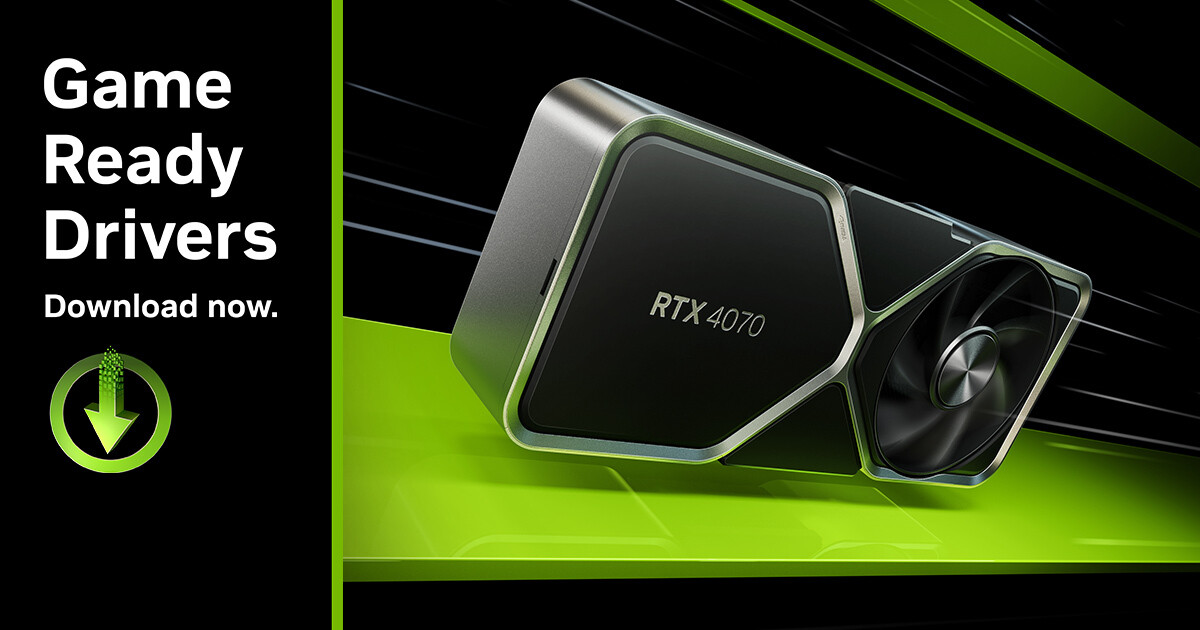
NVIDIA GeForce RTX 4070 End of January Stock Depletion Predicted

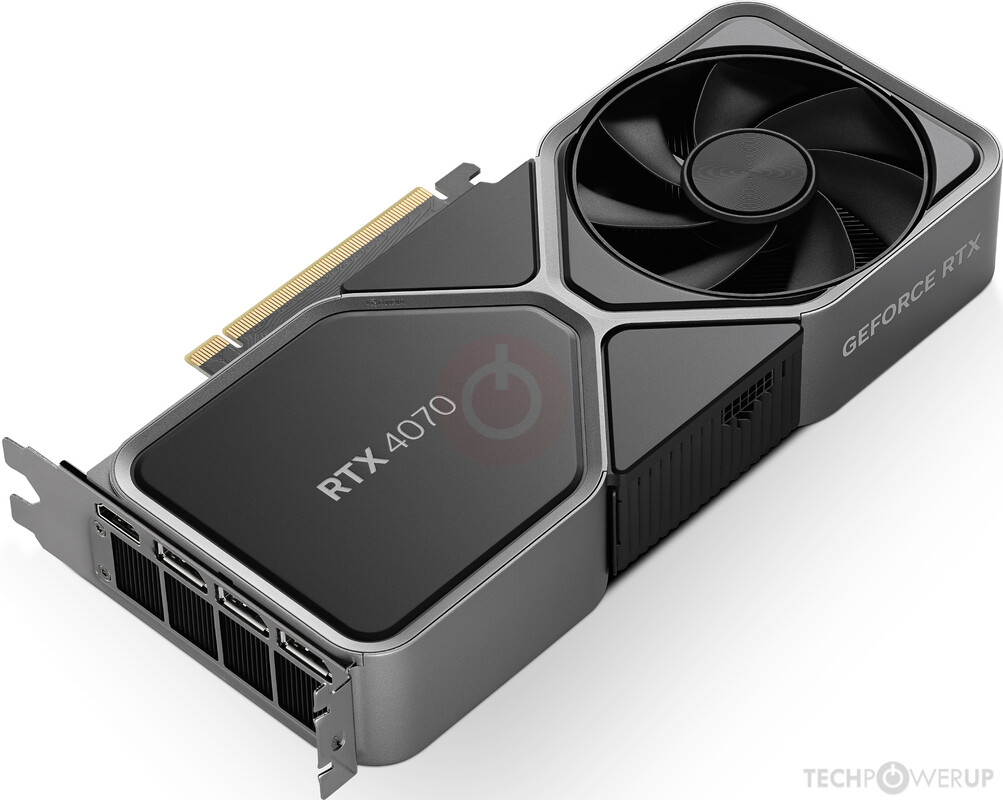
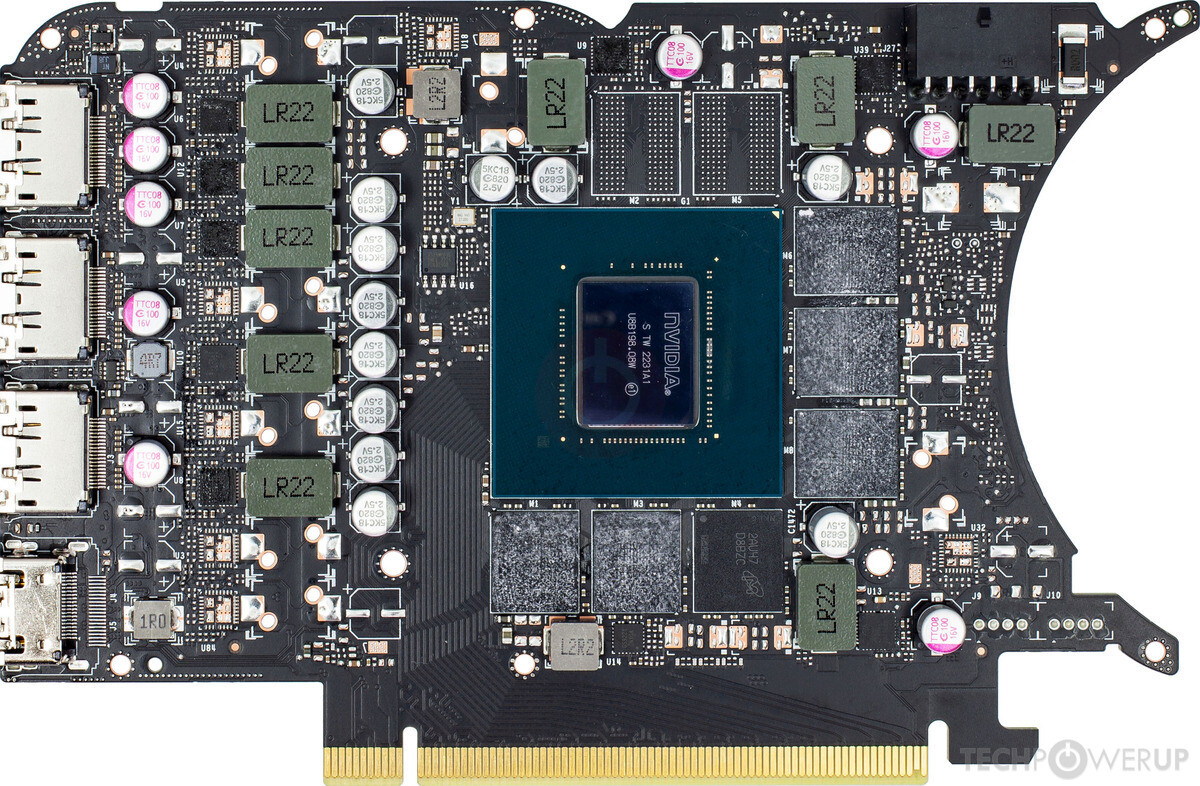
Supply chain insiders reckon that stock of NVIDIA's "Ada Lovelace" generation GeForce RTX 4070 GPU will be depleted by the end of this month. This revelation emerges on the cusp of Team Green's GeForce RTX 5000 series of "Blackwell" GPUs heading to market (on January 30). The popular Chinese hardware forum—Board Channels—is a reliable source of product "supply and demand" information. Industry insiders believe that Team Green's mid-tier SKU will be completely sold—by the closing of this month—across several unnamed regional markets. NVIDIA's incoming GeForce RTX 5070 SKU (baseline $549 MSRP) appears to be the natural alternative, given that GeForce RTX 4070 SUPER offerings are priced within the range of $550 to $600—according to market research performed by VideoCardz.

A board member disclosed details and prophesized changes up and down NVIDIA's current-gen product stack: "The inventory for NVIDIA RTX 4070 and higher models is expected to be completely cleared by January. Starting from February, major AIC brands are anticipated to have stock remaining only for the RTX 4060 Ti and RTX 4060 series, which still need to be digested. However, since NVIDIA's Q1 begins in February, these two models will essentially enter the final stock phase." VideoCardz anticipates a March launch window for the GeForce RTX 5060 series—this could be well-timed given circumstances surrounding Team Green's (alleged) limiting of GeForce RTX 4060 Ti GPU supplies and the insider's predicted cessation of RTX 4060 (non-Ti) production.

GeForce NOW Update Grants Mixed Reality Headset Support

Time to suit up, members. The multiverse is about to get a whole lot cloudier as GeForce NOW opens a portal to the first season of hit game Marvel Rivals from NetEase Games. Members can now game in a new dimension with expanded support for virtual- and mixed-reality devices. This week's GeForce NOW app update 2.0.70 begins rolling out compatibility for Apple Vision Pro spatial computers, Meta Quest 3and 3S, and Pico 4 and 4 Ultra devices. Plus, no GFN Thursday is complete without new games. Get ready for seven new titles joining the cloud this week, including multiplayer online battle arena game SMITE 2.

Invisible No More
Eternal night falls for Marvel Rivals, the superhero, team-based player vs. player shooter that lets players assemble an ever-evolving all-star squad of Super Heroes and Super Villains battling with unique powers across a dynamic lineup of destructible maps from the Marvel Multiverse. The Fantastic Four will be playable in season one of the game. For Eternal Night Falls, Invisible Woman and Mister Fantastic will be released in the first half of the season, followed by Human Torch and The Thing in the second. Season one will also feature three new maps, special events and an all-new Doom Match game mode.
Return to Keyword Browsing
Nov 27th, 2026 19:01 CST change timezone

New Forum Posts

Popular Reviews

TPU on YouTube

Controversial News Posts