News Posts matching #RTX 5060

Return to Keyword Browsing

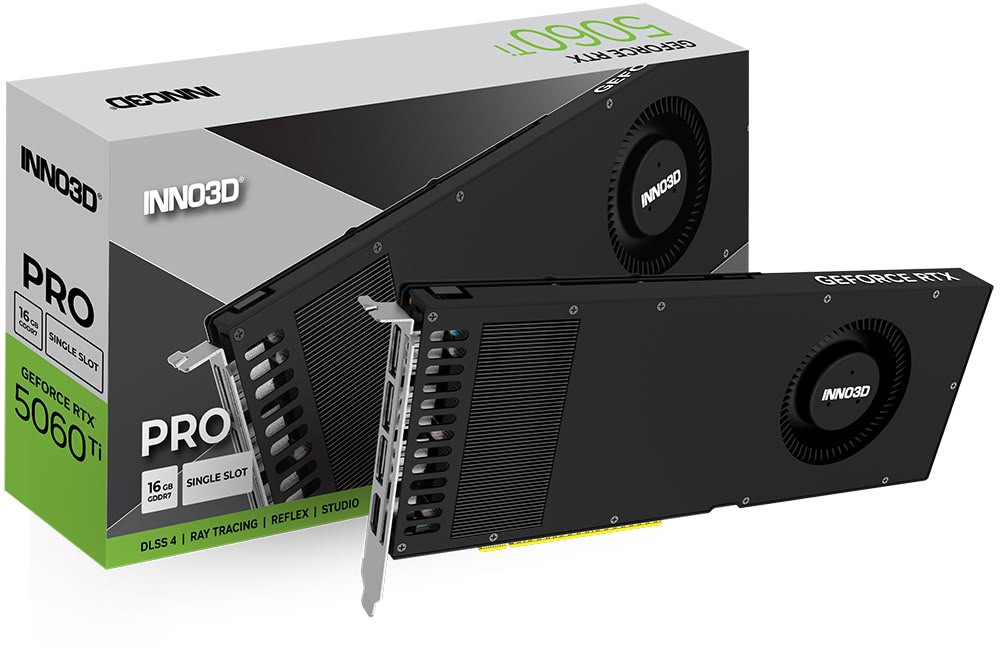
INNO3D's Single-Slot RTX 5060 Ti PRO Gets Listed in Japan for About $1,060

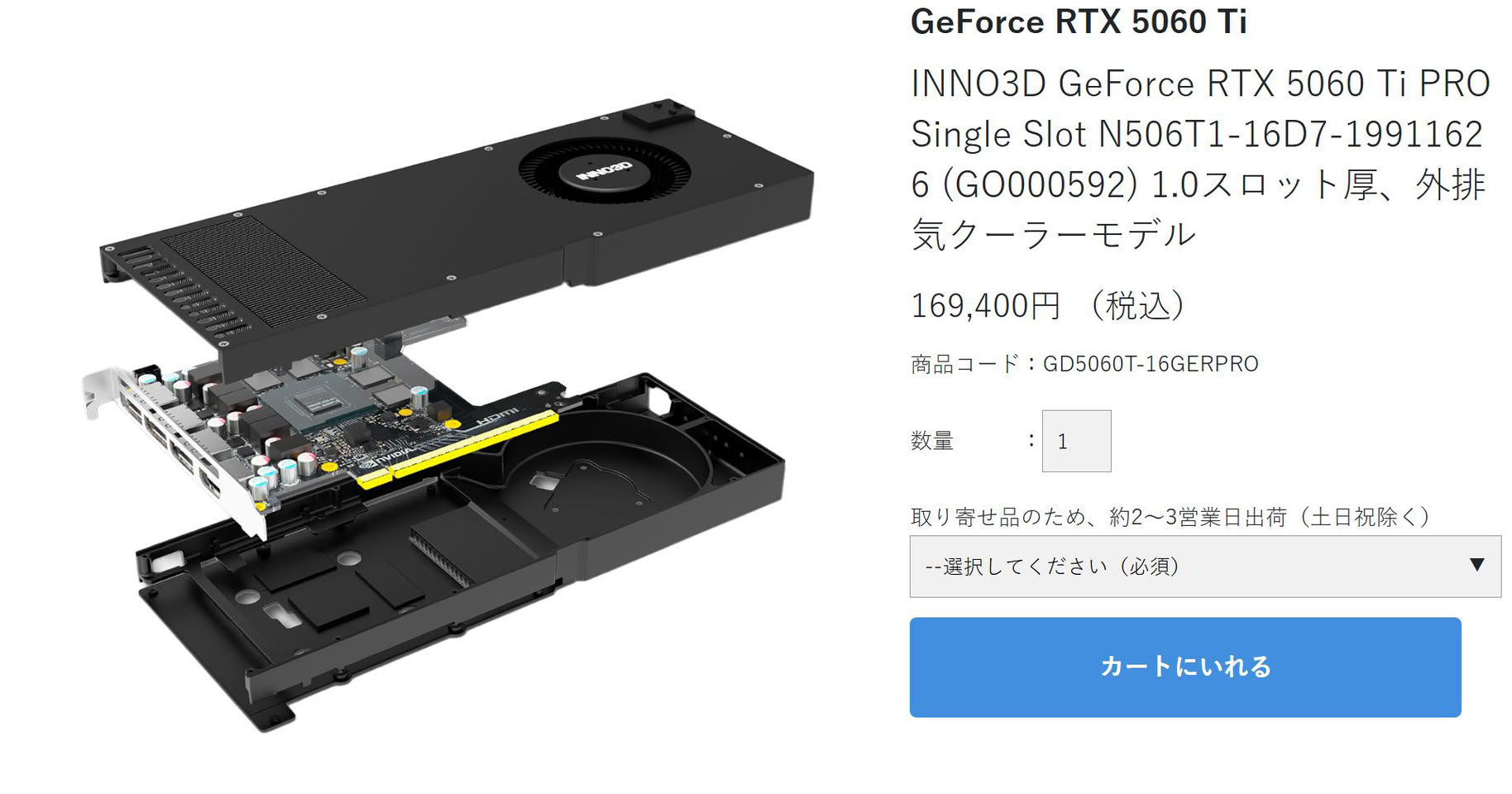
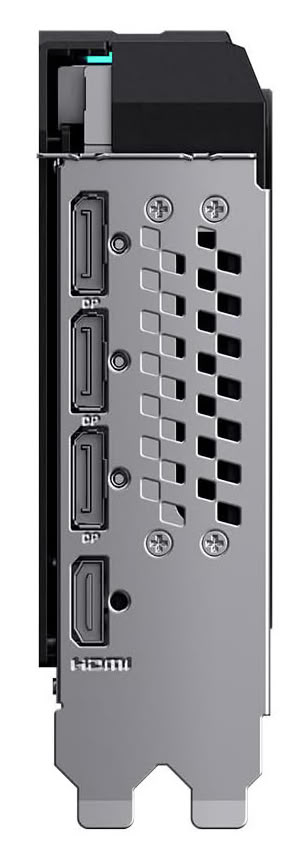
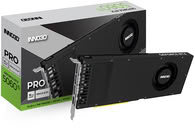
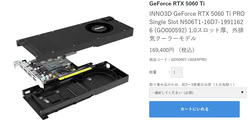
Single-slot graphics cards are quite a rare sight nowadays, especially for the newest generations from NVIDIA and AMD. INNO3D's RTX 5060 Ti PRO is seemingly a great option for those buyers who want a single-slot GPU for their compact builds. However, it looks like Japanese buyers will have to pay a hefty 169,400 yen (roughly $1,060) for this particular model. That information comes from an ELSA ONLINE listing, which is the web store of INNO3D's Japanese partner, ELSA Japan. INNO3D put up the product page for this card around 3 months ago, but the price was not known at that time. For comparison, ELSA's dual-slot RTX 5060 Ti 16 GB cards cost around 20,000 yen ($125) less. What's more interesting is that even some RTX 5070 models in Japan cost less than the single-slot INNO3D variant, at least according to October data.

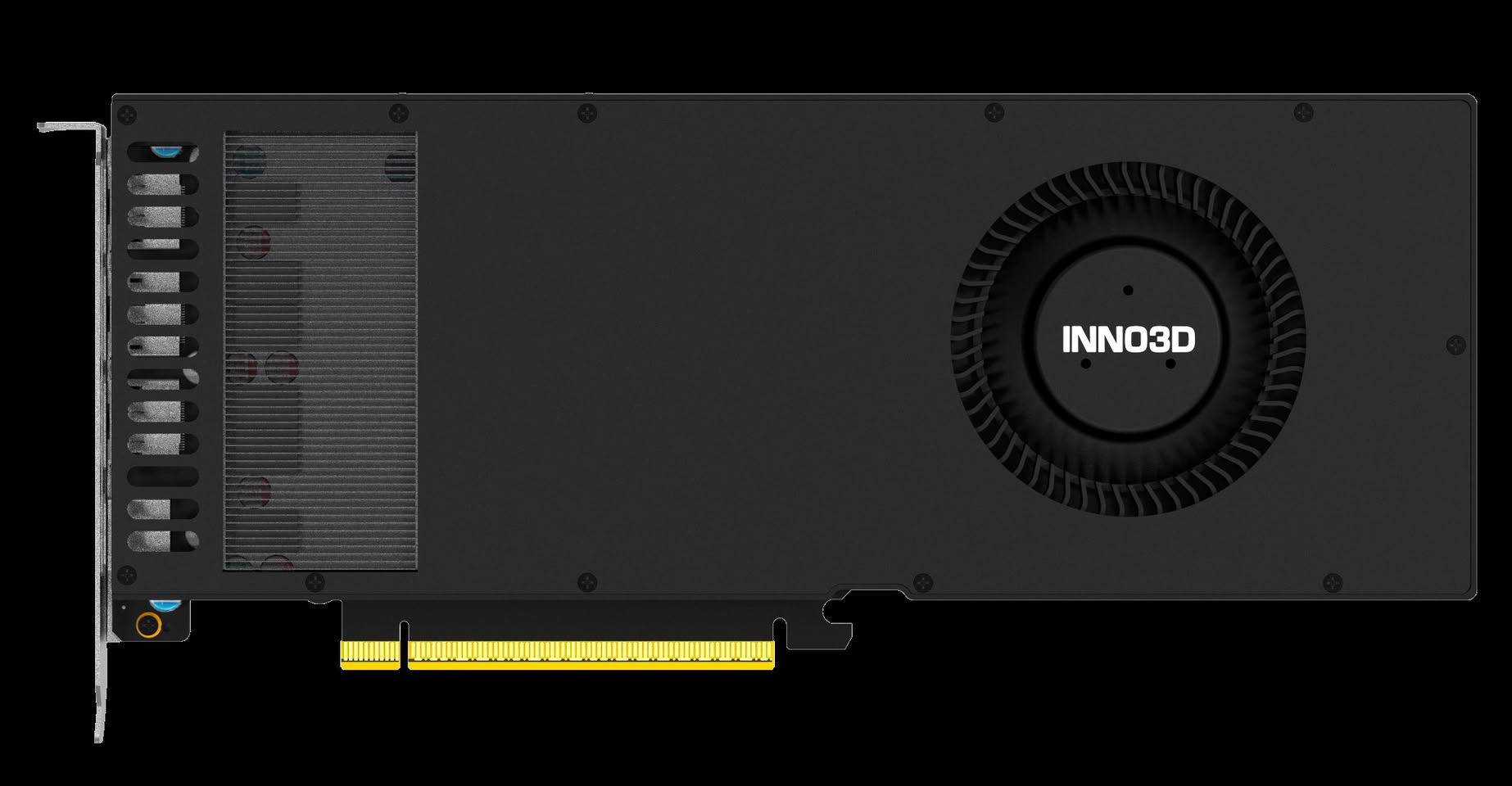
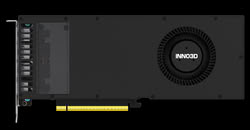
So what do buyers get for spending a cool $1,060 for a single-slot RTX 5060 Ti? The shroud is just 20 mm thick, and inside is a stock RTX 5060 Ti with 4,608 CUDA cores, a 2,572 MHz boost clock, and 16 GB of GDDR7 VRAM on a 128-bit bus. There's only a single 8-pin connector, and power is rated at 180 W. As for thermals, a vapor chamber and blower fan push the heat out through the bracket. The dimensions are 265 x 111 x 20 mm, so it still needs a full-height slot. This particular variant looks like it's aimed at multi-GPU workstations, but it can also be useful for small form factor builders. INNO3D has done some one-slot cards before, such as the RTX 5090 and RTX 5080 Frostbite Pro, but those relied on Alphacool water blocks instead.
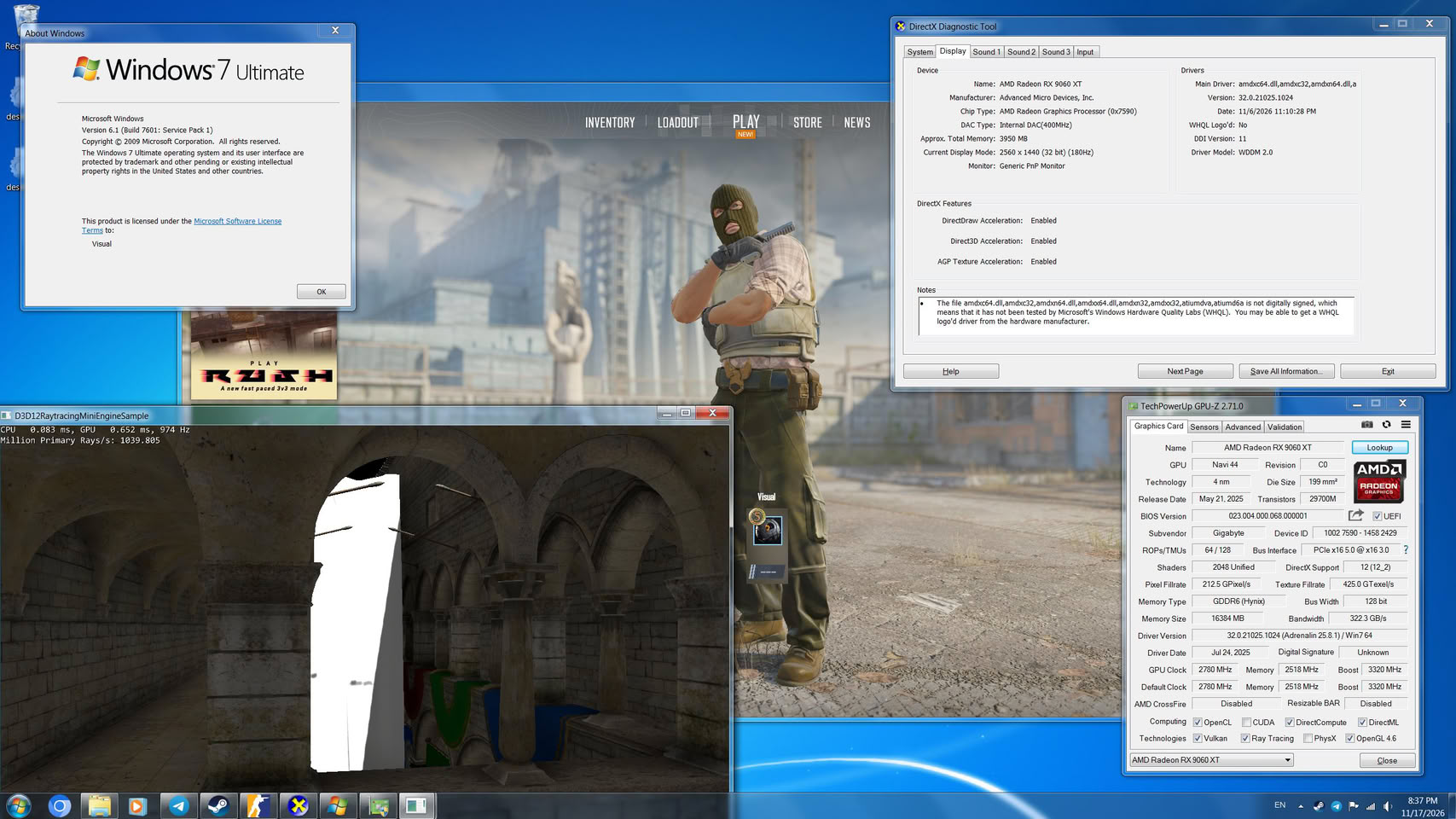
Windows 7 Gets Unofficial DirectX 12 Support for Modern GPUs

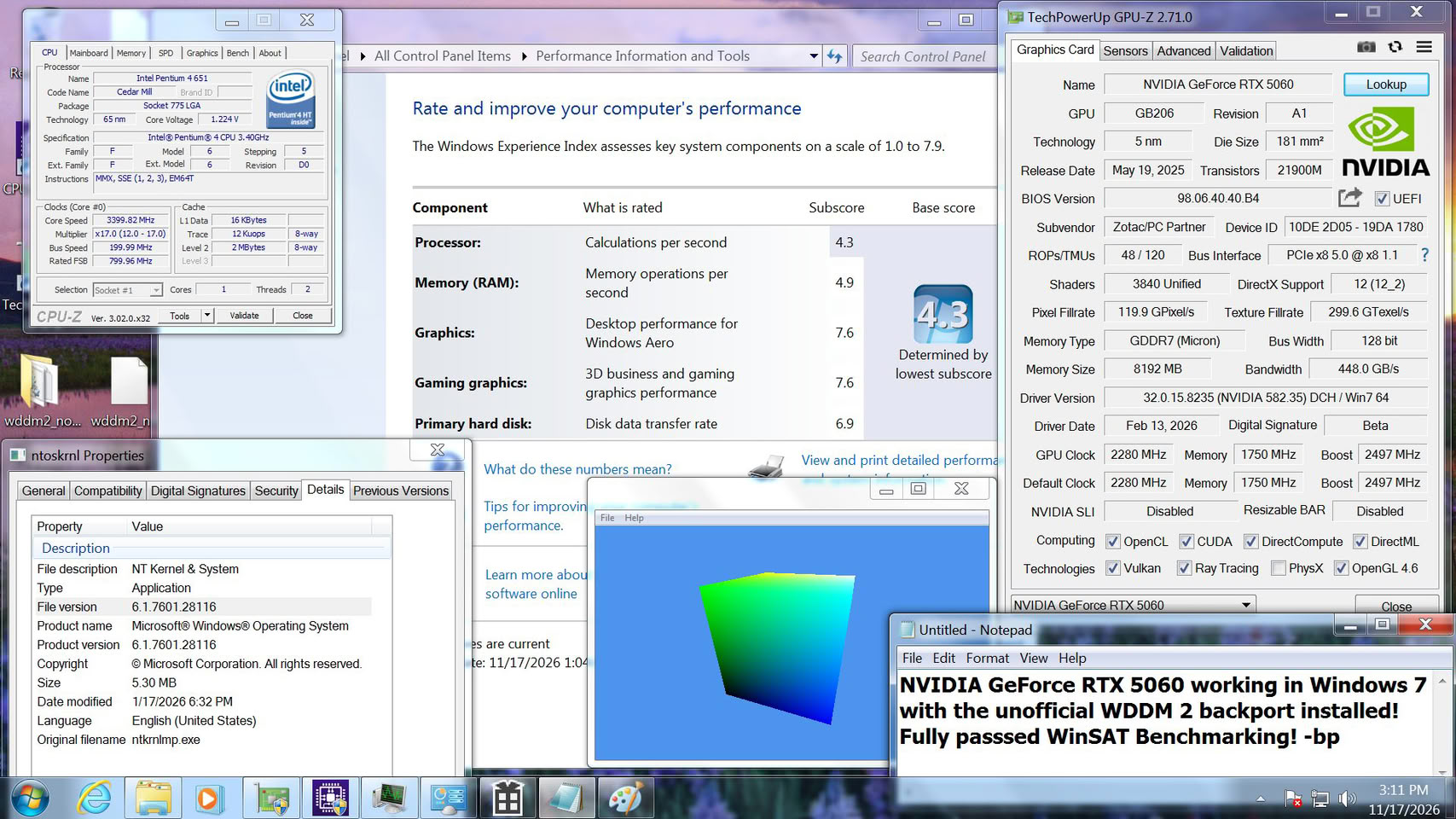
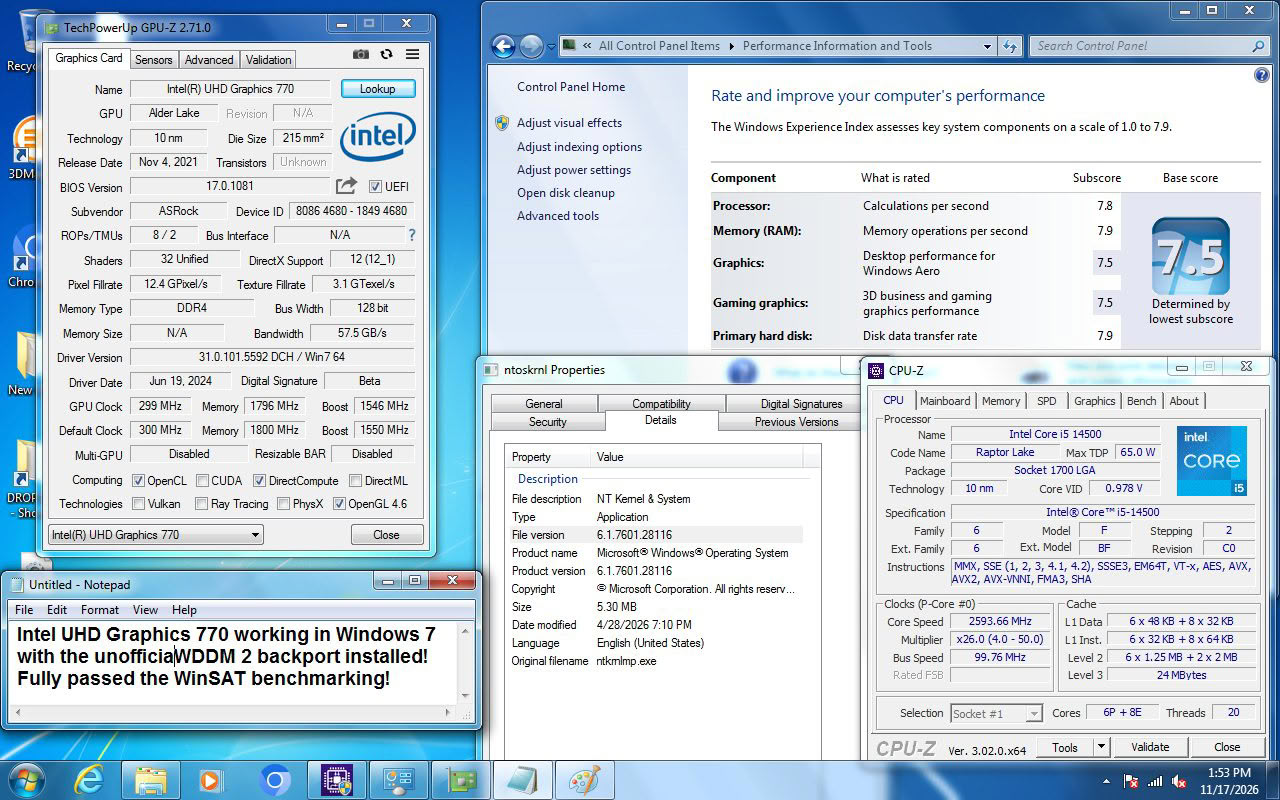
Windows 7 was a beloved operating system for many, and if you're still running a machine with that OS, this release might be for you. Three Windows 7 enthusiasts have managed to get current-generation GPUs and DirectX 12 running on Microsoft's 17-year-old OS. Bob Pony shared the project on X, called WDDM2Win7, an unofficial backport of the Windows Display Driver Model (WDDM) 2. The screenshots show Intel UHD Graphics 770, an NVIDIA GeForce RTX 5060, and an AMD Radeon RX 9060 XT, all detected in TechPowerUp's GPU-Z and running in Windows 7. According to the developer, GeForce RTX 40-series and 50-series cards, as well as Radeon RX 7000 and RX 9000 series cards, work. Intel UHD and Xe graphics are also supported, and DirectX 12 works as well.

Windows 7 originally shipped with WDDM 1.1, while WDDM 2.0 arrived alongside Windows 10 in 2015, bringing DirectX 12 along with it. Microsoft then brought DirectX 12 to Windows 7 in 2019, though only as a user-mode runtime. Individual games like World of Warcraft had to ship it themselves, which limited compatibility. The developers behind this project also backported the Steam client beta to Windows 7 last December after Valve dropped support for the OS in early 2024. As for WDDM2Win7, there is still plenty of testing to be done, but so far there are screenshots showing various GPUs being detected and some DX12 games working. Windows 7 stopped getting free security updates in January 2020, so if you have to try this, make sure it is on a secondary or offline machine.

Gigabyte Debuts the Completed Anime-themed AORUS ARI Series with Co-branded DDR5 Memory and Chassis

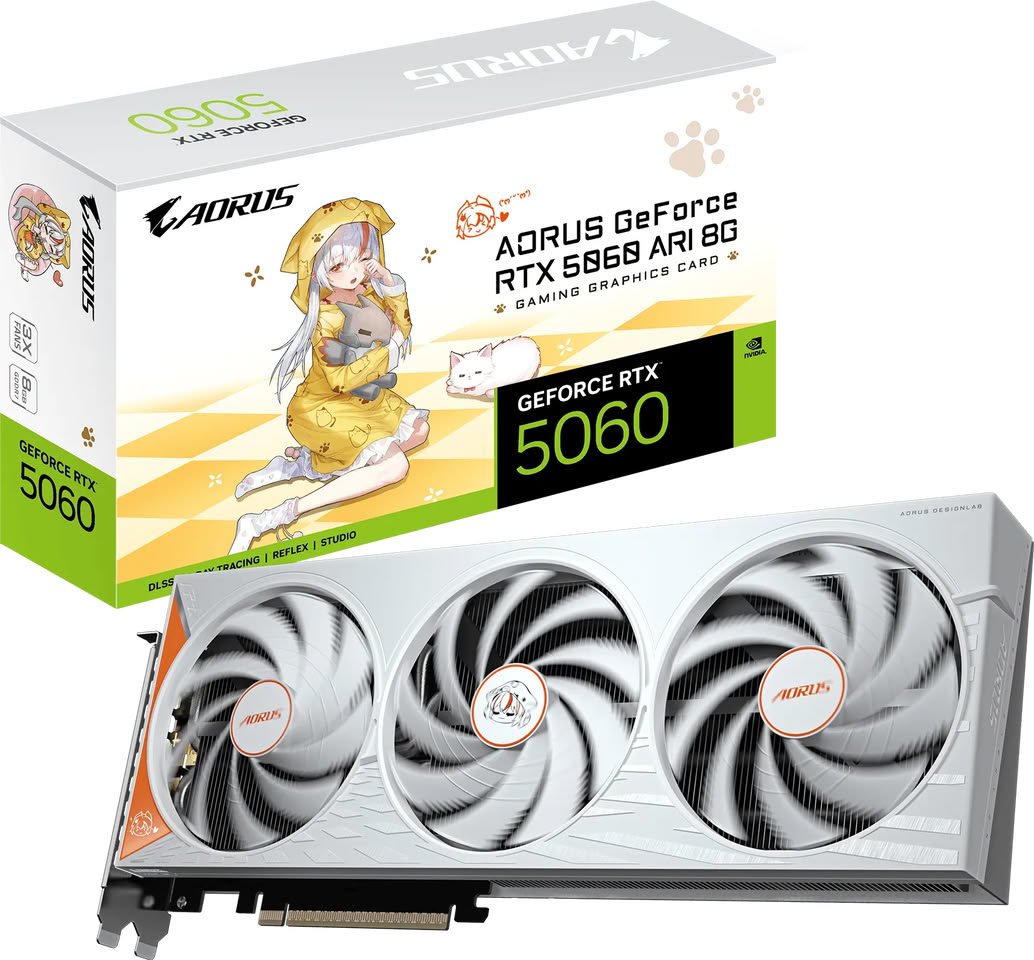
Gigabyte, the world's leading technology brand, introduced Ari, an ACG character from AORUS' vast universe, AORUSVERSE. As the tech guardian angel, Ari embodies performance, creativity, and gaming spirit, bringing gaming performance and anime-inspired aesthetics together. Inspired by the character, Gigabyte developed the AORUS ARI Series, enabling gamers and PC DIY enthusiasts to express their personal style through customized PC builds.

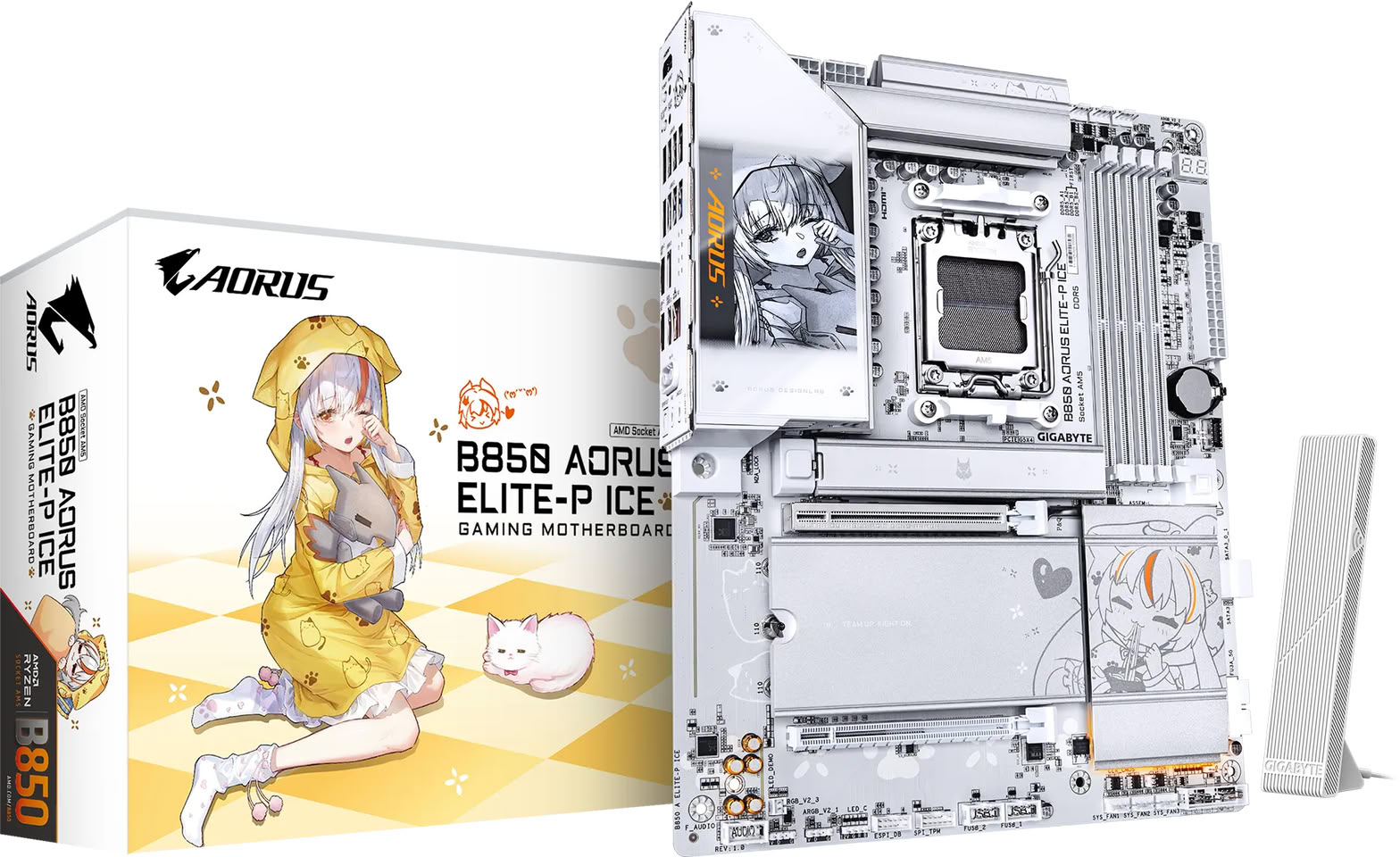
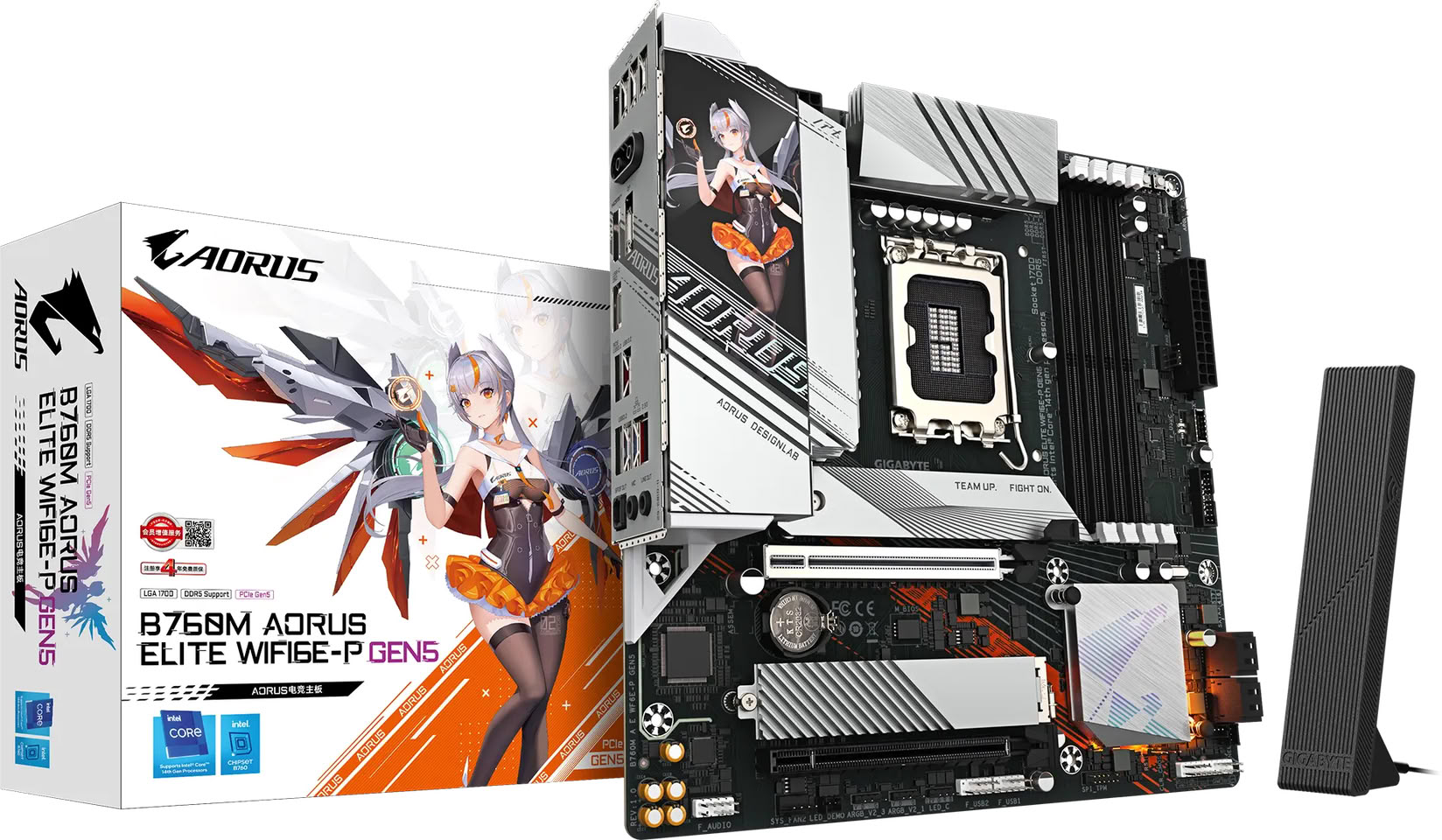
Building on this concept, the series made its debut with Gigabyte's performance-driven motherboards, followed by graphics cards featuring ARI-themed design. The B850 AORUS ELITE-P ICE and B760M AORUS ELITE WIFI6E-P GEN5 motherboards deliver outstanding DDR5 compatibility, supporting memory speeds of up to 8200 MT/s and 7800 MT/s, respectively. Gigabyte's EZ-DIY innovations further simplify component installation and disassembly, making PC building more accessible. Complementing the motherboards, the AORUS GeForce RTX 5060 ARI 8G graphics card features the WINDFORCE cooling system with a patented Hawk fan design that increases air pressure by up to 53.6% and airflow volume by up to 12.5% while reducing resistance and noise. Server-grade thermal conductive gel further enhances heat transfer and long-term reliability.

Intel Core Ultra 7 260K Arrives Without an Announcement, Limited to Two Prebuilt Desktops

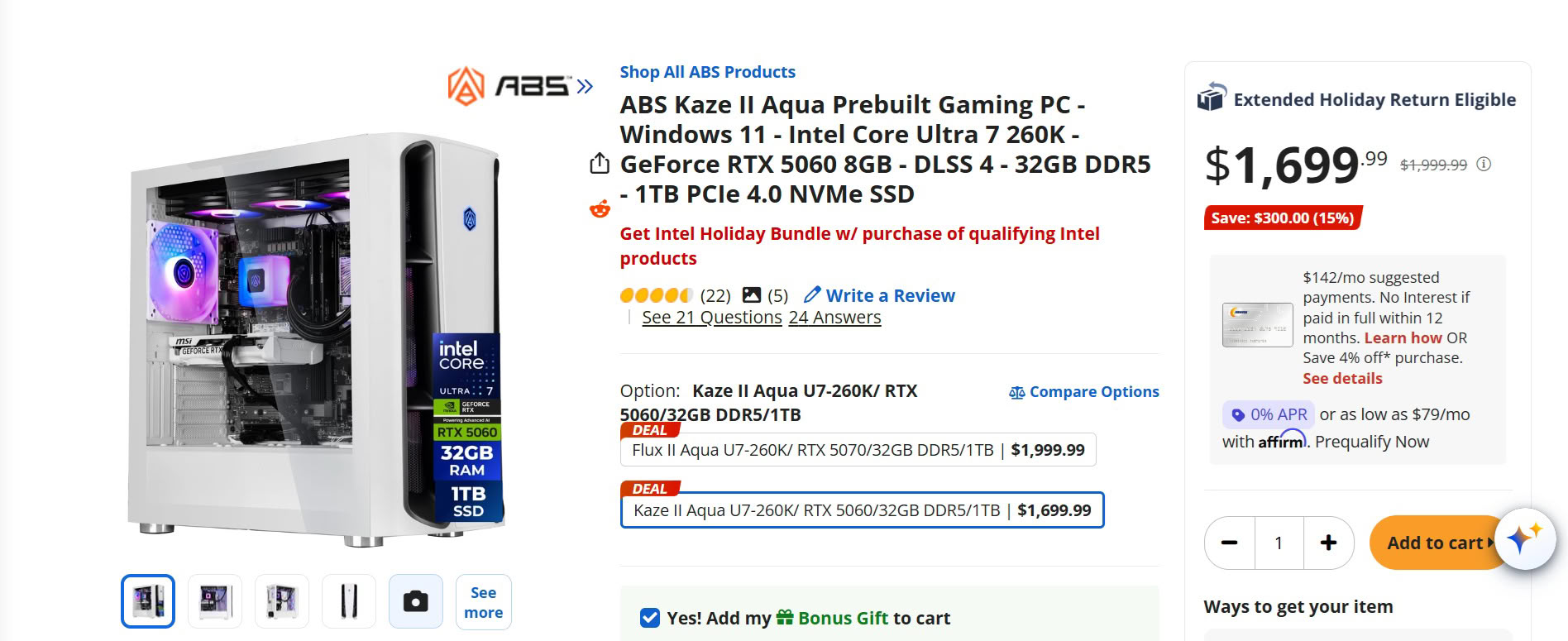
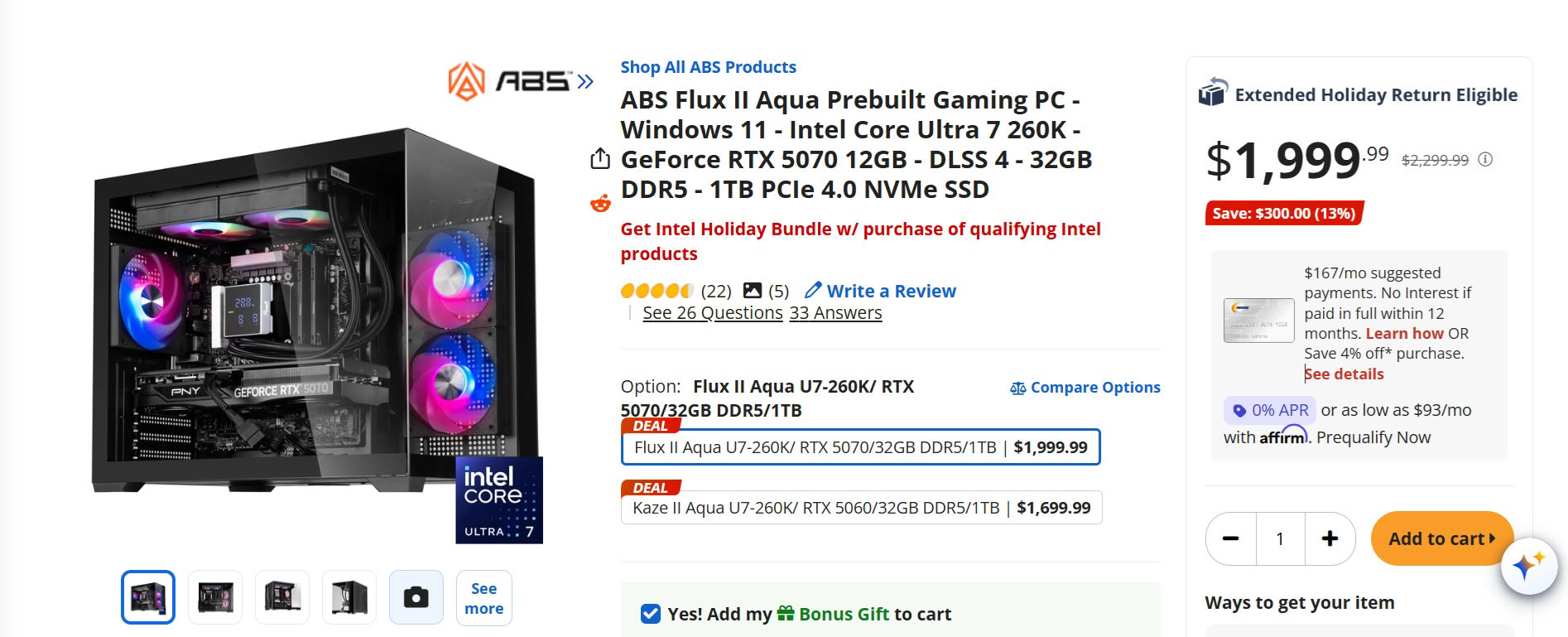
A new unannounced Intel CPU, the Core Ultra 7 260K, is now on sale, though only inside two of Newegg's in-house ABS gaming desktops. The Kaze II Aqua pairs it with an RTX 5060 for $1,699.99, while the Flux II Aqua steps up to an RTX 5070 for $1,999.99. Newegg confirmed the chip is exclusive to its ABS systems and won't be sold separately. Per Tom's Hardware, Intel has since described it as a "limited-availability" SKU with no boxed retail version, and its specifications should appear on Intel's website within a few days.

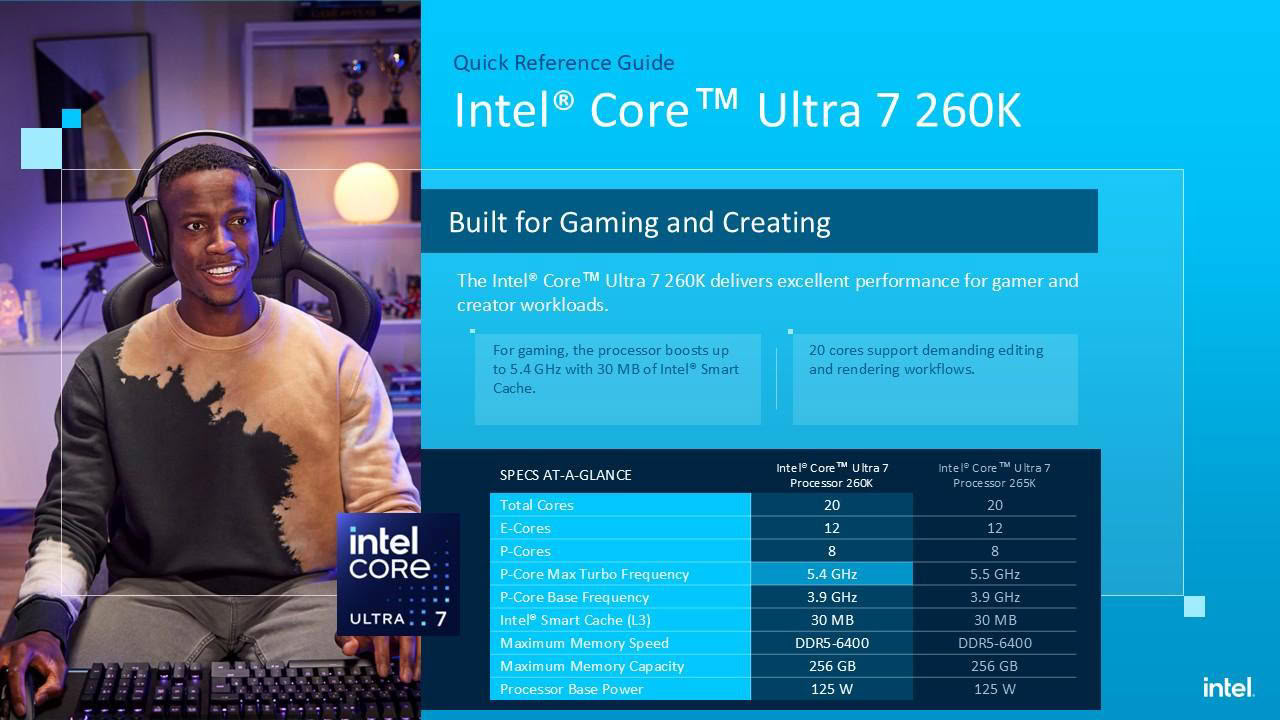
Going by Newegg's own buying guide, the 260K looks like a Core Ultra 7 265K with a slightly lower clock speed ceiling. It keeps the same 8P+12E core layout, 30 MB of L3 cache, 125 W base power, and DDR5-6400 support for up to 256 GB of memory, but the P-cores top out at 5.4 GHz instead of 5.5 GHz. That DDR5-6400 limit places it in the original Arrow Lake family rather than the Arrow Lake Refresh lineup, so it misses out on DDR5-7200 support and Intel's Binary Optimization Tool as well.

Astro Bot Runs Natively on PC Through AnyPS5, With DLSS Frame Generation

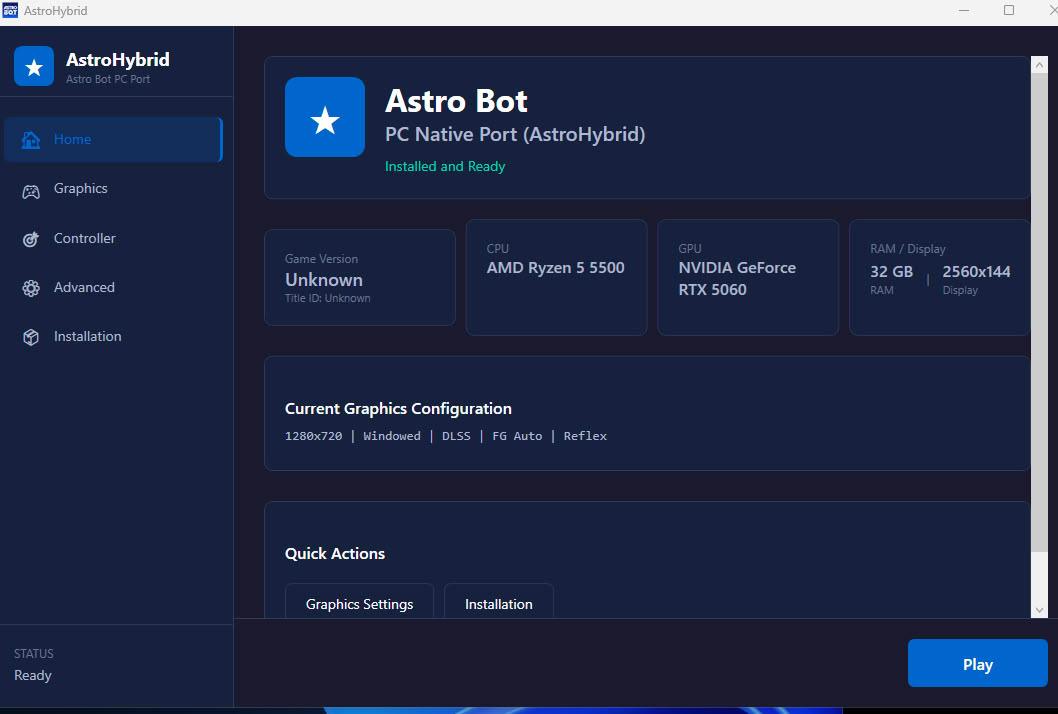
PlayStation 5 exclusive Astro Bot now runs on Windows with DLSS Super Resolution, DLSS Frame Generation, and Reflex support, thanks to an unofficial port from GitHub user imnotsharingmyname. Technically, it's a port, not running through any PS5 emulator. AnyPS5 relinks the PS5 game's x86-64 code into a Windows executable and swaps in native versions of the console's system libraries, while a GPU layer borrowed from the KytyPS5 emulator translates the graphics work to Vulkan. Players have to supply their own decrypted dump of version 01.019.000, and no game files are included.

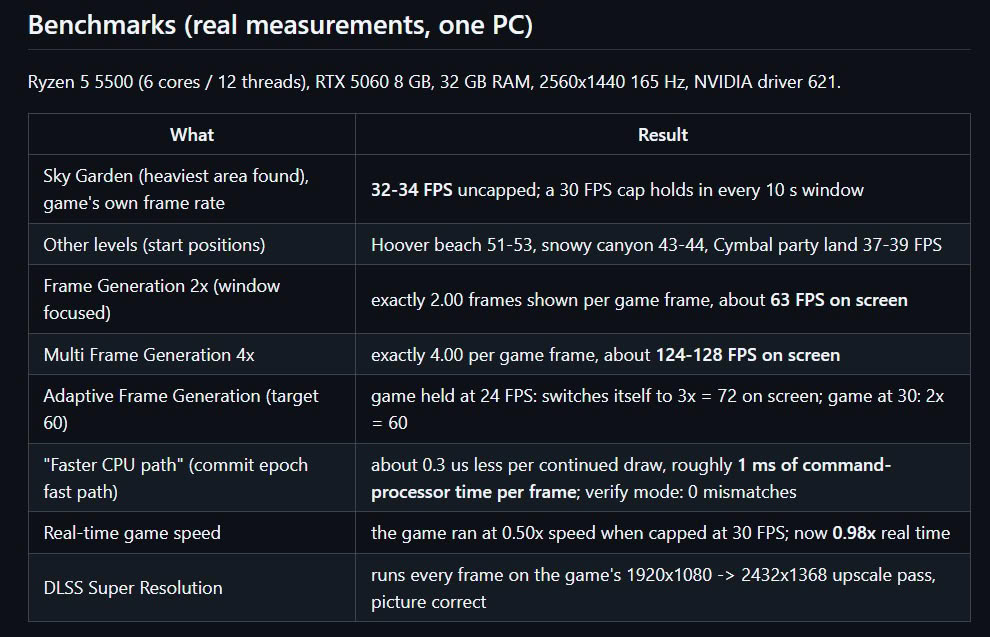
The port hooks Astro Bot's own temporal upscale pass at runtime and feeds its color, depth, and motion vector data into DLSS through NVIDIA's Streamline SDK. On a Ryzen 5 5500, RTX 5060, and 32 GB of RAM at 1440p, the developer measured 32 to 34 FPS in Sky Garden, the heaviest area tested, and roughly 37 to 53 FPS elsewhere. Frame Generation brings that to around 63 FPS on screen, while 4x Multi Frame Generation hits 124 to 128 FPS. Apparently, the game is heavily CPU-limited, with about 22 ms of each 30 ms frame spent submitting draws on a single thread, so lowering the resolution doesn't help much. Frame Generation needs an RTX 40 card, the 3x and 4x modes need RTX 50, and input latency hasn't been measured yet.

MSI Reportedly Plans RTX 5080 Price Hikes of up to $1,200 in China

MSI's GeForce RTX 5080 cards could cost up to 8,000 yuan (about $1,200) more in China this month, according to a ChannelGate post shared on X by harukaze5719. The post outlines MSI's November distributor pricing compared to October, with RTX 5080 models going up by 1,300 to 8,000 yuan depending on the card. That's roughly $195 at the low end, while the top figure alone is more than the RTX 5080's entire $999 launch MSRP. Yes, that's apparently a $1,200 increase planned for the RTX 5080 at the top end.

The rest of the RTX 50 stack goes up too. RTX 5070 Ti models rise by 800 to 4,000 yuan (about $120 to $600), and the RTX 5070 by 500 to 1,000 yuan (75 to $150). The RTX 5060 Ti 16 GB picks up 400 yuan, its 8 GB sibling 200 yuan, and the RTX 5060 between 200 and 500 yuan. Even the RTX 3050 gets a 100 yuan bump. These are distributor prices in China, not new MSRPs, and the post doesn't say which RTX 5080 models sit at the top of that range. Colorful and Galax reportedly started sharing similar hikes with their partners earlier this month, so MSI seems to be following the same path. We can certainly expect other AIB partners to follow suit soon.

NVIDIA GeForce RTX 50-Series Scheduled for up to $500 Price Hike This Week

NVIDIA's GeForce RTX 50-Series "Blackwell" gaming graphics cards are expected to see significant price adjustments this week. According to Chinese ChannelGate, add-in card (AIC) partners have confirmed that price hikes are scheduled due to the ongoing demand for these GPUs outstripping supply. Some major AIC partners, like Colorful and Galax, have reportedly already started sharing information about these price increases. The most significant example is expected to be for SKUs based on NVIDIA's GeForce RTX 5090 DV2, which will see an increase of up to 3,300 RMB, translating to nearly $500. Even entry-level GPUs are not exempt, as the GeForce RTX 5060 is expected to see around a $30 price increase on existing models. These changes are anticipated to be implemented this week for retail partners, meaning that consumer prices might take a week or two to reflect the new listing prices.
Below is the list of price hikes in China, expected to be the norm.

ASUS and Gigabyte Bump RTX 5080 Prices in China, RTX 5070 Ti Also Sees Wholesale Increase

Rumors of the RTX 5080 16 GB being discontinued are picking up steam, and the effects are starting to show. RTX 5080 16 GB wholesale prices in China have jumped by around 2,000 yuan (roughly $300), according to new information from Board Channels. The card previously traded at 12,700 to 13,500 yuan (~$1,900 to $2,020) and now sits at 14,500 to 15,000 yuan (~$2,170 to $2,240). Board Channels blames tighter upstream supply and the reported discontinuation of the 16 GB model. A leaker recently claimed that NVIDIA has set January discontinuation dates for the card, though NVIDIA hasn't confirmed anything.

Along with the RTX 5080 16 GB, the RTX 5070 Ti, which uses the same 16 GB of GDDR7, is also facing price hikes. It is now going for 9,650 to 9,850 yuan (~$1,440 to $1,470), compared to 9,000 to 9,150 yuan (~$1,350 to $1,370) before, a roughly $100 bump. Board partners are adjusting too. ASUS has reportedly added 1,000 yuan (~$150) to all of its RTX 5080 16 GB models and 200 yuan (~$30) to the RTX 5070 Ti, RTX 5070, and RTX 5060 Ti 16 GB cards. Gigabyte went further, with 1,200 yuan (~$180) on its RTX 5080 cards and 200 yuan (~$30) on the RTX 5070 Ti and RTX 5070. Cheaper RTX 5060-class cards from both brands saw smaller bumps of 200 yuan (~$30) or less, and ASUS reportedly raised prices on its Radeon cards as well, between $15 and $50.

Rumor: NVIDIA RTX 6060 May Be Years Away, and Possibly Slower Than the PS6

Anyone holding out for an affordable next-gen NVIDIA card might have a long wait. Hardware leaker Kepler_L2 claims on NeoGAF that the GeForce RTX 6060 will "launch much later," adding that, based on recent trends, he doubts it will even match the PlayStation 6. He was replying to a forum member who argued the PS6 would compete with the RTX 6060, in the same thread where he claimed the console's RAM and storage alone cost over $680. Kepler didn't give an actual date, and the 2029 figure going around seems to be an extrapolation. Both Kepler and kopite7kimi have placed NVIDIA's Rubin-based RTX 60 series in 2028, and the x60 cards usually trail the flagship by a few months. The RTX 5060 arrived under four months after the RTX 5090, while the RTX 4060 took over eight months to follow the RTX 4090.

With a flagship launch around mid-2028 or later, that could push the RTX 6060 into 2029. That said, the "much later" comment seems to be relative to the PS6, which is reportedly targeting late 2027, so the exact timing is still anyone's guess. Kepler didn't say why, but the ongoing memory shortage looks like the obvious suspect. NVIDIA reportedly postponed its RTX 50 SUPER refresh earlier this year to prioritize AI products that use the same GDDR7 memory, and the company recently admitted that RTX 5090 supply is tight. Of course, NVIDIA hasn't announced the RTX 60 series officially yet, so treat this as a rumor. Anyone looking to buy a new NVIDIA GPU should probably expect the current RTX 50 lineup to stick around for quite a while.

New Tools Let Users Edit and Load Modified VBIOS on GeForce RTX GPUs Without Flashing

A developer who goes by Panchovix has released three tools that let NVIDIA GeForce RTX 50, RTX 40, and RTX 30-series owners run a modified VBIOS without writing anything to the card's flash chip. The first is a VBIOS editor for Windows and Linux that can change power limits, voltage ceilings, current (OCP) limits, fan channels, and the core and memory offset ranges. Edited images keep NVIDIA's original signature, which no longer matches, so they can't be flashed with nvflash. Patched tools did break NVIDIA's BIOS signature lock for crossflashing back in 2023, but this approach skips flashing altogether. On Windows, the loader stores the edited image in the GPU's driver registry key, where the driver picks it up as an override every time the device starts, and it only needs a quick GPU restart. The Linux loader instead patches NVIDIA's open kernel modules so the GSP firmware starts with the custom image, with Fedora 43 being the only distro tested on real hardware so far.

The screenshots show how this works in practice. On what appears to be an RTX 5090 Founders Edition ROM, the board power ceiling went from 600 W to 700 W and the NVVDD and MSVDD voltage ceilings from 1,110 mV to 1,150 mV. An RTX 4090 ROM had its power ceiling raised from 666 W to 750 W and its core offset range doubled to +2,000 MHz, and nvidia-smi later confirmed that card's power limit going from 550 W to 671 W. Apparently, an RTX 5090 reached 800 W, an RTX 5080 went from 360 W to 500 W, and an RTX 5060 Ti from 185 W to 300 W in the developer's own testing. Laptop RTX 40 GPUs can't be edited yet, and memory timings can't be changed since the card reads them directly from the flash chip.

NVIDIA RTX 5060 Ti 16 GB Price Hikes Put Entry-Level GPU Above $1,200 in Japan

On two separate occasions, in August and again in September, it was predicted that entry-level GPUs would see significant price increases in the second half of 2026, and it seems as though that prediction has come true, as showed in a recent Reddit post sharing updated retailer listing prices for NVIDIA GeForce RTX 50-series GPUs from Japan—one of the countries where PC hardware prices are often felt sooner than in international markets. According to the price list, the cheapest available RTX 5060 Ti 8 GB was ¥118,800 (~$750 converted), while RTX 5060 Ti 16 GB prices start at ¥139,800 (~$882 converted).

Meanwhile, the RTX 5070 12 GB starts at ¥145,800 (~$920 converted), 5070 Ti prices start at ¥230,800 (~$1,456 converted), and the RTX 5080 16 GB has climbed to a starting price of ¥295,801 (~$1,867 converted). Compared to MSRP, these new prices represent an increase of around 59% for the RTX 5060 Ti 8 GB, 66-144% for the 5060 Ti 16 GB, 32-82% for the 5070, and as much as 94% for the RTX 5080.

NVIDIA Unveils "Preset C "DLSS Frame Generation with up to 35% Faster Generation

NVIDIA has updated its DLSS Frame Generation algorithm to be faster and more efficient. In the latest NVIDIA App beta update, rolling out today, the company introduced "Preset C," the fastest Performance Mode for DLSS Frame Generation. NVIDIA demonstrates that this mode can make frame generation up to 35% faster on the GeForce RTX 5060, with minimal trade-offs in image quality. This improvement applies to the GeForce RTX 40-Series, GeForce RTX 50-Series, and RTX Spark.

According to NVIDIA, there are two models for DLSS: Multi-Frame Generation and Frame Generation. The first model uses a standard AI approach that inputs motion vectors and depth to understand how two rendered frames are constructed. The second model employs optical flow for in-game elements like UI and ray tracing. Today, NVIDIA replaced this optical flow model with a much faster and lighter AI algorithm that boosts FPS across DLSS Frame Generation, Multi-Frame Generation, and Dynamic Multi-Frame Generation. This new model is available for download through the NVIDIA App beta update, so ensure you're running the latest beta version to try out the "Preset C" setting.

Wici Wireless eGPU Promises RTX 5060 Ti and 5090 Performance Over Wi-Fi 7

There has been a lot of development in the eGPU scene lately, with Thunderbolt 5, OCuLink, and MCIO 8i providing serious gains in bandwidth and throughput for eGPU use cases. However, Wici has just launched the Wici One, a new wireless eGPU solution that relies on Wi-Fi 7 for data transfer instead of a cable connection, available with both an NVIDIA GeForce RTX 5060 Ti or an NVIDIA GeForce RTX 5090, the latter of which does not yet have a listed price.

While Wi-Fi 7 is capable of theoretical maximum speeds of around 46.1 Gbps, as VideoCardz points out, the 4×4 radio inside the Wici One, running at 320 MHz and 4096-QAM, would top out at just 11.5 Gbps. To add to this limitation, those speeds are likely only possible over very short distances, with very little interference. Still, Wici promises high-framerate gaming over the network-connected device, with Cyberpunk 2077 reaching 80 FPS at 4K Ultra with DLSS 4 on the RTX 5060 Ti version and Black Myth: Wukong hitting 60 FPS in the 4K Cinematic preset. No latency claims are made, however, but, gaming, a latency-sensitive workload, isn't Wici's main selling point. The true focus for Wici is as a workstation machine, since it contains not only a GPU. The Wici One is actually a full platform, replete with a CPU and storage—presumably, the platform relies entirely on VRAM, since there are no RAM specs or quantities listed.

XMG Refreshes APEX 16 and PRO 16 VE Laptops With RTX 5070 12GB and Better Cooling

XMG is introducing 2026 refreshes of its 16-inch laptops from the APEX and PRO model series with the XMG APEX 16 and XMG PRO 16 VE. Unlike the 2025 APEX 16 MAX and PRO 16 VE models, the new versions feature an NVIDIA GeForce RTX 5070 with 12 GB of VRAM. Both models also receive minor adjustments to their cooling systems and bottom ventilation.

XMG APEX 16: Ryzen 9 9955HX or 8945HX and RTX 5070 with 12 GB VRAM
Following in the footsteps of the XMG APEX 16 MAX (M25), the new XMG APEX 16 (M26) offers a choice between the AMD Ryzen 9 9955HX from the Fire Range and the Ryzen 9 8945HX from the Dragon Range refresh generation. Both processors feature 16 cores and 32 threads. For graphics, the laptop uses the updated NVIDIA GeForce RTX 5070 with 12 GB of VRAM and a maximum graphics power of 115 watts, including Dynamic Boost. By contrast, the 2025 XMG APEX 16 MAX (M25) is equipped with the GeForce RTX 5070 Ti and therefore remains available as the higher-end MAX version of the 16-inch laptop.

FEVM Intros New Mini PCs With Desktop AMD or Intel CPUs and RTX 5090 Mobile GPUs

The latest mini PC maker to get in on the high-powered mini PC trend is FEVM, who, to its credit, previously launched a mini PC powered by AMD's impressive Strix Halo platform, with the new FA80G packing up to both an AMD Ryzen 9 9950X3D and an NVIDIA GeForce RTX 5090 Mobile into a mere 2.6 L chassis, while the FN80G swaps out the AMD Ryzen CPU for up to an Intel Core Ultra 7 270KP. What's more, the mini PC maker says that the cooling solutions in the FN80G and FA80G are capable of keeping both versions at below 85 °C on the CPU and 80 °C on the GPU while generating less than 42 dB of noise.

The new FEVM mini PCs, which measure 180 × 168 × 88 mm, both start with NVIDIA's RTX 5060 GPUs, with other configs including the desktop RTX 5060 Ti and 5080 Laptop GPUs. In the 5090 Mobile variants, the GPU is limited to 150 W, with combined CPU and GPU power topping out at 250 W. Both models ship as barebones unit, meaning buyers will need to bring their own RAM and SSDs, but the rest of the mini PC is also nothing to scoff at.

Manli Intros UF (Unlimited Firepower) GeForce RTX 50 Graphics Cards Series

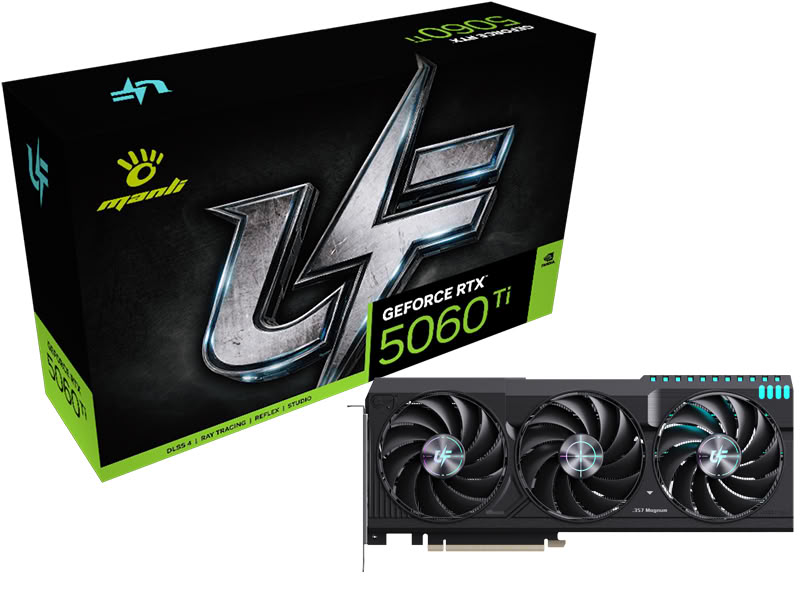
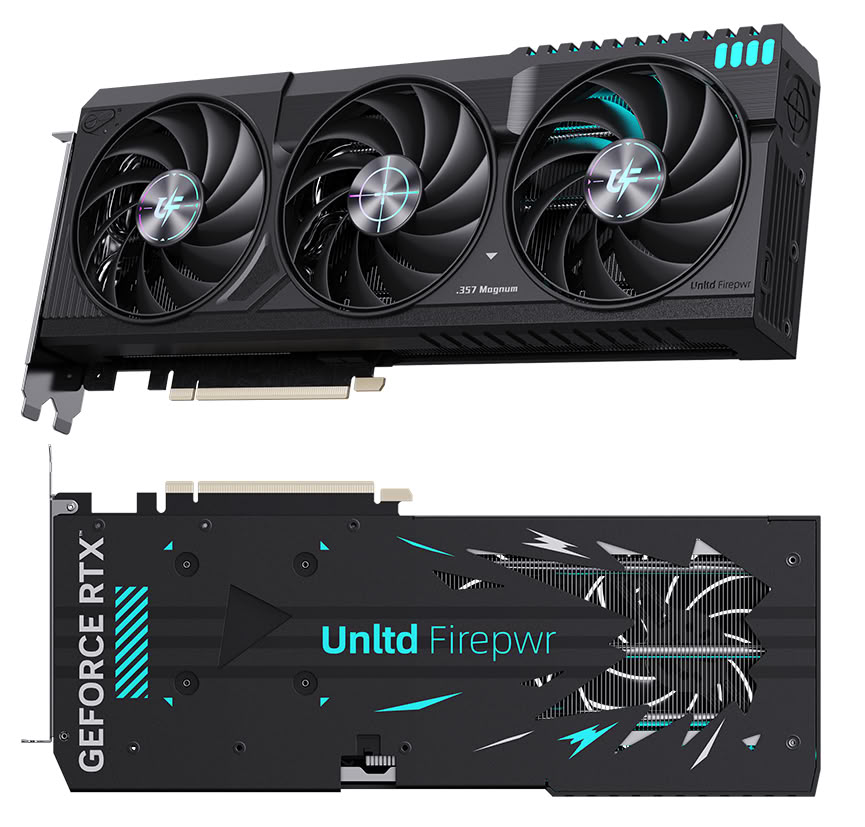
Manli is marking its 30th anniversary with the launch of the UF (Unlimited Firepower) series, a new graphics card lineup that joins its existing Nebula, Stellar, Polar Fox, and Gallardo families. Currently, it seems that two models are available at launch, both based on NVIDIA Blackwell architecture: the Manli UF GeForce RTX 5060 OC and the UF RTX 5060 Ti OC. Both are 2-slot cards measuring 324 x 143 x 42 mm with triple 92 mm fans, an aluminium baseplate, large radiators, and three 6 mm composite copper heatpipes. Idle fan stop is supported. Both graphics cards have 8 GB GDDR7 memory with a 128-bit interface, 28 Gbps speed, and 448 GB/s bandwidth. For connectivity, three DisplayPort outputs and one HDMI are available. On the GPU side, the RTX 5060 OC has 3,840 CUDA cores at 2280/2550 MHz base/boost and draws 145 W. The RTX 5060 Ti OC steps up to 4,608 CUDA cores at 2407/2632 MHz base/boost and a 180 W TDP.

A notable feature on both cards is G-Sense, a built-in tilt sensor that monitors GPU alignment in real time and sends alerts through a new Manli App if abnormal sag is detected. The app also handles ARGB customization and hardware monitoring. No pricing or store availability has been announced yet.

Mod Revives Multi-GPU Gaming With Dedicated DLSS 5 GPU for Impressive FPS Gain

If you were around during what many consider the golden age of PC gaming, back when SLI was still possible, and, going back even further, when gamers put dedicated PhysX cards into their PCs, the latest trick shown off by modder, Marcelo Guibout, on YouTube. Guibot showed off a gaming setup using two NVIDIA RTX 5060 Ti 16 GB GPUs in tandem to split the rendering and Neural Rendering workloads.

[Editor's note: Our in-depth analysis of the DLSS 5 model leaked in the NBA2K27 and in use here is now live]

Similarly to the example of PhysX cards, the idea is to split the workloads between two GPUs, theoretically allowing for improved performance on the GPU doing the primary rendering, since it will be able to use resources on raster or ray tracing rendering that might otherwise be used for DLSS 5 Neural Rendering. With the Neural Coprocessor enabled using the multi-GPU processing setup, frame rates improved anywhere from 59% to 125% compared to running DLSS 5 on the same GPU—performance was still down compared to DLSS 5 off, however.

ASUS and Galax Raise GeForce RTX 50-Series Prices by Up to $74

ASUS and Galax have become the latest NVIDIA board partners to raise prices on RTX 50-series cards, with increases landing September 1. According to a report from Channel Gate, ASUS is bumping RTX 5070 prices by 150 to 300 Yuan, or roughly $22 to $44, while Galax is applying a 200 Yuan (about $30) hike to the same card. Galax's RTX 5070 Ti is going up 300 Yuan (around $44), and its RTX 5080 sees the steepest jump at 500 Yuan (about $74). Budget cards like the RTX 5060 and RTX 5050, along with the flagship RTX 5090, are apparently untouched this time. The increases here are smaller in dollar terms than some earlier hikes, but they add up, and mid-range buyers eyeing the RTX 5070 family are in the crosshairs this time.

This is likely the third or fourth 2026 price hike for NVIDIA's board partners, and it results from the GDDR7 cost pressure we have tracked for months. NVIDIA reportedly raised the price of its GPU-memory kits for partners back in July, and that increase still seems to be trickling down one vendor at a time. NVIDIA had already raised prices on the RTX 5090 specifically in May for the same reason. With ASUS and Galax moving this week, other partners like MSI, Gigabyte, and Colorful will probably follow with adjustments of their own soon, since that's been the pattern all year. Right now, there seems to be no plausible end in sight either.

DLSS 5 No Longer Needs Two RTX 5090s, NVIDIA Says Model is 5x Faster Since March

NVIDIA has shared its first-party performance numbers for DLSS 5, the neural rendering feature arriving September 3 in NBA 2K27. The company says the model is now five times faster than when it was first shown at GTC in March, which required two RTX 5090 GPUs just to run. It now works on a single card across the whole RTX 50-series lineup, from the RTX 5060 up to the RTX 5090. That is a commendable improvement in a span of just 6 months, but DLSS 5 will still incur a significant performance penalty compared to native rendering, contrary to what we have come to expect from DLSS.

In NBA 2K27, running at 4K with the Ultra preset, ray tracing, and Multi Frame Generation, NVIDIA's own figures put the RTX 5090 at roughly 370 FPS with DLSS 5 on, and the RTX 5080 around 233 FPS. At 1440p, the RTX 5090 gets close to 600 FPS, while even the RTX 5070 stays above 260 FPS. NVIDIA also shared some 1080p benchmarks with the RTX 5090 hitting nearly 800 FPS, but those are not relevant to how these cards will be used in the real world. NVIDIA did not provide performance figures without DLSS 5 enabled.

NVIDIA GeForce RTX 5060 with GB205 Appears in Third-Party AIB Design

NVIDIA's GeForce RTX 5060 mid-range graphics card is officially based on the GB206 GPU die SKU, equipped with 3,840 CUDA cores, 120 TMUs, 48 ROPs, and a total of 8 GB of GDDR7 memory running on a 128-bit bus. This is the standard configuration, which is supposed to be the same across every RTX 5060 GPU you buy from any of NVIDIA's add-in board partners. However, a review of the ASUS DUAL GeForce RTX 5060 OC D7 8 GB by Intek & Company, Quasar Zone revealed that the GPU die inside this graphics card is actually a GB205-200-KB-A1 GPU die SKU. This die is usually found in NVIDIA's GeForce RTX 5070, RTX 5070 Ti Mobile, and RTX PRO 3000 "Blackwell" mobile graphics cards.

When NVIDIA does these GPU SKU crossovers, it usually comes down to binning. Sometimes, GPUs of a lower bin do not meet all the parametric yields, meaning not all CUDA cores are functional. In such cases, the company can repurpose these GPUs as a lower-tier design, as is the case with the RTX 5060. Instead of this SKU going into an RTX 5070 and lacking CUDA cores, ROPs, or TMUs, it is cut down to RTX 5060 specs and used as an RTX 5060 base. No performance difference should be present.

Gigabyte Officially Introduces the AORUS GeForce RTX 5060 ARI 8G Graphics Cards

Gigabyte Technology Co., Ltd., a leading manufacturer of premium gaming hardware, continues to explore new possibilities at the intersection of gaming hardware and player culture. This time, GIGABYTE blends powerful graphics performance with distinctive anime aesthetics in the new AORUS GeForce RTX 5060 ARI 8G graphics card. Inspired by GIGABYTE's original character, ARI, the graphics card combines a sophisticated technological design with a unique anime aesthetic, allowing ARI fans to bring their favorite character into their everyday desktop setup. It also offers gamers who embrace anime culture and seek to express their individuality a fresh alternative to conventional gaming hardware.

Powered by the NVIDIA GeForce RTX 5060 GPU, AORUS ARI delivers the performance needed for gaming, content creation, and everyday use. Beyond performance, the distinctive ARI-inspired backplate design and RGB lighting on the side turn the graphics card from a high-performance hardware component into an integral part of the user's desktop aesthetic. From immersive gaming worlds to creative spaces, cutting-edge technology and anime-inspired design come together in AORUS ARI, delivering not only visual performance but also a unique design that invites users to explore their own world beyond the screen.

NVIDIA RTX 50 Series Median Prices Jump Up to 41% in August, with MSRP Now a Distant Dream

NVIDIA's GeForce RTX 50 series of "Blackwell" graphics cards has seen significant price increases over the past few months, with a particularly notable jump between July and August. On Newegg, one of the largest computer hardware retailers in the United States, there has been a noticeable change in the median listed price for each GeForce RTX 50 model. For instance, the entry-level GeForce RTX 5050 had a median price of $300 in June, which rose by 5% to $315 in August. Moving up the range, the GeForce RTX 5060 was listed at an average of $370 in July, but this increased by 27% to $470 in August, marking a $100 difference. However, this is just the beginning.

The 8 GB edition of the RTX 5060 Ti was priced at $470 and has now risen to $530, reflecting a 13% increase. The most significant change occurred with the 16 GB version of the RTX 5060 Ti, which jumped from $570 in July to $805 in August, a 39% increase. The RTX 5070 experienced a similar percentage rise of 36%, going from $660 to $900. The RTX 5070 Ti remained steady at $1100, while the RTX 5080 saw a modest 3% increase from $1462 to $1500. The flagship GeForce RTX 5090 recorded a 9% increase, moving from $4300 to $4700.

GMKtec Neo-X1 Launches as 14.6 L SFF Desktop With RTX 5070

GMKtec has been moving fast with its SFF PC launches, with its latest compact PC, the Neo-X1 and Neo-X1 Pro, reportedly packing some impressive gaming power at an equally high price. The new mini PC uses a mobile AMD Ryzen 9 9955HX in the regular X-1 or an AMD Ryzen 9 9955HX3D in the Pro model, both of which are 16-core, 32-thread CPUs with 55 W TDPs. The Pro comes with an NVIDIA RTX 5070 12 GB, and the non-Pro variant uses an RTX 5060 Ti 8 GB.

The GMKtec Neo series is also water cooled by a built-in AIO, but it's currently not known if that only includes both the CPU and the GPU. The chassis of the Neo series measures in at a very compact 14.6 L, although the company has not yet shared exact dimensions. It features a minimalist design with two metal grab handles on the top, and what looks to be a completely closed off front panel. The front panel has two USB Type-A ports, a USB Type-C port, and a 3.5 mm headphone jack, although exact speeds of the front panel I\O is not yet known.

System76 Debuts Adder Pro Laptop: Features 2K OLED Display, Core Ultra 7, and RTX 50 Series

If you're a serious gamer or content creator and were ordering up your ideal laptop, what would it have?
  • A 2K OLED, 500-nit display
  • Workstation-caliber processing power
  • Up to 96 GB of RAM
  • NVIDIA GPU and graphics card
  • Light weight (3.37 pounds)
  • Exceptional pixel response times and motion rendering
  • Sharp text, high contrasts, and 1 billion colors
  • A flawless Linux experience - it's from System76, why ask?
You just ordered the new Adder Pro laptop, System76's most advanced, visually stunning, and powerful machine ever for gamers, developers, creators, and makers.

MSI GeForce RTX 3060 12 GB Ventus Graphics Card Relaunched at $329

NVIDIA's GeForce RTX 3060 12 GB is back on retail shelves, with MSI's Ventus 2X OC variant showing up on Newegg at $329.99, the same price the card was launched back in 2021. The relaunch isn't a surprise. Reports of NVIDIA reviving the RTX 3060 12 GB "Ampere" GPU had been circulating for a while with AIC partners like ASUS, Colorful, GALAX and MSI involved in this resurrection. The reason is obvious, and it is driven by mainstream GPU demand and the ongoing squeeze on consumer-grade components as AI chip production continues to take priority. Just last Tuesday we reported that according to MEGAsizeGPU, the GeForce RTX 5050 9 GB edition has been canceled because NVIDIA is currently relaunching its GeForce RTX 3060 12 GB edition GPU. The 12 GB frame buffer is the RTX 3060's main talking point against current-generation alternatives, but it comes with significant trade-offs mainly due to the older architecture.

The RTX 5060 8 GB sits at $349-$359 right now, $20-$30 more, but it's a Blackwell card with DLSS 4.5, faster tensor cores, an updated display engine, and better encode/decode. In most games it outperforms the RTX 3060. The memory advantage only really matters at 4K, which isn't a realistic target for either card anyway. At $329 the RTX 3060 is hard to recommend when the RTX 5060 is this close in price. The gap between the two could also widen further, the memory costs aren't expected to ease anytime soon. However, alongside MSI's Ventus 2X OC availability on Newegg in the US, European buyers can also find the ASUS Dual GeForce RTX 3060 V2 OC hitting store shelves at €333.
Return to Keyword Browsing
Nov 25th, 2026 02:14 CST change timezone

New Forum Posts

Popular Reviews

TPU on YouTube

Controversial News Posts