Sunday, October 18th 2026

New Tools Let Users Edit and Load Modified VBIOS on GeForce RTX GPUs Without Flashing
A developer who goes by Panchovix has released three tools that let NVIDIA GeForce RTX 50, RTX 40, and RTX 30-series owners run a modified VBIOS without writing anything to the card's flash chip. The first is a VBIOS editor for Windows and Linux that can change power limits, voltage ceilings, current (OCP) limits, fan channels, and the core and memory offset ranges. Edited images keep NVIDIA's original signature, which no longer matches, so they can't be flashed with nvflash. Patched tools did break NVIDIA's BIOS signature lock for crossflashing back in 2023, but this approach skips flashing altogether. On Windows, the loader stores the edited image in the GPU's driver registry key, where the driver picks it up as an override every time the device starts, and it only needs a quick GPU restart. The Linux loader instead patches NVIDIA's open kernel modules so the GSP firmware starts with the custom image, with Fedora 43 being the only distro tested on real hardware so far.
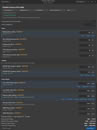
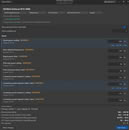
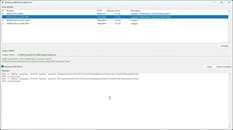
The screenshots show how this works in practice. On what appears to be an RTX 5090 Founders Edition ROM, the board power ceiling went from 600 W to 700 W and the NVVDD and MSVDD voltage ceilings from 1,110 mV to 1,150 mV. An RTX 4090 ROM had its power ceiling raised from 666 W to 750 W and its core offset range doubled to +2,000 MHz, and nvidia-smi later confirmed that card's power limit going from 550 W to 671 W. Apparently, an RTX 5090 reached 800 W, an RTX 5080 went from 360 W to 500 W, and an RTX 5060 Ti from 185 W to 300 W in the developer's own testing. Laptop RTX 40 GPUs can't be edited yet, and memory timings can't be changed since the card reads them directly from the flash chip.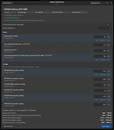
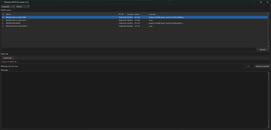
 The Windows loader needs driver 616.56 or newer, which is interesting, as NVIDIA shut down mVolt+'s RTX 50 power limit unlock with a driver update back in August. The loader even writes the same registry values mVolt+ uses for loading a VBIOS, and there's no word on whether NVIDIA plans to close this route too. Both loaders are open source, though the editor's GitHub page lists it as closed-source binaries. Raising power and voltage limits also carries real risk, and readers trying this are advised to keep a copy of their original ROM and test on a GPU that isn't driving the display.
Sources:
Panchovix on Reddit, VBIOS Editor (GitHub), VBIOS Loader Windows (GitHub), VBIOS Loader Linux (GitHub)
The screenshots show how this works in practice. On what appears to be an RTX 5090 Founders Edition ROM, the board power ceiling went from 600 W to 700 W and the NVVDD and MSVDD voltage ceilings from 1,110 mV to 1,150 mV. An RTX 4090 ROM had its power ceiling raised from 666 W to 750 W and its core offset range doubled to +2,000 MHz, and nvidia-smi later confirmed that card's power limit going from 550 W to 671 W. Apparently, an RTX 5090 reached 800 W, an RTX 5080 went from 360 W to 500 W, and an RTX 5060 Ti from 185 W to 300 W in the developer's own testing. Laptop RTX 40 GPUs can't be edited yet, and memory timings can't be changed since the card reads them directly from the flash chip.


26 Comments on New Tools Let Users Edit and Load Modified VBIOS on GeForce RTX GPUs Without Flashing
With the current graphics cards prices, one must have big 🏀🏀 to start such a risky endavour :respect:
My 2080 ti screams more than 310w 😅
Will wait for a more stable version.
But personally I will edit my vga bios to have a lower power limit :toast:My exact idea!
Edit: You probable were talking about the garbage Nvidia 16-pin connector, my mind went straight to the power socket... But yeah that's a lot for the 16-pin.
This seems way too risky for anyone to do. Good for the brave and bold I guess (or for a gpu already out of warranty anyway).
Also on the original post, binaries were closed source for 1 day so testers could confirm me they worked fine, and since then all is open source.
To add, highly feasible NVIDIA patches this out on next drivers, so enjoy while you can...
Anyhow given the already high stock clocks and voltages on this silicones there might be more performance benefit from Microsoft fixing something rather than OC. Overclocking is long death. Gone are the days of 20-30% clock and respectably performance uplift. For 5-10% performance that can't be even felt and insane power consumption the risk is just not justified. I still have my Athlon T-Bred rolling somewhere that went more than 20 years ago from 1400MHz to 2200MHz and stayed like this for 6 years everyday use , this is overclock getting some underdog and pushing it past the top dogs.Or getting GeForce 4 Ti4200 and pushing it past or at the levels of Ti4600.This days are long gone and overclocking is gone with them.
Sticking to stock BIOS with this one, thanks.
These things are basically titans/high end quadros begging to have higher than 1328mhz
551.78 (cuda toolkit 12.4.1) is the absolute latest I can use with p100/v100 for the Optimus registry hack