News Posts matching #RTX 5060

Return to Keyword Browsing

System76 Announces New Adder Pro 15.3-inch Performance Laptop Series

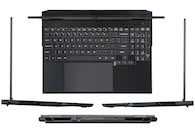
System76 is preparing a new version of its Adder Pro performance laptop series. The Denver, Colorado company that leans mostly towards Linux users is offering this new 15.3-inch model with Intel Panther Lake Core Ultra 7 356H, 16-core (4P+8E+4LPE), 4.7 GHz CPU. The laptop measures 34.37 x 26.19 x 1.98 cm, weighs just 1.52 kg, and features a 2560 x 1600 QHD+ @ 165 Hz OLED glossy display with 100% DCI-P3 coverage. Buyers will be able to choose from either an RTX 5060 or RTX 5070, both with 8 GB GDDR7 memory paired with up to 96 GB of dual-channel DDR5-5600. For storage, Adder Pro has one M.2 2280 PCIe Gen 4 x4 slot up to 4 TB, with a second M.2 2242 PCIe Gen 4 x4 slot available for expansion.

From the connectivity side, it features two USB 3.2 Gen 2 Type-C ports with DisplayPort 1.4 (one with power delivery), two USB 3.2 Gen 1 Type-A ports, HDMI, Gigabit Ethernet, Wi-Fi 7, and Bluetooth 6. There's a 5 MP webcam with a privacy shutter, a 2-in-1 headphone/mic jack and a Kensington lock slot. The 60 Wh battery charges via a 230 W adapter. System76 has not announced the Adder Pro pricing, just that it will arrive in mid-July.

Gears of War: E-Day Will Run on NVIDIA's Oldest Supported Gaming GPUs

Gears of War: E-Day is officially slated to launch on October 6, 2026, and ahead of that launch date, Xbox Game Studios has published the recommended and minimum hardware specifications for E-Day, and it's yet another relatively low-power GPU, much like Forza Horizon 6. According to the game's Steam Store page, which was updated on June 15 with the minimum specifications, Gears of War: E-Day will require at least an NVIDIA GeForce RTX 2060 or RTX 5050 or higher to play. The lowest-tier AMD or Intel GPU that will be able to play E-Day is the Intel Arc A580 or AMD Radeon RX 6600 GPU. Aside from the GPU specs, E-Day requires at least 130 GB of SSD storage, 12 GB of RAM, and an AMD Ryzen 5 2600X, Intel Core i7-6850K, or Core i5-10400.

Curiously, the recommended hardware specifications don't call for much more powerful hardware, with an NVIDIA GeForce RTX 5060 or 3060 Ti, AMD Radeon RX 6700 XT, or 9060 XT, or an Intel Arc B580 GPU, 16 GB of RAM, and an AMD Ryzen 5 5600 or Intel Core i5-11600K CPU. While it may seem, at first glance, as though The Coalition and Xbox Game Studios are opting for ray tracing-capable GPUs, it's worth noting that NVIDIA's Pascal GPU generation is officially out of active support, making the RTX 2060 part of the oldest GPU series still supported by NVIDIA. The GTX 1660 Ti is technically part of the same generation, but, in our testing, it is anywhere between 18 and 23% slower than the RTX 2060, even without ray tracing enabled. Of course, there are still questions surrounding the minimum and recommended specifications, the most important of which is the target resolution and frame rates, although those details will only likely be teased out after the game launches.

Cougar's New Mid-Tower Gaming PC Cases Hide Airflow in Aesthetic Cutouts

Alongside its new AI workstation-oriented NU-series cases, Cougar has also debuted new additions to its line-up of airflow-focused gaming PC cases at Computex 2026. The new CVF220 and Duoair RGB cases feature large cutouts and overhangs that not only serve to generate visual interest, but are also meant to increase airflow and cooling capacity, because they separate the PSU from the main system components and create more room for fresh air intake. The new Cougar CVF220 RGB case is a slightly more compact version of the existing CVF235, and it moves the PSU to the front of the case and has a fan intake cutout between the PSU and the rear of the case. Both CVF cases feature fan intakes on the bottom panel, right above the intake cutouts, in order to bring in fresh air from the outside of the case via that cutout. The older CFV235 has three fan mounts on the top and bottom intake panels, along with a pre-installed Cougar Unity 240 PWM fan kit (dual 120 mm fans in one frame), next to the motherboard. The CVF220, on the other hand, keeps the space in front of the motherboard completely clear, with tempered glass on all three sides of the case until the motherboard tray, instead relying only on two bottom intakes that draw air in via the cutout in front of the PSU compartment and three top fan mounts, where it can mount up to a 360 mm radiator.

The Duoair takes a more conservative approach with the chamber separation, but it makes up for that with two 140 mm intake fans behind a mesh front panel, as opposed to the motherboard-adjacent option. That mesh front panel can also be replaced with a tempered glass front panel for those more concerned with aesthetics. There are still two fan mounts above an empty space behind the PSU compartment in the front portion of the case, where the case fans can still draw in fresh air from the outside of the case to feed the GPU directly. The Duoair supports GPUs up to 410 mm long, while the CVF220 can fit longer 420 mm GPUs. Both the CFV220 and Duoair will also receive their own pre-built PC options. The Duoair A1 will feature up to an Intel Core i7-14700F, 16 GB of G.Skill Ripjaw DDR4-3200 memory, and an NVIDIA GeForce RTX 5060 GPU, with a mix of 2× 140 mm ARGB and 3x 120 mm non-RGB PWM fans handling airflow. Meanwhile the CVF220 will be powered by an AMD Ryzen 7 9800X3D, 32 GB of G.Skill Ripjaw DDR5 memory, and an AMD Radeon RX 9070 XT GPU. The Duoair X1 will launch at $1,499, while the CVF220 X1 will launch at $2,599.

ASUS ROG Zephyrus Duo, G14, G16 Debut for Eyewatering Prices in Taiwan

It has long been predicted that 2026 would be a year for expensive PC hardware launches, especially on the gaming and enthusiast side of things, and that is turning out to be true for ASUS's latest gaming laptops in the ROG Zephyrus line-up. As per a recent announcement by ASUS Taiwan, the ASUS ROG Zephyrus Duo, Zephyrus G14, and Zephyrus G16 have officially been made available for pre-order in the East Asian nation. All three laptops feature color-accurate, high-resolution OLED displays, lightweight aluminium chassis, Intel Core Ultra 9 386H CPU, and NVIDIA's GeForce RTX 50-series graphics, making them powerhouses for both gaming and creative workflows. As we shared in our coverage of CES 2026, however, it seems as though there are more SKUs coming later down the line with different GPU configurations.

The ASUS Zephyrus Duo, largely the flagship device of the three launching today, packs an NVIDIA GeForce RTX 5090 Laptop GPU with 24 GB of GDDR7 alongside that 16-core Intel Core Ultra 9 CPU and up to 64 GB of LPDDR5X. Despite the dual 16-inch, 120 Hz, 1,100-nit, 3K OLED displays—which incidentally have 100% DCI-P3 Wide color gamut coverage, Pantone validation, and stylus support—and dual USB 3.2 Gen 2 Type-A ports, a 3.5 mm audio combo jack, a full-size HDMI 2.1 port, a full size UHS-II SD card reader, and dual Thunderbolt 4 ports, the laptop measures in at a reasonable 24.9 mm thick at its thickest and weighs in at 2.82 kg. In Taiwan, the Zephyrus Duo will retail for NT$269,999 or $8,570.31.

NVIDIA GeForce RTX 3060 12 GB Returns in June, RTX 5050 9 GB Edition on Pause

NVIDIA's GeForce RTX 3060 12 GB "Ampere" GPU, which is two generations old, is expected to make a comeback in June this year. Meanwhile, the rumored RTX 5050 9 GB edition is reportedly on hold. According to well-known hardware leaker MEGAsizeGPU on X, NVIDIA is pausing the transition from its 8 GB RTX 5050 "Blackwell" version to a 9 GB model due to the reintroduction of the GeForce RTX 3060 12 GB "Ampere" GPU. Since both of these GPUs compete in the budget segment, the company will reportedly only release the older GeForce RTX 3060 12 GB SKU with a 192-bit wide memory bus. For this, NVIDIA will once again use Samsung's 8 nm DUV node, as it has in the past. The entire NVIDIA "Ampere" architecture lineup was produced on the 8 nm DUV node, and its return after several years was unexpected. However, since NVIDIA has transitioned to TSMC for manufacturing its "Ada Lovelace" and latest "Blackwell" GPUs, becoming TSMC's largest customer using the 5 nm node, this move is intriguing.

The NVIDIA GeForce RTX 3060 features 3,584 CUDA cores and 12 GB of GDDR6 memory. In contrast, the GeForce RTX 5050 has newer CUDA cores on a smaller node with 2,560 cores on the GB207 die, but it has less memory, with only 9 GB of the rumored GDDR7. Since the resurrected GeForce RTX 3060 will use the older GDDR6 memory, sourcing GDDR6 may have been easier for NVIDIA, leaving the more expensive GDDR7 for its other GPUs.

NVIDIA To Pause RTX 5060 Ti 8 GB Supply in Late April

A leak from early 2026 claimed that NVIDIA would be pausing production of the GeForce RTX 5060 and RTX 5060 Ti for as long as six months starting in the beginning of 2026, with the leaker predicting that supply would start to worsen in the beginning of 2026 and relief only coming in Q4. While it seems as though this may not have come to pass as predicted, a new rumor claims that supply for the NVIDIA GeForce RTX 5060 Ti 8 GB may be halted for two weeks at the end of April 2026. As Gazlog reports, the alleged production halt is as a result of oversupply of the entry-level GPUs.

This production and supply pause means that third-party GPU vendors will not receive 5060 Ti GPUs during this pause, although production is slated to resume in May. The running theory is that the oversupply is causing prices of the 5060 to decline, and the production pause would create artificial scarcity and return the prices to previous levels. Curiously, this news comes hot on the heels of news that NVIDIA may be launching a new 9 GB variant of the RTX 5060 and 5060 Ti near Computex around May or June. It should be pointed out that this is merely a rumor and may not come to pass at all, although leaks that come out of Board Channels generally do carry a decent amount of weight.

NVIDIA GeForce RTX 5060 and 5060 Ti Planned With 9 GB VRAM

It was recently revealed that NVIDIA plans to launch a version of the RTX 5050 GPU with 9 GB of VRAM—three 3 GB modules of GDDR7 over a 96-bit bus and 336 GB/s total memory bandwidth. Now, according to a new leak by Hakuitado on the Board Channels forum (via Gazlog), NVIDIA is planning to make the same move with the RTX 5060 and 5060 Ti in order to cater to budget consumers while avoiding high DRAM and BOM costs.

DRAM quantity aside, the move would also see NVIDIA decrease the bus width of the respective cards, going from 128-bit to 96-bit by using new 24 Gbit memory chips, resulting in an overall decrease in bandwidth and reduced memory performance. According to @harakuze5719 on X, the new 9 GB NVIDIA GeForce RTX 5060 and 5060 Ti GPUs are slated to launch sometime between May and June, with a Computex launch seemingly likely.

Next-Gen Honor Win H9 Gaming Laptop Debuts With 6-Fan Cooling Setup

Honor may not be a household name in the gaming laptop space, but the company is apparently attempting to innovate on gaming laptop design with the new Honor Win H9 gaming laptop, which the brand claimed in a recent Weibo post would feature an NVIDIA GeForce RTX 5070 Ti with a total CPU and GPU TDP of 270 W. While powerful internals are great, the Win H9 gaming laptop's cooling solution may be the most interesting part of the whole package. In the new gaming laptop, Honor is debuting a six-fan cooling solution consisting of dual bottom intake fans, similar to the typical blower fans found in a gaming laptop, and an array of six exhaust fans on the back of the laptop to aid cooling.

According to Honor, the Win H9's cooling solution results in an increase of 10% in total air volume and a total 57% increase in internal airflow. Honor claims that, during gaming loads and in Quiet mode, the Win H9 runs at under 38 dBA and with a surface temperature under 40° C on the left palm rest. The H9 will be available in two configurations: with an Intel Core i7-14650HX, RTX 5060, and 16 GB of DDR5 memory and up to 1 TB of SSD storage or an Intel Core Ultra 9 290HX with an NVIDIA GeForce RTX 5070 Ti. Pricing and availability has not yet been revealed, but is slated to be announced in China on April 23.

Tuxedo Intros Gemini 17 Gen 4 17.3-Inch Notebook with AMD Ryzen 9 9955HX

Goodbye Desktop PC: The Tuxedo Gemini 17 - AMD represents the classic desktop replacement notebook. With a large 17.3-inch high-resolution screen, an absolute top-tier CPU, powerful graphics, and enhanced cooling for quieter operation, it delivers excellent stationary performance in a portable, subtly designed workstation - ideal for both work and play. While its Intel-based sibling with Core i9-14900HX and NVIDIA GeForce RTX 5070 Ti is aimed at users with very high graphics requirements, the Gemini 17 - AMD primarily shines with its exceptionally fast high-end processor.

Solid Desktop Replacement Chassis with Classic Workstation Flair
With an overall height of just under 2.9 cm and a weight of 2.8 kg, this Linux desktop replacement is not designed for constant mobility, but still allows comfortable transportation over short to medium distances.

Mindfactory Reports AMD Radeon RX 9070 XT Still Tops Sales Charts but GPU Sales Plummet

German retailer Mindfactory indicates that AMD's Radeon RX 9070 XT is its top-selling GPU for weeks 9-11 of 2026 (meaning March 1-15), although it also indicated that there is a dramatic decrease in GPU sales during the same time period. According to the retailer data (shared by TechEpiphanyYT on X), AMD made up 55.6% of the outlet's sales for that time period, with the AMD Radeon RX 9070 XT in the lead as top seller with 25.6% market share and the RX 9060 XT following that up with 20.3%. The next five spots, though, are all NVIDIA GPUs—namely the RTX 5080 at 11.8%, the RTX 5070 Ti at 9%, the RTX 5060 and 5070 at 7% each, and the RTX 5090 at 5.3%.

The next-most-popular AMD GPU at Mindfactory was the Radeon RX 7600 in the eighth spot, with the RX 7900 XTX, 7900 XT, and 7700 XT following in 10th, 11th, and 12th place. Curious as it may seem to see AMD in the lead where NVIDIA usually dominates in most other markets, it follows trends set by previous Mindfactory reports. More concerning, GPU sales have also reportedly fallen to roughly a third of their usual numbers, likely as a result of stock shortages and skyrocketing hardware prices across the board. While recent reports indicate that GPU prices might be correcting slightly, at least on the AMD side, other component supply issues and the resulting high prices may be dissuading people from platform upgrades or fresh PC builds altogether.

Colorful Launches the iGame GeForce RTX 50 Ultra Series

Colorful Technology Company Limited, a leading brand in gaming PC components, gaming laptops, and Hi-fi audio products, proudly introduces the new iGame GeForce RTX 50 Ultra Series graphics cards. The Ultra Series continues the brand's signature hip-hop art-inspired design language, blending bold aesthetics with high-performance gaming hardware, now presented in a striking black color scheme.

While the white iGame Ultra W Series emphasizes futuristic purity, the iGame Ultra Series adopts a black colorway that delivers a more aggressive personality and deeper character. Gradient accent colors transition from dark into vibrant neon pink, complemented by dynamic gradient lighting effects that resemble flowing neon trails in the night. The result is a design that radiates rebellious street-style energy while maintaining the distinctive Ultra identity.

ASUS Announces ExpertCenter P700 Mini Tower

ASUS today announced ExpertCenter P700 Mini Tower (PM700MG) with AMD Ryzen AI 400-series processors, a refreshed 15-liter business desktop designed to deliver exceptional performance, scalability, and reliability for professional creators, engineers, and small businesses. With cutting-edge hardware, business-grade security, and comprehensive manageability, ExpertCenter P700 Mini Tower is engineered to be the trusted backbone of business-critical workloads.

Blending next-generation AI performance with whisper-quiet thermal design, P700 Mini Tower is built to tackle modern professional tasks with ease—from generative AI and content creation to advanced data analysis. As Copilot+ PCs, these new desktops bring intelligence and creativity to the forefront of everyday business, while the exclusive ASUS MyExpert all-in-one AI platform boosts productivity in multiple innovative and flexible ways. They also benefit from ASUS ExpertGuardian, providing all-around protection for sensitive data, plus military-grade durability to ensure long-term reliability.

Samsung to Resurrect NVIDIA's GeForce RTX 3060 Using 8 nm Node

NVIDIA's GeForce RTX 3060 is making a comeback, expected around mid-March. For this, NVIDIA will once again use Samsung's 8 nm DUV node, as it has in the past. This has been confirmed by the Korean media outlet Hankyung, which reports that Samsung is restarting its 8 nm node production to meet NVIDIA's needs. Originally, Samsung manufactured these GPUs back in 2021. The entire NVIDIA "Ampere" architecture lineup was produced on the 8 nm DUV node, and we didn't anticipate its return after several years. However, since NVIDIA has transitioned to TSMC for manufacturing its "Ada Lovelace" and latest "Blackwell" GPUs, and has become TSMC's largest customer, utilizing the 5 nm node, this move is intriguing.

We still lack concrete information about which version of the RTX 3060 will be reintroduced—whether it will be the original 12 GB model with a 192-bit wide memory bus or the newer 8 GB variant with a 128-bit bus. Additionally, the decision to use a two-generation-old GPU architecture in 2026 is puzzling, as the reason NVIDIA has chosen the RTX 3060 instead of a newer model like the RTX 4060 remains unclear. Speculatively, it could be because the RTX 4060 is based on the same NVIDIA 4N (5 nm-class) node at TSMC as the current RTX 5060, while the RTX 3060, along with the rest of the GeForce "Ampere" generation, is built on the Samsung 8N (8 nm DUV) foundry node, which would leave the 5 nm capacity for "Blackwell" and its enterprise variants. Finally, it is worth pointing out that when GPU IP design is done, it is usually hard-linked with the node it has been prepared for, so NVIDIA is sticking with Samsung again to avoid any potential upfront costs of adapting this GPU for a different node.

Tuxedo Launches InfinityBook Max 16 with AMD Ryzen AI 9 HX 370 and GeForce RTX 50

Following the recently launched InfinityBook Max 16 - INTEL with Core Ultra 9 275HX, the AMD-based variant of the thin and light Linux gaming workstation is now ready to hit the market.

Despite its robust high-quality full-metal chassis, the InfinityBook Max 16 weighs just over 2 kg and is powered by up to a Ryzen AI 9 HX 370, an NVIDIA GeForce RTX 5060 or 5070, and a 99 Wh battery, while the 500 nits, 100 % DCI-P3 display qualifies the Linux ultrabook workstation for software development, professional media design, and gaming.

NVIDIA Reportedly Preparing 9 GB GeForce RTX 5050 Variant with GDDR7

NVIDIA is reportedly planning a second RTX 5050 variant with 9 GB of memory instead of the standard 8 GB, according to leaker MEGAsizeGPU who has a decent track record on NVIDIA leaks. Unlike the existing RTX 5050, which uses 8 GB of 20 Gbps GDDR6 memory on a 128-bit bus for 320 GB/s of bandwidth, the new model is said to adopt 3 GB GDDR7 modules. The updated configuration would total 9 GB across a 96-bit memory bus. While the narrower bus reduces interface width, the move to 28 Gbps GDDR7 would raise total memory bandwidth to 336 GB/s, a roughly 5% increase, alongside a 12.5% boost in VRAM capacity. Core specifications are expected to remain unchanged. The card would continue to use the GB207 GPU, based on the Blackwell architecture, with 2560 CUDA cores and a 130 W TDP. No changes to clock speeds or core counts have been mentioned.

The report also claims NVIDIA is preparing adjustments higher up the stack. A revised GeForce RTX 5060 may transition to the larger GB205 die, currently used in the RTX 5070, in a cut-down configuration. That would reportedly reduce the GPU from 6144 CUDA cores and a 192-bit bus to 3840 cores and a 128-bit interface. Such a move would require board partners to adopt new PCBs compatible with GB205 and standard 8-pin power connectors. According to the leak, these changes are tied to supply constraints affecting lower-tier RTX 50-series GPUs, including the RTX 5050 and RTX 5060. The GeForce RTX 5060 12 GB, which appeared in earlier roadmaps, is now reportedly canceled.

ASUS Raises GeForce RTX 50 Series "Blackwell" Pricing in China, Radeon Pricing Unchanged

ASUS has reportedly updated its product pricing in the Chinese market to reflect the memory component shortage across the semiconductor industry. According to Board Channels, ASUS is adjusting the pricing for the GeForce RTX 50 Series "Blackwell" GPUs with GDDR7 memory, while the pricing strategy for AMD Radeon RX 9000/7000 and other series remains unchanged. At the very top, ASUS is increasing the price of its RTX 5090 D v2 SKUs by about 500 yuan, which is approximately $72 at the time of writing. Other SKUs like the GeForce RTX 5080, RTX 5070 Ti, regular RTX 5070, and RTX 5060 Ti with 16 GB of VRAM are experiencing an increase of anywhere from $14.50 to $45. Interestingly, some older and low-end SKUs like the popular GT 1030 and GT 710 series, which provide basic graphics output for many prebuilt PCs, are also seeing a price increase of up to $8. AMD's Radeon series reportedly remains unchanged, which can be explained by these GPUs already having gone through a price increase cycle and GDDR6 memory being in better supply than GDDR7.
You can check out the entire list with proposed price changes below.

COLORFUL Announces EVOL P15 Gaming Laptops with NVIDIA GeForce RTX 50-Series Graphics

Colorful Technology Company Limited, a leading brand in gaming PC components, gaming laptops, and Hi-fi audio products, announces the upcoming launch of its new COLORFUL EVOL P15 gaming laptops, expanding the EVOL lineup with next-generation NVIDIA GeForce RTX 50-series graphics. Designed for gamers, creators, and performance-focused users, the EVOL P15 series combines modern processors, high-refresh-rate displays, and refined industrial styling in a versatile 15.6-inch form factor.

The EVOL P15 series will be available in two configurations, featuring NVIDIA GeForce RTX 5060 and RTX 5050 Laptop GPUs. Both models emphasize smooth gameplay, responsive multitasking, and color-accurate displays, supported by DDR5 memory, PCIe SSD storage, and advanced cooling solutions. With Windows 11 Home pre-installed alongside WPS productivity software, the EVOL P15 laptops are built to deliver balanced performance for gaming, content creation, and everyday computing.

HP Does an NZXT With $49.99-129.99/month Omen Gaming Laptop Subscription

With the increasing price of gaming memory and silicon in general, it was only a matter of time before we saw gaming laptop manufacturers lean into hardware rentals as a business model, for better or worse. HP seems to be leading the pack with a newly announced hardware subscription service, called the Omen Gaming Subscription, that offers gamers rentals of HP Omen gaming laptops and even gaming accessories, like monitors, headphones, microphones, USB hubs, and HyperX gaming mice. The subscription is charged monthly, but HP locks you into a 12-month minimum contract term, with cancellation fees between $549.99 and $1,429.99 after two months of use with a device return. If you want to keep the device, you'll need to pay a flat rate of $1,199 for the Victus 15 and $3,299 for the Omen Max 16, seemingly regardless of how long you've been subscribed to the service.

The subscription starts at $49.99 with the "Everyday Gaming with Great Performance" HP Victus 15 with an AMD Ryzen 7 8845HS, 16 GB of DDR5-5600, and an NVIDIA GeForce RTX 4050 Laptop GPU; the $79.99 "Immersive Gaming Experiences" plan gets you an Omen 17 laptop with a Ryzen AI 7 350, RTX 5060 8 GB Laptop GPU, 32 GB of DDR5-5600 memory, and 1 TB of PCIe storage; and the $129.99 "High-End Gaming with no Compromises" plan comes with an Omen Max 16 with an Intel Core Ultra 9 275HX CPU, NVIDIA RTX 5080 16 GB Laptop GPU, 32 GB of DDR5-5600, and 1 TB of PCIe storage. Subscription requires a soft credit check, and the service renews annually, with new hardware available with each renewal. HP also offers a 30-day trial and an ongoing warranty, all of which is very reminiscent of HP's infamous All-In printer subscription, which starts at $7.99 per month for 20 pages of printing with a two-year commitment. Needless to say, the whole hardware subscription model has largely been met with criticism in online spaces like r/pcmasterrace, with some users calling it a scam and others recalling the time when NZXT was ripped to shreds online for a similar business model.

ZOTAC Korea Notifies Local Customers About "Staggering" GeForce RTX 50-series Price Hikes

Lately, North American customers have shared abject feedback on the internet, regarding frustrating Zotac GeForce RTX 50-series graphics card purchases. Last week, the reported end of NVIDIA's Open Price Program (OPP) likely caused widespread panic amongst hardcore and enthusiast PC DIY communities, leading to swift runs—in-person and online—on multiple retail outlets. The ongoing computer memory crisis has driven up prices across many market sectors—in particular, sharp inclines have affected supplies of GDDR6 and (even more costly) GDDR7 VRAM modules. Sensing a grim near future outlook, Zotac's South Korean office has briefed its local customer about an incoming storm of preposterously epic proportions.

Western news sites were alerted to this sympathetic announcement by harukaze5719—the tenured tracker of tech industry developments summarized part of Zotac SK's message: "(this) current situation threatens the very existence of (add-in-board partners) AIBs and distributors." Earlier today, the South Asian manufacturer's local office issued a major warning, via its official Tagtag Mall account. Starting off, Zotac Korea announced the end of a very minor percentage discount promo: "we recently announced a 2% savings rate. I'm so sorry to be giving you another notice of your savings after only one month. The current situation is so serious that it is worrisome for the future existence of graphics card manufacturers and distributors. They announced that memory supply will not be sufficient and that GPU supply will also be reduced. Additionally, some models will reportedly not be available for some time. Personally, I'm also concerned that it may be impossible for Samsung to secure a smooth supply of GPUs beyond those it can manufacture."

NVIDIA Reportedly Ends GeForce RTX 5070 Ti Production, RTX 5060 Ti 16 GB Next

NVIDIA has reportedly stopped production of its mid-range GeForce RTX 5070 Ti graphics card, according to ASUS, one of the largest PC manufacturers. ASUS shared exclusive information with Hardware Unboxed, revealing that NVIDIA has created a supply shortage for the GeForce RTX 5070 Ti, effectively ending its production. As one of NVIDIA's largest AIB partners, ASUS has learned that the model is essentially in end-of-life status. The company noted the supply shortage and offered no further comments on availability or potential improvements in supply. Since retailers and manufacturers can't source enough stock of the GeForce RTX 5070 Ti GPUs, the shortage has led to significant price increases for these models and suggests that the future availability of this GPU SKU might be nonexistent.

Update 2, January 16, 08:30 UTC: ASUS issued an official public statement regarding the "incomplete" information about the RTX 5070 Ti and RTX 5060 Ti EOL.
ASUSWe would like to clarify recent reports regarding the ASUS GeForce RTX 5070 Ti and RTX 5060 Ti 16 GB. Certain media may have received incomplete information from an ASUS PR representative regarding these products. The GeForce RTX 5070 Ti and GeForce RTX 5060 Ti 16 GB have not been discontinued or designated as end-of-life (EOL). ASUS has no plans to stop selling these models. Current fluctuations in supply for both products are primarily due to memory supply constraints, which have temporarily affected production output and restocking cycles. As a result, availability may appear limited in certain markets, but this should not be interpreted as a production halt or product retirement. ASUS will continue to support the GeForce RTX 5070 Ti and RTX 5060 Ti 16 GB and is working closely with partners to stabilize supply as conditions improve.

Tuxedo Launches InfinityBook Max 16 Laptops with Core Ultra 9 275HX and RTX Graphics

Infinitely fast and portable into the new year: After the launch of the new InfinityBook Max 15 with Ryzen AI processors at the end of last year, its larger but equally ultraslim sibling, the InfinityBook Max 16, is ready to hit the market with even more impressive features.

Despite its robust high-quality full-metal chassis, this Linux business workstation weighs just over 2 kg despite being powered by an absolute high-end processor, the Intel Core Ultra 9 275HX, while the display features an outstanding high-resolution OLED panel option with brilliant contrast and color reproduction. Combined with fast NVIDIA graphics, up to 128 GB RAM, and a 99 Wh battery, the InfinityBook Max 16 is a stylish, slim, and very lightweight CPU and graphics workstation for software development, demanding media design, and gaming.

NVIDIA To Prioritize RTX 5060 at Expense of Rest of 50 Series

It's been predicted for a while now that the looming DRAM crisis would have an effect on GPU prices in 2026, with previous stories we've covered indicating that cards like the RTX 5090 would see increases up to $5,000 before the end of the year. Now, an industry insider has claimed on Board Channels, via Wccftech, that NVIDIA would prioritize production and logistics for the GeForce RTX 5060 series, specifically referring to the RTX 5060 and 5060 Ti 8 GB models. This comes after NVIDIA has supposedly cut shipments of the 5060 Ti 16 GB and 5070 Ti models. This means that higher-end models will become more scarce and prices will likely become even more inflated as a result of the scarcity.

The switch-up in the logistics pipeline is supposedly a direct response to the shortage of consumer memory, which has resulted in higher density GDDR7 modules becoming more difficult to procure. These supply chain struggles are not limited to GPU add-in-board partners or NVIDIA, as there have been rumors about prominent laptop and smartphone manufacturers potentially delaying 2025 launches as a result of the DRAM crisis or even trimming the RAM on flagship devices in order to keep costs somewhat lower. Even the next-gen console generation is said to be caught in the crossfire, with delays apparently being discussed by the likes of Microsoft and Sony.

ASUS TUF Gaming TM500 Gaming Desktop With AMD Hawk Point CPU Spotted at CES

During CES 2026, ASUS announced the TUF Gaming TM500 Gaming PC, which in and of itself isn't a big deal and in fact, the TPU team on site grabbed a couple of quick snaps of it, without realising what sets it apart from your typical gaming PC. The TUF Gaming TM500 appears to be using leftover bits at ASUS, since it will be powered by either an AMD Ryzen 5 220 or a Ryzen 7 260, both of which are mobile CPUs based on AMD's Zen 4 processor architecture. These are obviously budget notebook chips with either six or eight cores, a Radeon 760M or 780M GPU and a total of 20 usable PCIe 4.0 lanes. ASUS decided that as this is a mobile CPU, the TM500 should use SO-DIMM memory. We're looking at a pair of DDR5 slots that support up to 64 GB of 5600 MT/s memory.

The motherboard itself appears to be microATX, but it has a custom layout and ASUS has even implemented a special heatpipe cooler that attaches to the rear of the chassis where the fan is located. As the TM500 is being sold as a gaming PC, it also comes with a choice of an AMD Radeon RX 9060 XT or an NVIDIA GeForce RTX 5060 graphics card. The motherboard also has room for a pair of SATA ports and a pair of PCIe 4.0 M.2 NVMe SSDs in the standard 2280 form factor. Connectivity wise, ASUS didn't seem to even have bothered, as the board only has a HDMI 2.1 port, one DP 1.4, one USB 3.2 Gen 1 (5 Gbps) Type-A port, two USB 2.0 ports, a Gigabit Ethernet port and three audio jacks around the back. The front of the chassis is home to a further two USB 3.2 Gen 1 (5 Gbps) Type-A ports and one Type-C port and a 3.5 mm combo headset jack. Considering the CPUs used have native USB4 support, as well as support for USB 3.2 Gen 2 (10 Gbps), this just feels cheap from ASUS. A Wi-Fi 6 module with Bluetooth 5.4 support and a 330 W PSU rounds off the package. There was no word on pricing, but it seems like there are competing mobile on desktop type systems out there that offer more features than the TUF Gaming TM500.

ASUS Unveils V Series Home Desktop PCs

ASUS today announced the ASUS V series (VM701MG, V701ML, VM501MH, V501MV, V501SV)—an all-new lineup of home-focused desktop PCs that redefines how performance computers should look, sound, and feel in modern living spaces.

Powered by up to an AMD Ryzen AI 7 processor with a built-in NPU delivering over 50 TOPS for Copilot+ AI features, and up to dual NVIDIA GeForce RTX 5060 graphics, V series delivers smooth, responsive performance for work, creativity, and entertainment alike. Combined with an advanced ASUS cooling system that keeps temperatures low and noise levels down, it's designed for quiet performance that blends harmoniously into modern homes.

HP Omen 16L Gaming Desktop To Get Raptor Lake-R CPUs Alongside RTX 50-Series GPUs

HP is seemingly planning to update its Omen 16L line-up of SFF gaming desktops, this time introducing Intel's Raptor Lake CPUs into the mix. This is according to a recent rumor posted by @realVictor_M on X. Supposedly, the new Omen 16L will be powered by the Intel Core i7-14650HX mobile CPU and up to an NVIDIA GeForce RTX 5060 Ti GPU, with lower tier GPU options also available. The new desktop will likely launch at CES 2026, although there is no word on an official launch or availability date.

It's unclear why HP would "update" its Omen 16L gaming PCs with an older CPU, but the Core i7-14650HX should perform similarly to the existing Arrow Lake models, thanks to its 16-core, 24-thread design. Pricing is also a mystery so far, although the current-gen HP Omen 16L, which is powered by the Arrow Lake Intel Core Ultra 7 265F and an RTX 5060, comes in at $1,559.99. It's also likely that the ongoing DRAM and storage supply issues will affect the price, so it would make sense for the new models to launch at the same price or higher prices than the old models. Alternatively, HP could be introducing the mobile CPU variants in order to cut back on costs somewhat, since you wouldn't need as powerful a PSU or cooler to keep the desktop fed and cooled.
Return to Keyword Browsing
Nov 25th, 2026 02:08 CST change timezone

New Forum Posts

Popular Reviews

TPU on YouTube

Controversial News Posts