News Posts matching #RTX Spark

Return to Keyword Browsing

Honor Reveals 2 Liter AI Workstation with AMD, Intel, or NVIDIA CPU Options

Honor, the smartphone and computer company formerly owned by Huawei, has officially revealed the Tiangong AXB35, a new AI workstation platform that designed for enterprise use and made to run on a choice of AMD, Intel, or NVIDIA hardware in a tiny SFF desktop chassis measuring just 70 × 192 × 203 mm, or around 2 L volume. Honor says that the Tiangong SFF PC is designed for everything from high-level office work and local knowledge bases, AI inference workloads, and agentic applications, but it would also be useful as a raw computational workstation for everything from 3D modelling and creative tasks to developing, and even gaming.

The Tiangong AXB35 comes in three variants: Standard, Pro, and Ultra, The Standard AXB35 comes equipped with Intel's Core Ultra X7 358H CPU, which features the new Intel Arc B390 iGPU, a total of 16 cores (4× P-Cores, 12× E-Cores, 4× LP E-Cores), and support for up to 96 GB of memory. The Pro version comes with AMD's 16-core Ryzen AI Max+ 395, packing the Radeon 8060S iGPU and up to 128 GB of LPDDR5X memory on a wide 256 GB/s bus. Meanwhile, the Ultra version comes with NVIDIA's new RTX Spark platform, based on the Arm architecture.

HP Announces New OmniBook PCs to Help Build the Next Generation of AI Experiences

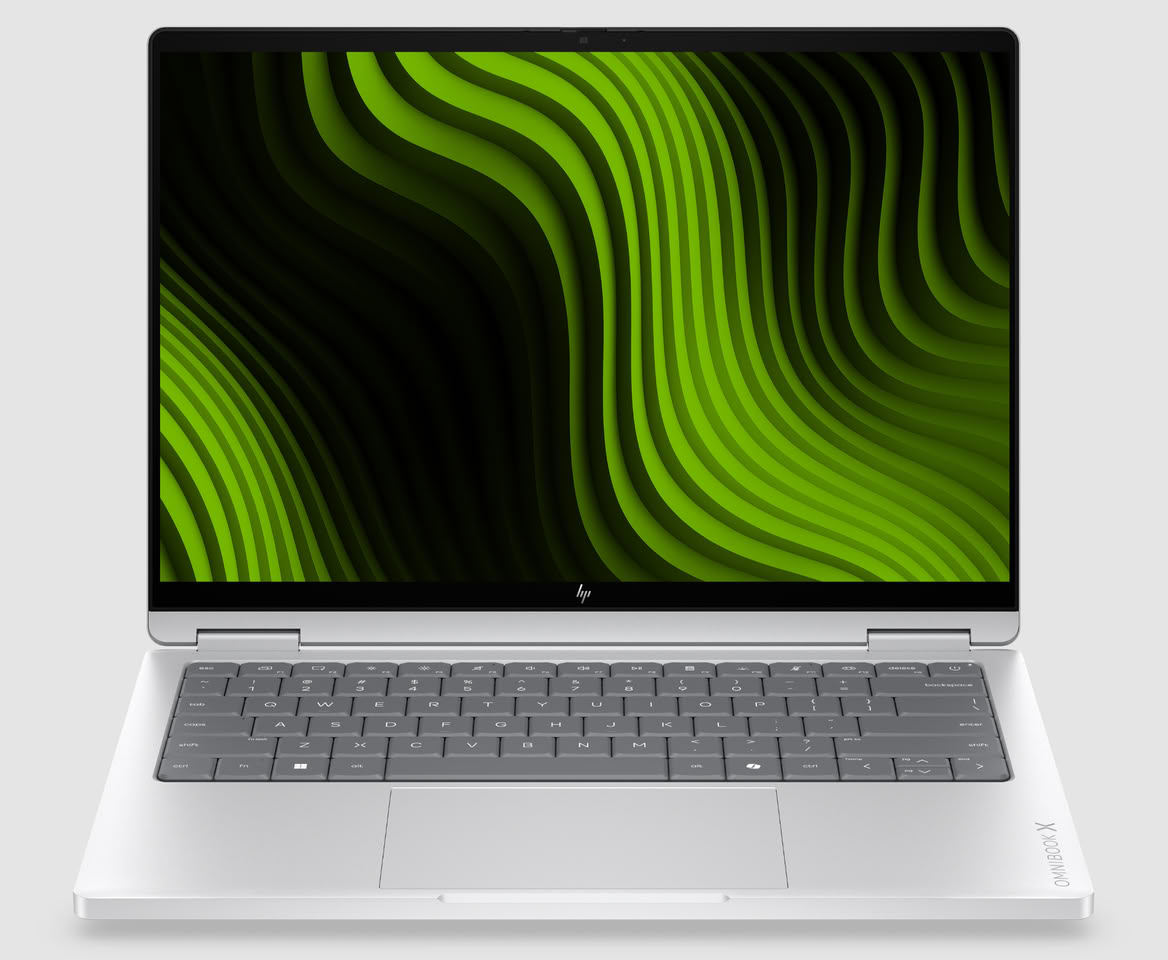
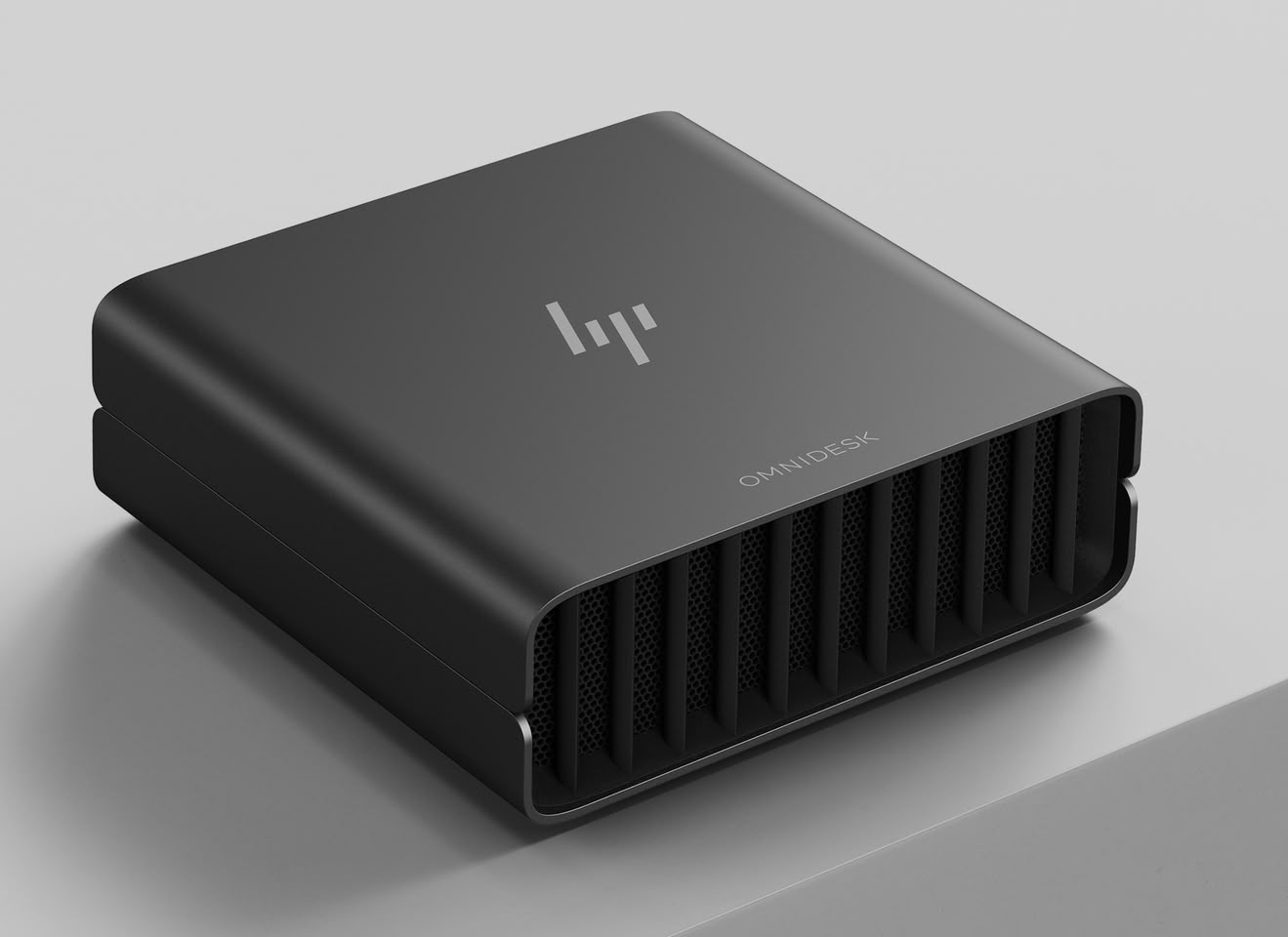
Today, HP Inc. announced its new HP OmniBook Ultra 16 and HP OmniBook X 14 along with new details around the upcoming HP OmniDesk, all powered by NVIDIA RTX Spark and Windows. Together, the devices expand HP's portfolio of next-generation AI PCs designed for creators, developers, entrepreneurs, gamers, and advanced AI users. First previewed at Computex in June, the world's thinnest RTX Spark laptops bring personal agents, local AI, advanced content creation and RTX technologies into premium designs, redefining how people create, develop, play, and work on their PCs.
Samuel Chang, Senior Vice President and Division President, Consumer Personal Systems at HP Inc."As AI transforms the way people create, develop, game, and work, HP is focused on delivering devices that help bring intelligent experiences directly into everyday workflows," "The HP OmniBook Ultra 16, HP OmniBook X 14, and HP OmniDesk powered by RTX Spark represent a new generation of Windows PCs designed for developers, creators, gamers, and innovators who want local intelligent assistants and AI-powered applications, including open-source tools working alongside them."

ASUS Shows RTX Spark Mini PCs and Laptop Designs at IFA 2026

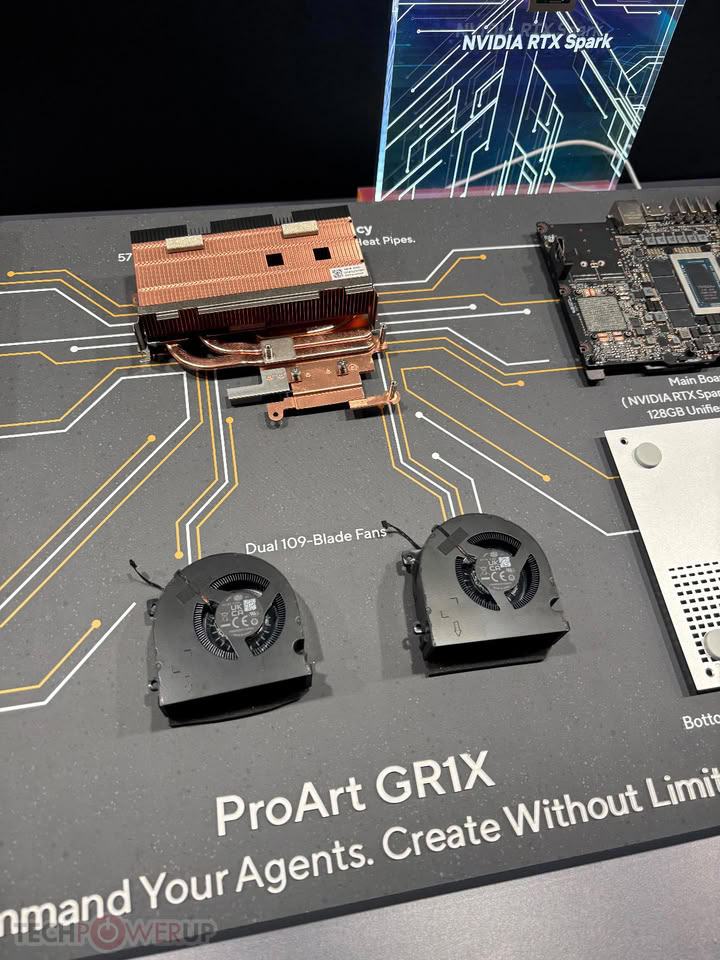
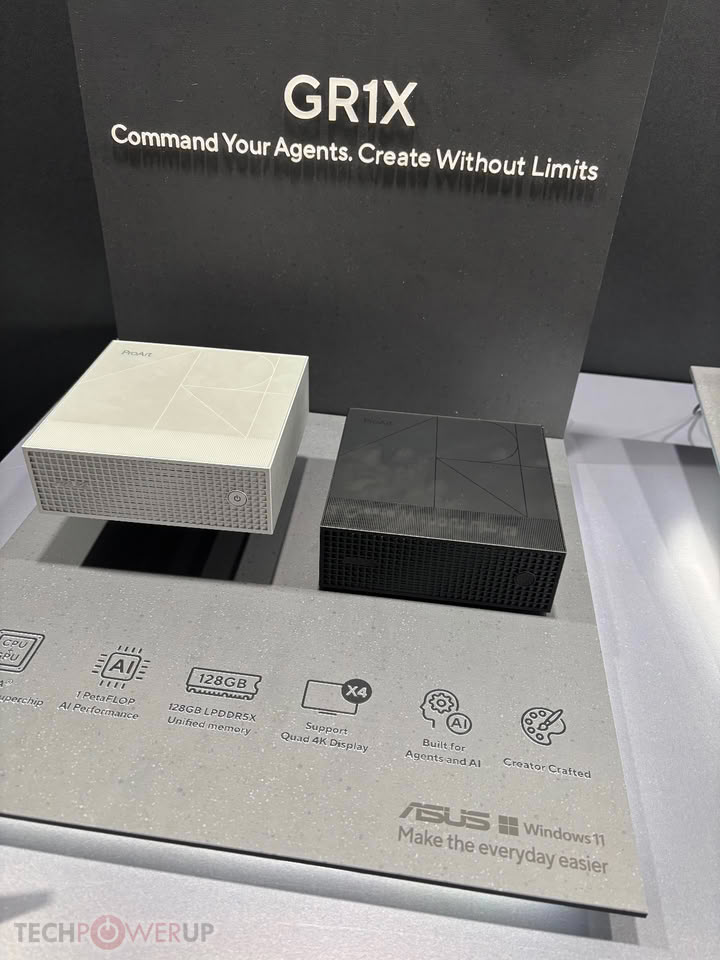
At IFA 2026 in Berlin, Germany, ASUS introduced mini PCs and laptops powered by NVIDIA's RTX Spark SoC. Starting with the GR1X mini, ASUS showcased the power of the RTX Spark N1X in grey or black aluminium enclosures. These are available with up to a 6,144-core GeForce RTX "Blackwell" GPU, alongside up to 20 cores on the NVIDIA "Grace" CPU, delivering a total of 1 PetaFLOPS of FP4 compute power. The entire package can be configured with up to 128 GB of LPDDR5X unified memory, all running on the Windows 11 desktop operating system. However, ASUS will also offer less powerful configurations, such as the second N1X configuration with a slightly less powerful 18-core "Grace" CPU, a "Blackwell" GPU with 5,120 CUDA cores, and 24-32 GB of LPDDR5X unified memory. The system is cooled by a custom copper heatsink paired with two blower fans, each with 109 blades.

NVIDIA "N1X" Comes in Two SKUs: 20C CPU and 6,144C GPU or 18C CPU and 5,120C GPU

At IFA today, NVIDIA confirmed that the upcoming N1X SoC for the RTX Spark PC platform will come in two configurations. The top-end model will feature a 20-core "Grace" CPU and a GPU with 6,144 CUDA cores based on the "Blackwell" microarchitecture. NVIDIA envisions this version for both laptops and mini PCs, offering between 24 GB and 128 GB of LPDDR5X unified memory. The second configuration is slightly less powerful, with an 18-core "Grace" CPU, a "Blackwell" GPU with 5,120 CUDA cores, and 24-32 GB of LPDDR5X unified memory. This version is specifically aimed at laptops, which will be classified as Copilot+ AI PCs running Windows 11 for Arm.

Both chips are officially called "N1X," and there is no "N1" as previously thought. They are simply different configurations of the same chip, likely due to binning efforts during production. NVIDIA will launch these chips next month, and we expect to see systems from Acer, ASUS, Dell, MSI, HP, Microsoft, Lenovo, and many other OEMs. Pricing details are currently unknown, but with more memory, we can expect higher prices from any OEM, as memory is currently the most scarce resource.

Lenovo Advances Hybrid AI Across New Personal and Enterprise Technology

Today at Lenovo Innovation World during IFA 2026, Lenovo unveiled a new portfolio of personal and enterprise technology, showing how its Hybrid AI strategy is moving from vision to practical experiences across devices, infrastructure, services, and the everyday moments that connect them.

The announcements bring together Lenovo's "one personal AI, multiple devices" approach with enterprise technology that helps organizations turn data into insights and value. They span personal AI across PCs, smartphones, tablets, and wearables; creator and consumer devices that adapt to different ways of working and expressing ideas; and business technology built for AI-enabled productivity, collaboration, security, and scale.

Acer Showcases SFF RTX Spark with a Unique Chassis Design

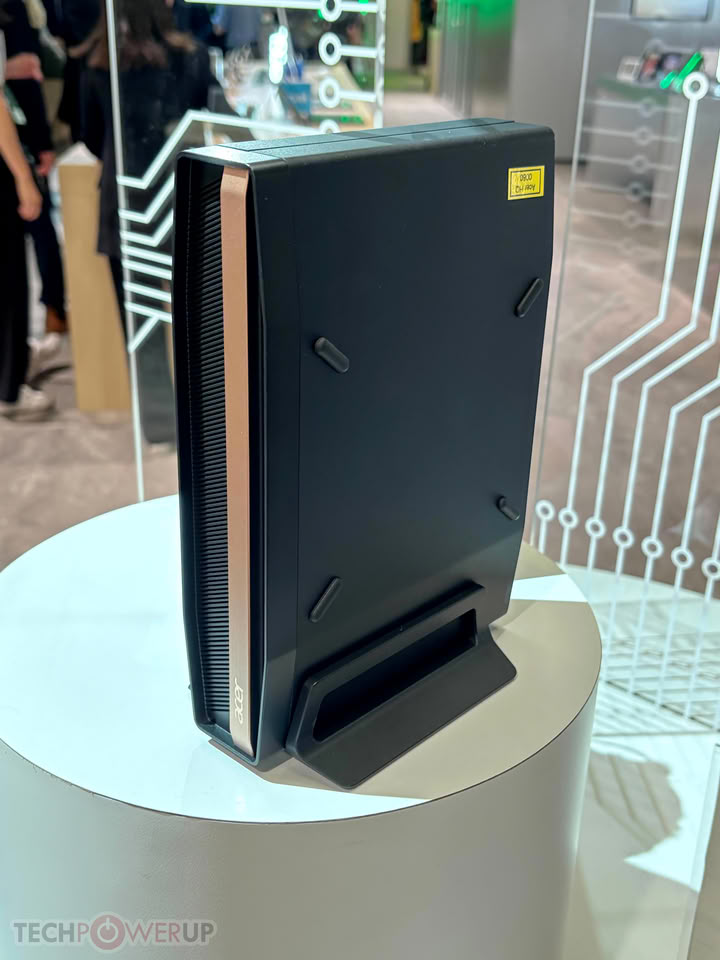
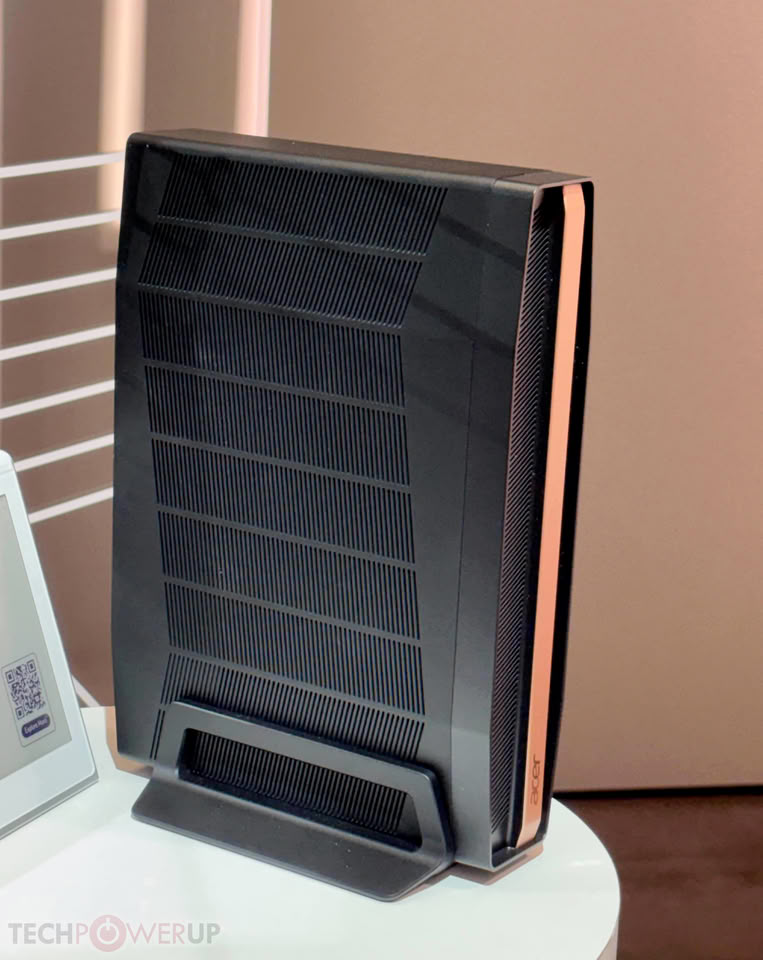
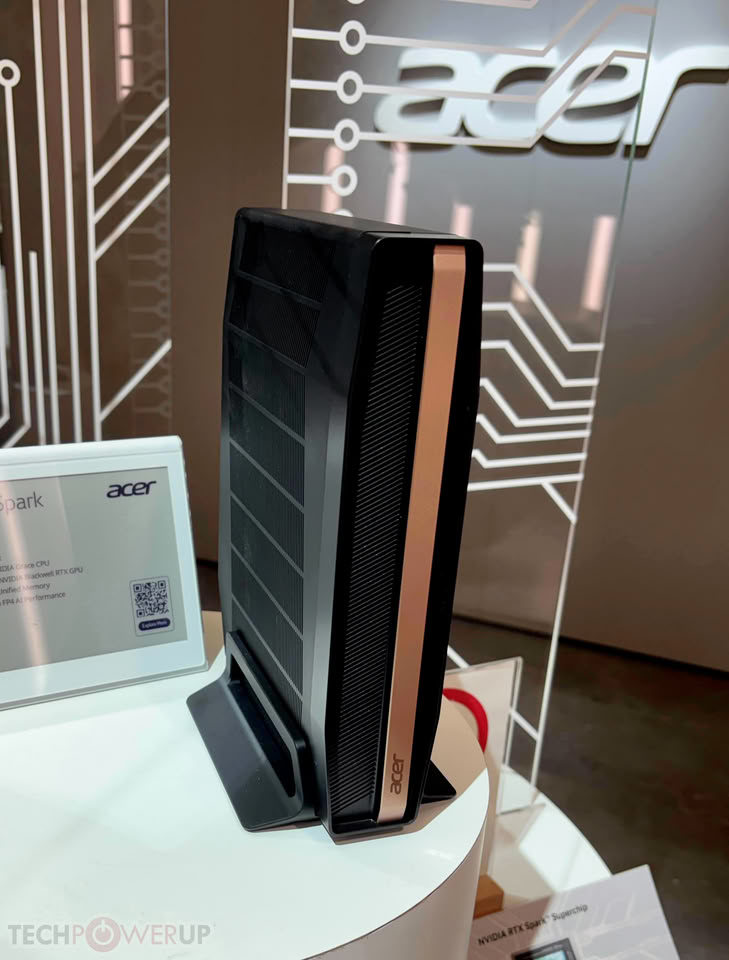
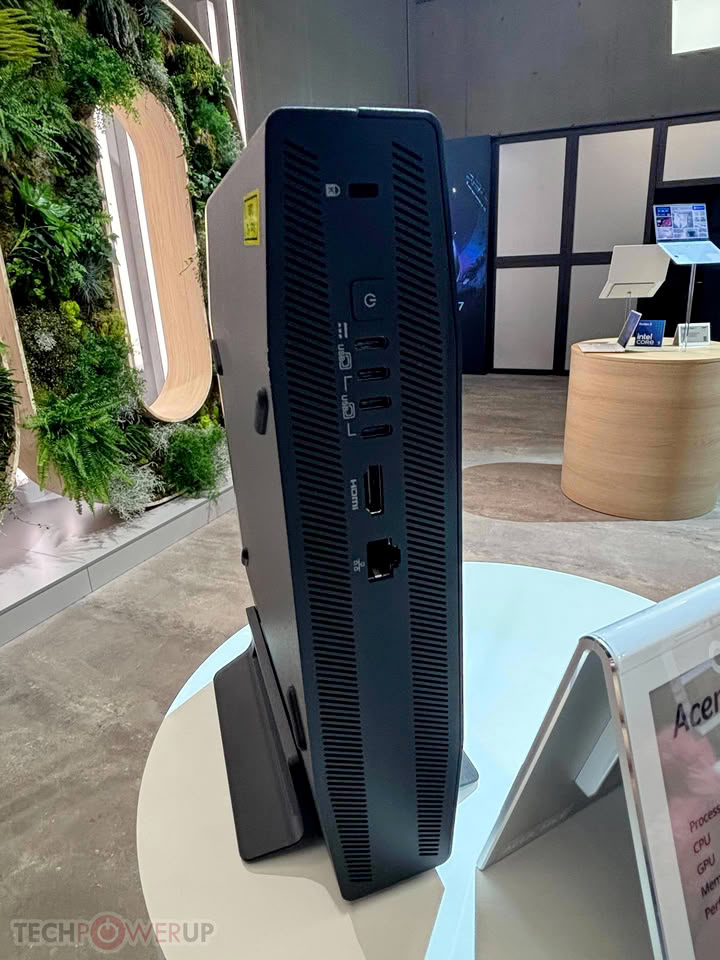
At IFA 2026, Acer showcased its unique take on the new NVIDIA RTX Spark desktop PC platform with a new chassis. In a package Acer calls the SFF RTX Spark, likely emphasizing the small-form-factor of this PC, the design differs from previous DGX Sparks. The RTX naming convention focuses more on home office users, creators, gamers, and local AI enthusiasts. The SFF RTX Spark from Acer features up to a 6,144-core GeForce RTX "Blackwell" GPU, alongside up to 20 cores on the NVIDIA "Grace" CPU, delivering a total of 1 PetaFLOPS of FP4 compute power. The entire package can be configured with up to 128 GB of LPDDR5X unified memory, all running on the Windows 11 desktop operating system.

Acer used a black shroud with a single bronze accent, providing an elegant and edgy design. The system can stand on its own in a horizontal position, while there is a specific holder for a vertical position, as shown in the images below. NVIDIA's full optimization stack for gaming and local AI is included, along with Acer's customizations that are typically featured in the company's PCs and laptops.

Acer Presents Their NVIDIA RTX Spark Design at IFA 2026

Acer showcased the Acer SFF RTX Spark design for a compact desktop powered by the NVIDIA RTX Spark superchip at Acer's next@Acer global press conference on September 2 during IFA 2026. NVIDIA RTX Spark redefines personal computing, combining personal agents, advanced content creation and high-performance gaming in a new platform engineered from the ground up for the next wave of Windows PC experiences. Designed for creators, AI developers and gamers, NVIDIA RTX Spark brings NVIDIA's full-stack AI platform and full suite of RTX technologies to compact desktops.

Powered by NVIDIA RTX Spark at its core, the Acer SFF RTX Spark offers major compute power in a space-saving footprint for tapping into agentic AI running locally. The design is built to deliver up to 1 petaflop of AI performance and up to 128 GB of high-speed unified memory, delivering a combination of compute and data privacy. It features up to a 6,144-core Blackwell RTX GPU, up to a 20-core NVIDIA Grace CPU, up to 1 petaflop of AI compute, and up to 128 GB of unified memory, paired with NVIDIA's full-stack AI platform and full suite of RTX technologies to accelerate AI innovation at the edge.

ASUS Unleashes Agentic Creativity with ProArt RTX Spark PCs at IFA 2026

At IFA 2026, ASUS is showcasing its new generation of ProArt AI creator PCs - the P16 and P14 laptops and GR1X mini PC - powered by NVIDIA RTX Spark, with hands-on demonstrations at the ASUS IFA Media Showroom. RTX Spark pairs a Blackwell RTX GPU with 6,144 CUDA cores and a 20-core NVIDIA Grace CPU, giving creators and developers on-device performance with fully private local data and full workflow customization - without relying exclusively on the cloud.

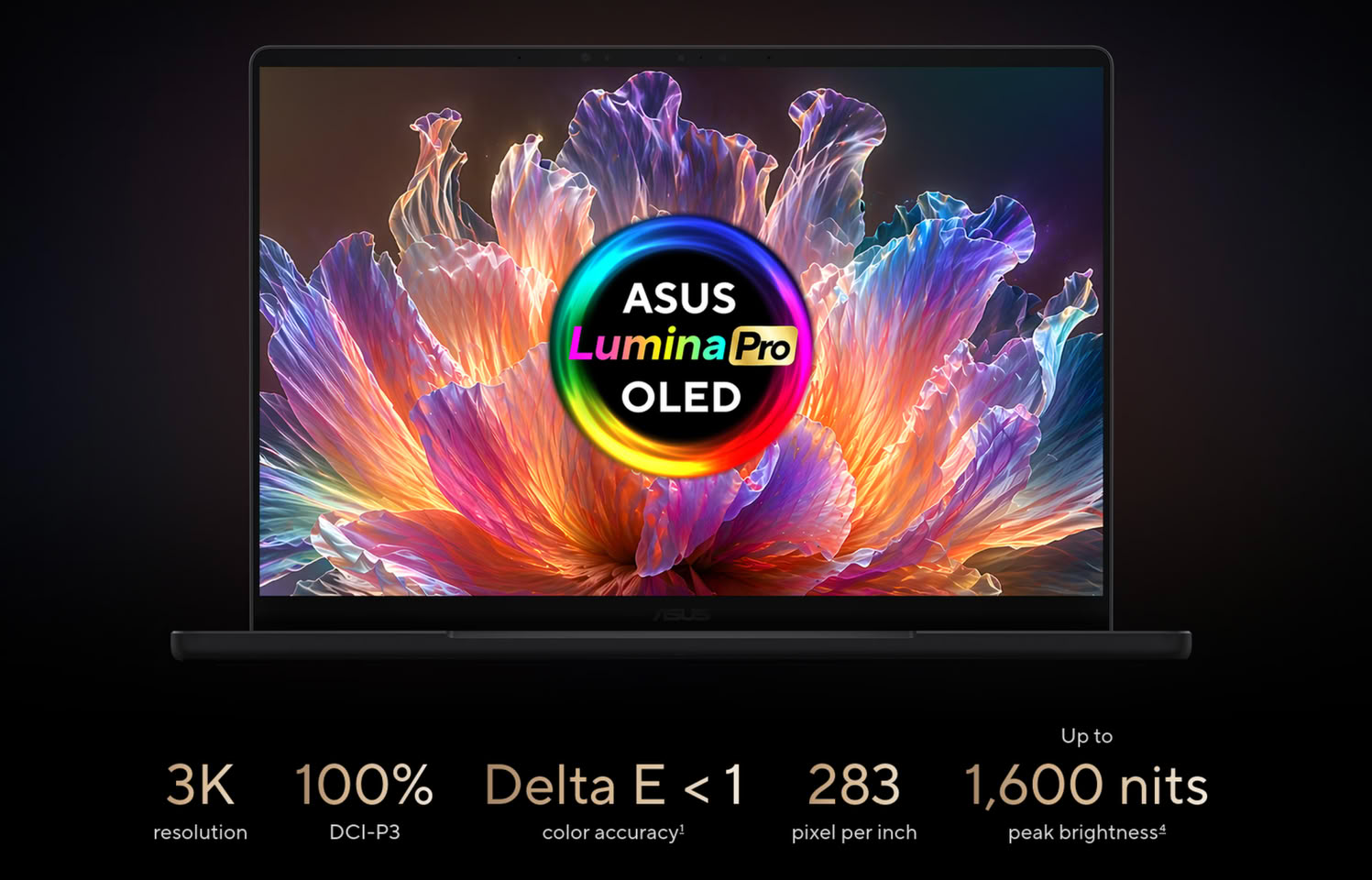
The ProArt P16 & P14 come with the thinnest ProArt laptop yet with RTX performance due to its integrated chip design - plus up to 99Wh battery capacity. Both feature ASUS Lumina Pro OLED displays with Delta E < 1 color accuracy, up to 1,600 nits peak brightness and 120 Hz visuals. The compact GR1X mini PC brings performance to a 150 x 150 x 51 mm desktop built for 24/7 AI workloads, available in Nano Black or a new Neo White.

Taiwanese Hardware Manufacturers Sell Out NVIDIA RTX Spark Laptop Stock Ahead of Launch

News out of Taiwan suggests that both ASUS and MSI have sold their entire production run of NVIDIA RTX Spark based laptops before a single unit has shipped. It would appear that allocation of the MediaTek co-developed chip has been pretty sparse by NVIDIA, which is one reason for the first stock being sold out. Investor.com.tw claims that ASUS and MSI were allocated 100,000 units of the N1 and/or N1x version of the SoC for their first production run, which doesn't seem like a super-small amount, although it's unclear how many chips NVIDIA's other launch partners were allocated.

Dell, HP, Lenovo and Microsoft are the other RTX Spark launch partners, with Acer and Gigabyte said to be following later. According to the source above, NVIDIA will be providing a higher allocation for the next production run, of somewhere between 300 and 500,000 chips. Considering that there's an expected starting MSRP of somewhere around US$3,500 for an RTX Spark laptop in Taiwan, it doesn't seem like there might be as much demand for these new laptops as the channel might think, unless they know something that isn't public information as yet. Nonetheless, it'll be interesting to see how well received NVIDIA and MediaTek's Arm based laptop SoC will be and if the asking price will be a hurdle or not.

ASUS Shows Off ProArt P14 NVIDIA RTX Spark-Powered Creator Laptop

ASUS has officially launched its ProArt P14 creator laptop, which features NVIDIA's new RTX Spark Arm SoC. The 14-inch laptop is currently listed on ASUS's site as the H7407BA, and it is available with two touch-enabled G-Sync display options: a 14-inch, 2880 × 1800 OLED display with a 120 Hz refresh rate and up to 700 nits of brightness in SDR mode and 1,600 nits in HDR mode; or a 120 Hz, 2880 × 1800 OLED display with identical color reproduction but with 500 nits peak SDR brightness and 1,100 nits peak HDR brightness. Both displays also feature 100% coverage of the DCI-P3 color gamut and support for a pressure-sensitive stylus, all of which should make for a pretty convincing laptop for photographers and video editors alike.

ASUS says the ProArt P14 measures in at just 13.9 mm thick and 1.48 kg, while packing 24, 32, 48, 64, or 128 GB of LPDDR5X unified system memory and 512 GB or 1 TB of NVMe PCIe 4.0 storage—it does not seem as though there is a 16 GB RAM variant available. The P14's I/O relies largely on USB4 ports, featuring 3x USB4 Gen 3 Type-C ports with USB-PD and DisplayPort Alt Mode support alongside a single USB 3.2 Gen 2 Type-A port, a 3.5 mm audio combo jack, an HDMI 2.1 FRL port, and an SD 4.0 card reader. Pricing has not yet been revealed.

NVIDIA Invests $3.5 Billion in MediaTek, Partners on NVLink Fusion

NVIDIA announced today that it is investing $3.5 billion in MediaTek and adding new layers of collaboration between the two silicon giants. It's important to note that NVIDIA and MediaTek are already working together, as MediaTek designed an SoC called GB10 that powers NVIDIA's RTX Spark consumer products and DGX Spark mini workstations. Both companies have confirmed that they will be approaching the collaboration through NVIDIA's NVLink Fusion ecosystem. NVLink Fusion serves as an IP and chiplet framework that allows non-NVIDIA processors and accelerators to become key participants in the company's data center fabric.

MediaTek will offer the NVLink Fusion platform to its customers, which include numerous ASIC clients like Google, enabling them to connect their XPUs to the NVLink Fusion scale-up fabric using photonic or classical copper interconnects. This includes the NVLink-C2C high-bandwidth fabric, which can connect multiple nearby XPUs and is also used in the upcoming NVIDIA "Rosa" CPUs. Additionally, MediaTek will offer customers NVIDIA's newly announced NVHBM, which integrates the controller into the 3D HBM stack, significantly enhancing performance and efficiency. Compared to standard HBM4E, NVIDIA claims up to 30% more memory bandwidth, 15% lower HBM power consumption, and up to 25% more usable compute die area on the processing unit.

Windows 11 26H2 Goes Into Release Preview Channel

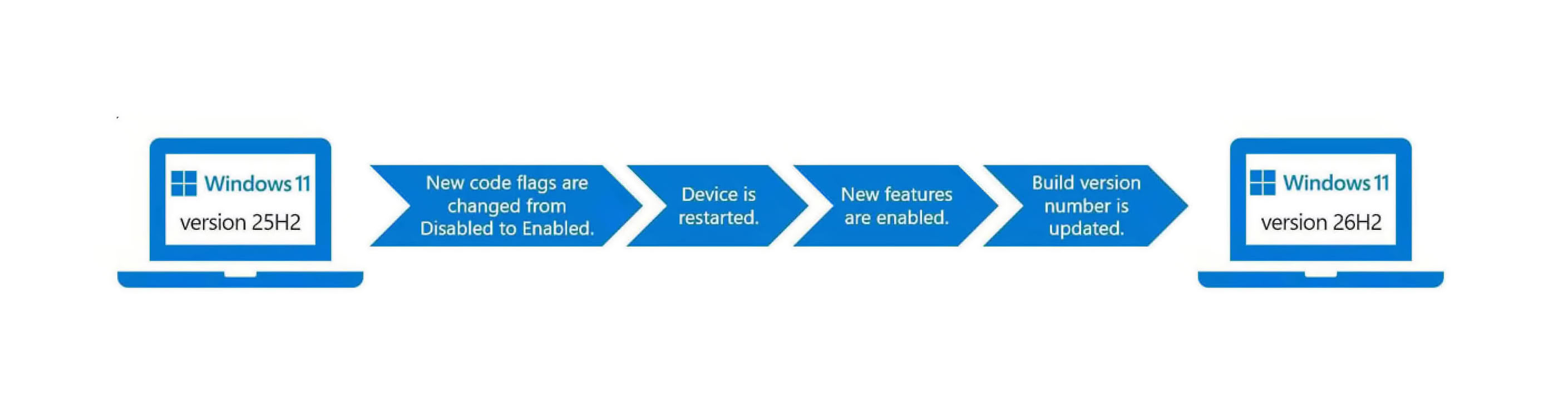
Microsoft has released Windows 11 version 26H2 to the Release Preview Channel, with build number 26300.9278, for Windows Insiders. As we mentioned just a few days ago, Windows 11 26H2 is one of the more boring releases in terms of new features. This update focuses on resetting the support cycles that Microsoft is implementing, rather than introducing major features or overhauls. For those upgrading, the main change will be an extension of the support cycle as users transition to the 26H2 release.

Since late 2024, support and updates have been rolled out across every OS branch, with each new release cycle activating these features rather than leaving them dormant in the kernel. Enablement packages (eKB) are central to this process, as downloading an update essentially involves eKBs that activate certain functionalities. For instance, on a device running Windows 11 24H2 or 25H2, a simple eKB is needed to upgrade to the latest Windows 11 26H2 version. For older versions like 22H2 and 23H2, which are on an older servicing branch, Windows 11 26H2 will be a full feature update.
Windows 11 26H2 Update

EA, Embark, and Ubisoft Bring Their Blockbuster Titles to NVIDIA RTX Spark

NVIDIA announced today that some of the world's leading game developers are supporting the upcoming RTX Spark PC platform. Launching this fall, RTX Spark will include support for major AAA titles, featuring the work of publishers and developers like Electronic Arts, Embark, and Ubisoft. This list of major publishers pledging their support for the platform is growing, with KRAFTON, NetEase, Riot Games, SEGA, and Xbox already on board. Newly added titles include EA's EA SPORTS F1 25 and Apex Legends, Ubisoft's Anno 117: Pax Romana, and Embark Studios' ARC Raiders and THE FINALS, with many more to come.

Additionally, NVIDIA has collaborated with EA to ensure the EA Javelin Anticheat system supports the RTX Spark Windows-on-Arm platform, making online gaming possible. As readers may know, modern games with online features often include complex anticheat engines that are usually platform-specific, making them difficult to port without the developer's involvement. Many anticheat engines run exclusively on Windows for x86 CPUs, leaving out Linux-based gamers and Arm-based Windows gamers like those using the upcoming RTX Spark. By porting its Javelin Anticheat system to Windows-on-Arm, EA suggests that other developers may soon follow suit with their own anticheat systems.

Windows 11 to Get Unified Memory Control Options Ahead of RTX Spark Launch

Microsoft is working on providing processors with unified memory dedicated control parameters in Windows 11, as indicated by the recent Windows 11 build 29648.1000. This build, originally released on August 17, includes a hidden feature called IntelligentCarveout. This feature will allow the system to manage unified memory in SoCs like NVIDIA's upcoming RTX Spark, AMD Ryzen Halo, and other APU-like chips that integrate the CPU and GPU into a single package. These are connected to external LPDDR5X memory, which acts as a unified pool for both the CPU and GPU. With the new feature, we will see specialized controls that allow settings to be configured for independent partitions of this unified memory. During Computex, Microsoft even hinted at this feature arriving for Windows 11 in their announcement for NVIDIA's RTX Spark platform.
MicrosoftTo realize the potential of up to 128 GB of unified memory on RTX Spark, we have focused on improving how Windows supports unified memory systems, starting with a new higher, smarter limit on total system memory accessible by the GPU. This updated limit increases the memory available to the GPU on high-memory systems, unlocking the ability to load larger local AI models or render more complex projects.

Windows 11 26H2 Update Focuses on Extended Servicing, Not New Features

According to Windows Latest, Microsoft's upcoming Windows 11 26H2 is expected to be one of the most uneventful releases in terms of new features. Instead, this release focuses on resetting the support cycles that Microsoft is implementing, rather than introducing major features or overhauls. For those who are not aware, Microsoft has altered its update approach for Windows 11 for some time now. Since Windows 11 24H2, the company has adopted a shared servicing model applied to the Windows 11 24H2 and 25H2 branches. Since late 2024, support and updates have been rolled out across every OS branch, with each new release cycle activating these features rather than leaving them dormant in the kernel. Enablement packages (eKB) are central to this process, as downloading an update essentially involves eKBs that activate certain functionalities.

For instance, on a device running Windows 11 24H2 or 25H2, a simple eKB is needed to upgrade to the latest Windows 11 26H2 version. For older versions like 22H2 and 23H2, which are on an older servicing branch, Windows 11 26H2 will be a full feature update. In terms of new functionality with 26H2, Microsoft's focus is on resetting the support cycle timeline. The 26H2 version will receive regular support for 24 months on Home and Pro versions, while Enterprise and Education versions will receive 36 months of support. Starting from 2026, this support will extend until October 2028 for Home and Pro, and until October 2029 for Enterprise and Education. For those already running Windows 11 24H2 and 25H2 with the latest updates and patches, 26H2 will not introduce any new features.

NVIDIA Neural Texture Compression Now Runs on RTX Spark

NVIDIA has officially brought its RTX Neural Texture Compression (NTC) technology to Windows-on-Arm, gearing up for a general release on its RTX Spark PC platform. First demonstrated at GTC 2026 in May, NVIDIA showcased how NTC can significantly reduce GPU VRAM usage by up to seven times. In a technology demo at one of the GTC 2026 sessions, NVIDIA revealed that NTC can lower VRAM usage from 6.5 GB to just 970 MB in certain scenes. NTC technology is an AI-driven texture output that enables games to feature high-quality, complex materials without sacrificing performance. Games can take advantage of the substantial VRAM reduction that NTC offers while maintaining the same texture quality.

For the upcoming RTX Spark, NVIDIA is enhancing the software ecosystem so gamers and future buyers receive a mature software that works seamlessly out of the box, eliminating the need for workarounds. Even Japan's legendary SEGA has released AAA titles optimized for RTX Spark and is dedicating more resources to support the ecosystem. NVIDIA has already started shipping its first preview build of the CUDA toolkit for the RTX Spark platform, specifically as a native Windows-on-Arm software toolkit. Now, emerging technologies like NTC will run on RTX Spark, which includes configurations such as one with 6,144 CUDA cores and another with 5,120 CUDA cores. Both configurations are based on the "Blackwell" GPU microarchitecture and are paired with a 20-core Arm CPU and up to 128 GB of LPDDR5X memory.

FinalWire Releases AIDA64 v8.35

FinalWire Ltd. today announced the immediate availability of AIDA64 Extreme v8.35, a streamlined diagnostic and benchmarking tool for home users; AIDA64 Engineer v8.35, a professional diagnostic and benchmarking solution for corporate IT technicians and engineers; AIDA64 Business v8.35, an essential network management solution for small and medium-sized enterprises; and AIDA64 Network Audit v8.35, a dedicated network audit toolset for collecting and managing corporate network inventories.

The latest AIDA64 update enhances support for next-generation AMD Zen 6, AMD Mustang Peak, and Intel Panther Lake-R processors. It also adds support for new LCD display solutions, USB-NVMe passthrough for the ASUS ROG Strix Aiolos, and hardware detection for the AMD Radeon RX 6300 GPU.

DOWNLOAD: FinalWire AIDA64 v8.35

NVIDIA RTX Spark Laptop Found on Roadside Gets Reviewed Before Official Launch

A long-time TechPowerUp forum user who goes by Fouquin just posted a surprisingly in-depth review of the upcoming Microsoft Surface Laptop Ultra, featuring the NVIDIA RTX Spark Arm-based SoC. In a bizarre stroke of luck, the user says that he found the Microsoft Surface Laptop Ultra on the side of the road and decided to pick it up "assuming it was trash."

While the review is not an official TechPowerUp review, so it cannot be directly compared to our existing benchmarks for other laptops and CPUs, the user has done surprisingly thorough testing of the Laptop Ultra using the Phoronix test suite. While the Surface Laptop Ultra in question was running very old graphics drivers initially, Fouquin was able to update the drivers to NVIDIA preview version 616.00, which added CUDA support for the built-in Blackwell GPU. The version of the Spark SoC present in the test unit is the top-end variant with 6,144 cores and a 20-core CPU.

NVIDIA RTX 4060 Running on Arm Desktop Shows Promise for Gaming on Windows-on-Arm

News recently broke that NVIDIA had published the first native Windows-on-Arm toolkit for its RTX Spark platform, and it didn't take long for a Chinese developer, VoidTech, and modder to use NVIDIA's work to get an NVIDIA RTX 4060 working on an Arm-powered Huawei Qingyun desktop with a Kunpeng 920 CPU.

In a video on Bilibili, the developer explains that he managed to get the device supported by extracting NVIDIA's ARM64 driver from the Spark software. He adds that, while the device is recognized by both NVIDIA's driver and TechPowerUp's GPU-Z, and is able to accelerate graphics tasks, there is no video output, so he notes that it is "suitable for use with streaming" (machine translation).

RTX Spark Core Counts Leaked by NVIDIA's Own Driver

NVIDIA has released a developer preview of GeForce drivers for its RTX Spark PC platform, confirming the variants of the N1X chip and the SKU separation that will occur. In GeForce driver version 616.00, this marks the company's first driver package compiled for the Windows-on-Arm (WoA) platform. Thanks to Windows Latest, which extracted the installation file and examined the information file, it appears there are two main RTX Spark N1X chip SKUs: one with 6,144 CUDA cores and another with 5,120 CUDA cores. Both are based on the "Blackwell" GPU microarchitecture and are paired with a 20-core Arm CPU and up to 128 GB of LPDDR5X memory.

NVIDIA is working with Microsoft to optimize Windows 11, and developers now have access to the optimization techniques needed to get their AAA titles, productivity software, and other applications ported and optimized for running on NVIDIA's latest platform. A few days ago, we noted that NVIDIA is rolling out the CUDA toolkit for its RTX Spark platform, specifically as a native Windows-on-Arm software toolkit, and this driver version 616.00 is part of that toolkit.

NVIDIA Paves the Way for Windows-on-Arm Gaming With RTX Spark Toolkit

NVIDIA has officially released its first preview build of the CUDA toolkit for its RTX Spark platform, specifically as a native Windows-on-Arm software toolkit. This means that NVIDIA's partners, ecosystem developers, and game developers now have the means to perform native platform optimization for the latest NVIDIA chips. This is particularly important since the platform is one of the few Windows-on-Arm designs available on the market. For decades, modern PC gaming has focused on x86-based operating systems, giving Intel and AMD an advantage in gaming scenarios. Consequently, most indie and major AAA titles have been developed natively for x86 processors, with Arm making little progress in this area. However, NVIDIA expects this to change as the company begins rolling out optimization toolkits to create native, optimized Arm builds for its RTX Spark mini PCs and laptops.

Legendary SEGA Game Titles Come to NVIDIA's RTX Spark PC Platform

Japan's legendary SEGA and NVIDIA have announced a new partnership, marking a significant addition to NVIDIA's latest RTX Spark PC platform. Celebrating three decades of collaboration, the two companies are bringing VIRTUA FIGHTER CROSSROADS and future SEGA-branded titles to NVIDIA's RTX Spark. When NVIDIA unveiled its RTX Spark at the Computex 2026 international show, many gamers were curious whether a new Arm-based PC platform would receive the same support as its competing x86-based platforms. It turns out that NVIDIA's industry partnerships with major game studios are proving fruitful, as SEGA's upcoming titles will be running on RTX Spark laptop and desktop PCs.

Interestingly, we asked NVIDIA whether the support means a full native port of VIRTUA FIGHTER CROSSROADS or if it will just be an emulation of the native game running without issues. We are still waiting for a response and will update the article once we learn more. Modern emulation of games is usually good enough to ensure performance and playability, but a native port is always preferable as it allows for more optimizations. Either way, the release brings RTX Spark one step closer to fulfilling NVIDIA's dream of powering slim laptops and compact mini PCs with its own hardware.

NVIDIA's "Blackwell-Next" GPU Appears in Linux Kernel Patches

NVIDIA's next generation of graphics cards, under the "Blackwell-Next" name, began their integration into the Linux kernel some time ago. The latest set of patches now includes updates for handling Compute Express Link (CXL). This particular patch is intriguing because it refers to the next generation of NVIDIA GPUs with the "Blackwell-Next" architecture, even though NVIDIA has publicly confirmed the codenames for its upcoming GPU architectures multiple times. From the "Blackwell" generation, we have seen another variant called "Blackwell Ultra" in the B300 series. However, the next-generation architecture has been publicly confirmed to be called "Rubin." Therefore, it is unclear why NVIDIA's engineers are referring to the next generation GPU design as "Blackwell-Next," given that the codenames have been public for some time.

Furthermore, this is not a case of separating consumer and server products, as both consumer GeForce RTX GPUs are available in "Blackwell" and will be available in "Rubin" variants. This is also true for server-grade AI accelerators. We have learned that NVIDIA plans to update its RTX Spark SoC with the "Vera" CPU and "Rubin" GPU, ensuring name consistency across both server and consumer products. This makes the "Blackwell-Next" patch an isolated case, but it serves as a good reminder that progress toward the general launch of the first "Rubin" GPUs is underway.

SK hynix and NVIDIA Announce Multi-year Technology Partnership to Advance Memory for AI Factories

SK hynix Inc. and NVIDIA today announced a multi-year technology partnership to advance next-generation memory for the global AI factory buildout and accelerate semiconductor design and manufacturing. The agreement builds on years of deep co-engineering collaboration that has powered some of the world's most advanced AI computing platforms.

"SK hynix and NVIDIA have been building toward this for years, and this partnership reflects the depth of that collaboration," said Chey Tae-won, Chairman of SK Group. "Together, we are co-developing the next generation of memory for AI factories and applying AI to how we design and manufacture semiconductors - work that will shape the future of AI infrastructure."

Microsoft Introduces New Surface RTX Spark Dev Box for Developers

Software developers are some of the most ambitious makers we serve. They push devices harder, ask more of their tools and expect their environment to help define the pace of modern software creation. Development today means longer running jobs, larger models and a growing need to prototype and iterate locally rather than paying for every cloud call. That is why we embarked on a project to build two new Surface devices designed specifically for the needs of these makers.

Earlier this week, we introduced Surface Laptop Ultra, a high-performance laptop built for developers, creators and technical professionals who need serious performance wherever they work. Today at Microsoft Build, we are introducing Surface RTX Spark Dev Box, a compact developer PC engineered with NVIDIA RTX Spark superchip and built on the Windows developer platform, designed for local-first AI development. Surface RTX Spark Dev Box is for developers who want to prototype, fine-tune and run capable models on their desk, and reach for the cloud when the work calls for it. Together, Surface Laptop Ultra and Surface RTX Spark Dev Box represent the next step for Surface: purpose-built devices for the people building what's next.
Return to Keyword Browsing
Nov 11th, 2026 07:09 CST change timezone

New Forum Posts

Popular Reviews

TPU on YouTube

Controversial News Posts