Monday, July 20th 2026

NVIDIA Paves the Way for Windows-on-Arm Gaming With RTX Spark Toolkit

NVIDIA has officially released its first preview build of the CUDA toolkit for its RTX Spark platform, specifically as a native Windows-on-Arm software toolkit. This means that NVIDIA's partners, ecosystem developers, and game developers now have the means to perform native platform optimization for the latest NVIDIA chips. This is particularly important since the platform is one of the few Windows-on-Arm designs available on the market. For decades, modern PC gaming has focused on x86-based operating systems, giving Intel and AMD an advantage in gaming scenarios. Consequently, most indie and major AAA titles have been developed natively for x86 processors, with Arm making little progress in this area. However, NVIDIA expects this to change as the company begins rolling out optimization toolkits to create native, optimized Arm builds for its RTX Spark mini PCs and laptops.
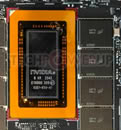

NVIDIA recommends the following steps to achieve RTX Spark optimization:
  • Review your application and third-party dependencies for Arm64 support.
  • Choose an Arm64 or Arm64EC porting strategy appropriate for your application.
  • Build and test your application on Windows on Arm.
  • Validate the NVIDIA and CUDA software paths used by your application.
  • Test installation, updates, functionality, and performance.
  • Validate on RTX Spark when supported hardware and software become available.
Currently, some RTX Spark hardware is available to developers, but nothing has yet been shipped to consumers. We expect to hear more about RTX Spark availability soon, as developers are starting to roll out optimizations. Even Japan's legendary SEGA has released AAA titles optimized for RTX Spark and is committing more resources to prepare the ecosystem. This means that VIRTUA FIGHTER CROSSROADS and future SEGA-branded titles will be available on NVIDIA's RTX Spark platform. Considering that NVIDIA plans more RTX Spark iterations with new CPU and GPU microarchitectures, ecosystem adoption will be essential to its success.
Sources: NVIDIA, via VideoCardz
Add your own comment

30 Comments on NVIDIA Paves the Way for Windows-on-Arm Gaming With RTX Spark Toolkit

#1
lexluthermiester
Compatibility with existing software? Unless they've pulled a rabbit out of their bum, I just don't see it happening.
Posted on Reply
#2
kondamin
lexluthermiesterCompatibility with existing software? Unless they've pulled a rabbit out of their bum, I just don't see it happening.
Now that AI is accelerating tasks like that, you will be surprised how quickly projects can be ported to other architectures.
objective is clear and testable, so give it to some agents and let them do the boring stuff.

but adoption of the platform isn't going to take off until prices become sane.

Who would waste $5000 on a first gen product for gaming?
Posted on Reply
#3
Exilarch
Meanwhile, Microsoft is paving the way for Gaming on Linux with their Windows 11 Annoyance Toolkit.
Posted on Reply
#4
kondamin
ExilarchMeanwhile, Microsoft is paving the way for Gaming on Linux with their Windows 11 Annoyance Toolkit.
Adobe is getting a new CEO, I hope they finally allow their software to run natively on linux.
Posted on Reply
#5
Darmok N Jalad
Until hardware prices become sane again, I’m not sure how much traction this will have. WOA has been a thing for a long time, but most of the market doesn’t want to pay a premium for it.
Posted on Reply
#6
lexluthermiester
kondaminyou will be surprised how quickly projects can be ported to other architectures.
Yes, I really would be. Shocked would be a better word.
Posted on Reply
#7
Space Lynx
Astronaut
It probably will happen, it just will be a 20% performance hit or something. Best to stick with what we have, well, I will be anyway.
Posted on Reply
#8
melkor_unlimited
kondaminWho would waste $5000 on a first gen product for gaming?
$2000 for Strixh Halo (+ Radeon 8060S) + 128GB RAM was too expensive for that.
(Price from times before Ram-O-calypse)
$5000 should be now a reasonable price just for paintings its logo green?

Gamers are not the audience for those.
Posted on Reply
#9
Darmok N Jalad
kondaminNow that AI is accelerating tasks like that, you will be surprised how quickly projects can be ported to other architectures.
objective is clear and testable, so give it to some agents and let them do the boring stuff.

but adoption of the platform isn't going to take off until prices become sane.

Who would waste $5000 on a first gen product for gaming?
I guess the question would be, will they do it anyway? Porting via AI might be doable, but it’s still an additional expense and I doubt AI will do it perfectly, requiring human intervention and testing, and then there’s all the associated post-port support, like when a driver or game update breaks something. It’s a lot like how developers won’t support Linux now, especially anything involving anti-cheat. It doesn’t require that much effort, but they’ll say it’s not worth it anyway. That’s not to mention any and all games that are no longer actively being updated or developed. It’s going to be emulation-city on these devices, even with NVIDIA’s clout.
Posted on Reply
#10
RinSenpai
melkor_unlimited$2000 for Strixh Halo (+ Radeon 8060S) + 128GB RAM was too expensive for that.
(Price from times before Ram-O-calypse)
It's currently $3200 with only 32GB RAM, and it was $2800-2900 before RAMpocalypse. 128GB RAM pushed it way above $4k so $5k for Nvidia and 128GB of memory isn't that much farfetched...
Like Strix Halo though, if you're buying this for gaming, you're just rich and throwing money.
Posted on Reply
#11
_roman_
Sometimes I really wonder how far back windows 95 is.

My 20 year gnu gentoo linux had so many archtiectures. some architectures were dropped etc.

arm, which is also up to definition arm 8, 9 or the 9x are not the same. The latest arm architecture is much more closer from the avx512 instruction set. i would differentiate between the old arm architecture and the newer one which has similar instruciton as avx512. The newer architecture is very powerful.

I would instantly buy the latest motherboard when everything would be in a socket with the latest arm cpu with those avx512 alike instruction set.

others have used rasperry pi XY with gnu gentoo linux for desktop usage for years. a basic desktop works on arm quite well for years.

-- I'm well aware of most people say it is x86. My amd turion notebook cpu was already am64. When you are stuck over 20 years in the past, keep on naming those intel and amd cpus as x86, although they have the amd64 feature set. Most windows software etc names itself as amd64 or 64bit. 32Bit cpu died with Windows xp. (When you wonder why do i know that, my gentoo was put on a supermarket notebook with one of the first amd64 cpus in my area. Fascinating at that time.) AMD and intel cpus are not backward compatible anyway, so naming those x86 is a nope. afaik 16bit mode is gone, amd dropped xop, and some other lost cpu features and instructions. The main reason why looking at the cpu instructions of the processor in question is very important.

-- Cuda should run, windows applications, hmm who knows. the wine emulation layer does not execute all windows software reliable.
Posted on Reply
#12
ncrs
_roman_I would instantly buy the latest motherboard when everything would be in a socket with the latest arm cpu with those avx512 alike instruction set.
I have good news for you then: ASRock Rack sells such a motherboard.
Posted on Reply
#13
Darmok N Jalad
_roman_Sometimes I really wonder how far back windows 95 is.

My 20 year gnu gentoo linux had so many archtiectures. some architectures were dropped etc.

arm, which is also up to definition arm 8, 9 or the 9x are not the same. The latest arm architecture is much more closer from the avx512 instruction set. i would differentiate between the old arm architecture and the newer one which has similar instruciton as avx512. The newer architecture is very powerful.

I would instantly buy the latest motherboard when everything would be in a socket with the latest arm cpu with those avx512 alike instruction set.

others have used rasperry pi XY with gnu gentoo linux for desktop usage for years. a basic desktop works on arm quite well for years.

-- I'm well aware of most people say it is x86. My amd turion notebook cpu was already am64. When you are stuck over 20 years in the past, keep on naming those intel and amd cpus as x86, although they have the amd64 feature set. Most windows software etc names itself as amd64 or 64bit. 32Bit cpu died with Windows xp. (When you wonder why do i know that, my gentoo was put on a supermarket notebook with one of the first amd64 cpus in my area. Fascinating at that time.) AMD and intel cpus are not backward compatible anyway, so naming those x86 is a nope. afaik 16bit mode is gone, amd dropped xop, and some other lost cpu features and instructions. The main reason why looking at the cpu instructions of the processor in question is very important.

-- Cuda should run, windows applications, hmm who knows. the wine emulation layer does not execute all windows software reliable.
16bit support died with the first 64bit OS. If you kept the 32bit version of Xp, Vista or 7, then at least some 16bit apps worked, or at least those not killed by the move to NT and the death of Real Mode. I don’t think most people really ran 64bit Vista, as most systems at the time were still shipping with less than 4GB. It was really late-Windows 7 where 64bit was the default OS.
Posted on Reply
#14
Chaitanya
kondaminAdobe is getting a new CEO, I hope they finally allow their software to run natively on linux.
Highly doubt that will happen, but if Adobe really does adopt Linux for their softwares(Lightroom in particular) then I will happily throw my MicroSlop Windows SSD into bin.
Posted on Reply
#15
Rulumi
Modern AMD and Intel CPUs still have the real 16-bit mode avaliable however, whether it has much people using it or if not all vendors make it easily valiable to the user is a different matter.
Posted on Reply
#16
Erratic4^2
ChaitanyaHighly doubt that will happen, but if Adobe really does adopt Linux for their softwares(Lightroom in particular) then I will happily throw my MicroSlop Windows SSD into bin.
No reason to wait to move away from Adobe. DaVinci Resolve, Darktable, the Affinity Suite (recently bought by Canva, so may not be good long term). There are many good options out there that also run on linux.
Posted on Reply
#17
melkor_unlimited
RulumiModern AMD and Intel CPUs still have the real 16-bit mode avaliable however, whether it has much people using it or if not all vendors make it easily valiable to the user is a different matter.
Even the 9580x3D2 boots as single core in 16-bit real mode.
It has to switch to protected mode.
Then to 64-bit mode.
And initialise all other cores.

Intel`s proposition of x86S (or what was its name) was about to remove all of those old modes and boot directly into 64-bit.
Posted on Reply
#18
kondamin
Darmok N JaladI guess the question would be, will they do it anyway? Porting via AI might be doable, but it’s still an additional expense and I doubt AI will do it perfectly, requiring human intervention and testing, and then there’s all the associated post-port support, like when a driver or game update breaks something. It’s a lot like how developers won’t support Linux now, especially anything involving anti-cheat. It doesn’t require that much effort, but they’ll say it’s not worth it anyway. That’s not to mention any and all games that are no longer actively being updated or developed. It’s going to be emulation-city on these devices, even with NVIDIA’s clout.
if the install base is large enough it's silly to leave that money on the table.
but as i said, at 5000 per box there won't be a lot of people getting those things for gaming.


The cost? i doubt a company like EPIC will have all that much trouble getting a couple of racks of nvidia compute running something like deepseek locally so inferencing is free other than the power it uses
Erratic4^2No reason to wait to move away from Adobe. DaVinci Resolve, Darktable, the Affinity Suite (recently bought by Canva, so may not be good long term). There are many good options out there that also run on linux.
I have tried all of them, lightroom and photoshop remain my go to's because they do more and i got used to their quirks
Posted on Reply
#19
Darmok N Jalad
kondaminif the install base is large enough it's silly to leave that money on the table.
but as i said, at 5000 per box there won't be a lot of people getting those things for gaming.


The cost? i doubt a company like EPIC will have all that much trouble getting a couple of racks of nvidia compute running something like deepseek locally so inferencing is free other than the power it uses

I have tried all of them, lightroom and photoshop remain my go to's because they do more and i got used to their quirks
Yeah, but that's the same argument those that game on Linux make, and we have studios like Bungie that would rather have their products die before adopting and form of Linux support.

And I agree, there really isn't a good Linux alternative for photo editing, and WINE hasn't been very productive for the commercial softwares, outside of a Lutris+On1 combo.
Posted on Reply
#20
TheinsanegamerN
I'm glad somebody is pushing ARM forward. I'm tired of the x86 duopoly.
Erratic4^2No reason to wait to move away from Adobe. DaVinci Resolve, Darktable, the Affinity Suite (recently bought by Canva, so may not be good long term). There are many good options out there that also run on linux.
Unless your workflows and tools don't work on the alternatives....
Posted on Reply
#21
Chaitanya
Erratic4^2No reason to wait to move away from Adobe. DaVinci Resolve, Darktable, the Affinity Suite (recently bought by Canva, so may not be good long term). There are many good options out there that also run on linux.
Have tried darktable and it is lagging behind Lightroom. I primarily use Lightroom for organization(inc. GPS) while Zerene(it has native linux version) is used for stacking photos and editing those stacks.
Posted on Reply
#22
Grimling
RinSenpaiIt's currently $3200 with only 32GB RAM, and it was $2800-2900 before RAMpocalypse. 128GB RAM pushed it way above $4k so $5k for Nvidia and 128GB of memory isn't that much farfetched...
Like Strix Halo though, if you're buying this for gaming, you're just rich and throwing money.
German Word: arm
poor
needy
examples
poor man: armer Mann
to be poor: arm sein
to become poor (od impoverished): arm werden
Posted on Reply
#23
jdrch
Not really sure this is about gaming. The kit is CUDA-related, and I don't know of any games that use CUDA.
Posted on Reply
#24
shuffy_losys
jdrchNot really sure this is about gaming. The kit is CUDA-related, and I don't know of any games that use CUDA.
Any games that have a GPU compute path is using CUDA on NVIDIA.
TheinsanegamerNI'm glad somebody is pushing ARM forward. I'm tired of the x86 duopoly.
If we're talking about a third or fourth option for CPUs, it is nice. But if we're isolating things to ARM, ARM isn't much better since ARM and Qualcomm are the only two that design high-performance CPUs that they sell to anyone else (I don't know if Samsung Exynos is considered high performance and who knows what the Chinese are doing if they're not using an ARM Holdings design)
Posted on Reply
#25
igormp
shuffy_losysAny games that have a GPU compute path is using CUDA on NVIDIA.
No it's not. CUDA is a different API entirely, similarly to Vulkan, OpenGL, DX, OpenCL, etc etc.
As far as I'm aware the only thing in games that ever used actual CUDA was PhysX.
shuffy_losysARM isn't much better since ARM and Qualcomm are the only two that design high-performance CPUs that they sell to anyone else
Ampere has nice CPUs (not ground braking but pretty good for the price), and Nvidia will soon start selling their own CPUs as well (they already had APUs and embedded ARM SoCs available tho).
Posted on Reply
Add your own comment
Nov 20th, 2026 15:59 PST change timezone

New Forum Posts

Popular Reviews

TPU on YouTube

Controversial News Posts