News Posts matching #RX 9070 XT

Return to Keyword Browsing

AMD Radeon RX 9070 XT Pricing Leak: More Affordable Than RTX 5070?

As we reported yesterday, the Radeon RX 9070 XT appears to be all set to disrupt the mid-range gaming GPU segment, offering performance that looks truly enticing, at least if the leaked synthetic benchmarks are anything to go by. The highest-end RDNA 4 GPU is expected to handily outperform the RTX 4080 Super despite costing half as much, with comparison to its primary competitor, the RTX 5070, yet to be made.

Now, a fresh leak has seemingly hinted at how heavy the RDNA 4 GPU is going to be on its buyers' pockets. Also sourced from Chiphell, the Radeon RX 9070 XT is expected to command a price tag between $479 for AMD's reference card and roughly $549 for an AIB unit, varying based on which exact product one opts for. At that price, the Radeon RX 9070 XT easily undercuts the RTX 5070, which will start from $549, while offering 16 GB of VRAM, albeit of the older GDDR6 spec. There is hardly any doubt that the RTX GPU will come out ahead in ray tracing performance, as we already witnessed yesterday, although traditional rasterization performance will be more interesting to compare.

AMD Radeon RX 9070 XT Benchmarked in 3D Mark Time Spy Extreme and Speed Way

Although it has only been a few days since the RDNA 4-based GPUs from Team Red hit the scene, it appears that we have already been granted a first look at the 3D Mark performance of the highest-end Radeon RX 9070 XT GPU, and to be perfectly honest, the scores seemingly live up to our expectations - although with disappointing ray tracing performance. Unsurprisingly, the thread has been erased over at Chiphell, but folks have managed to take screenshots in the nick of time.

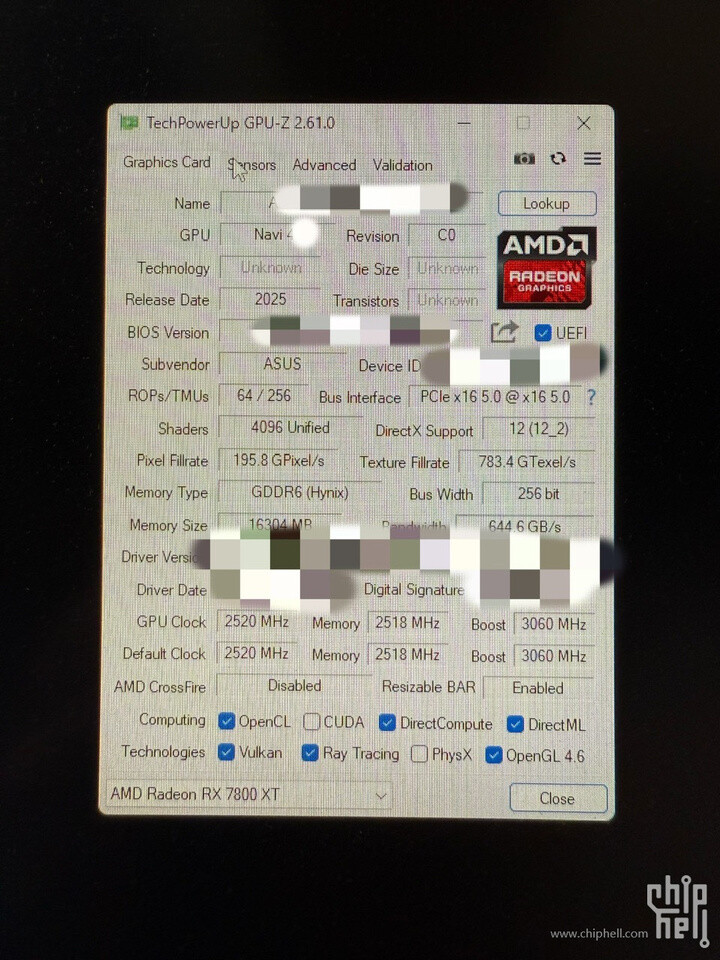
The specifics reveal that the Radeon RX 9070 XT will arrive with a massive TBP in the range of 330 watts, as revealed by a FurMark snap, which is substantially higher than the previous estimated numbers. With 16 GB of GDDR6 memory, along with base and boost clocks of 2520 and 3060 MHz, the Radeon RX 9070 XT managed to rake in an impressive 14,591 points in Time Spy Extreme, an around 6,345 points in Speed Way. Needless to say, the drivers are likely far from mature, so it is not outlandish to expect a few more points to get squeezed out of the RDNA 4 GPU.

ASUS TUF Gaming Radeon RX 9070 XT Comes with Three 8-pin Power Connectors

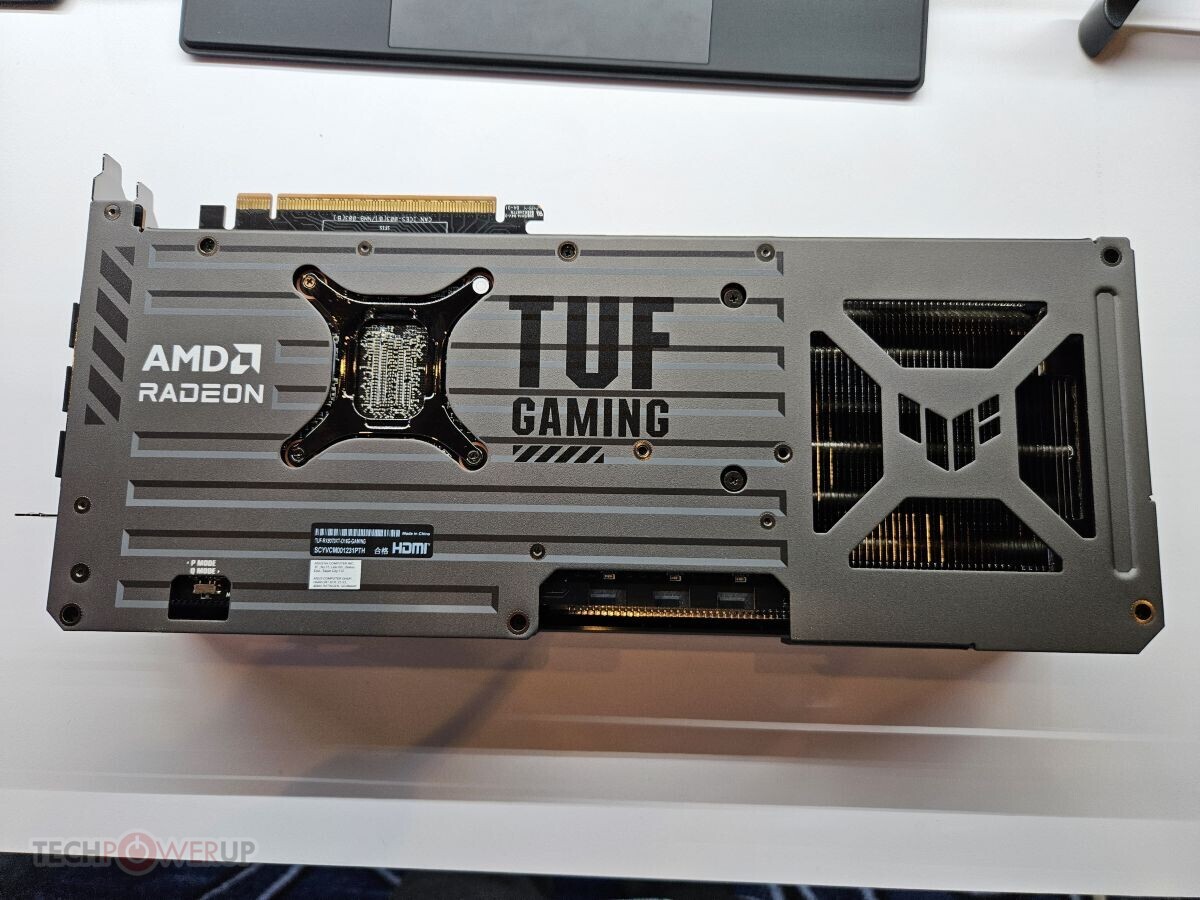
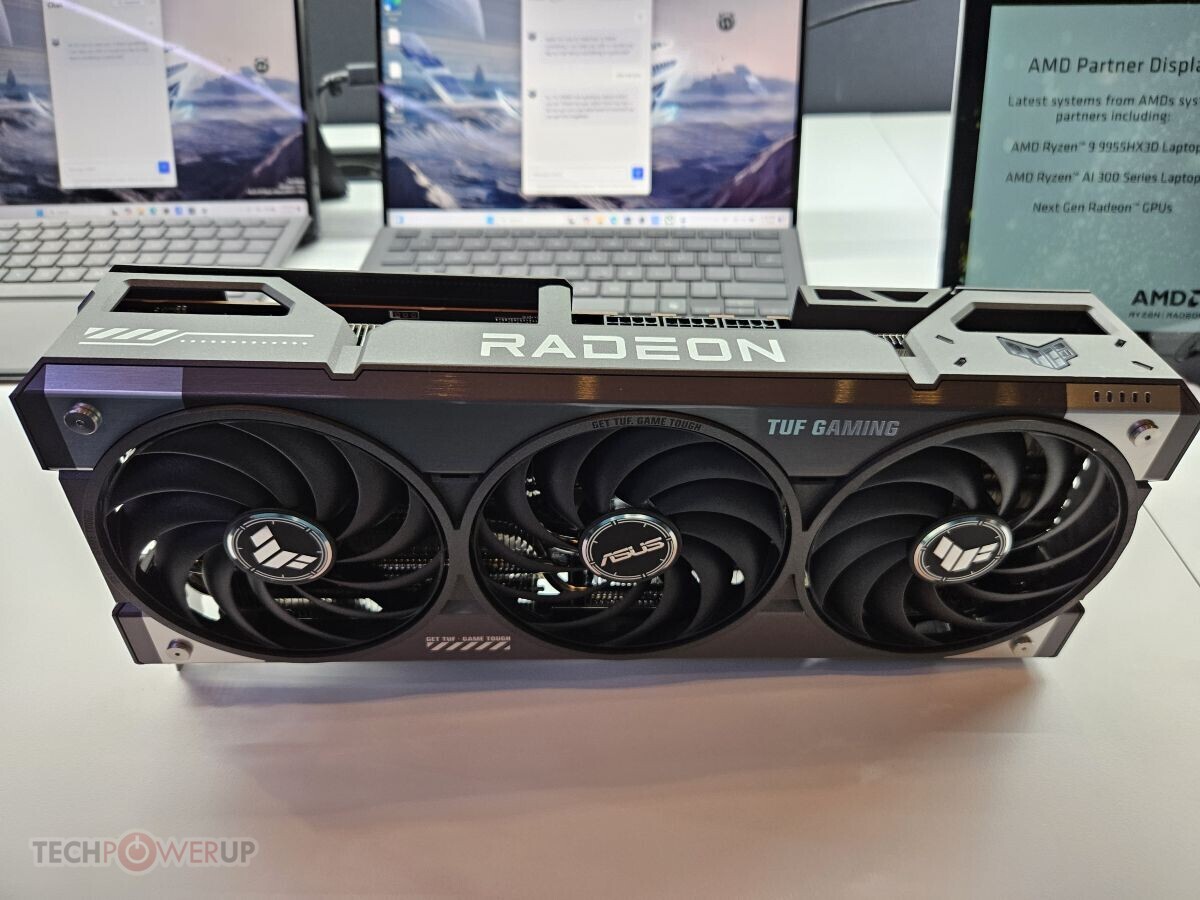
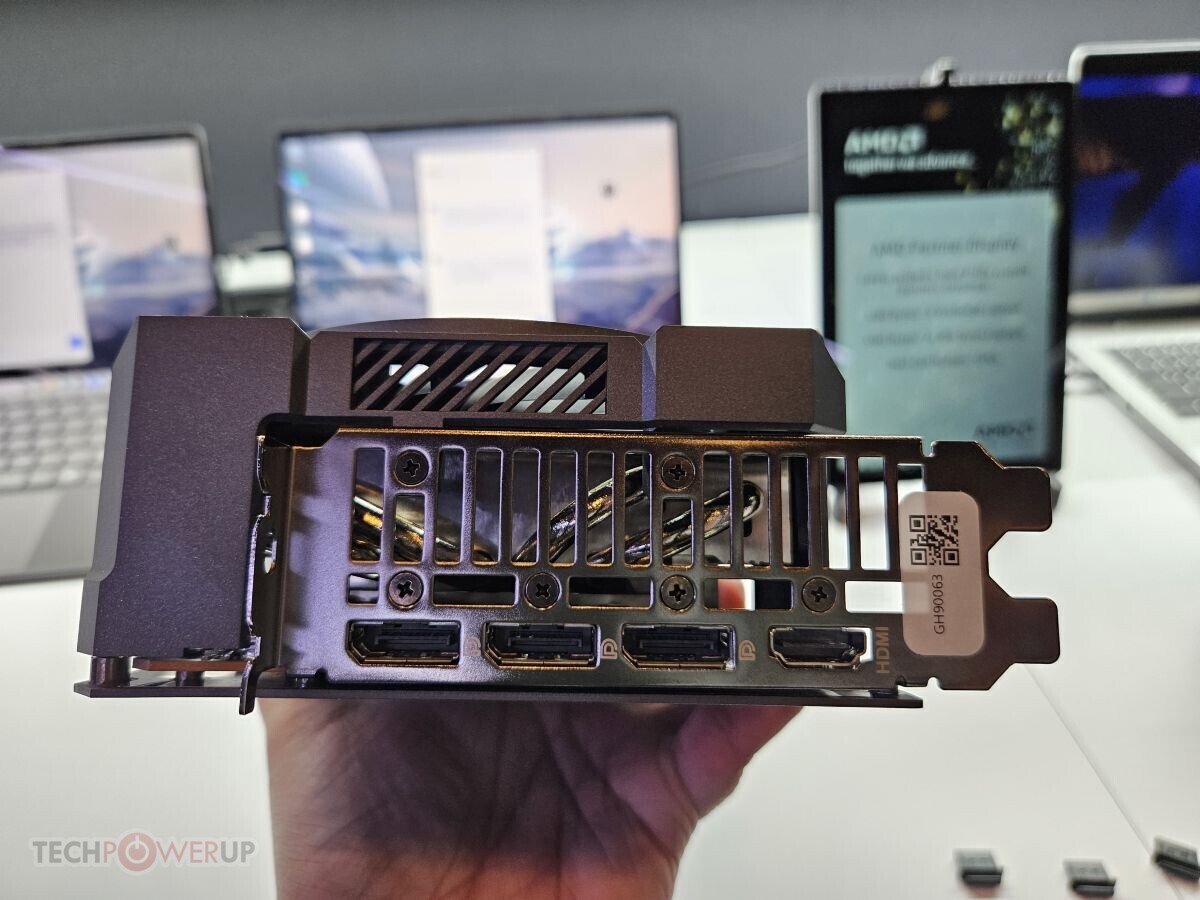
At the 2025 International CES, ASUS showed off its Radeon RX 9070 XT TUF Gaming graphics card. This card was part of a multi-brand showcase AMD set up in its booth. The card features the latest generation of TUF Gaming board design that the company is debuting with the GeForce RTX 50-series and Radeon RX 90-series. The card features a triple slot cooling solution, with its Axial-Tech fans taking up an entire slot (thicker fans mean lower RPM). The PCB is 2/3 the length of the card, so all airflow from the third fan is vented through the heatsink and out a large cutout on the backplate.

Perhaps the most striking feature of the ASUS TUF Gaming RX 9070 XT is its power connectors. The card calls for three 8-pin PCIe power connectors. We've only seen one other custom RX 9070 XT come with three connectors, and that is the XFX RX 9070 XT Merc 319 Black. The question then arises, what is a small performance-segment GPU going to do with 525 W of power on tap? Most other cards, including the PowerColor Red Devil, come with just two 8-pin connectors (375 W), so does the presence of three connectors mean that the board power of overclocked RX 7090 XT exceed 300 W, and board partners are trying to reduce the load on the 75 W put out by the PCIe slot, by sneaking in a third 8-pin input? This isn't the only oddball power connector configuration we've seen at CES for the RX 9070 series. The ASRock RX 9070 XT Taichi comes with a 16-pin 12V2x6 power connector, although there's no way of telling yet if this is configured for 600 W—it could even be keyed for 300 W.

Hands On with the PowerColor Radeon RX 9070 XT Red Devil and HellHound

At CES 2025, we went hands on with PowerColor's new Radeon RX 9070 series graphics cards. These include the RX 9070 XT and the RX 9070. PowerColor will keep custom board designs common for both SKUs as they're both based on the 4 nm "Navi 48" silicon. We get the general feeling that these cards aren't designed as over-the-top as the RX 7900 series custom designs; since the GPUs are positioned in the performance segment, and AMD's board partners would ideally like to give themselves room to price-wars against NVIDIA's products from the RTX 5070 series.

The PowerColor RX 9070 XT Red Devil features a triple-slot cooling solution. It is a fairly long card, with an aluminium fin-stack heatsink that's ventilated by a trio of fans. The large, rhomboid vent on its backplate gives you the impression that the PCB inside is just two-thirds the length of the card—it's not, it's closer to 80% its length. There is an elaborate LED-illuminated decal at the tail end of the card. The Red Devil gets a few premium features, such as dual-BIOS, and the company's highest factory overclock. The lighting on this card is RGB and controllable via software. The card draws power from a pair of 8-pin PCIe power connectors. The 375 W of power on tap should be sufficient for a performance-segment GPU.

ASRock Unleashes Custom Radeon RX 9070 XT & 9070 GPUs at CES 2025

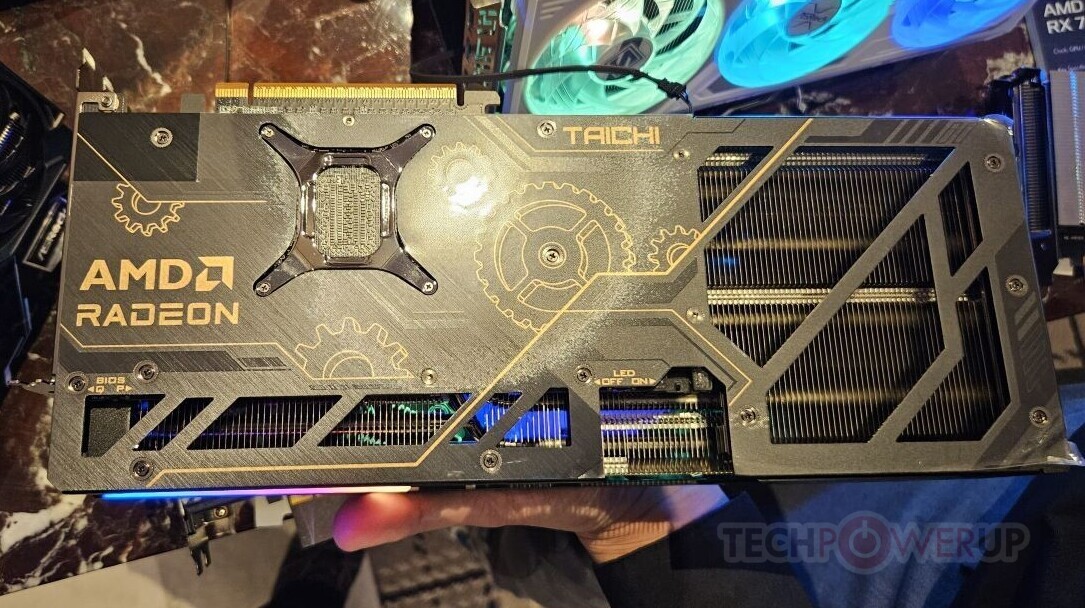
ASRock has showcased its AMD Navi 48 GPUs on the showroom floor at this year's CES trade event—only hours ago, a TechPowerUp team member familiarized themselves with Taichi, Steel Legend and Challenger options. The new models are offered up in Radeon RX 9070 XT and 9070 variants—these next generation cards are due to arrive later this quarter alongside RDNA 4 and FSR 4 technologies. Out of the gate ASRock representatives were keen to show off their new flagship cog/gear-themed model.

The ASRock Radeon RX 9070 XT Taichi is a very long and chunky proposition—TPU's photos depict a triple-slot design, continuing the legacy of preceding Taichi designs. ASRock has refreshed its custom shrouds and backplates for the RDNA 4 generation—the incoming RX 9070 XT Taichi is quite boxy when compared to its older sibling. Cog wheel graphics on the backplate seem to jump out more due to updated coloration/contrast. The usual Taichi triple-fan config is present here, with a smattering of RGB lighting strips spread across its shroud. Performance and quiet operating modes can be accessed via a rear switch. Another switch—placed next to the card's single 12-pin power connector—gives you the option to turn onboard LED lighting on or off.

GIGABYTE Shows Off Custom Radeon RX 9070 and 9070 XT GPUs at CES 2025

At CES 2025, GIGABYTE unveiled their latest Radeon RX 9070 series GPUs, showcasing the AORUS Radeon RX 9070 XT ELITE and the Radeon RX 9070 GAMING OC models. Powered by AMD's new RDNA 4 architecture, GIGABYTE has prepared a massive triple-fan cooling setup for both cards. The AORUS RX 9070 XT ELITE stands out with its WINDFORCE cooling system, featuring a newly designed Hawk fan and a vapor chamber with composite copper heat pipes for enhanced thermal management. The card also glows with an RGB Halo lighting system, a reinforced structure with an RGB-illuminated metal backplate, and dual BIOS modes for performance and silent operation. Meanwhile, the RX 9070 GAMING OC offers similar cutting-edge features in a sleek package, tailored for gamers who demand a balance of performance and style.

These new GIGABYTE models, with features such as dual BIOS for overclocking, help AMD's RX 9070 series deliver performance comparable to the RX 7900 XT or even higher in rasterization while introducing innovations like 2nd gen AI accelerators, 3rd gen ray tracing accelerators, and the FidelityFX Super Resolution 4 (FSR 4) with frame generation and anti-lag technology. With these GPUs set to launch in Q1 2025, we will learn more about the pricing structure in the coming days.

AMD Debuts Radeon RX 9070 XT and RX 9070 Powered by RDNA 4, and FSR 4

AMD at the 2025 International CES announced the Radeon RX 9070 XT and Radeon RX 9070 desktop performance-segment graphics cards. These will be the face of AMD's next generation of gaming graphics products, and will be powered by the new RDNA 4 graphics architecture. AMD hopes to launch both cards within Q1 2025. AMD changed the nomenclature of its gaming GPUs mainly because it has made a tactical retreat from the enthusiast graphics segment, its fastest products will compete in the performance segment. From the way AMD arranged the Radeon RX 9070 series and 9060 series product stack against the backdrop of the Radeon RX 7000 series, the GeForce RTX 4000 series, and the anticipated GeForce RTX 5000 series, the RX 9070 XT will offer performance roughly similar to the Radeon RX 7900 XT in raster, with the RX 9070 being slightly faster than the RX 7800 XT. The RX 9060 XT will beat the RX 7700 XT, while the RX 9060 beats the RX 7600 XT.

With RDNA 4, AMD claims generational SIMD performance increase on the RDNA 4 compute units. The 2nd Gen AI accelerators will boast of generational performance increase, and AMD will debut a locally-accelerated generative AI application down the line, called the AMD Adrenalin AI, which can generate images, summarize documents, and perform some linguistic/grammar tasks (rewriting), and serve as a chatbot for answering AMD-related queries. This is basically AMD's answer to NVIDIA Chat RTX. AMD's 3rd Gen Ray accelerator is expected to reduce the performance cost of ray tracing, by putting more of the ray tracing workload through dedicated hardware, offloading the SIMD engine. Lastly, AMD is expected to significantly upgrade the media acceleration and display I/O of its GPUs.

PowerColor Teases Radeon RX 9070 XT "Red Devil" GPU

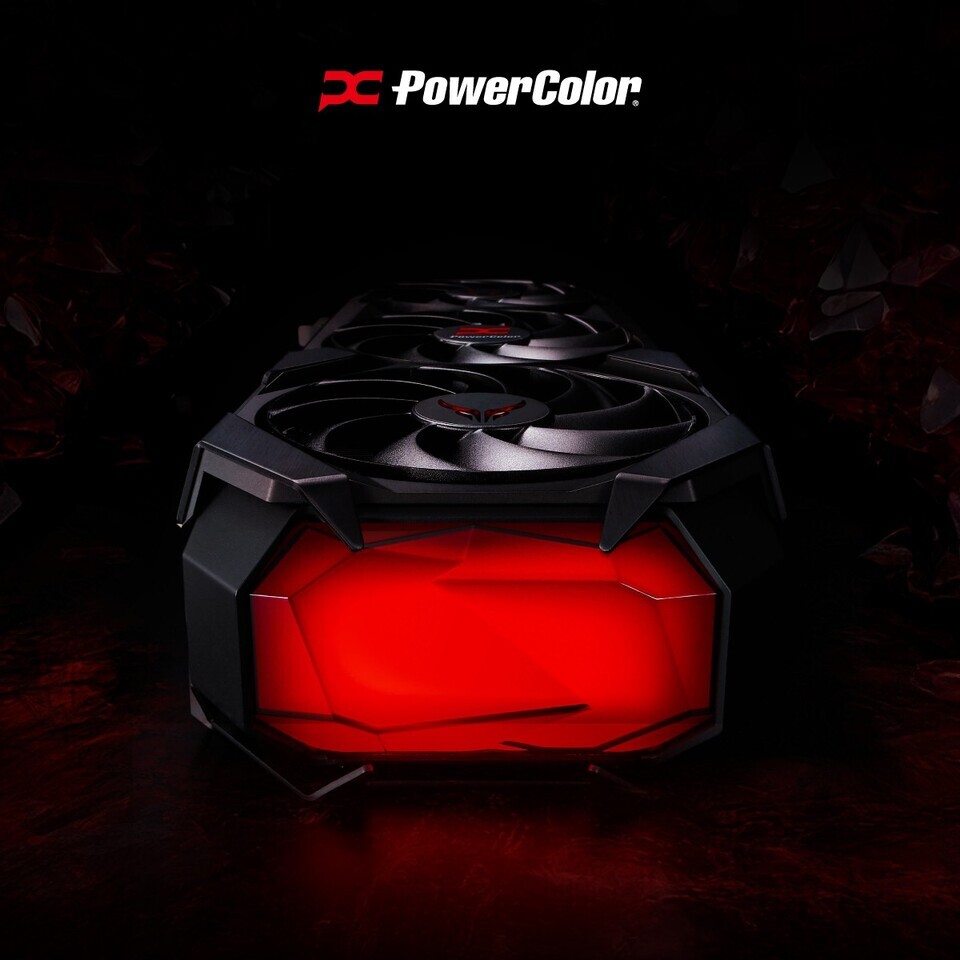
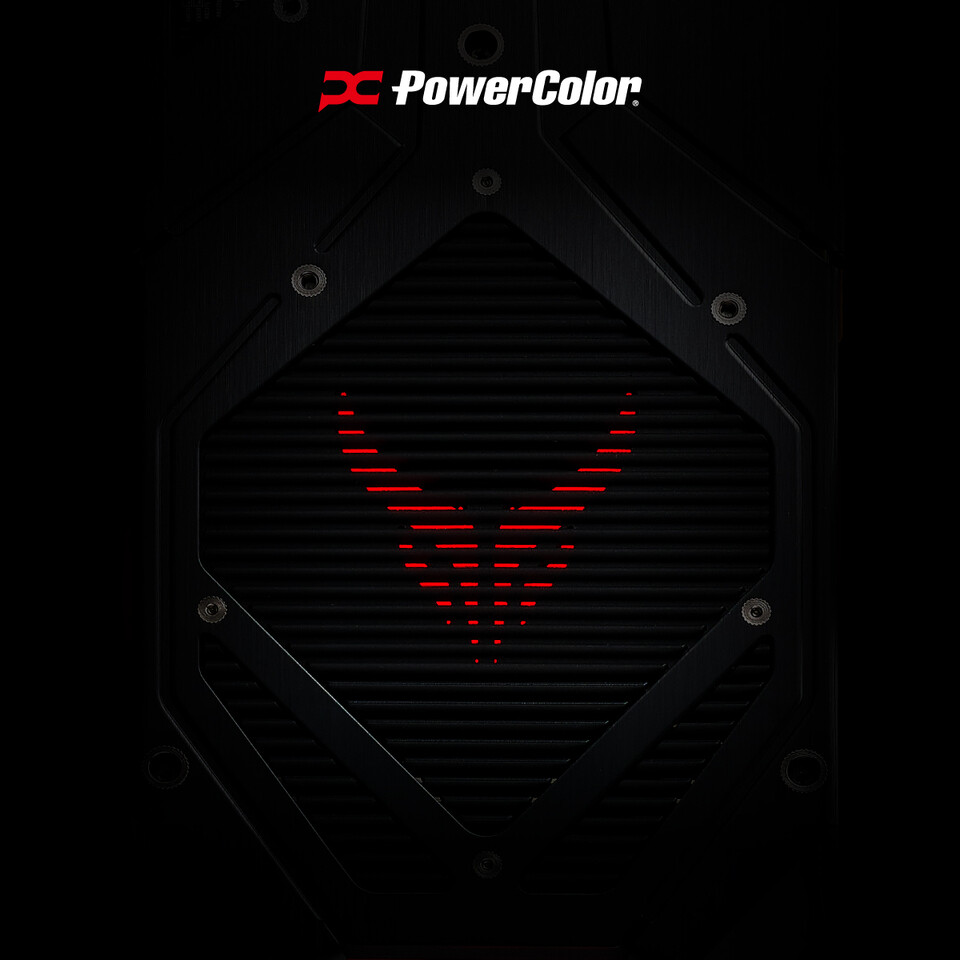
PowerColor has prepared its highest-end Radeon RX 9070 XT GPU in the "Red Devil" family. In a post on the social media platform X, PowerColor shared the below picture with the following words: "Every edge shines like a gem. Every second burns like fire. If power was in your hands, how would you use it?" The picture shows an interesting design with a black shroud holding a red acrylic core, which follows the design philosophy of Red Devil cards. On the backplate, PowerColor has embedded a Red Devil sign with a meshed plate on top of it to show the card branding. Suppose the previous generations of Red Devil cards are for reference. In that case, we assume that the Radeon RX 9070 XT Red Devil will deliver top-tier specifications and component selection for overclocking, meaning that this card will be one of the highest-end RDNA 4 designs that we will see. Of course, surprises are welcome, and we must wait for the CES launch to see more.

AMD to Launch Mid-range SKUs of the Radeon RX 9000 Series in March

AMD is expected to have a rather lean lineup of next-generation gaming GPUs powered by the RDNA 4 graphics architecture. The series is expected to debut at AMD's 2025 International CES keynote address, with product launches of the series-leading Radeon RX 9070 XT and RX 9070 performance-segment GPUs later this month. The RX 9070 should be available by late-January, although add-in board partners from China expect availability to ramp in February 2025. The series will see expansion with more announcements in March.

The RDNA 4 generation is driven mainly by two chips—the larger "Navi 48," and the smaller "Navi 44." The "Navi 48" will power the RX 9070 series, which are performance-segment and designed to compete with the NVIDIA GeForce RTX 5070 series; but cut-down variants of the chip are also expected to power certain upper mid-range SKUs that go up against the RTX 5060 series. The "Navi 44" chip is expected to power certain high performance/price SKUs in the mid-range, which AMD will use to target price-points well under the $300-mark. This segment is expected to heat up as NVIDIA has current-generation RTX 4060 series, Intel just made a stab with the Arc B580, and is expected to launch a faster Arc B700-series SKU based on a maxed-out "BMG-G21" silicon.

AMD Radeon "RDNA 4" RX 9000 Series Will Feature Regular 6/8-Pin PCI Express Power Connectors

AMD will continue using traditional PCI Express power connectors for its upcoming Radeon RX 9000 series RDNA 4 graphics cards, according to recent information shared on the Chiphell forum. While there were some expectations that AMD would mimic NVIDIA's approach, which requires the newer 16-pin 12V-2×6 connector for its GeForce RTX 50 series, the latest information suggests a more traditional power approach. While AMD plans to release its next generation of graphics cards in the first quarter, most technical details remain unknown. The company's choice to stick with standard power connectors follows the pattern set by their recent Radeon RX 7900 GRE, which demonstrated that conventional PCI Express connectors can adequately handle power demands up to 375 W. The standard connectors eliminate the need for adapters, a feature AMD could highlight as an advantage. An earlier leak suggested that the Radeon RX 9070 XT can draw up to 330 W of power at peak load.

Intel reportedly cited similar reasons for using standard power connectors in their Arc "Battlemage" graphics cards, suggesting broader industry support for maintaining existing connection standards. NVIDIA's different approach reportedly requires all board partners to use the 12V-2×6 connector for the RTX 50 series, removing the option for traditional PCI Express power connectors. In contrast, AMD's decision gives its manufacturing partners more flexibility in their design choices, and MBA (Made by AMD) reference cards don't enforce the new 12V-2×6 power connector standard. Beyond the power connector details and general release timeframe pointing to CES, AMD has revealed little about the RDNA 4 architecture's capabilities. Only the reference card's physical appearance and naming scheme appear to be finalized, leaving questions about performance specifications unanswered, as early underwhelming performance leaks are somewhat unreliable until final drivers and final optimizations land.

AMD Radeon RX 9070 XT Boosts up to 3.10 GHz, Board Power Can Reach up to 330W

AMD's upcoming Radeon RX 9070 XT graphics card can boost its engine clock up to 3.10 GHz, a new leak that surfaced on ChipHell says. Depending on the board design, its total board power can reach up to 330 W, the leak adds. The GPU should come with a very high base frequency for the engine clock, with the leaker claiming a 2.80 GHz base frequency (can be interpreted as Game clocks), with the GPU boosting itself up to 3.10 GHz when the power and thermals permit. The RX 9070 XT will be the fastest graphics card from AMD to be based on its next-generation RDNA 4 graphics architecture. The company isn't targeting the enthusiast segment with this card, but rather the performance segment, where it is expected to go up against NVIDIA's GeForce RTX 5070 series.

RDNA 4 is expected to introduce massive generational gains in ray tracing performance, as AMD is rumored to have significantly developed its ray tracing hardware, to reduce the performance cost of ray tracing. However, as it stands, the "Navi 48" silicon that the RX 9070 XT is based on, is still a performance-segment chip, which succeeds the "Navi 32" and "Navi 22," with a rumored compute unit count of 64, or 4,096 stream processors. Performance-related rumors swing wildly. One set of rumors say that the card's raster graphics performance is in league of the RX 7900 GRE but with ray tracing performance exceeding that of the RX 7900 XTX; while another set of rumors say it beats the RX 7900 XT in raster performance, and sneaks up on the RTX 4080. We'll know for sure in about a month's time.

AMD Radeon RX 9070 XT Alleged Benchmark Leaks, Underwhelming Performance

Recent benchmark leaks have revealed that AMD's upcoming Radeon RX 9070 XT graphics card may not deliver the groundbreaking performance initially hoped for by enthusiasts. According to leaked 3DMark Time Spy results shared by hardware leaker @All_The_Watts, the RDNA 4-based GPU achieved a graphics score of 22,894 points. The benchmark results indicate that the RX 9070 XT performs only marginally better than AMD's current RX 7900 GRE, showing a mere 2% improvement. It falls significantly behind the RX 7900 XT, which maintains almost a 17% performance advantage over the new card. These findings contradict earlier speculation that suggested the RX 9070 XT would compete directly with NVIDIA's RTX 4080.

However, synthetic benchmarks tell only part of the story. The GPU's real-world gaming performance remains to be seen, and rumors indicate that the RX 9070 XT may offer significantly improved ray tracing capabilities compared to its RX 7000 series predecessors. This could be crucial for market competitiveness, particularly given the strong ray tracing performance of NVIDIA's RTX 40 and the upcoming RTX 50 series cards. The success of the RX 9070 XT depends on how well it can differentiate itself through features like ray tracing while maintaining an attractive price-to-performance ratio in an increasingly competitive GPU market. We expect these scores not to be the final tale in the AMD RDNA 4 story, as we must wait and see what AMD delivers during CES. Third-party reviews and benchmarks will give the final verdict in the RDNA 4 market launch.

AMD to Launch Radeon RX 9070 Series and FSR 4 Alongside Ryzen 9 9000X3D Processors in January

AMD's client computing division is expected to have an action-packed 2025 International CES. On the CPU front, the company is expected to expand its Ryzen 9000X3D family with high-core count models, such as the Ryzen 9 9950X3D and Ryzen 9 9900X3D. It is also expected to introduce certain power-efficient 65 W models of its non-X3D Ryzen 9000 series "Zen 5" chips, which serve as value options within this processor generation, to try and lure buyers off the 65 W Intel Core Ultra "Arrow Lake-S" models. On the gaming graphics side, the company is expected to debut its Radeon RX 9000 series, led by the RX 9070 XT and RX 9070, both of which are based on the "Navi 48" silicon, and powered by the RDNA 4 graphics architecture.

That's not all, AMD is also expected to announce the new FSR 4 technology for gamers. Leaks describe FSR 4 as being a performance enhancement that's a generation ahead of FSR 3.x. While FSR 3.x combines super-resolution based performance enhancement, and algorithmic frame-generation that nearly doubles framerates; FSR 4 is expected to be AMD's first performance enhancement to incorporate AI to not just enhance the visual detail in super-resolution, but also to improve accuracy of frame-generation. At this point, it is not known if FSR 4 will be available as a feature at launch of the Radeon RX 9070 series. VideoCardz reports that the early-January announcements could be followed by late-January availability of the hardware.

AMD RDNA 3.5 Powers Radeon RX 8000 for Mobile, RDNA 4 Drives RX 9000 Desktop Series

AMD's interim RDNA 3.5 architecture will power the Radeon RX 8000 series integrated graphics in "Strix Halo" mobile processors, while the more advanced RDNA 4 architecture is reserved for the higher-tier Radeon RX 9000 series of discrete graphics, according to @9550pro on X. We previously believed that AMD's Ryzen AI MAX 300 Strix Halo processors would carry an iGPU with Radeon 8000S branding. However, at the same time, we expected the Radeon RX 8000 series of desktop GPUs to have a similar branding while being powered by RDNA 4. The new Radeon naming scheme is now transparent, thanks to the latest leaks of the naming schemes and early glimpses of reference design.

The RDNA 4-based RX 9000 series will be powered by the Radeon RX 9070 XT, built on the Navi 48 silicon. This GPU represents AMD's new focus on the high-volume midrange performance segment rather than competing in the ultra-enthusiast high-end space. The architecture promises enhanced SIMD IPC performance and a specialized ray tracing solution that significantly reduces performance overhead compared to current offerings. According to All The Watts, the RX 9000 lineup is expected to include various SKUs across different performance tiers, including the RX 9060, 9050, and 9040 series. Meanwhile, the RDNA 3.5-powered RX 8000 series will serve as a refined iteration of the current RDNA 3 generation. Still, they will be exclusive to AMD's mobile segment in the form of iGPU, integrated inside Strix Halo APU. Both RDNA 4 GPUs and RDNA 3.5-based APUs are scheduled for the CES 2025 event unveiling in January.

AMD Radeon "RX 8800 XT" is Actually the RX 9070 XT?

It turns out that the Radeon RX 8800 XT, the top SKU in AMD's next generation gaming GPU series, is actually named the Radeon RX 9070 XT. European computer hardware retailer may have leaked the name, along with that of the Radeon RX 9070 (non-XT), ahead of its January 2025 reveal. The two cards appeared in the store's search filters, where it was screengrabbed by enthusiasts. The RX 9070 XT is what was supposed to be the RX 8800 XT; while the RX 9070 is the RX 8800. Extrapolating this, the series could include the RX 9060 series, the RX 9050 series, and the RX 9040 series, says All The Watts.

What prompted this change in nomenclature probably has to do with the company's decision to withdraw from the enthusiast segment of gaming GPUs. While the RX 9070 XT technically succeeds the RX 7800 XT, a performance-segment, 1440p-class SKU, the company wouldn't want its product stack to have a "void" left by the lack of an "RX 8900 series." The company also took the opportunity to skip the RX 8000 series altogether, which probably give it room to rebadge some SKUs from the RX 7000 series over to the RX 8000 series. The RX 9070 XT and RX 9070 are based on the "Navi 48" silicon, and implement the RDNA 4 graphics architecture.
Return to Keyword Browsing
Nov 26th, 2026 00:23 CST change timezone

New Forum Posts

Popular Reviews

TPU on YouTube

Controversial News Posts