News Posts matching #RX 9070 XT

Return to Keyword Browsing

Alphacool Unveils Core-series Radeon RX 9070 XT Water Block

Alphacool International GmbH, based in Braunschweig, has been a pioneer in PC water cooling technology for over 20 years. With one of the most comprehensive product portfolios in the industry and over 20 years of experience, Alphacool is now expanding its portfolio with the new Core RX 9070 XT graphics card water coolers with Backplate.

The GPU water coolers have been completely redesigned. Precise adjustments to the spacing between the cooler and the PCB, along with optimized water flow simulations and extensive practical testing, have resulted in significant improvements to the cooler base and jetplate. These enhancements ensure maximum cooling performance for the newest AMD Radeon RX 9070 XT generation. The GPU water coolers feature a precisely machined copper base with high-quality chrome plating for exceptional durability and a smooth surface. The design is further complemented by robust brass fittings with a nylon cover, ensuring maximum safety and reliability.

Vastarmor Updates its Radeon RX 9070 XT Super Alloy Design with Zany Rainbow "Ultra" Edition

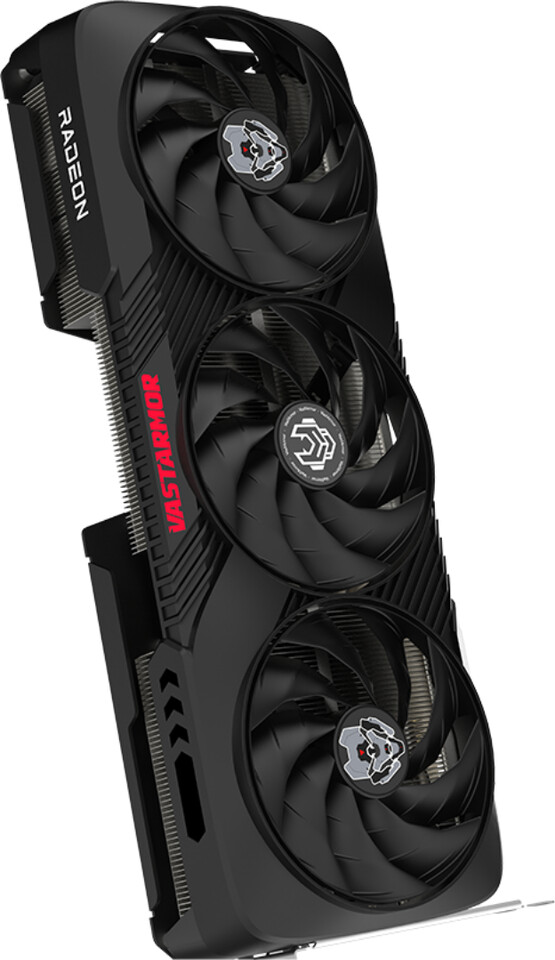
Roughly a month ago, Vastarmor debuted its "Super-less" Radeon RX 9070 XT Alloy SKU. The Chinese manufacturer's barebones spin-off—derived from a triple-fan flagship design—was stripped of fancy ARGB trimmings. Additionally, this sober-looking alternative option was deemed unworthy of sporting 3.1 GHz boost clock credentials—instead, making do with a mere 3010 MHz setting. A brand-new "Super Alloy Ultra" model retains elite-tier membership; as demonstrated by a recently published specification sheet. The Vastarmor design team has opted into using a louder and wider color palette; clearly demonstrated by their fresh RX 9070 XT Super Alloy Ultra's zany pearlescent rainbow-spectrum shroud setup. Unfortunately, this bright aesthetic treatment did not extend to the new flagship's backplate. The AIB's Super Alloy White option was appropriately decorated; on the front and back. Vastarmor's latest offering is not expected to break retail barriers beyond Chinese markets. ASRock's premium Radeon RX 9070 XT Taichi OC card is—perhaps—the closest to being a visually "eccentric" option for global audiences. Fittingly, its factory overclocked talents include a 3.1 GHz boost clock.

8K Association Teases "World First" Showcase of 120 Hz 8K Gaming Experience - Enabled by AMD Hardware

The 8K Association was at the NAB 2025 Show with several areas of interest. At one end of the booth, there was a demonstration of real time gaming using an AMD-based gaming PC and a special 65" TV flown in from Korea by 8K Association member, Samsung, that supported 120 FPS display. The game was Horizon Forbidden West and the TV was a modified Neo QLED 8K display set enabled with the following features: Auto Low Latency Mode (ALLM), Variable Refresh Rate (VRR), and FreeSync Premium Pro. The PC was from MAINGEAR and used an AMD Ryzen 7 9800X3D CPU and an AMD Radeon RX 9070 XT GPU. The game supports the Steam platform which allows analytics to be shown and confirming the 120 Hz operation. The game was rendered at 5K and was then internally upscaled using AMD ML-based FidelityFX Super Resolution 3 technology.

The signal was sent to the TV using HDMI 2.1b with DSC support and the impressive smooth visuals attracted a lot of attention from visitors, especially those that were already aware of the game, which is visually very impressive. In the center of the booth was the latest 8KA "sizzle reel" which includes video provided by member company Imax featuring some impressive content scanned from its 70 mm film stock. BZBGear, another 8KA member was showing its range of switches, splitters and HDBaseT transmitters and receivers which all support 8K.

PC Enthusiasts Discover Samsung GDDR6 Modules in Radeon RX 9070 XT Cards

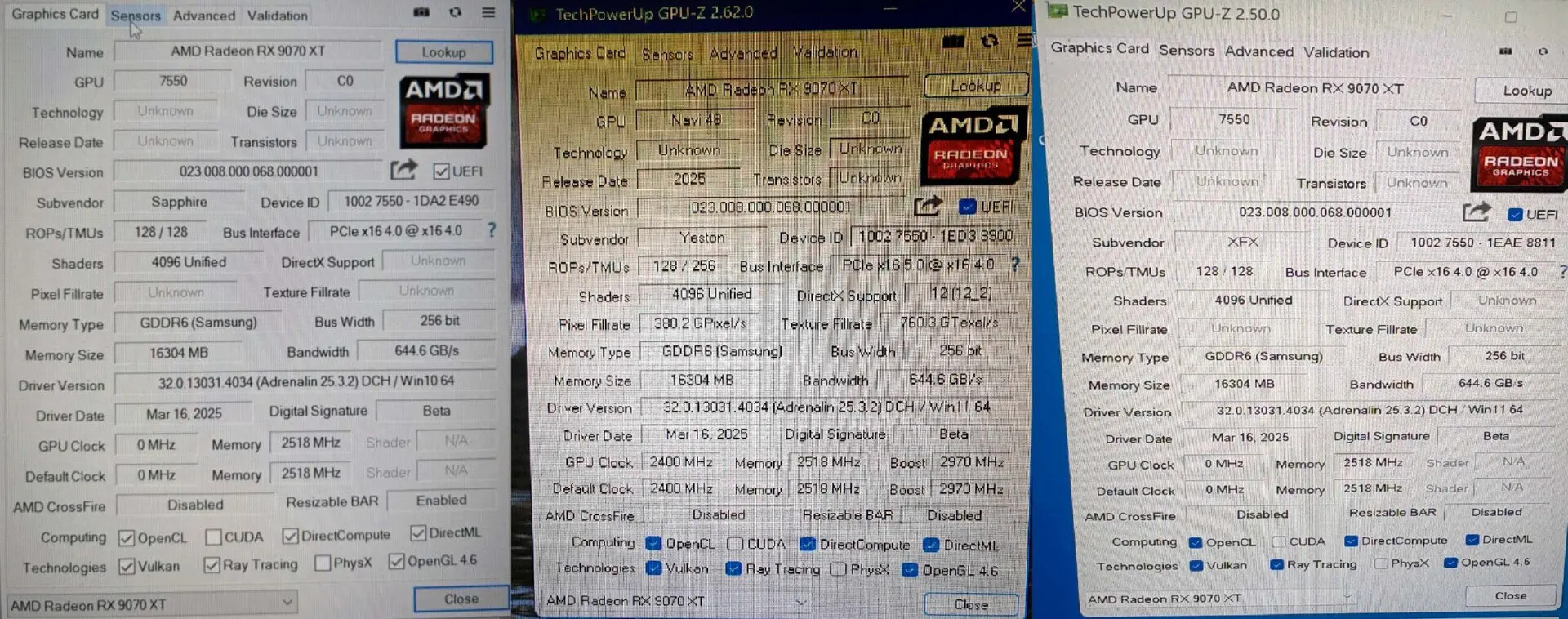
Just before the official launch of Radeon RX 9070 XT graphics cards, members of the Chiphell forum expressed concerns about unnamed evaluation samples exhibiting worrying memory module temperatures. Days later, Western review outlets published similar findings across several board partner specimens. Typically, pre-launch and retail units have utilized SK hynix GDDR6 VRAM modules—TechPowerUp's W1zzard uncovered numerous examples of the manufacturer's "H56G42AS8DX-014" model during teardown sessions. Curiously, Chinese PC hardware enthusiasts have happened upon Radeon RX 9070 XT cards that utilize Samsung GDDR6 memory modules. It is not clear whether Yeston has outfitted its flagship Sakura Atlantis OC SKU with Samsung components from the very beginning, but one owner documented a GPU-Z diagnostics session—late last month—showing "GDDR6 (Samsung)" onboard. Earlier this month, insiders posited that NVIDIA was in the process of changing its main GDDR7 memory vendor—from Samsung to SK hynix—for the GeForce RTX 50-series.

According to a recent Guru3D news piece, additional cases were reported. Online conjecture points to "higher end" custom models being updated with "cooler" modules. Hilbert Hagedoorn—Guru3D's head honcho—has gathered compelling information via community feedback channels: "the transition to Samsung memory has yielded noticeable thermal advantages. Early reviews and comparisons indicate that the new memory modules help lower temperatures significantly. Custom RX 9070 XT models running demanding benchmarks like Furmark have demonstrated memory temperatures of 75°C or lower without necessitating an increase in voltage or a reduction in clock speeds. Notable manufacturers, including Sapphire, XFX, and GIGABYTE, have already integrated Samsung's GDDR6 into their custom variants. However, as of now, AMD has not authorized its partners to explicitly differentiate between models with SK hynix and Samsung memory, likely to avoid confusion among consumers and maintain a consistent product lineup." Additionally, TechPowerUp forum members have found Samsung GDDR6 memory on Radeon RX 9070 XT and RX 9070 custom models. Thanks for the tip, Fluffmeister.

SAPPHIRE PULSE Radeon RX 9070 Series Expanded with "METAL ALLOY" Options

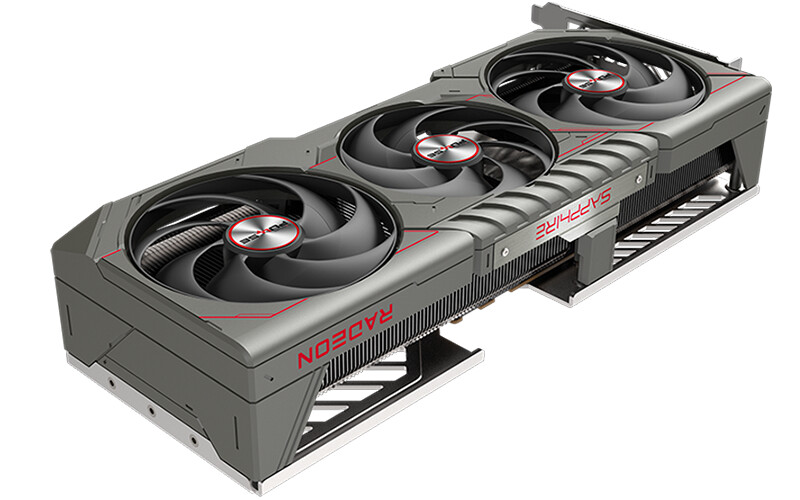
Sapphire has quietly expanded its existing Radeon RX 9070 Series lineup with two new additions: PULSE METAL ALLOY Radeon RX 9070 XT and RX 9070. According to VideoCardz, the manufacturer's Chinese website was updated with new product listings at some point last week. Sapphire's regional branch has not issued any fresh press material, regarding an official launch of these gray-shaded options. Sapphire's graphics card team has seemingly refreshed their standard black PULSE (RDNA 4 generation) triple and dual-fan shroud and backplate designs with new metallic tones and finishes. Fancier enclosures will not arrive alongside bump-up in specs—as mentioned in freshly-published official product pages, company engineers have stuck with AMD's reference figures for the Radeon RX 9070 XT and RX 9070. VideoCardz reckons that the PURE METAL ALLOY cards will debut in China; possibly as starting off as exclusives. Currently, the manufacturer's various global online presences only list the readily available black PULSE cards. Interestingly, the white PURE series shares the same overall (triple-fan) shroud and backplate setup—Sapphire's pale-shaded offerings feature very mild overclocks over "baseline MSRP" configurations. Chinese market pricing—for the two PULSE METAL ALLOY SKUs—was not available at the time of publication.

Acer Sweden Briefly Promotes "Nitro Radeon RX 9070 GRE XT" Model

Acer seems to be readying premium tier Radeon RX 9070 XT OC graphics card models for an imminent launch. The brand's Swedish office has sent out mixed messages—as noted by VideoCardz's past weekend coverage—regarding their incoming non-overclocked Nitro SKU. Gaming GPU enthusiasts have often complained about AMD's overcomplicated model nomenclature—in particular, the company's XT, XTX and GRE attachments have caused uncountable headaches. Quite amusingly, Acer Sweden's marketing team got bamboozled by Team Red's model labelling scheme—as evidenced by their recent advertising of a "Nitro Radeon RX 9070 GRE XT 16 Gbit/s graphics card."

VideoCardz reckons that no such SKU exists; employees have rectified this mistake—at the time of writing, Acer Sweden's product page showcases a corrected designation: "Nitro Radeon RX 9070 XT 16 GB graphics card." According to industry moles, AMD and its board partners are working on RDNA 4 generation "Great Radeon Edition" (GRE) cards. Late last week, VideoCardz acquired an alleged Radeon RX 9070 GRE 12 GB specification sheet. Team Red and AIBs seem to be devising a forthcoming retail release in China; possibly by next month. Acer Sweden's inadvertent/bungled leak suggests that GRE-related info is present within internal promo material.

AMD Readies Radeon PRO W9000 Series Powered by RDNA 4

AMD is readying a new line of professional graphics cards based on its latest RDNA 4 graphics architecture. The company has assigned the silicon variant "Navi 48 XTW" to power its next flagship pro-vis product, which will likely be branded under the Radeon PRO W9000 series. According to the source of this leak, the card comes with 32 GB of memory, which is probably ECC GDDR6, across the chip's 256-bit wide memory bus. The product should offer the same core-configuration as the Radeon RX 9070 XT gaming GPU, with 64 compute units worth 4,096 stream processors, 128 AI accelerators, 64 RT accelerators, 256 TMUs, and 128 ROPs.

Besides professional visualization, AMD could target the AI acceleration crowd. The company is hosting the "Advancing AI" press event in June, where it is widely expected to announce its next-generation AI GPUs and updates to ROCm. It could also use the occasion to unveil the Radeon PRO W9000 series product, promoting them to the AI acceleration crowd.

Vastarmor Expands Radeon RX 9070 XT Range with New "Alloy" Model

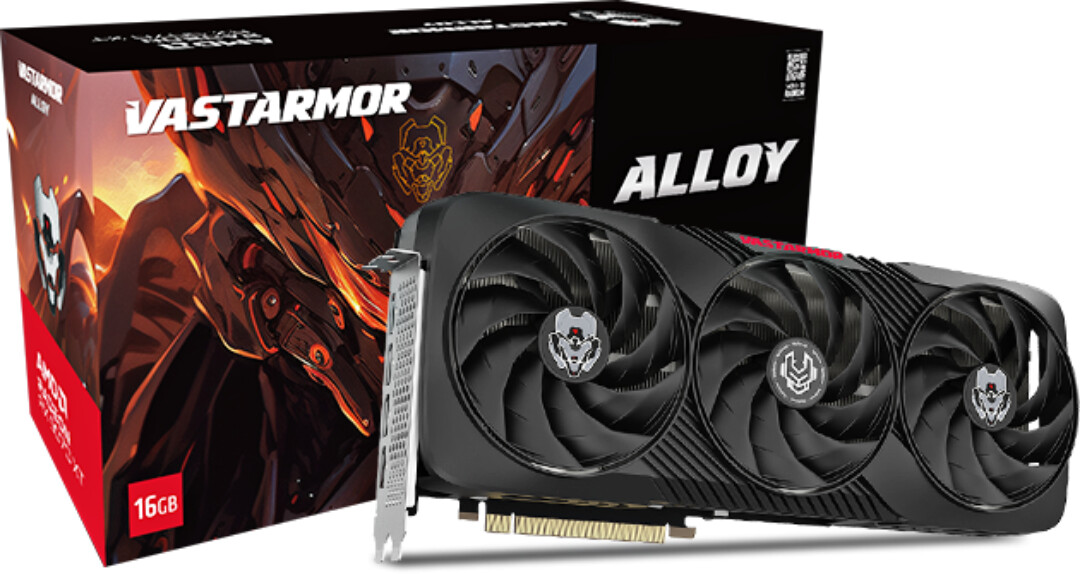
Vastarmor—a Chinese manufacturer—was introduced as an important board partner during AMD's special Radeon 9070 Series event. Despite having limited reach outside of its home base, the fairly young brand's custom designs have gained press traction around the globe. TechPowerUp covered Vastarmor's introduction of new Super Alloy series Radeon RX 9070 XT and RX 9070 models back in late February. The triple-fan ARGB-lit flagship model was positioned in good (rival) company, thanks to a maximum 3.1 GHz boost capability. As reported by VideoCardz, Vastarmor has added another custom Radeon RX 9070 XT option to its RDNA 4 product portfolio. A freshly-published product page has outlined specifications for the brand's new (non-Super) Alloy SKU.

Outside of Vastarmor's dedicated listing, a quick web search of the model's identifier code—AH-9070XT16TC1BR7N—reveals BIOS information, and little else. The Radeon RX 9070 XT Alloy seems to be a straightforward spin-off of its fancier sibling, albeit sans ARGB lighting zones. This barebone design sports non-transparent black fans, but preserves the flagship card's triple 8-pin power connector configuration. Vastarmor has downgraded its non-Super model's boost clock to a mere 3010 MHz (instead of 3100 MHz)—as configured on rival cards: ASUS PRIME RX 9070 XT OC, PowerColor Hellhound RX 9070 XT, and Sapphire PURE RX 9070 XT. Curiously, a white Alloy option is not present on Vastarmor's website—their current-gen Super Alloy range launched with pale alternatives.

PowerColor Red Devil Radeon RX 9070 XT "Backplate Edition" Card Reportedly in the Works

Last week, PowerColor introduced a Spectral White spin-off of its flagship Red Devil Radeon RX 9070 XT Limited Edition model. According to fresh inside track info, the Taiwanese manufacturer is preparing yet another premium level RDNA 4 option. VideoCardz has detected whispers regarding a speculated "Red Devil Radeon RX 9070 XT Backplate Edition" product; the online publication has a history of sourcing pre-launch details from board partner industry moles.

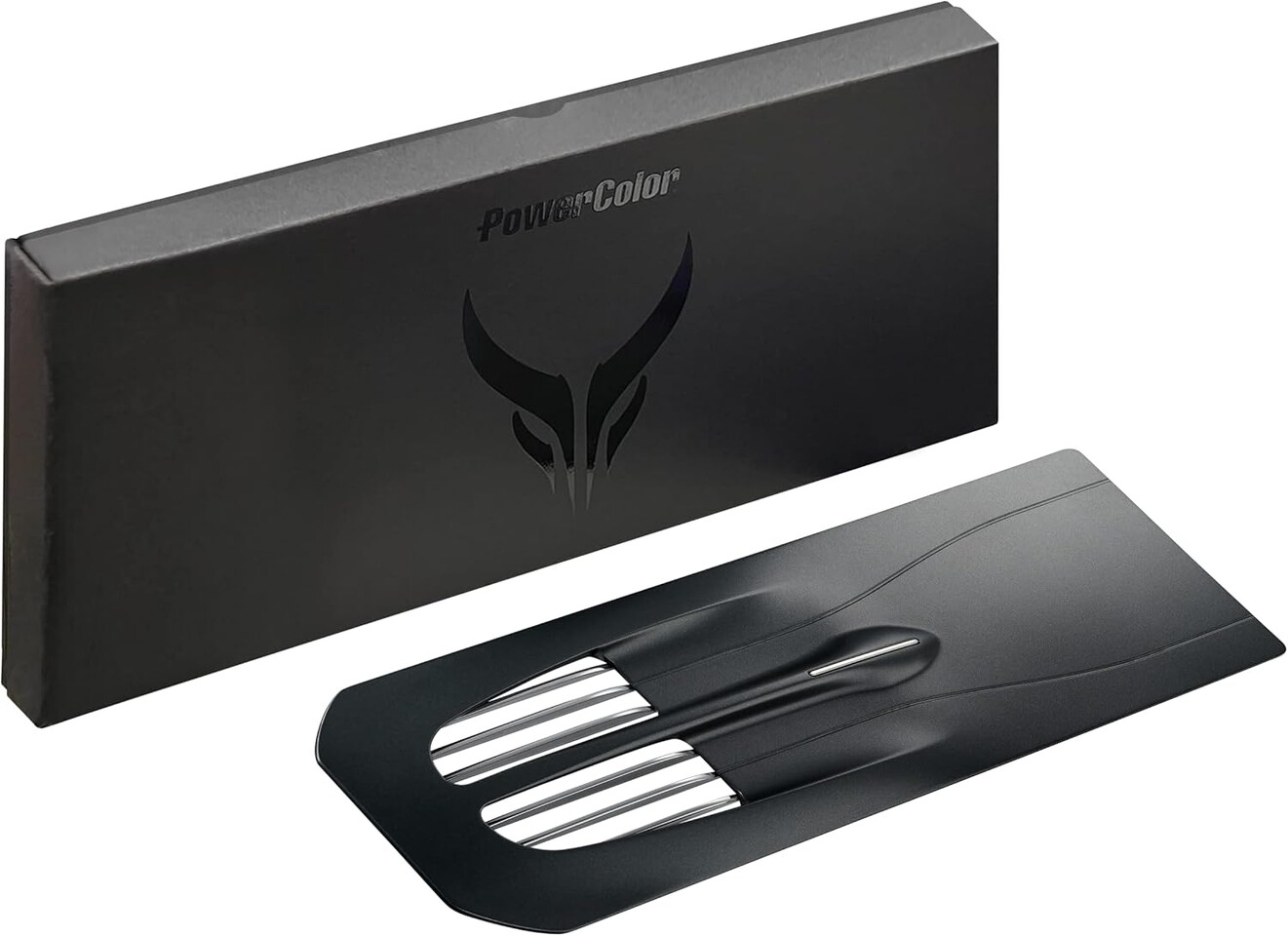
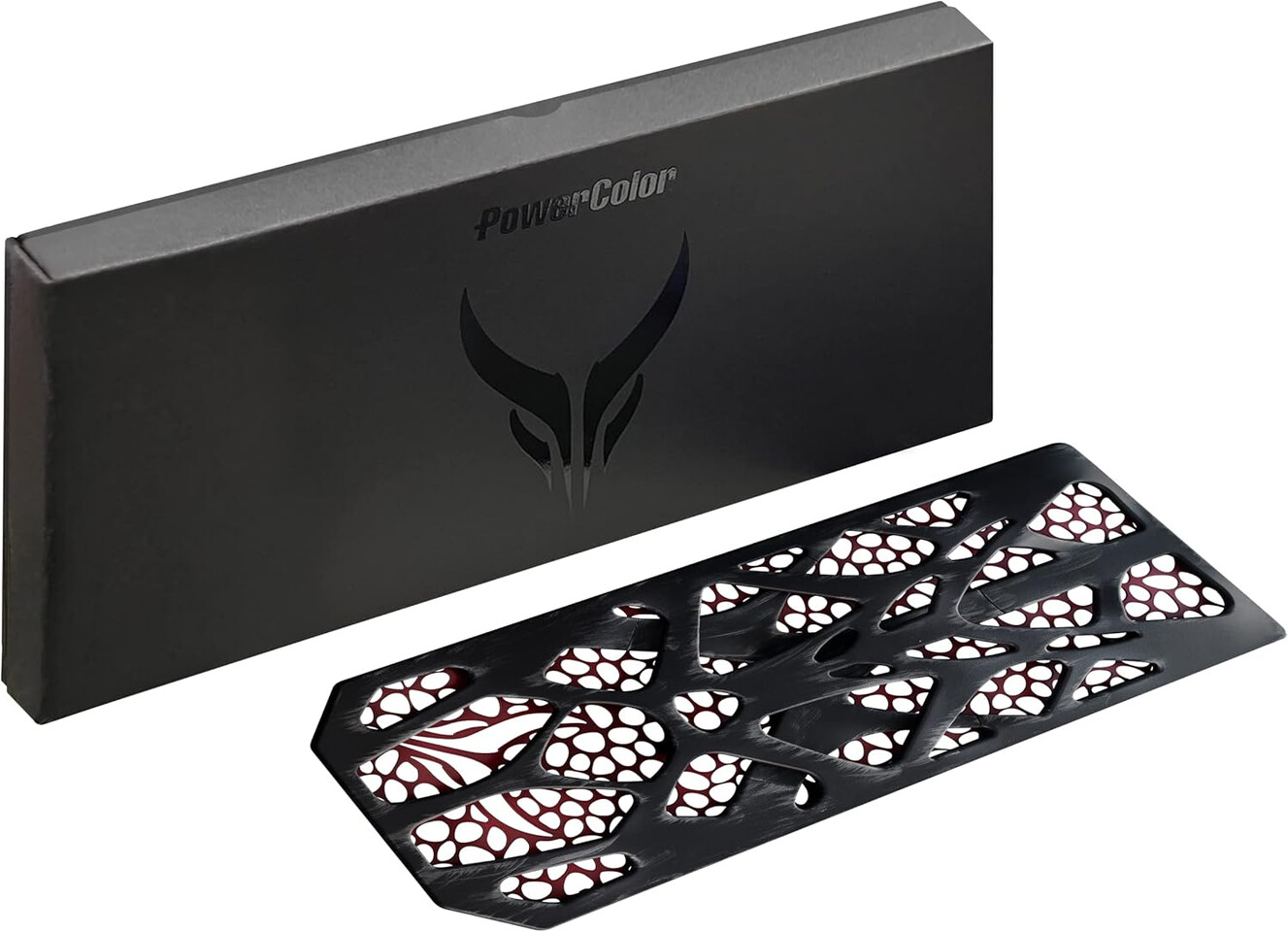
PowerColor's older Red Devil graphics card products can be customized with swappable backplates—Devil Skin designs are identified as "Intrusive" and "Generative." VideoCardz believes that the alleged "Backplate Edition" card will be based on the brand's regular Red Devil RX 9070 XT model. It is not clear whether this special edition package will be bundled with successors to the two RX 7000 Series-only Devil Skin attachments, but insiders have indicated a current "in production" status of "Backplate Edition" cards.

AMD Radeon RX 9070 XT "Reference Design" Tinkered With & Tested, Max. VRAM Temp Reduced to 82 °C

AMD's Radeon RX 9070 XT and RX 9070 "MBA" graphics cards are no longer "best kept secrets"—as demonstrated recently by the "leaking out" of supposed reference models through black market/back alley channels in China. Late last month, a dual-fan non-XT specimen was snapped up by Chiphell forum member—alleged benchmark results were soon shared within that community. A few days later, a "Made-by-AMD" Radeon RX 9070 XT sample was dissected and compared to Sapphire's PULSE Radeon RX 9070 XT 16 GB SKU. An additional MBA XT example emerged last week, courtesy of another in-depth Chiphell thread. A "bored" enthusiast happened upon a 5499 RMB (~$748 USD) when idly browsing through Xianyu listings (Taobao's Ebay equivalent platform). Their buying experience was described as follows: "(I) found a 'public version' Radeon RX 9070 XT in Tianjin. It was said to be manufactured by (an) OEM, so I bought it without hesitation...I made an appointment to meet today and got it successfully. I don't have to wait for a graphics card anymore."

For unknown reasons, AMD decided to launch its first wave of RDNA 4 gaming graphics cards sans first-party designs. Leaked specimens have attracted much attention in China; with owners bragging about their respective ownerships of reasonably priced rarities. The latest back channel customer expressed satisfaction when inspecting Team Red's all-black flagship Navi 48 GPU-based solution: "after I got it, I have to say that it is not very heavy and is quite light. But the appearance is really what I like." After initial tests, they discovered that VRAM temperatures were not up to snuff—as alluded to (pre-launch) by other Chiphell figures. Their personal DIY improvements were described: "(I) took it apart to measure the thickness of the thermal grease pad. Everyone said the temperature of the video memory was high, so I decided to change to something better....(with) original silicone grease FurMark 2K resolution for 20 minutes: maximum core temperature was 62 degrees, maximum hot spot temperature was 84 degrees, maximum memory temperature was 88 degrees, maximum power was consumption 346 W."

PowerColor Unveils Limited Edition RED DEVIL Spectral White AMD Radeon RX 9070 XT Graphics Card

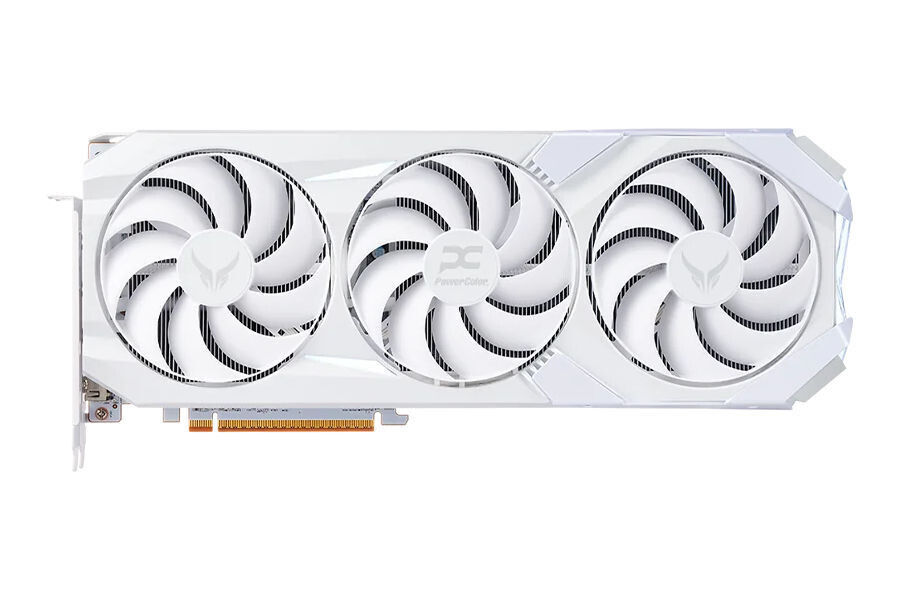
PowerColor, a global leader in high-performance graphics card innovation, proudly announces the Red Devil Spectral White AMD Radeon RX 9070 XT 16 GB - a limited-edition masterpiece that marks a first for the iconic Red Devil series. For years, gamers have admired the elegance of Spectral White designs, and now, for the first time, PowerColor brings that vision to life with the Red Devil's flagship performance.

A True Spectral White Marvel
Crafted with meticulous attention to detail, the Red Devil Spectral White redefines what it means to blend form and function. From the PCB and heatsink to the cooler shroud and power connectors, every component has been precision-engineered in pure white, delivering a truly unified aesthetic rarely seen in high-performance GPUs. At the heart of its design lies Hellstone—a signature multi-faceted RGB element positioned at the tail of the card. It radiates vivid, customizable lighting that glows like a mystical crystal, making the Spectral White model not just a GPU, but a centerpiece of any gaming setup. Gamers can control the lighting via RGB headers, offering seamless synchronization with the rest of their system.

AMD Radeon RX 9070 Can be Flashed with RX 9070 XT BIOS to Increase Power Limits and Clocks

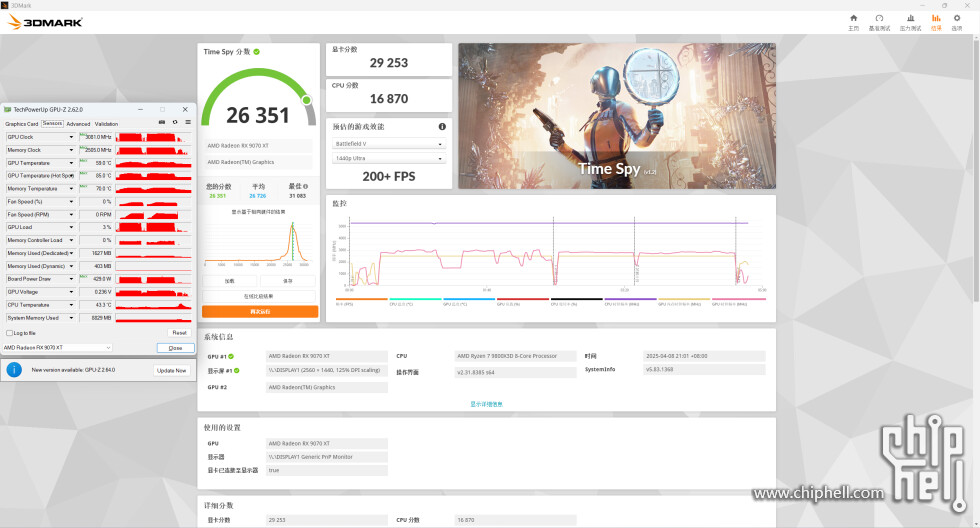
PC Games Hardware (PCGH) discovered that certain AMD Radeon RX 9070 graphics cards can be flashed with the video BIOS of RX 9070 XT of a comparable board design, to achieve higher clock speeds and power limits. While the flash won't unlock any new shaders—you're still limited to 56 CU or 3,584 stream processors—it gives the RX 9070 increased power limits and clock speeds of the faster SKU. More importantly, the flashed RX 9070 was found to offer significantly improved overclocking headroom, and PCGH was able to tune up performance by 15-20% over stock RX 9070, bringing its performance to match a stock RX 9070 XT, which was confirmed by a set of 3DMark benchmarks.

There are, however, some caveats. The most obvious one is that BIOS flashing is fraught with risks, and unless you have a card with dual-BIOS, you really need to know what you're doing. Secondly, BIOS flashing might only work between two cards that share a common board design. AMD board partners tend to use nearly identical board designs between the RX 9070 and RX 9070 XT, at least for the value segment SKUs. And lastly, there is no software tool that can flash Radeon RX 9000 series GPUs yet, the modder used a hardware flashing tool that interfaces with the 8-pin BIOS ROM chip on the card. The flashed card does not display "XT" in the name string.

Update 13:23 UTC: Our resident hardware guru W1zzard has the following explanation for why the card's name does not change. On AMD cards, the revision ID field is used to distinguish between variants of the same GPU. On the RX 9070 Series, the XT models uses "C0" and the non-XT uses "C3." In the past, the AMD BIOS stored the revision ID of the card, and flashing the BIOS would change the value that Windows sees, and thus the model name will change accordingly. With Navi 4x, AMD made a change to their BIOS format, so that the revision ID can no longer be changed, which protects against fake cards, but in this case it means that some properties like power limits, clocks, etc. can swap to values from the BIOS, but all the IDs and unit counts remain fixed.

High NVIDIA RTX 5000 Pricing Pushes RTX 4060 to Top of GPU Sales Charts

It seems as though the high pricing and shortages surrounding NVIDIA's latest GeForce RTX 5000 series GPUs has resulted in gamers turning to previous GPU generations for salvation. According to the latest Newegg GPU bestseller charts, the $459.98 MSI Ventus NVIDIA GeForce RTX 4060 8 GB graphics card is currently the best-selling GPU. Curiously, the Gigabyte AMD Radeon RX 7800 XT OC 16 GB is close on its heels, with the Gigabyte AMD Radeon RX 9070 XT on its heels in third place. The first NVIDIA GeForce RTX 5000 series GPU on the Newegg bestseller list is the ASUS TUF Gaming RTX 5070 OC, which is in eighth place, behind several AMD Radeon RX 7900 XT, RX 9070 XT, and RX 6600 models. It's unclear whether this is due to high pricing or simply a lack of stock to sell, although the RTX 5070 OC is currently available on Newegg for $739.99. Curiously, this is also the only in-stock RTX 5000 series card amongst the top 20 best-selling GPUs on Newegg. Granted, this is only one vendor, but the majority of the GPUs on the list are either AMD Radeon RX 7000 series or NVIDIA GeForce RTX 4000 series GPUs.

The most recent Steam Hardware & Software Survey, updated for March 2025, however, tells a more confusing story. While adoption rates for NVIDIA GeForce RTX 5000 series GPUs is certainly slow, with the RTX 5080 being the only 5000 series GPU to even feature on the chart, with 0.19% growth over the last month, gamers seem to be moving away from the RTX 4000 series even faster. The GPU that showed the most growth during the last Steam Survey is the NVIDIA GeForce GTX 1650, which is already six years old. It's also interesting to note that most of the AMD GPUs in the Steam Survey results also saw minor upticks in adoption. Recent reports out of Japan show that AMD has garnered massive interest since the launch of the RX 9070 series GPUs, with claims of 45% market share coming as a surprise after NVIDIA reached 90% GPU market share in December last year. While NVIDIA's supply issues are likely at least partially to blame for AMD's increased popularity, there is also a growing sentiment amongst gamers, backed by some of our own testing, that NVIDIA is more interested in AI and simply isn't equipping its gaming graphics cards with enough VRAM for high-resolution and high-refresh rate gaming.

GPU Die Defects Found in PowerColor RX 9070 XT Graphics Card

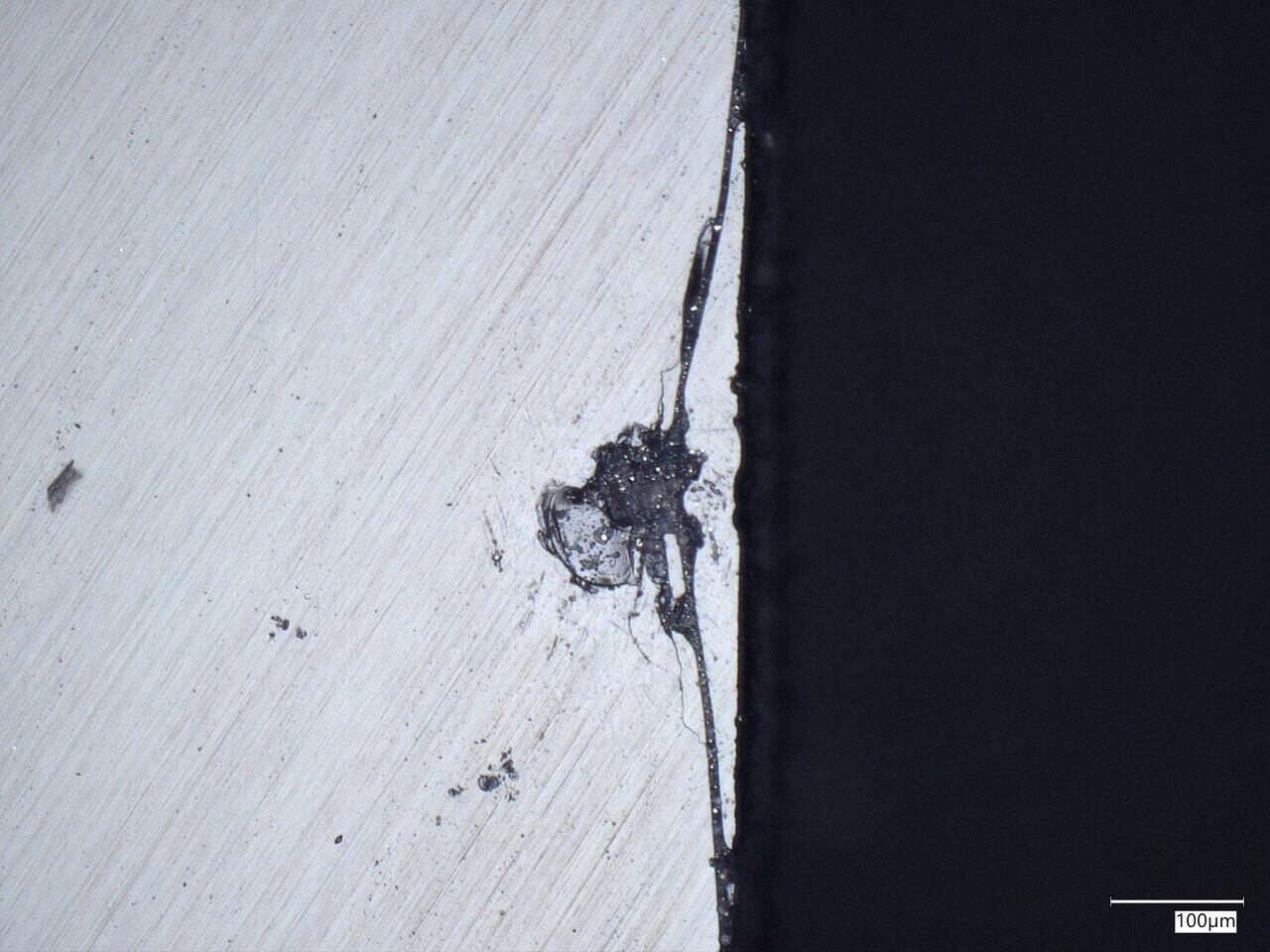
Surface defects on the GPU die of a PowerColor Radeon RX 9070 XT Hellhound have been linked to excessive thermal hotspots, according to analysis following Igor's Lab's investigation. Microscopic examination revealed 1,934 pits across the silicon die surface despite proper thermal interface material application. The defects affect over one percent of the chip's surface area, with the largest measuring 12.59 µm in depth and 212.36 µm in diameter—significantly exceeding industry tolerances. These imperfections impede heat transfer, causing localized temperatures to reach 113°C, exceeding the 110°C threshold for RDNA GPUs and triggering thermal throttling. The defects appear to stem from flaws in the backgrinding process that thins silicon wafers for packaging. Improper process control creates surface irregularities that compromise thermal conductivity and structural integrity.

The discovery raises questions about the effectiveness of automated optical inspection systems in detecting subtle surface abnormalities. TSMC, the maker of these chips, uses optical recognition tools to see if any defects occurred. AMD stated: "We are aware of the reported issue and believe this to be an isolated incident. We are working with our partners and internal teams to understand the issue." The company maintains this is an isolated case, though the findings suggest potential gaps in quality control protocols. Users experiencing thermal issues with affected RX 9070 XT units should initiate the RMA process for replacement while AMD and PowerColor investigate whether these defects exist beyond the identified sample. We hope no further issues are present, and so far, PowerColor hasn't received any customer complaints. We are on the lookout for further situation development. We reviewed PowerColor's Radeon RX 9070 Hellhound, and found no issues on our unit, so this indeed remains an isolated case so far.

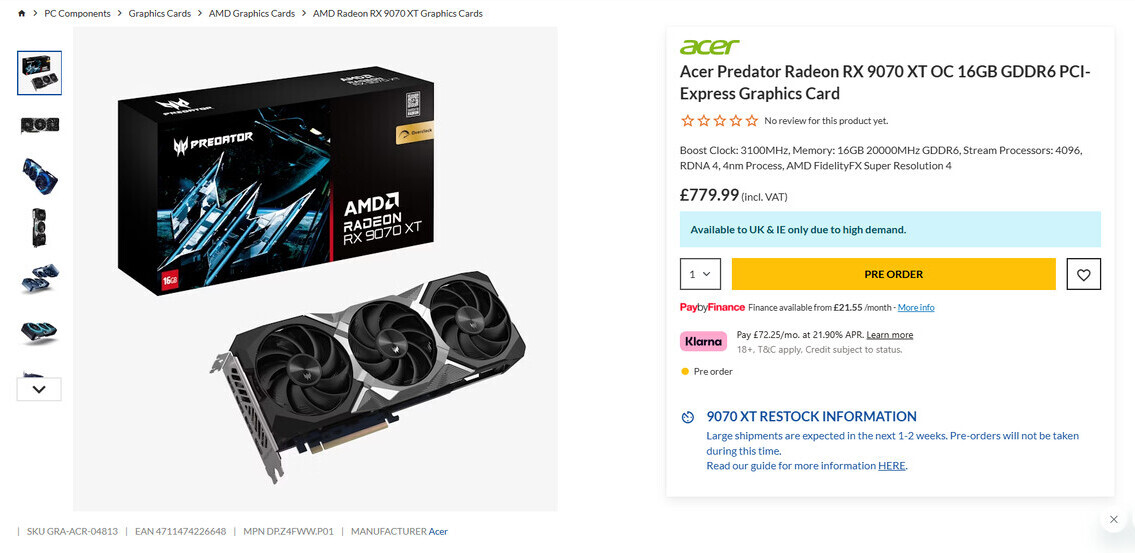
Acer Radeon RX 9070 XT OC SKU Prices Revealed in UK, Pre-orders Start at £750

Just over two weeks ago, Acer unveiled its brand-new Predator BiFrost and Nitro Radeon RX 9070 Series graphics cards. Despite being a late contributor to AMD's opening salvo of RDNA 4, the Taiwanese manufacturer made a big impression with its reveal of four premium specced models. In particular, Acer's Predator BiFrost Radeon RX 9070 OC 16 GB and Nitro Radeon RX 9070 XT OC 16 GB SKUs will be joining an elite group of custom options that boast 3100 MHz boost clocks. Mid-March press material did not provide any insight into launch pricing—weeks later, Overclockers UK has opened up pre-orders for the four Predator BiFrost and Nitro RX 9070 XT and RX 9070 cards. Just prior to RDNA 4 launch time, Overclockers UK (OcUK) received plenty of press attention—in particular, their building of a sizable cube out of an impressive quantity of Sapphire PULSE Radeon RX 9070 XT retail stock.

The British retailer seemed confident with its pre-kickoff accumulation of various AIB models, but demand quickly outstripped supply on day one. Unfortunately, OcUK has implemented dreaded price hikes across its Radeon RX 9070 Series product listings. Looking at Acer's main competition in the premium custom Radeon RX 9070 XT tier, OcUK has jacked up prices by £20 to £30 (approx.). ASRock's Radeon RX 9070 XT Taichi OC model—one of the elite 3.1 GHz boosters—launched at £700 (including VAT, shipping fee is extra), but was adjusted up to £728.99 (~$943 USD) at some point last month. The British store's pre-order price for the "cheaper" Nitro Radeon RX 9070 XT OC SKU is £749.99 (inc. VAT), while the flagship Predator BiFrost costs £779.99 (inc. VAT) for reservation. GIGABYTE's (almost) £800 AORUS RX 9070 XT ELITE model is the only other 3.1 GHz boost-capable option sitting above the £750 mark. Looking at "on paper" information (e.g. aluminium backplates, state-of-the-art cooling, etc.)—Acer's two headliners are impressive offerings, but rival cards already exist with similar credentials at "lower prices." Historically, TechPowerUp's resident GPU reviewer—W1zzard—has not received any graphics card samples from the manufacturer. Perhaps this drought will end in the near future...

ASRock Will Launch Radeon RX 9070 XT Steel Legend Dark Model in Japan Early Next Month

Around RDNA 4's launch period, ASRock's web presences listed an intriguing Radeon RX 9070 XT Steel Legend Dark 16 GB model—seemingly not mentioned in official introductory press material. As covered on TechPowerUp earlier this month, this unusual darkened spin-off of the "traditional white" Steel Legend design received little fanfare—the obvious reason being that gray/black stock was not readied for AMD's March 6 rollout to market. Over the past weekend, VideoCardz put an investigative spotlight on a Hermitage AkiHabara/GDM Japan press release. It turns out that ASRock's Radeon RX 9070 XT Steel Legend Dark SKU will become available early next month, starting with the Japanese "domestic market."

The manufacturer's global website was not updated with a similar PR item, so an international/widespread launch is likely planned for a later date. The "expected market price" upon release is 133,800 yen (including tax), which converts to roughly US$891. Industry watchdogs believe that the Dark variant will roll out "globally" with the exact same price tag as the already launched pale sibling. The Taiwanese brand did not introduce a Radeon RX 9070 (non-XT) Steel Legend Dark overclocked model, to exist alongside their white-hued RX 9070 Steel Legend OC offering. The wallet-friendlier triple-fan ASRock RX 9070 Challenger SKU—in black, with a splash of ARGB—is their only other Navi 48 XT GPU-based option.

AMD Radeon RX 9070 XT Reference PCB Design Revealed via Leak, Compared to Similar Sapphire PULSE Board

AMD Radeon RX 9070 XT and RX 9070 "MBA" models have turned up for sale through Chinese black market channels; with local PC hardware enthusiasts quickly snapping up these "reference design" curios—for "scientific" analysis, and in some cases: bragging rights. Officially, Team Red has relied on its board partners to produce an all-custom first wave of RDNA 4 gaming graphics cards. Recent discoveries of authentic-looking "Made by AMD" specimens suggested a very limited distribution of first-party units to trusted partners. According to a fresh ITHome news article, Team Red's Radeon RX 9070 XT reference PCB design was fully revealed via a comprehensive teardown. Kyogre shared heavily watermarked photos with the online publication; showcasing their disassembly of a "leaked" example.

Team Red's proprietary triple-fan cooling solution and backplate were removed; leading to the exposure of gory innards. ITHome provided a quick rundown visual clues—the analyzed unit features: "dual PCIe 8-Pin power supply interfaces, and a black shell with a tough and simple shape. It is about three slots thick and is equipped with a rear open and ventilated cooling backplane with a core back frame...Looking deeper into the internal structure of the graphics card, we can find that this graphics card is equipped with five heat pipes, the corresponding position of the GPU core uses a copper base, and the surrounding memory positions are also in contact with the metal frame through thermal pads. In addition, it is equipped with four video output interfaces."

Latest AMD and NVIDIA GPUs Are Losing the MSRP Battle: Real-World Prices Far Above MSRP

Tom's Hardware just published an intensive data collection of online prices of the latest GPUs from AMD and NVIDIA, suggesting that real-world prices are nowhere near MSRP. With an investigation into the 30-day eBay average price based on listings, the data shows that a lot of GPU SKUs are retailing for well-above-average price premiums. The data tracker also looked for the best-priced listing of a specific SKU. For instance, NVIDIA's GeForce RTX 5070 is seen retailing at around $700—a 27% increase over its official MSRP of $550—while the RTX 5080 pushes these premiums even further by selling at over 50% above its suggested price. The flagship RTX 5090 tops the chart with a staggering $4,222 on secondary markets compared to its $2,000 MSRP, an increase of roughly 111%.

In contrast, earlier models like the RTX 4060 and RTX 4060 Ti show relatively minor inflation, with increases of only about 3% and 5%, respectively, according to recent eBay averages. Still, selling years-old GPUs at MSRP today proves that there is demand. On the AMD side, the Radeon RX 9070 series is no less dramatic. The base RX 9070, with a $550 MSRP, averages around $817 in real-world sales—a nearly 48% premium—while its high-end sibling, the RX 9070 XT, jumps to approximately $1,001 from a $600 MSRP, marking an increase of roughly 66%. Early figures even suggest that first-week sales for the RX 9070 series were ten times higher than those of previous AMD models, justifying the price surge. AMD is working on addressing this supply, which should improve in April, and NVIDIA is working with AIB partners, too, to deliver more Blackwell GPUs.

PowerColor Red Devil RX 9070 XT Limited Spectral White Edition Reportedly Arriving on April 8

Late last week, a leak suggested a forthcoming Spectral White Limited Edition refresh of the existing Red Devil Radeon RX 9070 XT graphics card design. PowerColor's pale reinterpretation of flagship level hardware appeared online courtesy of an accidental Amazon listing; indicating $899/€929 pricing. The Taiwanese manufacturer's Spectral White product line—historically favoring Hellhound SKUs—is viewed favorably as offering a nearly "all-white" aesthetic; extending to proper coloration of PCB and I/O panel designs.

As expected, PowerColor has distributed Limited Edition packages to media and influencer outlets—as evidenced by Overclock3D's very recent showcasing of a sample unit. In response to last week's leak, OC3D's "Tiny" Tom Logan "previewed" the ghostly Red Devil RX 9070 XT variant—he noted that a "performance/review" NDA is still in effect; due to be lifted on April 2. Video coverage explored a slight "bending of the rules," but Logan did not power up his evaluation specimen. As evidenced by the unboxing process, PowerColor has bundled in several Spectral White-tinted accessories—indicating a commendable level of attention to detail. By contrast, the manufacturer's slightly inelegant and contradictory nomenclature is confirmed by outer box labelling—loudly exclaiming: "RED DEVIL Spectral White." Amusingly, Logan and his team have nicknamed this new sub-variant: "White Devil."

AMD's Radeon RX 9070 XT Shatters Sales Records, Outperforming Previous Generations by 10X

In a recent interview with ASUS China Manager Tony Yu on Bilibili, AMD CEO Dr. Lisa Su revealed that the company's latest RDNA 4-based Radeon RX 9070 XT GPU has achieved remarkable success, with first-week sales surpassing previous generations by tenfold. "I'm very proud of the team on RDNA 4," said Dr. Su, adding, "When we design a new architecture, we plan its core features years in advance. For RDNA 4, our goal was to deliver top-tier gaming performance at an accessible price, allowing more gamers to experience this technology. The 9070 XT has been a fantastic success—it's the No. 1 selling AMD Radeon GPU in its first week, with sales 10 times higher than past generations."

While rumors suggested AMD sold 200,000 Radeon RX 9000 GPUs at launch, the company clarified that this figure was never shared, basically dismantling the rumor. When (and if) we get the official concrete sales numbers, it will show just how much of a significant milestone has been achieved by Team Red. Notably, in some specific markets like Japan, AMD has captured nearly 50% of the market share with the RX 9070 series—a first for the company. Dr. Su confirmed that AMD is ramping up production to meet surging demand. "We are very excited and increasing manufacturing to ensure more gamers can access our GPUs," she said. This move is expected to stabilize supply and pricing. Additionally, AMD hinted at more RDNA 4 releases, likely including the Radeon RX 9060 series, which will come in 16 GB and 8 GB variants later this year. With competitive pricing and strong performance, AMD's latest GPUs are well-received by the gaming community despite no high-end competition for NVIDIA's top SKUs.

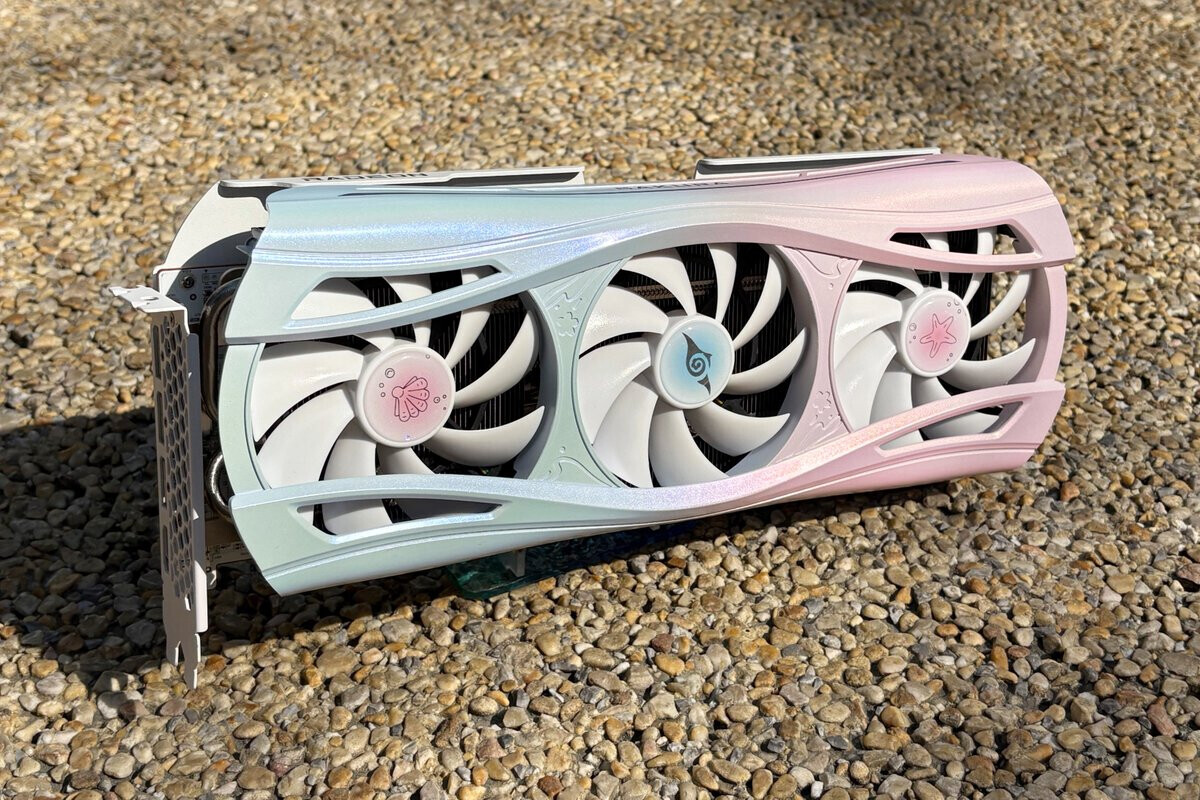
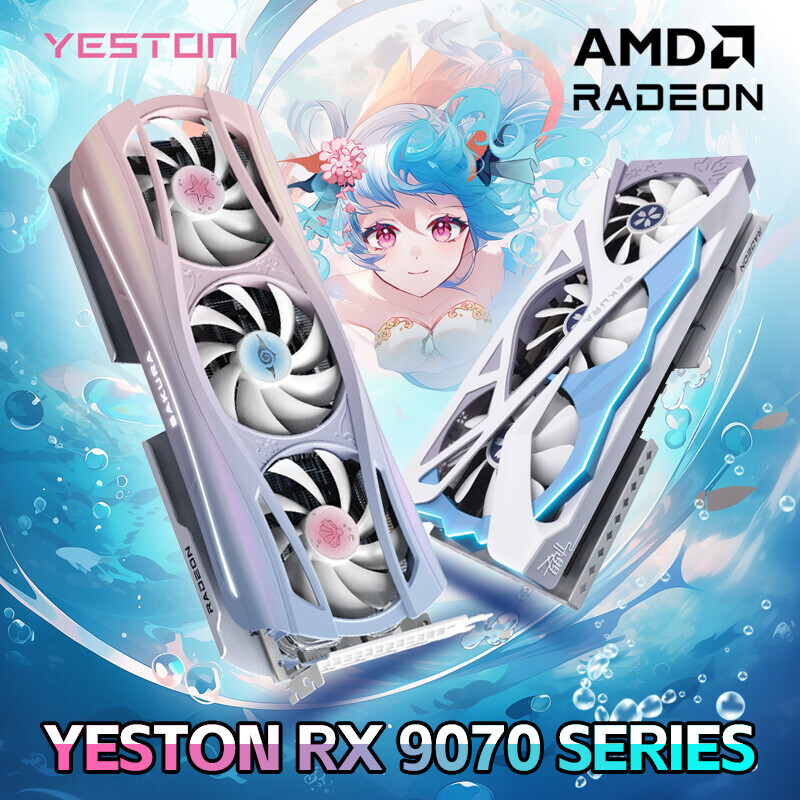
Yeston's Sakura Radeon RX 9070 XT GPUs Double as Aromatherapy

Blending gaming and sensory indulgence, Yeston has unveiled its latest Radeon RX 9070 XT graphics cards—hardware that powers high-octane gameplay and fills your space with curated scents. Dubbed the Sakura Atlantis and Sakura models, these AMD RDNA 4-powered GPUs integrate fragrance modules, transforming rigs into multisensory experiences. The Sakura Atlantis variant promises an "ocean breeze" aroma, while the standard Sakura model offers a floral bouquet. Tech reviewers at Gamers Nexus tested these claims, humorously comparing the Atlantis's scent to a mix of car air fresheners, mall perfume samples, and freshly laundered fabric. Despite marketing's poetic descriptions, the team emphasized scent subjectivity.

Yeston's design cleverly places the fragrance cartridge near the GPU fan, dispersing odors as airflow circulates. However, the novelty comes with caveats: replacing the module requires complete disassembly, a daunting task even for seasoned builders. Yeston has not clarified if refills will be sold separately, leaving users wondering about long-term viability. Aesthetically, the cards continue Yeston's anime-inspired legacy, featuring pastel hues and a "waifu" character adorning the backplate—a nod to ATI's iconic Ruby mascot. Underneath the whimsy, both models boast identical specs, including a 5% higher game clock than reference designs, triple 8-pin power connectors, and modern display outputs. Priced between $869 and $899, these limited-edition GPUs are currently scarce, with restocks anticipated post-April. While ASUS previously experimented with scented laptops, Yeston's approach feels more refined, albeit niche. Whether a gimmick or genius, Yeston's fragrant foray challenges norms, proving not everything is in looks and performance. After all, why shouldn't your gaming marathon smell as good as it looks?

PowerColor Red Devil AMD RX 9070 To Get Fresh Coat of Paint with Leaked Spectral White Edition

The ominously named PowerColor Red Devil AMD Radeon RX 9070 XT looks to be getting the same treatment as the Hellhound Spectral White edition with an all-white Spectral Edition refresh. While the design has yet to be confirmed by PowerColor, it has seemingly leaked on Amazon ahead of the official announcement. While the page seems to have been taken down by the retail giant, VideoCardz managed to grab some images of the new white AMD RX 9070 XT GPU before it was removed.

Much like the Hellhound Spectral Edition, the Red Devil Spectral Edition has been completely drained of color. Even the hallmark Red Devil logo on the cooling fins in the backplate cutout and the illuminated Hellstone at the end of the RX 9070's shroud seems to have a clearer acrylic cover, as opposed to the smoky acrylic cover on the standard issue Red Devil card. Everything else on the Red Devil Spectral White edition seems to be identical to the regular Red Devil RX 9070 XT. Pricing also seems to be identical to the original, at $899 or €929. A launch date for the Spectral White RX 9070 XT Red Devil is unclear at the time of writing, but it will likely be soon, given its appearance on Amazon.

Over 200,000 Sold Radeon RX 9070 and RX 9070 XT GPUs? AMD Says No Number was Given

AMD's Radeon RX 9000 series of GPUs spent just a few days on the retail market, and they are already sold out. If you are wondering just how many have been sold, AMD has a number for you. According to the information shared at the AI PC Innovation Summit in Beijing, AMD claims that it has sold as many as 200,000 Radeon RX 9070 and RX 9070 XT graphics cards in the first wave. Current retail channels show severely constrained inventory for AMD's latest GPUs, though supply chain forecasts indicate normalization expected by early Q2. Board partners have implemented significant price premiums across their custom-designed variants, with RX 9070 XT models commanding up to $200 above AMD's reference pricing structure. While AMD has issued statements advocating for adherence to suggested retail figures, the company maintains a hands-off approach to partner pricing strategies, acknowledging the market dynamics of premium component allocation.

The initial allocation bottleneck should resolve as manufacturing capacity scales to meet demand, potentially stabilizing both availability and price points by mid-April. Yeston, one of AMD's longest-standing AIBs, has suggested that "now the supply is unstable, but we will restock every week. Please don't be frustrated if you didn't get it. The supply will become stable and continue to be available after April." However, we still don't understand how AMD is counting these sales. The company noted that the first wave has been sold, and that is likely their first shipment of Navi 48 SKU from TSMC. When TSMC ships more chips, AMD distributes them to its AIB partners for assembly. That could be the second wave. As these GPUs are ordered months in advance, AMD's AIBs are likely already shipping the next wave of GPUs to retail stores.
Yeston Predicts Stabilization of Radeon RX 9070 Series Supply After April

Coverage of Radeon RX 9070 XT and RX 9070 launch batches has mainly focused on Western market conditions, with little insight into goings-on in China. AMD and board partners held a special RDNA 4 kick-off event in Beijing at the end of February, roughly twelve hours in advance of their international presentation. According to VideoCardz, initial supplies of Yeston's Sakura and Sakura Atlantis graphics cards were snapped up quickly by regional customers. The Chinese AIB specializes in brightly-hued shroud and backplate designs, often decorated with "waifu" illustrations and miscellaneous cute graphics. Unfortunately, interested parties from abroad are limited to importing from local retail platforms.

Yeston's social media accounts have alerted potential customers to re-stocks and connected developments—their latest bulletin hints about an improved situation, following another swift depletion of refreshed stock: "hello everyone! Thank you for the support! We have received a lot of messages and would love to inform you now the supply is unstable, but we will restock every week. Please don't be frustrated if you didn't get it. The supply will become stable and continue to be available after April." Interestingly, this morning's message did not touch upon the controversial topic of price hikes. At launch, Yeston's latest Navi 48 GPU-based offerings conformed or floated just above Team Red baseline MSRP (including VAT)—4999 RMB (~$686 USD) for XT, 4499 RMB (~$617 USD) for non-XT—likely boosting demand around that time. Last week, AMD board partners in Japan expressed concerns about current supply constraints—GPU market share in that region had climbed to ~45%, due to the popularity of RX 9070 Series graphics cards. Team Red could lose ground if GPU allocation limitations continue.

AMD Radeon RX 9070 non-XT "Made by AMD" OEM Design Pictured

Last week, we got a leaked picture of AMD's reference/OEM/Made by AMD (MBA) design of the Radeon RX 9070 XT in China. However, we have a non-XT card on the menu today, with the reference design also pictured in China. We already know that AMD is not releasing any MBA reference designs of its latest Radeon RX 9000 series GPUs based on the RDNA 4. However, the Chinese black market is the place to be when it comes to finding these MBA cards, probably manufactured in high double-digit or low tripe-digits of units. AMD usually has one of its AIB partners manufacture these for OEM integrated system distribution or partner testing/software optimization.

Pictured below is the Radeon RX 9070 non-XT GPU with an all-black shroud. Unlike official renders, this design is much more toned down. The official render shows a black/gray color combination with an LED-illuminated Radeon logo. However, the official version appears with only a simple aesthetic, without a hint of LED illumination. The card wasn't pictured running, but we assume that there is no LED illumination. Below, you can compare the pictured/leaked Radeon RX 9070 GPU with the official render.
Return to Keyword Browsing
Nov 26th, 2026 00:23 CST change timezone

New Forum Posts

Popular Reviews

TPU on YouTube

Controversial News Posts