News Posts matching #Radeon

Return to Keyword Browsing

More AMD Radeon HD 7000 OEM Products Surface

Apparently, HD 7670 OEM isn't the only product that couldn't survive the prying eyes of the media, there are more. AMD's lineup of HD 7000 series OEM solutions extends downwards way beyond the HD 7670 OEM, it includes HD 7570, HD 7470, HD 7450, and HD 7350. There's no reason to cheer, though. First, these products are available only in the OEM channels, to pre-built system manufacturers so they could spice their specs sheets up; and second, they're complete re-brands of previous generation HD 6500, 6400, and 6300 families, down to the clock speeds and feature-sets. There are absolutely no HD 7000 series features, no DirectX 11.1, ZeroCore, new media-processing capabilities, nothing. The fineprint of their specifications is tabled below. Details of these chips can be accessed here.

Radeon HD 7950 Launch Delayed to February

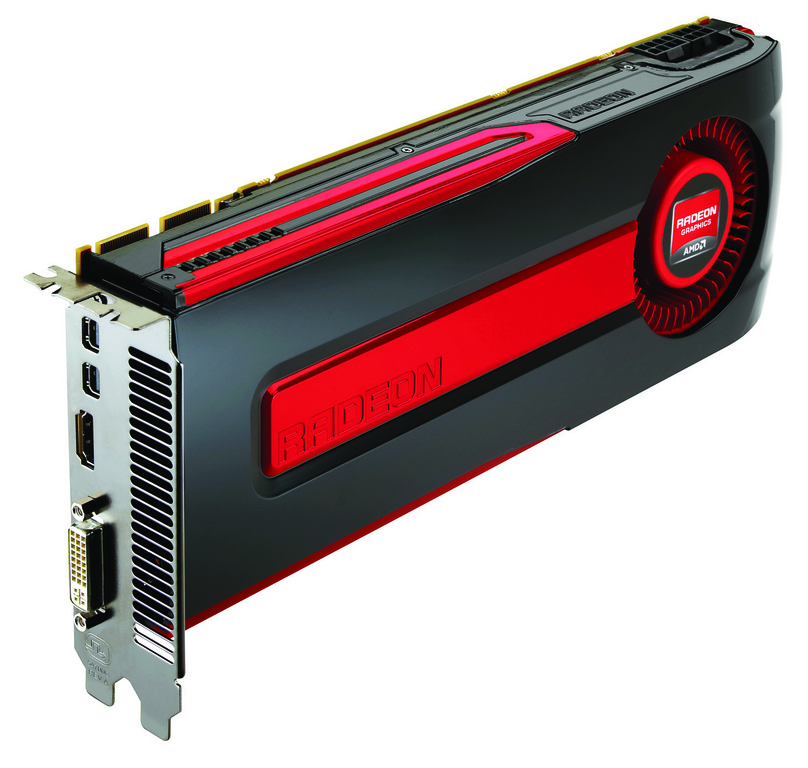
On the 22nd of December, 2011, AMD paper-launched its Radeon HD 7970. By all measures, it appears like when the card hits retail availability on the 9th of this month, AMD will have a winning product at hand, for the price-segment it's targeting with that. According to latest reports, a leaked confidential email of AMD sourced by Guru3D (now redacted) says that AMD wants to launch Radeon HD 7950 on the same day of its retail availability, which happens to be in the first week of February, 2012. So no Radeon HD 7950 on the 9th of January, as we were earlier told about. The Radeon HD 7950 will be an important SKU for AMD, as it's more affordable than the $550 HD 7970.

HD 7970 Overclocked to 1.26 GHz: 28 nm Tech Really Stretches Its Legs

Welcome to the first TechPowerUp news post of 2012! Read on for a couple of impressive overclocking feats with the HD 7970 graphics card.

It looks like the new AMD Radeon HD 7970 could be a bit of a dark horse and a lot more potent than its stock specifications would suggest - excellent for creating a competitive graphics card market. The reviews at stock speeds show the flagship HD 7970 to be around 10-15% faster than NVIDIA's flagship GTX 580, which doesn't seem all that impressive since the GTX 580 has been on the market for over a year now. However, what the reviews haven't really shown, is what kind of an overclocking monster the HD 7970 is. It definitely looks like AMD could have easily beaten the GTX 580 by a much bigger margin than they did, had they wanted to and it makes one wonder why they didn't.

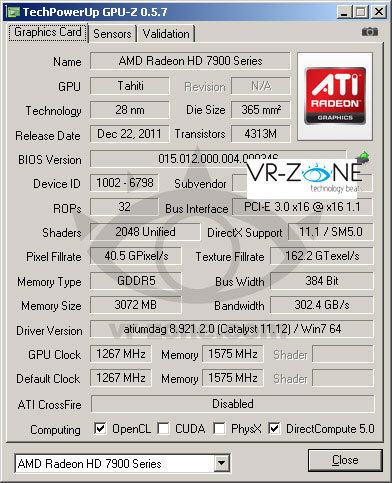
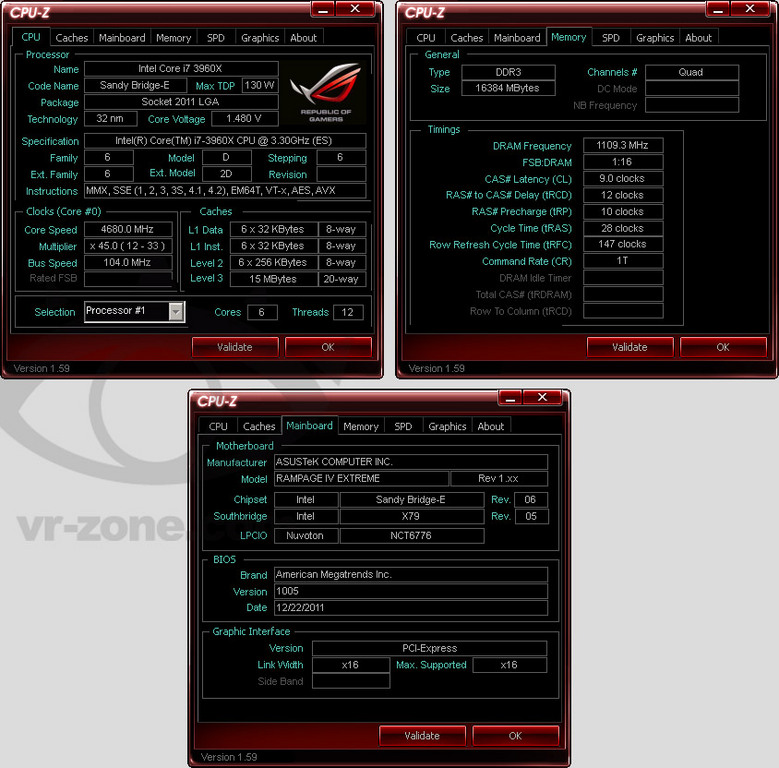
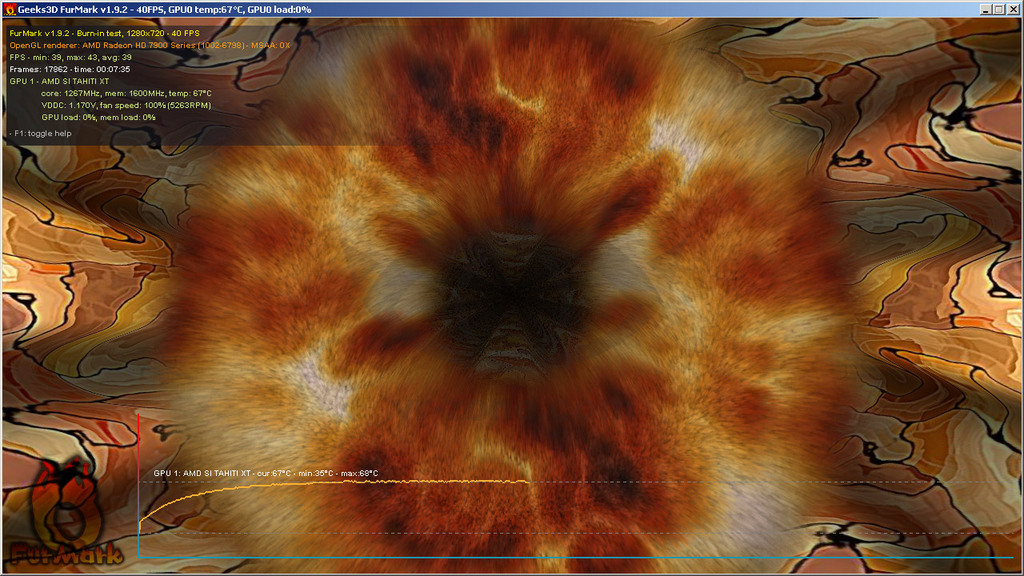
VR-Zone have spent the New Year weekend overclocking this beast, having reached a whopping 1.26 GHz core clock speed with their HD 7970 - and decent benchmark improvements to go with it. Also, with the fan at 100%, the card never got above a very comfortable 68 degrees centigrade while running Furmark, which is amazing considering how this test is specifically designed to heat a graphics card to the max - but please see the update at the bottom of the article. The stock cooler may be noisy, but it's certainly very effective: an excellent result which will prolong the working life of the card.

Aqua Computer Unveils First Water Block for Radeon HD 7970

Aqua Computer is the first in the industry with a water block designed for AMD Radeon HD 7970 graphics card. Called the AquagrATIx 7900, the block provides full-coverage for the obverse side of the AMD Radeon HD 7970 PCB, which is where all the heat-producing components are. Its primary material is copper, with a stainless steel top. Its channel bears a nearly symmetric shape, the portion over the GPU is ridged to increase sub-surface area for improved heat dissipation to the coolant. While the AquagrATIx 7900 doesn't include fittings, it features two standard G1/4" threads (the inlet and outlet). The block is also said to be compatible with Radeon HD 7950. Aqua Computer is accepting orders for this, with estimated delivery time of 21 days. It is priced at €89.90.

More HD 7770 Leaks: Pictures, Plus 3DMark Benchmarks

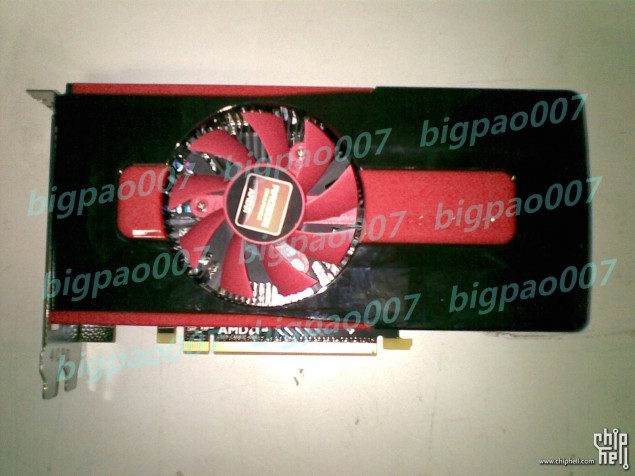
Not quite two weeks ago, we reported on leaked pictures of AMD's upcoming Radeon HD 7770 mid-range graphics card based on the new Southern Islands architecture and listed its basic specs. Well, the leaks keep coming and bigpao007 of ChipHell has leaked more pictures with some benchmarks to go with them. The test setup consisted of an Ivy Bridge ES CPU - Core i5-3550K at 3.3Ghz and Z77 chipset-based motherboard. The driver used was the AMD Catalyst 8.940 RC2, giving the following 3DMark benchmark results:

Asus Readies the E-450-Powered Eee PC 1225B Netbook

Next month Asus is set to add a new member to its Eee PC line, the Eee PC 1225B which runs Windows 7 Home Premium, features an 11.6-inch (1366 x 768) LED-backlit display, and is powered by an AMD Brazos APU, either the 1.0 GHz C-60 or the much more enticing 1.65 GHz E-450.

The incoming netbook weights 1.4 kg and also has 2/4 GB of RAM, up to a 750 GB hard drive, integrated DirectX 11 graphics (Radeon HD 6290 for the C-60 version, Radeon HD 6320 for the E-450 unit), a 0.3-megapixel webcam, LAN, 802.11 b/g/n WiFi, Bluetooth 3.0 (this is optional), stereo speakers, an SD/MMC card reader, D-Sub and HDMI outputs, and a 6-cell battery allowing for up to 7 hours of operation per charge.

The Eee PC 1225B will be available in five color versions - gray, red, silver, black and white, and is supposed to start at 349 Euro.

Christmas Special: The PC Technology of 2011

Welcome to the TechPowerUp 2011 PC technology Christmas special. We hope that you will enjoy reading it while tucking into your turkey, Christmas presents and a little too much wine... In this article, we go through the technology of 2011 that has had the most significance, the most impact and was generally the most talked about. It's not necessarily the best tech of 2011 which is the most significant though, since lemons can be just as significant as the ground-breakers in how they fail to deliver - and the backlash that goes with it.

January: Intel Sandy Bridge i5 & i7

Released on January 9th, the new Intel Core i5 & i7 processors were based on Intel's second generation Core architecture built on a 32 nm production process (HEXUS review). They included an IGP (Integrated Graphics Processor) physically on the same piece of silicon along with HyperThreading. These new dual and quad core processors soundly beat all previous generations of Intel processors in terms of processing performance, heat, power use, features and left AMD in the dust. Therefore, Intel badly needed some competition from AMD and unless you have been living under a rock, you will know how that turned out in October with the launch of Bulldozer. Sandy Bridge was a sound win and is generally considered to be the only architecture worth considering at this point. The i5-2500K is currently at the sweet spot of price/performance. It comes at a stock speed of 3.3 GHz, but typically overclocks to an amazing 4.5 - 5 GHz with a decent air cooler and without too much difficulty in getting there. Models in the budget i3 range were released at various times later. See this Wikipedia article for details.

Cost-Effective Radeon HD 7900 PCB Already In The Works

A little earlier today, we showed you pictures of AMD's first Radeon HD 7900 series single-GPU PCB that makes use of digital-PWM power delivery. Some of the first batches of Radeon HD 7900 graphics cards will stick to that PCB and board design, as it's backed by AMD's engineering. Even as the SKU's launch is less than 24 hours away, there are pictures of AMD's cost-effective Radeon HD 7900 PCB surfacing on Asian media sites. Once ready, AMD add-in board partners can opt for this cost-effective PCB if they want to fine-tune their prices. It looks like AMD is ready well ahead to face competition from NVIDIA, with its GeForce Kepler 104 (GK104) GPU.

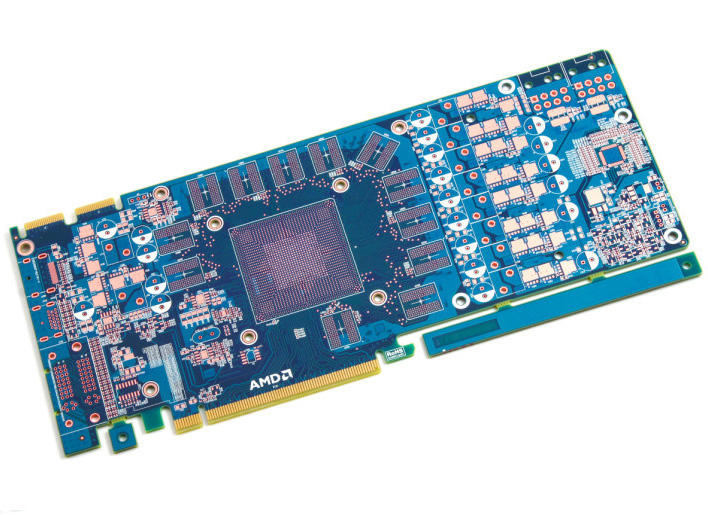
The cost-effective PCB, without any components laid, is pictured below. The first picture shows its obverse side, the second, its reverse side. The PCB is completely up to speed with everything Tahiti GPU will need. It has provision for two 8-pin PCIe power inputs, an 8+2 phase cost-effective analog VRM, probably driven by a cost-effective CHIL controller, and a different display output connector loadout. It has provision for two DVI, and one each of HDMI and full-size DisplayPort. Partners can still use a single DVI connector, and keep their cards single-slot capable. Provisions for 12 GDDR5 chips are right where they should be. There is nothing eventful in the reverse side, just traces for all the supportive components.
AMD Radeon HD 7970 PCB Pictured Clear

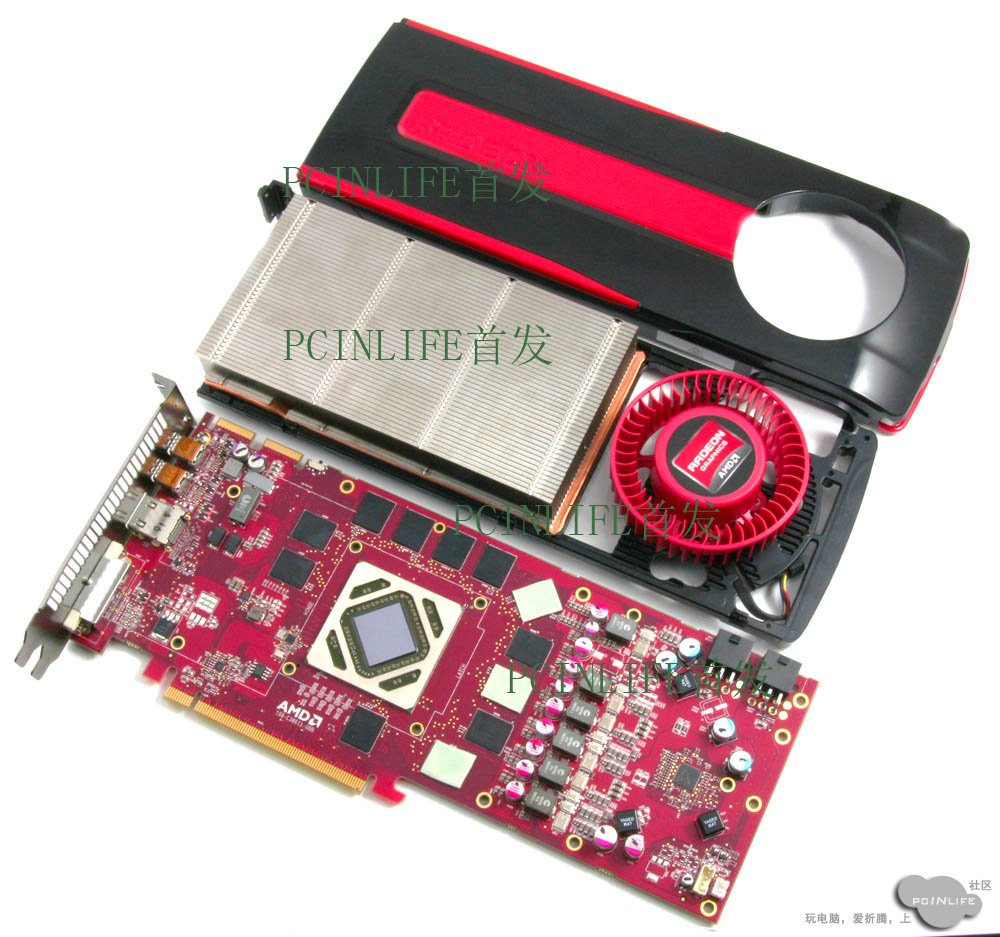
Here is the first clear picture of Radeon HD 7970 engineering sample PCB. The final product will feature an all-black PCB color. The picture reveals the PCB to have provision for two 8-pin PCIe power connectors, though on this sample, there are two 6-pin connectors. We've seen other samples using 8 + 6 pin connector arrangements. Unlike earlier thought, the HD 7900 single-GPU reference board very much does use a digital-PWM power design. There appears to be CPL-made single-phase PWM chokes, and Volterra-made regulators. Not all power domains, though, seem to have digital-PWM. We can find a 5+1+1 phase VRM, with some miscellaneous analog power domains.

The GPU package design is nothing like we've seen from AMD. It looks to be slightly larger than that of AMD Cayman. The die is oriented diagonally, with a sturdy brace around it reduce and stabilize the pressure applied by the cooling assembly. There are twelve memory chips around the GPU, as this chip features a 384-bit wide memory interface, to deliver nearly 50% higher memory bandwidth over the previous generation. The card features redundant BIOS, loaded into two separate EEPROM chips that can be toggled using a small 2-way switch located next to the Crossfire connectors. Display connectors include one DVI, one HDMI, and two mini-DP connectors. The second picture below reveals a curvy back-side of the cooling assembly. A nice aesthetic touch with zero function.

New Radeon Pictures Leaked: HD 7770

First pictures of AMD's mainstream card, HD 7770, have now been leaked online. This card is the first major upgrade to the HD 5770 in two years, since the HD 6770 was just a rebrand. It features the Cape Verde GPU, which replaces the Juniper GPU used in the HD 5770/HD 6770. The card looks somewhat different, with a large fan sitting on top of the GPU, blowing directly onto it and the card's length is the same as the HD 5770, at around 8.25 inches.

Radeon HD 7970 Raw Specs Leaked

If slide leaked on Orb-Hardware is to be believed we GPU consumers are in for a pretty big treat in the next month or so. The slide shown below states that the AMD 7970 will have a default core clock speed of 925MHz and a whopping 3 GB of GDDR5 memory.

It also sports a 3.5 TFLOPs precision floating point. Which would put it well beyond the NVIDIA flagship single GPU solution. The slide states the a ROP count of 32, against an earlier speculated count of 48. This could be because AMD may have delinked ROP clusters from memory bus. The cooler itself is under the trademark AMD black shroud so there is no way to see if it uses the rumored "vapor chamber" as seen in after market solutions.

Looking past all the beastly prowess of this slide one cannot help but think about power draw. The "leaked" slide states the 7970 will have a peak power draw of 300 W and an idle draw of 3 W. We will have to wait for review to see if any of these amazing stats are true.

AMD Pulls Radeon HD 7970 Launch to December 22

In a surprising move, AMD pulled the launch date of Radeon HD 7970, a high-performance single-GPU graphics card based on the 28 nm Tahiti silicon, up to December 22, 2011; from its earlier launch date of January 09, 2012. The January date was a lot more than speculation, as older presentation slides from AMD to distributors and retailers talked specifically about it. The move to pull December 22 (next Thursday) spices things up in the run up for CES. First, it gives AIB partners full freedom to show off their custom-design graphics cards at the event, along with full details about GPU specifications and clock speeds.

According to a VR-Zone report, Radeon HD 7970 will launch on December 22, 2011, this will be the day you will be able to read reviews of the card (at least the AMD reference design board), online. It will be a limited launch (read: paper-launch), but one can expect "full" retail availability of the card by January 09. Another interesting bit of information is concerning the Radeon HD 7950. This card will be available in non-reference board designs from day one, it will however launch on January 09.

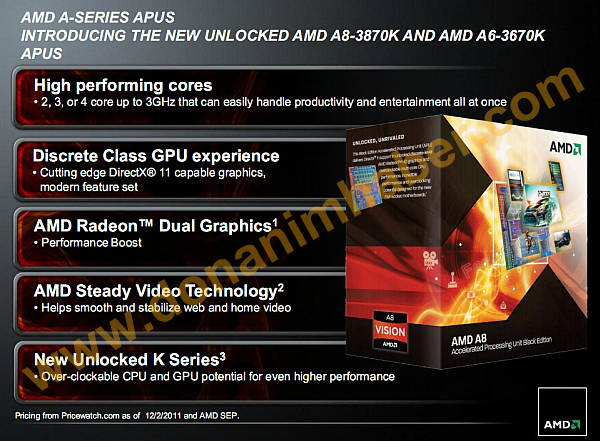
26 December Launch Date for AMD A8-3870K and A6-3670K Black Edition Unlocked APUs

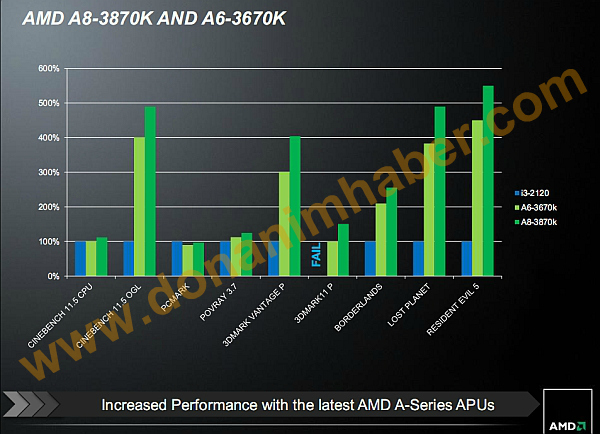
December thru January looks to be a busy time for AMD. Along with a few new graphics products, AMD will launch new CPUs and APUs. The company has chosen December 26 to launch its A8-3870K and A6-3670K Black Edition "Llano" accelerated processing units (APUs) in the FM1 package, which feature unlocked base clock multipliers for the processor component, making overclocking a breeze. In two of its presentation slides to distributors, it unveiled the swanky new box art of these unlocked APUs.

These chips pack four x86-64 cores based on the "Stars" K10.5 architecture with 1 MB dedicated L2 cache per core, dual-channel DDR3-1866 MHz integrated memory controller, PCI-Express 2.0 root complex, and a "discrete-class" graphics processor that packs 400 VLIW5 stream processors, DirectX 11 support, and the ability to pair with similarly specc'd discrete GPUs. The A8-3870K Black Edition features x86 core clock speed of 3.00 GHz, and Radeon HD 6550D graphics that features all 400 of those stream processors, with 600 MHz GPU clock speed. The A6-3670K Black Edition, on the other hand, has its x86 component clocked at 2.70 GHz, it features Radeon HD 6530D graphics that has 320 out of the 400 stream processors enabled, and a GPU clock of 433 MHz.

January 9 Launch Date for AMD Radeon HD 7900

Ladies and Gentlemen with graphics card upgrade plans, circle the date January 09, 2012, for this is going to be the day AMD will launch its next generation high-performance graphics cards in the Radeon HD 7900 series, according to reliable market sources DonanimHaber spoke with. On the 9th, AMD is expected to unveil at least two new SKUs in the HD 7900 series, most likely, HD 7970 and HD 7950. These will be based on the new 28 nm "Tahiti" silicon that will use completely redesigned number-crunching machinery, and a very wide memory bus.

AMD Tahiti (Radeon HD 7900) Graphics Card Seen in the Nude

Today may be a Fringe-less Friday but worry not, there are plenty of thing to do like contemplating the two recently-leaked images of an AMD Tahiti-powered graphics card. Tahiti is a 'next-gen' GPU built on TSMC's 28 nm process that's supposed to be at the heart of the Radeon HD 7900 series models (the HD 7950, HD 7970, and then probably the dual-GPU HD 7990).

The card seen below comes with one Tahiti chip protected by a heatspreader/shield (only the die is exposed) and has a red PCB, a 5+1-phase PWM, two BIOSes, two PCIe power plugs, CrossFire connectors enabling quad-GPU configurations, and 12 memory chips which support previous reports of a 384-bit memory interface.

The Radeon HD 7900 series cards are rumored to debut in January at CES 2012 (January 10-13) so we still have one month of leaks to look forward to. Oh, and the winter holidays.

AMD Radeon HD 7900 ''Tahiti'' Pictured, 384-bit Memory Bus Confirmed?

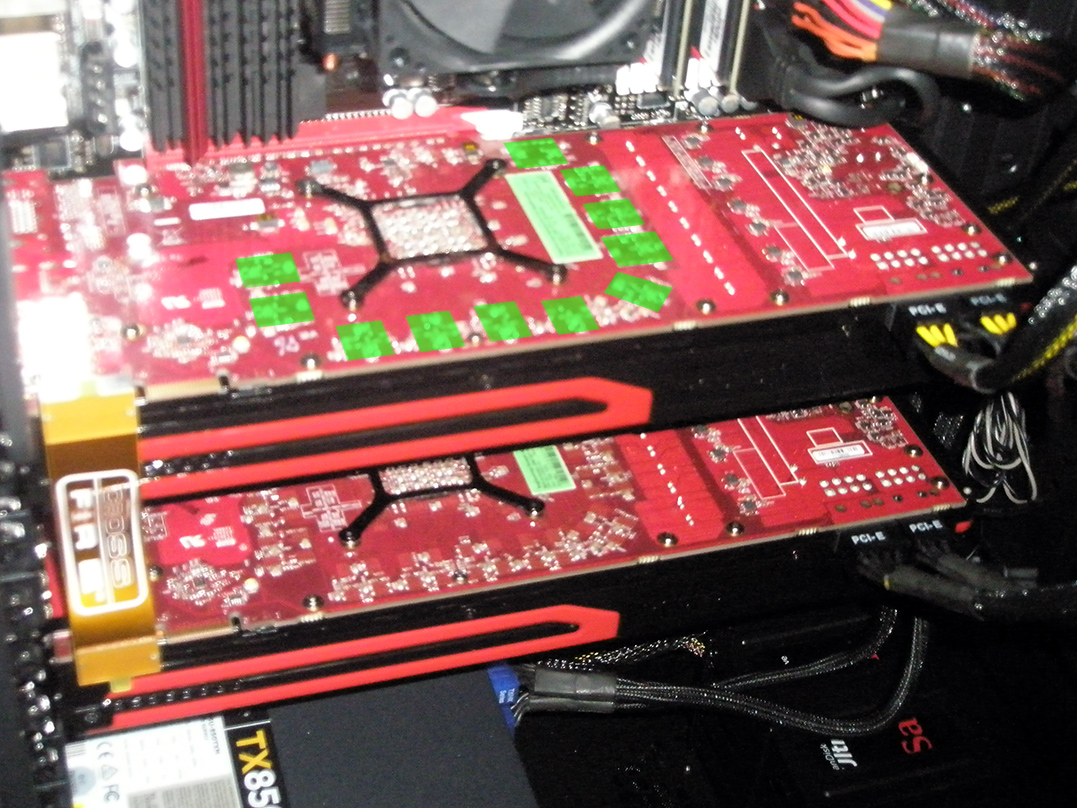
A Beyond3D forum member posted a mysterious picture of two graphics cards that could very well be engineering samples of AMD's true next-generation Radeon HD 7900 "Tahiti" graphics cards. The final products most probably won't look like these, with a bare red PCB, but it does look like the reference cooler design is ready. A more important feature in that picture is the spotting of traces for at least 11 memory chips, the 12th one (not highlighted) is apparently near the PCIe slot interface. The presence of 12 memory chips gives rumors of Tahiti featuring a 384-bit wide memory interface a shot in the arm. This will be the first AMD GPU in over 5 years to feature a memory bus wider than 256-bit. The R600 Radeon HD 2900 GPU featured a 512-bit GDDR4-capable memory interface.

Zalman Enters Graphics Card Business, Starts Selling AMD Radeon

Korean company Zalman, known more for its innovative PC air cooling solutions, PSUs, and cases, entered the graphics card business. The company is now an AMD Radeon add-in board (AIB) partner, and started its lineup off with some upper-mainstream models. It makes perfect sense for Zalman to enter this business, as it holds some expertise with high-end graphics card cooling solutions. Zalman can source PCBs from any of the major foundries such as PC Partner, Hightech Information Systems, or TUL, and assemble its coolers on top of them. Zalman's first three graphics cards are based on Radeon HD 6870, HD 6850, and HD 6770, with AMD reference clock speeds. What markets Zalman will target its new graphics card lineup with, is not known.

AMD Radeon HD 7400M, HD 7500M, and HD 7600M Released

Over the week, AMD launched three of the first notebook GPUs in the Radeon HD 7000 series in a bid to stay competitive in the notebook GPU market, even if it means re-branding already launched GPUs like NVIDIA did, with its recent GeForce 600M series launch. The newly [re]launched mGPUs include Radeon HD 7400M, HD 7500M, and HD 7600M. The three are based on current-generation Caicos and Turks GPUs.

The HD 7400M is based on the "Caicos" silicon, featuring 160 stream processors, 8 TMUs, 4 ROPs, and a 64-bit wide GDDR5 memory interface. The HD 7500M and HD 7600M are based on the "Turks" silicon, the HD 7500M features 480 stream processors, 24 TMUs, 8 ROPs, and 64-bit wide GDDR5 memory interface (more economical with lower number of memory chips, while offering the same performance as 128-bit DDR3); while the HD 7600M features all the features of the HD 7500M, including the full 128-bit wide GDDR5 memory interface.

New Lenovo ThinkPad Laptop Ruggedized For Students and Schools

Lenovo announced today the ThinkPad X130e laptop, specially ruggedized for education and with the features needed to help students in grades K-12 and their schools get the most out of their PC technology. Equipped with the advanced technology expected for an educational laptop, the ThinkPad X130e comes with choices of the latest Intel or AMD processors and fast, integrated graphics as well as wireless connectivity and multimedia tools for today's digital learning. Designed to be handled by kids, the ThinkPad X130e has a reinforced and extra durable top cover, keyboard and hinges. Schools will also like its performance, reliability and customizable options including asset tags, BIOS modifications, custom imaging and a broad selection of custom colors.

AMD A8-3870K and A6-3670K up for Pre-Order

Later this month, AMD will finally launch its much overdue unlocked A8 and A6 series APUs in the FM1 package, that are geared for overclocking. The A8-3870K is clocked at 3.00 GHz, and the A6-3670K at 2.60 GHz. The two are quad-core APUs, and differ by the core clock speeds and integrated GPUs. While the A8-3870K packs Radeon HD 6550D graphics with 400 stream processors, the A6-3670K has Radeon HD 6530D graphics with 320 stream processors. The two were listed for pre-order on ShopBLT, with the A8-3870K priced at US $143.77, and the A6-3670K at $121.50. It is expected that prices of A8-3850 and A6-3650 will drop after the launch of these two chips.

AMD Working On Radeon HD 6930 Graphics Card

AMD is reportedly working on a new Radeon HD 6900 series single-GPU graphics card based on the "Cayman" silicon, the Radeon HD 6930. This SKU will be designed to make things very competitive for the non-Ti GeForce GTX 560 from NVIDIA. In its most recent salvo, NVIDIA launched a limited edition GeForce GTX 560 Ti with 448 CUDA cores, targeting select markets in the winter shopping season. Tests showed it to be very competitive with HD 6950 and HD 6970, and is priced accordingly, at $289. AMD's new SKU will be designed to heat things up in the sub-$200 market where GTX 560 non-Ti and HD 6870 are trading blows.

Carved out of the 40 nm "Cayman" silicon, the GPU in its HD 6930 configuration will carry the codename "Cayman-CE". It will feature 1280 advanced VLIW4 stream processors, 80 TMUs, 32 ROPs, and a 256-bit wide GDDR5 memory interface that will hold 1 GB of memory. The core will be clocked at 750 MHz, and the memory at 1200 MHz (4.80 GHz effective). Most AIBs will reuse their cost-effective HD 6950 1 GB board designs with the new SKUs. The new Radeon HD 6930 is expected to be priced around $180.

Radeon HD 7000 Series To Be Unveiled on December 5

According to a NordicHardware report, December 5 is pin-pointed as the day AMD will unveil its some of its new Radeon HD 7000 graphics processors. It is indicated that products launched on that day will be based on GPUs built on the 28 nanometer fabrication process. The new products will be unveiled in London. It's likely that these are mobile parts based on the "Thames" and "Seymour" silicons. An alternate theory is that AMD could unveil some of its next-generation GPUs based on the GCN architecture, AMD's biggest leap in GPU architecture since Radeon HD 2000 series.

Radeon HD 7000M Mobile GPUs Slated For December Launch Tabled

Around the 9th of December, AMD will announce its first Radeon HD 7000M series graphics processors, beginning with mobile parts (for notebooks). There will be at least 16 models announced, all based on two silicons: "Thames" and "Seymour", and being carved out of toggling various components within those GPUs. The models AMD will be launching will span across the Radeon HD 7400M series, 7500M series, and 7600M series. Thames and Seymour are brand new chips built on the 28 nanometer silicon fabrication process, which will allow AMD more TDP headroom, which it can use to step up clock speeds.

While we don't have key details such as stream processor, ROP, and TMU counts, a table based on data compiled by CompuBase.de lists out GPU and memory clock speeds, memory interface widths, and memory type. The table also mentions some higher-end GPU models named "Chelsea", "Heathrow", and "Wimbeldon". By now you know that all these codenames are after names of places in the UK. That's one way you can identify Radeon HD 7000M mobile GPUs from the "Southern Islands" Radeon HD 7000 desktop discrete GPU family (named after islands in the southern hemisphere).

Noises About Radeon HD 7900 Series with XDR2 Memory Grow

As early as in September, we heard reports of AMD toying with Rambus XDR2 memory on its next generation of high-performance GPUs. Apart from our own community's response, that news met with a wall of skepticism as it was deficient in plausibility. New reports from Chinese websites have raised the topic again with fresh rumors that AMD will attempt to implement XDR2 on some of its next-generation ultra-high end products after all. XDR2, according to Rambus, can transport twice the amount of data per clock as GDDR5.

Apparently AMD and Rambus have had much more cordial relations with each other, than other companies the latter engaged in patent disputes with. In 2006, AMD settled outstanding disputes with Rambus by willing to pay licensing costs for certain technologies claimed by Rambus, turning a leaf in the relations between the two. What Chinese sources are suggesting now, is that AMD will design its high-end GPU (codename: "Tahiti") in a way that will let it support both GDDR5 and XDR2. Certain higher-end SKUs based on Tahiti will use XDR2, while the slightly more cost-effective SKUs will use GDDR5.
Return to Keyword Browsing
Nov 11th, 2026 06:05 CST change timezone

New Forum Posts

Popular Reviews

TPU on YouTube

Controversial News Posts