News Posts matching #Systems

Return to Keyword Browsing

KORA Introduces AI-Focused Operating System with Local AI and Agentic Workspaces

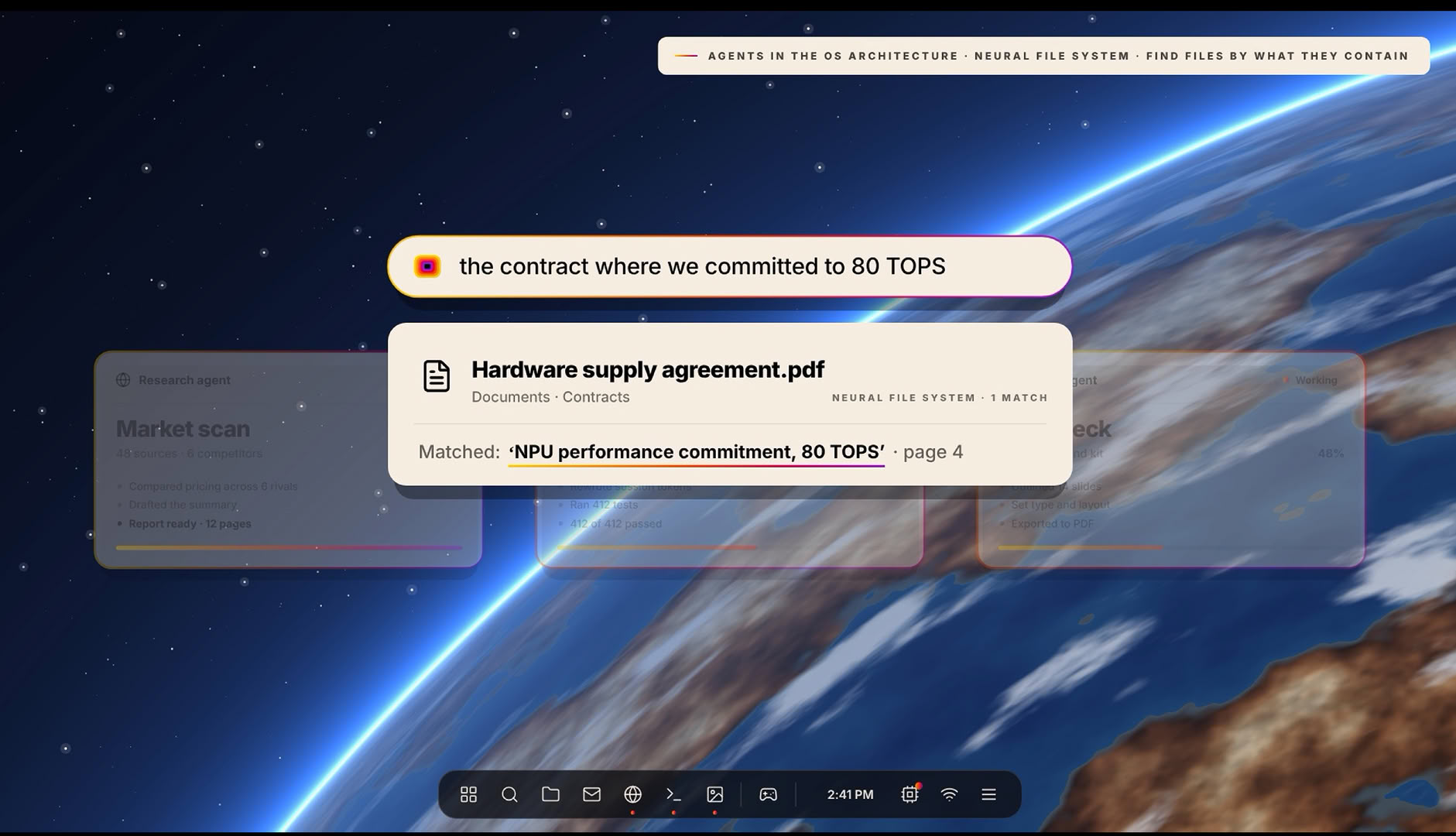
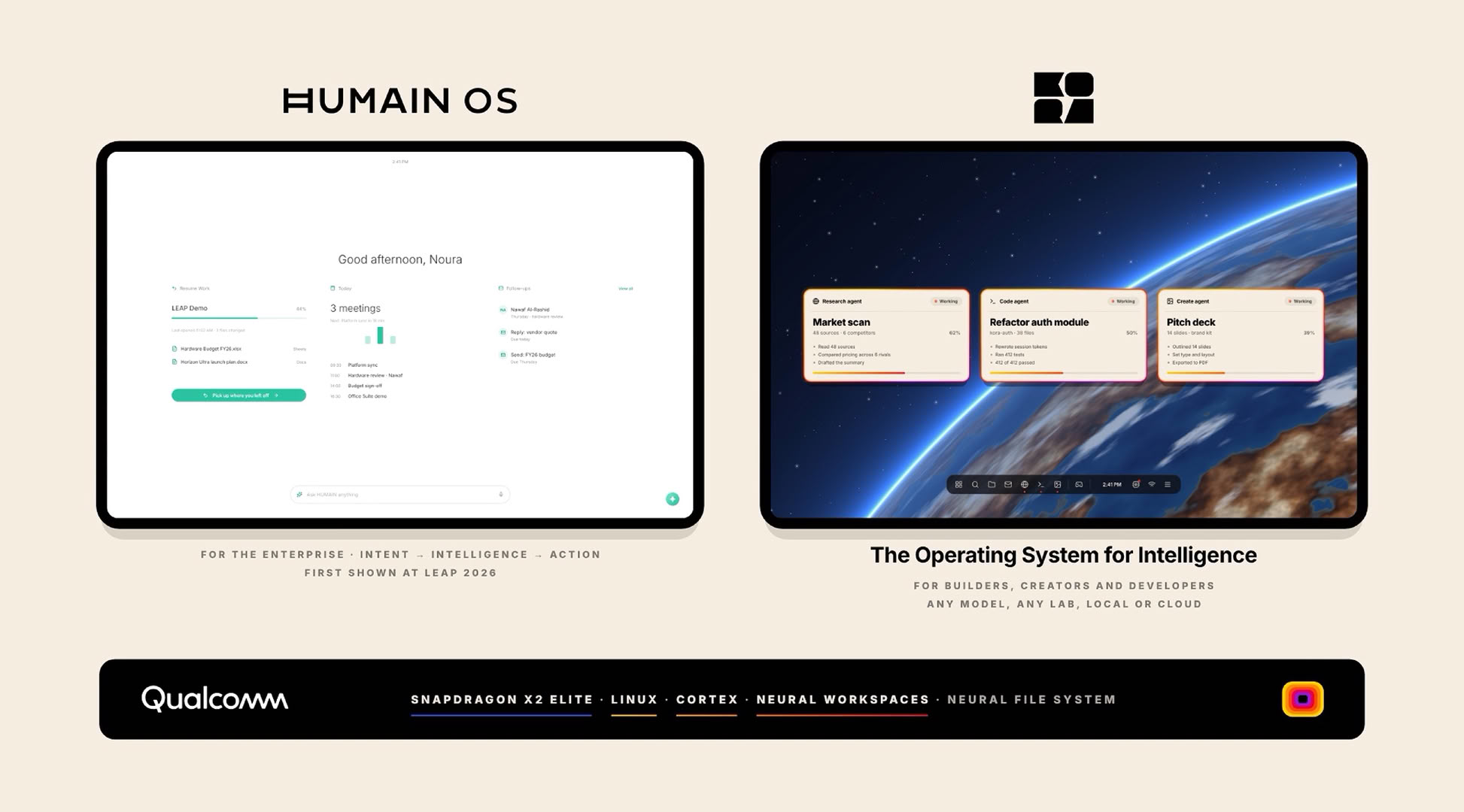
There is a new player in the operating systems arena from KORA Systems Inc. Called KORA, this operating system is the first bottom-up OS designed specifically for AI PCs, enabling agentic workflows. It is one of the first concepts where a system is so heavily customized that AI workflows are native to it. The company developed this customized operating system on top of NixOS, using it as a foundational layer.

The customization includes the development of what are called neural workspaces and file systems, which replace traditional folders and desktop apps. While these traditional elements are still present, the workflow on KORA OS is organized around intent, context, and memory. Each workspace is divided based on user intent, and the OS manages the files accordingly. Security is robust, as KORA implements each workspace within a secured sandbox for applications and agents, with separate permissions. The memory and context of the workflow remain on the user's desktop, never leaving the machine. Features like semantic search and email are natively integrated, allowing you to search across your entire OS or email to find what you need.



FSP Announces New Flagship 1200W Gold Non-Modular FSP1200-50ADA Power Supply

With the booming development of next-generation graphics cards and AI applications, global power supply leading brand FSP Group announces the expansion of its highly popular 50ADA series, launching the new flagship 1200 W Gold non-modular power supply—FSP1200-50ADA. This power supply, built specifically for hardcore gamers and AI developers, effortlessly handles top-tier graphics cards like the RTX 5090 and RTX 6000 pro Blackwell, and can provide robust power for Edge AI Inference workstations.

ATX 3.1 Standard and Gold Certification, Seamless Integration with Next-Gen Hardware
Continuing the excellent architecture of the 50ADA series, FSP1200-50ADA fully complies with the latest Intel ATX 12 V V3.1 design guide, perfectly withstanding the transient power spikes of next-gen graphics cards. This model meets 80 Plus Gold efficiency, with conversion efficiency up to 90%, and adopts an eco-friendly design concept. While providing a massive 1200 W output, it can still effectively reduce energy consumption.

Linux Mint Announces Hibernation Re-Implementation and New System Apps

Linux Mint is one of the most widely recommended Linux distributions, especially for those looking to move from Windows to Linux, since it features a familiar layout and is very beginner-friendly. However, it is still based on Ubuntu and thus subject to many of Ubuntu's upstream decisions, like the prior removal of hibernation support in favor of suspend. In a recent Linux Mint blog post, previewing upcoming chanes to Mint, the development team behind the distribution argue that, while suspend is useful and widely supported, it results in phantom battery drain in most cases and can result in a dead laptop battery within 2-3 days.

With this justification in mind, the development team has confirmed that it has re-implemented support for hibernation in Linux Mint, with a new GUI page in the System Administration tool with toggles to enable specific sleep modes, including suspend, hibernate, suspend then hibernate, and hybrid sleep. There is also a dedicated drop-down to configure more specific hibernation and sleep modes, and there is a section that automatically detects problems with the configured sleep modes to make it easier for users to fix them.

Microsoft Confirms 20% Faster Windows 11 Experience, 8 GB Systems Also Run Better

Microsoft is making its long-promised Windows 11 changes official! Today, the company confirmed that Windows 11 is finally getting a responsiveness improvement, up to 20% more noticeable than the older Windows experience. In footnotes, Microsoft states that the company compared response times across Search, Start, Settings, Snipping Tool, File Explorer, Microsoft 365, and right-clicking on applications and functions across the operating system. Compared to the older Windows 11 build 26200.7628, the newest Windows 11 build 26300.9550 offers up to a 20% faster, noticeable improvement in response time. Microsoft has spent months of engineering work optimizing this behavior, and we are finally seeing a concrete figure that will help get Windows 11 to where Microsoft promised months ago.

Additionally, Microsoft has stated in the past that 8 GB systems will receive a significant set of optimizations to ensure that millions of users across the Windows ecosystem continue to have a smooth experience, even with 8 GB of RAM in their systems. With the latest Windows 11 build 26300.9550, the operating system will keep up to 2 GB more data in memory instead of storage, enhancing responsiveness. Keeping more data in RAM doesn't mean that resources are inefficient; rather, it means that services will start faster, and overall usage will feel smoother. To combat unnecessary background memory-hogging processes, Microsoft has confirmed that when your PC runs on 8 GB of memory or less, Widgets will load only when you open them, freeing up more than 200 MB of memory for your apps and other tasks. Hence, only what is needed will be loaded into the memory.

Rapidus Unveils "Rapidus CORE" Global Framework for Development and Mass Production of Semiconductors

Rapidus Corporation today announced that it will establish the Rapidus Collaborative Open Rapid Ecosystem (CORE), a global ecosystem framework to support the development and mass production of cutting-edge semiconductors.

Today, semiconductor development requires more than just manufacturing technology; it is essential to integrate the entire semiconductor value chain—including research institutions, EDA, IP, design and manufacturing—to provide customers with a development and production infrastructure they can rely on. Further, amid a global shortage of cutting-edge semiconductor talent, it is crucial to build a design ecosystem that enables customers to begin development at an early stage by collaborating with design-related companies.

NVIDIA Launches DGX Spark 64 GB Desktop AI Systems

Local AI is becoming more useful by the token. As AI agents move from experiments into everyday development, increasingly capable open models are shrinking to fit on more devices, giving builders more to run locally.

Coming this month, NVIDIA DGX Spark will be available with 64 GB of unified memory from top manufacturer partners—Acer, ASUS, Dell, Gigabyte, HP and MSI—giving developers, researchers and AI enthusiasts a new configuration with DGX OS and the NVIDIA AI software stack ready to use from day one.

Windows 11 Will Get Faster Boot Times and More Optimizations for 8 GB RAM Systems

At IFA 2026 in Berlin, Germany, Microsoft confirmed that the company is listening to user feedback on various aspects of the Windows experience, including boot times, Windows Hello, and optimizations for PC systems with 8 GB of RAM. Speaking at the event, Mark Linton, Corporate Vice President of Windows & Devices at Microsoft, stated that the company is making a series of decisions that will impact Windows 11 users, and many of these changes will be rolled out over the next few builds.
Mark Linton, MicrosoftWe've made significant gains on things like boot time, Windows Hello responsiveness… We're continuing to improve on the fundamentals... We're listening to customer feedback, continuously improving Windows, and you'll see those updates as Windows just gets better as the updates come through... We're optimizing so that 8 gig of RAM runs great on machines as well.

iBUYPOWER Expands Its Prebuilt and Custom Systems Lineup With PRO Workstations

iBUYPOWER, a leading system integrator of high-performance gaming PCs, announced today a formal expansion of its lineup with the launch of iBUYPOWER PRO Workstations, a new line of prebuilt and custom systems designed to meet the technical demands of creative professionals, software developers, and data-intensive workloads. The company also announced a warranty expansion, where it now offers three years of parts support as part of its existing three-year labor warranty.

With over 25 years of experience building gaming systems, iBUYPOWER brings its proven quality and service to the workstation space, where powerful machines are needed for a diverse range of workloads. Since workstations need to be highly reliable, iBUYPOWER is adding even more value to their PCs via their new warranty. Starting today, any new systems bought from iBUYPOWER.com are backed by a three-year warranty for parts and labor, a one-year increase from its previous two-year labor warranty. Customers will also benefit from fast turnaround times, with most systems shipping within five days or less; a sixty-day coverage period to ship their PC for repairs and diagnostics; and lifetime technical support.

MiTAC Computing Advances Agentic AI Infrastructure with 6th Gen AMD EPYC Server CPUs

MiTAC Computing Technology Corp., a global leader in high-performance, energy-efficient server solutions and a subsidiary of MiTAC Holdings Corporation (TWSE:3706), is highlighting its latest agentic AI infrastructure at AMD Advancing AI. MiTAC's showcase focuses on its premier exhibition lineup, featuring its latest liquid-cooled and air-cooled AI servers and next-generation multi-node platforms built on the new 6th Gen AMD EPYC Server CPUs. As part of the launch, MiTAC is introducing a portfolio of next-generation platforms designed to help customers scale AI, cloud, HPC and enterprise workloads with greater performance, efficiency and flexibility.

The new MiTAC M2810Z6 and M2610Z6 systems, powered by 6th Gen EPYC Server CPUs, reflect MiTAC's commitment to delivering infrastructure choices that align compute density, memory bandwidth, and I/O capability with evolving data center requirements. With support for AMD's Venice "Zen 6" architecture, PCIe Gen 6 I/O subsystem, and CXL 3.1, these platforms are engineered to meet the demands of modern AI-driven environments while optimizing power and system density.

IBM Unveils New Power Systems and Software Built for Enterprises

IBM (NYSE: IBM) today announced IBM Power Autonomous Operations, an AI agent that can help continuously monitor Power systems and autonomously resolve issues to keep operations running smoothly. It complements the recently launched IBM Bob Premium Package for i, which brings agentic-driven software designed to accelerate application development on IBM i. These capabilities can accelerate building modern applications so enterprises can innovate at the pace required by their business. Additionally, the entry-level Power S1112 server provides a new compact, efficient option powerful enough to run AI inference locally.

IBM Power has long been IBM's platform for mission-critical enterprise workloads. As AI becomes part of that critical infrastructure, Power is built to support it. IBM introduced Power11 last year as autonomous IT for the AI era, built for availability, resiliency, and scale across on-premises and IBM Cloud environments. IBM Power Virtual Server is a fully managed cloud service on which enterprises can run AIX, IBM i and Linux workloads while offloading much of the routine management for system operations. Now, IBM is embedding autonomous IT across the Power platform, from code to runtime, with new capabilities and systems.

IBM Launches Compact z17 and LinuxONE Systems

IBM (NYSE: IBM) today announces new IBM z17 and IBM LinuxONE 5 configurations, marking the first time IBM is offering rack mount alongside single frame systems across its full Z and LinuxONE portfolio. The expanded IBM z17 and LinuxONE 5 portfolios now offer a wide range of deployment options, engineered with the same flagship performance, security, and ecosystem standards. New single frame and rack mount options provide additional ways for organizations to position their infrastructure where it fits best for their business needs, helping support flexibility and operational efficiency.

Organizations processing highly sensitive workloads at scale are facing record-low data center vacancy and rental rates exceeding $400 per kW/month, according to CBRE's 2026 Global Data Center Trend Report. At the same time, they need infrastructure that can optimize their data center footprint while prioritizing the resilience required for their core applications. Enterprises can use IBM z17 and LinuxONE 5 rack mount and single frame systems to address these challenges, optimizing their data center real estate to meet today's realities.

ASUS Expects Milder PC Price Increases in Q3 This Year

In late Q1, ASUS implemented a 30% price increase for PCs in Taiwan, with the rest of the world following closely. ASUS Joint Technology Systems Division General Manager Yi-Hsiang Liao announced this planned 30% price hike across the company's entire product line, explaining that the extremely high costs of DRAM and SSD storage, combined with a shortage of CPUs, were driving this increase. However, today we are facing another increase, but a much milder one. According to Money UDN, ASUS now expects single-digit PC price increases for Q3, which is a much better situation for the PC market than the continuously rising prices. While these price increases hurt consumers, they also impact PC makers' sales, meaning that signs of stabilizing prices present a good opportunity for the PC market to rebound in the coming months.

As PC price increases are now expected to be in the single digits compared to Q1, we can conclude that component pricing has exhausted its room for further increases from the mid-double digits seen since Q4 of 2025. We can hope to see this trend evolve into price stagnation in the coming quarters, as well as possible contractions down the line. Main cost drivers, including NAND Flash, DRAM, and CPUs, have made any price cuts impossible for the time being. However, there is hope that the supply chain will stabilize next year. DIY PC enthusiasts might see better availability in the coming quarters as major PC OEMs work with the supply chain to gain access to more DRAM and NAND Flash, but as of now, this remains a distant hope.

Gigabyte Expands Its AI TOP Ecosystem with New High-Performance Systems

Gigabyte, the world's leading computer brand, continues to advance its vision of "Create Your Own AI on Your Own Desk" with the expansion of the AI TOP ecosystem at COMPUTEX 2026. More than a single product, AI TOP is a purpose-built local AI ecosystem that combines dedicated hardware and optimized systems to simplify AI development. As AI agents become increasingly capable of executing tasks, automating workflows, and operating continuously, AI TOP provides a scalable foundation for users looking to deploy AI locally.

Expanding the ecosystem is the new AI TOP 100 B850, engineered for demanding AI workloads. Powered by the AMD Ryzen 9 9950X processor and available with either GeForce RTX 5090 or Radeon AI PRO R9700 graphics, the system combines high-performance processing with advanced graphics acceleration for AI computing. With support for up to 128 GB of DDR5-5600 memory and a server-grade 1600 W 80 Plus Platinum power supply, it delivers the stability, scalability, and sustained performance required for advanced AI applications. Every workload runs locally, eliminating cloud dependency while keeping sensitive data under user control.

Corsair Introduces Corsair Pro Lineup of AI Workstations and Servers

Corsair (Nasdaq: CRSR) today introduced Corsair Pro, a new portfolio of AI systems built for organizations deploying and scaling modern AI workloads. Designed to support multiple workloads from model development and fine-tuning to inference and production deployment, Corsair Pro brings together purpose-built workstations and servers in a single platform family.

With AI teams facing very different infrastructure requirements depending on workload, model size, and deployment stage, Corsair Pro is built to offer a more practical approach. Some users need a workstation for development, experimentation, validation, and local inference. Others need server-class infrastructure for denser compute, shared environments, and production-scale deployment. Corsair Pro is designed to support both.

IBM Announces Strategic Collaboration with Arm

IBM (NYSE: IBM) today announced a strategic collaboration with Arm to develop new dual-architecture hardware that helps enterprises run future AI and data intensive workloads with greater flexibility, reliability, and security.

IBM's leadership in system design, from silicon to software and security, has helped enterprises adopt emerging technologies with the scale and reliability required for mission-critical workloads. As AI moves deeper into core business operations, IBM continues to invest in hardware platforms such as the Telum II processor and Spyre Accelerator, which are designed to bring AI from experimentation into everyday enterprise use.

AMD Joins Intel in Raising PC CPU Prices by Up to 15%

Last week, we reported that Intel is preparing to increase CPU prices by 10% across its client PC sector. However, a new report from Nikkei Asia suggests that AMD is also joining this trend, with plans for a PC CPU price hike as well. Reportedly, AMD Ryzen CPUs could see prices rise by 15% compared to the same time last year, when prices were typically around the MSRP at retailers. Now, as CPU demand has depleted inventories and the focus remains on server and data center CPU production, capacity for the client segment has been significantly reduced, leading to little to no inventory for PC enthusiasts. Large OEMs like HP and Dell are among the first to feel the pressure from the dwindling supply chain and have reported a significant gap between demand and supply for their PC systems.

Nikkei also notes that both AMD and Intel have informed their clients that CPU price increases will take effect by the end of March and into April, which should start to manifest very soon. What used to be a one or two-week wait from order to CPU shipment has now stretched to a process lasting eight to twelve weeks. This means that a CPU batch ordered in April might not arrive until June. This period is expected to be the worst in terms of supply in the second quarter of this year. Even if OEMs are willing to pay extra to secure CPU supply, availability is lacking. The CPU shortage is worsening daily, coinciding with the ongoing memory and storage shortage we are already experiencing.

ASUS Plans 30% PC Price Increase in Taiwan, Other OEMs to Follow

PC pricing in Taiwan may see a significant increase next quarter, as ASUS Joint Technology Systems Division General Manager Yi-Hsiang Liao has announced a planned 30% price hike across the company's entire product line. He explains that the extremely high costs of DRAM and SSD storage, combined with a shortage of CPUs, are driving this increase. ASUS also claims that this issue is not limited to their company, as every Taiwanese PC maker will face similar challenges. Reportedly, ASUS did not comment on whether the price increase will affect overseas markets or remain exclusive to Taiwan. However, it seems likely that rising component costs in Taiwan will also impact Western markets, which have already experienced significant price increases in recent months.
UDN, Machine TranslatedYesterday, ASUS, in partnership with Qualcomm, held a press conference for its new Zenbook A16 laptop. During an interview, Liao Yi-hsiang, General Manager of ASUS United Technology Systems Business, revealed that ASUS has confirmed that PC prices in Taiwan will increase by 25% to 30% or more in the second quarter, with varying increases across different models.

Optical Scale-up Consortium Established to Create an Open Specification for AI Infrastructure

The Optical Compute Interconnect (OCI) Multi-Source Agreement (MSA) group today announced its formation, led by founding members AMD, Broadcom, Meta, Microsoft, NVIDIA and OpenAI. This industry consortium marks a pivotal shift toward a hyperscaler-driven open ecosystem to enable the development of a multi-vendor supply chain for optical scale-up interconnects. By aligning on an open specification, the OCI MSA members are promoting a robust optical ecosystem which will ensure that the future of AI interconnects is built with a flexible, multi-vendor foundation to meet the optical interconnect needs of modern AI infrastructure.

The Physics and Power Mandate
As large language models (LLMs) advance toward super intelligence, traditional copper-based connectivity is reaching limitations in physical reach which are impacting AI cluster scale-up domain architectures. OCI will enable migration from copper-based to optical-based scale-up architectures, alleviating copper interconnect bottlenecks.

Cisco Unveils Silicon One G300 102.4 Tbps Switching ASIC

Cisco (NASDAQ: CSCO) continues to transform the network into an AI innovation platform, today unveiling the Silicon One G300, a 102.4 Tbps switching silicon designed for massive AI cluster buildouts. The Cisco Silicon One G300 will power new Cisco N9000 and Cisco 8000 systems that push the frontier of AI networking in the data center. The systems feature innovative liquid cooling and support high-density optics to achieve new efficiency benchmarks and ensure customers get the most out of their GPU investments. In addition, the company enhanced Nexus One to make it easier for enterprises to operate their AI networks—on-premises or in the cloud—removing the complexity that can hold organizations back from scaling AI data centers.

"We are spearheading performance, manageability, and security in AI networking by innovating across the full stack - from silicon to systems and software," said Jeetu Patel, President and Chief Product Officer, Cisco. "We're building the foundation for the future of infrastructure, supporting every type of customer—from hyperscalers to enterprises—as they shift to AI-powered workloads."

Imec Inaugurates NanoIC Pilot Line, Accelerating Innovation in Sub-2nm Systems-On-Chip

Imec - a world-leading R&D center in advanced semiconductor technologies - today inaugurated a 2,000 m² cleanroom expansion at its Leuven headquarters, marking a pivotal milestone in the deployment of Europe's NanoIC pilot line. The event was attended by European EVP Henna Virkkunen, Belgian Prime Minister Bart De Wever, Flemish Minister-President Matthias Diependaele, and ASML CEO Christophe Fouquet, alongside representatives from the European high-tech ecosystem - including industry and startups - the NanoIC pilot line consortium, and policymakers from the EU, Belgium, and Flanders. With a capacity of over 12,000 m², imec's cleanroom plays a crucial role in the European Chips Act's ambitions to position Europe at the forefront of next-generation semiconductor innovation and manufacturing; a strategy that will be instrumental in reinforcing the continent's industrial fabric in the AI era, while safeguarding a climate of sustained economic growth, security, and prosperity for decades to come.

"Since announcing in May 2024 that imec would host the NanoIC pilot line, we've moved at full speed - accelerating tool acquisition and launching a comprehensive recruitment program. Today, that effort culminates in the inauguration of a 2,000 m² cleanroom extension at the imec premises. It will house a best-in-class toolset, including ASML's next-generation High NA EUV scanner that is scheduled to arrive mid-March," said Luc Van den hove, CEO of imec.

AMD Announces Kintex UltraScale+ Gen 2 FPGAs to Capture the Middle of the Market

AMD today unveiled the Kintex UltraScale+ Gen 2 FPGA family. The company's latest announcement is a strategic play for the middle-of-the-market in the FPGA segment that's dominated by the likes of Intel Agilex 5 series. Targeting sectors that demand longevity and reliability, such as medical imaging, industrial automation, and broadcast video production, the Gen 2 family is not just a lithography shrink, but it represents a significant architectural modernization of the existing 16 nm Kintex platform, infusing it with the high-speed connectivity and memory standards required for the data-heavy workloads of 2027 and beyond.

The original Kintex UltraScale+ series from the Xilinx era is popular in the industry, for a performance/Watt balance that made it the suitable for everything from ultrasound machines to 5G radio heads. However, as edge devices have become hungrier for bandwidth, the original platform's connectivity options began to show their age. The Gen 2 update addresses the I/O modernization need. The most striking upgrade is the memory subsystem, replacing DDR4 with newer LPDDR4X, DDR5 and LPDDR5X memory standards. LPDDR tends to be popular for compact, edge devices in the IIoT (industrial IoT) space. This should even pave the way for a new crop of 8K or 4K broadcast-tier cameras. Since these are produced in small batches, FPGAs are preferred over ASICs or elaborate SoCs.

Arm Flexible Access Helps Startups Build Chips Faster

Arm Flexible Access is evolving, unlocking broader startup eligibility, expanded edge AI capabilities, and a more flexible way to design, test, and bring silicon to market. Innovation in silicon design thrives on iteration. For startups and established design teams alike, the ability to explore, test, and refine without financial friction is essential. That's why Arm Flexible Access is evolving to make that journey even easier.

Arm Flexible Access already offers up-front, low-cost or no-cost access to a wide portfolio of Arm technology, tools, and training. This "try before you buy" model allows teams to build and test designs freely, only paying licensing fees for the technologies used in production silicon. It's helped launch over 400 chips across more than 100 companies.

ECS Showcases the Full LIVA Mini PC Portfolio at ISE 2026

Elitegroup Computer Systems (ECS), a global leader in motherboards, mini PCs, and notebook computers, announced its participation in Integrated Systems Europe (ISE) 2026, taking place in Barcelona, Spain, from February 3-6, 2026. ECS will exhibit at Booth 4P200.

At the exhibition, ECS will showcase its complete LIVA mini PC portfolio, spanning the One, Z, Q, M, and P Series, addressing a broad range of applications including digital signage, smart retail, and commercial display environments. The diversified lineup enables system integrators and enterprise customers to flexibly select optimal platforms and accelerate deployment across different project requirements.

Global AI Server Shipments Forecast to Grow Over 28% YoY in 2026, with a Rising Share of ASIC-Based Systems

North American CSPs' continued investments in AI infrastructure are expected to increase global AI server shipments by more than 28% YoY in 2026, according to the latest market research from TrendForce. The rapid growth of AI inference services is boosting demand for general-purpose servers, supporting both replacement and expansion efforts. Consequently, TrendForce predicts that total global server shipments, including AI servers, will accelerate from 2025, with a 12.8% YoY growth in 2026.

The server market from 2024 to 2025 primarily centered on training advanced large language models (LLMs), utilizing AI servers with GPUs and HBM for parallel computing. However, starting in the second half of 2025, the growth of AI agents, LLaMA-based applications, and Copilot upgrades shifted CSP's focus toward inference services as a monetization strategy. AI inference workloads are now deployed not only on dedicated AI server racks but also on general-purpose servers that handle pre- and post-inference computing and storage.

META PCs Showcases Custom-Built PC Systems at CES 2026

Here at CES 2026 META PCs, a U.S. based system builder, showed several custom-builds built around flagship components targeting the enthusiast crowd. The systems on display featured high-end components, custom cooling setups, clean cable routing and carefully styled cases. So, whether you're not particularly comfortable building a PC from scratch or simply tired of doing yet another build, their turnkey systems offer a way to get a unique, high-end machine that still stands out from the usual off-the-shelf prebuilts. Naturally, this level of customization and presentation comes at a price, but for those with the budget, META PCs' CES lineup demonstrated that the company knows how to blend performance and visual impact. Below, we're highlighting some of the designs that caught our attention on the show floor.
More pictures follow.
Return to Keyword Browsing
Nov 11th, 2026 04:20 CST change timezone

New Forum Posts

Popular Reviews

TPU on YouTube

Controversial News Posts