News Posts matching #USB 3.2 Gen 2

Return to Keyword Browsing

Tuxedo Nano Pro Gen15 Mini PC Launches With Intel Core Ultra X7 358H and Linux Preinstalled

Tuxedo Computers has just announced its Nano Pro Gen15, a new mini PC powered by Intel's Panther Lake Core Ultra X7 358H CPU and its capable Arc B390 iGPU. The mini PC is a workstation targeting developers and home lab enthusiasts who want to run "local, secure, sovereign" LLMs, but Tuxedo also fully acknowledges that it can be used as a no-fuss mini gaming PC, thanks to Intel's graphics integrated into the Linux kernel of the pre-installed TuxedoOS. Physically, the Nano Pro Gen15 measures in at just 110 × 117.5 × 49 mm, and it features a plastic chassis, although Tuxedo has maintained a repair-friendly design, with just four screws required to access the internals, where the upgradeable RAM, storage, and wireless cards are easily accessible.

Tuxedo supplies a 120 W external power supply that connects via a barrel adaptor, but it makes no claims about the actual maximum TDP of the Intel CPU inside. Connectivity on the Nano Pro Gen15 is reasonable, if not stellar, with Wi-Fi 7 and dual 2.5 GbE for networking, alongside Bluetooth 6 for peripheral connectivity. On the back of the mini PC, there is a DC-in power port, the aforementioned 2.5 GbE ports, 2× USB 3.2 Gen 2 Type-A ports, 2× HDMI ports with HDMI 2.1 support on Windows and 2.0b support on Linux (for now). On the front of the mini PC, there is a USB4 port, 1× USB 3.2 Gen 2×2 Type-C port with DP 1.4a Alt Mode, and a USB 3.2 Gen 2 Type-A port alongside a 3.5 mm audio combo jack. Tuxedo says that, between the USB Type-C ports and the dedicated HDMI ports, the Nano Pro Gen15 can support up to four simultaneous displays.

System76 Unveils Thelio Prime 11-Liter Linux Desktop PC

System76 has announced the Thelio Prime, a compact 11-liter (288 x 148.9 x 281.9 mm) desktop built at the company's Denver facility. The chassis is made from milled stainless steel and aluminium parts. To add a bit of finesse, there's a smoked-glass front panel and tool-free magnetic side panels. The interior is designed with two thermal chambers, separating the CPU and GPU. As for performance, System76 describes it as "An 11-liter Linux desktop that fits almost anywhere, without giving up on performance." Users can choose from an AMD Ryzen 9000 processor (up to Ryzen 7 9850X3D) with integrated Radeon graphics or go for a discrete AMD or NVIDIA GPU (up to RTX 5070), depending on configuration. The system can have up to 96 GB of dual-channel DDR5 and up to 8 TB of storage across its M.2 slots (one PCIe 5.0 and one PCIe 4.0).
Front I/O offers a USB 3.2 Gen 1 Type-C, a USB 3.2 Gen 1 Type-A, and the audio jack. The rear adds two USB 3.2 Gen 2 Type-A ports, one USB 3.2 Gen 2 Type-C, one USB 3.2 Gen 1, four USB 2.0 ports, a BIOS Flashback button, and audio line-out. Networking covers 2.5 GbE, Wi-Fi 6E, and Bluetooth 5.2. Display outputs depend on the GPU. Integrated graphics get HDMI 2.1 and USB-C with DisplayPort 1.4. A discrete GPU option typically adds three DisplayPort outputs and one HDMI. Power comes from a 600 W 80 Plus certified supply with at least 90% efficiency. The system comes preinstalled with Pop!_OS 24.04 LTS with COSMIC Desktop Environment or with Ubuntu 24.04 LTS. The Thelio Prime is expected to launch November 18, starting at $1,599.

TOPC Launches $6,399 AMD Ryzen AI Max+ Pro 495 Mini PC Workstation

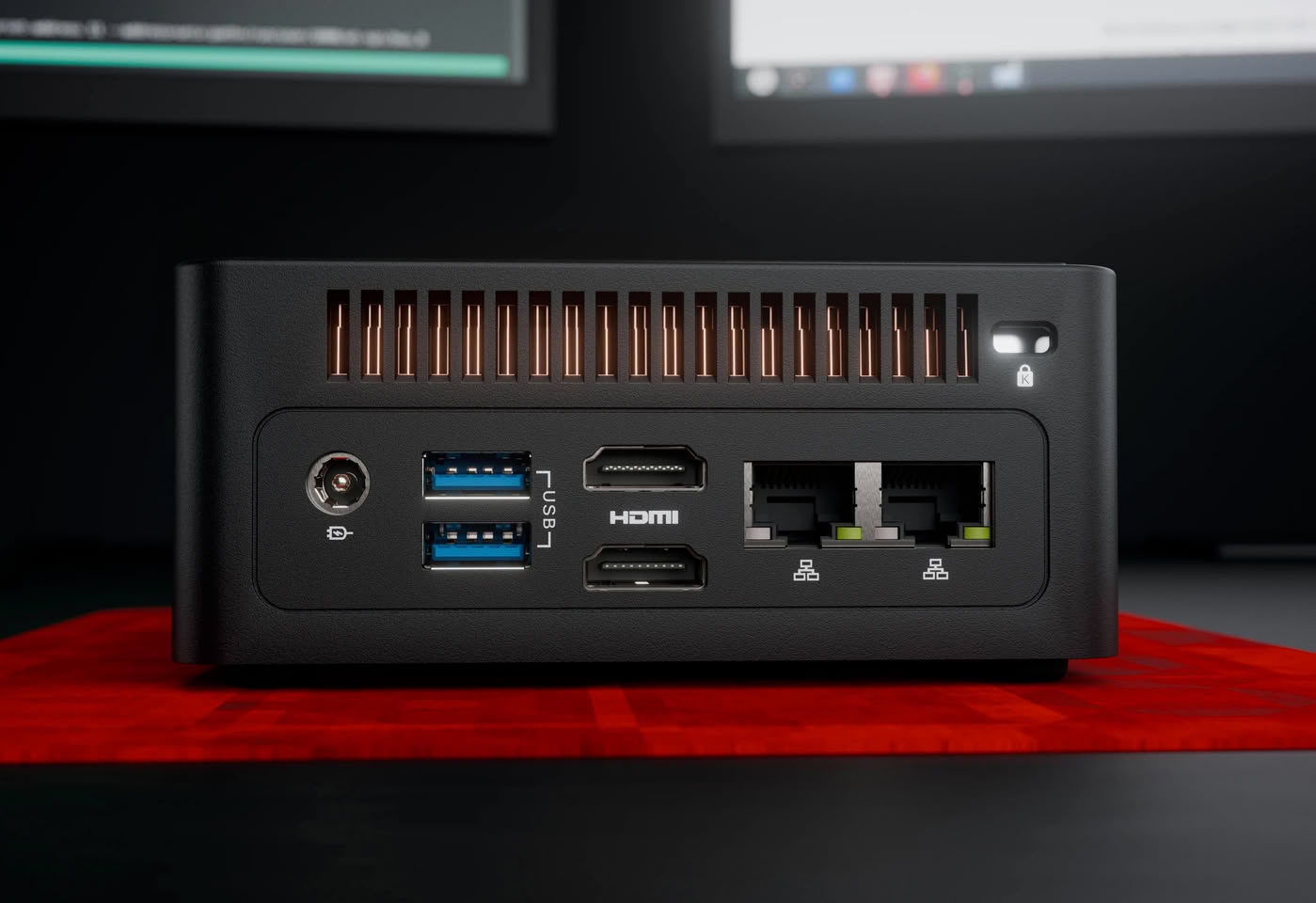
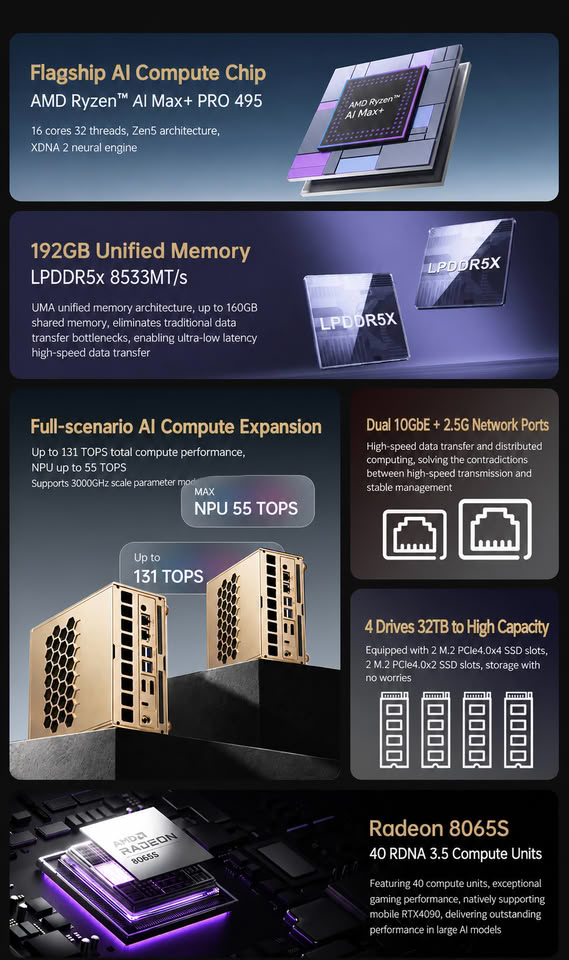
The ever-growing list of mini PCs powered by AMD's Gorgon Halo APUs has just received its latest addition in the TOPC TXA2, a new workstation built around AMD's Ryzen AI Max+ Pro 495 APU and its powerful Radeon 8065S iGPU. The TOPC TXA2 is available in two configurations, with either 2 TB of storage for $6,399 or 4 TB of storage for $6,699 on TOPC's online store—even though the price is high, it's still a solid $900 cheaper than AMD's in-house Ryzen AI Halo Developer platform.

The TXA2 also packs 192 GB of LPDDR5X-8533 unified memory, with up to 160 GB shared with the iGPU for workstation use. Despite the 180 ×180 × 78 mm, or ~2.5 L chassis, TOPC claims that the TXA2 is capable of a 120 W TDP. It's also no slouch in the I/O department, with Wi-Fi 7 and Bluetooth 5.4 for wireless networking and connectivity, and it has a healthy port selection, to boot.

Infineon Advances USB 20 Gbps Ecosystem with PCIe Reference Design for 5-Meter Cabling and 36W Power Delivery

Infineon Technologies AG (FSE: IFX / OTCQX: IFNNY), a global leader in USB semiconductor solutions, today announced a new PCI Express Gen 4 x4 add-on card reference design that addresses key barriers to USB 20 Gbps (USB 3.2 Gen 2×2) adoption. Debuting at VISION Stuttgart 2026, the industry-first standalone reference design integrates ASMedia's ASM4242 USB4 host controller with Infineon's EZ-PD CCG7 USB Power Delivery (PD) controller to support robust, high-performance connectivity for machine vision systems.

A primary focus of this release is Infineon's continued effort to expand and mature the USB 20 Gbps ecosystem. While the standard offers double the bandwidth of previous generations, widespread industrial adoption has been limited by signal integrity challenges over longer distances and complex power requirements. This new reference design directly addresses these hurdles by enabling reliable data transmission over 5-meter passive USB cables, which is important for industrial environments where cameras are often mounted far from the host PC. By demonstrating USB 20 Gbps operation over passive cabling at this length, Infineon helps reduce an integration challenge for system designers.

Intel "Nova Lake" Launch Nears as Platform Passes USB4 and PCIe 5.0 Compliance Testing

Intel's Core Ultra 400-series "Nova Lake" CPUs are reportedly nearing launch as Intel has successfully passed USB and PCIe compliance testing. This means the platform has officially passed testing with the two organizations, and all the advertised specifications are working correctly. Starting with the USB Implementers Forum (USB-IF), a governing body of the USB standard, there are two "Nova Lake-H" device IDs certified for compliance with USB4. These include devices with IDs D331 and D333. Additionally, USB-IF lists ID 6E6E for the "Nova Lake" PCH-S chipset for desktop motherboards, compliant with USB 3.2 Gen 2. Intel likely chose a desktop chipset and a laptop CPU to achieve Qualification by Similarity, where testing one product can earn certification for other products easily. To avoid revealing too much before the launch, Intel opted for this strategy instead of testing a full flagship desktop CPU.

For the PCI-SIG, a governing body for PCIe compliance, Intel's 900-series chipset has long been present with the IDs 6E38-6E3F, 6E30-6E35, and 6E40-6E47. These were added back in April, but in August, another set of entries for CPUs specifically appeared. Certifying the PCIe 5.0 x16 root complex were device IDs D461, D465, and D467-D46A, which are likely "Nova Lake-S" CPUs or some mobile variation. Regardless, the verification process is the final stage that a platform and the CPU usually go through before the launch is finalized.

Corsair Deploys the WARTHOG Airflow Mid-Tower PC Case for Standout Builds

Corsair is pleased to announce that the highly anticipated WARTHOG Series cases are now available for pre-order, with shipments beginning within the next four weeks. WARTHOG is also available today at select resellers and as a complete build from select system integrators. This unique ruggedized chassis stole the show when it was unveiled at Computex 2026 and won numerous awards for its eye-catching design, rugged steel construction, and innovative features. We knew the WARTHOG would be a fan favorite because our community helped bring it to life. Over the years, we've received countless requests to reimagine the award-winning 2012 Vengeance C70 for modern PCs.

"The C70 has a cult following for a reason, and people have been asking us to bring it back for years. With WARTHOG, we wanted to honor that without just doing a reissue," Principal Product Manager Mitch Podlaha said. "Everything right now is glass panels and RGB everywhere, so we went the other way. Something more industrial, more rugged, but still built to actually perform, not just look good on a desk."

[Editor's note: Please read our review here.]

ASUS Announces the New ASUS Googlebook 14

ASUS today announced ASUS Googlebook 14 (CX9406CAA), a 14-inch ultraportable laptop that's the first ever ASUS laptop designed for Gemini Intelligence. Built for users who want a more connected experience with their Android phone, ASUS Googlebook 14 combines effortless portability, strong performance, and a premium-crafted design that keeps productivity moving seamlessly throughout the day.

ASUS Googlebook 14 comes with 12 months of Google AI Pro. Users can get expanded access to powerful features in Gemini, Flow, and Gemini Notebook as well as Gemini directly in the Google apps they know and use. Plus, they get 5 TB of cloud storage to keep photos and files backed up.

Acer Debuts its First Googlebook - the Embodiment of Premium, Intelligence-Powered Hardware

Acer today debuted the Acer Googlebook 14, designed for Gemini Intelligence and the first from the company in a brand-new category of flagship laptops bringing together premium materials, powerful performance, intelligence features, and seamless syncing with Android phones.

Designed for the new Googlebook OS, the device works seamlessly with Android-based workflows and supports touch, keyboard, stylus, voice, and traditional laptop interaction methods within a unified user experience and help from Gemini at every step. The Acer Googlebook 14 is the industry's first convertible Googlebook and provides users with groundbreaking new features designed to boost productivity and creativity by enabling context-aware actions for personalized, proactive help and a more intuitive, streamlined workflow.

Sonnet Launches Thunderbolt 5 eGPU Box with 850 W PSU and Triple-Slot GPU Support

Sonnet, the US-based accessory maker who previously launched the Echo 20 and 21 Thunderbolt 5 docking stations with 10 GbE, has officially released the Breakaway Box 850 T5, a Thunderbolt 5-based eGPU box with an industrial aesthetic and a built-in 850 W PSU. The Breakaway Box 850 T5 is available from Sonnet for $599.99.

The Breakaway Box 850 T5 is designed to accept triple-slot GPUs with dimensions up to 345 × 155 × 70 mm, and the included PSU features three 8-pin connectors that can be adapted to a 12v-2×6 connector in the case of the latest NVIDIA and certain AMD Radeon GPUs. The enclosure itself weighs 6.4 kg and measures 210 × 400 × 250 mm, and it is backwards-compatible with Thunderbolt 4 and USB4 in addition to Thunderbolt 5.

ASUS Shows Off ProArt P14 NVIDIA RTX Spark-Powered Creator Laptop

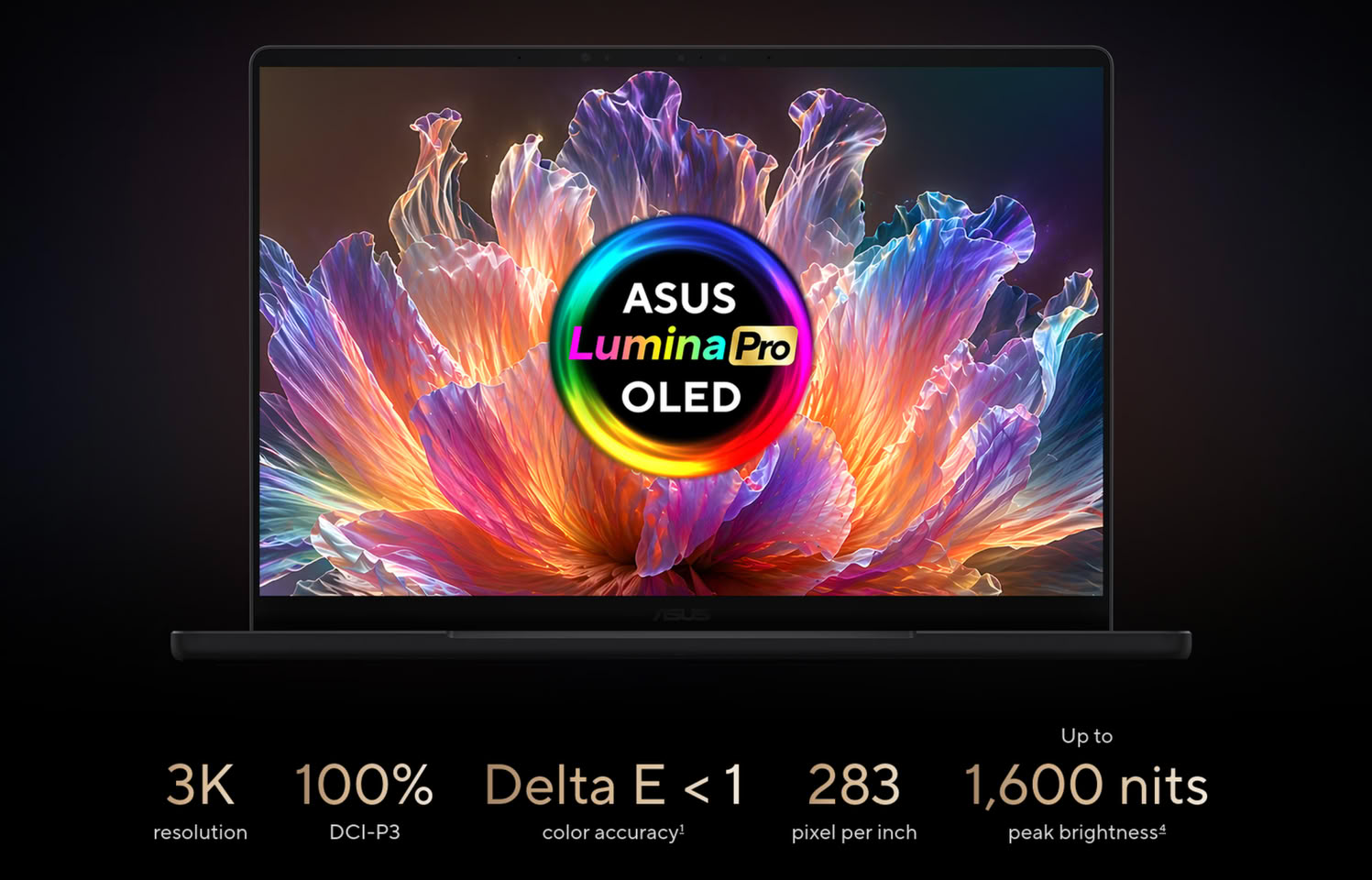
ASUS has officially launched its ProArt P14 creator laptop, which features NVIDIA's new RTX Spark Arm SoC. The 14-inch laptop is currently listed on ASUS's site as the H7407BA, and it is available with two touch-enabled G-Sync display options: a 14-inch, 2880 × 1800 OLED display with a 120 Hz refresh rate and up to 700 nits of brightness in SDR mode and 1,600 nits in HDR mode; or a 120 Hz, 2880 × 1800 OLED display with identical color reproduction but with 500 nits peak SDR brightness and 1,100 nits peak HDR brightness. Both displays also feature 100% coverage of the DCI-P3 color gamut and support for a pressure-sensitive stylus, all of which should make for a pretty convincing laptop for photographers and video editors alike.

ASUS says the ProArt P14 measures in at just 13.9 mm thick and 1.48 kg, while packing 24, 32, 48, 64, or 128 GB of LPDDR5X unified system memory and 512 GB or 1 TB of NVMe PCIe 4.0 storage—it does not seem as though there is a 16 GB RAM variant available. The P14's I/O relies largely on USB4 ports, featuring 3x USB4 Gen 3 Type-C ports with USB-PD and DisplayPort Alt Mode support alongside a single USB 3.2 Gen 2 Type-A port, a 3.5 mm audio combo jack, an HDMI 2.1 FRL port, and an SD 4.0 card reader. Pricing has not yet been revealed.

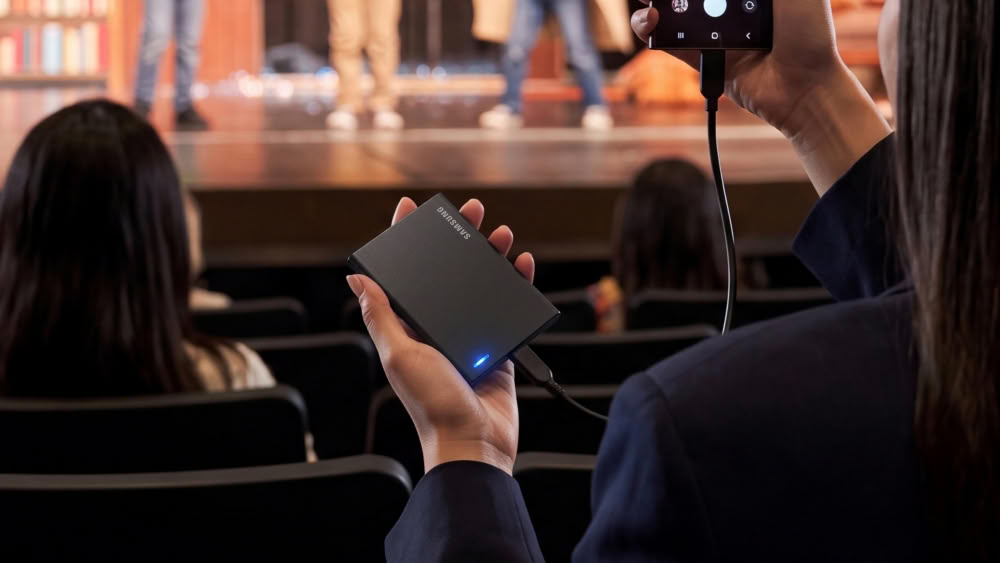
Samsung Showcases P9 and P7 SSDs Featuring USB4 at Gamescom 2026

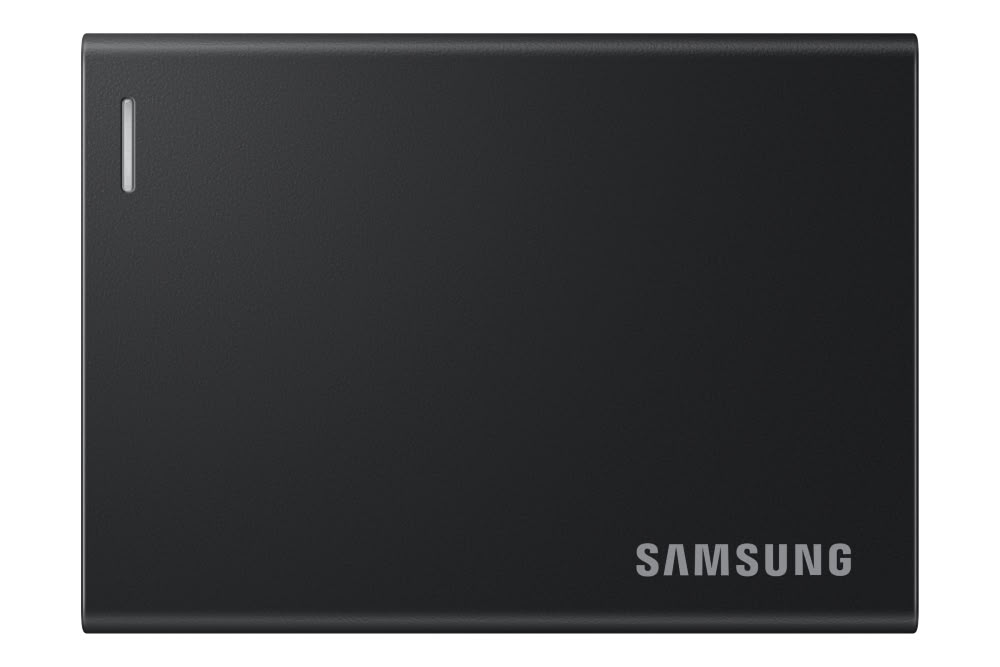
Samsung Electronics a global leader in advanced memory technology, today unveiled the P9 and P7, its next-generation portable solid-state drives (SSDs) featuring USB4 connectivity. The company introduced the new P Series at Gamescom 2026, the world's largest gaming event, held in Cologne, Germany from Aug. 26-30.

Designed to meet rapidly growing storage demands driven by ultra-high-resolution video, AI content, and large-scale games, the P Series includes the flagship P9, which delivers high-end performance for professional users, and the P7, designed for fast and convenient storage across everyday use cases.

Minisforum Launches $1,800 M2 Pro Mini PC With Intel Arc B390 iGPU and 32 GB RAM

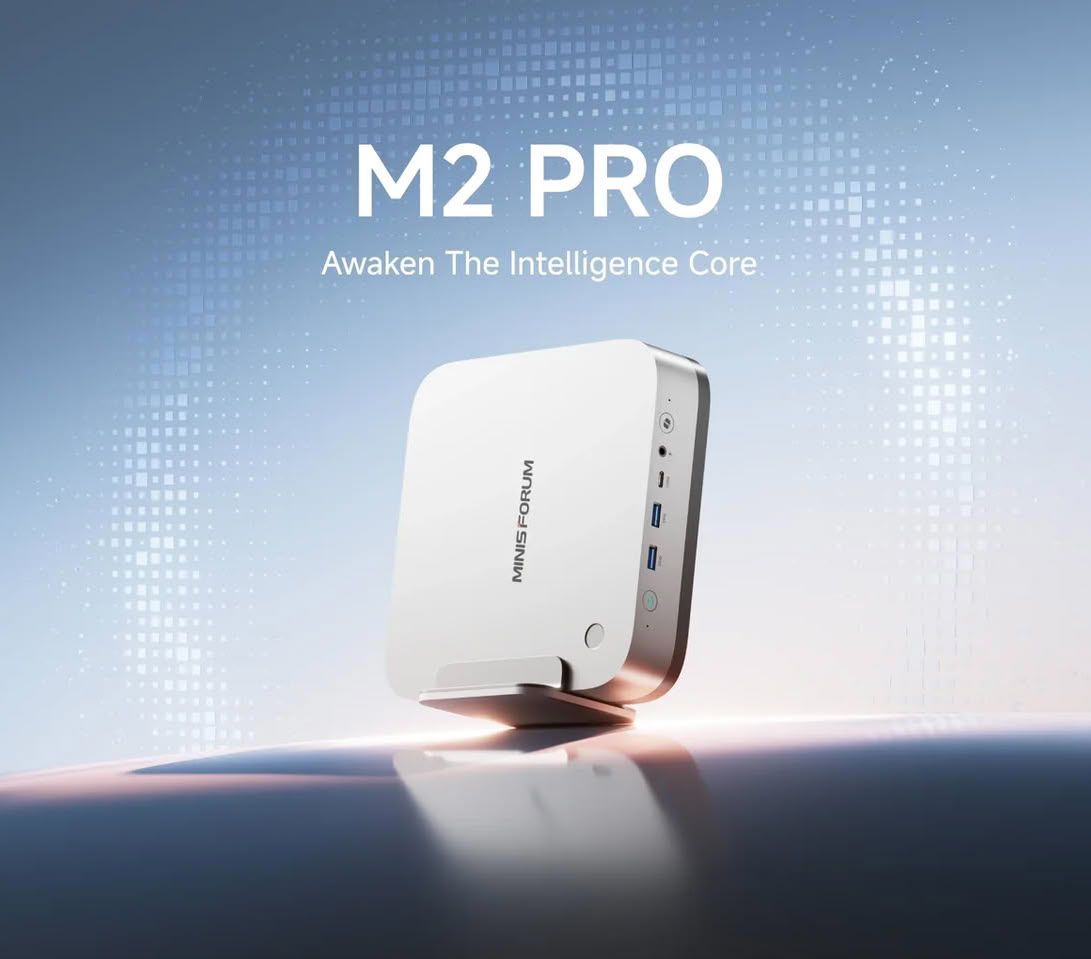
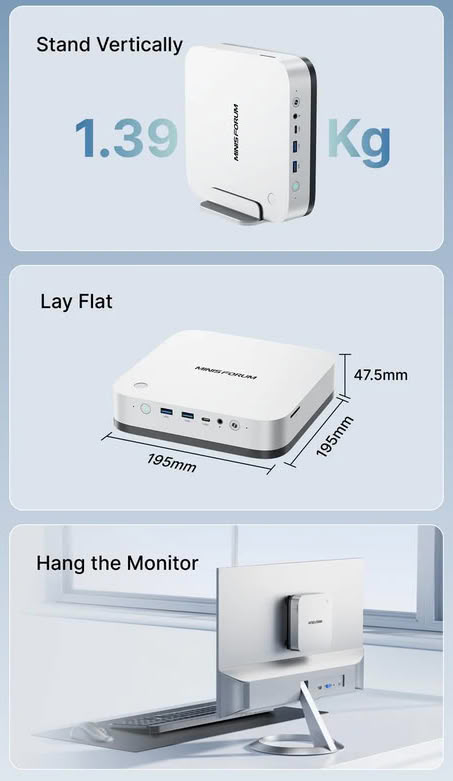
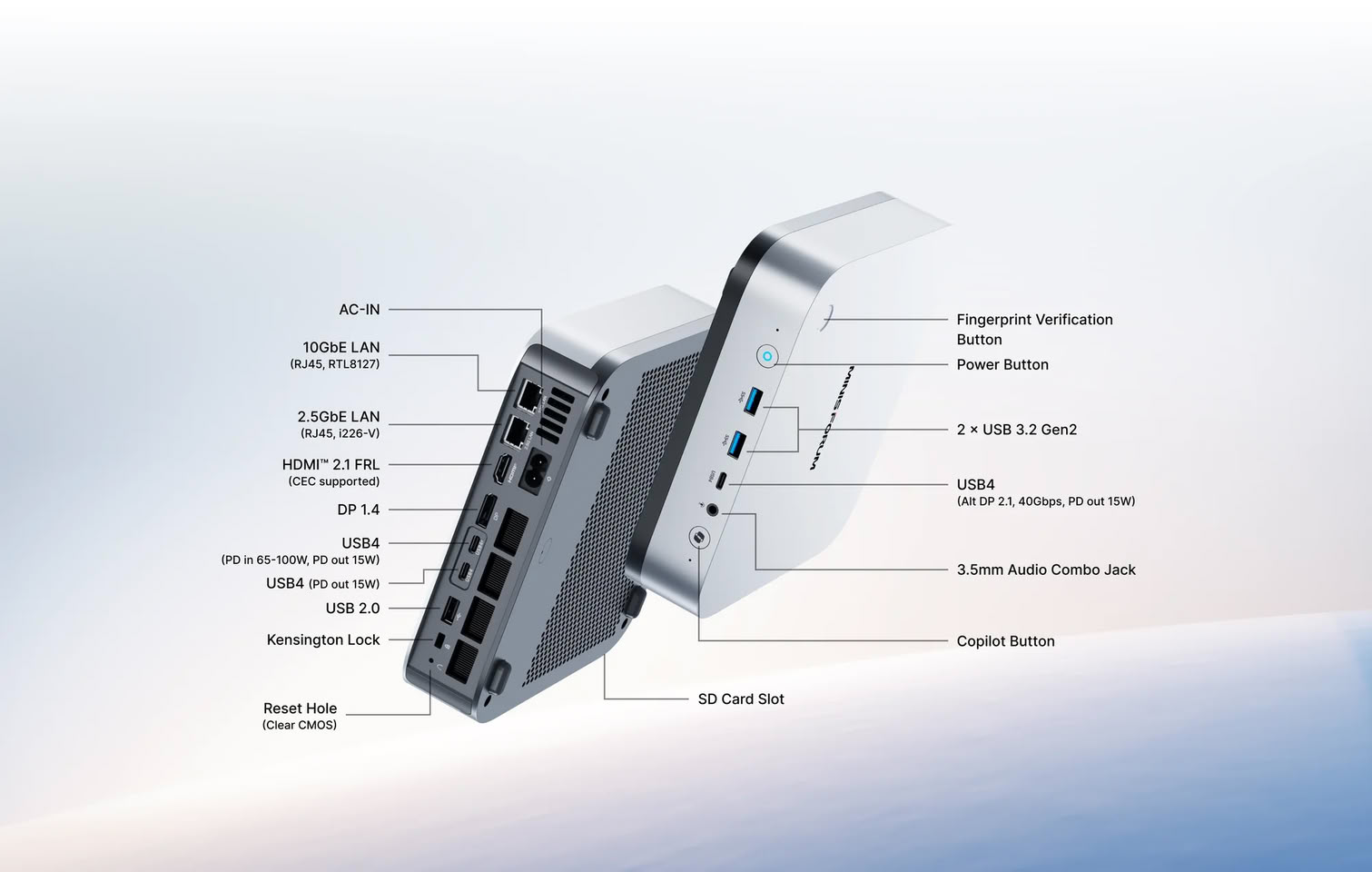
Minisforum is apparently continuing its ongoing attempt to flood the mini PC market with as many models as possible, with the M2 Pro being the latest entry into its Intel Panther Lake-powered mini PC line-up. The Minisforum M2 Pro packs Intel's latest Core Ultra X7 358H, with its powerful Arc B390 iGPU in tow, into an aluminium chassis measuring just 195 × 195 × 47.5 mm, or 1.8 L. Minisforum claims that the Intel Core X7 Ultra CPU inside the M2 Pro can sustain TDP of up to 65 W thanks to a dual heat pipe cooling solution and a flow-through cooling design.

Minisforum seems to also be positioning the M2 Pro as something of a do-it-all machine, since it features built-in HDMI CEC, making it a solid, if somewhat expensive HTPC and living room console. The Minisforum M2 Pro also packs a 134.9 W PSU into the tiny chassis, meaning there is no need to hide a power brick behind a TV console or on a desk. The M2 Pro only comes in one variant, with the Intel Core Ultra X7 358H, 32 GB of LPDDR5X-7467 memory, and a 1 TB NVMe SSD, all for an MSRP of $1,799, with a launch discount bringing that down to $1,439. At that price, it's certainly not cheap, but it also has an impressive specs and features list to back up that price, including upgradeable and expandable storage and triple USB4 ports.

ASUS Republic of Gamers Announces ROG Flux Charger Dock

ASUS Republic of Gamers (ROG) today announced the ROG Flux Charger Dock, a premium all-in-one charging and connectivity hub for gamers and creators. With 260 watts of total power output, it easily turns a laptop into a full gaming setup with an external monitor, mouse, and keyboard. A built-in 1.9-inch LCD screen and control knob let users view critical information and adjust settings on the fly. The dock features extensive connectivity options, including USB-C with 140 W charging and 10 Gbps transfer speeds, as well as HDMI 2.1 to support up to 4K @ 144 Hz visuals. Aura Sync compatibility and bold ROG design elements help set it apart from other devices in its class.

Unmatched power
Engineered to deliver 260 W of continuous power, the ROG Flux Charger Dock can easily run any accessory in a gamer's arsenal. The dock can charge a laptop at up to 140 W, with capacity to spare for a gaming handheld, phone, headset, keyboard, and more. The single-cable design allows for neater setups and greater convenience.

GIGABYTE Intros B550 X Gaming Socket AM4 Motherboard

Supporting the recent Socket AM4 renaissance sparked by the memory pricing crisis is a new crop of motherboards, and GIGABYTE's latest addition is the B550 X Gaming. The board brings many of GIGABYTE's recent motherboard innovations to the aged platform. It is build in the ATX form-factor, and draws power from a combination of 24-pin ATX and 8-pin EPS connectors, conditioning it for the processor with an 8+2 phase duet-rail VRM that's sufficient to power the Ryzen 7 5800X3D. The socket is wired to four DDR4 DIMM slots, a PCI-Express 4.0 x16 slot, and an M.2 Gen 4 x4 NVMe slot. The board's second M.2 slot is Gen 3 x4, and wired to the B550 FCH, along with four SATA 6 Gbps ports. Other expansion slots include a PCI-Express x16 (electrical Gen 3 x4), and two PCIe x1.

The board features M.2 EZ-Latch design that makes it easy to install the M.2 SSD and the included heatsink for the M.2 Gen 4 NVMe slot. The board also features newer ARGB 2.0 headers. Display connectivity includes one each of standard DisplayPort and HDMI 2.1. There is no WLAN connectivity, the board's sole network connectivity is a 2.5 GbE interface driven by a Realtek 8125-series PHY. The board's onboard audio solution features an entry-level Realtek ALC892 codec. USB connectivity includes one 10 Gbps USB 3.2 Gen 2 port, three 5 Gbps USB 3.2 Gen 1 ports, one 5 Gbps USB type-C, two USB 2.0 ports on the rear panel, with two additional USB 3.2 ports via headers, and multiple USB 2.0 headers. Expect a price well under $150.

Dell Launches Affordable Intel Core Series 3-Powered Dell 15 Laptop

Dell has launched what appears to be its answer to Apple's MacBook Neo: the Dell 15 laptop, starting at $699.99. The Dell 15 is, as the name suggests, a 15-inch laptop, and the entry-level model comes with an Intel Core 3 304 CPU, but there are also two Intel Core 5 320 versions, with either 8 GB or 16 GB of RAM, for $799.99 and $999.99, respectively. At the time of writing, all versions are available on Dell's online store. Dell claims that the Dell 15 is made from post consumer recycled plastic and aluminium to reduce its environmental impact.

Judging by the specs and construction, the Dell 15 is designed to be a student or home productivity laptop more than a gaming powerhouse, since the most powerful version only comes with a 6-core Intel CPU. The new Dell 15 laptop has unapologetically plastic casing, from the bottom case and keyboard deck to the display bezel and top case, and it has 1920 × 1200 p non-touch LCD with a claimed brightness of 450 nits and 45% coverage of the NTSC color space. Above the display is a 1080 p webcam with IR support for Windows Hello, and all versions of the laptop come with a 512 GB M.2 PCIe NVMe SSD.

Framework Laptop 12 Gets Intel Core Series 3 CPUs and Thunderbolt 4 Upgrade

The Framework Laptop 12 was an almost instant hit when it launched, thanks to its whimsical, compact design and durable chassis, but there was always a bit of a perception amongst hardware enthusiasts that the small laptop wasn't a serious computer, thanks to its outdated 13th-Gen Intel CPUs. Now, Framework has just announced that the convertible laptop has received an update to Intel's latest Core Series 3 CPUs.

Following the update, the Framework 12 is available for pre-order with the Intel Core 3 304, Core 5 320, and Core 7 350 CPUs, delivering Intel's latest six-core (2× P-Cores, 4× E-Cores) CPUs. Unfortunately, there are still no versions with the Intel Core Ultra X7 358H or any with a proper Intel Arc B390 iGPU. That said, the Framework Laptop 12 also now ships with two Thunderbolt 4-capable USB Type-C ports in the two rear-most expansion bays, theoretically allowing for eGPU expansion or other Thunderbolt peripherals.

AAEON Launches MIX-Q870A1, a Modular Mini-ITX Motherboard with 65W "Arrow Lake" CPU Support

AAEON, a leading producer of industrial motherboards, has announced the release of the MIX-Q870A1, a sophisticated Mini-ITX motherboard supporting up to 65 W Intel Core Ultra 200S Series LGA 1851 socket-type processors (formerly Arrow Lake). Compatible with a broad selection of SKUs from the second generation of Intel Core Ultra processor range, the MIX-Q870A1 can leverage the platform's integrated NPU and Xe LPG Graphics for AI acceleration for a total of 36 TOPS alongside optimized multitasking and multicore performance.

A particularly notable inclusion among the MIX-Q870A1's specifications is its 16-lane PCIe Gen 5 slot with bifurcation, which can be split into x16, x8/x8, or x8/x4/x4 configurations through a dedicated jumper. This addition provides a modular foundation for the installation of expansion cards based on project need, meaning that even when equipped with a GPU to bolster the AI acceleration offered by the board's Intel Core Ultra platform, the remaining lanes of its PCIe slot can be used to accommodate additional modules like NVMe SSDs, NICs, frame grabbers, or field bus interface cards.

GIGABYTE Intros B550 AORUS Elite WiFi7 Socket AM4 Motherboard

GIGABYTE introduced a new Socket AM4 motherboard as part of a new wave of motherboards based on the older socket that supports DDR4 memory, timed with the re-launch of the Ryzen 7 5800X3D processor. The B550 AORUS Elite WiFi7 is essentially an upgrade of the B550 AORUS Elite AX V2, with a Wi-Fi 7 WLAN module replacing the Wi-Fi 6E module. GIGABYTE also took the opportunity to give the board its latest Wi-Fi antenna EZ-plug connector, replacing the older screw-type RP-SMA connectors. It also comes with a newer antenna. The WLAN module on this board is the Realtek RTL8922AE, which supports Wi-Fi 7 with 160 MHz channel width, along with Bluetooth 5.4 support, which is a significant upgrade over the MediaTek RZ608 or Realtek RTL8852CE module on the older board that supported Wi-Fi 6E with 80 MHz or 160 MHz channel widths (depending on the PCB revision), and Bluetooth 5.2.

The new B550 AORUS Elite WiFi7 is built in the ATX form-factor, and pulls power from a combination of 24-pin ATX and 8-pin EPS connectors, and uses a 12+2 phase VRM. The AM4 socket is wired to four DDR4 DIMM slots, a PCI-Express 4.0 x16 slot, and an M.2 Gen 4 NVMe slot. The board's second M.2 NVMe slot is Gen 3, and wired to the B550 FCH, and shares its lanes with a PCI-Express x16 (electrical x4) slot. There is a third x16 slot that's electrically x1, along with a physical x1 slot. Besides the contemporary WLAN module, the board comes with a 2.5 GbE wired LAN interface driven by a Realtek 8125-series controller. The onboard audio solution uses a Realtek ALC1200 HDA codec. USB connectivity includes a 5 Gbps USB-C header, two 5 Gbps USB 3.2 ports by headers, two 10 Gbps USB 3.2 Gen 2 ports, four 5 Gbps USB 3.2 Gen 1 ports, and a couple of USB 2.0 ports on the rear panel, besides four via headers. Expect a sub-$160 price.

TerraMaster Launches D8 Hybrid 2, a 4+4 bay DAS with USB 3.2, up to 152 TB Capacity

TerraMaster, a professional brand focused on innovative storage solutions for home users, SMBs and creative professionals, today announced the launch of the D8 Hybrid 2, a major upgrade to its popular hybrid storage line. Designed for users who need both high-speed active storage and vast archive capacity, the D8 Hybrid 2 combines 4 SATA HDDs/SSDs and 4 M.2 NVMe SSDs in a single enclosure, delivering a flexible, high-performance platform for video editing, media libraries, backups, NAS expansion and multi-system workflows. With support for up to 152 TB total capacity, depending on drive configuration, the D8 Hybrid 2 offers one of the most versatile hybrid storage architectures available in a consumer-friendly enclosure. The TerraMaster D8 Hybrid 2 is available now for £299.99 on Amazon UK and for $299.99 on Amazon USA.

Powered by USB 3.2 Gen 2 with 10 Gbps bandwidth, the D8 Hybrid 2 achieves read speeds of up to 1020 MB/s with a single NVMe SSD, while four HDDs, depending on RAID configuration, could reach up to 980 MB/s. This enables dramatically faster large-file transfers, smoother 4K/8K editing, and near-instant project loading. A 5 GB HD movie could, for example, be transferred in around five seconds, significantly reducing workflow bottlenecks for creators and professionals.

Blame the Plumbing: Why Intel Handles USB Onboard Audio Codecs Better Than AMD

Back in March, I wrote a detailed editorial on how hardware-accelerated audio is possible in Windows 11, and it's possible for sound card manufacturers to put native audio stack processing on the card to overcome issues with DPC latency spikes. Today, I'll talk a bit about USB-based onboard audio codecs, and how the Intel platform is better suited to handle them than the AMD platform, particularly given how motherboard designers handle the latter. The Intel "Azalia" high-definition audio (HDA) bus, introduced in the early-2000s, laid the foundation for high-quality onboard audio, offering consumers high-resolution 24-bit/192 kHz audio. This is a low-latency interface designed to ensure the quickest possible movement of audio data between the system and the DAC. On Intel platforms, the HDA bus tends to be wired out from the PCH (the chipset), whereas on the AMD platform, the HDA bus is located on the SoC (the processor), and not the FCH (the chipset). This was a deliberate choice by AMD, and has to do with the chipset bus the company uses.

Unlike Intel, AMD's platform designers adopted a "SoC first" strategy. Modern Ryzen client-segment processors are fully-fledged SoCs in their own right; while the chipset only serves to increase downstream platform connectivity. Ryzen SoCs put out not just PCIe lanes, but also certain platform connectivity, such as USB and SATA; while the FCH puts out additional USB and SATA connectivity. Traditionally, on the Intel platform, the processor only puts out PCIe lanes, while the PCH handles all other forms of connectivity, including USB and SATA; and of course the HDA bus. Intel is able to place the HDA bus on the chipset, while AMD avoids this. The HDA bus is instead put out by the SoC.

Biostar Introduces EdgeComp MS-NAT4000 Compact Edge AI Computing System

BIOSTAR, a leading manufacturer of edge computing solutions, industrial motherboards, graphics cards, and storage devices, today introduces the EdgeComp MS-NAT4000, a compact edge AI computing system designed to support the NVIDIA Jetson Thor T4000 module for high-performance AI computing, real-time sensor processing, and intelligent automation at the edge.

Built for system integrators, AI software developers, smart manufacturing solution providers, and advanced autonomous machine builders, the EdgeComp MS-NAT4000 is engineered to bring greater AI computing density closer to where data is generated. With support for on-device generative AI, visual intelligence, low-latency sensor fusion, and simultaneous AI workloads, the platform provides a powerful foundation for industries deploying AI-driven systems in real-world environments.

New Lenovo Yoga AI Mini PC Packs Intel Core Ultra X7 358H CPU and Arc B390

Lenovo has hopped onto the AI trend, launching the diminutive Yoga AI mini PC (via IT Home), a small form factor PC seemingly designed to fit in seamlessly in a minimalist productivity desk setup and deliver both CPU, GPU, and NPU performance for a variety of workloads. The mini PC is powered by the Intel Core Ultra X7 358H CPU, which is a 25 W Panther Lake CPU with four P-Cores, eight E-Cores, and four LP E-Cores, and the Intel Arc B390 iGPU that is more than capable of running a few games when it's not busy with productivity work. The Yoga AI Mini PC also features 64 GB of LPDDR5X memory and a 1 TB PCIe 4.0 SSD. Lenovo claims that the mini PC's specs lend it up to 180 TOPS of AI performance between the CPU, GPU, and NPU, and the memory allows for models with up to 80 billion parameters.

The impressive part of Lenovo's Yoga AI Mini PC is that the minimalist aluminium chassis is just 0.65 L and weighs in at 600 g. It also has built-in ARGB ring on the bottom of the chassis, which casts ambient light onto the desk. The downside of the small chassis is that connectivity is limited. While the wireless connectivity features both Bluetooth and Wi-Fi 7, the physical ports are limited to: 1x 3.5 mm audio combo jack, 2× Thunderbolt 4 ports, 1× USB Type-C 3.2 Gen 2 port, 1× USB PC port, 1x USB 3.2 Gen 2 Type-A port, 1× HDMI (unspecified revision), and 1× 2.5 G RJ45 LAN port. The mini PC is currently only available in China via JD.com at a price of RMB 17,999, which converts to roughly $2,650.

Minisforum Debuts NAB9S Mini PC with DDR4 and 24-Core Intel i9 CPU

Minisforum has officially released the NAB9S mini PC, which has gone on sale for $399 for a barebones model and $759 for a pre-built version with 32 GB of DDR4-3200 RAM and a 1 TB SSD. Aside from opting for the older DDR4 standard instead of DDR5, Minisforum has also included a full 2.5-inch SATA bay for additional SSD or HDD storage, making it more viable for cost-sensitive buyers who need a compact workstation. The NAB9S features an aluminium chassis with toolless access for easy installation of additional memory or storage. As for CPU horsepower, the NAB9S is powered by the Intel Core i9-13900HK, which is a laptop CPU with 24 cores (eight P-Cores and 16 E-Cores) and 32 threads and up to 5.4 GHz boost frequency. Unfortunately, this limits the mini PC's applications as an SFF gaming or content creation machine.

The NAB9S also offers a surprisingly decent selection of ports, including dual USB 3.2 Type-A ports, a USB 3.2 Gen 1 Type-C, and a 3.5 mm audio combo jack on the front. The rear I/O consists of dual 2.5 G LAN ports, dual HDMI ports, two USB 3.2 Type-C ports (only one with DisplayPort Alt mode) and dual USB 3.2 Gen 2 Type-A ports. The mini PC ships with an internal SATA cable to adapt the M.2 SATA port to a traditional 2.5-inch SATA port, and it also includes a VESA mount and requisite hardware for mounting the mini PC to the back of a monitor or a similar situation. Minisforum has also beefed up the cooling on the NAB9S, with active SSD cooling and flow-through cooling for to keep the i9 CPU in check.

Purism Announces Librem 16 Laptop Focused on Privacy and Security

Purism, an independent U.S. technology company dedicated to protecting users' privacy, security, and online freedom, today announced the launch of its flagship laptop, the Librem 16. The Librem 16 is a consumer privacy-focused laptop, uniquely positioned to give users complete digital freedom while protecting all personally identifiable information (PII) by default.

"Purism is a social purpose corporation," said Todd Weaver, Purism Founder & CEO. "With tech advancements abusing people more and more we have forgotten the parallel that democracies were founded to protect individuals from oppressive governments. We are creating a digital utopia with technology that protects citizens, not that surveils them, and the Librem 16 is integral to that vision."

AAEON's Release of the EPIC-PTH9 Puts a Spotlight on Industrial AI

Industry-leading provider of embedded solutions AAEON (Stock Code: 6579) today announced the release of the EPIC-PTH9, a 4" industrial single-board computer with Intel Core Ultra Series 3 processors (formerly Panther Lake), PCIe Gen 5 x8 expansion, and a robust, low-profile design. Offering standard models with a choice of either the Intel Core Ultra X7 Processor 358H or Intel Core Ultra 7 Processor 356H, the EPIC-PTH9 can deliver up to 180 TOPS of AI performance through the Intel platform's integrated CPU, Intel Arc B390 GPU, and NPU.

Given the product's positioning as a platform for industrial AI applications, its I/O is geared towards support for the need to support multiple cameras, sensors, or control devices such solutions require. For this, the EPIC-PTH9 comes with four LAN ports, three of which three running at 2.5GbE and one at 1GbE speed, with two of these four ports supporting PXE enablement. Other notable I/Os come in the form of four USB ports (two USB 3.2 Gen 2 and two USB 2.0), as well as four internal serial port headers. The board also provides a GPIO 8-bit, and SMBus header, co-lay with I2C and timed GPIO functions, which can be changed by BOM.
Return to Keyword Browsing
Nov 11th, 2026 06:15 CST change timezone

New Forum Posts

Popular Reviews

TPU on YouTube

Controversial News Posts