Saturday, October 10th 2026

PS2 Discs Now Load on Jailbroken PS5 Consoles Through PS5SX2 Emulator
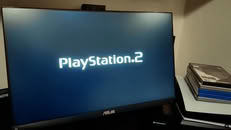
Developer Sword has added physical disc support to PS5SX2, a native port of the PCSX2 PlayStation 2 emulator for jailbroken PlayStation 5 consoles. The feature arrived as a beta in version 2.01 on October 10, a day after Sword showed it off on X with a clip of a PS2 disc going into a PS5. Contrary to how it may appear at first, the game does not seem to run straight off the disc. According to the release notes, PS5SX2 copies the disc to storage the first time it is inserted and then launches the game from that copy. Sword adds that this has only been tested on one original PS5.
That said, the PS5's optical drive apparently cannot read CDs, so PS2 games that shipped on CD are out, at least through the internal drive. Version 2.02, out later the same day, adds an experimental, off-by-default option that builds on a community contribution for reading PS2 discs from a USB DVD or Blu-ray drive, which should help Digital Edition owners. The emulator renders at up to 6x the PS2's native resolution, although the README warns that some games are too heavy for 6x on a regular PS5. Sword isn't stopping at the PS2 either, confirming that PS3 disc support is planned for an RPCS3 port that is in the works. The timing is notable, as Sony plans to stop producing discs for new PlayStation games from January 2028.
Sources:
Sword on X, PS5SX2 (GitHub), via Tom's Hardware
That said, the PS5's optical drive apparently cannot read CDs, so PS2 games that shipped on CD are out, at least through the internal drive. Version 2.02, out later the same day, adds an experimental, off-by-default option that builds on a community contribution for reading PS2 discs from a USB DVD or Blu-ray drive, which should help Digital Edition owners. The emulator renders at up to 6x the PS2's native resolution, although the README warns that some games are too heavy for 6x on a regular PS5. Sword isn't stopping at the PS2 either, confirming that PS3 disc support is planned for an RPCS3 port that is in the works. The timing is notable, as Sony plans to stop producing discs for new PlayStation games from January 2028.


23 Comments on PS2 Discs Now Load on Jailbroken PS5 Consoles Through PS5SX2 Emulator
Now if they can integrate PS1, PS3, and PS4 emulation, I'll speed up jailbreaking my PS5 and retire my PS4 and maybe the PS3.
Other games mostly ran between 30-60 FPS, some had frame drops while others were smooth. A PS5 is far mroe powerful and likely would have no issues.
The heck...open that crap up Sony, what are you doing?!?
EDIT, nvm, should have actually read the article..."That said, the PS5's optical drive apparently cannot read CDs, so PS2 games that shipped on CD are out, at least through the internal drive."
We will pwn everything and be happy.
The original PS3 had an advanced single-lens optical pickup that could read both CDs, DVDs, and BDs (KES-400A), it was one of the first things they dropped to reduce cost when they started to butcher its specs. The pickups used since later PS3 models had two lenses with the associated diodes, one for BDs, and one for CD/DVDs. With the PS5, Sony decided that it was no longer interested in the PlayStation being a media center device, so they dropped the ability to read and rip audio CDs. Since no software would ship on data CDs, they removed the ability to read these discs.
iirc, only some very early PS2 games (such as the port of Unreal Tournament '99) used CDs, but with the console jailbroken, you basically can just rip whatever and enjoy ultra fast loading from storage instead
I quick read it. I am sure there are firmware limitations on the pony 5. I do not care if it is firmware of the hardware, firmware of the optical disc drive or software. at the end of the day, it is locked on purpose.
And buying any pony hardware was obvious it will not be backward compatible like amd64 or x86 was around ~80% of the existing instructions.
I really wonder if those Pony hardware purchasers are aware of what they are doing when they are sharing, using such code base. Why not use something which has less usage of forbidden or nearly forbidden usage of the hardware. I may have a different opinion on that when i would live in a country without a bad legal system
Is it opposite day?PS5 is backwards compatible with PS4, WTF are you talking about?What are you trying to say here?
I’ve been building my own “Install & Play” project around a very similar idea — keeping the original physical disc as part of the experience rather than reducing everything to a library of downloaded files.
I’ve also just tested an original PlayStation 1 disc on a jailbroken PS5 using Linux and an external OmniDrive. The PS5 detected the drive, DuckStation accessed the physical disc directly, and I got all the way into gameplay.
So between PS5SX2 now supporting physical PS2 discs and what I’ve just demonstrated with PS1, it’s starting to look like the jailbroken PS5 could become a genuinely interesting physical-media backwards-compatible machine.
Really exciting development, and great work by everyone involved.
As for backwards compatibility it seems originally it was deemed as an important thing to have by Sony Computer Entertainment as all of their systems until the PS Vita had support of some kind either in hardware or by a softwareand hardware hybrid method.
PS2 can play PS1 games by a hardware and software hybrid approach (CPU is mostly native, but graphics and some other functions are emulated), PS3 had PS2 hardware until they went a hybrid approach and ultimately was fully cut for costs, but all PS3 systems can play PS1 games through a software emulator. PSP was given PS1 Classics support, and PS Vita has PSP hardware implemented in the SoC specifically for playing digital PSP and PS1 games. Ultimately all of that went away with the PS4, which is around when Sony Computer Entertainment changed focus and started becoming the California based company and managed from the USA Sony Interactive Entertainment, instead of the old Japanese SCE.
PSP is similar to the PS2 and often called a Pocket PS2. The PS Vita doesn't have PSP hardware in it. PSP uses MIPS while the PS Vita uses ARM. Two very different hardware.
The PS2's Emotion Engine CPU was the first thing to go (starting with C and E chassis units that had the COK-002 motherboard), then they took the GS plus all PS2-related functionality and started simplifying all the components - progressively worse quality optical pickups, removed the SACD decoder chip, reduced the quality of the shell's plastic, removed the chrome trim, the card reader and two USB ports permanently (simplified SEM-001 motherboard on G chassis units), then the next revision after that removed the dedicated NAND for persistent firmware (taking away the ability to swap HDDs without formatting the console, starting with the DIA-001 and H chassis units), by the time you reach the final "super-slim" models like the CECH-4300 series, the console was nothing but a shadow of its original model, with a flimsy top loader for discs - the HDD was removed and replaced with a basic 12 GB eMMC storage.
If you put the original A chassis and the Q chassis unit (the last fat model before slim came out) side by side, I guarantee the first thing that will come through your head is "How did THAT happen". I never forgave Sony for butchering the PS3, which is why I never bought a PS4 or a PS5. I just became a PC gamer instead.
The PS3 was truly designed to be the ultimate entertainment system, the only issue with it is that it was far too ambitious for Sony to maintain even its production. I only wonder what it could have been if they had 512 MB of RAM on the consumer and debugging units too, only the programmer's tool models had it, we've seen with the classic Xbox recently that RAM upgrades actually improved the performance.
The best things about the PS3 is that they're easy to mod and the had the second best generation of games in console history. Think about how many great games were on the PS3. GTAV, Dark Souls 1&2, Mass Effect 1,2,3, Demon Souls, Fallout 3,Vegas, Dead Space 1,2, Skyrim, and the list goes on.
Later Slim models SCPH-75000 and later replaced the MIPS IOP with Deckard, which is a weird one as it's a PowerPC based one but that has an APU connected and bundled with it that has some MIPS R3000A circuitry like the decoder, ALU and registers files, as well as the GTE and work together to mimmick the older one; timings are emulated in events through software as the APU does not have its own clock and derives from the PPC, which usually work fine but in specific operations can result in a bit slower time to complete because code paths lenght and that's likely why a few PS1 games on those system have a bit more slowdown than previous PS2 systems. It's a weird approach and I wonder if repackaging in a smaller package was worth the trouble for SCE Inc. just to result in slightly slower performance in few scenarios and not use any of the extra potential the new configuration could give to mantain compatibility, but ultimately Deckard also incorporates an Ethernet transceiver that in SCPH-70000 was separated from the IOP in the old SPEED chip from the Network adapter that SCE had to incorporate in those causing more costs and heat, so probably it had to do with that.
Dr. Dro already explained the PS3 situation pretty well, but I would like to add that the cheaper $500 CECHB launch model was equal in PS2 included hardware to the more expensive CECHA having both the EE+GS, the difference of CECHB was mostly in reduced connectivity to things like the card readers, smaller storage and no Wi-Fi built in.
As for the PS Vita, it does include the PSP original CPU and GPU hardware, specifically and only for the purpose to be used for PSP games and PS1 games, which it's also thanks to them why PSP compatibility is almost 100% and why with homebrew it has been possible to run the full OS, XMB and kernel inside the PS Vita's "PSPEMU". The Media Engine is not included, but since the ME was anyways used as a black box only accessible to the software through APIs and frameworks it can be reimplemented safely, and the PS Vita already has its own media coprocessor in Venezia, so it makes sense that it wasn't included.
I actually have one of the early slims (SCPH-70011) which has both modem and ethernet ports, it's on my list of fix er uppers for the future
My 10000 started to freeze at random and I've been unable to diagnose it, the service manual for them never leaked which further complicate things. Might need to find a donor console for a full repair but buying another functioning 10K even if it's banged up is not going to be easy at least not at a reasonable price
From left to right: SSE2, SSE4.1, AVX2/FMA, and Icelake tier AVX-512.
As you can see you'd only need SSE4.1 instructions for RPCS3 to be playable, but the PS5 comes with Zen2 which has AVX2 instructions, so what gives? This comes back to the PS5 using GDDR6 memory for the CPU while your typical PC uses DDR5 memory. There's a reason why we don't use GDDR memory for CPU's because it hurts performance. I've ran RPCS3 with good performance on a FX 8350, so the PS5 should be more than good enough for PS3 emulation. I've also done this using Linux which tends to performance better at emulation.
You can see from 7 years ago the RPCS3 emulator ran fine on a FX 8350, and the emulator has since had many improvements. The PS5 port of RPCS3 has something wrong.