News Posts matching #Zen 6

Return to Keyword Browsing

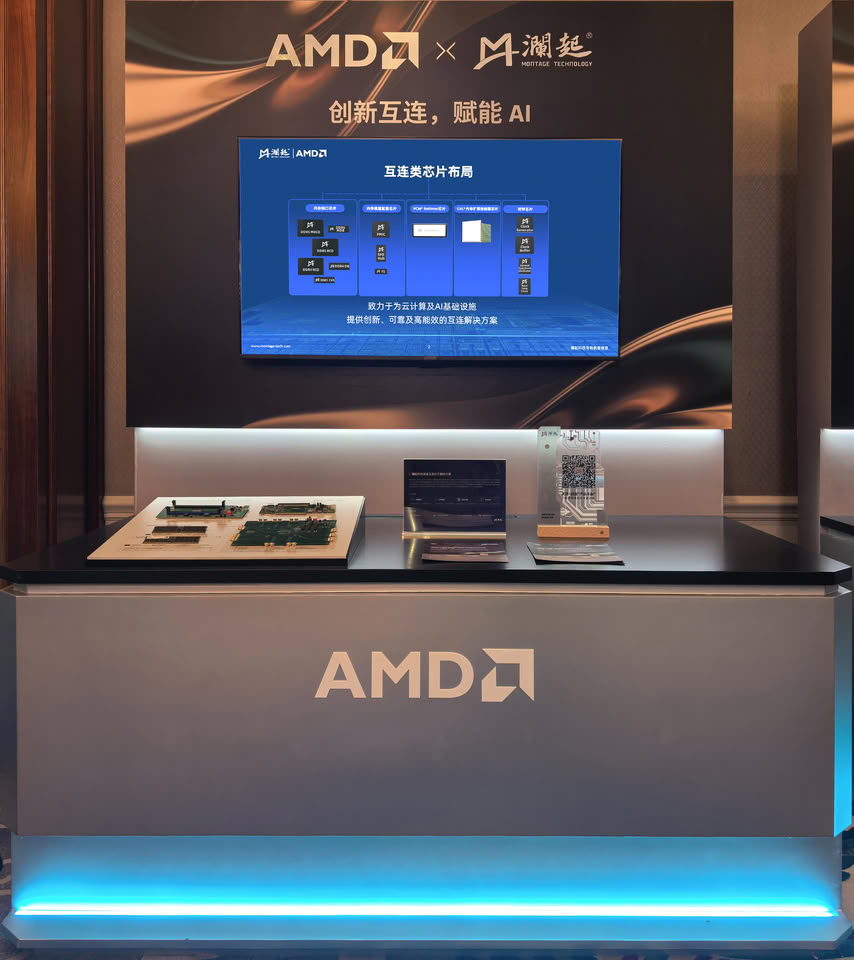
Montage Technology Showcases Its Full Interconnect Portfolio at the 6th Gen AMD EPYC Processor Technology Summit

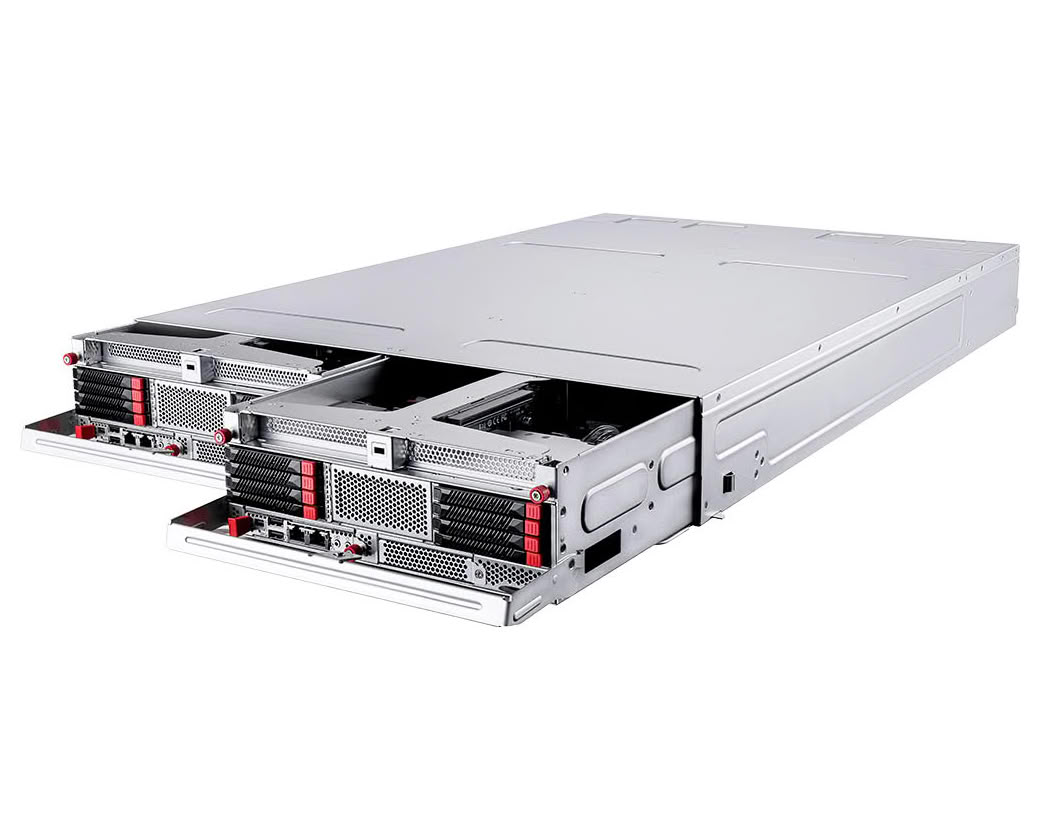
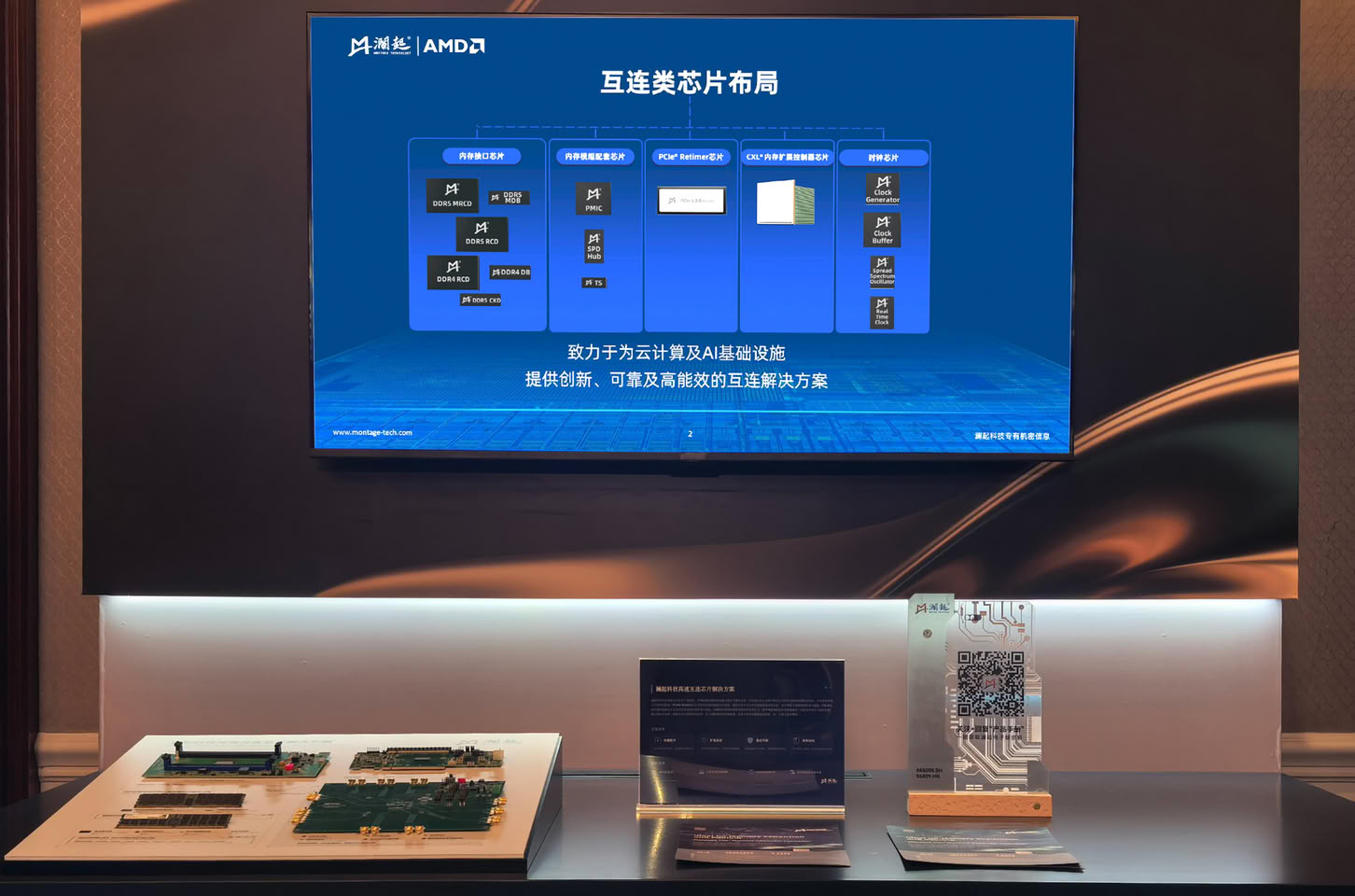
The 6th Gen AMD EPYC Processor Technology Summit convened on November 19 at the China World Hotel in Beijing. The event spotlighted innovations behind AMD's "Zen 6" architecture and the 6th Gen AMD EPYC processors, with a focus on the performance and application prospects of the AMD EPYC 9006 Series, alongside partner showcases of the latest server platforms and real-world deployments. Montage Technology, a leading provider of interconnect chip solutions, was among the invited partners, presenting its full interconnect portfolio, including memory interface chips and memory module supporting chips, PCIe interconnect chips, CXL Memory eXpander Controller (MXC) chips, and clock chips.

Montage's DDR5 RCD05 chips, MRCD02 and MDB02 chips for Gen 2 MRDIMMs, PCIe 6.x/CXL 3.x Retimer chips, and CXL MXC chips have all successfully completed interoperability testing and validation on the 6th Gen AMD EPYC processor platform. This milestone demonstrates the compatibility of Montage's high-speed interconnect solutions with AMD's latest generation of server processors, offering data center customers a validated portfolio that delivers high performance and reliability.

AMD "Zen 6" for Desktop Reportedly Pushed to Computex 2027

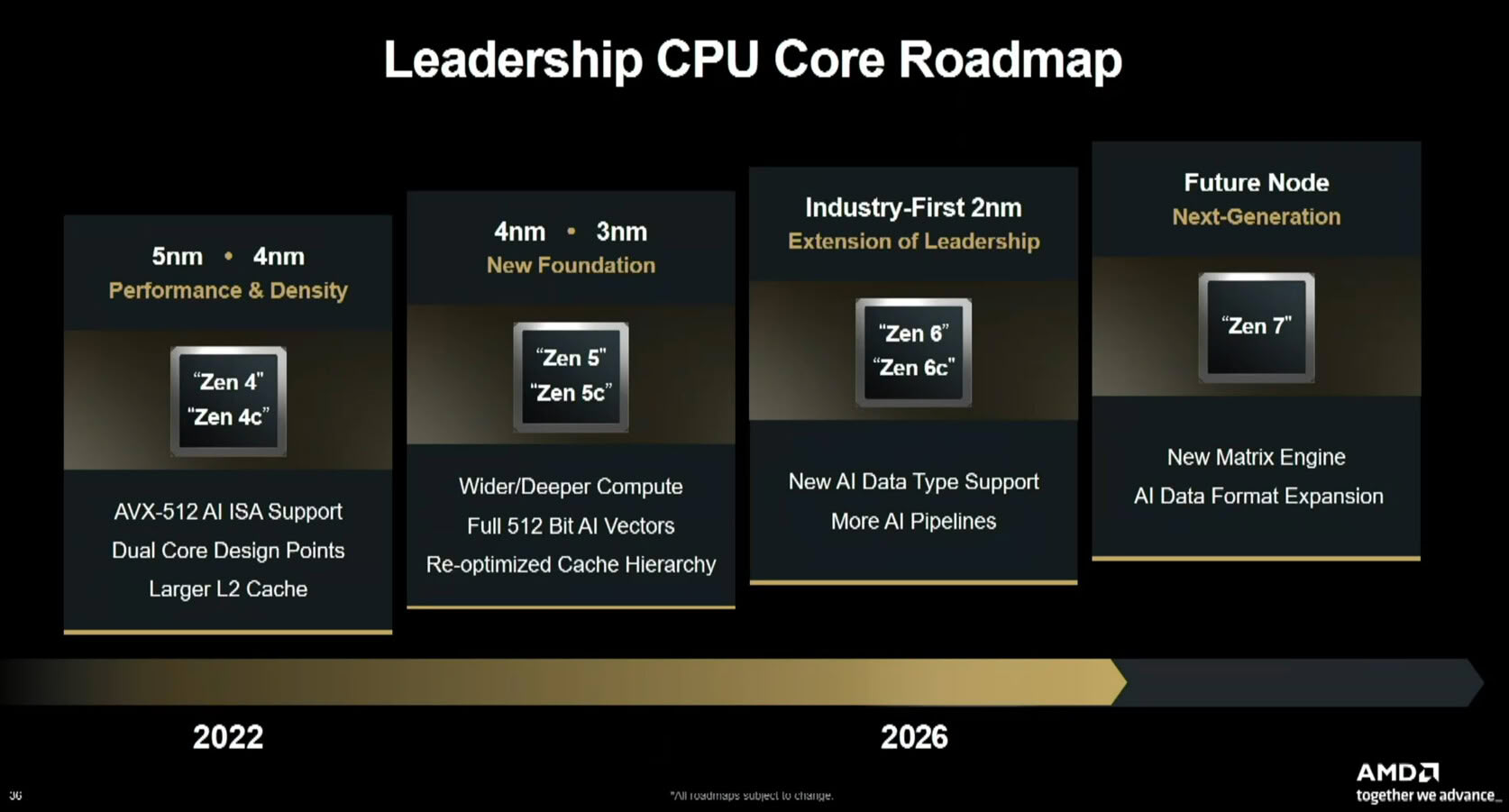
AMD's upcoming Ryzen processors based on the new "Zen 6" core architecture are reportedly delayed until Computex 2027, according to the latest information from Chiphell. The "Zen 6" EPYC lineup will utilize TSMC's N2 node, with the standard version for "Venice" and the enhanced N2P for "Verano." However, for the desktop "Zen 6" Ryzen family, codenamed "Olympic Ridge," AMD is switching to TSMC's N2X node, an enhanced variant of the standard N2 that targets higher frequencies. This switch results in delayed mass production and rollout of desktop Ryzen. TSMC plans to begin mass production of its N2X node in 2027, meaning "Olympic Ridge" will likely arrive a few months later, with Computex 2027 being the probable announcement date.

AMD likely chose the N2X node for its higher clock potential. Originally, TSMC targeted HPC workloads, but desktop processors can also benefit from high clock speeds for maximum performance. The N2X node offers two advantages over the standard N2: an ultra-high performance standard cell that delivers a 5% higher clock speed, and a high-speed device, which provides an additional 5% boost, resulting in a combined 10% speed increase.

Linux Kernel Gets AMD Capacity-Aware Scheduling for Zen 6 Heterogeneous CPU Architectures

It has long been rumored that AMD is working on new Zen 6 LP cores for its next-gen Zen 6 (see our Zen 6 Technical Deep Dive here) CPU architecture—which has already been unveiled for server applications—and it now appears as though the Linux kernel is being prepared to support that new architecture across the board. A patch series by AMD itself details support for a Capacity-Aware Scheduling, which would effectively allow the Linux kernel to detect the capabilities of each individual CPU core and assign work to that CPU core accordingly.
Amd-pstate does not export per-CPU capacity today, so the scheduler treats all cores as equal and places tasks without regard to core strength.
Patch 1 makes amd-pstate publish asymmetric per-CPU capacities via the arch hybrid capacity scaling interface. It is enabled by default on supported hardware and can be turned off with the "amd_cas=disable" boot parameter.
Patch 2 makes amd-hfi stand down when CAS is active, since both manage the same scheduler state.

AMD Pushes Back on NVIDIA and Arm's "Agentic CPU" Marketing

AMD's Madhu Rangarajan, corporate VP of Compute and Enterprise AI, says the company never set out to build its Zen 6 EPYC 9006 "Venice" chips around agentic AI, a not-so-subtle dig at NVIDIA and Arm, which both pitch their latest server CPUs as made for that exact job. Rangarajan still called EPYC 9006 the best CPU for agentic workloads during a media session covered by Tom's Hardware. Chief Zen architect Mike Clark said much the same in a separate talk, admitting AMD didn't see agentic computing coming, though he added that the company always expected the CPU to keep a role in AI software. Here's what Rangarajan said:
We think that the EPYC 9006 CPU is the best CPU for the agentic era, and spoiler alert, we didn't magically know four years ago that agentic was going to be a thing and purpose-built something for agentic. The reality is an agentic workflow is a diverse set of tasks… and in order to execute those tasks well, you need compute that is able to handle a diverse set of workloads with a full portfolio.

MSI Advances Next-Gen Data Center Infrastructure with AMD EPYC 9006 Series Server CPUs

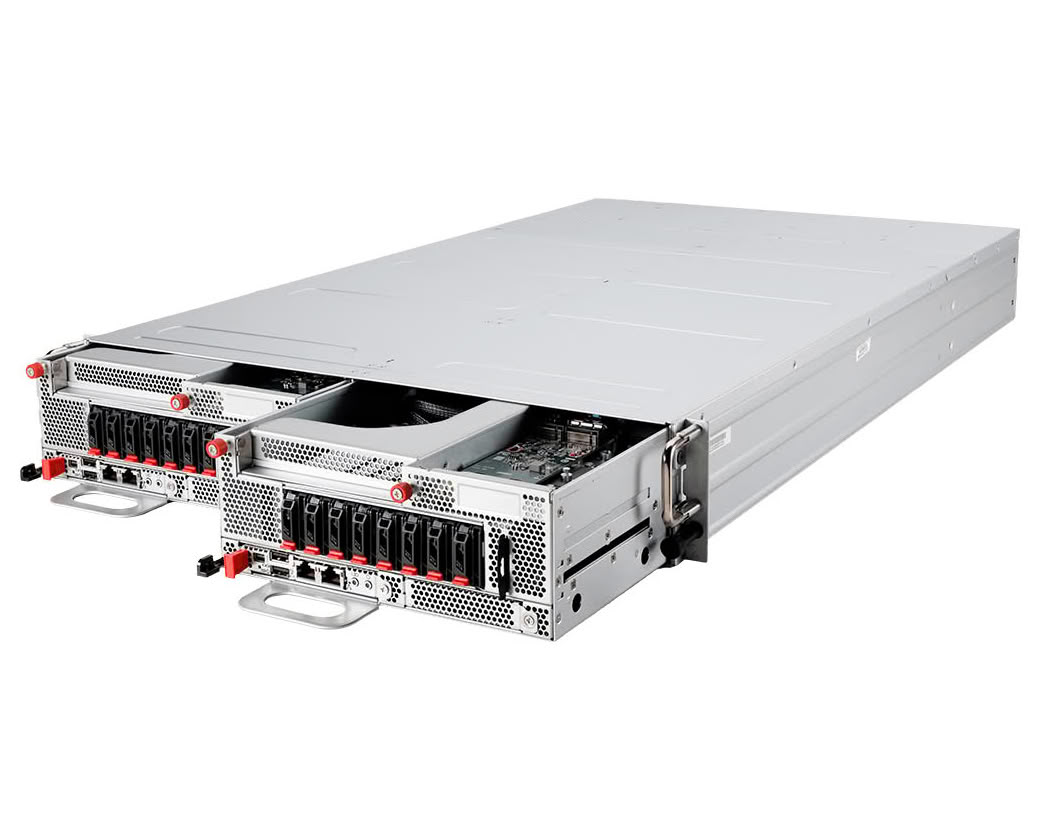
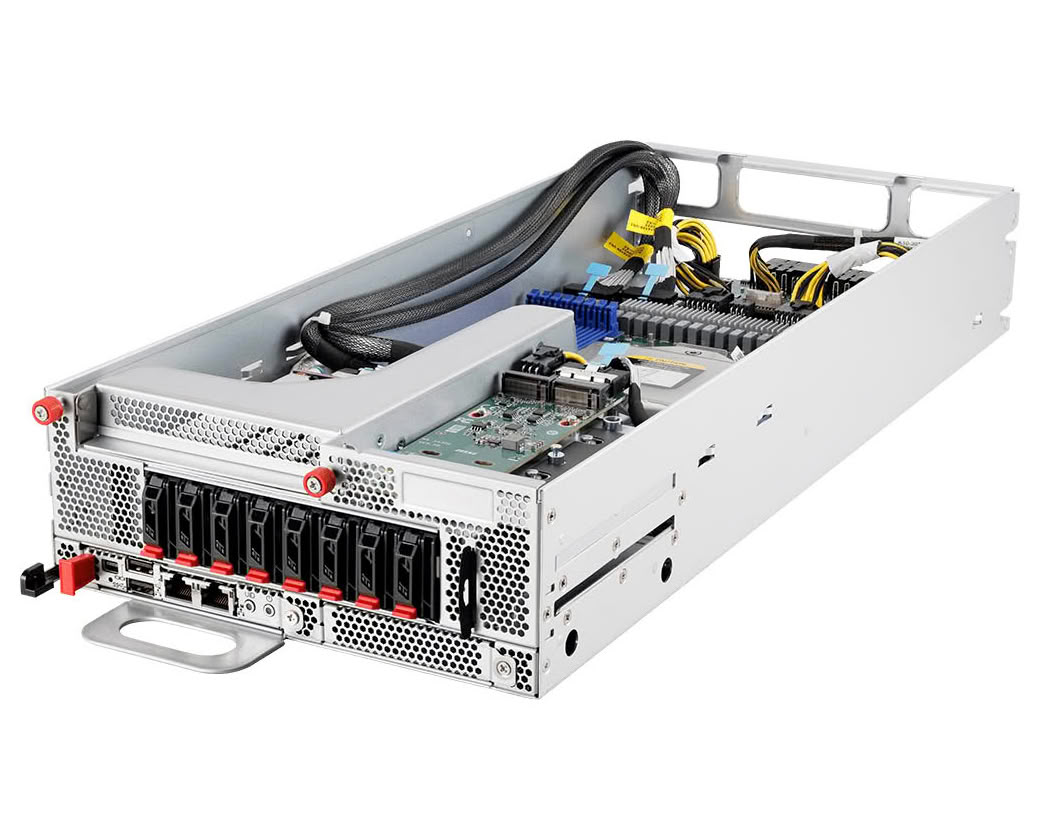
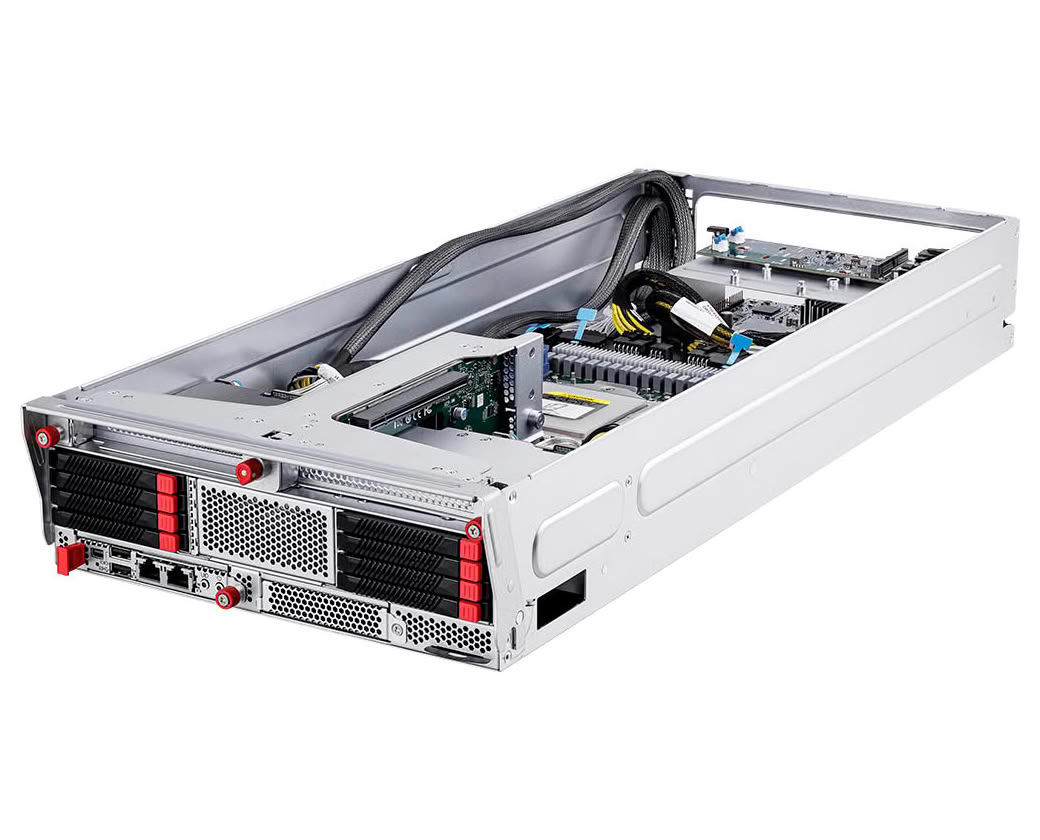
As agentic AI drives new demands for compute density, memory bandwidth, and data movement, MSI is advancing next-generation data center infrastructure with server platforms powered by AMD EPYC 9006 Series SP7 Server CPUs. With SP7 systems entering the shipping phase in Q4 2026 and SP8 platforms planned for the first half of 2027, MSI's portfolio spans liquid-cooled GPU servers, 19" DC-MHS and 21" ORv3 multi-node platforms, and enterprise servers, supporting AI, cloud, HPC, virtualization, and business-critical workloads.

Built on the Zen 6 architecture, AMD EPYC 9006 Series Server CPUs deliver up to 256 cores and 512 threads per socket for high-density computing and AI agent execution. With up to 1.6 TB/s of memory bandwidth and PCIe Gen 6 connectivity, they support data-intensive workloads and high-speed I/O for GPUs, networking, and storage.

AMD Unveils 6th Gen EPYC Embedded Processors

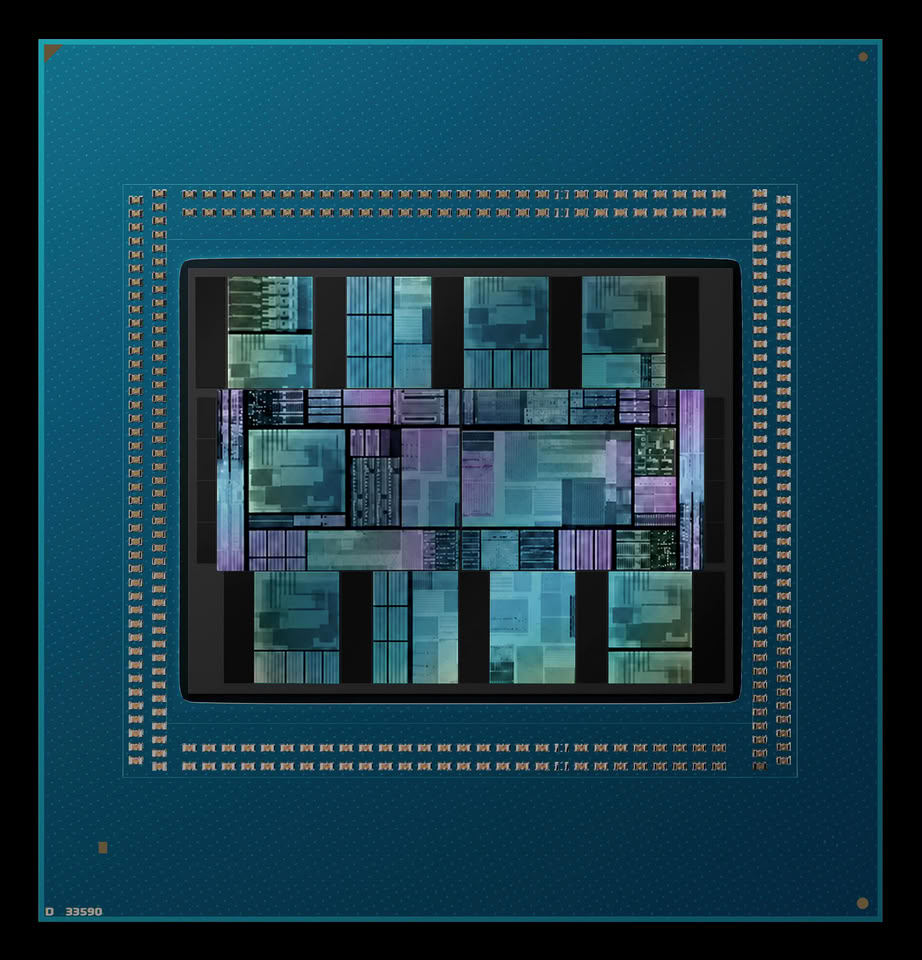
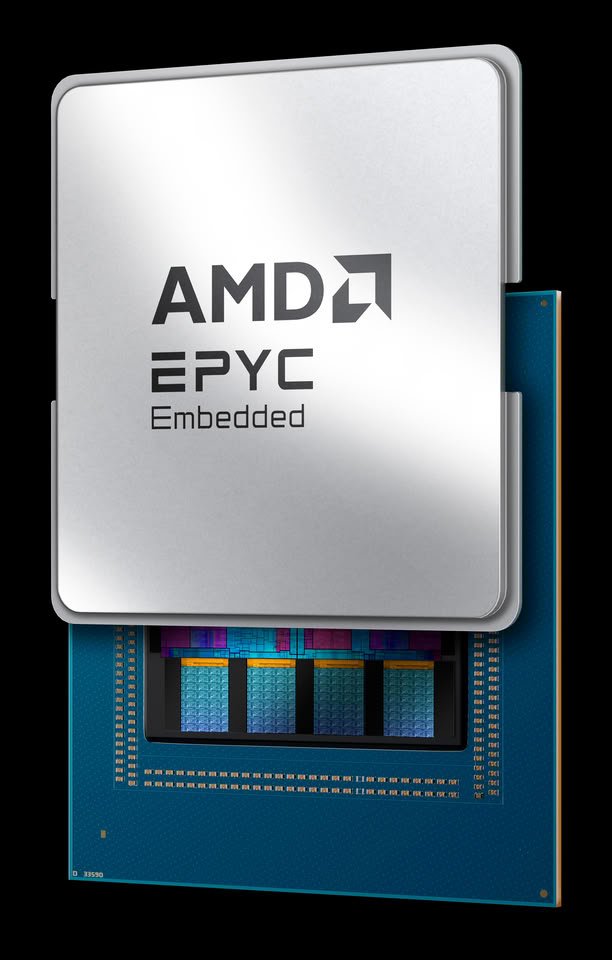
What's the News? AMD announced the AMD EPYC Embedded 9006 Series SP7 CPUs, expanding its x86 processor portfolio optimized for embedded customer requirements and deployments. Advanced by the high-performance "Zen 6" core architecture, AMD EPYC Embedded 9006 CPUs combine up to 256 cores, scalable PCIe Gen 6 and CXL 3.1 connectivity, and advanced security from secure boot through runtime. With a throughput increase of up to 1.8x compared with the previous generation 5th Gen AMD EPYC 9005 Series processors, they provide the leadership compute and high-speed connectivity needed to scale throughput and handle increasingly demanding workloads in semiconductor automated test equipment (ATE), enterprise storage and network firewall applications. Seven-year product longevity, support for post-quantum cryptography for firmware signing, and ongoing security updates simplify maintenance and long-term support for mission-critical embedded applications.

Why It Matters? As AI infrastructure expands and data volumes grow, semiconductor ATE needs to validate memory and I/O devices faster, firewalls need to process and secure more network traffic, and storage controllers need to move and process more data. AMD EPYC Embedded 9006 processors deliver the high throughput, memory bandwidth and I/O performance required to meet these growing application demands.

AMD Showcases 6th Gen EPYC Server SP7 Processors Based on the New Zen 6 Architecture

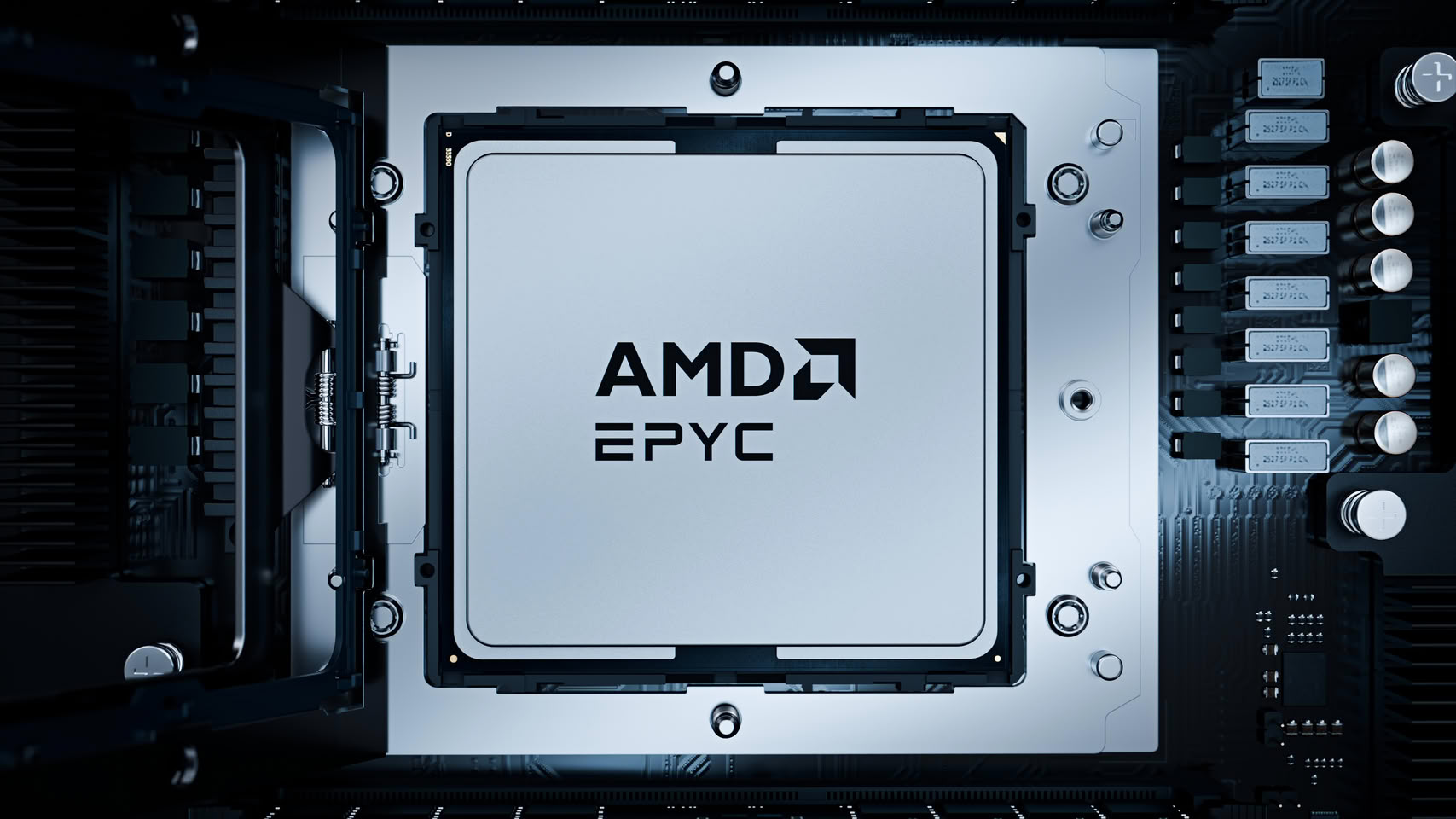
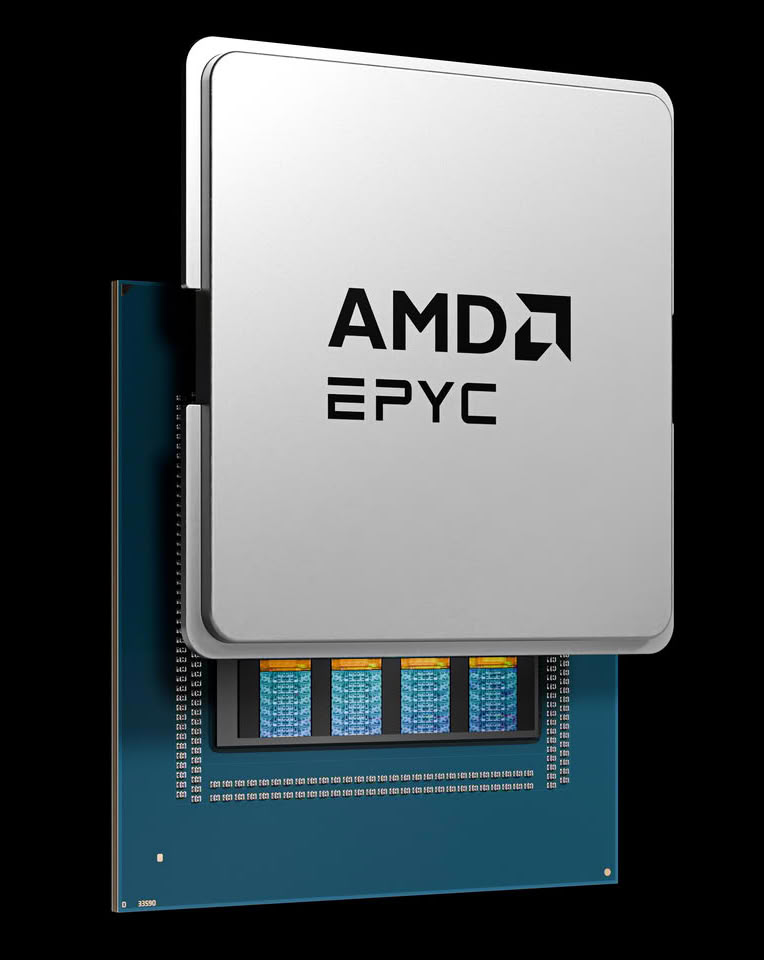
AMD (NASDAQ: AMD) today announced the general availability of the 6th Gen AMD EPYC server SP7 processors, based on the new "Zen 6" architecture, extending its historical server CPU performance leadership as AI creates new demands across the data center. Systems powered by the new CPUs are shipping from all leading server vendors, and cloud instances from Microsoft Azure and OCI are coming soon.

Across five generations, AMD EPYC processors have repeatedly raised the standard for server CPU performance, energy efficiency and platform choice, culminating in 5th Gen AMD EPYC processors becoming the fastest-ramping and highest-volume EPYC generation in AMD history. Now, 6th Gen AMD EPYC server CPUs extend AMD CPU leadership, running AI agents, accelerated infrastructure and critical enterprise applications, helping customers expand computing capacity that runs their businesses.

[Editor's note: You can read our AMD Zen 6 Technical Deep Dive here]

AMD "Medusa Point" With 10-Core, 20-Thread CPU Configuration Surfaces

AMD's "Medusa Point" APU has surfaced on Geekbench, showcasing a 10-core, 20-thread configuration divided into two clusters: four "Zen 6" cores and six "Zen 6c" cores. This suggests that AMD will continue its hybrid approach with two different core types. Each core is equipped with 32 KB of L1 instruction cache, 48 KB of L1 data cache, and 1 MB of L2 cache, while all cores share a single 16 MB L3 cache. The sample shows a base frequency of 2.0 GHz, and Geekbench lists the maximum frequency at just 1996 MHz, which is likely a misreading of early silicon rather than its actual boost clock. The instruction set confirms full AVX-512 support, including the AVX512-FP16 and AVX512-VNNI extensions, along with AVX-VNNI. The test system was paired with 64 GB (only 55.58 GB usable) of quad-channel DDR5 memory running at 5,188 MT/s.

"Medusa Point" is rumored to introduce a desktop-exclusive "RDNA 4" into mobile segment with the new "RDNA 4m" variant. Although we initially lack direct comparisons between the two, some instruction set extensions, such as WMMA and SWMMAC instructions, suggest support in the new "GFX1170" GPU, which is expected to be part of the GFX11 generation, also known as "RDNA 3." Currently, this is believed to be an upgraded "RDNA 3" with many RDNA 4 modules, enabling FSR 4 support even on the less powerful "Medusa Point" APU.

PlayStation Handheld May Be Only Portable Console With RDNA 5

It has long been rumored that Sony is working on a PlayStation 6 handheld with a powerful AMD APU codenamed Canis, which has been alleged to feature a combination of Zen 6 CPU cores—potentially with all-new Zen 6 LP cores—and RDNA 5 tech for the iGPU. Now, according to Richard Leadbetter on episode 287 of the Digital Foundry Direct Patreon-exclusive podcast, Sony may be the only gaming handheld to feature this RDNA 5 iGPU. However, it may not be an exclusivity agreement in the traditional sense of the word, since it appears to be as a result of AMD's requirements to build custom silicon for hardware OEMs.

Rumors, albeit disputed rumors, have mentioned that part of the reason Xbox cancelled its own in-house handheld console is because AMD wanted a minimum commitment of 10 million unit sales before it would engineer a custom APU for a console. This may also be why Valve's Steam Deck 2 will seemingly use an off-the-shelf component instead of another custom silicon design. This leaves questions about what CPU and GPU combo will be in the upcoming Steam Deck 2 and Xbox's previously leaked handheld, which now seems like it will be another third-party device, like the ROG Xbox Ally series.

AMD EPYC 9996 Geekbench Listing Offers First Look at Zen 6 Single-Core Gains

AMD's Zen 6 just got one of its first rough per-clock comparisons against Zen 5, and the early numbers look good. Leaker HXL spotted a Geekbench 7.1.0 listing for the 256-core EPYC 9996, the flagship "Venice" chip AMD launched in July, scoring 2,847 points in single-core on a Dell PowerEdge R9815 server running Linux. User three twenty six on X then locked a Ryzen 7 9700X to 4.1 GHz, matching the EPYC 9996's maximum boost, and got 2,444 points on the same Geekbench version. That works out to roughly 16.5% higher single-core performance for Zen 6 at the same frequency. Apparently, Zen 6 came out ahead in all 15 single-core subtests, with gains ranging from 8.2% in File Compression to 25.7% in HTML5 Browser.

Of course, these scores only give us a general idea about the gains. The EPYC 9996 uses the dense Zen 6c cores, not the full Zen 6 cores expected in desktop Ryzen chips, so it's hard to say how closely these numbers will carry over. The two systems are also wildly different, with a server platform on one side and a 9700X running DDR5-6000 CL34 under CachyOS Linux on the other, and the EPYC listing has since been pulled from the Geekbench database. Still, a double-digit per-clock gain from the dense core variant is quite encouraging. AMD has already confirmed that "Olympic Ridge" desktop CPUs will stay on AM5, though they reportedly won't arrive until 2027, so we can expect more comprehensive performance leaks well before then.

AMD Lists Three Zen 6 "Medusa" GPU IDs in HIPRT 3.2

AMD has published HIPRT 3.2, the latest version of its ray tracing library for HIP, and the release notes name the integrated graphics of its upcoming Zen 6 "Medusa" processors outright. Under new features, AMD lists Medusa support for three GPU architecture IDs: gfx1170, gfx1171, and gfx115E. HIPRT is mostly used by rendering apps like Blender, so this says nothing about gaming performance. Still, the link between these IDs and Medusa has so far rested on compiler patches and leaks, and now the Medusa name sits right in AMD's own changelog.

The gfx117x IDs belong to RDNA 4m, which first showed up in LLVM back in February. AMD added GFX1171 and GFX1172 targets in March, merged GFX1171 into Mesa 26.3 in August, and pushed RDNA 4m firmware later that month. Despite the name, RDNA 4m sits in the GFX11 family with RDNA 3 and 3.5, plus a few RDNA 4 style additions like FP8/BF8 conversion and new matrix instructions. The gfx115E entry is the more curious one. GFX115x covers the RDNA 3.5 graphics in Strix Point and Strix Halo, so it looks like at least one Medusa chip could stick with RDNA 3.5. The same release fixes a bug that truncated architecture numbers containing a letter, gfx115E included.

Ryzen 5800X3D Revival was Lisa Su's Initiative, and Other Interesting Details in AMD Interview with MyNavi Tech+

Japanese tech publication MyNavi Tech+ interviewed Travis Kirsch, the client-segment product manager for AMD, and there are some interesting excerpts from the conversation. It turns out that reviving Ryzen 7 5800X3D for the Socket AM4 market earlier this year, was an initiative going as far up as CEO Lisa Su. The effort required certain manufacturing process updates with TSMC to ensure they can build new 5800X3D chips that are identical in specs to the original ones, without having to revive deprecated manufacturing processes.

AMD says that 5800X3D AM4 Anniversary Edition was released as a parting gift to the loyal Socket AM4 crowd that's holding on to DDR4 memory in the wake of brutal overpricing of DDR5. It was planned to help users better plan their transition to AM5 and DDR5 memory. The 5800X3D offers contemporary levels of performance with games, and its re-launch triggered a new wave of product launches from motherboard vendors.

Rumored Steam Deck 2 APU Appears in Leaked Benchmarks with 50% More CPU Cores

A new AMD Gainsborough APU, which has been identified as a potential candidate for the Valve Steam Deck 2, has apparently been leaked onOpenBenchmarking. The new engineering sample shows a total of six cores and twelve threads on the CPU, an increase of 50% over the current Steam Deck APU, and a base clock of 2.4 GHz.

Another notable change from the original Steam Deck is that the Gainsborough APU in question has 24 GB of LPDDR5 RAM, instead of 16. That memory was also running at a whopping 9600 MT/s, as opposed to the Steam Deck's 6400 MT/s. This isn't necessarily to say that the Steam Deck 2 will have 24 GB of memory, but it's an indication that AMD, Valve, or some other OEM is testing that configuration. In the benchmark results, the APU reaches 3,508 points in Furmark. While it's not directly comparable, since the Gainsburough APU was running at 1024 × 768 the Valve Steam Deck achieved 3,323 in Furmark at 1280 × 800. Those two results are close, especially given the higher resolution in the Steam Deck testing, but if this is on early drivers, it's a good sign for GPU performance on the Steam Deck 2.

Ubuntu 26.10 "Stonking Stingray" Launches With GNOME 51, Linux 7.3 and Optional Speech-to-Text Feature

Canonical has released Ubuntu 26.10 "Stonking Stingray," shipping with GNOME 51, Linux kernel 7.3, and a new optional speech-to-text feature called Myna. Following its official release in September, GNOME 51 lands in Ubuntu 26.10 and promises a more responsive desktop experience and improved accessibility. Linux kernel 7.3 brings hardware support for Intel Xe3P (Nova Lake), AMD Zen 6, and NVIDIA 615.x Linux drivers, along with improved DRM, power management hooks and out-of-the-box Lustre filesystem support. However, the headline that could easily get unnoticed is the Myna, an opt-in speech-to-text agent that runs entirely on-device using local LLMs. Canonical says it is positioning it as the first step toward a more natural AI-assisted desktop, with accessibility as the stated priority for the initial rollout. Jon Seager, VP of Ubuntu Engineering at Canonical, says "Stonking Stingray delivers the first milestone through the integration of Myna: a speech-to-text agent that utilizes on-device LLMs. We've led Ubuntu's first AI integration with accessibility to ensure that cutting-edge features are available to all users from day one."

Security and enterprise features got expanded with a full migration to Rust-based uutils coreutils, post-quantum package signing, and broader TPM-backed full-disk encryption support. Microsoft Entra ID integration brings support for password-plus-MFA and passwordless authentication flows. Ubuntu 26.10 also upgrades ROCm to version 10.0, adding support for newer AMD GPU architectures and frameworks including vLLM and SGLang. Going back to Ubuntu's new AI Myna feature, Canonical also says that it will not go away, rather it will continue to evolve and will be included by default with new Ubuntu releases.

AMD Showcases Its Next-Gen EPYC "Verano" CPU, Up to 192 Cores and LPDDR5X Memory

AMD showed off its next-generation EPYC "Verano" server CPUs during CEO Dr. Lisa Su opening keynote at the 2026 OCP Global Summit. The new CPU is the first EPYC processor to support LPDDR5X memory via SOCAMM2 modules. Now AMD is mirroring rival NVIDIA's Vera CPU that already uses SOCAMM2 modules. The "Verano" processor sits within the EPYC 9006 "LP" family and is built on the same TSMC 2 nm process as the already-launched EPYC "Venice". While AMD "Venice" is the first EPYC processor based on Zen 6 architecture, "Verano" is optimized for AI tasks in agentic AI racks. For this, AMD plans to pair them with its own Instinct MI500 GPUs via xGMI connectivity at up to 112 Gbps. It will run on the new SP8 platform rather than Venice's SP7. When we first heard about "Verano", AMD indicated that the upcoming CPUs will feature up to 72 cores on a single-socket platform. However, that has now been updated to up to 192 cores.

From the initial information available, this could mean either a single large chip or a dual 96-core configuration. More details came from System360Cheese on X, who reported that the chip shown featured eight Zen 6 CCDs alongside two large IO dies and four LPDDR5X memory controllers. The CCDs appear smaller than those in Venice's Zen 6C design, suggesting these are the standard 12-core Zen 6 dies rather than the denser 32-core Zen 6C variants. The announcement follows AMD's earlier reveal of the Helion agentic AI rack, an Open Compute Project spec-designed system that Verano is expected to be integrated. Availability is targeted for 2027.

AMD Engineer Details Zen 6 IBS Memory Profiler

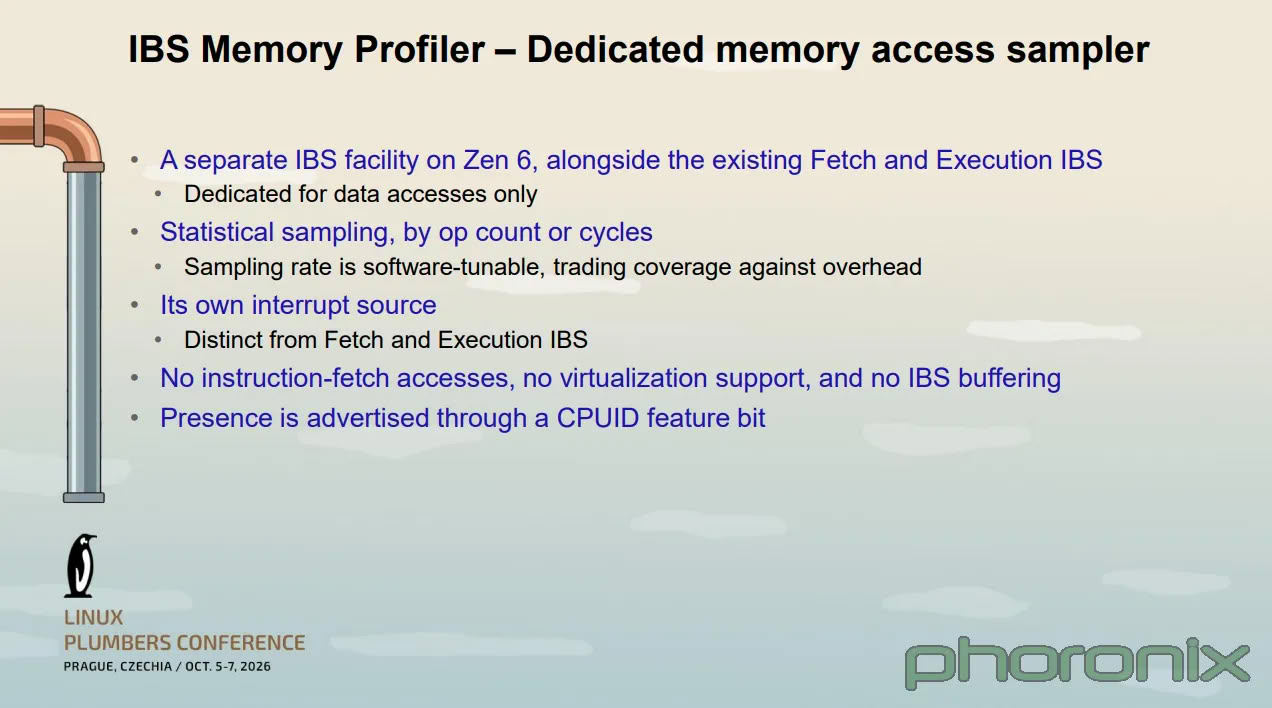
AMD has detailed the IBS Memory Profiler, a little-discussed hardware feature in its upcoming Zen 6 processors. AMD engineer Bharata Bhasker Rao presented it at the Linux Plumbers Conference (LPC) 2026 in Prague on October 5. Instruction-Based Sampling (IBS) is AMD's existing profiling hardware, and Zen 6 adds a separate, lighter instance that only samples data memory accesses. Each sample hands the kernel the physical address of the access and shows whether the data came from DRAM or external memory such as CXL. That matters on tiered-memory servers, where Linux has to find frequently used ("hot") pages on slower CXL memory and move them to DRAM. AMD's EPYC 9006 "Venice" chips support memory expansion via CXL 3.1.

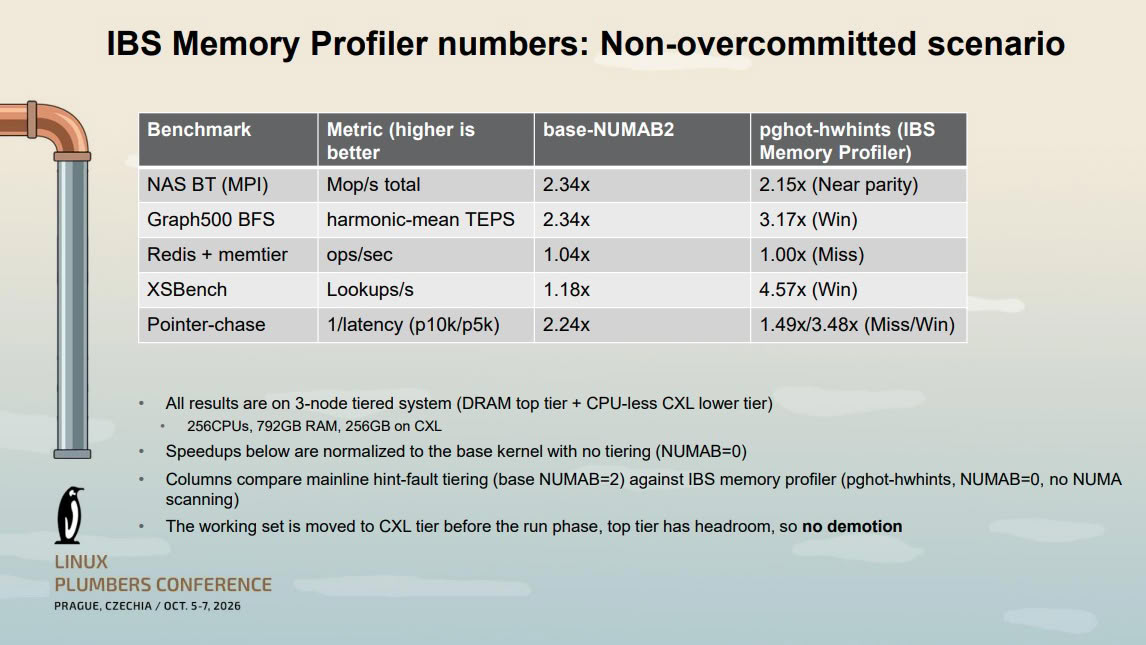
Linux currently finds those pages by scanning page tables and trapping page faults. AMD wants to feed the profiler's samples into pghot, a proposed kernel subsystem for hot page tracking. The results, however, are a mixed bag. On a test system with 256 logical CPUs and 256 GB of CXL memory, XSBench ran at 4.57x over a no-tiering baseline against 1.18x for the current method, and Graph500 hit 3.17x against 2.34x. Redis saw no gain, and NAS BT landed slightly behind. Per-folio promotion cost fell from 26.1 to 15.8 microseconds in an overhead test, though that benchmark finished about 5% slower. These are AMD's own numbers, and the slides list no virtualization support for the profiler. The pghot patches are still in development, and EPYC Venice is in production with cloud deployments expected later this year.

AMD EPYC "Verano" CPUs to Use New SB1 Socket, Dynatron Cooler Listing Suggests

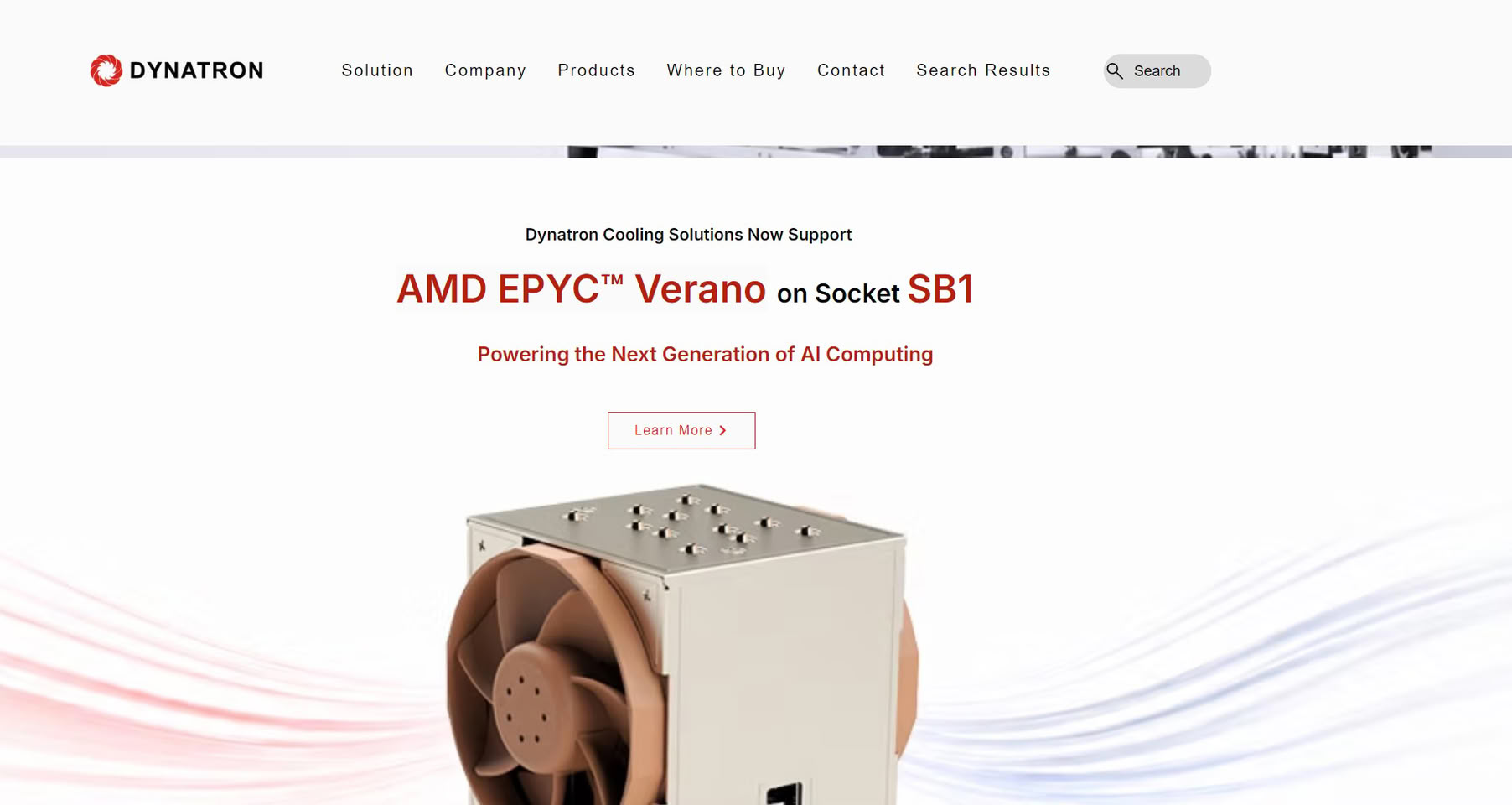
AMD's upcoming EPYC "Verano" processors will apparently use a new socket called SB1. The name comes from server cooler maker Dynatron, which now states on its website that its cooling solutions support "AMD EPYC Verano on Socket SB1." Dynatron also has a product page up for a 4U active cooler listed as "SB1-4U-ACTIVE (TBD)," so the final product name is still pending. The "B" in SB1 could point to a BGA package soldered to the board, although that is a guess based on the name and nothing official. The listing doesn't help much either. Maximum power is marked as TBD, and the 128.05 x 106.6 x 130.7 mm dimensions are identical to Dynatron's J26 cooler for SP7, so the specs could simply be placeholders for now.

Verano is the codename for the EPYC 9006 LP, a Zen 6 part that AMD announced alongside the rest of its 6th Gen EPYC lineup. It tops out at 72 cores with boost clocks of up to 5 GHz, and it runs on 24 channels of LPDDR5X memory through replaceable SOCAMM2 modules. AMD is aiming it at AI racks as a host processor for GPU clusters, with a launch planned for the second half of 2027. The regular "Venice" chips use different sockets, namely SP7 for up to 256 cores and SP8 for up to 128. For "Verano," AMD itself hasn't revealed the socket name yet.

AMD "Gainsborough" APU Codename Appears in Driver, Could Power Valve's Steam Deck 2

AnandTech forum user SixPie has spotted a previously unknown AMD codename, Gainsborough, in the Adrenalin 26.9.2 driver, and it may be the chip for Valve's Steam Deck 2. Import and export records show test equipment carrying the name was shipped to Asia several times in late July, and that it uses an FF6 BGA package with 1,179 contacts. AMD's partners who know about the Medusa APUs reportedly have no information on it, which would make sense for a custom part.

As for the Steam Deck 2 link, the name is the main clue. Valve's Steam Deck chips have used Final Fantasy VII codenames such as Aerith and Sephiroth before, and Gainsborough is Aerith's surname, as leaker Kepler_L2 pointed out. Separately, Moore's Law Is Dead claims it's a semi-custom APU built on TSMC N3P with Zen 6 and RDNA 5, possibly arriving in late 2027 or 2028, but none of that is confirmed. Moreover, there are reasons to be cautious. Leakers have reportedly tied the same FF6 package to AMD's upcoming Ryzen Z3 handheld chips, so there's conflicting information about who the customer really is.

AMD Ryzen Z3 Reportedly Packs 6 CPU Cores and 12 RDNA 4m GPU CUs

AMD may be preparing a significant update to its Ryzen Z-Series processors designed for handheld devices, with the latest Z3 processor bringing substantial changes over the previous generation. At the core of everything will be the CPU architecture. For the standard Ryzen Z3, AMD plans to use four "Zen 6" cores and two "Zen 5" low-power cores. The Ryzen Z3 Extreme will share the same CPU core configuration, resulting in a total of six cores and twelve threads in the CPU cluster. Alongside this, there will be a cluster with an integrated graphics solution, featuring up to 12 Compute Units of RDNA 4m. This version reportedly derives from RDNA 3.5 but includes RDNA 4-style ALUs for matrix operations that power technologies like FSR 4.

Compared to the previous Ryzen Z2 Extreme's eight-core CPU cluster and 16 CU RDNA 3.5 integrated graphics cluster, the new solution focuses on extracting extra performance from the new "Zen 6" cores and optimizing for RDNA 4m. This ensures the software stack is mostly new, without needing any backporting to older RDNA generations. The difference between the two Z3 variants will be in power limits, with the Z3 catering to the 15-watt segment, while the Z3 Extreme will be optimized for a 25-watt power envelope.
Ryzen Z3 Extreme

AMD Publishes Full EPYC 9006 "Venice" Specs and Pricing: 8-Core at $700, 256-Core at $14,904

AMD has published the full EPYC 9006 "Venice" lineup on its product page, listing specifications and 1,000-unit pricing for all 31 Zen 6 server processors across the SP7 and SP8 platforms. Prices start at $700 for the 8-core EPYC 9016 and top out at $14,904 for the 256-core EPYC 9996. AMD says the specifications are subject to change. The EPYC 9996 is the flagship, with 256 Zen 6c cores and 512 threads, a 2.55 GHz base clock, up to 4.1 GHz boost, 1 GB of L3 cache, and a default CPU power of 600 W (configurable from 400 W to 600 W). That works out to roughly $58 per core, and it costs about the same as the 192-core EPYC 9965 did at launch, which was around $14,800.

The SP7 platform covers nine chips, from the 64-core EPYC 9556 at $8,008 up to the 9996. The 22 chips on the SP8 platform run from 8 cores up to the 128-core EPYC 9746 at $11,679. AMD has also retired TDP as its power label for this generation, using "Default CPU Power" instead. SP7 systems are expected in Q4 2026, with SP8 following in the first half of 2027. These are 1Ku prices, so what OEMs charge for complete systems will probably look quite different. Nevertheless, it looks like the EPYC 9996 is the one to watch for this generation, especially after AMD's claims of beating NVIDIA's Vera CPUs by a significant margin.

AMD Starts "Zen 6" Desktop Enablement in Linux 7.3

AMD's upcoming "Zen 6" desktop processors are moving closer to release as the company begins Linux kernel support in the latest version 7.3. According to Phoronix, AMD has updated the Host System Management Port (HSMP) kernel module, adding protocol version 7, which is used by the Zen 6 Family 1Ah Model 80H processors. Additionally, there are new AMD PMF platform driver features for these processors, likely referring to the "Zen 6" desktop "Olympic Ridge" processors. The AMD PMF driver now also offers device metrics through a new ioctl interface.

With the "Zen 6" generation, AMD is reportedly increasing its CCD core count to up to 12 instances, whereas the previous-generation CCDs maxed out at 8 cores. For versions with two CCDs, the core count starts at 12 cores and continues with 16 and 20-core models, topping off with the flagship 24-core dual CCD SKU. AMD is able to pack more cores per CCD due to the new manufacturing technology, which is TSMC's N2 2 nm node, providing better transistor density compared to the older nodes used in previous generations.

AMD Confirms AM5 Compatibility with "Olympic Ridge" Desktop "Zen 6"

AMD's technical documentation page was updated today to emphasize ongoing compatibility with the AM5 platform. For the upcoming Ryzen 10000 series "Olympic Ridge" desktop processors, the company confirmed that these CPUs will also be compatible with the AM5 platform, bringing the already-announced "Zen 6" CPU technology to the consumer market. Interestingly, the documentation page also lists "Medusa1" as compatible with the AM5 desktop socket, suggesting we might see "Medusa Point" or "Medusa Halo" APUs in a socketed design as well, likely launching after the Ryzen "Olympic Ridge" family becomes available for consumer desktop PCs.

During the Computex 2026 international show, AMD confirmed that Socket AM5 would continue to be supported through 2029. In 2022, AMD introduced Socket AM5 alongside the Ryzen 7000 series powered by the "Zen 4" architecture. At that time, the company promised at least two processor generations on the socket, extending support up to 2027 (five years in the market). The company subsequently launched the Ryzen 8000 series APUs and its current Ryzen 9000 series powered by the "Zen 5" architecture. Its latest product line includes the introduction of Ryzen AI 400 series desktop APUs.

AMD Gains Ground as Intel x86 Market Share Goes Back to 1995 Levels

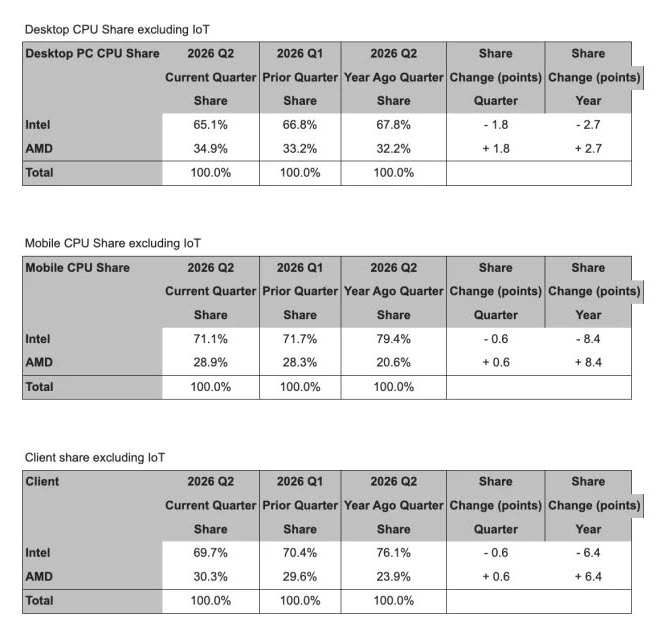
According to Mercury Research, Intel's x86 CPU market share has dropped below 70% for the first time since 1995, hitting 69.3% in Q2 2026, a 6.5-point drop year over year. AMD was there to pick up the difference, reaching 30.7%, a new record for the company. Mercury Research president Dean McCarron confirmed the 31-year low to CRN following the release of his second-quarter CPU market share report. Those figures cover PC and server CPU shipments only. When semi-custom, embedded, and IoT products are included, the Intel market share falls to 65.9% vs. AMD's 34.1%, with the latter getting a boost from a stronger than expected gaming console SoC shipments, a segment Intel doesn't compete in, if we skip the Arc G3 CPU family dedicated to handhelds.

Breaking it down by segment, AMD's desktop share reached 34.9%, up 2.7 points year over year against Intel's 65.1%, despite Intel CPUs returning to Amazon's CPU Top 10 sales ranking yesterday. In the server CPU market, AMD managed to grow by 7.3 points year over year, reaching 34.5% against Intel's 65.5%. The competition is fierce in this segment, AMD has launched the 6th Gen EPYC "Venice" server processors powered by the "Zen 6" CPU microarchitecture, while Intel just announced its upcoming Xeon 7 "Diamond Rapids" CPUs and the "Crescent Island" graphics card for data centers and workstations. The laptop market is where AMD moved the most, climbing to 28.9%, up 8.4 points year over year, while Intel stays at 71.1%. Overall PC market share for AMD hit a record 30.3%, up 6.4 points year over year.

PlayStation 6 Handheld for $600 Seems Impossible

There have been a number of leaks about the upcoming PlayStation 6 handheld, including purported details about the Canis APU slated to arrive in the handheld with Zen 6 LP cores. Despite this, we still haven't seen any real indication of a price for the new handheld, even though there are already BOM estimates floating around for the PS6 living room console.

According to ubiquitous hardware leaker, KeplerL2 on the NeoGAF forums, however, it seems as though a $600 PlayStation 6 Portable is off the cards. In response to a recent question about the price of the PS6 Portable's price, the leaker stated that a $600 handheld "is definitely not possible right now," thanks to LPDDR memory price increases attributed to demand from data centers.

Intel's New CPU Cores Debut on "Nova Lake-S" Desktop Before Xeon Servers

Intel's approach to releasing the latest CPU technology differs significantly from AMD's. Robert Hallock, the company's VP and general manager of the enthusiast business, confirms that desktop PC DIY enthusiasts are the first to experience the latest CPU cores. In an interview with Tom's Hardware, Hallock emphasized that Intel prioritizes bringing its newest CPU cores to desktops first, subtly hinting at the upcoming "Nova Lake-S" processor generation. Unlike AMD, which introduces its latest core designs in the server segment first, Intel debuts them on the desktop. While these cores will eventually be used in Xeon server processors, they initially appear on the desktop platform. This means that the "Coyote Cove" P-Cores and "Arctic Wolf" E-Cores will first be available for desktops, in contrast to AMD's Zen 6 CPU technology, which debuts with the EPYC "Venice" and only later appears in desktop CPUs.
Intel's Robert HallockWhat I would say is, as we think about our own roadmap, I have a new core. It's coming to desktop first. I mean, I hope enthusiasts do the math about that one, and that's all I'm going to say.
Return to Keyword Browsing
Nov 24th, 2026 06:54 CST change timezone

New Forum Posts

Popular Reviews

TPU on YouTube

Controversial News Posts