News Posts matching #inference

Return to Keyword Browsing

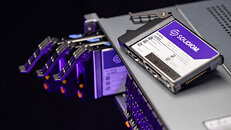
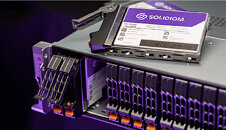
Solidigm AI Central Lab Features 192 SSDs Packing 23.6 PB Into 16U

Solidigm recently announced the opening of its AI Central Lab featuring what it claims are the industry's highest-performing and most dense storage test clusters built for artificial intelligence workloads. Located in Rancho Cordova at the FarmGPU facility near Solidigm headquarters, the AI Central Lab lets Solidigm run and study real-world workloads on NVIDIA B200 and H200 GPUs. This gives the company insights into how storage can boost cluster efficiency and allows key AI ecosystem partners to run experiments on the lab's hardware. The AI Central Lab features several notable configurations. The performance cluster using Solidigm D7-PS1010 SSDs achieved 116 GB/s per-node throughput in MLPerf Storage testing—the highest ever measured in the AI model training test. The density cluster packs 192 Solidigm D5-P5336 SSDs with 122 TB each, fitting 23.6 PB into just 16U of rack space. Additional hardware includes 800 Gbps Ethernet networking and storage servers. Workloads available for testing include AI model training and inference, KV cache offload, VectorDB tuning, and power consumption benchmarking.

The lab was built with common reference architectures in mind, letting customers test their solutions with Solidigm SSDs in an environment using the same standards as large-scale data centers worldwide. The facility will also speed up storage research beyond conventional component-level testing to better understand real-world usage at the server, rack, and cluster levels. Work in the lab is already underway with multiple organizations.

IBM Introduces the Spyre Accelerator for Commercial Availability

IBM (NYSE: IBM) today announced the upcoming general availability of the IBM Spyre Accelerator, an AI accelerator enabling low-latency inferencing to support generative and agentic AI use cases while prioritizing the security and resilience of core workloads. Earlier this year, IBM announced the Spyre Accelerator would be available in IBM z17, LinuxONE 5, and Power11 systems. Spyre will be generally available on October 28 for IBM z17 and LinuxONE 5 systems, and in early December for Power11 servers.

Today's IT landscape is changing from traditional logic workflows to agentic AI inferencing. AI agents require low-latency inference and real-time system responsiveness. IBM recognized the need for mainframes and servers to run AI models along with the most demanding enterprise workloads without compromising on throughput. To address this demand, clients need AI inferencing hardware that supports generative and agentic AI while maintaining the security and resilience of core data, transactions, and applications. The accelerator is also built to enable clients to keep mission-critical data on-prem to mitigate risk while addressing operational and energy efficiency.

Fujitsu Expands Strategic Collaboration with NVIDIA to Deliver Full-Stack AI Infrastructure

Fujitsu today announced an expanded strategic collaboration with NVIDIA to create full-stack AI infrastructure that integrates AI agents. The initiative aims to bolster enterprises' competitive edge through AI, while preserving their autonomy in AI utilization.

The collaboration will focus on co-developing and delivering an AI agent platform tailored for industry-specific AI agents in sectors such as healthcare, manufacturing, and robotics, along with an AI computing infrastructure that seamlessly integrates the FUJITSU-MONAKA CPU series and NVIDIA GPUs via NVIDIA NVLink Fusion. The combined AI agent platform and computing infrastructure will accelerate the AI industrial revolution with AI agents that continuously learn and improve. This will enable cross-industry, self-evolving, full-stack AI infrastructure, overcoming the limitations of general purpose computing systems.

NAND Flash Shortages May Last 10 Years, Phison CEO Warns

The massive AI infrastructure buildout is placing a significant strain on the entire semiconductor supply chain, with one often overlooked component being NAND-based storage. According to Phison Electronics CEO Pua Khein-Seng, the NAND flash shortage could last an entire decade. CEO Pua warned that an upcoming NAND flash shortage is estimated to begin in 2026 and could stretch across the next decade. This claim is much higher than anything we have seen, where these shortages last only a year or two. Speaking in a recent interview, Pua said that the combination of surging AI-driven storage demand and limited recent investment in flash capacity has placed the memory market on a collision course with extended turnaround times.

Pua Khein-Seng put much of the blame on an earlier investment hangover. He argued that after prior cycles where heavy spending led to price collapses, many flash makers pulled back, slowing expansion. He noted that starting around 2023, a significant share of capital was redirected into high-bandwidth memory used for model training, as the margins there were more attractive. As a result, NAND received less focus just when demand began rising again. He also emphasized a shift inside cloud operations from training to inference, adding that inference workloads and model storage create large and persistent requirements for NAND flash. As one of the major controller designers for SSDs, the Phison CEO knows precisely where the demand is headed, many quarters ahead of the public.

French Team Develops First Hybrid Memory Technology Enabling On-Chip AI Learning and Inference

Breaking through a technological roadblock that has long limited efficient edge-AI learning, a team of French scientists developed the first hybrid memory technology to support adaptive local training and inference of artificial neural networks.

In a paper titled "A Ferroelectric-Memristor Memory for Both Training and Inference" published in Nature Electronics, the team presents a new hybrid memory system that combines the best traits of two previously incompatible technologies—ferroelectric capacitors and memristors—into a single, CMOS-compatible memory stack. This novel architecture delivers a long-sought solution to one of edge AI's most vexing challenges: how to perform both learning and inference on a chip without burning through energy budgets or challenging hardware constraints.

Avalue Launches HPS-GNRD4A High-Performance Computing Workstation

Avalue Technology Inc., a global leader in industrial computing solutions, proudly announces the launch of the HPS-GNRD4A workstation, designed for high-performance computing (HPC) workloads. Built to meet the demands of enterprise AI training, medical imaging analysis, and high-performance data center operations, the system supports dual Intel Xeon 6 6500P/6700P series processors with up to 350 W TDP per CPU and up to 16 DDR5 6400 MHz RDIMM and 8000 MHz MRDIMM slots, allowing for a maximum memory capacity of 4 TB and providing a stable, high-performance computing environment.

Key Features:
  • Flexible Storage and Expansion: The 19-inch 4U rack-mount chassis offers abundant storage and expansion options, including one external 5.25-inch optical drive bay and three front-accessible 2.5-inch drive bays. The system supports up to three double-width GPU cards, high-speed PCIe 5.0, various NVMe/SSD/RAID cards, and other acceleration cards, easily adapting to diverse computing workloads. In addition, the system supports U.2 storage bay expansion, with high-density U.2 SSDs capable of meeting demanding high-performance application requirements.

China Blocks Tech Firms from Buying NVIDIA AI Accelerators

China has reportedly banned its domestic technology firms from purchasing NVIDIA AI accelerators to promote the adoption of domestic AI accelerators. According to sources close to the Financial Times, the Cyberspace Administration of China (CAC) instructed several technology giants, including Alibaba, Baidu, and Tencent, to stop their independent evaluation and procurement of NVIDIA's export-modified AI accelerators. This includes chips like the RTX PRO 6000D, a variant of the RTX PRO 6000 designed for the Chinese market. There is no mention of the modified "Blackwell Ultra" single-die B30A accelerators, which were intended as a China-specific alternative to the GB300, offering half the compute power.

This directive from Beijing indicates that, despite Chinese tech giants' interest in NVIDIA-supplied AI accelerators due to their superior software and computing capabilities, regulators aim to promote domestic AI accelerators from companies like Huawei and Cambricon. These domestic chips are built on older technology nodes, primarily because of China's limited access to cutting-edge manufacturing and the absence of modern EUV tools for its domestic fabs. An insider told the Financial Times that "the top-level consensus now is there's going to be enough domestic supply to meet demand without having to buy NVIDIA chips." This suggests that the current ambitions of Chinese AI labs could be fully met with domestic chips. However, training and running frontier-level models on non-NVIDIA hardware remains a persistent challenge.

AMD Launches ROCm 7.0, Up to 3.8x Performance Uplift Over ROCm 6.0

AMD today unveiled ROCm 7.0, a massive update to its open GPU software platform for AI workloads across datacenter racks and even client devices. The release focuses on support for the new Instinct MI350 accelerator series, built on CDNA 4. It pairs hardware-level refinements, including advanced HBM utilization and expanded datatype handling, with software improvements designed to enhance throughput for both training and inference. AMD classifies this release as a generational step that widens deployment choices for enterprises, from single-node servers to multi-rack clusters. Company benchmarks shared with partners indicate multi-fold gains over previous ROCm 6.0 versions on select large-model tasks, and AMD shows tighter integration with open-source serving stacks to help teams transition from prototype to production more quickly.

Under the hood, ROCm 7.0 delivers algorithmic and systems advances intended to reduce cost and improve utilization: enhanced attention and reasoning primitives, sparse mixture-of-experts techniques, and support for FP4, FP6, and FP8 precision formats that trade a bit of accuracy for massive memory savings. ROCm 7.0 also focuses on scale and manageability by enabling GPU-direct communications, distributed inference across nodes with vLLM-d and DeepEP compatibility, and cluster tools such as AMD Resource Manager and a new AI Workbench for orchestration and monitoring. To smooth adoption, AMD provides prebuilt Docker images with quantized model examples and turnkey stacks for common frameworks. AMD is also expanding endpoint support to Ryzen AI processors and Radeon RX series GPUs, so developers can deploy consistent pipelines from edge devices to cloud racks. ROCm 7 is available now through AMD's developer resources, with documentation, examples, and enterprise support to help teams get started.

Soaring Inference AI Demand Triggers Severe Nearline HDD Shortages; QLC SSD Shipments Poised for Breakout in 2026

TrendForce's latest investigations reveal that the massive data volumes generated by AI are straining the global infrastructure of data center storage. Nearline HDDs, traditionally the backbone of large-scale data storage, are now facing severe supply shortages, pushing high-performance yet higher-cost SSDs into the market spotlight. In particular, shipments of high-capacity QLC SSDs could see explosive growth in 2026.

In the traditional tiered storage architecture of data centers, HDDs have long dominated cold data storage thanks to their exceptionally low cost per gigabyte. Cold data typically includes backup files and historical records—datasets that are rarely accessed but must be archived long-term. With the rapid expansion of inference AI applications, demand for cold data storage is surging.

Arm Launches Lumex Compute Subsytem Platform for Next-Gen Devices

AI is no longer a feature, it's the foundation of next-generation mobile and consumer technology. Users now expect real-time assistance, seamless communication, or personalized content that is instant, private, and available on device, without compromise. Meeting these expectations requires more than incremental upgrades, it demands a step change that brings performance, privacy and efficiency together in a scalable way.

Introducing Arm Lumex
That's why we're introducing Arm Lumex, our most advanced compute subsystem (CSS) platform, purpose-built to accelerate AI experiences on flagship smartphones and next-gen PCs.

Intel Arc Pro B-Series GPUs and Xeon 6 Shine in MLPerf Inference v5.1

Today, MLCommons released its latest MLPerf Inference v5.1 benchmarks, showcasing results across 6 key benchmarks for Intel's GPU Systems featuring Intel Xeon with P-cores and Intel Arc Pro B60 graphics, inference workstations code-named Project Battlematrix. In Llama 8B, Intel Arc Pro B60 performance per dollar advantages of up to 1.25x and up to 4x compared to NVIDIA RTX Pro 6000 and L40S respectively. The results underscore the performance and accessibility of an all-Intel platform that addresses emerging AI inference workloads across high-end workstations and edge applications.

"The MLPerf v5.1 results are a powerful validation of Intel's GPU and AI strategy. Our Arc Pro B-Series GPUs with a new inference-optimized software stack let developers and enterprises develop and deploy AI powered applications with inference workstations that are powerful, simple to set up, accessibly priced, and scalable." - Lisa Pearce, Intel corporate vice president and general manager of Software, GPU and NPU IP Group.

Axelera AI Boosts LLMs at the edge by 2x with the Metis M.2 Max

Axelera AI, the leading provider of purpose-built AI hardware acceleration technology, today announced Metis M.2 Max, a new addition to the company's class-leading Metis AI processor unit (AIPU) family. Delivering the performance of a PCIe card in the M.2 form factor, Metis M.2 Max is designed for the most compute-intensive AI inference applications at the edge, including better performance for large language models (LLMs) and vision transformer networks.

Metis M.2 Max enhances the current Metis M.2 with double the memory bandwidth, a slimmer profile, advanced thermal management features and additional security capabilities. Metis M.2 Max will have up to 16 GB of memory. In addition, Axelera will offer versions of Metis M.2 Max for both standard operating temperature range (-20°C to +70°C) and extended operating temperature range (-40°C to +85°C) for harsh environments. These enhancements make Metis M.2 Max ideal for applications in industrial manufacturing, retail, security, healthcare and public safety.

China to Triple Its Domestic AI Accelerator Output Thanks to Huawei and SMIC

The world's AI arms race is reshaping the global semiconductor supply chain. To reduce dependence on foreign computing, China is looking to triple its domestic AI accelerator output. According to anonymous sources close to the Financial Times, China has developed a plan to significantly scale its manufacturing operations. An entire semiconductor fabrication facility, with unknown total wafer output and node specifications, is being dedicated to Huawei for the production of its Ascend accelerators, and is scheduled to start production by the end of the year. Two additional plants will come online next year. SMIC, China's premier semiconductor manufacturer, has been supporting Huawei's efforts, but it appears that Huawei has decided to initiate its own independent production with SMIC's assistance.

We reported earlier that, out of frustration with SMIC's low output capacity, Huawei has secured the entire silicon production process, from sourcing materials and chemicals to wafer fab equipment and chip-making equipment, as well as actual chip design. A few companies, all backed by Huawei with funding and research, are the backbone of this operation. SiCarrier, which we reported on back in March, supplies optical and X-ray inspection tools, atomic force microscopes, and alignment systems for metrology; gas-based and atomic layer deposition tools for film coating; plasma etchers for patterning; rapid thermal processors for material tuning; and electrical testing platforms for reliability screening. SwaySure and Fujian Jinhua supply memory chips, Si'En and Pehgjin supply power chips, and PWX and PST deal with logic.

NVIDIA at Hot Chips 2025 Pushes Blackwell to Power Neural Rendering

NVIDIA's Hot Chips 2025 appearance on the graphics track was less about new silicon and more about a change in emphasis. Blackwell is being presented as a platform that makes machine learning a natural part of rendering rather than an add-on. The company showed how the architecture stretches from big datacenter cards all the way down to laptop GPUs and explained why that range matters. Instead of relying on brute-force raster work, the focus is on neural approaches, such as denoising and learned frame generation, that can reproduce or enhance pixels at far lower cost. To support that shift, NVIDIA is moving toward FP4 math to shrink memory and compute footprints, and it has invested in scheduler improvements like shader execution reordering and heavy integer work so streaming multiprocessors stay busy. The talk also showed an on-chip AI management processor that coordinates data and priorities so graphics shaders and inference kernels do not block one another.

The practical plumbing behind these concepts mattered as much as the models. Blackwell's GDDR7 support delivers more usable bandwidth at lower voltages, which helps both traditional rendering passes and large tensor jobs. NVIDIA described techniques to shorten the time to first token in mixed workloads so interactive agents and graphics can meet different latency needs. The company pushed the idea of a "race to idle," where a system uses learned interpolation or selective inference in place of a full render to save power. Finally, features borrowed from the datacenter world, such as Universal MIG, let a single GPU be split into many smaller virtual GPUs, improving utilization for light clients and yielding sizable gains over simple time slicing. The net message was clear: Blackwell is not just about adding TeraFLOPS. It is about rethinking scheduling and blending ML with graphics to make real-time, efficient experiences practical. Neural rendering is where the graphics world is headed, and NVIDIA wants to accelerate every stage of the pipeline.

NVIDIA Blackwell-Powered Jetson Thor Now Available, Accelerating the Age of General Robotics

NVIDIA today announced the general availability of the NVIDIA Jetson AGX Thor developer kit and production modules, powerful new robotics computers designed to power millions of robots across industries including manufacturing, logistics, transportation, healthcare, agriculture and retail. Early adopters include industry leaders Agility Robotics, Amazon Robotics, Boston Dynamics, Caterpillar, Figure, Hexagon, Medtronic and Meta, while 1X, John Deere, OpenAI and Physical Intelligence are evaluating Jetson Thor to advance their physical AI capabilities.

"We've built Jetson Thor for the millions of developers working on robotic systems that interact with and increasingly shape the physical world," said Jensen Huang, founder and CEO of NVIDIA. "With unmatched performance and energy efficiency, and the ability to run multiple generative AI models at the edge, Jetson Thor is the ultimate supercomputer to drive the age of physical AI and general robotics."

Intel Collaborates with LG Innotek to Implement an AI-powered Smart Factory

In the world of precision component manufacturing - think of the tiny parts inside modern cellphones, automotive car displays and other smart devices - being able to replicate the same part hundreds of thousands of times with perfect accuracy and zero defects has been a moonshot goal. Like many electronic component makers, LG Innotek, a South Korea-based global leader in materials and component manufacturing, aims to reach that goal with the help of innovative technology.

In LG Innotek's factory in Gumi, Korea, it will do that with an orchestra of Intel technologies: Intel Core processors, Intel Xeon processors and Intel Arc built-in graphics processing units (GPUs). It's all brought together with the OpenVINO software tool kit. While LG Innotek has long used both rule-based inspection and deep learning-based systems at specific terminals on its production lines to ensure higher product quality, LG aims to build a fully automated system without any performance degradations through the broad use of AI across every stage of the manufacturing process.

NVIDIA "Blackwell Ultra" Brings PCIe Gen 6 and 1.5x NVFP4 Performance Boost

NVIDIA's long-anticipated "Blackwell Ultra" is the final form of the Blackwell family before the transition to "Rubin." However, this silicon doesn't seem to share much resemblance with its predecessors, especially in terms of I/O and performance. On its blog, NVIDIA detailed the silicon design of its latest creation and all the accompanying features like enhanced software support and optimizations. One of the most striking aspects of the Blackwell Ultra, designed for AI servers, is its use of PCIe Gen 6, whereas the consumer Blackwell and regular server Blackwell use PCIe Gen 5. Made using the TSMC 4NP node, the massive Ultra chip features 208 billion transistors, which is 2.6 times more than the last generation Hopper, based solely on raw transistor count. This comes with a 1,400 W TDP, which means a massive cooling system is a must.

When it comes to performance, Blackwell Ultra delivers approximately 1.5 times denser NVFP4 compute compared to Blackwell, resulting in higher tokens-per-second on inference and improved throughput for large-batch training. The chip pairs 160 SMs across two reticle dies via NVIDIA's NV-HBI link, bringing a 10 TB/s die-to-die fabric, 288 GB of HBM3E at up to 8 TB/s bandwidth, and fifth-generation Tensor Cores tuned for NVFP4. Attention-layer throughput benefits from the doubled performance of special function units (SFUs) for transcendental operations, reducing softmax latency and enhancing reasoning responsiveness.
Blackwell Ultra Blackwell Ultra Blackwell Ultra

NVIDIA Prepares Cut-Down B30A "Blackwell" AI Accelerator for Chinese Market

NVIDIA's China-specific accelerators are not unknown by now, and the last export-modified accelerator the company prepared was H20, which recently got an export license. However, Chinese AI labs are on the lookout for a more performant design, and NVIDIA is here to deliver. According to Reuters, NVIDIA has designed a new SKU called B30A, based on the B300 "Blackwell Ultra." Designed as a single-die design, it takes the same base die from the dual-die B300, and just embeds a single one onto the package for half the performance to comply with export regulations.

As the Blackwell Ultra, in its B300 dual-die configuration, features 15 PetaFLOPS of FP4, 7.5 PetaFLOPS at FP6/FP8, 3.75 PetaFLOPS at FP16/BF16, and 1.88 PetaFLOPS at TF32 precision, we can expect the single-die B30A to halve these numbers. This yields roughly 7.5 PetaFLOPS FP4, 3.75 PetaFLOPS FP6/FP8, 1.875 PetaFLOPS FP16/BF16, and 0.94 PetaFLOPS at TF32. Additionally, NVIDIA will not skimp on the mission-critical features like HBM and NVLink, which enable AI training and inference in a much easier way. These chips may be sufficient to counter any current Chinese-designed AI accelerator with a superior software stack and higher performance. As the U.S. administration decided to grant NVIDIA access to the export license, NVIDIA is again serving the Chinese market with a high-performance accelerator for their domestic needs and AI labs.

Firefox's AI "Inference" Process Causing CPU Spikes and Battery Drain

Firefox users have reported sudden spikes in CPU usage and battery drain that appear to be linked to a background task labeled "Inference," which was introduced with recent on-device AI features. The highest-profile culprit is the browser's new AI-assisted tab grouping, a function that reads open tab titles and suggests group names and related tabs using a local model. People who opened Firefox's process monitor and profilers noticed that the Inference process was consuming large amounts of CPU, making fans run loudly and laptops lose charge far faster than during normal browsing. Mozilla says the feature was rolled out in phases, acknowledged an unintended performance regression after receiving user reports, and reversed the rollout while engineers work on a fix.

If this is happening to you there are several ways to check and mitigate it right now. Type about:processes to see which Firefox processes are active and how much CPU they use, and use about:config to turn off the related experiment flags. Relevant preferences include browser.ml.enable, browser.ml.chat.enabled and the smart tab grouping keys such as browser.tabs.groups.smart.enabled. Unticking the AI chatbot or disabling those keys should stop the local inference activity without affecting basic browsing. Mozilla frames these capabilities as privacy-minded, on-device tools designed to avoid sending data to servers, but the episode shows the risk of introducing new machine learning features to a wide user base before they are fully mature. Users who continue to experience problems are advised to file a performance bug with a profiler capture, so the developers have the necessary data to track down the root cause.

NVIDIA and AMD Customize HBM4 Memory for Next-Generation AI Accelerators

NVIDIA's and AMD's next-generation accelerators will definitely utilize a next-generation HBM4 memory, too. However, interesting news, confirmed by SemiAnalysis, is that these accelerators will utilize a customized HBM memory for the first time. In an HBM stack, consisting of stacked DRAM dies up to a 12-high, connected with TSVs, there is the possibility of embedding an optional base die with customized logic/accelerator circuitry tailored to a specific need. It appears that NVIDIA and AMD are not only exploring this option to gain more performance, but are also actively working on an implementation with a custom base that will push these accelerators ahead of any third-party ASIC solution by a third. Since everyone is trying to grab a bit of market share in the AI ASIC world, NVIDIA and AMD have to innovate their designs to stay ahead constantly.

"We expect NVIDIA and AMD to come out with their custom HBM implementations with HBM4, with other accelerator designers likely to only have a custom base die implementation by HBM4E in the 2027 timeframe," notes the SemiAnalysis post. This means that while ASIC designers, such as Broadcom and MediaTek, will have a working solution in 2027 chips, NVIDIA and AMD will have a working custom HBM4 in 2026 products. For NVIDIA, this is the "Rubin" architecture, supposed to outperform the current "Blackwell" implementation by a wide margin. For AMD, this is the Instinct MI400 series of accelerators, which is coming for the first time in a rack-scale flavor.

SuperX Launches New All-in-One Multi-Model Server Series

Super X AI Technology Limited today announced the official launch of its latest All-in-One Multi-Model Servers ("MMS"). As the first enterprise-grade AI infrastructure to support the dynamic collaboration of multiple models by SuperX, this MMS is centered on being out-of-the-box ready, multimodel fused, and deeply integrated into application scenarios. It provides enterprises with a secure and efficient full-stack AI solutions, with customized specifications for enterprises of various scales, marking a new era where large model applications evolve towards the collaboration of multimodel intelligent agents. This is an integrated solution offered to large enterprise AI clients, following the debut of SuperX's XN9160-B200 AI Server on July 30, 2025, expanding SuperX's portfolio of enterprise AI infrastructure products.

To help enterprise clients secure a decisive competitive edge in the new wave of generative AI, this All-In-One Multi-Model Server comes pre-configured with high-performance large language models (LLMs), including the newly released top-tier open-source models GPT-OSS-120B and GPT-OSS-20B from OpenAI. Benchmark results show that GPT-OSS-120B achieves—and in some key tests like Massive Multitask Language Understanding (MMLU) and American Invitational Mathematics Examination (AIME) even surpasses—the performance of several leading closed-source models according to OpenAI's press release on Aug 5, 2025. That means SuperX's customers will be able to gain world-class AI inference and knowledge-processing capabilities at superior cost efficiency.

Myrtle.ai Enables Microsecond ML Inference Latencies running VOLLO on Napatech SmartNICs

Myrtle.ai, a recognized leader in accelerating machine learning inference, today released support for its VOLLO inference accelerator on the NT400D1x series of SmartNICs from Napatech. VOLLO achieves industry-leading ML inference compute latencies, which can be less than one microsecond. This new release enables those who need the very lowest latencies possible to run inference next to the network in a SmartNIC. A wide range of models may be run on VOLLO, including LSTM, CNN, MLP, as well as Random Forests and Gradient Boosting decision trees.

This has been developed to meet the needs of a wide range of applications including financial trading, wireless telecommunications, cyber security, network management and others, where running ML inference at the lowest possible latency confers advantages in security, safety, profit, efficiency and cost.

Giga Computing Joins OCP APAC to Unveil New OCP Solutions Including one for the AMD Instinct MI350X GPU

Giga Computing, a subsidiary of GIGABYTE and an industry leader in accelerated computing servers and advanced cooling technologies, today announced participation in the first ever OCP APAC Summit. At GIGABYTE booth #S01, Giga Computing will highlight a broad portfolio of OCP-based solutions, including three newly launched solutions designed to meet the growing demands of modern data centers.

Among the featured innovations is the GIGABYTE TO86-ZX1-AA03, a high-performance, accelerated computing server that integrates AMD CPUs & GPUs. Complementing the flagship system are two flexible compute nodes, the GIGABYTE TO25-ZU4 and TO25-ZU5, both supporting AMD CPUs and offering versatile networking and storage options.

BCM Intros Next-Gen COM-HPC Module and Carrier Board for Edge Applications

The ESM-HRPL is a next-generation COM-HPC module designed for compute-intensive edge applications. Paired with the high-performance EEV-HC10 carrier board, this solution is ideal for AI inference, smart healthcare, industrial automation, and intelligent energy systems. It delivers exceptional processing power, modular scalability, and long-term product availability for critical embedded deployments.

Advanced COM-HPC Performance for Evolving Edge Architecture
The ESM-HRPL module complies with the PICMG COM-HPC Client Type specification and supports Intel 12th, 13th, and 14th Gen Core processors (LGA 1700, up to 65 W TDP), along with the Intel R680E chipset. It includes four DDR5 SO-DIMM sockets supporting up to 128 GB of memory at speeds up to 3600 MT/s and optional ECC support, depending on the selected CPU.

IBM Power11 Raises the Bar for Enterprise IT

Today, IBM revealed IBM Power11, the next generation of IBM Power servers. Redesigned with innovations across its processor, hardware architecture, and virtualization software stack, Power11 is designed to deliver the availability, resiliency, performance, and scalability enterprises demand, for seamless hybrid deployment on-premises or in IBM Cloud.

Organizations across industries have long run their most mission-critical, data-intensive workloads on IBM Power, most notably those within the banking, healthcare, retail, and government spaces. Now, enterprises face an onslaught of new technologies and solutions as they transition into the age of AI. IDC found that one billion new logical applications are expected by 2028, and the proliferation of these systems poses new complexities for companies. IBM built Power11 to deliver simplified, always-on operations with hybrid cloud flexibility for enterprises to maintain competitiveness in the AI era.
Return to Keyword Browsing
Nov 28th, 2026 07:23 CST change timezone

New Forum Posts

Popular Reviews

TPU on YouTube

Controversial News Posts